Summary and General Index
Editorial Introduction: Venezuela, Mirror of Its Own Impunity
A critical review of Venezuela’s recurring cycles of impunity, from the 19th century to the present day.
Venezuela: Land Where Only the Fool Pays
The opening chronicle of the series. From civil wars to the Delgado Chalbaud case, including the Gómez dictatorship and democratic charades. By Israel Centeno.
Venezuelan Criminality: From Marble Courtrooms to Historical Psychiatry
A comparative study between Four Crimes, Four Powers by F. Mármol León and Psychopathology of the Venezuelan by Francisco Herrera Luque.
Blood on the Couch: The Monster Caracas Embraced
The rise, crime, and fall of Edmundo Chirinos. How the elite pampered him, and how his crime revealed a new paradigm of symbolic and intellectual impunity. By Israel Centeno.
The Danilo Anderson Case: Chronicle of a Mutilated Truth (in progress)
Contradictions in the legal process, political figures involved, the role of the key witness, the persecution of Patricia Poleo and the Guevara brothers, and persistent impunity. Ongoing investigation.
Venezuela: Land Where Only los pendejos Fool Pays
In this special edition, Quinto Día presents a chronicle that is not merely a historical review of Venezuela—it is a portrait of a nation’s sustained failure to achieve justice. From the civil wars of the 19th century to the unresolved crimes of today, the country has dragged along a legacy of impunity that has become embedded in its institutional DNA.
This series does not seek to close wounds or stoke nostalgia; it seeks to expose the continuity of silence, cover-up, and selective punishment. Because when crime goes unpunished, power becomes habit, and violence turns systemic.
Israel Centeno signs this journey through the unresolved crimes that have shaped Venezuelan life—crimes that still await memory, words, and perhaps someday, justice.
Impunity as Heritage: A Dark Chronicle of a Republic Without Punishment
In Venezuela, impunity is not the exception—it is structure, it is air, it is inheritance.
I. The 19th Century: A Republic in Perpetual War
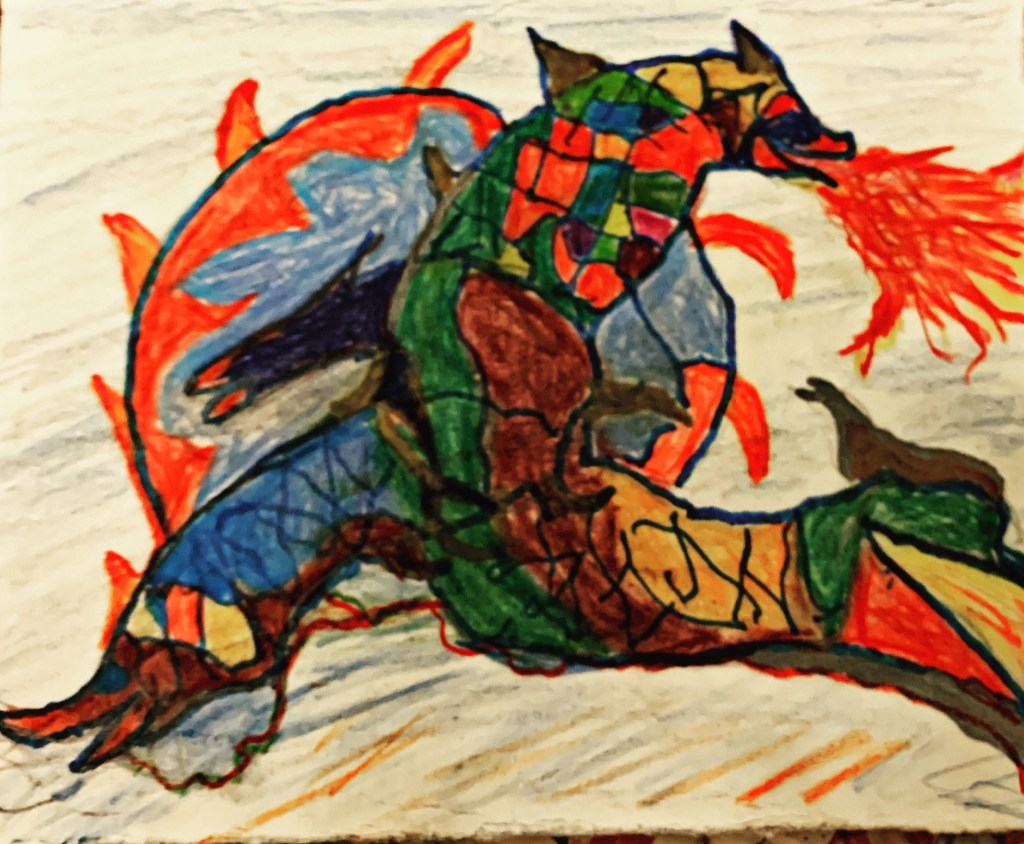
From the first shot at Carabobo to the final gasps of the Restoration Revolution, Venezuela lived the 19th century as one long civil war, interrupted only by brief pauses for reorganization. Independence, won through blood and epic sacrifice, did not bring peace but rather extended the violence under new banners. Bolívar spoke of morals and enlightenment; Páez spoke with the lance. José Tadeo and José Gregorio Monagas, Falcón, Guzmán Blanco, Linares Alcántara, Joaquín Crespo: a procession of caudillos who ruled in the name of the Republic as warlords.
The Federal War (1859–1863), with its promise of “Land and Free Men,” left the country in ruins, with no land reform and twice the number of caudillos. The Blue Revolution, the Legalist Revolution, the Restorative: each one claimed to refound the republic, yet all merely recycled the war. Meanwhile, institutions were barely outlined—a congress, some codes, a justice system signed in blood and sealed by sword duels. There was no solid republic because there was never time to build one. Venezuela, in the 19th century, was a battlefield with a national anthem.
II. Gomecismo: Peace as Terror and Silence
When Juan Vicente Gómez seized power in 1908, many sighed in relief. At last, the rifles had fallen silent. But what followed was a different kind of violence: a peace forged in prisons and cemeteries. Gómez built his regime on a simple premise: fear.
For nearly three decades, he ruled with an iron fist from Maracay. Opponents were disappeared, imprisoned, or neutralized through economic coercion. Congress was a stage prop. Newspapers served as parish bulletins for the regime. The secret police fabricated crimes and erased dissent. Everything was controlled—except for the ambitions that leaked through the cracks of his own family.
In 1923, his own brother, Juancho Gómez, a power figure in the Aragua Valley, was murdered under murky circumstances. The official version cited a political clash. But many knew Juancho was as brutal as he was autonomous, and his murder carried a clear message from the General-in-Chief: in Venezuela, there are no parallel powers—not even those that share your blood.
Gomecismo was riddled with scandals: oil concessions granted at will, silent fortunes amassed by relatives, and brutal repression in prisons like La Rotunda. But the regime endured under a familiar slogan: “peace, land, and labor.” In exchange for silence, there was progress. The cost? The nation’s moral compass.
III. The Democratic Mirage and the Foundational Crime of 1950
After Gómez’s death, Venezuela experienced a brief democratic awakening in 1945. Rómulo Betancourt, Acción Democrática, elections, a new constitution. But the pendulum swung swiftly. In 1948, a military coup toppled President Rómulo Gallegos. Two years later, in 1950, the nation witnessed one of its most disturbing political crimes: the assassination of Carlos Delgado Chalbaud, president of the Military Government Junta.
Delgado Chalbaud was kidnapped and murdered in Caracas by a group led by Rafael Simón Urbina. The official account painted it as an isolated act, carried out by a mentally unstable man with a thirst for revenge. But in Venezuela, few things are what they seem. Delgado Chalbaud was the most civilian among the military rulers, and his death paved the way for the definitive rise of Marcos Pérez Jiménez.
Urbina was captured and killed just hours later. No trial, no confession. The case was buried under a heap of decrees and gunfire. With Delgado Chalbaud’s death emerged a new brand of impunity—one that kills in broad daylight and erases its traces with uniforms and presidential sashes.
IV. Endemic Violence, Today a Failed State
As the 20th century advanced, Venezuela changed its costume, but the play remained the same. Each democratic restoration came with promises of justice, of rooting out the corrupt, of building a nation. And each time, impunity proved more resilient than reform.
The brief glow of institutional democracy was always eclipsed by dark corners of violence: unresolved political assassinations, massacres turned into rumors, and a judicial system that operated as a selective blade—sharp for the weak, dull for the powerful.
Then came the 21st century and the revolution that promised to sweep away corruption, impunity, and privilege. Yet, paradoxically, it ushered in a deeper opacity. Now, even the fantasy of justice has collapsed. The State no longer even pretends to arbitrate: it persecutes, it controls, it conceals. We have entered an era where violence is no longer an exception or tool—it is structure and governance.
From the murder of prosecutor Danilo Anderson to the unresolved killings at Plaza Altamira; from the disappeared in the prisons of Tocorón to the public executions broadcast as justice—each case is a stone in the monument to our failure.
In Venezuela, today, impunity is no longer a distortion of justice—it is its substitute.
Endemic Violence, Today a Failed State
As the 20th century came to an end, violence in Venezuela never did. What once had the face of civil war, dictatorship, or political struggle began to take on the guise of daily chaos, of structural rot.
The democratic period did not erase violence—it veiled it. Judicial impunity became systematic. The police were often actors in crime scenes, not investigators. The victims multiplied, and the trials shrank. Justice was no longer blind; she now wore a partisan bandana, and the sword she held only fell on the necks of the poor.
At the dawn of the 21st century, the revolutionary promise was not just to punish the past but to build a new morality. Instead, what came was a perfected model of impunity. A justice system turned into a political tool. Judges who awaited calls, not evidence. Prosecutors who constructed cases around the accused, not around facts.
The murder of prosecutor Danilo Anderson, with all its contradictions, is a monument to this decay. The killings at Plaza Altamira. The shadowy figure of Gouveia. The crimes for which no one answers. And above all: the idea that in Venezuela, only the fool pays.
Unpunished Crimes and Social Awareness in Pre-Chávez Venezuela
“Four Crimes, Four Powers”: A Novelized Chronicle of Impunity
Cover of the book Cuatro crímenes, cuatro poderes (1978), by Fermín Mármol León — a publishing success that exposed the link between crime and political influence in contemporary Venezuela.
In 1978, Police Commissioner Fermín Mármol León of the Technical Judicial Police published Four Crimes, Four Powers, a novel based on real events that became a publishing phenomenon in Venezuela. Within just six months, three editions (50,000 copies) had sold out—a reflection of the immense public interest the book generated.
Mármol León details four emblematic criminal cases that took place between 1961 and 1973, each of them shocking public opinion at the time. The common thread among these cases is the interference of powerful factions—what he calls “the four powers”: the Church, politics, the military, and economic elites—each acting to obstruct justice and secure impunity for the perpetrators. The book thus denounces the institutional corruption of the period: according to Mármol León, in Venezuela the guilty could evade conviction thanks to their alliances with power, despite the efforts of honest investigators.
Each of the four cases corresponds to a different “power” and reveals how influential individuals manipulated the judicial system to avoid punishment:
Ecclesiastical Power:
The book recounts the rape and murder of a young Caracas woman, Lídice Cuzati, at the hands of her own brother—Father Pedro Cuzati. Despite substantial evidence, the priest was released just a few months later, after pressure from the upper ranks of the Catholic Church, which claimed there was no conclusive proof. This case illustrated how the Church, acting as a powerful social institution, intervened to protect one of its own, preventing a conviction and triggering widespread indignation.
Political Power:
Mármol León narrates the murder of Hilda de Rosales, wife of a Congressman. She died when a bomb hidden in a religious statue, supposedly sent as a gift to her husband, exploded—initially seen as a terrorist act. However, the investigation soon pointed to her husband, Congressman Pedro Rosales, as the mastermind. Only months later, he married a minor, revealing a likely passionate motive. The case was stalled in Congress, which froze the investigation. When Rosales finally lost his parliamentary immunity, a judge dismissed the case for “lack of evidence.” This episode exposed how political privilege—immunity and backdoor lobbying—can halt justice in its tracks.
Military Power:
Known as “the elevator crime,” this case involves the murder of Dalia Padilla, wife of an Air Force captain. Although Captain Daniel Rondón Plaz initially confessed, he later retracted his statement. Forensic evidence pointed to his guilt, but high-ranking military officials intervened: the General Commander of the Air Force had the arrest order overturned and hindered the investigation. Ultimately, a military tribunal declared the captain innocent. Here, military corporatism protected one of its own, enshrining impunity under the pretense of a botched robbery that likely never happened.
Economic Power:
The fourth and perhaps most infamous case is the kidnapping and death of teenager Carlos Vicente “Tomy” Vega. The boy, son of a wealthy Caracas family, was abducted by a group of upper-class youths who had developed a habit of kidnapping acquaintances to finance their drug use. Tomy Vega died of carbon monoxide poisoning after being left locked in the trunk of a car. Among the suspects were several nicknamed children of the elite—“Caramelito” Branger, Javier Paredes, Julio Morales, Diego Rísquez, Gonzalo Capecci, Alfredo Parilli, and “El Chino” Cano, among others—and even a possible implication of the victim’s own brother. Thanks to legal technicalities and the shielding power of privilege… …Thanks to legal technicalities and the shielding power of privilege, none of the suspects were ever sentenced. Some were never even indicted. The case became a symbol of how economic influence could erase not only criminal responsibility but also public memory. The names of the young perpetrators circulated like ghosts among the upper classes—rumored, whispered, but never judged. The victim’s death was buried beneath silence and scandal fatigue.
A Mirror Held to the Nation
Four Crimes, Four Powers was not merely a bestseller—it was a mirror. It forced Venezuelans to confront a chilling truth: in their republic, justice did not belong to everyone. It belonged to those who could afford it. The book’s explosive success revealed a hunger in the public for truth, for clarity, for accountability. It suggested a society that, even before Chávez, was already tired of the spectacle of democracy without consequence.
But it also hinted at something deeper and more tragic: a society that had grown accustomed to the idea that impunity was inevitable, and that justice was a kind of theater where the ending was always known in advance.
By naming each “power,” by narrating each manipulation with forensic detail and literary force, Mármol León didn’t just tell four stories. He offered a diagnosis of a country sick with complicity—where crime, when aligned with privilege, was not a stain but a currency.
Francisco Herrera Luque: The Ancestral Roots of Crime
If Mármol León exposed the visible faces of power shielding criminals, Francisco Herrera Luque dared to look into the bloodstream.
His most influential book in this regard, Los viajeros de Indias (1961), later expanded in Psicopatología del venezolano (1977), suggested a disturbing thesis: that the roots of Venezuela’s violence lay not only in its institutions, but in its genes, in the unresolved psychodrama of a colonized and brutalizing past.
Herrera Luque, a psychiatrist and historian, proposed that the Spanish colonization of Venezuela had left behind a genetic and cultural legacy of imbalance. The conquistadors, often recruited from prisons or desperate social strata, brought with them pathologies of cruelty, impulsiveness, narcissism, and paranoia. These traits, reinforced by the absence of strong institutions and the normalization of authoritarian power, were passed down through generations like a virus woven into national identity.
In Psicopatología del venezolano, he traced behavioral patterns common in Venezuelan political and social elites: a tendency toward personalism, disdain for norms, cycles of idealization and betrayal, fascination with the caudillo figure, and a deep distrust of the collective good. In short, a nation of orphans seeking a father figure, yet unable to build a house of law.
When History Becomes Madness
For Herrera Luque, Venezuela was not just a nation without justice—it was a nation without self-regulation. Its violence, he argued, was not always premeditated but often visceral, born of a cultural syndrome that glorified dominance and scorned limits. He believed that Venezuela’s great historical dramas—its revolutions, coups, and betrayals—were repetitions of a collective neurosis stemming from a traumatic origin never metabolized.
Where Mármol León spoke of criminals and cover-ups, Herrera Luque spoke of psychotypes and transgenerational pathology. Both authors, though different in approach, converge in a disturbing portrait: Venezuelan crime is not random. It is structured, legitimized, and, at times, subconsciously desired by the very culture that suffers from it.
From Diagnosis to Tragedy
The popularity of both books—Four Crimes, Four Powers and Psicopatología del venezolano—reveals something profound: before Chávez, before the Bolivarian Revolution, Venezuela was already a nation deeply engaged with its own dysfunction. These works were not written in exile or dissidence; they were produced from within, in the brief windows of reflection afforded by a precarious democracy.
Together, Mármol León and Herrera Luque offered a double map: one charting the alliances of impunity, the other the ancestral script that normalized it. Their legacy is not one of solution, but of lucid warning—that without reform, not only of institutions but of the national psyche, the future would merely repeat the worst of the past.
And so it did.
The “Manzopol” Scandal (1988): A Shadow Police Force and Untouchable Corruption During the Lusinchi Era
During the presidency of Jaime Lusinchi (1984–1989), a major scandal erupted known as “Manzopol”—a name coined by the press to describe a clandestine paramilitary police network operated from within the Ministry of Justice. In 1988, investigative journalists—led by then journalist and politician José Vicente Rangel—uncovered that Justice Minister José Manzo González had secretly created and financed an unofficial parallel police force, operating completely outside legal institutions.
This armed group, nicknamed “Manzopol” (from Manzo + policía), allegedly conducted undercover operations to combat drug trafficking and subversion. However, all activities took place beyond the boundaries of the law. There were even allegations that Manzopol received off-the-books funding, possibly from the U.S. DEA—though this was never fully substantiated.
The revelations caused an uproar in both the media and political spheres. Internal documents and videos surfaced detailing the structure and activities of this rogue police unit. Public outrage was swift: the idea of a “watchdog minister” assembling his own private security force in violation of the law was too much to ignore. Under intense pressure from the press and public, Minister Manzo González was forced to resign in March 1988. President Lusinchi dismissed a few of his close associates in an attempt to contain the scandal.
However—and this is the key point—there were no legal consequences. The Public Prosecutor’s Office opened inquiries, but no formal charges were filed against Manzo or his collaborators. No trials, no indictments. The matter ended in internal reviews, with resignation as the only political penalty.
This outcome only reinforced the perception of impunity. The so-called “Manzopol” case laid bare the deep levels of corruption and abuse of power within the state itself—a minister creating an illegal paramilitary force—and yet no one ended up behind bars. On the street, the phrase was that Manzo “got away scot-free.” For human rights organizations, the case highlighted the judiciary’s lack of autonomy in the face of political power. Manzo and his allies managed to halt any judicial proceedings before they even began.
In the end, the secret network was quietly dismantled, but its architects walked away untouched. In Venezuela’s collective memory, “Manzopol” became a synonym for high-level police corruption. The fact that a Minister of Justice could engage in illicit activity and suffer no legal consequence further undermined public trust in institutions in the critical years leading up to 1999.
Other Massacres and Unresolved Crimes: El Amparo, El Caracazo, and Beyond
Several serious human rights violations that occurred in the 1980s and 1990s were also left unpunished, leaving open wounds in Venezuelan society. Two cases, in particular, stand out for their notoriety and symbolic weight:
El Amparo Massacre (1988):
On October 29, 1988, in the village of El Amparo in the state of Apure, 14 humble men out on a fishing trip in the border marshlands were gunned down by a joint task force of police and military officers from the so-called José Antonio Páez Special Command (CEJAP). The perpetrators—agents from the DISIP (political police) and the Venezuelan Navy—claimed the victims were “subversive guerrillas” killed in combat. In truth, they were unarmed fishermen.
Only two survivors, Wolmer Pinilla and José Arias, managed to escape and later told the story. The official narrative initially portrayed the killings as a successful anti-insurgency operation, but journalists, the Church, and human rights organizations quickly exposed the lie. Despite clear evidence of extrajudicial execution, the case was transferred to military courts, which promptly closed ranks. The perpetrators were acquitted on the grounds that they had acted in “self-defense” during a combat that never occurred.
Worse still, the two survivors were themselves charged with rebellion in an effort to silence their testimonies. Later, under international pressure, the case was moved to the civilian courts—but it made no progress, thwarted by legal hurdles and systematic cover-ups. Leaked documents showed how legal maneuvers were deliberately employed to “ensure impunity” at every stage of the investigation.
In 1993, a military judge closed the case, releasing all involved officers. It was only thanks to the Inter-American Court of Human Rights—whose 1996 ruling found the Venezuelan state responsible—that families received financial compensation. Yet no one was ever imprisoned for the massacre.
El Amparo remains an emblematic case of brutality followed by institutional denial. The town’s name—“The Shelter”—now stands as a bitter irony. Each year, NGOs like PROVEA mourn that “34 years later, the El Amparo Massacre remains a disgraceful case of impunity.”
El Caracazo (1989): A Nation Buried Its Dead and Its Justice
On February 27, 1989, a wave of popular protests, looting, and street riots erupted in Caracas and several other Venezuelan cities. The spark: a drastic neoliberal economic package imposed at the start of President Carlos Andrés Pérez’s second term. What followed was chaos. The government responded by suspending constitutional guarantees and activating “Plan Ávila”—a military order to restore public order.
For days, troops and police stormed the poorest neighborhoods with brutality. Civilians were shot in the streets. Arbitrary arrests multiplied. Reports of executions surfaced rapidly. The official death toll was set at 276, but human rights organizations like COFAVIC documented at least 380 identified victims—and many believe the true number exceeds 500 or even 1,000.
Dozens of bodies were never claimed. Some were buried in mass graves, the most infamous of which was dubbed “La Peste” (“The Plague”). This event left a permanent scar on the nation’s memory and is widely seen as the catalyst for Venezuela’s political unraveling. Yet, despite its magnitude, the Caracazo had no immediate judicial consequences. No high-ranking official, no military officer, no police commander was prosecuted between 1989 and 1998 for the human rights atrocities committed during those days.
The facts remained buried—literally and metaphorically. Between 1989 and 1998, there were no serious criminal proceedings, no systemic reparations. Only after Hugo Chávez came to power in 1999 was the case reopened. The new Supreme Court classified the massacre as a crime against humanity, making it legally imprescriptible. The Venezuelan state finally admitted its responsibility before international bodies and began paying reparations to some of the victims’ families.
But in terms of criminal accountability, almost no individual perpetrator was ever punished. Military commanders implicated in the operations retired peacefully. Judicial truth remained elusive. The Caracazo thus became a national symbol of state-sponsored impunity.
For many Venezuelans, the democratic establishment of the Punto Fijo era was deeply discredited by the state’s failure to own up to the massacre—official discourse referred to it merely as “isolated excesses,” avoiding any acknowledgment of a systemic human rights breakdown. The images of bullet-riddled corpses, paired with a glaring lack of justice, paved the way for an anti-establishment discourse.
As a BBC report would later put it, the lingering trauma of the Caracazo was “one of the seeds of the political emergence of Commander Hugo Chávez,” who built much of his early support on the widespread resentment born in those days of fire and silence.
Other Unresolved Massacres and Scandals: From “RECADI” to the Shadow of Danilo Anderson
Beyond these major episodes, the list of notorious, unresolved events in pre-Chávez Venezuela is long and unsettling. It includes large-scale corruption scandals and unresolved political crimes that further cemented the notion of a broken judicial system.
The RECADI Scandal (1984–1989): One of the most emblematic cases of economic corruption involved the Régimen de Cambio Diferencial, or RECADI, a system for foreign exchange control that became a breeding ground for fraud during the Lusinchi administration. Billions of dollars were embezzled—some estimates reached up to $36 billion—through shell companies, false imports, and crony favoritism. Many of those implicated were tied to the presidential circle. While a handful of officials were investigated, few ever faced trial, and even fewer were sentenced. The scandal came to symbolize a key phrase in Venezuelan political folklore: “Aquí no cae nadie” (No one ever goes down).
Ramón Carmona Vásquez: Silenced for Speaking Out
Criminal lawyer Ramón Carmona Vásquez was murdered on July 28, 1978, in Caracas. He had announced that he would reveal evidence of corruption within the Technical Judicial Police (PTJ), specifically implicating its director, Manuel Molina Gásperi. Carmona was gunned down by members of the Tactical Operational Support Group (GATO), an elite PTJ unit. Although some of the material perpetrators were convicted, Molina Gásperi never stood trial and died in a plane crash in 1986. Carmona’s widow fought for years to obtain justice, and in 2007 the Supreme Court ordered financial compensation for damages.
Renny Ottolina: Accident or Conspiracy?
Renny Ottolina, a charismatic TV host and presidential candidate, died on March 16, 1978, in a plane crash en route to Porlamar. Although authorities attributed the crash to pilot error and adverse weather conditions, conspiracy theories persist. Questions remain about the speed with which the wreckage was destroyed and the lack of a thorough investigation. Ottolina was seen as a serious threat to the political status quo, and his death left a vacuum in Venezuelan political life.
The Sierra Nevada Case: In the 1970s, a scandal erupted over the irregular purchase of warships—second-hand and overpriced—from Spain. The deal was marred by kickbacks and shady intermediaries. Although the case received public attention and led to heated congressional debates, it ultimately fizzled out without convictions, swallowed by bureaucracy and political complicity.
The iHub Case (1993): Involving the illicit transfer and smuggling of military equipment, this case briefly shook the political establishment but vanished into silence once again. Investigative journalism pointed to senior officers and businessmen, yet no one stood trial.
The Murder of Prosecutor Danilo Anderson (2004): Though technically post-1999, this case straddles the transition between eras and deserves mention. Anderson was killed in a car bombing in Caracas while investigating cases of coup-related actions in the aftermath of the 2002 events. The crime scene was bizarre: among the first on site were then-Minister of Interior Jesse Chacón and political analyst José Vicente Rangel, raising immediate questions. The government’s case quickly centered on a controversial witness—a former Colombian paramilitary—whose testimony became the prosecution’s keystone. The prosecutor publicly stated that “he only needed to look into the man’s eyes to know he was telling the truth.” Based on this, journalist Patricia Poleo and the Guevara brothers were accused and eventually fled or faced prosecution. Meanwhile, the assassination of Antonio López—another suspect—further muddied the waters. By mid-2025, the truth remains elusive. Who really ordered Anderson’s murder? Who benefitted? The only ones who paid, once again, were the powerless.
A Culture of Impunity, Cemented
All these cases—from the “Manzopol” to the Caracazo, from RECADI to Anderson—fed a deep collective suspicion that Venezuelan justice operated on a two-tier system: one for the powerful, and one for the rest. As civil rights organizations like PROVEA repeatedly noted, more than 90% of human rights violations in the 1980s and 90s never reached a guilty verdict. That wasn’t just a statistic—it was a structural verdict on the very institutions meant to uphold the law.
In those decades, a grim refrain began to echo: “El que tiene padrino, no muere infierno.” He who has a godfather, escapes hell. In other words, in the Venezuela before Chávez—just like after him—impunity wasn’t just the result of failed cases. It was the system itself.
Social Conscience and the Thirst for Justice on the Eve of Chavismo
The books and cases discussed above do more than recount crimes and injustices—they reveal a deeper undercurrent within Venezuelan society at the twilight of the 20th century: a collective yearning for justice and for answers within a system widely perceived as corrupt. Before the rise of Hugo Chávez, Venezuela experienced a prolonged democratic period (1958–1998) marked by undeniable achievements, yet increasingly shadowed by the belief that many crimes—especially those involving the powerful—went unpunished.
In response, various sectors of civil society raised their voices: writers, journalists, academics, human rights activists, and even honest police officers used whatever tools they had to expose these social pathologies and demand reform.
Thus, the publication of Four Crimes, Four Powers in 1978 brought uncomfortable truths to a wide audience: that neither the Church, nor Congress, nor the Armed Forces, nor the economic elite were innocent in the corruption of justice. The popular impact of that book revealed a public awareness on the rise—eager to uncover the truth, and indignant in the face of impunity.
Similarly, Francisco Herrera Luque, through historical fiction and essays, invited Venezuelan society to examine itself: he asked whether our cultural DNA carried the seeds of repeated cycles of violence, caudillismo, and opportunism. His theses could be contested, but they resonated with many ordinary citizens who began to openly discuss “the Venezuelan character” in plazas, classrooms, and cafés.
In other words, these authors sparked a national debate on identity and dysfunctions, and within that debate lay a collective desire to change course. To acknowledge historical flaws—even if presented provocatively—was the first step toward transcending them.
At the same time, the traumatic events of the 1980s and 1990s gradually opened the eyes of wide sectors of society. Each high-profile case of impunity—unpunished massacres, embezzlements without arrests, hushed-up scandals—contributed to a growing climate of frustration and indignation. For example, after the Caracazo of 1989, many young people and emerging leaders—Chávez among them—came to the conclusion that representative democracy was morally bankrupt, incapable of delivering justice for the hundreds of innocent people killed. Similarly, when the truth about El Amparo came to light, the collective reaction of horror and solidarity (especially in rural areas and among religious organizations) showed that society no longer wished to tolerate covert military abuses. Pressure from both domestic and international public opinion managed, for the first time, to force a Venezuelan government (the transitional one of 1994) to partially apologize for a massacre and to compensate the victims—although the direct perpetrators never served time in prison. Each of these moments helped forge a growing awareness of human rights among the population.
Nonetheless, the persistent lack of effective punishment took a heavy toll on public trust in institutions. By the late 1990s, surveys of the time showed that terms like “courts,” “Congress,” or “police” carried low credibility among the people, widely seen as instruments of the rich and powerful. This perception fueled the idea that a “revolution” or at least a complete refounding of the State was necessary to break the cycle of impunity. Hugo Chávez’s 1998 presidential campaign capitalized directly on that sentiment: he promised to end the corrupt “old politics,” convene a Constituent Assembly, and deliver social justice. It’s no coincidence that in his early speeches, Chávez referenced events like the Caracazo and the financial scandals of the 1980s as proof of the “rottenness of the Fourth Republic.” His message succeeded largely because it tapped into the people’s long-standing thirst for justice. As historian Inés Quintero aptly put it, “Chávez didn’t invent the indignation, he harnessed it: he arrived at a time when the population was exhausted by corruption and crying out for a redeemer.”
In conclusion, the books and cases examined in this series served as catalysts for Venezuelan social consciousness before 1999. Works by authors like Mármol León and Herrera Luque exposed and examined the nation’s pathologies—from immediate judicial impunity to the deeper historical patterns of our national psyche—while real-life cases of injustice tested the limits of the collective patience. Venezuelan society, through its brave journalists, civil society organizations (like COFAVIC, PROVEA, the local chapter of Amnesty International), and its writers, did not remain silent: it sought to document the truth, protest, and propose reforms. That spirit of justice-seeking and national self-critique is a defining feature of pre-Chávez Venezuela. Without it, the so-called “Bolivarian Revolution” might never have found such fertile ground. Paradoxically—and this extends beyond the scope of this article—the Chavista phenomenon would later bring its own forms of impunity. But by then, the citizenry had already developed a strong narrative around the right to justice and zero tolerance for abuse of power—a narrative forged precisely in those previous years. In sum, Venezuela at the end of the 20th century was profoundly marked by the tension between enduring impunity and the struggle to overcome it, a duality that shaped the nation’s path into the new millennium.
Sources: El Nacional; Tal Cual; Crónica Uno; Últimas Noticias; UCV Library; PROVEA; IACHR rulings; Four Crimes, Four Powers by F. Mármol León; essays and novels by F. Herrera Luque; interviews and historical analyses.
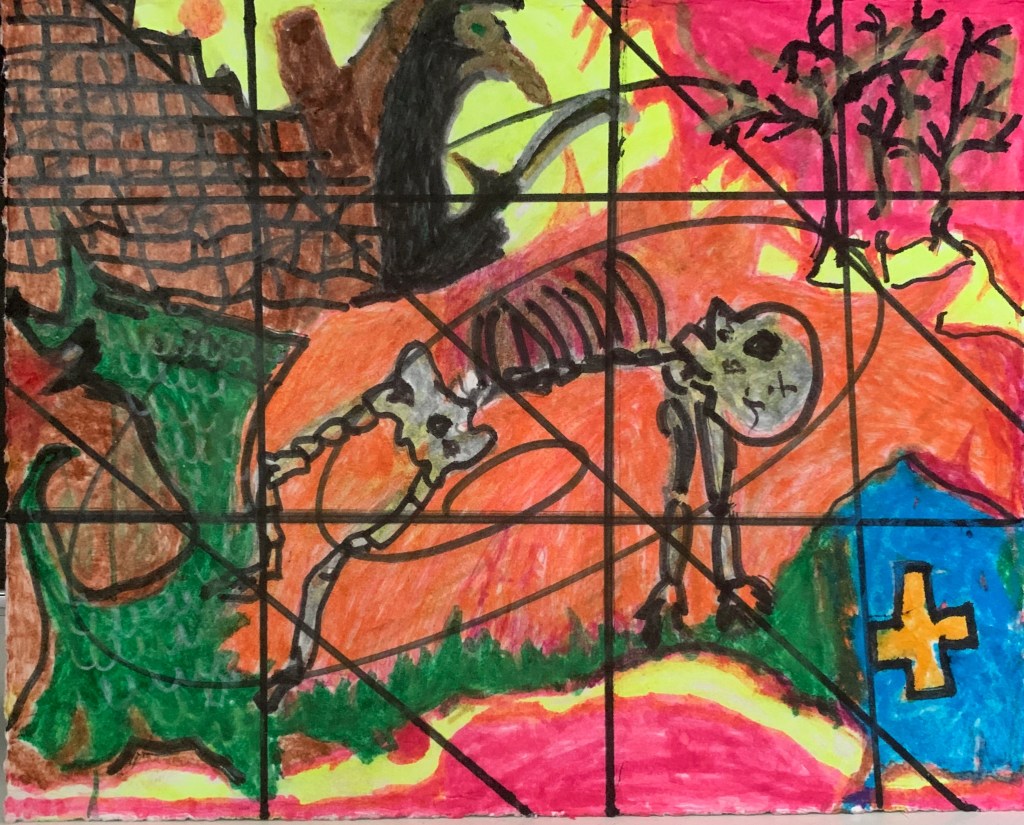
The Hannibal Lecter of Caracas High Society
The Edmundo Chirinos Case: Venezuelan Psychiatrist Convicted of Homicide
Background and Judicial Details
Edmundo Chirinos, a renowned Venezuelan psychiatrist aged 74 in 2008, was accused and later convicted of the murder of Roxana Vargas, a 19-year-old university student who had been his patient. Vargas, who was studying Social Communication in Caracas, had sought treatment from Chirinos in 2007 for depression and eating disorders—on the recommendation of her own mother, who trusted the doctor after being his patient years earlier. Chirinos diagnosed her with depression and schizophrenia and prescribed a controversial “sleep therapy” that involved regularly sedating her. Rather than improving her condition, this treatment led to an unhealthy relationship marked by emotional dependence and sexual abuse: the patient transitioned into the psychiatrist’s lover, with Chirinos exploiting her emotional vulnerability.
Edmundo Chirinos, once an esteemed psychiatrist and prominent public figure in Venezuela, was arrested and tried in 2010 for the murder of Roxana Vargas, a young patient with whom he had maintained an illicit relationship.
On July 14, 2008, the semi-naked body of Roxana Vargas was found in a vacant lot in Parque Caiza, on the outskirts of Caracas, bearing visible signs of facial and head trauma. The autopsy revealed seven premortem skull fractures; the cause of death was severe cranioencephalic trauma. Initially, authorities considered various theories unrelated to Chirinos—from a random robbery or “express kidnapping” to a possible political motive, as the victim had interned at the opposition television channel RCTV. But none of those hypotheses matched the facts of the case.
Soon, however, crucial evidence emerged: Roxana had kept a personal diary and blog where she described in detail her romantic and abusive relationship with the psychiatrist. Her family (especially her mother) and friends were aware of this connection, and pointed to Chirinos as the prime suspect from the very beginning—even before forensic evidence was available.
CICPC Investigations and the Fall of Chirinos
The investigations conducted by the CICPC (Venezuela’s criminal investigation police) gathered overwhelming evidence against Chirinos. It was confirmed that on the day of Roxana’s death, she had several phone conversations with her psychiatrist, and he was the last person to contact her. When Chirinos’ office was searched, traces of the victim’s blood were discovered, as well as one of Roxana’s earrings that had gone missing at the crime scene. In addition, three photographs were seized—taken by Chirinos himself—showing Roxana unconscious and naked, irrefutable proof that he had sexually abused her during his so-called “sleep therapy” sessions.
When summoned to testify in 2008, Chirinos declared himself completely innocent, calling the case a “grand fabrication” and claiming to be the victim of a conspiracy. In a televised interview that same year, he indignantly asked: “Why, out of all the young women who are killed every weekend, is this one tied to me? Just because she was my patient?”—an attempt to minimize the connection. Nevertheless, the material evidence spoke louder than his denials.
Chirinos was arrested at the end of July 2008, just 15 days after the murder. The judicial process concluded two years later: in September 2010, the 5th Criminal Court of Caracas found him guilty of intentional homicide and sentenced him to 20 years in prison. The ruling explicitly detailed Chirinos’ responsibility in the murder of his patient, establishing that he took advantage of the doctor-patient relationship to sedate and violate her. Chirinos, 75 at the time of the ruling, was imprisoned in Yare III prison in the state of Miranda.
In 2011, he attempted to escape the sentence by requesting a presidential pardon from Hugo Chávez, citing his age and fragile health—a move that sparked widespread public outrage. He did not receive the pardon, although in 2012 he was granted house arrest on humanitarian grounds due to a stroke that impaired his mobility and speech. Edmundo Chirinos ultimately died in August 2013, under house arrest at age 78, after suffering a massive stroke.
“Blood on the Couch”: The Book that Documented the Case
The macabre story of Edmundo Chirinos and Roxana Vargas was documented in the book Blood on the Couch: The Extraordinary Case of Dr. Chirinos, written by Venezuelan journalist Ibéyise Pacheco. First published in 2010 (by Grijalbo Publishing) shortly after the trial, the book became a bestseller in Venezuela. Pacheco, renowned for her investigative journalism, conducted numerous in-depth interviews with Chirinos during his incarceration to probe the mind of the homicidal psychiatrist.
The result is a chilling chronicle that combines the crime narrative with Chirinos’ own confessions and ramblings, revealing his narcissistic and manipulative personality in his own words. The author reconstructs the details of the case—from the moment Roxana and Chirinos met, to the young woman’s writings (her blog and diary, which were key elements in the investigation), the evidence found in his offices and residences, and the full account of the legal proceedings and final sentencing.
The Book’s Impact: Media Sensation and Cultural Milestone
The book received broad media and public acclaim. It became one of the best-selling titles of the decade in Venezuela, sparking widespread debate about abuse of power and sexual violence. Critics praised the meticulousness of the investigation and the raw, unflinching way in which it exposed real events. While some readers pointed out stylistic flaws or a sense of rushed writing, most agreed that it is an essential testimony that “shook Venezuelan society” with its brutal honesty and authenticity.
The impact of Blood on the Couch led to a theatrical adaptation in the form of a monologue. Actor Héctor Manrique portrayed Dr. Chirinos on stage, using almost verbatim the words Chirinos had shared with Pacheco in their interviews. Premiered in 2014 by Grupo Actoral 80, the monologue (based on the book’s chapter “The Delirium”) enjoyed successful runs in Venezuela, Spain, Chile, and the United States, earning critical acclaim and playing to sold-out audiences. The theatrical adaptation, along with a subsequent documentary series, helped to further disseminate the story to international audiences.
Taken together, Ibéyise Pacheco’s book and its offshoots are widely regarded as a courageous contribution to investigative journalism, exposing a case that weaves together crime, power, and psychopathy in contemporary Venezuela.
From Respected Eminence to Public Scandal
Before the scandal broke, Edmundo Chirinos was held in high esteem by Venezuelan society. Born in 1935, he amassed an impressive array of credentials: he was a psychiatrist with postgraduate degrees from London, Cambridge, and other European universities, author of more than 700 academic works, and held prominent positions, including rector of the Central University of Venezuela (1984–1988). He even ventured into politics: in 1988, he ran for president as the Communist Party candidate (garnering 0.8% of the vote), and in 1999 he was elected to the Constituent Assembly that drafted the new Constitution, aligning himself with the Chávez movement.
As a professional, Chirinos was a national intellectual celebrity and a frequent voice in Venezuelan public discourse. He was once considered “one of the brightest minds in Venezuela” and a leading opinion maker in the 1980s. Thousands of patients passed through his famous couch, including three presidents of the Republic—former heads of state Jaime Lusinchi, Rafael Caldera, and sitting president Hugo Chávez—all of whom trusted his psychological counsel. Chirinos’ connection to power was so close that Chávez informally included him in his advisory circle: Chirinos counseled him on behavioral quirks (like gestural tics), and, according to Pacheco, even treated First Lady Marisabel Rodríguez to help cover up marital issues, thereby gaining the trust of the presidential entourage.
These privileged relationships earned Chirinos an untouchable public image—one of a scholarly and honorable man. In academic circles, he was revered; young psychologists saw him as a mentor, and people lined up to be treated by him, seeing him as a sort of “blessed figure” in his field.
Public Respectability vs. Hidden Darkness
This public respectability stood in stark contrast to a darker side that remained hidden for decades. Chirinos was also known for his controversial personal life: in interviews, he boasted about being a compulsive womanizer, once bragging, “I couldn’t begin to count how many women I’ve had… Almost all of them are grateful.” In doing so, he normalized predatory behavior with an almost whimsical tone. Many in society either celebrated or downplayed these attitudes, seeing them as the eccentricities of an influential figure. Before the crime, both the media and the general public treated him with deference: he was “the presidents’ doctor,” the expert guest on TV programs and conferences, even a political ally in the constitutional process.
After the scandal, that perception shifted dramatically toward outrage and revulsion. The revelation that a renowned psychiatrist had drugged and raped patients—eventually killing one—shook Venezuela to its core. Public opinion turned from admiration to disbelief, asking in shock, “How could someone like this, showing so many signs of madness, fool so many people? How did he manage to accumulate such power and get away with so much, with so many complicit in their silence?”
At first, there were mixed reactions and media controversy. Some of Chirinos’s close associates and loyal patients refused to believe the accusations. In fact, social media groups emerged to defend his innocence, portraying him as “a noble citizen victimized by a crazy girl trying to tarnish his honor”—a disparaging reference to Roxana, citing her mental health. At the same time, other collectives voiced support for the victims of sexual abuse tied to the psychiatrist, demanding justice. This polarization reflected the broader social contradictions surrounding the case: on one side, a tendency to blame or doubt the victim (protected by the aggressor’s prestige); on the other, a growing awareness about abuse of power and the importance of believing affected women.
Chirinos’s political connections added more tension. Some speculated that thanks to his “contacts in high places,” he might escape justice. However, the overwhelming evidence made any cover-up impossible: even Hugo Chávez—once his patient and known associate—did not intervene on his behalf. Chirinos ended up convicted like any ordinary citizen. In fact, when the former doctor appealed directly to Chávez in 2011, requesting clemency due to his age, society reacted with fury at the mere suggestion he might be pardoned. The government ultimately did not grant any pardon and allowed the court’s humanitarian measure (house arrest for health reasons) to proceed without interference.
A Collective Wake-Up Call
The Chirinos case marked a rupture in Venezuela’s collective consciousness. The fall of the psychiatrist once trusted by those in power exposed a dynamic of impunity protected by social status: for years, he practiced and abused without effective complaints, shielded by his fame and connections. Colleagues and friends who once praised him either remained silent or expressed disbelief once the truth came to light—unwilling to publicly comment on “the controversial doctor” out of shame or misplaced loyalty.
But after his conviction, Edmundo Chirinos’s name became permanently linked to crime and moral corruption. The press labeled him “the monster of the couch,” and his name became synonymous with betrayal of medical trust. Social analysts interpreted his case as a symbol of “a society in full moral collapse”—as one expert put it—questioning the ethical failings of an environment that allowed his crimes to occur right under its nose.
Ultimately, Chirinos’s respectable mask was shattered, revealing a sexual predator and murderer. His exposure brought bitter lessons about abuse of power, society’s blind trust in authority figures, and the urgent need to protect the most vulnerable—even from those we trust the most.
Other Victims: Silenced Testimonies and Belated Revelations
The murder of Roxana Vargas uncovered what had been a well-kept secret for decades: Edmundo Chirinos’s office had long been the scene of numerous acts of abuse against women under his care. As the investigation deepened, authorities found an archive in the psychiatrist’s home containing 1,200 photographs of various women, naked or semi-naked—many of them sedated patients. Some of these images dated back over 40 years, indicating that from the very beginning of his career, Chirinos had been sexually exploiting certain patients while they were unconscious. Shockingly, none of these cases had come to light at the time: most of the victims remained silent, either because they could not clearly recall the events (due to sedation), out of shame, or for fear of not being believed given the doctor’s influence.
It wasn’t until the Roxana Vargas case gained notoriety that many of the women featured in the photos were identified and informed of what had happened. Several finally broke their silence. During the 2010 trial, the testimonies of 14 women were presented, each claiming to have been sexually abused by Chirinos under similar circumstances: all were patients he had sedated under the guise of psychiatric treatment, only to touch or photograph them without consent. These testimonies, combined with 70 pieces of forensic and documentary evidence, confirmed that Chirinos’s predatory behavior had been systematic and long-standing. Many of these women had never filed complaints before, either out of fear or lack of clear evidence. Only after learning of Roxana’s fate—and seeing their own faces in the seized material—did they dare to come forward. As some reports put it, Roxana “vindicated” these women, as her case revealed the full scale of the assaults that had gone unpunished.
As the details spread, more former patients of Chirinos began to recognize disturbing patterns in their past sessions. Some remembered leaving consultations feeling groggy or disoriented, with gaps in their memory, not realizing at the time that they might have been victims of a crime. After the scandal broke, women’s organizations and survivor groups raised their voices to shed light on this hidden form of sexual violence. The emergence of an online support group for “victims of harassment and sexual violence by Edmundo Chirinos” showed that—however late—truth had finally made room for them to be heard.
Still, the tragedy of their long silences also became evident: the fact that a professional with such power could “do as he pleased under the complicity of many” for years pointed to deep failures in reporting mechanisms and blind faith in authority figures.
Ultimately, the Edmundo Chirinos case not only delivered justice for Roxana Vargas but also broke the silence of dozens of women who had carried traumatic experiences alone. It set a critical precedent: from then on, Venezuela looked more skeptically at the imbalance of power in doctor-patient relationships and began encouraging potential victims to report abuse—no matter how respected the perpetrator. The painful legacy of those silenced patients finally found an echo in courtrooms and public discourse, leaving behind a warning against similar future cases. In sum, the fall of Edmundo Chirinos exposed not only the monstrous actions of a criminal physician but also the quiet voices of his other victims—voices that, though belated, were finally heard to ensure such stories are never repeated.
Sources: El Pitazo, El Diario, Prodavinci, Tal Cual, La Tercera, BBC Mundo, among others. (see references in the text)
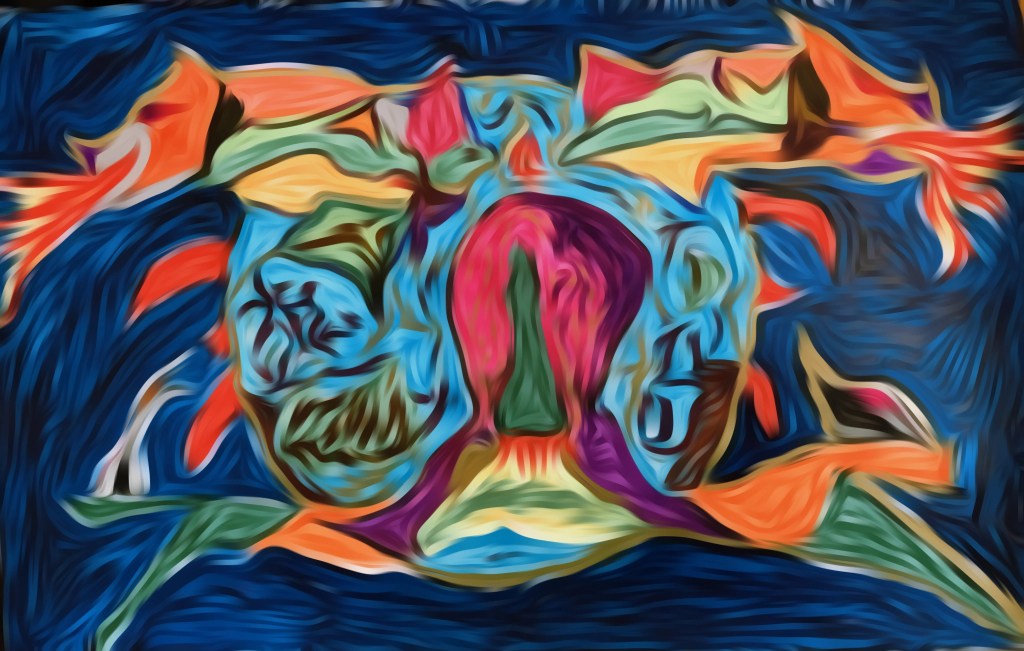
Chronicle of the Danilo Anderson Case: Contradictions, Questionable Witnesses, and Impunity
The Night of the Explosion and the First Contradictions
On the night of November 18, 2004, Venezuela was shaken to its core. Just before midnight, two loud explosions rocked the Los Chaguaramos neighborhood in Caracas. They were the near-simultaneous detonations of a C-4 plastic explosive device placed under the seat of a Toyota Autana driven by prosecutor Danilo Anderson. The vehicle burst into flames and crashed into a building, incinerating its sole occupant. Anderson, 38 years old, was returning from his postgraduate classes when he was assassinated with a car bomb—an act quickly described as an unprecedented terrorist attack in the country. The news stunned all of Venezuela: figures from both the Chávez government and the opposition—alongside the Catholic Church—condemned the crime.
However, inconsistencies in the official investigation emerged within hours of the attack. Inside the Public Prosecutor’s Office, Anderson’s own colleagues quietly voiced criticisms about how poorly the crime scene had been handled by authorities. The government’s response appeared hasty and contradictory. Then–Attorney General Isaías Rodríguez went so far as to declare that he could “fill a bus with the guilty,” implying the existence of a vast conspiracy. Initially, the act was classified as “terrorism”; a few days later, it was redefined as a “contract killing”; then it swung back again to the “terrorism” theory. For a public already reeling from the shock, these abrupt changes in the official narrative raised serious red flags.
The Anderson Family and the First Signs of Doubt
Danilo Anderson’s own family also perceived the contradictions in the official version. His sister, Marisela Anderson, publicly expressed her confusion and doubts about the multiple twists coming from the Prosecutor’s Office: “Prosecutor Isaías Rodríguez has given so many different versions about the cause of my brother’s death that I don’t know what to believe anymore.” All the family could cling to was the hope for justice: “All I want is for them to prove the guilt of the Guevara brothers… and the others,” Marisela said amidst the uncertainty. But the road to the truth was already becoming tangled from the outset.
Initial Timeline of Events
To understand the case, it’s useful to review the chronology of those tumultuous days and the rushed decisions that shaped the investigation:
November 18, 2004 (night) – Danilo Anderson dies when a bomb explodes inside his SUV in Los Chaguaramos, Caracas. Firefighters and authorities arrive at the scene. Hugo Chávez’s government quickly condemns the attack as an “act of terrorism.” Unexpectedly, several high-ranking officials show up at the scene, raising questions.
November 19, 2004 – The government organizes public tributes: Anderson is buried with honors almost akin to those of a head of state, elevating him to martyrdom in the eyes of chavismo, portrayed as a victim of the “coup-mongering right.” Meanwhile, rumors emerge of irregularities in how evidence was collected at the crime scene.
November 20–23, 2004 – A series of opaque police operations target suspects. On November 20, Juan Bautista Guevara—a cousin of former police officers the Guevara brothers—is arrested at home without a warrant and disappears in the hands of security agents. Days later, on November 23, his cousins Otoniel and Rolando Guevara—former commissioners with spotless service records—are intercepted: Otoniel is taken after crashing his car during a chase in El Cafetal; Rolando is seized under similar circumstances. For three days, both are held incommunicado, gagged, tied, and tortured by state agents, with no legal proceedings. They would later “reappear” as part of a staged operation.
November 23, 2004 – In the early hours, lawyer Antonio López Castillo—another suspect linked to the case—is killed in a supposed shootout in downtown Caracas. His SUV is riddled with bullets by agents tailing him; López, the son of former senator Haydée Castillo, is struck multiple times and dies, as does one police officer during the incident. Just hours later, the Guevara brothers “miraculously reappear”: the National Guard announces they’ve been “rescued,” found bound in a rural area of Carabobo state. In truth, as the brothers would later testify, their captors had taken them there to stage the rescue—their supposed liberation was actually their formal arrest.
November 24, 2004 – Following López’s violent death, authorities raid his parents’ home (former minister Castillo and her husband), allegedly seizing weapons and explosives. The elderly couple is arrested and charged with “concealment of weapons and explosives,” though later released on conditional parole due to their age. Their implication arises only after their son is killed by the police, casting serious doubt on whether the operation was meant to silence a potentially inconvenient witness.
November 25, 2004 – In another confusing episode, former police officer Juan Carlos Sánchez, 32, was shot and killed at a motel in Barquisimeto while allegedly resisting arrest in connection with the Anderson case. Authorities claimed to have found traces of C-4 explosive in his vehicle, thus linking him to Anderson’s assassination. He became the second suspect to die in less than 48 hours while under police custody—further reinforcing an alarming pattern.
November 26, 2004 – The government finally announced, with much fanfare, the capture of the so-called “material authors”: brothers Rolando and Otoniel Guevara (along with their cousin Juan, who had been arrested days earlier) were publicly presented as detainees and charged with aggravated homicide. The official narrative described them as opposition agents involved in a terrorist plot. A criminal case was opened against them, while the circumstances of their arrest (and alleged torture) were swept under the rug. That same day, with the Guevaras in prison and two other suspects already dead, the government declared the case “solved” in terms of material authorship, even though intellectual authorship remained, allegedly, under investigation.
This frantic sequence of events—murky shootouts, irregular detentions, and shifting official versions—only fueled further suspicion. Was the truth being uncovered, or were scapegoats being fabricated in haste? The next phases of the case would raise even more doubts.
Power and suspicion at the crime scene: Rangel and Isaías under scrutiny
Minutes after the explosion that killed Danilo Anderson, not only firefighters and detectives arrived at the scene. What shocked many was the presence of top-ranking political figures at the actual crime scene. Then-Vice President (and former minister) José Vicente Rangel made an unexpected appearance that night. Far from offering reassurance, his presence stirred suspicion—even among the victim’s family. Marisela Anderson, Danilo’s sister, was alarmed upon seeing Rangel and did not hesitate to insinuate his involvement: “José Vicente is behind the bankers my brother wanted to prosecute for corruption. I can’t shake that thought from my mind,” she told El Universal. To her, it was no coincidence that such a powerful figure of the Chávez government was present so early at the scene. She suspected her brother, who had been investigating bankers and businessmen linked to the 2002 coup, had touched very sensitive nerves; she specifically hinted that Rangel may have wanted to silence Anderson’s accusations.
Rangel wasn’t the only high-ranking official involved from the outset. Attorney General Isaías Rodríguez, Anderson’s superior, personally took over the investigation and was also present coordinating actions shortly after the attack. From the very first moment, the official version constructed by Rangel and Rodríguez pointed directly at sectors of the opposition. President Hugo Chávez joined that chorus: he praised Anderson as a courageous prosecutor, a martyr struck down by “terrorist right-wingers,” and framed the assassination as a political conspiracy. Posters and murals with Anderson’s face soon covered the streets, elevating him to hero status within the revolutionary process.
However, as the government doubled down on its narrative, critical voices began to question the role of these very officials. Why the rush to blame specific opposition members before a thorough investigation? Why did high-ranking officials (Rangel, Rodríguez) seem to manage the crime scene as if they already knew what to look for?
Years later, a bombshell accusation emerged from Johan Peña, a former member of the scientific police who fled the country. In 2018, Peña stated from exile that the intellectual author of Anderson’s murder was none other than José Vicente Rangel. According to Peña, then-Minister of the Interior, Rangel had allegedly ordered the assassination, adding a disturbing detail: he claimed Rangel had summoned Anderson up to 22 times before his death, demanding he stop extorting bankers implicated in the 2002 coup. In other words, if Peña’s testimony is to be believed, Rangel knew Anderson was running an extortion scheme, and their conflict escalated to a deadly conclusion.
Aquí tienes la traducción al inglés del nuevo fragmento, manteniendo el tono crítico, narrativo y judicial:
Of course, Peña’s accusations were never validated in court and came from a witness with vested interests—he himself had once been implicated in the case. Still, they illustrate how, over time, the shadow of doubt came to encompass even the architects of the official investigation. Rangel’s early presence at the crime scene, combined with Isaías Rodríguez’s erratic handling of the case, fed theories of a cover-up. For many in the opposition, the government turned Anderson’s death into a political “witch hunt” aimed more at silencing dissent than uncovering the true culprits. Rodríguez always denied any political bias, but his conduct—as we shall see—ultimately undermined the credibility of the case.
The “star witness”: a paramilitary with convincing eyes (and evident lies)
Amid the investigative chaos, the Prosecutor’s Office announced a dramatic twist in 2005: they had found a key witness who would supposedly expose the conspiracy. Isaías Rodríguez unveiled the “star witness” with great fanfare—a Colombian man named Giovanny José Vásquez de Armas, whose testimony allegedly linked prominent civilians to the plot to assassinate Danilo Anderson.
According to the Prosecutor’s Office, Vásquez was a former paramilitary of the Colombian Autodefensas Unidas, a double informant for both the Colombian police and paramilitary groups, who had fled to Venezuela fearing for his life. The 36-year-old even introduced himself as a psychiatrist. His story seemed ripped from a spy novel: he claimed to have taken part in secret meetings in Panama and Maracaibo, where opposition politicians and other figures plotted Anderson’s murder. The witness implicated businessmen, retired military officers, and even a journalist as part of the conspiracy’s inner circle.
Isaías Rodríguez became enamored with this character and his chilling level of detail. In a press conference, he defended Vásquez’s credibility with a rather bizarre argument: he claimed he could “read the sincerity in his eyes.” The Attorney General admitted that he believed “85%” of what the Colombian had told him, and based on that testimony, he made high-stakes decisions.
Soon after, arrest warrants were issued against several high-profile opposition figures named by Vásquez: journalist Patricia Poleo, banker Nelson Mezerhane, retired general Eugenio Áñez Núñez, and anti-Castro activist Salvador Romaní Jr. Rodríguez accused them of being the intellectual authors who had allegedly commissioned the ex-police officers (the Guevara brothers) to carry out the assassination.
Let me know when you’re ready for the next section or if you’d like a compiled version in one file.
The uproar was immediate. For the pro-government sector, the “star witness” seemed to provide the missing piece to complete the narrative: a political-financial conspiracy by the extreme opposition, with international ties (Colombian paramilitaries), aimed at eliminating an inconvenient prosecutor. However, it didn’t take long before this star began to fall. Investigative journalists, independent media, and even Colombian authorities uncovered serious doubts about Giovanny Vásquez. It was revealed that much of what he claimed about himself was false or inconsistent. For instance, he was not actually a psychiatrist nor did he hold any medical degree, despite having introduced himself as a doctor. There was also no evidence that he had ever belonged to the AUC or to any police force, as he claimed.
More seriously, crucial dates and facts in his story didn’t add up. A newspaper obtained an official Colombian report that demolished one of Vásquez’s central claims: according to the witness, on a specific day in 2003, a meeting of the conspirators was held in Panama City, which he attended. But the Colombian document proved that on that very date, Vásquez was in prison in Santa Marta, Colombia, serving time for common crimes. It was impossible for him to have been in Panama planning anything. This and other debunkings of his alibi (such as inconsistencies in the profiles of the alleged conspirators and his use of false identities) completely discredited his testimony. Essentially, the star witness turned out to be a fraud.
Isaías Rodríguez’s reaction was as forceful as it was controversial: instead of immediately acknowledging the weakness of his case, in January 2006 he imposed a media ban in Venezuela prohibiting any further reporting on Vásquez’s private life or credibility. A “news blackout” was instituted under the pretense of protecting due process, but in practice it seemed like an attempt to buy time and avoid public embarrassment. For months, the “witness” was shielded by a veil of judicial silence. Even so, persistent reporters kept digging. Journalist Laura Weffer, from the newspaper El Nacional, achieved a journalistic feat in August 2006: she found Giovanny Vásquez himself and conducted a revealing interview. In it, the Colombian—feeling abandoned by his protectors—admitted he feared for his life and was seeking asylum, but more importantly, he hinted that everything surrounding his testimony had been a major fabrication.
Soon after, faced with overwhelming evidence, Isaías Rodríguez had no choice but to backtrack. In a public appearance that same month, he admitted he had been deceived by his star witness. He acknowledged, for instance, that Vásquez “was indeed in prison at the time of the alleged meeting in Panama,” confessing: “I made a mistake, I am not infallible.” He also admitted that the claim of being a psychiatrist was a sham: “That’s one of the things he lied to me about,” he explained, regretting that the impostor had used technical psychological jargon that made him sound credible to his psychoanalysis-trained ears.
The fall of Giovanny Vásquez was a devastating blow to the official investigation. The Anderson case, which until then the government had presented as practically solved (with the material perpetrators in prison and the intellectual authors identified), was now in question. If the central pillar of the accusation against the supposed masterminds of the assassination was the testimony of a liar, what validity did the charges have? And what about those who had already been convicted based on that testimony?
It’s worth noting an epilogue to Vásquez’s story: a year after the trial, in 2006, the witness himself fully recanted. In an interview with journalist María Angélica Correa, Giovanny Vásquez bluntly stated that “the entire trial had been a fabrication” orchestrated by Isaías Rodríguez’s Prosecutor’s Office. He claimed to have received three million dollars to memorize a script full of falsehoods—one he repeated in up to seven different versions during interrogations. Even one of the prosecutors in the case, Hernando Contreras, fled into exile and from there confessed to the same source that “it had all been a government setup to blame someone for Anderson’s death.” Contreras, tormented, told Jackeline Sandoval (wife of Rolando Guevara) that he regretted being part of the charade: “I shouldn’t have been on that case, but I was on duty,” he excused himself. These revelations completed a sordid picture: a false testimony had been manufactured to uphold high-profile political accusations.
After the collapse of the “star witness,” the grand intellectual plot behind Anderson’s murder was left hanging. Those accused by Vásquez (Poleo, Mezerhane, Áñez, Romaní) ultimately benefited from the Prosecutor’s Office debacle: none of them were brought to full trial with solid evidence, and the case against them fizzled out. But while the supposed masterminds escaped the discredit of the accusations, others had already paid the price for this dubious testimony: the Guevara brothers and their cousin, presented since 2004 as the material authors, were tried and convicted before Vásquez’s falsehoods came to light. For them, justice would come too late… or perhaps never.
Persecution and trial: Patricia Poleo in exile, the Guevaras in prison
The judicial offensive unleashed by Giovanny Vásquez’s testimony affected several targets. On one hand, Patricia Poleo, a prominent opposition journalist, became one of the main accused as an intellectual author. Poleo, a fierce critic of chavismo, was linked by the witness to the planning of the attack, allegedly due to her ties to anti-Chávez groups in Miami. Facing an imminent arrest warrant in November 2005, Poleo decided to flee the country and seek asylum. She eventually found refuge in the United States, from where she has consistently denied any involvement and claimed to be a political persecuted. In Venezuela, the case against her remained open but stalled: since she did not appear in court, she was declared a fugitive, but was never tried. Unlike the other accused, Poleo had no chance to clear her name in Venezuelan courts; her trial became exile.
The other alleged intellectual authors fared better. Retired General Áñez Núñez, businessman Nelson Mezerhane (co-owner of the opposition channel Globovisión), and Salvador Romaní turned themselves in when charged in 2005. They were held for a few weeks but were allowed to face trial on bail by early 2006. After the Vásquez fraud was exposed, these cases virtually collapsed. In fact, analysts at the time predicted that the final phase of the trial against the intellectual authors would end in dismissal or acquittal due to lack of evidence—except in Poleo’s case (unable to defend herself while absent). And so it was: over time, none of those accused of planning the crime were convicted. Mezerhane later went into exile after another clash with the Chávez government; Áñez and Romaní were released. The grand opposition conspiracy that was initially painted gradually faded away—at least in legal terms.
Meanwhile, the Guevara brothers and their cousin Juan Bautista did face the full weight of the state apparatus. Their case represents the most painful and controversial aspect of this story. Rolando, Otoniel, and Juan Guevara—former security officers with distinguished careers but at odds with the new chavista leadership—were turned into ideal scapegoats. According to Jackeline Sandoval (wife of Rolando Guevara and herself a former Public Ministry prosecutor), the government “needed someone to blame” and set its sights on them. As outlined in the timeline, they were irregularly detained (virtually kidnapped) and subjected to torture during their initial interrogation. “They used electric shocks to torture them, and when we reported it, the authorities claimed they were mosquito bites,” Sandoval later said, describing the cynical way in which the signs of electrocution on their bodies were dismissed by officials as mere insect bites.
Even so, the Guevaras survived that dark phase and made it to trial alive, which began in 2005. But there, according to their defenders, they encountered a parody of justice. The public oral trial was plagued with irregularities: for instance, the Prosecutor’s Office never summoned the police officers involved in the investigation (the ones supposedly holding the technical evidence). Instead, everything revolved around the testimony of Giovanny Vásquez, which the prosecution defended vehemently at the time. In fact, during the trial, the only real piece of evidence against the Guevaras was Vásquez’s word, since out of the 167 items submitted by the prosecutor, none directly linked the accused—except for what the Colombian had said. Despite how flimsy that sole piece of evidence was, the court gave it full weight.
On December 13, 2005, the verdict was delivered. In a ruling heavily criticized, Rolando and Otoniel Guevara were each sentenced to 27 years and 9 months in prison, and Juan Bautista Guevara to 30 years (receiving a harsher sentence due to an added charge of illegal weapons possession). On this point, Sandoval has noted an outrageous detail: at the time of the kidnapping, Rolando was carrying his service weapon, which was stolen by the agents; later, in the indictment, he was charged with carrying an unregistered weapon—it was the same gun they had taken from him. Even so, the sentence was upheld on appeal (copying nearly verbatim from the original ruling, a pattern later seen in other political trials). The Guevaras were formally turned into long-term prisoners, paying for Danilo Anderson’s murder with their imprisoned lives.
For chavismo, those convictions were presented as exemplary justice against “terrorists.” For many independent observers, however, they represented the success of a setup. Years later, when the truth about the false witness came to light, the Guevaras’ innocence began to be defended more vigorously by human rights organizations. By 2011, after serving over six years, the Guevara brothers were eligible for alternative sentencing measures (such as open regime or parole). But such benefits were systematically denied, citing political reasons. Iris Varela, then Minister of Penitentiary Affairs, even stated that although “all prisoners have a right to benefits,” that didn’t apply to “political” prisoners—implicitly placing the Guevaras in that category. “We were the first on the list of injustices,” summarized Jackeline Sandoval, who has since become a human rights activist, referring to the fact that the Anderson case marked the beginning of a series of tainted criminal proceedings against government opponents in Venezuela.
In parallel, Patricia Poleo remained in exile, as did others involved who preferred to leave the country (Mezerhane, for example, left after later being persecuted in relation to a government-intervened bank). By 2007, with a new Attorney General in office, the Anderson case had lost momentum. No new compelling evidence was ever presented, nor were any other intellectual authors identified beyond those already named and later released. In the eyes of many, the only ones who ended up paying for the crime were those most vulnerable and easiest to demonize, such as the Guevara ex-policemen—”los pendejos,” in popular slang—while the real masterminds, if they ever existed, remained untouched.
A collateral murder: the strange case of Antonio López Castillo
A dark chapter within the Anderson saga is the homicide of Antonio López Castillo, considered by some as part of a cover-up. López Castillo, a 38-year-old lawyer, was initially mentioned as a suspect in having supplied explosives or logistical support for the attack. But he never made it to an interrogation room: he was shot dead by police before he could speak. On November 23, 2004, just five days after Anderson’s death, a security unit tailed López through downtown Caracas. According to the official version, when they attempted to arrest him, a shootout ensued in which the lawyer pulled a weapon and opened fire, and was killed after receiving “multiple gunshot wounds.” A police officer also died in the exchange, which seemed to lend credibility to the version of a real armed confrontation.
However, the incident raised immediate suspicions. López Castillo was the son of a well-known political figure (former senator Haydée Castillo), affiliated with the moderate opposition. His death prevented any insight he might have offered into the investigation. What drew further attention was that just hours after his killing, authorities raided his parents’ home, allegedly seizing war-grade weaponry and explosives. This retrospective “discovery” served to posthumously justify López’s guilt in the plot: “See? He had C-4 at his parents’ house.” But the logic of the sequence seemed odd: if he had already been so clearly identified, why not arrest him alive? Was a deadly confrontation in a busy street really necessary?
Over the years, the death of Antonio López Castillo has fueled theories that it was an extrajudicial execution meant to silence someone who knew too much. In fact, former police officer Johan Peña (mentioned earlier) claimed that the Anderson case marked the beginning of the regime’s era of excess: “At that moment, they took the liberty of assassinating Antonio López Castillo,” he said, implying that the elimination was deliberate. While such a statement is impossible to independently verify, the perception took root among a significant portion of the public: López Castillo may have been a scapegoat eliminated to tie up loose ends.
Let’s not forget that another suspect, Juan Carlos Sánchez, was also gunned down in Barquisimeto just a couple of days later. Two alleged perpetrators killed in near-consecutive shootouts is, at the very least, unusual. This pattern reinforces the hypothesis of a modus operandi: neutralizing potentially inconvenient suspects before they can speak—or before capturing them alive. In the official files, both cases were closed as casualties “in the line of duty,” but for family members and human rights advocates, they remain unresolved dark spots.
Antonio López Castillo, in particular, became a kind of ghost in the story—present only in conspiracy theories. His death deprived the case of a testimony that could have been revealing. Was he really part of the plan to assassinate Anderson, or was he narratively inserted afterward to fit the official theory? We may never know for certain, as his voice was silenced by gunfire before he could speak. What did remain was a chilling message: in the Anderson case, those who might offer uncomfortable versions of the truth tended to end up dead or silenced, while those who served the official version—like the false witness—were protected… until they were no longer useful.
2025: Impunity, Contradictory Truths, and the Lesson That “Only the Fool Pays”
More than 20 years have passed since that tragic November, and the assassination of prosecutor Danilo Anderson remains shrouded in controversy and uncertainty. Officially, the case is only half-closed: three people (the Guevara brothers) were convicted as the material authors, but no intellectual author has ever been convicted. In practice, there is no clarity as to who truly ordered the crime. The narrative blaming an opposition conspiracy lost credibility after the key testimony collapsed, and no independent evidence was ever presented to support it. On the other hand, suspicions of an internal plot involving corruption and extortion as a motive—implicating figures close to Anderson or the government—have also never been judicially clarified. The result is a justice and information vacuum, allowing each side to uphold its own version of events.
In Venezuela in 2025, the legacy of the Anderson case remains deeply bitter. National and international human rights organizations claim a colossal injustice took place. In fact, the case has reached international forums: in April 2025, legal representatives of the Guevara brothers presented their case before the Inter-American Court of Human Rights, denouncing that their conviction was the result of “a setup with false witnesses and riddled with procedural irregularities.” They requested that the Court order their immediate and unconditional release, arguing that they are victims of human rights violations. Jackeline Sandoval—Rolando’s wife, now leading the Foundation for Due Process—testified before the Inter-American judges that the Guevaras have suffered torture, arbitrary detention, and a trial marred by “paid witnesses” that constituted procedural fraud. The Inter-American Commission itself recalled how, in November 2004, the detainees were tortured during interrogations after being arrested without a warrant. All of this reflects that, more than two decades later, the wound remains open.
In terms of public perception, the Anderson case became synonymous with impunity and the political manipulation of justice. For the government and its most loyal followers, Danilo Anderson remains a martyr: every anniversary, official spokespeople evoke his memory as that of a hero fallen for the Revolution. There is even a commemorative monolith at the corner where his vehicle exploded, bearing an inscription that proclaims him a “brave prosecutor” and condemns his “enemies of the people.” For years, Anderson’s figure was used as a symbol to rally Chavismo against supposed destabilization plots.
However, outside the official narrative, almost no one believes that true justice was ever served. Broad sectors of society, including many in the opposition, believe that Anderson was not the victim of those the government accused, but perhaps of his own shady dealings (such as the alleged extortion scheme) or of internal power struggles. As early as 2005, reports began to surface about an extortion network operating around him: then-Minister Jesse Chacón even admitted that an internal investigation revealed “two groups of lawyers, one linking people with money and another connected to Anderson, which demanded money from the wealthy in exchange for not being prosecuted.” If such a network existed, it suggests Anderson may have made powerful enemies—someone who preferred to eliminate him rather than keep paying, or even his own accomplices who wanted the loot for themselves. This version, though plausible, was never officially pursued—perhaps because it tainted the heroic image of the prosecutor.
Another theory persists: that radical factions within Chavismo sacrificed Anderson in order to blame the opposition and push through anti-terrorism laws (in fact, following his death, the government fast-tracked approval of such a law and deployed exceptional security measures). This hypothesis sees him as a piece in a larger political strategy—a provocation designed for internal control. Again, there is no conclusive evidence, but the very existence of such speculation speaks to the deep mistrust surrounding the case.
Ultimately, after countless headlines, a scandalous trial, false witnesses, exiles, suspicious deaths, and years of imprisonment, the full truth about who killed Danilo Anderson remains hidden. What has been laid bare is the cynical use of justice for political ends. In colloquial terms, this case cemented the bitter notion that in Venezuela, “only the fool pays.” The powerful—whether millionaire opposition figures, government insiders, or whoever actually ordered the murder—have paid nothing. None of the possible intellectual authors (from either side) have seen a day behind bars for this crime. Instead, three former mid- to low-ranking officers remain behind bars after 20 years, turned into living symbols of the failures of the judicial system.
The Anderson case is both tragedy and farce: the tragedy of a man brutally murdered, and the farce of an investigation that, rather than clarifying the facts, appeared designed to serve immediate political interests. Its consequences have been disastrous for public confidence in Venezuelan justice. As editor Teodoro Petkoff once reflected, the prosecution’s actions were “a puppet-show farce” that reached laughable extremes—but with very real effects on the lives of innocent people.
Today, as we review this chronicle, a bitter aftertaste remains: impunity at the top, injustice at the bottom. And a cynical lesson that many Venezuelans repeat with resignation: in this country, when it comes to power, only the fool pays. The real hands that placed the bomb beneath Danilo Anderson’s seat—and especially the minds that planned it—remain in the shadows, safe from the explosion that split Venezuela’s recent judicial history in two. Until the full truth comes to light, the Danilo Anderson case will remain a mirror of the nation’s fractures and darkness, a reminder of how much work remains to ensure that justice is not selective, nor a tool of political revenge, but a genuine path toward truth and reconciliation.
Sources: Journalistic and judicial investigations into the Anderson case, testimonies compiled from national and international media, newspaper archives from 2004–2025.

 Centeno's Lighthouse
Leave a comment