Israel Centeno
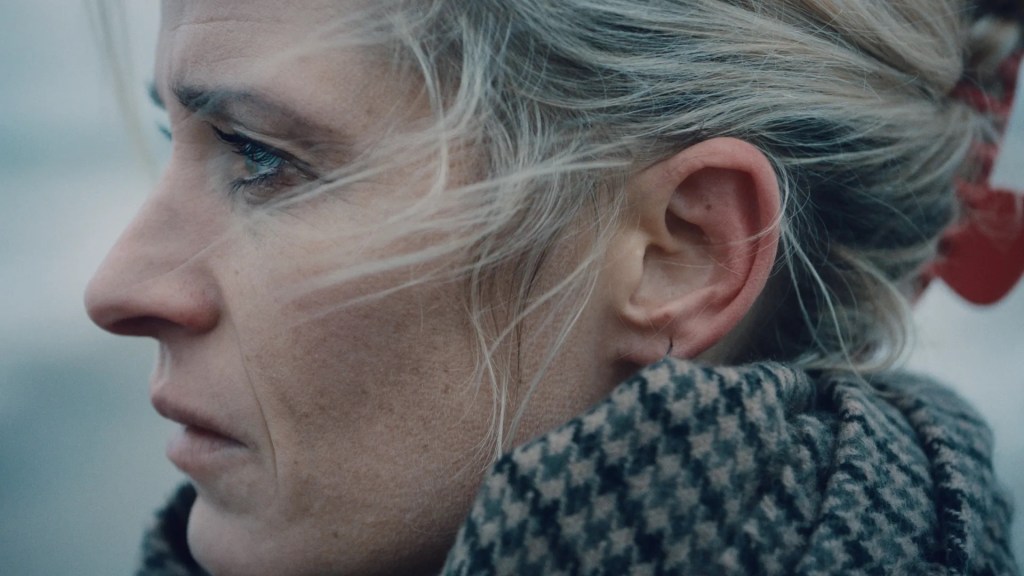
Fatal Crossing is not a show that screams. It whispers. Slowly, deliberately, until you realize it has trapped you. At first glance, it may look like just another Nordic noir: a journalist-turned-investigator, a trail of murdered girls, a powerful conspiracy. But if you surrender to its measured pace —and its deep humanity— it becomes clear that the series is not about discovering who did it, but about understanding how it was allowed to happen.
This is not American storytelling. There are no flashbulb twists, no spectacular resolutions, no charming lone wolf detectives saving the day. What Fatal Crossing offers is far more unsettling: the articulation of evil — how it forms, feeds, and grows through a network of complicity. A society that sees itself as modern, civilized, democratic, turns out to be the very soil in which silence, cowardice, and bureaucratic apathy allow evil to flourish.
The horror here is not only the murderer —his existence is almost expected— but the web that allowed him to operate undisturbed: the authorities who looked away, the colleagues who “had a feeling but didn’t want to get involved,” the systems that enabled and protected the predators.
Journalist Nora Sand —the protagonist created by Lone Theils in Fatal Crossing, the first in a series of at least five novels— is no archetypal hero. She is not morally untouchable. She doesn’t resolve the case from a position of superiority, but from pain, doubt, and exhaustion. And that is the brilliance of the show: there is no cheap redemption. There is shame. There is guilt. It confronts us with something deeper than crime —the feedback loop of evil, the way in which people, without committing atrocities themselves, nonetheless create the conditions in which those atrocities can thrive.
This is where Fatal Crossing touches something almost theological: collective guilt as a modern form of original sin. Not in a doctrinal sense, but as an anthropological truth. Evil is not born with the killer. It lies dormant in all of us. There is no pedophile network without lawyers, judges, businessmen, neighbors. The murderer may pull the trigger —but the world loads the gun.
The show doesn’t preach this, but it evokes it. The true machinery of evil is not built by monsters, but by ordinary people who look the other way. The problem is not always malice. Sometimes it is just fear. Or comfort. Or inertia. And that is perhaps the most terrifying truth: we are all entangled.
Which leads to an open question: does Lone Theils’s original novel carry this same complexity? Does the book version of Fatal Crossing bear this moral and metaphysical weight, or has the screen adaptation elevated the material? Is Nora Sand, across the full five-book saga, a vehicle for this kind of ethical meditation —or is that an interpretive gift from the showrunners?
Either way, Fatal Crossing lingers. Not because of its plot. But because it forces us to face the most disturbing of truths: that evil is not a deviation, but often a well-oiled system. And that its persistence relies less on villains than on the decent people who chose not to resist.
 Centeno's Lighthouse
Leave a comment