Israel Centeno
A menudo se ha querido reducir a Jesús a una construcción mítica, un símbolo más entre los tantos del imaginario religioso de la antigüedad. Algunos sectores de la academia contemporánea —especialmente desde enfoques progresistas o posmodernos— han intentado ubicarlo en la misma categoría que los héroes griegos o los dioses solares, como una figura derivada de tradiciones previas. Pero esta comparación resulta insostenible cuando se toma en serio la densidad narrativa, histórica y teológica que acompaña la figura de Jesús.
En primer lugar, su historia no se estructura como una tragedia griega, ni como un mito heroico. El relato de los Evangelios —aun con sus diferencias de estilo— tiene una coherencia que nace del entramado judío en el que se inscribe. Mateo, Marcos, Lucas y Juan escriben desde matrices culturales y teológicas profundamente hebreas. Incluso cuando Lucas, probablemente no judío, redacta su Evangelio, lo hace bajo la impronta de Pablo de Tarso, rabino, conocedor de la Ley y teólogo riguroso. El resultado es una narrativa entrelazada con las Escrituras, que respira profecía, genealogía, Ley, numerología y promesa.
Este entrelazamiento no es trivial. En una época donde la transmisión de textos era limitada, difícil y fragmentaria, construir un relato que articule el Génesis con Isaías, los Salmos con Daniel, y que haga de esa urdimbre un anuncio y cumplimiento en Jesús, no es obra de un solo autor ni de una escuela tardía. Es una arquitectura espiritual imposible de falsificar desde la invención. Implicaría un conocimiento exhaustivo de los textos hebreos, de las esperas mesiánicas, de las formas narrativas judías. E implicaría además haber previsto, con siglos de antelación, cada gesto, cada palabra, cada número. Porque los números, en los Evangelios, también hablan.
La numerología bíblica atraviesa los textos. El siete, cifra de la plenitud; el doce, figura del nuevo Israel; el tres, símbolo de confirmación. Pedro niega a Jesús tres veces, pero también tres veces es restaurado: “¿Me amas?”, le pregunta Jesús. Y tres veces lo llama a pastorear. No es reiteración por insistencia: es arquitectura de sentido. Como cuando se perdona “setenta veces siete”, como cuando el tercer día marca la plenitud del misterio pascual. Los Evangelios no solo narran: codifican una lógica interior, profundamente semítica, que articula el símbolo con la acción.
Decir que Jesús es un mito griego es ignorar que ningún otro personaje en la historia —ni Buda, ni Krishna, ni Hermes, ni Mitra— clamó lo que él clamó: ser el Logos eterno, el Hijo de Dios, el Alfa y el Omega, aquel por quien y para quien fue creado el universo. Ningún otro afirmó haber preexistido a la creación y permanecer más allá del tiempo. No es una figura cósmica más. Es el centro mismo del ser, de acuerdo con el testimonio que de sí mismo dejó. Eso no es compatible con las narrativas de divinidades naturales o de héroes apoteósicos.
A ello se suma el testimonio de quienes no eran cristianos. El historiador romano Tácito menciona a Cristo como el fundador de la secta que Nerón persigue. Plinio el Joven, en sus cartas al emperador, narra las prácticas de los cristianos que adoran a Cristo “como a un dios”. Josefo, en el Testimonium Flavianum, habla de Jesús como un hombre sabio, ejecutado bajo Poncio Pilato. Y aunque hay debate sobre la autenticidad de algunos pasajes, la referencia básica permanece. Pero quizá lo más llamativo es lo que dicen los enemigos de Jesús.
En el Talmud, texto central del judaísmo rabínico posterior al siglo I, hay varias menciones —indirectas y directas— a un personaje llamado Yeshu. No se trata de fuentes amistosas. Pero es precisamente allí donde radica su valor: no buscan glorificarlo, sino desacreditarlo. Y sin embargo, lo acusan de hacer milagros… por medio de la magia. Lo llaman hechicero, brujo, seductor de Israel. Lo cual, en lenguaje negativo, sigue siendo un reconocimiento de que tenía poder. No niegan los prodigios; niegan su fuente. Ese dato es crucial: confirma, desde la oposición, que Jesús era percibido como alguien con autoridad y capacidad para obrar signos.
Y luego está Pablo. El perseguidor. El fariseo que odiaba a los cristianos. Que no conoció a Jesús en vida, pero que tuvo un encuentro tan radical que transformó su vida y su teología. A él se le debe el primer credo cristiano, escrito en 1 Corintios 15, apenas veinte años después de la crucifixión, donde afirma que Cristo murió, fue sepultado, y resucitó al tercer día “según las Escrituras”. Pablo no escribe mitos; escribe con la urgencia del testigo.
No basta con intentar desfigurar al Jesús de la fe; ahora hay sectores de la academia que, en nombre del racionalismo progresista, pretenden extirpar también al Jesús de la historia. La estrategia es doble: por una parte, se reduce al Nazareno a un arquetipo narrativo intercambiable con héroes de otras culturas —un Prometeo reformado, un Buda itinerante, un Sócrates más emotivo—; por otra, se niega toda posibilidad de un núcleo factual que fundamente la proclamación más radical de la cristiandad: la Resurrección.
Esta negación sistemática, sin embargo, enfrenta un obstáculo serio: la evidencia mínima, pero poderosa, reconocida por historiadores de distintas corrientes —incluso escépticos—, que admite al menos tres hechos fundamentales:
- Jesús fue crucificado bajo Poncio Pilato.
- Su tumba fue hallada vacía por un grupo de mujeres discípulas.
- Un amplio número de sus seguidores, incluyendo a enemigos declarados como Pablo de Tarso, aseguraron haberlo visto resucitado y transformaron sus vidas en función de ese encuentro.
La academia crítica puede poner en duda la interpretación teológica de estos hechos —la Resurrección como acto divino—, pero no logra borrar el hecho de que el cristianismo comienza precisamente con esa proclamación. No fue una enseñanza moral, ni una teoría revolucionaria lo que provocó la expansión del cristianismo primitivo: fue el testimonio insistente de que Jesús, muerto y sepultado, había sido visto vivo, glorioso y presente.
El estudioso alemán Pinchas Lapide, judío no cristiano, llega a sostener que la única explicación plausible para la transformación de los apóstoles y el nacimiento de la Iglesia es que algo real les ocurrió. No fue ilusión colectiva, ni construcción simbólica tardía. Y William Lane Craig, Gary Habermas y otros historiadores especializados han recogido una vasta literatura crítica, escéptica e interconfesional que, aun sin aceptar la fe, reconoce la solidez de la tumba vacía como hecho histórico.
¿Por qué, entonces, esta necesidad de borrar al Resucitado? ¿Por qué ciertos académicos insisten en reducir el acontecimiento fundacional de la cristiandad a un símbolo colectivo, cuando el testimonio está anclado en tiempo, lugar, y testigos —muchos de ellos martirizados sin retractarse? Tal vez porque aceptar que la tumba estaba vacía abre una puerta incómoda. Porque si el cuerpo no estaba allí… ¿dónde estaba? ¿Quién lo movió? ¿Por qué nadie lo exhibió para acabar con la secta naciente?
Se ha señalado con razón que la Resurrección no es simplemente una doctrina; es un acontecimiento. Si no ocurrió, el cristianismo es un mito. Si ocurrió, cambia la historia. No hay término medio. Por eso no puede relegarse a fábula. Porque una fábula no hace que cientos de hombres y mujeres renuncien al poder, a la familia y a la vida misma con tal de proclamar que Aquel que vieron morir volvió a abrazarlos.
Y es precisamente esa radicalidad lo que incomoda: la tumba vacía como grieta en el materialismo, como interpelación a la soberbia del siglo. La Resurrección, no como consuelo piadoso, sino como hecho que altera las leyes del mundo. Una afirmación que no se puede cancelar sin reescribir también la historia del amor más escandaloso que haya existido.
Hay una afirmación que a menudo pasa desapercibida, incluso entre estudiosos del cristianismo primitivo: los Evangelios no son una ruptura con la tradición judía, sino su culminación y transfiguración. Lejos de ser productos de una helenización tardía, sus textos están impregnados del aliento y la lógica profunda de la Escritura hebrea. Aun en aquellos casos en que los destinatarios parecen ser públicos no judíos —como ocurre con el Evangelio de Lucas—, el andamiaje teológico, la simbología, la estructura narrativa y los referentes siguen siendo indisociablemente judíos.
El Evangelio de Mateo es quizás el ejemplo más evidente: está construido como una relectura mesiánica de la historia de Israel, con Jesús como el nuevo Moisés, el nuevo David, el Hijo que recapitula y consuma la fidelidad que Israel no pudo sostener por sí mismo. Cada frase, cada escena está anclada en la Ley y los Profetas. El texto está pensado como una exégesis viviente de la Escritura, una midrash cristológica.
Marcos, por su parte, aunque más sobrio, conserva la fuerza simbólica de los signos proféticos. La urgencia escatológica y el lenguaje apocalíptico remiten a la literatura intertestamentaria judía, a la espera de la restauración de Israel, al clamor del justo sufriente en el estilo de Isaías.
Lucas, muchas veces considerado más “griego”, es sin embargo inseparable de la figura de Pablo, el fariseo convertido, el doctor de la Ley, el intérprete más radical de la tradición judía en clave cristológica. El evangelio lucano y los Hechos de los Apóstoles no pueden comprenderse sin el pensamiento paulino como trasfondo. Y Pablo, pese a su apertura misionera, jamás dejó de considerarse un judío. “Hebreo de hebreos”, dirá él mismo. Su teología, su uso de las Escrituras, su visión del Mesías, todo es lectura interna de la historia de Israel a la luz de Cristo.
Y Juan, el más teológico de los cuatro, es quizá el más judío en su profundidad. Su prólogo —“En el principio era el Logos”— ha sido interpretado como influencia helénica. Pero es, en verdad, una reelaboración sublime del Bereshit del Génesis. El Logos no es un concepto griego importado, sino la Dabar, la Palabra viva que creó el mundo. Y todo el evangelio de Juan está estructurado como un relato de cumplimiento: los signos, las fiestas judías, el templo, la Torah misma, encuentran en Jesús su plenitud. Juan no rompe con la tradición: la lleva hasta el fondo.
Así, leer los Evangelios como textos judíos no es una concesión arqueológica, es una necesidad hermenéutica. Porque la figura de Jesús sólo se comprende en la continuidad —y el cumplimiento— del relato bíblico de Israel. No hay Evangelio sin Éxodo. No hay Cruz sin Cordero Pascual. No hay Encarnación sin promesa davídica. No hay Resurrección sin esperanza de restauración.
Los Evangelios, en suma, no son mitos helenísticos. Son la corona profética de un linaje literario, teológico e histórico que empieza en Abraham, pasa por Moisés y los profetas, y se revela en el Hijo. Son, en toda su forma y contenido, narrativas judías que anuncian la irrupción de lo eterno en la historia.
Fuentes utilizadas / Recomendadas para profundización
- N.T. Wright, The Resurrection of the Son of God
(Sobre la unicidad del mensaje pascual en el contexto del judaísmo del Segundo Templo) - Gary Habermas y Michael Licona, The Case for the Resurrection of Jesus
(Defensa académica de la historicidad de la resurrección con referencias a estudios escépticos) - Pinchas Lapide, The Resurrection of Jesus: A Jewish Perspective
(Reflexión de un erudito judío que considera históricamente plausible la Resurrección) - Jacob Neusner, Judaism and the Interpretation of Scripture
(Sobre midrash, numerología y estructuras narrativas judías) - Richard Bauckham, Jesus and the Eyewitnesses
(La validez de los Evangelios como testimonios de primera mano) - Margaret Barker, The Great High Priest: The Temple Roots of Christian Liturgy
(Relación entre el simbolismo del templo y la narrativa cristológica) - Michael Fishbane, Biblical Interpretation in Ancient Israel
(Sobre exégesis simbólica y estructuras hermenéuticas hebreas) - Edith Stein, La Ciencia de la Cruz
(Lectura mística y teológica de la pasión en clave carmelitana, profundamente enraizada en la tradición judía)
Israel Centeno
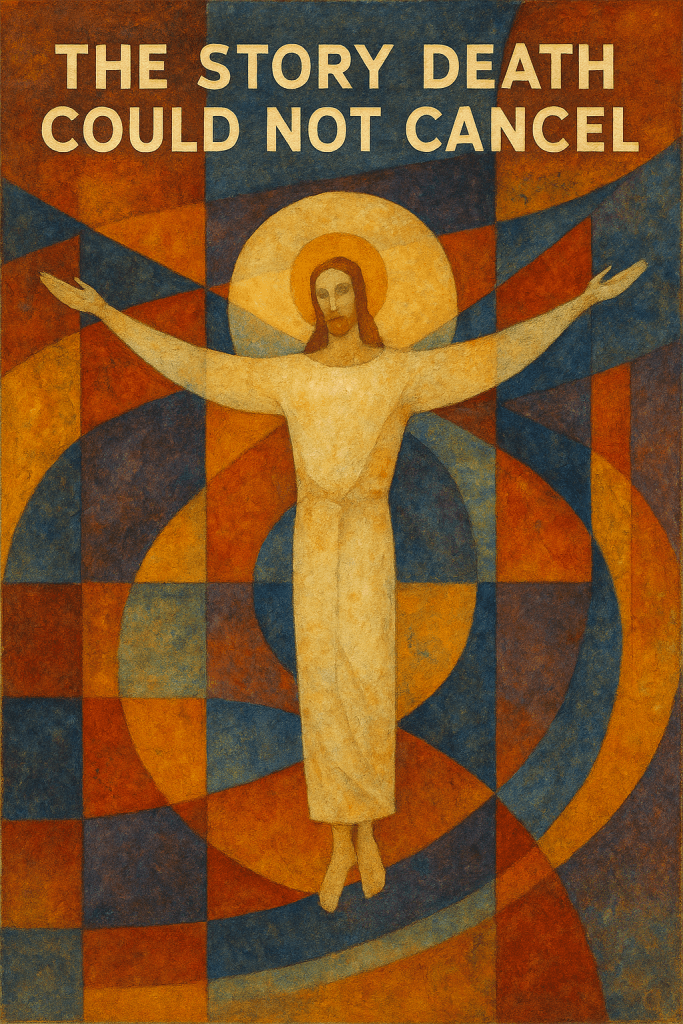
“The Story Death Could Not Cancel”
Jesus and the Impossibility of Myth
by Israel Centeno
Jesus has often been reduced to a mythical construct, just another symbol within the vast religious imagination of antiquity. Certain sectors of contemporary academia—especially from progressive or postmodern perspectives—have attempted to place him in the same category as Greek heroes or solar deities, as a figure derived from earlier traditions. But this comparison collapses when one takes seriously the narrative, historical, and theological density that surrounds the figure of Jesus.
First, his story does not unfold like a Greek tragedy or a heroic myth. The Gospel accounts—even with their stylistic differences—possess a coherence born from the Jewish matrix in which they are rooted. Matthew, Mark, Luke, and John write from profoundly Hebrew cultural and theological frameworks. Even when Luke, likely not Jewish, writes his Gospel, he does so under the imprint of Paul of Tarsus—a rabbi, expert in the Law, and rigorous theologian. The result is a narrative interwoven with Scripture, breathing prophecy, genealogy, Law, numerology, and promise.
This interweaving is not trivial. In an age when the transmission of texts was limited, difficult, and fragmented, constructing a narrative that connects Genesis to Isaiah, the Psalms to Daniel—and makes of that tapestry an announcement and fulfillment in Jesus—is not the work of a single author nor of a late editorial school. It is a spiritual architecture impossible to fabricate. It would require exhaustive knowledge of Hebrew texts, of messianic expectations, of Jewish narrative forms. And it would also require having foreseen, centuries in advance, each gesture, each word, each number. Because the numbers in the Gospels also speak.
Biblical numerology permeates the texts. Seven, the number of fullness; twelve, the figure of the new Israel; three, the symbol of confirmation. Peter denies Jesus three times, but is also restored three times: “Do you love me?” Jesus asks him. And three times, he is called to shepherd. It is not repetition for emphasis—it is architecture of meaning. Just as when one is called to forgive “seventy times seven,” or when the third day marks the fullness of the paschal mystery. The Gospels do not merely narrate: they encode an inner logic, deeply Semitic, that links symbol to action.
To say that Jesus is a Greek myth is to ignore the fact that no other figure in history—not Buddha, not Krishna, not Hermes, not Mithras—claimed what he claimed: to be the eternal Logos, the Son of God, the Alpha and the Omega, the one by whom and for whom the universe was created. No one else claimed to have pre-existed creation and to remain beyond time. He is not one more cosmic figure. He is the very center of being, according to his own testimony. That is incompatible with the narratives of natural divinities or apotheosized heroes.
To this is added the testimony of those who were not Christians. The Roman historian Tacitus refers to Christ as the founder of the sect persecuted by Nero. Pliny the Younger, in his letters to the emperor, describes Christian practices of worshipping Christ “as a god.” Josephus, in the Testimonium Flavianum, speaks of Jesus as a wise man, executed under Pontius Pilate. And although there is debate over the authenticity of some passages, the basic reference remains. But perhaps most striking is what Jesus’ enemies said about him.
In the Talmud, a central text of post-1st-century rabbinic Judaism, there are several indirect and direct references to a figure named Yeshu. These are not friendly sources. But that is precisely what gives them weight: they do not aim to glorify, but to discredit. And yet, they accuse him of performing miracles… through magic. They call him a sorcerer, a charlatan, a seducer of Israel. Which, in negative language, still acknowledges that he had power. They do not deny the wonders—only their source. That detail is crucial: it confirms, even from the opposition, that Jesus was perceived as someone with authority and the ability to perform signs.
And then there is Paul. The persecutor. The Pharisee who hated Christians. Who never knew Jesus in life, but who had such a radical encounter that it transformed his life and theology. To him we owe the first Christian creed, written in 1 Corinthians 15, barely twenty years after the crucifixion, where he affirms that Christ died, was buried, and rose on the third day “according to the Scriptures.” Paul does not write myths; he writes with the urgency of a witness.
Against the Cancellation of the Risen One
It is no longer enough to distort the Jesus of faith; now, certain sectors of academia, under the banner of progressive rationalism, seek to eliminate even the Jesus of history. The strategy is twofold: on one hand, the Nazarene is reduced to a narrative archetype interchangeable with heroes from other cultures—a reformed Prometheus, a wandering Buddha, a more emotive Socrates; on the other hand, any possibility of a factual core that could support the most radical proclamation of Christianity—the Resurrection—is denied.
This systematic denial, however, faces a serious obstacle: the minimal yet powerful evidence recognized by historians of various schools of thought—even skeptical ones—that admits at least three fundamental facts:
- Jesus was crucified under Pontius Pilate.
- His tomb was found empty by a group of female disciples.
- A large number of his followers, including declared enemies like Paul of Tarsus, claimed to have seen him resurrected and radically changed their lives because of that encounter.
Critical scholarship may question the theological interpretation of these events—the Resurrection as a divine act—but it cannot erase the fact that Christianity begins precisely with that proclamation. It was not a moral teaching, nor a revolutionary theory, that sparked the growth of early Christianity—it was the persistent testimony that Jesus, dead and buried, had been seen alive, glorious, and present.
The German scholar Pinchas Lapide, a non-Christian Jew, went so far as to argue that the only plausible explanation for the transformation of the apostles and the birth of the Church is that something real happened to them. It was not a collective hallucination, nor a late symbolic construction. And William Lane Craig, Gary Habermas, and other specialized historians have compiled a vast critical, skeptical, and interconfessional literature that—while not embracing the faith—nonetheless acknowledges the historical solidity of the empty tomb.
Why, then, this drive to erase the Risen One? Why do certain academics insist on reducing Christianity’s foundational event to a collective symbol, when the testimony is rooted in time, place, and witnesses—many of whom were martyred without ever recanting? Perhaps because accepting that the tomb was empty opens an uncomfortable door. Because if the body wasn’t there… where was it? Who moved it? Why did no one produce it to discredit the fledgling sect?
It has rightly been said that the Resurrection is not merely a doctrine; it is an event. If it did not happen, Christianity is a myth. If it did, it changes history. There is no middle ground. That is why it cannot be dismissed as a fable. Because a fable does not cause hundreds of men and women to renounce power, family, and life itself to proclaim that the One they saw die had returned to embrace them.
And it is precisely that radical nature that unsettles: the empty tomb as a crack in materialism, a challenge to the arrogance of the age. The Resurrection—not as pious consolation, but as a fact that alters the laws of the world. A claim that cannot be canceled without also rewriting the history of the most scandalous love the world has ever known.
The Gospel Narrative as the Heart of Messianic Judaism
by Israel Centeno
There is a claim that often goes unnoticed, even among scholars of early Christianity: the Gospels are not a rupture with Jewish tradition, but its culmination and transfiguration. Far from being products of late Hellenization, their texts are steeped in the breath and deep logic of Hebrew Scripture. Even in those cases where the intended audience seems to be non-Jewish—such as in the Gospel of Luke—the theological framework, the symbolism, the narrative structure, and the references remain inseparably Jewish.
The Gospel of Matthew is perhaps the clearest example: it is constructed as a messianic rereading of Israel’s history, with Jesus as the new Moses, the new David, the Son who recapitulates and fulfills the faithfulness Israel could not sustain on its own. Every phrase, every scene is anchored in the Law and the Prophets. The text is conceived as a living exegesis of Scripture—a Christological midrash.
Mark, for his part, though more concise, retains the symbolic force of prophetic signs. The eschatological urgency and apocalyptic language point back to Jewish intertestamental literature, to the longing for Israel’s restoration, to the cry of the suffering righteous one in the style of Isaiah.
Luke, often considered the most “Greek,” is nonetheless inseparable from the figure of Paul—the converted Pharisee, the doctor of the Law, the most radical interpreter of Jewish tradition through a Christological lens. The Lukan Gospel and the Acts of the Apostles cannot be understood apart from Paul’s thought. And Paul, despite his missionary openness, never ceased to consider himself a Jew. “A Hebrew of Hebrews,” as he says himself. His theology, his use of Scripture, his vision of the Messiah—all of it is an internal reading of Israel’s story in the light of Christ.
And John, the most theological of the four, may be the most deeply Jewish. His prologue—“In the beginning was the Logos”—has often been interpreted as Hellenistic in influence. But in truth, it is a sublime reworking of the Bereshit of Genesis. The Logos is not a borrowed Greek concept, but the Dabar, the living Word that created the world. The entire Gospel of John is structured as a narrative of fulfillment: the signs, the Jewish feasts, the Temple, the Torah itself—all find their fullness in Jesus. John does not break with tradition; he brings it to its depths.
Thus, to read the Gospels as Jewish texts is not an archaeological concession, but a hermeneutic necessity. For the figure of Jesus can only be understood within the continuity—and fulfillment—of the biblical story of Israel. There is no Gospel without Exodus. No Cross without the Paschal Lamb. No Incarnation without the Davidic promise. No Resurrection without the hope of restoration.
In sum, the Gospels are not Hellenistic myths. They are the prophetic crown of a literary, theological, and historical lineage that begins with Abraham, passes through Moses and the prophets, and is revealed in the Son. In both form and content, they are Jewish narratives proclaiming the eruption of the eternal into history.
Sources Used / Recommended for Further Study
- N.T. Wright, The Resurrection of the Son of God
(On the uniqueness of the Easter message within the context of Second Temple Judaism) - Gary Habermas and Michael Licona, The Case for the Resurrection of Jesus
(A scholarly defense of the historicity of the Resurrection, including references to skeptical studies) - Pinchas Lapide, The Resurrection of Jesus: A Jewish Perspective
(Reflections by a Jewish scholar who considers the Resurrection historically plausible) - Jacob Neusner, Judaism and the Interpretation of Scripture
(On midrash, numerology, and Jewish narrative structures) - Richard Bauckham, Jesus and the Eyewitnesses
(On the validity of the Gospels as firsthand testimonies) - Margaret Barker, The Great High Priest: The Temple Roots of Christian Liturgy
(On the relationship between temple symbolism and the Christological narrative) - Michael Fishbane, Biblical Interpretation in Ancient Israel
(On symbolic exegesis and Hebrew hermeneutical structures) - Edith Stein, The Science of the Cross
(A mystical and theological reading of the Passion in Carmelite key, deeply rooted in the Jewish tradition)
 Centeno's Lighthouse
Leave a comment