Primera oración
“A los que Dios conoció de antemano, también los predestinó a ser conformes a la imagen de su Hijo… Y a los que predestinó, también los llamó; a los que llamó, también los justificó; y a los que justificó, también los glorificó. ¿Qué diremos después de esto? Si Dios está con nosotros, ¿quién contra nosotros?… ¿Quién podrá separarme del amor de Cristo?”
Así se revela el misterio de la predestinación y de la elección divina a los ojos del Apóstol. “A los que conoció de antemano”. ¿No estamos nosotros entre ese número? ¿No puede Dios decirle a nuestra alma lo que dijo una vez por boca del profeta: “Pasé junto a ti y te vi. Vi que había llegado la hora de ser amada. Extendí mi manto sobre ti. Te juré protegerte, hice alianza contigo, y tú fuiste mía”?
Sí, por el bautismo hemos llegado a ser suyos. Esa es la llamada de la que habla Pablo: el sello de la Trinidad impreso en nosotros. Con san Pedro podemos decir que hemos sido hechos “partícipes de la naturaleza divina”, que hemos recibido “un principio de su misma existencia”.
Él nos justificó por medio de los sacramentos, con esos toques directos de gracia que alcanzan las profundidades del alma; también por la fe, según la medida en que nos unimos a la redención de Cristo.
Y finalmente quiere glorificarnos. Por eso, dice Pablo, “nos ha hecho dignos de compartir la herencia de los santos en la luz”. Pero esa gloria será en la medida en que nos hayamos conformado a la imagen de su Hijo.
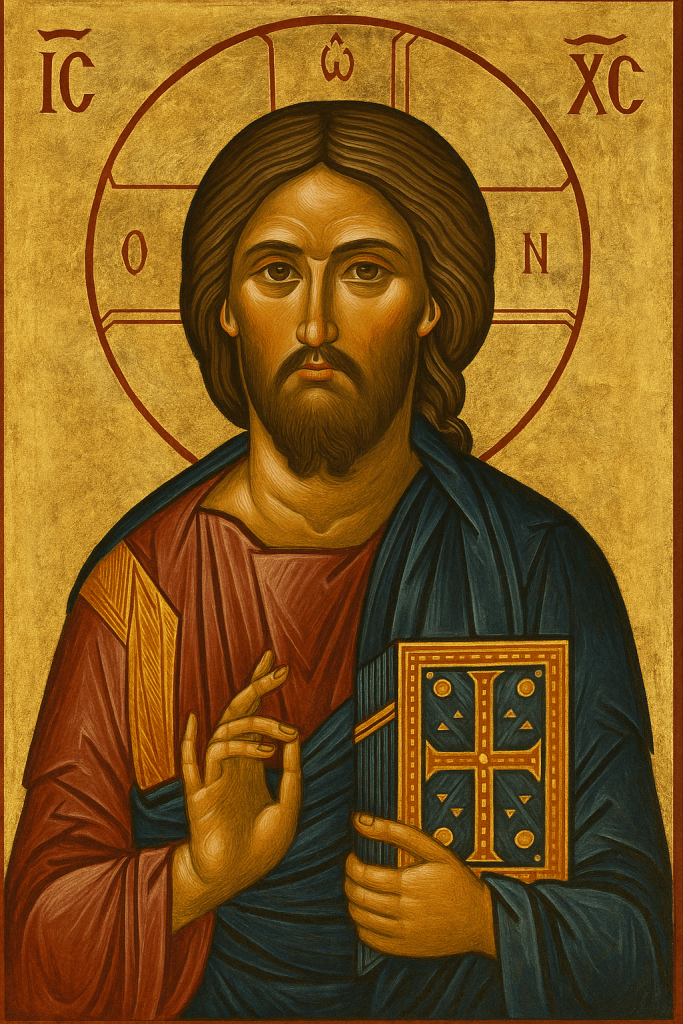
Contemplemos, pues, esa Imagen adorada. Permanezcamos bajo su resplandor, dejemos que ella se imprima en nosotros. Acerquémonos a todo con la disposición interior de nuestro Maestro. Entonces realizaremos el gran designio por el cual Dios ha querido “recapitular todas las cosas en Cristo.”
Segunda oración
“Todo lo considero pérdida a causa del incomparable conocimiento de Cristo Jesús, mi Señor. Por él lo perdí todo y lo tengo por basura con tal de ganar a Cristo… Lo que quiero es conocerlo a él, experimentar la fuerza de su resurrección, participar en sus sufrimientos, configurarme con su muerte… Corro hacia la meta, hacia el premio al que Dios me llama desde lo alto en Cristo Jesús.”
Ese es el deseo de Pablo: identificarse totalmente con Cristo, poder decir: “Mihi vivere Christus est” – “Cristo es mi vida.” Toda la intensidad de su alma se desborda en esas líneas.
Y este retiro tiene justamente ese fin: hacernos semejantes a nuestro Maestro, hasta poder repetir con él: “Ya no vivo yo, es Cristo quien vive en mí. Y la vida que ahora vivo en este cuerpo de muerte, la vivo en la fe en el Hijo de Dios, que me amó y se entregó por mí.”
Desde su entrada en el mundo, Cristo declara: “Ya no te complaces en sacrificios ni holocaustos; por eso me diste un cuerpo, y aquí estoy, oh Dios, para hacer tu voluntad.” Esa voluntad fue su alimento cotidiano durante treinta y tres años, hasta poder decir al entregar su alma al Padre: “Todo está cumplido… yo te he glorificado en la tierra.”
Su alimento fue siempre cumplir la voluntad del que lo envió. Por eso podía afirmar: “No estoy nunca solo; el que me envió está siempre conmigo, porque hago siempre lo que le agrada.”
También nosotros hemos de comer con amor este pan de la voluntad de Dios. Si a veces esa voluntad resulta más dura y crucificante, podremos decir como nuestro Señor: “Padre, si es posible, aparta de mí este cáliz”; pero añadiremos de inmediato: “No se haga mi voluntad, sino la tuya.”
Y con serenidad y fortaleza, junto al Crucificado, subiremos nuestro calvario cantando en lo secreto del corazón un himno de acción de gracias al Padre. Porque quienes caminan por esta vía de dolores son precisamente aquellos a quienes Dios conoció de antemano y predestinó a ser conformes a la imagen de su Hijo amado, el Crucificado por amor.
Señor Jesús,
hazme conformar mi vida a la tuya.
Que tu voluntad sea mi alimento,
tu cruz mi escuela,
tu amor mi fuerza.
Concédeme vivir cada instante unido a Ti,
para que mi chispa de tiempo en la tierra
sea ya participación de tu eternidad.
Amén.
Meditate with Elizabeth of the Trinity – Day 8
First Prayer
“Those whom God foreknew He also predestined to be conformed to the image of His Son… Those He predestined, He also called; those He called, He also justified; and those He justified, He also glorified. What then shall we say after this? If God is for us, who can be against us?… Who shall separate me from the love of Christ?”
Thus the mystery of predestination and divine election appeared to the Apostle’s enlightened gaze. “Those whom He foreknew.” Are we not counted among them? Cannot God say to our soul what He once said through His prophet: “I passed by you and saw you. I saw that the time had come for you to be loved. I spread my garment over you. I swore to protect you, made a covenant with you, and you became mine.”
Yes, we have become His through baptism. That is the “calling” of which Paul speaks: the seal of the Holy Trinity impressed upon us. With St. Peter we may say that we have been made “partakers of the divine nature”, that we have received “a beginning of His very existence.”
He has justified us through the sacraments, through His direct touches of grace that reach into the depths of the soul; justified us also through faith, in proportion to our adherence to the redemption won by Christ.
And finally, He desires to glorify us. As St. Paul says, “He has made us worthy to share in the inheritance of the saints in light.” Yet we will be glorified only in the measure that we have been conformed to the image of His Son.
Let us then contemplate this adored Image. Let us remain beneath its radiance, allowing it to be imprinted upon us. Let us approach everything with the same interior disposition as our Master. Thus we will fulfill the great design by which God has “resolved in Himself to restore all things in Christ.”
Second Prayer
“I count everything as loss because of the surpassing worth of knowing Christ Jesus my Lord. For His sake I have suffered the loss of all things and count them as refuse, in order that I may gain Christ… that I may know Him and the power of His resurrection, and may share His sufferings, becoming like Him in His death… I press on toward the goal for the prize of the upward call of God in Christ Jesus.”
This is Paul’s desire: to be utterly identified with Christ, to be able to say: “Mihi vivere Christus est” – “Christ is my life.” The whole intensity of his soul pours out in these words.
And this retreat has no other aim than to make us more like our adored Master, until we too may say: “I live no longer I, but Christ lives in me. And the life I now live in this body of death, I live by faith in the Son of God, who loved me and gave Himself up for me.”
From the very moment He entered the world, Christ declared: “You no longer delight in holocausts or offerings; so I have taken a body, and here I am, O God, to do your will.” That will was His daily bread for thirty-three years, until, handing over His soul to the Father, He could say: “All is accomplished… I have glorified You on earth.”
His food was always to do the will of Him who sent Him. Thus He could also affirm: “I am never alone; He who sent Me is always with Me, because I always do what pleases Him.”
So let us lovingly eat this bread of God’s will. And if at times His will is harder, more crucifying, we may echo our Lord: “Father, if it is possible, let this cup pass from me.” Yet we will add at once: “Not as I will, but as You will.”
Then, with serenity and strength, together with the Crucified, we too will climb our calvary, singing in the secret of our hearts a hymn of thanksgiving to the Father. For those who walk this way of sorrows are precisely those whom He foreknew and predestined to be conformed to the image of His beloved Son, the One crucified by love.
Lord Jesus,
let my life be conformed to Yours.
May Your will be my daily bread,
Your cross my school,
Your love my strength.
Grant that I may live each moment united to You,
so that my brief spark of time on earth
may already share in Your eternity.
Amen.
 Centeno's Lighthouse
Leave a comment