Bilingüe
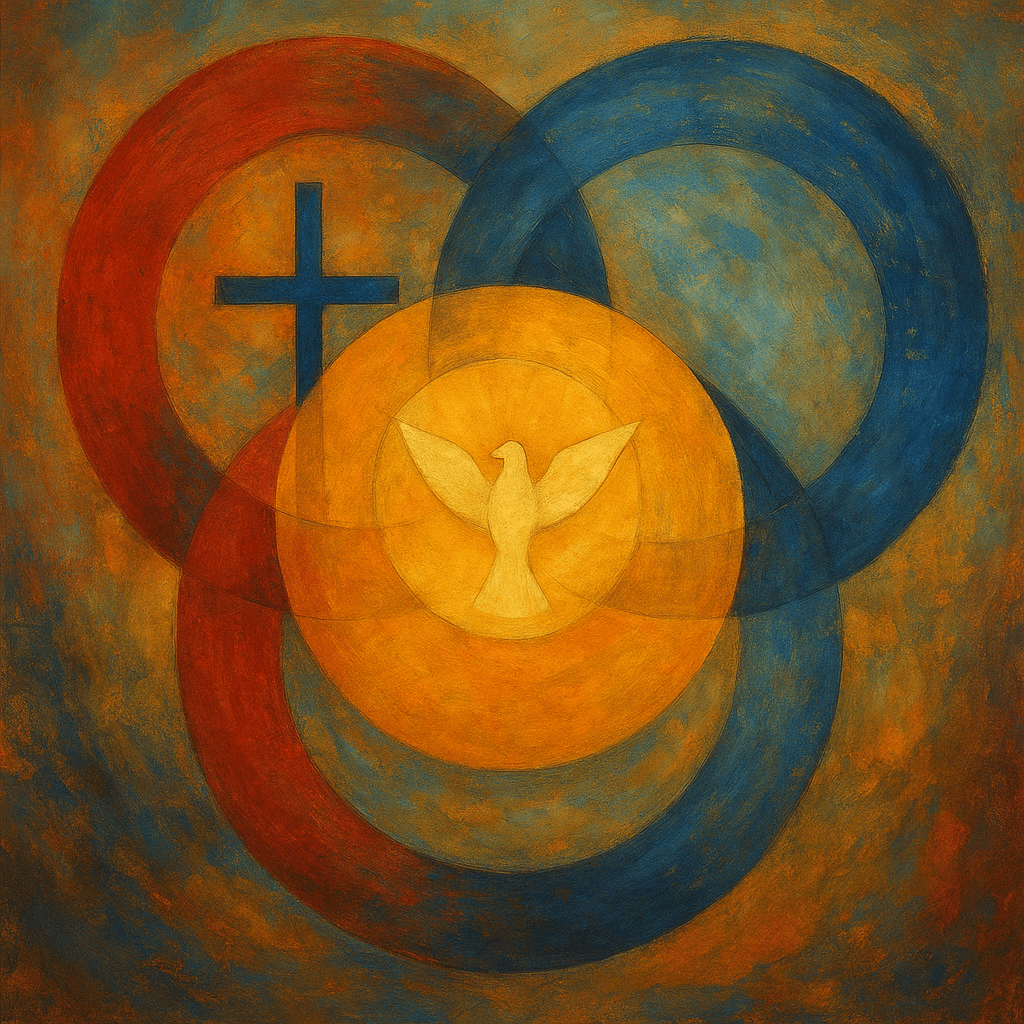
🇪🇸 Tercer Día — El Reposo del Abismo
“Hemos sido predestinados, según el designio de Aquel que realiza todas las cosas conforme al consejo de su voluntad, para ser alabanza de su gloria.”
— Efesios 1, 11–12
- Es San Pablo quien nos anuncia esta elección divina — San Pablo, que penetró tan profundamente el “misterio escondido desde la eternidad en el corazón de Dios.”
Luego ilumina esta vocación a la que hemos sido llamados:
“Dios nos eligió en Él antes de la creación del mundo, para que fuéramos santos e inmaculados en su presencia, en el amor.”
Si comparo estas dos explicaciones del plan divino, eterno e inmutable, concluyo que, para cumplir dignamente mi obra de Laudem Gloriae, debo permanecer “en la presencia de Dios” en todo momento.
Y no solo eso: el Apóstol añade in caritate, “en el amor”, es decir, en Dios mismo, porque Deus caritas est. Es el contacto con el Ser divino lo que hace al alma “santa e inmaculada” ante sus ojos.
- Relaciono todo esto con la hermosa virtud de la simplicidad, de la cual un autor piadoso escribió:
“Da al alma el reposo del abismo.”
Es decir, el descanso en Dios, el Abismo insondable — preludio y eco del descanso eterno del que habla San Pablo:
“Los que hemos creído entraremos en ese reposo.”
Los bienaventurados poseen este reposo del abismo porque contemplan a Dios en la simplicidad de su esencia.
“Le conocen —dice nuevamente San Pablo— como son conocidos por Él”,
es decir, por una visión intuitiva, una mirada simple.
Y por eso, continúa el gran Apóstol, “son transformados de claridad en claridad a su misma imagen, por la acción de su Espíritu.”
Entonces se convierten en una alabanza de gloria incesante del Ser divino, que contempla en ellos su propio esplendor.
- Me parece que daríamos inmensa alegría al Corazón de Dios si perfeccionáramos ya, en el cielo de nuestra alma, esta ocupación de los bienaventurados: adherirnos a Él mediante una contemplación simple, semejante a la del hombre en estado de inocencia, antes del pecado original, cuando Dios lo creó “a su imagen y semejanza.”
Ese fue el sueño del Creador: poder contemplarse a sí mismo en su criatura, ver reflejadas en ella todas sus perfecciones y su belleza, como en un cristal puro y sin mancha.
¿No es eso, de algún modo, una prolongación de su propia gloria?
El alma, mediante la simplicidad de la mirada que fija en su divino Objeto, se aparta de todo lo que la rodea —y, sobre todo, de sí misma. Entonces resplandece con ese “conocimiento de la gloria de Dios” del que habla el Apóstol, porque permite que el Ser divino se refleje en ella, y todos sus atributos se le comunican.
En verdad, esa alma es una alabanza de gloria de todos sus dones; a través de todo, incluso de los actos más ordinarios, canta el canticum magnum, el canticum novum,
y ese cántico conmueve las profundidades de Dios.
“Tu luz se alzará en las tinieblas,
y tu oscuridad será como el mediodía.
El Señor te guiará continuamente,
saciará tu alma en la sequía
y fortalecerá tus huesos.
Serás como un jardín bien regado,
como una fuente cuyas aguas no faltan.
Y te haré cabalgar sobre las alturas de la tierra.”
— Isaías 58, 10–11.14
“El Reposo del Abismo”
Esta meditación de Santa Isabel de la Trinidad se adentra en uno de los ejes más profundos de su mística: la vocación del alma a ser alabanza de gloria. En ella, el alma ya no busca dones ni consuelos; busca al Dador mismo. La contemplación se vuelve su respiración interior.
El alma sencilla, unificada, deja de dispersarse entre deseos, pensamientos o emociones; se convierte en un espejo claro donde Dios puede reflejarse sin distorsión. Para Isabel, la simplicidad no es pasividad, sino una forma de heroísmo espiritual: el reposo absoluto en Dios, el “sabbat eterno”, prefigurado ya aquí, en la tierra.
El “reposo del abismo” no es quietud sin vida, sino el movimiento perfecto del amor en armonía con el Amor. El alma deja de mirar hacia fuera y se vuelve hacia el centro donde habita Dios. Desde ahí, toda acción —incluso la más cotidiana— se vuelve canto, reflejo, canticum novum.
La imagen final, tomada de Isaías, encierra el misterio de la vida espiritual: la luz que nace de la oscuridad, el alma que se vuelve jardín regado, fuente que no se agota. Esa es la obra del Espíritu: transformar la aridez en canto, y el silencio en adoración.
🇬🇧 Third Day — The Rest of the Abyss
“We have been predestined by the decree of Him who works all things according to the counsel of His will, so that we may be the praise of His glory.”
— Ephesians 1:11-12
- It is Saint Paul who announces to us this divine election — Saint Paul who penetrated so deeply the “mystery hidden from eternity in the heart of God.” Then he sheds light on this vocation to which we are called:
“God,” he says, “chose us in Him before the creation of the world, that we might be holy and immaculate in His presence, in love.”
If I compare these two explanations of the divine and eternal, unchanging plan, I conclude that to fulfill worthily my work of Laudem Gloriae, I must remain “in the presence of God” through everything. And that is not all: the Apostle adds in caritate — in love — that is, in God Himself, Deus caritas est. It is contact with the divine Being that makes the soul “holy and immaculate” in His eyes.
- I relate all this to the beautiful virtue of simplicity, of which a pious author has written:
“It gives the soul the repose of the abyss.”
That is to say, rest in God — the unfathomable Abyss — a prelude and echo of the eternal Sabbath of which Saint Paul speaks:
“We then who have believed shall enter into this rest.”
The glorified possess this repose of the abyss because they contemplate God in the simplicity of His essence. “They know Him,” Saint Paul says again, “as they are known by Him.”
That is, through intuitive vision — a simple gaze.
And that is why, the great Apostle continues, “they are transformed from brightness to brightness into His very image by the power of His Spirit.”
Then they become an unceasing praise of glory of the divine Being, who contemplates in them His own splendor.
- It seems to me that it would give immense joy to the Heart of God if we would begin even now, in the heaven of our souls, this occupation of the blessed — if we would cling to Him through this simple contemplation that resembles that of man in the state of innocence before original sin, when God created him “in His image and likeness.”
Such was the Creator’s dream: to be able to contemplate Himself in His creature, to see reflected there all His perfections and beauty, as through a pure and flawless crystal.
Is that not, in a sense, an extension of His own glory?
The soul, by the simplicity of the gaze it fixes on its divine Object, finds itself set apart from all that surrounds it — and, above all, set apart from itself. Then it shines with that “knowledge of the glory of God” of which the Apostle speaks, because it allows the divine Being to be reflected within it, and all His attributes are communicated to it.
Truly, such a soul is the praise of glory of all His gifts; through everything — even the most commonplace acts — it sings the canticum magnum, the canticum novum; and this canticle reaches to the very depths of God.
“Your light shall rise in the darkness,
and your gloom shall be as the noonday.
The Lord will guide you continually,
and will satisfy your soul in drought,
and make strong your bones;
you shall be like a watered garden,
like a spring of water whose waters never fail.
And I will lift you above the high places of the earth.”
— Isaiah 58:10-11, 14
Would you like me to format it next as a bilingual blog post layout (with flag icons, parallel text, and a short contemplative introduction)? It would align perfectly with the previous entries in your Meditaciones de Isabel de la Trinidad.
Dijiste:
The🇬🇧 Spiritual Curatorship — Third Day: “The Rest of the Abyss”
This meditation by Saint Elizabeth of the Trinity unfolds one of the deepest dimensions of her mysticism: the soul’s vocation to become a praise of glory. Here, the soul no longer seeks gifts or consolations — it seeks the Giver Himself. Contemplation becomes its inner breath.
The simple, unified soul no longer scatters itself among desires, thoughts, or emotions; it becomes a clear mirror in which God can reflect Himself without distortion. For Elizabeth, simplicity is not passivity but a form of spiritual heroism — the absolute rest in God, the “eternal Sabbath,” already anticipated here on earth.
The “rest of the abyss” is not lifeless stillness, but the perfect motion of love in harmony with Love itself. The soul ceases to look outward and turns toward the center where God dwells. From there, every action — even the most ordinary — becomes a hymn, a reflection, a canticum novum.
The final image, drawn from Isaiah, contains the secret of spiritual life: light rising from darkness, the soul becoming a watered garden, a fountain whose waters never fail. This is the work of the Spirit — to turn dryness into song and silence into adoration.ights of the earth.”
 Centeno's Lighthouse
Leave a comment