Israel Centeno
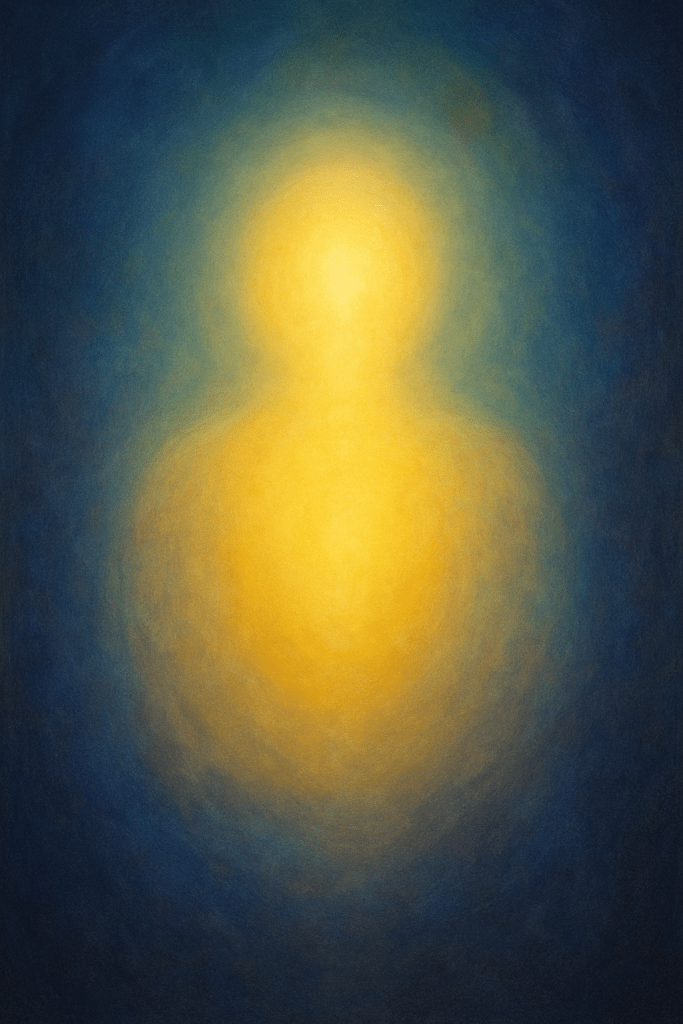
“Solo el alma en silencio puede oír a Dios.” — Edith Stein
La modernidad y la posmodernidad, cada una a su modo, creyeron poder alcanzar el sentido último de la realidad. La primera confió en la razón como herramienta universal; la segunda, en la disolución del sentido como forma de libertad. Ambas, sin embargo, se detienen ante el mismo muro: el misterio. El pensamiento moderno, agotado en su racionalismo, y el posmoderno, disuelto en su ironía, terminan reconociendo que no pueden acceder, por experiencia propia, a aquello que trasciende las categorías de espacio, tiempo y finitud.
Este límite no es fracaso: es frontera. Allí donde la palabra ya no basta, donde el lenguaje se quiebra y el pensamiento no alcanza, comienza el silencio que revela. En ese borde, el alma comprende que solo puede acceder a lo eterno a través de la gracia. Y la gracia no es conquista: es don. Edith Stein lo entendió cuando llevó la fenomenología hasta el umbral del ser. Comprendió que, por más refinado que sea el método, la conciencia no puede franquear por sí misma la distancia que la separa del Acto Puro. Solo puede disponerse, prepararse, vaciarse para recibir.
Llegamos a un tiempo donde toda herramienta humana —la razón, la ciencia, la técnica— ha sido puesta al servicio de descifrar lo indecible. Pero, a medida que se multiplican los logros del conocimiento, crece la evidencia de que el alma sigue sedienta. Y el reto, hoy, no es ya comprender, sino abrirse. El pensamiento que vendrá no puede limitarse a rehacer los esquemas de la escolástica, ni quedarse en el nihilismo posmoderno. Debe ir más allá de ambos: retornar a la tradición contemplativa, al camino interior que recorrieron Teresa de Jesús, Juan de la Cruz y los grandes humildes de la fe.
La fenomenología nos ofrece un método para eso: el método del horizonte. Todo fenómeno se da dentro de un campo de sentido que siempre apunta más allá de sí mismo. El alma, cuando se abre a ese horizonte, descubre que lo que aparece no se agota en lo visible, sino que remite a lo invisible. Dios no es fenómeno; es el fundamento del aparecer. Y el diálogo entre el alma y el ser —ese diálogo que Husserl inició y Stein llevó al Carmelo— continúa en nosotros cada vez que callamos y dejamos que el ser se manifieste.
Wittgenstein, al final del Tractatus, no cerró el camino, sino que lo abrió:
“De lo que no se puede hablar, hay que callar.”
Los ateos y racionalistas tomaron esa frase como una negación del misterio. Pensaron que lo que no puede nombrarse no existe. Pero Wittgenstein señalaba, precisamente, lo contrario: que el lenguaje se detiene, no porque el ser desaparezca, sino porque lo desborda. El silencio que sigue a la última palabra no es vacío: es plenitud. Es el umbral de lo indecible.
La mística lo entendió siglos antes. Santa Teresa, en su lectura divina, enseña:
“Lee y calla.”
Porque el alma, después de leer y pensar, debe guardar silencio para que la Palabra hable desde dentro. El silencio contemplativo no es mutismo, sino disposición; es el espacio donde el Verbo puede encarnarse. Y ese mismo silencio, interpretado por la fenomenología, es la epoché última: la suspensión de todo juicio para que la verdad se dé sin mediación.
Los verdaderos conocedores de Dios no fueron filósofos, sino humildes. Francisco de Asís, Catalina de Siena, el Padre Pío, Conchita Cabrera de Armida… no necesitaron teorías para encontrarse con Él. La razón construye torres; la humildad abre cielos. El conocimiento humano busca controlar; la sabiduría divina se recibe. Por eso el Evangelio dice:
“Quien se ensalza será humillado, y quien se humilla será ensalzado.”
El alma que se despoja, que se hace pobre de espíritu, se vuelve transparente a la luz de Dios.
La pobreza de espíritu no es ignorancia ni renuncia al pensamiento. Es liberación del ego cognitivo, el acto de descender de la soberbia de creer que el cerebro humano —encerrado en tres dimensiones, o cuatro si contamos el tiempo— puede comprender el misterio total del universo. Es aceptar que toda sabiduría verdadera comienza donde la mente se rinde. Solo el alma vacía puede ser llena de Dios.
La posmodernidad confundió el vacío con la nada, y el silencio con la ausencia. Pero ese mismo vacío, cuando se habita desde la fe, se convierte en morada del Ser. Allí, el alma reconoce que no es ella quien llega a Dios, sino Dios quien la toca. Y ese toque no depende del mérito, sino de la gracia. Es Él quien decide cuándo se concede la unión, cuándo se bautiza con fuego, cuándo el corazón humano y el corazón divino laten en un solo compás. Hasta entonces, nuestra tarea es callar, contemplar y dejar que el Amor hable.
El límite del pensamiento no es su fin, sino su cumplimiento. Allí donde la palabra se agota, comienza la adoración. El alma descansa en la Luz.
🇬🇧 Silence, Language, and Mystery
“Only the soul in silence can hear God.” — Edith Stein
Modernity and postmodernity, each in its own way, believed they could reach the ultimate meaning of reality. The first trusted reason as a universal tool; the second, the dissolution of meaning as freedom. Both, however, stop before the same wall: the mystery. Modern thought, exhausted by rationalism, and postmodern thought, dissolved in irony, both end up admitting that they cannot, by their own experience, reach that which transcends space, time, and finitude.
This limit is not failure; it is a threshold. Where words no longer suffice, where language breaks and thought cannot reach, silence begins—the silence that reveals. At that edge, the soul realizes it can only approach the eternal through grace. And grace is not conquest—it is gift. Edith Stein understood this when she carried phenomenology to the threshold of being. She saw that, no matter how refined the method, consciousness cannot, by itself, cross the distance that separates it from the Pure Act. It can only prepare, empty, and open itself to receive.
We have arrived at an age where every human tool—reason, science, technology—has been used to decipher the unsayable. Yet as knowledge multiplies, the soul remains thirsty. The challenge today is not to understand, but to open. The thought to come cannot merely rework scholastic frameworks or rest in postmodern nihilism. It must go beyond both: return to the contemplative tradition, the interior path once walked by Teresa of Ávila, John of the Cross, and the great humble ones of faith.
Phenomenology offers a way: the method of the horizon. Every phenomenon appears within a field of meaning that always points beyond itself. When the soul opens to that horizon, it discovers that what appears does not end in what is visible, but refers to what is invisible. God is not a phenomenon; He is the foundation of appearing. The dialogue between soul and being—the dialogue Husserl began and Stein carried into Carmel—continues in us each time we fall silent and let being manifest itself.
At the end of the Tractatus, Wittgenstein did not close the path; he opened it:
“What we cannot speak about, we must pass over in silence.”
Atheists and rationalists took that as a denial of mystery. They thought that what cannot be named does not exist. But Wittgenstein meant the opposite: language stops not because being vanishes, but because it overflows. The silence that follows the last word is not emptiness; it is fullness—the threshold of the unsayable.
The mystics understood this centuries earlier. Teresa of Ávila, in her lectio divina, teaches:
“Read, and be silent.”
Because the soul, after reading and thinking, must fall silent so that the Word may speak from within. Contemplative silence is not muteness; it is readiness—the space where the Word can take flesh. And this same silence, interpreted phenomenologically, is the ultimate epoché: the suspension of all judgment so that truth may reveal itself directly.
The true knowers of God were not philosophers but the humble: Francis of Assisi, Catherine of Siena, Padre Pio, Conchita Cabrera de Armida… they needed no theories to find Him. Reason builds towers; humility opens heavens. Human knowledge seeks to control; divine wisdom is received. That is why the Gospel says:
“Whoever exalts himself will be humbled, and whoever humbles himself will be exalted.”
The soul that strips itself bare, that becomes poor in spirit, becomes transparent to the light of God.
Poverty of spirit is not ignorance or rejection of thought. It is the liberation of the cognitive ego—the act of descending from the arrogance of believing that the human brain, bound to three dimensions (four, if we count time), can comprehend the full mystery of the universe. It is accepting that true wisdom begins where the mind surrenders. Only the empty soul can be filled with God.
Postmodernity confused emptiness with nothingness, and silence with absence. Yet that same emptiness, when inhabited by faith, becomes the dwelling of Being. There the soul realizes that it does not reach God; God reaches it. And that touch depends not on merit but on grace. It is He who decides when union is granted, when the heart is baptized with fire, when the human and divine hearts beat as one. Until then, our task is to be silent, to contemplate, and to let Love speak.
The limit of thought is not its end but its fulfillment. Where words fall silent, adoration begins. The soul rests in the Light.
 Centeno's Lighthouse
Leave a comment