One of the few things that can be said with any certainty in our time is that politics has ceased to be about governance and become a theater of projection. The right and the left, in their current forms, no longer represent coherent ideologies; they function instead as mirrors, each defined by its hatred of the other. What we are witnessing is not a battle of ideas but a battle of reflexes. And as Carl Jung noted, the shadow we refuse to acknowledge in ourselves will inevitably appear in the face of our enemy.
But this is not new. This is political romanticism, reincarnated.
In the nineteenth and twentieth centuries, fascism and communism did not arise as symmetrical opposites. They were mirror images—each born from disillusionment with Enlightenment rationalism, each promising a redemption of history, a restoration of meaning, and a heroic future built upon sacrifice. Both movements relied on emotion over reason, myth over analysis, identity over universality. Both were totalizing. Both demanded enemies to define themselves.
Today, that romanticism has returned—not in the form of grand ideologies, but as reactive tribalism dressed in digital aesthetics.
The new populist right and the progressive identitarian left no longer resemble traditional conservatism or classical liberalism. They resemble, in attitude and structure, the old romantic ideologies of Europe: — the exaltation of feeling over thought — the sacralization of collective identity — the desire to break with the “corrupt present” — and the longing for a purifying crisis.
Both sides offer an emotional theater. They no longer argue policy—they narrate moral epics. Their currency is outrage. Their method is exposure. Their weapon is humiliation. And they both rely on simplified archetypes: the oppressor, the victim, the savior.
In this ecosystem, a name like Rosa Luxemburg becomes a brand. Her writings are not read, her contradictions not studied. She is invoked to validate the instinct, not to challenge it. Likewise, Jung is quoted by young conservatives who have never touched Psychological Types, simply because the word “shadow” sounds deep.
The problem is not ignorance. The problem is the willingness to perform seriousness without the burden of depth.
This is not politics. This is the return of the romantic impulse: the desire to redeem the world through purity, struggle, and identity. But it is a romanticism without poetry, without sacrifice—only curated indignation and algorithmic glory.
Each side believes it is resisting. Each side claims to be the true victim. But in reality, both act within the same structure: — moral absolutism — the cult of the silenced voice — permanent offense as identity — and the refusal to engage the other without caricature.
This was the logic of the 1930s, only now it’s digitized.
The question is not who is right, but what system of thought can survive when everything becomes romanticized and moralized to the point that no shared framework remains.
When fascism and communism clashed, they burned books, imprisoned thinkers, and demanded total allegiance. They were enemies, but they were also reflections of one another: both viewed politics as a sacred struggle and justified violence in the name of a better future.
What we see today may be less violent—so far—but the logic is eerily familiar.
The romantic shadow is seductive. It offers meaning. It offers identity. It offers clarity in chaos.
But it never ends well.
And if history teaches us anything, it is this: when politics becomes a mirror, sooner or later the glass breaks. And when it breaks, it cuts.
Addendum:
As of this week, an unexpected political phenomenon is taking shape in the United States: the strong possibility that New York City—the symbolic capital of global capital—may soon be governed by a self-declared Marxist. For the first time in history, a major financial and cultural epicenter could serve as a testing ground for the very ideology it once exiled.
This has sparked contradictory reactions. Some, with visible suspicion, ask how such a figure could avoid being co-opted, especially given the millions in campaign donations from institutions like Goldman Sachs. Others claim, half-dismissively, “New York isn’t real America.” But the truth is: yes, it is. It is America in its most distilled capitalist form. Everything else is swamp and snakebite.
If socialism cannot function in the very city where capital concentrates, then where can it function at all?
The coming months will tell. For now, one thing is certain: even revolutionaries must learn to govern. And when they do, the romance tends to fade.
“¿Crees en Dios?”, pregunta cada vez más común en una cultura donde lo trascendente ha sido desplazado por lo cuantificable. Y no es raro escuchar la respuesta que parece clausurar todo diálogo: “Yo creo en la ciencia.” Suena firme, moderna, casi definitiva. Pero esa frase, lejos de expresar madurez intelectual, revela una confusión de fondo: confundir ciencia con cosmovisión, método con significado, datos con sentido.
Vivimos en una época donde se le pide a la ciencia no solo que describa la materia, sino que nos diga qué somos, de dónde venimos y hacia dónde vamos. Lo que comenzó como una herramienta para investigar lo observable ha sido elevado al trono de la metafísica contemporánea. Y desde allí se declara —sin evidencia experimental— que no hay propósito, que todo es azar, que la mente es un accidente bioquímico.
Por definición, la ciencia no trata con lo eterno ni con lo absoluto. Estudia lo que se puede medir, replicar, falsar. No tiene instrumentos para investigar si existe el alma, ni para concluir si el universo fue querido. Su lógica es reductiva, no contemplativa. Su poder es explicativo, pero no fundacional. Y sin embargo, vemos cómo muchos científicos, al salir del laboratorio, se transforman en oráculos del nihilismo: — “No hay sentido.” — “No hay mente detrás del universo.” — “Todo es resultado de combinaciones aleatorias.”
¿En qué parte del método científico se validan estas afirmaciones? ¿Con qué telescopio midieron el origen del alma? ¿Dónde se falsó la posibilidad de Dios?
La contradicción es más que lógica: es espiritual. Se afirma que el universo es infinito, sin bordes ni centro, pero al mismo tiempo se intenta comprimir ese infinito en modelos, constantes y algoritmos. Se glorifica la complejidad, pero se exige que toda realidad entre en una ecuación. Se venera el método, pero se lo convierte en dogma.
La ciencia, en sí misma, es un logro prodigioso. Cuando se ordena al bien, al conocimiento, al cuidado de la creación, puede ser incluso una forma de humildad. Pero cuando se absolutiza, cuando se convierte en sistema cerrado y totalizante, cae en lo que podríamos llamar la superstición del laboratorio: la creencia de que todo lo real es mensurable, y que todo lo que no puede medirse, simplemente no existe.
Y sin embargo, el propio mundo científico comienza a mostrar fisuras en ese reduccionismo.
En abril de 2022, la New York Academy of Sciences publicó una declaración de consenso firmada por médicos, neurocientíficos y expertos clínicos en reanimación, afirmando que:
“La evidencia sugiere que ni los procesos fisiológicos ni los cognitivos terminan con la muerte.”
Se refieren a los estudios del Dr. Sam Parnia, director de investigación en reanimación en NYU Langone, quien ha documentado durante años experiencias de conciencia lúcida en pacientes en paro cardíaco clínico. En un estudio con más de 500 personas resucitadas, se registró que aproximadamente el 20% tuvo percepciones organizadas, memorias, revisión de vida, e incluso vivencias con una dimensión moral profundamente estructurada. Y no hablamos de creencias religiosas: hablamos de pacientes clínicamente muertos, con electroencefalograma plano, recordando lo que sucedía mientras sus cuerpos eran técnicamente cadáveres.
Por si alguien cree que esto es misticismo de pasillo de hospital, aparece una figura difícil de ignorar: el Dr. Michael Egnor, neurocirujano con más de 7.000 operaciones cerebrales a lo largo de su carrera. Egnor no es un bloguero de TikTok ni un conferencista motivacional: es un cirujano que ha abierto cabezas humanas y ha trabajado con epilepsia, tumores, traumas craneales. Y lo que ha observado lo ha llevado a una conclusión que no cabe en una TED Talk: el pensamiento no se produce en el cerebro. El cerebro no es el origen de la conciencia, sino su instrumento.
A esta misma conclusión llegó hace décadas otro titán de la neurocirugía: Wilder Penfield, pionero en el mapeo cerebral en pacientes epilépticos. Estimuló regiones cerebrales con electrodos y logró desencadenar recuerdos, movimientos, emociones. Pero jamás —ni una sola vez— logró provocar el pensamiento consciente como tal. No pudo inducir una decisión. No pudo generar el yo. Al final de su carrera, Penfield escribió que el centro del pensamiento consciente no estaba en ninguna parte del cerebro, y que probablemente residía en otra dimensión del ser.
Y no todo ocurre en quirófanos ni laboratorios. El Dr. Andrew Huberman, neurocientífico de Stanford y uno de los divulgadores científicos más influyentes del mundo actual, ha declarado públicamente que cree en Dios y que la oración transforma radicalmente su estado mental. No lo dice como sacerdote encubierto, sino como hombre de ciencia que reconoce en su experiencia algo que escapa a la dopamina.
Estos testimonios no pretenden demostrar la existencia de Dios como se demuestra la presión de un gas. Pero derriban el prejuicio de que la ciencia y la trascendencia son incompatibles. Demuestran que hay médicos que operan cerebros y reconocen el alma. Que hay investigadores que miden la actividad neuronal y admiten que la mente no es una sinapsis. Que hay científicos que no necesitan negar el misterio para hacer ciencia.
La ciencia pregunta: ¿cómo funciona esto? La filosofía se atreve a ir más allá: ¿por qué hay algo en vez de nada? Y la teología responde con humildad: porque alguien lo ha querido.
Esa respuesta no anula la ciencia. La enmarca. La dignifica. La orienta.
No se trata de elegir entre Dios o el microscopio. Se trata de reconocer que sin Dios, el microscopio no tiene por qué estar ahí. Y que sin apertura al misterio, incluso el universo observable se convierte en una ecuación sin alma, en una partitura sin melodía.
Cuando alguien dice “yo creo en la ciencia” para rechazar a Dios, no está eligiendo entre dos verdades. Está buscando consuelo en el sinsentido. Pero lo más profundo no se deja atrapar por instrumentos. Se deja intuir por el alma.
Hace unos años, uno de los apóstoles del nuevo ateísmo —de esos que hacen filosofía de YouTube en nombre del empirismo— soltó con aire de genialidad que el autor de Hamlet no era más que un saco de moléculas. Lo dijo para provocar, claro. Pero logró el efecto contrario: reforzó lo que todos intuimos, incluso quienes repiten ese tipo de frases sin pensar demasiado. Porque decir que Shakespeare no era más que materia organizada equivale a decir que Hamlet, El Rey Lear, El Mercader de Venecia, fueron escritas por una reacción química sin sujeto, sin libertad, sin alma.
Y nadie, en su conciencia viva, lo cree realmente.
Quien escribió Hamlet era más que hueso y sinapsis. Era más que biología. Era alguien que trascendía su carne, que interrogaba el dolor, la muerte, la traición, el amor y el destino con una lucidez que no se fabrica en un laboratorio. Porque el alma no es un órgano, ni el pensamiento un accidente.
Si algo nos dice Hamlet, no es que somos polvo animado, sino que somos seres abiertos al abismo, al sentido, a la pregunta que ninguna fórmula puede clausurar. Y esa pregunta —la que no cabe en el microscopio— es donde comienza la filosofía. Y también, quizás, la oración.
English version
Beyond the Microscope: Why Science Cannot Expel God
“Do you believe in God?” A question increasingly common in a culture where transcendence has been displaced by what is quantifiable. And it’s not rare to hear the response that seems to shut down all dialogue: “I believe in science.” It sounds firm, modern, almost definitive. But that phrase, far from expressing intellectual maturity, reveals a deeper confusion: mistaking science for worldview, method for meaning, data for purpose.
We live in a time when science is expected not only to describe matter but also to tell us who we are, where we come from, and where we are going. What began as a tool to investigate the observable has been elevated to the throne of contemporary metaphysics. And from there, it is declared—without experimental evidence—that there is no purpose, that everything is chance, that the mind is a biochemical accident.
By definition, science does not deal with the eternal or the absolute. It studies what can be measured, replicated, falsified. It has no instruments to investigate whether the soul exists or to conclude whether the universe was willed. Its logic is reductive, not contemplative. Its power is explanatory, not foundational. And yet, we see how many scientists, once outside the lab, transform into oracles of nihilism: — “There is no meaning.” — “There is no mind behind the universe.” — “Everything is the result of random combinations.”
Where in the scientific method are these claims validated? With what telescope did they measure the origin of the soul? Where was the possibility of God falsified?
The contradiction is not only logical; it is spiritual. They claim the universe is infinite, without borders or center, yet try to compress that infinity into models, constants, and algorithms. They glorify complexity but demand that all reality fit into an equation. They venerate the method, yet turn it into dogma.
Science, in itself, is a prodigious achievement. When directed toward good, knowledge, and the care of creation, it can even be an act of humility. But when absolutized, when it becomes a closed and totalizing system, it falls into what we might call the superstition of the laboratory: the belief that everything real is measurable and that everything unmeasurable simply does not exist.
And yet, the scientific world itself is beginning to show cracks in that reductionism.
In April 2022, the New York Academy of Sciences published a consensus statement signed by physicians, neuroscientists, and resuscitation experts affirming:
“Evidence suggests that neither physiological nor cognitive processes end with death.”
They refer to the studies of Dr. Sam Parnia, director of resuscitation research at NYU Langone, who has documented for years lucid consciousness in clinically dead patients. In a study with over 500 resuscitated people, about 20% reported organized perceptions, memories, life reviews, and even experiences with a deeply structured moral dimension. And we’re not talking about religious beliefs: these were clinically dead patients, with flat EEGs, recalling events while their bodies were technically corpses.
For those who think this is hospital hallway mysticism, consider a difficult-to-ignore figure: Dr. Michael Egnor, a neurosurgeon with over 7,000 brain operations in his career. Egnor is not a TikTok blogger or a motivational speaker: he is a surgeon who has opened human skulls and dealt with epilepsy, tumors, and cranial trauma. What he has observed led him to a conclusion unfit for a TED Talk: thought is not produced in the brain. The brain is not the origin of consciousness but its instrument.
This same conclusion was reached decades ago by another neurosurgery titan: Wilder Penfield, pioneer in brain mapping in epileptic patients. He stimulated brain regions with electrodes and triggered memories, movements, emotions. But never—not once—did he manage to provoke conscious thought itself. He couldn’t induce a decision. He couldn’t generate the self. At the end of his career, Penfield wrote that the center of conscious thought was nowhere to be found in the brain and likely resided in another dimension of being.
And not all happens in operating rooms and labs. Dr. Andrew Huberman, Stanford neuroscientist and one of the most influential science communicators today, has publicly declared that he believes in God and that prayer radically transforms his mental state. He doesn’t say this as a covert priest, but as a scientist who recognizes in his experience something that escapes dopamine.
These testimonies do not aim to prove God’s existence the way one proves gas pressure. But they dismantle the prejudice that science and transcendence are incompatible. They show that there are doctors who operate on brains and recognize the soul. That there are researchers who measure neural activity and admit the mind is not a synapse. That there are scientists who do not need to deny mystery to practice science.
Science asks: how does this work? Philosophy dares to go further: why is there something rather than nothing? And theology responds with humility: because someone willed it.
That answer does not cancel science. It frames it. It dignifies it. It orients it.
It’s not about choosing between God or the microscope. It’s about recognizing that without God, the microscope has no reason to be there. And that without openness to mystery, even the observable universe becomes an equation without soul, a score without melody.
When someone says “I believe in science” to reject God, they are not choosing between two truths. They are seeking comfort in meaninglessness. But the deepest realities cannot be captured by instruments. They are intuited by the soul.
A few years ago, one of the apostles of the new atheism—those who do YouTube philosophy in the name of empiricism—stated with smugness that the author of Hamlet was just a sack of molecules. He said it to provoke, of course. But he achieved the opposite: he reinforced what we all sense, even those who repeat such phrases unthinkingly. Because saying that Shakespeare was nothing but organized matter is equivalent to saying that Hamlet, King Lear, The Merchant of Venice were written by a chemical reaction without subject, freedom, or soul.
And no one, in their living consciousness, truly believes that.
Whoever wrote Hamlet was more than bone and synapse. He was more than biology. He was someone who transcended his flesh, who interrogated pain, death, betrayal, love, and destiny with a lucidity that cannot be manufactured in a lab. Because the soul is not an organ, and thought is not an accident.
If Hamlet tells us anything, it is not that we are animated dust, but that we are beings open to the abyss, to meaning, to the question that no formula can close. And that question—the one that does not fit in a microscope—is where philosophy begins. And perhaps, too, where prayer begins.
A specter is haunting the West—not the specter of communism, but something far more volatile and nebulous: technological romanticism.
Israel Centeno
History teaches nothing to those with internet access. The repetition of historical patterns, so clear in books, becomes invisible when it arrives dressed as a trending topic. But it’s here nonetheless. There’s no Lord Byron leading the charge, though we do have influencers with the air of exiled prophets. There’s no Goethe riding the rails, but Jordan Peterson is reading Dostoevsky on TikTok. And of course, there’s no uprising against monarchies—only a rebellion against algorithms, globalist elites, and anything that smells like New York, Brussels, or shared intelligence.
What defines this new romanticism?
The exaltation of instincts over reason. Feeling now outranks thinking. Guts override graphs. “It feels true” has replaced “I think, therefore I am.” Within MAGA logic or Europe’s alt-right revival, the sensation that your country “no longer belongs to you” is enough to call for reconquest.
Nostalgia as political program. No one promises a shining future anymore—only the restoration of a golden past. Make America Great Again. Reconquer France. Bring back sovereign Britain. The 19th century has returned, silently, with its broken maps and wounded pride.
The cult of the emotional hero. Where once we had enlightened monarchs, now we have anti-establishment billionaires. Musk as Victor Frankenstein. Trump as a disheveled King Lear. Javier Milei as the libertarian Byron of the Southern Cone. All unhinged. All messianic. All trending.
The rejection of rational universalism. Goodbye Enlightenment, hello tribal timelines. The world is no longer one, but a thousand online tribes, each with its own totem, its own martyr, its own Telegram channel. Europe turns its back on unity. America fragments by state. Nationalism returns wearing startup merch.
And technology? There’s no contradiction, only synthesis. Technological romanticism feeds on the very system it despises. It hates the algorithm—but lives off it. It loathes the globalist agenda—but organizes on Discord. It is anti-modern from a verified account.
Marx once said that history repeats itself, first as tragedy, then as farce. Today it unfolds as livestream, with hashtags and playlists. Revolutions are no longer built on barricades, but in Reddit forums, between Crusader memes and Nietzsche gifs.
Romanticism has returned, with all its monsters. Only now, they host podcasts, mint NFTs, and promise to save civilization.
There is nothing new under the sun. But now, the sun has filters.
A reflection on war through the philosophy of Eleonore Stump
Israel Centeno English/Spanish
Thanks for reading Israel’s Substack! Subscribe for free to receive new posts and support my work.Subscribed
War is one of the most brutal faces of evil. In it, destruction, physical pain, loss, humiliation, fear, and often the loss of meaning converge. But how can we think about the suffering that emerges from war without falling into cold political or theological justifications that ignore the embodied experience of those who suffer? This is the question addressed by the philosophical-theological framework developed by Eleonore Stump in Wandering in Darkness, a work that offers a narrative and personalist approach to the problem of evil.
Stump begins with a radical intuition: suffering is not only a philosophical problem; it is a lived experience. And as such, it cannot simply be explained — it must be inhabited. To think about war from this perspective is to refuse to see it through military success or political strategy. It is to look at it from the heart of the soldier, the civilian, the exile, the defeated enemy, and even the one who never wanted to take part. Because even when evil seems to arise from impersonal structures, the soul remains the place where that evil is suffered and where decisions are made.
At the center of Stump’s thought is freedom. God permits human freedom because without it, true love is impossible. But that same freedom also allows for error, betrayal, and violence. War thus appears as a collective wound caused by the misuse of free will. But it is also the battlefield of many souls who had no choice and suffer without understanding why.
In contrast to theories that attempt to justify evil, Stump insists that theodicy must offer more than an abstract argument — it must have “interior accessibility”: a way to accompany the one who suffers. God, if He is to be good, cannot be indifferent. But if He is to love truly, He cannot coerce. That is the mystery of His presence: He does not interrupt human freedom, but neither does He abandon. Like Christ in Bethany, who weeps before raising Lazarus. Like Christ in Gethsemane, who asks not to suffer, but accepts the cup.
War wounds the body but also divides the soul. Many soldiers and civilians act against their conscience out of fear, pressure, or confusion. Stump’s philosophy dwells on that internal division. She calls it “the fragmentation of the will”: the soul wants one thing but does another. That division not only causes guilt but also profound suffering. And often, once the inner unity is broken, the person is left unable to love, to trust, even to believe.
But there is something even more disturbing: when people come to believe that killing is just. Not merely necessary or inevitable, but good in itself. Here, the soul no longer acts in division but in a false unity with itself, blinded by a logic that has replaced the voice of conscience with ideology or collective mandate. One kills not with regret but with conviction. The other is destroyed as if fulfilling a virtue. This deeply dehumanizing phenomenon requires moral anesthesia: the enemy ceases to be human, the self dissolves into a cause, responsibility is diluted in “duty.” The will aligns, but in the wrong direction. For Stump, this is a perverse form of integrity: a will coherent with a misguided end. Only grace breaking in from outside — a word, a look, a beloved face returning to memory — can fracture that coherence and open the soul to compunction. Sometimes it takes a dead child in one’s arms, an unbidden prayer, or the face of the enemy resembling that of a brother. That crack is the threshold where moral awakening can begin — and with it, healing.
God does not appear as an engineer fixing systems, but as a lover entering the wound. In the context of war, this means that God may be present in the trench, in the hospital, in the exile’s lament. Not necessarily to prevent pain, but to inhabit it. The relationship with God, in Stump’s theology, is not a system of rewards but a second-person bond: someone who sees you, hears you, is with you.
There is no promise of automatic healing. But there is the possibility of redemption. The survivor who finds meaning in serving others. The soldier who weeps for his guilt and seeks reconciliation. The displaced person who prays from exile. Grace is not the restoration of justice, but the possibility of communion. Sometimes visible, sometimes hidden — but real.
To think about war through Eleonore Stump is to think of it from the concrete soul. From the one who suffers, not from the court. From the betrayed love, not from power. And in doing so, to open a possibility: that God does not flee the battlefield, even if He does not prevent it. That there is hope even among the ruins. That evil does not have the final word.
And that love, even when broken, may be the beginning of healing.
Sufrir en la trinchera del alma
Una lectura de la guerra desde la filosofía de Eleonore Stump
Israel Centeno
La guerra es uno de los rostros más crudos del mal. En ella se condensan la destrucción, el dolor físico, la pérdida, la humillación, el miedo y, muchas veces, la pérdida de sentido. Pero ¿cómo pensar el sufrimiento que brota de la guerra sin caer en frías justificaciones políticas o teológicas que ignoren la vivencia encarnada del que sufre? A esta pregunta intenta responder la lógica filosófico-teológica que Eleonore Stump desarrolla en Wandering in Darkness, una obra que propone una forma narrativa y personalista de aproximarse al mal.
Stump parte de una intuición radical: el sufrimiento no es solo un problema filosófico, es una experiencia vivida. Y como tal, no basta con explicarla; hay que habitarla. Pensar la guerra desde esa perspectiva es rehusarse a mirarla desde el éxito militar o la estrategia política. Es mirarla desde el corazón del soldado, del civil, del exiliado, del enemigo vencido y del que nunca quiso tomar parte. Porque incluso cuando el mal parece venir de estructuras impersonales, el alma sigue siendo el lugar donde ese mal se sufre y se decide.
En el centro del pensamiento de Stump está la libertad. Dios permite la libertad humana porque sin ella no es posible el amor verdadero. Pero esa misma libertad permite también el error, la traición, la violencia. La guerra aparece, entonces, como una herida colectiva causada por decisiones libres mal ejercidas. Pero también es el campo de batalla de muchas almas que no tuvieron elección y que sufren sin entender por qué.
Frente a las explicaciones que quieren justificar el mal, Stump insiste en que lo que una teodicea debe ofrecer no es un argumento abstracto, sino algo que tenga “accesibilidad interior”: una forma de acompañar al que sufre. Dios, si ha de ser bueno, no puede ser ajeno. Pero si ha de amar, tampoco puede forzar. Ahí está el misterio de su presencia: no interrumpe la libertad humana, pero tampoco se ausenta. Como Cristo en Betania, que llora antes de resucitar a Lázaro. Como Cristo en Getsemaní, que pide no sufrir, pero acepta beber el cáliz.
La guerra hiere el cuerpo, pero también divide el alma. Muchos soldados, muchos civiles, actúan en contra de su conciencia por miedo, por presión o por confusión. La filosofía de Stump se detiene en esa división interna. La llama “fragmentación de la voluntad”: el alma quiere una cosa, pero hace otra. Esa división no solo causa culpa, también causa sufrimiento profundo. Y muchas veces, una vez rota la unidad interior, la persona queda incapacitada para amar, para confiar, incluso para creer.
Pero hay algo aún más inquietante: cuando los hombres llegan a creer que matar es justo. No solo necesario, no solo inevitable, sino bueno en sí mismo. Aquí el alma ya no actúa dividida, sino en una falsa unidad consigo misma, cegada por una lógica que ha suplantado la voz de la conciencia por una ideología o un mandato colectivo. Se mata no con pesar, sino con convicción. Se destruye al otro como si se cumpliera una virtud. Este fenómeno, profundamente deshumanizador, requiere de una anestesia moral: el enemigo deja de ser humano, el yo se disuelve en una causa, la responsabilidad se diluye en el “deber”. La voluntad se alinea, pero en una dirección equivocada. Para Stump, esta es una forma perversa de integridad: una voluntad coherente con un fin erróneo. Solo una gracia que irrumpe desde fuera —una palabra, una mirada, un rostro amado que regresa a la memoria— puede entonces quebrar esa coherencia y abrir el alma a la compunción. A veces basta un niño muerto en los brazos, una oración que irrumpe sin ser llamada, o el rostro del enemigo que se parece demasiado al del hermano. Esa grieta es el umbral donde puede comenzar el despertar moral, y con él, la sanación.
Dios no aparece como un ingeniero que corrige sistemas, sino como un amante que entra en la herida. En el contexto de la guerra, eso significa que Dios puede estar en la trinchera, en el hospital, en el lamento del exiliado. No necesariamente para evitar el dolor, pero sí para habitarlo. La relación con Dios, en la teología de Stump, no es un sistema de recompensas, sino un vínculo de segunda persona: alguien que te mira, que te escucha, que está.
No hay una promesa de sanación automática. Pero sí una posibilidad de redención. El sobreviviente que encuentra sentido sirviendo a otros. El combatiente que llora su culpa y busca reconciliación. El desplazado que reza desde el exilio. La gracia no es restitución de justicia, sino posibilidad de comunión. A veces visible, a veces secreta. Pero real.
Pensar la guerra desde Eleonore Stump es pensarla desde el alma concreta. Desde el que sufre, no desde el tribunal. Desde el amor traicionado, no desde el poder. Y en ese pensar, abrir una posibilidad: que Dios no huye del campo de batalla, aunque no lo evite. Que hay esperanza incluso entre las ruinas. Que el mal no tiene la última palabra.
Y que el amor, aun roto, puede ser el inicio de la sanación.
Desde las ruinas del sujeto Desde la Babel de las identidades Desde un mundo sin centro
Estimado Sr. Derrida,
Nos enseñó a desconfiar. A sospechar del texto, de la tradición, del sujeto, del significado mismo. Nos enseñó a deconstruir. Y lo hicimos. Con entusiasmo. Con furia. Con precisión académica.
Pero hoy le escribimos desde el otro lado de ese proceso.
Desmantelamos la historia. Desactivamos las metanarrativas. Desconfiamos de todo y de todos. Desarmamos al sujeto hasta que resultó irreconocible. Reducimos la justicia a una estructura de poder. Y declaramos a Dios una invención lingüística.
Ahora vivimos entre ruinas simbólicas.
Le preguntamos, con la humildad de quienes han perdido el camino: ¿Cómo puede una civilización trazar un mapa de esperanza sin un marco? ¿Cómo construir un futuro cuando todo significado es sospechoso, toda verdad es relativa, toda belleza es contingente, y todo valor no es más que un eco del poder?
Usted enseñó que toda construcción puede y debe ser desmantelada. Pero ¿puede el hombre vivir sin construcciones? ¿Sin un consenso mínimo sobre el bien, la justicia, la equidad, la oportunidad? ¿Puede vivir en un mundo donde el único dogma es que no hay dogmas? ¿Donde todo se mueve, pero nada echa raíces? ¿Donde todo es lenguaje, pero ya no hay palabras que unan?
¿Puede una sociedad vivir sin verdades trascendentes, sin Dios, sin alma? ¿Puede siquiera sobrevivir?
Usted legó una herramienta poderosa. Pero la convertimos en un método absoluto. La deconstrucción—que alguna vez fue una vía posible hacia la clarificación—se convirtió en una fábrica de escepticismo, una maquinaria de disolución.
Y hoy, Sr. Derrida, vivimos en una época de emoción sin fundamento, identidades en guerra, moralidad líquida, arte sin referencia, el yo disperso, los derechos convertidos en armas.
¿No vio usted venir esto? ¿O era este el destino inevitable de su legado?
Vemos ahora cómo sus ideas fueron recogidas por Michel Foucault, quien transmutó el poder en la misma gramática de lo social. Y por Judith Butler, quien redujo el género a pura performance y negó la coherencia del cuerpo. Y por Lyotard, quien proclamó la muerte de las grandes narrativas. Y por Jean-Luc Nancy, quien disolvió la comunidad en fragmentos del ser-con.
Este es el mundo que queda: Un museo de ruinas, curado por activistas. Una democracia donde el lenguaje ya no une. Una civilización donde la literatura es ilegible, la filosofía no se puede enseñar, el arte es inefable.
¿Puede haber belleza en un mundo sin verdad? ¿Puede haber ética en un mundo sin sustancia? ¿Puede haber sentido en un mundo donde todo significante se disuelve?
No preguntamos como enemigos, sino como herederos inquietos: ¿Dónde comienza la reconstrucción? ¿En el silencio? ¿En un retorno a la metafísica? ¿En la humildad? ¿En el misterio?
O quizá, en una larga mirada al abismo—y la decisión de amar de todos modos.
Desde el borde del abismo, un ser que aún anhela sentido.
Interludio: Sobre la Actualidad y la Potencialidad del Ser, la Memoria y el Paso Más Allá de la Muerte
Para comprender el misterio del yo—ese “yo” que persiste a través del río del tiempo—debemos distinguir entre actualidad y potencialidad, entre el ser que es y el ser que puede llegar a ser.
Aristóteles enseñó que el ser siempre está en movimiento: la bellota es potencialmente un roble. El yo, también, es un devenir. Sin embargo, en medio de ese devenir, hay un sentido de permanencia. Sigo siendo yo, incluso mientras cambio.
La memoria es la silenciosa guardiana del tiempo. Sin memoria, el tiempo desaparece. Porque el tiempo, en su sentido más profundo, no es el tic de un reloj, sino la huella del cambio impresa en un ser consciente. Las piedras no sienten el pasado. Nosotros sí.
Y este yo que recuerda también anticipa. Soy lo que fui, pero también lo que llegaré a ser. El presente, entonces, no es un punto—es un tramo entre la remembranza y la esperanza.
Ahora preguntamos: ¿qué ocurre en la muerte? ¿Qué pasa con este yo, este centro de memoria y anticipación?
Si todo lo que soy es la configuración actual de materia y neuronas, entonces la muerte me disuelve. Pero si soy más que materia—si soy un ser que sabe que es, que recuerda y que anhela—entonces quizá mi ser no se extingue, sino que se transforma.
La fe nos enseña esto: que el alma, como forma del cuerpo y centro de la persona, no se deshace con la descomposición. La resurrección no es la negación de la muerte, sino su transfiguración. En esa esperanza, el alma preserva su identidad, incluso mientras se despoja de su envoltura mortal.
“Yo soy ahora lo que no era antes, y tampoco lo que seré en el futuro.”
¿Quién soy, si todo en mí cambia? ¿Qué permanece, si la experiencia del presente me transforma, el recuerdo me reconfigura y la muerte me despoja del cuerpo? Estas preguntas nos enfrentan al misterio más íntimo de la existencia: la permanencia del ser en medio del devenir.
I. El barco de Teseo y la identidad en el cambio
La clásica paradoja del barco de Teseo plantea si un objeto que ha tenido todos sus componentes reemplazados sigue siendo el mismo objeto. Aplicada al ser humano, la pregunta se vuelve aún más profunda: si mis células cambian, si mis recuerdos se modifican, si mis emociones y deseos se transforman, ¿soy aún el mismo?
Lo que esta paradoja revela no es un mero juego lógico, sino una intuición fundamental: la identidad no es una sustancia inmóvil, sino una continuidad estructurada, una forma que permanece mientras su materia fluye. En términos aristotélicos, el ser se manifiesta como acto y potencia: soy actual en mi presente, pero contengo la potencia de lo que fui y de lo que seré.
II. El tiempo como horizonte del ser finito
El tiempo no es un contenedor neutro en el que ocurren los cambios. Para el ser consciente, el tiempo es una dimensión vivida. Agustín de Hipona lo expresó con claridad: el pasado es memoria, el futuro es expectativa, el presente es atención. El tiempo, entonces, no es tanto lo que pasa, sino lo que el alma conserva.
Sin memoria no hay tiempo, solo instantes inconexos. El ser finito construye su identidad al narrarse, al grabar en su interior un flujo que se convierte en historia. Por eso, la muerte no interroga únicamente sobre el cuerpo, sino sobre esa huella interior: ¿a dónde va mi identidad? ¿Se disuelve o permanece?
III. La memoria como inscripción del ser
La memoria no es solo recuerdo, sino configuración del yo. A través de ella, el ser finito reordena sus experiencias y se reconoce. Somos memoria que se actualiza constantemente, que reelabora lo vivido y proyecta lo porvenir. El ser graba, y en ese grabar se sostiene.
E incluso si el cuerpo muere, ¿no será esa memoria —ese modo de ser grabado— susceptible de otra forma de existencia? Aquí se abre la posibilidad de una trascendencia que no niega el tiempo, sino que lo eleva: una memoria eternizada, no como repetición, sino como consumación.
IV. Actualidad, potencialidad y la vida post mortem
Desde la metafísica tomista, todo ser actualiza lo que antes estaba en potencia. La vida humana es una constante actualización: nacemos con potencialidades que, al desarrollarse, nos configuran como sujetos. Pero si hay en nosotros un principio espiritual —no reducible a la materia—, entonces esa actualización puede continuar más allá de la muerte.
El cristianismo propone que la identidad no se pierde, sino que se transfigura en la resurrección, no como restauración material exacta, sino como permanencia del yo en su totalidad. El cuerpo glorioso es la forma final de esa continuidad personal.
V. Conclusión: entre el ahora que pasa y el yo que permanece
El ser humano vive una paradoja: está siempre cambiando, pero se reconoce como el mismo. Es acto, pero también potencia. Vive en el tiempo, pero desea eternidad. Su yo está hecho de presente, pero hilado de pasado y proyectado hacia el porvenir.
Así como el barco de Teseo sigue siendo el mismo mientras cambia, yo soy yo mientras me transformo, porque hay algo —una forma, una memoria, una vocación de sentido— que permanece.
Y si ese “algo” tiene un origen divino, entonces su destino no puede ser la nada, sino la plenitud.
Dear Albert Camus, Jean-Paul Sartre, and Martin Heidegger,
I write to you from a dystopian future, a post-secular world consumed by spiritual fatigue. Here, at the edge of this abyss, the civilization you helped to shape lies exhausted and meaningless. Your ideas on Nothingness, absurdity, and anguish left a profound imprint on our culture, and today, the echoes of your philosophies still resonate in the emptiness that surrounds us. I address you, masters of 20th-century thought, with a grieving heart: Why, in your time, did you prefer Nothingness, absurdity, or anguish over the idea of an Eternal Being? Why did you reject the possibility of a transcendent truth and a divine presence that might give meaning to Being?
I remember your foundational works—Being and Nothingness, Nausea, The Rebel, Being and Time —as inverted lighthouses that, rather than offering light, radiated a defiant shadow. You three, in different but converging styles, portrayed the human of your era as metaphysically orphaned.
Jean-Paul, in Being and Nothingness you taught that man has no given essence, that we are “condemned to be free” in a world without God or preordained values. You defined the pour-soi as a void, a nothingness that constructs itself through free choices, always conscious of a chasm of meanings. In Nausea, your protagonist experiences disgust and vertigo at the mere existence of things, discovering that everything simply “is” without a reason. That overwhelming gratuity of existence led to anguish: the awareness of a total freedom with no guide, a terrifying insecurity in every decision. You admitted that anguish is the cost of absolute freedom, because in the end, “there is no God to tell us what we must do,” and man feels forsaken before his choices. Your philosophy rejected any transcendent truth; instead, it placed upon human shoulders the unbearable burden of inventing meaning ex nihilo, in the midst of Nothingness.
Albert, you spoke of the absurd with the voice of the poetic rebel. In The Rebel and earlier in The Myth of Sisyphus, you portrayed humanity, upon finding no divine order in the universe, deciding to assert its dignity through rebellion. You proclaimed that the world lacks ultimate meaning—that the “universe is absurd”—yet you proposed that “the greatness of man lies in knowing it and accepting it.” You maintained that we must live “without hope” of eternity, rejecting supernatural consolations, and instead creating our own value through human solidarity and justice. Yet your heart was troubled. Not believing in God did not erase the unease; it only left an open wound. You bitterly asked: “What can we expect of man when he expects nothing and believes in nothing?” That rhetorical question found its answer in your novels: Meursault, “a hollow man” who kills without motive in The Stranger, because in a world governed by chance there are no longer any whys, no finalities. Years later, shortly before your untimely death, you would confess: “I am a disillusioned and exhausted man. I have lost faith, I have lost hope. It is impossible to live a life without meaning.” Even you, Camus, sensed that ethical rebellion was not enough to fill the void; your soul still thirsted for an absolute you publicly denied.
Martin, you embarked on a radical exploration of Being, reviving the question of the meaning of being in Being and Time. You unearthed human finitude with lucidity: you described Dasein (that concrete human being) as a being thrown into the world, Geworfenheit, launched without reason or purpose into existence. In your fundamental ontology, there was no mention of a Creator or divine sustenance; man appeared abandoned to temporality, defined by his being-towards-death and the anguish before Nothingness. You admired the authenticity of the individual who embraces his mortal destiny, but ignored the possibility of an eternal horizon. You contemplated the void revealed in the experience of Nothingness (in your famous lecture on “Nothingness nothings”), and proposed that only by facing that void can man find himself. Yet you remained silent on the question of God. Your student, Karl Rahner, called you a “hidden theologian,” but your pages offered no supernatural consolation. Yours was a diagnosis without transcendental remedy: man, you said, must find meaning despite being thrown into a world and doomed to vanish in death. You never spoke of an eternal Being sustaining finite beings; for you, transcendence was only Being manifesting in time, not a personal God who loves us.
I confess that, as a spiritual student of Edith Stein, my perspective on your philosophical legacies is profoundly different. My teacher, Edith Stein (also known as Saint Teresa Benedicta of the Cross), walked an intellectual and mystical path opposite to yours. She too knew the dark night of doubt—having been a disciple of Husserl and immersed in modern philosophy—but ultimately she entrusted herself to an Eternal Being you declined to seek. Stein dared to ask the ultimate question of Being, and that led her to a spiritual ontology: a view of the human person as a creature with an immortal soul, made in the divine image, called to a truth that transcends the temporal. In her work Finite and Eternal Being, Stein traced a path toward God through philosophy itself: she found in the essences of created things the traces of an absolute foundation. She discovered that every finite being points beyond itself. For Stein, the beauty and order of the world were not absurd or gratuitous, but reflections of eternal archetypes conceived by a loving Intelligence. Every truth discovered by reason was, for her, a sign pointing to the Supreme Truth, and every longing of the soul a call from the Infinite Spirit.
Where you saw a Nothing underlying being, Stein saw the discreet presence of the Divine, the ultimate foundation that sustains all reality. She wrote that the finite spirit (our soul) is always “exposed to non-being for lack of shelter,” but also that it is anticipated and upheld by the Infinite Spirit. That is: without God our soul is vulnerable to Nothingness, orphaned and fragile; but in God, it finds shelter and reaches its fulfillment. Stein understood the search for meaning not as a scream into the void, but as a dialogue: reason inquires, and the Eternal Being reveals Himself silently to the one who opens their heart in faith. She affirmed that truth is not an arbitrary construct, but a Transcendent Person who has compassion for our misery and fills our existence with meaning.
Contemplating your legacy through Stein’s teachings, the contrast could not be more striking. You proclaimed Nothingness, while she clung to the Eternal Being. You exalted absolute freedom even knowing it left man in anguish and abandonment; she, instead, taught that human freedom truly blossoms when it is oriented toward the good and the truth of God. You saw man as “thrown” into a senseless world; she saw him as “sustained” at every moment by invisible hands of grace. Where Sartre denied a given human nature (because without God “existence precedes essence”), Stein reclaimed the Thomistic insight that in God lies our archetype: we are creatures with an essence eternally conceived in the divine mind. Where Camus declared we must not expect anything from Heaven, Stein persevered in supernatural hope, even in the darkness of Auschwitz, believing that suffering itself gains meaning in the Cross. And where Heidegger spoke of anguish before Nothingness, Stein responded with a serene certainty of Being: the certainty that the Eternal Being calls us by name and loves us, even as we walk through the valley of shadows.
Now, from this future time, I witness the bitter fruits of a civilization that, in large part, followed your steps without looking further. By making absurdity and Nothingness their banner, our age has reaped hopelessness. People today live as if God did not exist; they feel radically free, but alone, lost within themselves. Without a transcendent compass, we have seen the proliferation of nihilism disguised as freedom. The idea that “there is no essence or universal truth” became absolute, and with it, each person ended up locked in their subjectivity, isolated. By abolishing the notion of a divine or objective meaning, we thought we were gaining autonomy, but in reality we drowned in the collective anguish of not knowing why we live. Today a kind of global existential nausea prevails: a weariness, an apathy of souls that no longer find a reason to get up each day. Your writings spoke to the intellectual individual of your time, inviting him to bravely face the lack of cosmic meaning; but as those ideas spread, the masses—less stoic than your novelistic heroes—fell into apathy or meaningless violence. The condition Sartre called bad faith abounds: to escape the anguish of freedom, people retreat into consumption, tribal ideologies, or any distraction rather than face the question of meaning. And yet, suffering has not vanished; on the contrary, the absence of a higher meaning makes it nearly unbearable. As you, Albert, rightly observed: without the expectation of “a beyond,” existence becomes unbearable.
I want you to know I write not in reproach, but with sorrow and a thirst for understanding. You loved humanity and sincerely sought the truth you thought possible. Perhaps it was inevitable that, after the wars and horrors of your century, you would distrust grand narratives and resist religious promises that many had betrayed. I understand your disillusionment with gods made by men. Your choice of Nothingness or absurdity was perhaps an act of honesty before a sky that seemed empty. And yet, from my little lamp lit with the oil of faith, I wonder if in that fervent rejection of transcendence there was not a premature renunciation of hope. Edith Stein, living in the same turbulent age, discovered a different path: she opened her soul to the possibility of the Eternal. In the midst of Nazism, when all seemed absurd, she found a divine presence in the silence, a flame of meaning that even the ovens of Auschwitz could not extinguish. You, instead, offered the world only the image of man alone with himself, brave but exhausted, free yet torn apart. And that man, lacking living water for his thirst, eventually withered. Your civilization of “God is dead” left us technological achievements and liberties, yes, but at enormous spiritual cost: it left us with a parched collective soul.
I speak from that withered world, but not without flashes of hope. There are still some of us who await the light. In this abyss of the future, I hold onto the teaching of my guide Edith Stein: truth exists and awaits us, even if we are slow to accept it. I believe, with Stein, that the light of the Eternal Being still shines beyond all the nights of nihilism. It is a latent dawn, ready to break when we awaken from the nightmare of Nothingness. That is why I write to you, visionaries of despair, from the darkness of a future that still longs for dawn. I write to build an imaginary bridge between your restless consciences and this lost generation, hoping for a response, a correction, or at least a word of comfort. I want to believe that if you could see what your ideas became, you might look with new eyes toward that Other you did not see.
This letter may never reach its addressees; after all, you already belong to the eternity of memory. Still, I needed to tell you that, despite everything, I do not judge you enemies of truth, but misunderstood seekers. Your questions remain alive here, but your answers no longer suffice. Absurdity, Nothingness, and anguish have not quenched humanity’s thirst for meaning. That is why, from this abyss still awaiting light, I turn my gaze to the Eternal Being Edith Stein invited us to contemplate. Toward that direction I now point the compass you cast aside. Perhaps, in some fold of time or eternity, your restless spirits may also glimpse that transcendent light.
No more for now. I bid farewell with a hope that survived the ashes of postmodernity. I still await the dawn in this abyss, convinced that the final word belongs not to Nothingness, but to the Being who is Love and Meaning. You, who so deeply reflected on being and nothingness, deserved to find that Eternal Being. Perhaps in the mystery of God, you already have.
From my solitude, filled with faith,A humble spiritual disciple of Edith Stein,
Carta desde el abismo del futuro
Queridos Albert Camus, Jean-Paul Sartre y Martin Heidegger:
Les escribo desde un futuro distópico, un mundo post-secular consumido por la fatiga espiritual. Aquí, en el abismo de esta era, la civilización que ayudaron a moldear yace agotada y sin sentido. Sus ideas sobre la Nada, el absurdo y la angustia calaron hondo en nuestra cultura, y hoy los ecos de aquellas filosofías resuenan en el vacío que nos rodea. Me dirijo a ustedes, maestros del pensamiento del siglo XX, para preguntar con el corazón en duelo: ¿por qué, en su momento, prefirieron la Nada, el absurdo o la angustia en lugar de explorar o rendirse ante la idea de un Ser eterno? ¿Por qué descartaron la posibilidad de una verdad trascendente y una presencia divina que diera sentido al ser?
Recuerdo sus obras fundamentales —El ser y la nada, La náusea, El hombre rebelde, Ser y tiempo— como faros invertidos que, en vez de luz, irradiaban una sombra desafiante. Ustedes tres, con estilos distintos pero convergentes, pintaron al ser humano de vuestra época sumido en la orfandad metafísica. Jean-Paul, en El ser y la nada enseñaste que el hombre no tiene esencia dada, que «estamos condenados a ser libres» en un mundo sin Dios ni valores preestablecidos. Definiste al pour-soi como un vacío, una nada que se hace a sí misma mediante elecciones libres, siempre consciente de un abismo de significados. En La náusea, tu protagonista siente asco y vértigo ante la mera existencia de las cosas, descubriendo que “de más está” todo lo que es, porque nada tiene una razón de ser más allá de sí mismo. Esa sensación de gratuidad absoluta del existir desembocaba en angustia: la conciencia de una libertad total y sin guía, una inseguridad angustiosa ante cada decisión. Admitiste que la angustia es el precio de la libertad absoluta, porque al final “no hay un Dios que nos dicte lo que debemos hacer” y por eso el hombre se siente desamparado y solo frente a sus elecciones. Tu filosofía, Jean-Paul, rechazó cualquier verdad trascendente; en su lugar, pusiste sobre los hombros humanos la carga insoportable de inventar un sentido ex nihilo, en medio de la Nada.
Albert, tú en cambio hablaste del absurdo con la voz del poeta rebelde. En El hombre rebelde y anteriormente en El mito de Sísifo, retrataste una humanidad que, al no encontrar orden divino en el universo, decide afirmar su dignidad a través de la rebeldía. Proclamaste que el mundo carece de sentido último —que el “universo es absurdo”— y aun así propusiste que “la grandeza del hombre reside en saberlo y aceptarlo”. Sostuviste que debíamos vivir “sin esperanza” de eternidad, sin recurrir a consuelos sobrenaturales, creando nuestro propio valor en la solidaridad y la justicia humanas. Sin embargo, tu propio corazón se inquietaba. No creer en Dios no disipó el malestar, sino que dejó una herida abierta. Te preguntaste con amargura: “¿Qué puede esperarse del hombre cuando no espera nada y no cree en nada?”. Esa pregunta retórica la respondiste en tus novelas: el resultado es un Meursault, “un hombre hueco” que mata sin motivo en El extranjero, porque en un mundo gobernado por el azar ya no hay porqués ni finalidad. Años más tarde, poco antes de tu muerte prematura, confesarías: «Soy un hombre desilusionado y exhausto. He perdido la fe, he perdido la esperanza. Es imposible vivir una vida sin sentido». Incluso tú, Camus, intuías que la rebelión ética no bastaba para colmar el vacío; te reconociste hastiado, anhelando una fe que diera sentido. Tu valor te llevó a luchar por la humanidad, pero tu alma seguía sedienta de un absoluto que públicamente negaste.
Martin, tú emprendiste una exploración radical del Ser, devolviéndonos la pregunta por el sentido del ser en Ser y tiempo. Desenterraste la finitud humana con lucidez: describiste al Dasein (ese ser humano concreto) como un ser arrojado al mundo, Geworfenheit, lanzado sin porqué ni para qué en medio de la existencia. En tu ontología fundamental no mencionaste un Creador ni un sustento divino; el ser humano apareció como abandonado a la temporalidad, definido por su ser-para-la-muerte y la angustia ante la Nada. Admiraste la autenticidad del individuo que asume su finitud y su destino mortal, pero ignoraste la posibilidad de un horizonte eterno. Contemplaste el vacío que se abre en la experiencia de la nada (aquella famosa conferencia tuya donde afirmaste que “la Nada nadea”), y propusiste que solo encarando ese vacío el hombre podría encontrarse a sí mismo. Sin embargo, te quedaste en silencio sobre la pregunta de Dios. Tu alumno, Karl Rahner, te llamaría “teólogo oculto”, pero lo cierto es que tus páginas no ofrecieron consuelo sobrenatural alguno. El tuyo fue un diagnóstico sin medicina trascendente: el hombre, dijiste, debe hallar sentido a pesar de estar arrojado al mundo y abocado a desaparecer con la muerte. Nunca hablaste de un Ser eterno que sostenga al ser finito; para ti, la trascendencia parecía ser únicamente el Ser mismo manifestándose en el tiempo, no un Dios personal que nos ame.
Les confieso que, siendo estudiante espiritual de Edith Stein, mi perspectiva ante sus legados filosóficos es profundamente distinta. Mi maestra, Edith Stein (a quien llamo también Santa Teresa Benedicta de la Cruz), recorrió un camino intelectual y místico opuesto al de ustedes. Ella también conocía la noche oscura de la duda —fue discípula de Husserl, inmersa en la filosofía moderna— pero al final se abandonó confiada a un Ser eterno que ustedes declinaron mirar. Stein se atrevió a preguntar por la verdad última del ser, y esa pregunta la condujo a la ontología espiritual: una comprensión del ser humano como criatura con alma inmortal, hecha a imagen divina, llamada a una verdad que trasciende lo meramente terreno. En su obra Ser finito y ser eterno, Edith Stein ensayó un recorrido hacia Dios desde la misma filosofía: buscó en las esencias del mundo creado las huellas de un fundamento absoluto. Descubrió que todo ser finito apunta más allá de sí mismo. Para Stein, la belleza y el orden del mundo no eran absurdos ni gratuitos, sino reflejos de arquetipos eternos pensados por una Inteligencia amorosa. Cada verdad descubierta por la razón era, para ella, un signo que remitía a la Verdad suprema, y cada anhelo del alma una llamada hacia el Espíritu infinito. Donde ustedes veían una nada subyacente al ser, Stein veía la presencia discreta de lo divino, el fundamento último que mantiene en el ser a todo lo real. Ella escribió que el espíritu finito (nuestra alma) siempre está “expuesto al no-ser por falta de cobijo”, pero también que ese mismo espíritu es anticipado y sostenido por el Espíritu infinito. Es decir, sin Dios nuestra alma queda vulnerable a la nada, huérfana y frágil; pero en Dios encuentra cobijo y se realiza plenamente. Stein no entendía la búsqueda de sentido como un grito en el vacío, sino como un diálogo: por un lado, la razón humana indaga y, por otro, el Ser eterno se revela silenciosamente al que abre su interior a la fe. Esta filósofa santificada afirmaba que la verdad no es una construcción arbitraria, sino una Persona transcendente que se compadece de nuestra miseria y llena de significado nuestro existir.
Al contemplar vuestro legado a la luz de las enseñanzas de Edith Stein, el contraste no podría ser más dramático. Vosotros proclamasteis la Nada, mientras ella se aferró al Ser eterno. Vosotros exaltasteis la libertad absoluta aun sabiendo que sumía al hombre en la angustia y el desamparo; ella, en cambio, enseñó que la libertad humana florece verdaderamente cuando se orienta hacia el bien y la verdad de Dios, cuando se reconoce criatura y no absoluto. Vosotros visteis al hombre “arrojado” a un mundo sin sentido, pero ella lo vio “sostenido” en todo momento por unas manos invisibles de gracia. Donde Jean-Paul Sartre negó que hubiera una naturaleza humana dada (porque sin Dios “la existencia precede a la esencia”), Edith Stein retomó la intuición de Tomás de Aquino de que en Dios estaba nuestro arquetipo: somos criaturas con una esencia pensada eternamente en la mente divina. Donde Albert Camus declaró que no debemos esperar nada del cielo, Edith Stein perseveró en la esperanza sobrenatural, incluso en medio de la oscuridad de Auschwitz, creyendo que el sufrimiento mismo adquiere sentido en la Cruz. Y donde Martin Heidegger habló de angustia ante la nada, Stein respondió con una certeza serena del ser: la certeza de que el Ser eterno nos llama por nuestro nombre y nos ama, aunque caminemos en el valle de sombra.
Ahora, desde este tiempo futuro, contemplo los frutos amargos de una civilización que, en gran parte, siguió vuestros pasos sin mirar más allá. Al hacer del absurdo y la nada su bandera, nuestra era ha cosechado desesperanza. La gente de este futuro vive como si Dios no existiera; todos se sienten radicalmente libres, pero solos, perdidos en sí mismos. Sin una brújula trascendente, hemos visto proliferar la nihilidad disfrazada de libertad. Se absolutizó la idea de que “no hay esencia ni verdad universal”, y con ello, cada individuo ha acabado encerrado en su subjetividad, aislado. Al abolir la noción de un sentido objetivo o divino, creíamos ganar autonomía, pero en realidad terminamos ahogándonos en la angustia colectiva de no saber para qué vivimos. Hoy impera una suerte de náusea existencial global: un hastío, una apatía de almas que ya no encuentran motivo para levantarse cada día. Vuestros escritos hablaban al individuo intelectual de vuestro tiempo, invitándolo a asumir con valentía la falta de sentido cósmico; pero al difundirse esas ideas, la masa humana —menos estoica que vuestros héroes de novela— cayó en la apatía o en la violencia sin causa. Veo a mi alrededor muchedumbres que oscilan entre el vacío hedonista y la desesperación silenciosa. Aquello que Sartre llamaba mala fe abunda: para escapar de la angustia de la libertad se refugian en consumos, en ideologías tribales, en cualquier distracción, antes que enfrentar la pregunta por el sentido. Y sin embargo, el sufrimiento no ha desaparecido; al contrario, la ausencia de un significado más alto lo hace casi intolerable. Como bien apuntaste, Albert, sin la expectativa de “un más allá”, la existencia se vuelve insoportable.
Quisiera que supieran que no les escribo con ánimo de reproche altivo, sino con dolor y ansia de comprensión. Ustedes amaban a la humanidad y buscaron sinceramente la verdad que veían posible. Tal vez era inevitable que, tras las guerras y horrores de su siglo, desconfiaran de los grandes relatos y se resistieran a las promesas religiosas que tantos habían traicionado. Comprendo su desilusión con los dioses fabricados por los hombres. Su elección de la Nada o el absurdo fue, quizá, un grito de honestidad ante un cielo que percibían vacío. Y sin embargo, desde mi pequeña lámpara encendida con el óleo de la fe, me pregunto si en aquel rechazo ardiente a lo trascendente no se coló una renuncia prematura a la esperanza. Edith Stein, viviendo en la misma época turbulenta que ustedes, descubrió una senda diferente: abrió su alma a la posibilidad de lo eterno. En medio de la noche del Nazismo, cuando todo parecía absurdo, ella encontró una presencia divina en el silencio, una llama de sentido que ni siquiera los hornos de Auschwitz pudieron apagar. Ustedes, en cambio, ofrecieron al mundo solo la imagen del hombre a solas consigo mismo, valiente pero exhausto, libre pero desgarrado. Y ese hombre, sin agua viva para su sed, terminó por marchitarse. Vuestra civilización del “Dios ha muerto” nos legó conquistas tecnológicas y libertades, sí, pero a un costo espiritual enorme: nos legó un alma colectiva reseca.
Les hablo desde ese mundo marchito, pero no sin destellos de esperanza. Aún hay algunos que, como yo, esperamos la luz. En este abismo del futuro, me aferro a la enseñanza de mi guía Edith Stein: la verdad existe y nos espera, aunque nosotros demoraremos en aceptarla. Creo, con Stein, que la luz del Ser eterno sigue brillando más allá de todas las noches del nihilismo. Es una aurora latente, preparada para irrumpir cuando despertemos de la pesadilla de la Nada. Por eso les escribo a ustedes, visionarios de la desesperanza, desde las tinieblas de un porvenir que aún ansía al alba. Les escribo para tender un puente imaginario entre sus conciencias inquietas y esta generación perdida, con la esperanza de hallar una respuesta, una rectificación o al menos un consuelo. Quiero pensar que, si pudieran ver lo que devino de sus ideas, tal vez mirarían con nuevos ojos hacia ese Otro al que no vieron.
Sé que esta carta quizás nunca encuentre destinatario; al fin y al cabo, ustedes pertenecen ya a la eternidad del recuerdo. Aun así, necesitaba decirles que, pese a todo, no los juzgo enemigos de la verdad, sino buscadores incomprendidos. Sus preguntas siguen vigentes aquí, pero ya no satisfacen sus respuestas. El absurdo, la nada, la angustia no han saciado el hambre de significado de la humanidad. Por eso, desde este abismo que aún espera luz, vuelvo la mirada al Ser eterno que Edith Stein nos invitó a contemplar. En esa dirección apunto ahora la brújula que ustedes arrojaron al suelo. Ojalá, en algún pliegue del tiempo o de la eternidad, sus espíritus inquietos también alcancen a vislumbrar esa luz trascendente.
Sin más, me despido con una esperanza que sobrevivió a las cenizas de la posmodernidad. Aún aguardo la aurora en este abismo, convencida de que la última palabra no la tiene la Nada, sino el Ser que es Amor y Sentido. Ustedes, que tanto reflexionaron sobre el ser y la nada, merecían encontrar ese Ser eterno. Quizás en el misterio de Dios ya lo habrán encontrado. Desde mi soledad poblada de fe, les envío un saludo respetuoso y conmovedor, con la confianza de que algún día la verdad trascendente que Stein vislumbró termine por iluminar incluso las sombras que ustedes, involuntariamente, ayudaron a proyectar.
Atentamente, Una humilde discípula espiritual de Edith Stein, Desde el Abismo del Futuro (aún en espera de la Luz).
From the Abyss of the Future (still waiting for the Light).
Desde un mundo donde ya no hay sujeto, ni historia, ni sentido
Israel Centeno
Spanish and English, bilingual text.
Estimados Antonio y Michel:
Les escribo desde una época donde sus ideas han triunfado… y han fracasado. Donde sus nombres sobreviven no como teoría crítica, sino como dogma institucional. Donde la hegemonía cultural que soñó uno, y la disolución del sujeto que teorizó el otro, se han conjugado para producir no una liberación, sino un mundo ininteligible. Un campo minado de identidades, de pronombres, de constructos que exigen obediencia.
Antonio, tú nos advertiste que la batalla no era solo económica, sino simbólica. Que el poder no se ganaba con tanques, sino con escuelas, medios, universidades, literatura, arte. Que la cultura era el campo de batalla verdadero. Y tenías razón. La hegemonía no solo fue disputada: fue conquistada. Pero no para edificar una civilización del obrero, sino para instaurar una nueva élite, un nuevo clero que vigila el lenguaje, censura la tradición y excomulga al disidente.
Esa hegemonía cultural fue utilizada para fragmentar, desde las universidades, desde los centros educativos, desde el discurso de la élite intelectual. Con Foucault, ese proceso adquiere un carácter más radical: ya no se trata solo de cuestionar al poder, sino de disolver los fundamentos mismos del sujeto. Su bisturí filosófico abrió las entrañas del discurso moderno, pero también liberó un virus: ahora, toda afirmación es sospechosa, toda convicción es opresión, toda identidad es política. Y no hay cura para tanto escepticismo.
Aquí estamos, entre los fragmentos. Ya no hablamos de proletariado y burguesía. Hablamos de siglas, de géneros, de intersecciones. Cada quien es una minoría. Cada uno es un marginado. El poder ya no es un bloque: es una nube. Y sin embargo, sigue oprimiendo. Lo que fue la lucha de clases se ha convertido en una guerra de identidades irreconciliables. La emoción que prevalece no es la esperanza de justicia, sino el resentimiento. Del odio de clases al resentimiento. Del resentimiento al odio a secas.
Michel, tú dijiste que el sujeto era una ficción. Que el poder se infiltraba en los cuerpos, en los saberes, en las instituciones. Que la verdad era una construcción. Todo eso fue tomado como evangelio por generaciones de académicos que no han leído otra cosa que no sea la genealogía del poder. Y sin embargo, ese poder ha mutado. Ahora no se presenta como opresor, sino como liberador. No reprime: tutela. No niega: redefine.
La hegemonía cultural construyó nuevas ortodoxias. La disidencia ya no es revolucionaria: es anatema. El lenguaje ha sido vaciado de sentido. La justicia, privatizada por tribus simbólicas. Y la política, desplazada por una estética de la victimización perpetua.
Nos prometieron liberación. Nos dieron algoritmos que deciden lo que podemos decir. Nos ofrecieron justicia. Nos entregaron una vigilancia moral más rígida que cualquier inquisición.
Pero esta carta no termina aquí. Derrida espera su turno. El deconstructivismo fue la última capa. La que deshizo incluso la posibilidad de lo común. Pero esa será otra epístola.
Por ahora, basta con decirles esto: que del sueño de una cultura emancipadora ha nacido un mosaico imposible. Un caleidoscopio donde cada fragmento exige el centro. Donde ya no hay totalidad, ni diálogo, ni reconciliación posible. Solo partes. Y detrás de cada parte, una herida que no quiere sanar.
Desde este abismo de signos rotos,
un testigo del mundo que ayudaron a crear
Epistles from the Abyss
Epistle Two: To Gramsci and Foucault
From a world where there is no longer subject, nor history, nor meaning
Dear Antonio and Michel,
I write to you from a time in which your ideas have triumphed… and failed. Where your names endure not as critical theory, but as institutional dogma. Where the cultural hegemony envisioned by one, and the dissolution of the subject theorized by the other, have merged to produce not liberation, but unintelligibility. A minefield of identities, pronouns, and constructs demanding obedience.
Antonio, you warned us that the battle wasn’t only economic, but symbolic. That power wasn’t won through tanks, but through schools, media, universities, literature, and art. That culture was the true battlefield. And you were right. Hegemony wasn’t just contested—it was conquered. But not to build a civilization of workers. Instead, to install a new elite, a new clergy that polices language, censors tradition, and excommunicates dissent.
That cultural hegemony was weaponized to fragment—from the universities, from educational centers, from the discourse of the intellectual elite. With Foucault, that process took a more radical turn: it was no longer just about questioning power, but dissolving the very foundations of the subject. Your philosophical scalpel, Michel, opened the entrails of modern discourse—but it also unleashed a virus: now every assertion is suspect, every conviction is oppression, every identity is political. And there is no cure for such skepticism.
Here we are, among the fragments. We no longer speak of proletariat and bourgeoisie. We speak of acronyms, of genders, of intersections. Everyone is a minority. Everyone a victim. Power is no longer a block: it’s a cloud. And yet it still oppresses. What once was class struggle has become a war of irreconcilable identities. The dominant emotion is no longer hope for justice, but resentment. From class hatred to resentment. From resentment to hatred, plain and simple.
Michel, you told us the subject was a fiction. That power infiltrates bodies, knowledge, institutions. That truth is a construction. All of that was taken as gospel by generations of academics who have read nothing but genealogies of power. And yet power has mutated. Now it does not present itself as oppressor—but as liberator. It does not repress—it safeguards. It does not deny—it redefines.
Cultural hegemony built new orthodoxies. Dissent is no longer revolutionary—it is heresy. Language has been hollowed out. Justice, privatized by symbolic tribes. And politics, displaced by an aesthetic of perpetual victimhood.
We were promised liberation. We were given algorithms that decide what we may say. We were offered justice. We were handed a moral surveillance more rigid than any inquisition.
But this letter does not end here. Derrida awaits his turn. Deconstruction was the final layer—the one that unraveled even the possibility of the common. But that will be another epistle.
For now, it is enough to say this: that from the dream of an emancipatory culture has emerged an impossible mosaic. A kaleidoscope in which each fragment demands the center. Where there is no longer totality, nor dialogue, nor possible reconciliation. Only parts. And behind each part, a wound that refuses to heal.
Simone Weil, la filósofa mística que nunca cruzó del todo el umbral de la Iglesia, escribió una vez con esa serenidad que solo da el sufrimiento: “Necesitamos santos. No héroes ni genios ni reformadores. Santos.” Y añadió: “Santos jóvenes. Porque solo ellos pueden enseñarnos a amar sin medida en un mundo que ha perdido el sentido del otro.”
Thanks for reading Israel’s Substack! Subscribe for free to receive new posts and support my work.Subscribed
Décadas después, en un tiempo en que el mundo parece caminar con los ojos vendados hacia un abismo—entre guerras frías que se calientan, algoritmos que anestesian, democracias quebradas y relaciones líquidas—esa premisa cobra una vigencia escandalosa.
Y no es una coincidencia que León XIV, el nuevo Papa, la haya rescatado en su primera exhortación al mundo: “Nuestra época no necesita influencers, necesita santos. No predicadores de sí mismos, sino hombres y mujeres que hagan de su vida una ofrenda callada. Santos del servicio. Santos del otro.”
Estamos atrapados en una lógica cerrada, egocéntrica, donde todo gira en torno al yo: mi deseo, mi dolor, mi identidad, mi cuerpo, mi historia, mi derecho a narrarlo todo desde mi herida. Una cultura del narcisismo emotivo donde hasta la espiritualidad se convierte en autoafirmación.
Frente a esto, León XIV ha sido claro: “O volvemos a mirar al otro, o nos extinguimos. Porque el hombre no fue creado para mirarse al espejo eternamente, sino para lavar los pies de su hermano.”
Lo que este Papa propone no es una estrategia pastoral, ni una vuelta a las formas tradicionales, ni una “nueva primavera” eclesial. Es algo más elemental: volver al Evangelio como acto de servicio, de entrega y de descentramiento radical.
Un santo hoy no es alguien sin pecados. Ni alguien idealizado en vitral. Es, ante todo, alguien que ha dejado de mirarse a sí mismo como el centro del mundo. Alguien que ha aprendido a escuchar. Que sabe permanecer al lado del dolor sin huir ni banalizarlo. Alguien que hace de su tiempo un don y no una agenda.
En una época saturada de discursos, el Papa ha señalado que lo más urgente es testimonios callados. Vidas que irradien el bien sin necesidad de anunciarlo. “El santo no habla de amor,” dijo en una de sus homilías, “lo da.”
Y añadió algo aún más provocador: “La santidad no es perfección moral, es incapacidad de vivir para uno mismo.”
León XIV ha comenzado a canonizar y beatificar figuras que encarnan precisamente esto: jóvenes entregados al servicio, religiosas que mueren cuidando enfermos, laicos que renuncian al ascenso profesional para cuidar a sus padres con Alzheimer, adolescentes que dan testimonio entre el bullying y la pornografía, sin volverse mártires del ego.
Ya no busca coronar grandes intelectuales ni místicos lejanos. Busca vidas ordinarias vividas con extraordinario amor.
Y este viraje no es anecdótico. Es teológico: Porque el núcleo del cristianismo no es la autoafirmación, sino la oblación. No es “yo soy así”, sino “heme aquí”. No es “mírame”, sino “tómame y úsame para el bien del otro”.
Frente a un mundo donde hasta el bien se instrumentaliza como capital social (likes, reconocimiento, activismo performativo), el santo es un escándalo silencioso. Porque actúa por amor, no por imagen.
Con León XIV se ha trazado una línea firme: O seguimos fabricando una Iglesia que se mira en el espejo, buscando adaptarse a los likes del siglo, o nos convertimos en una Iglesia que se arrodilla, como el Maestro, ante el otro, el roto, el invisible, el sucio.
Porque lo contrario del narcisismo no es el moralismo. Es el servicio humilde. Y lo contrario de una Iglesia autorreferencial no es la modernización. Es el sacrificio cotidiano por amor.
Simone Weil lo intuyó. León XIV lo encarna.
Ambos, desde sus trincheras distintas, apuntan al mismo núcleo: El mundo no se salva con más diagnósticos. Se salva cuando alguien, como Cristo, se entrega hasta el extremo sin hacer alarde. Cuando una vida deja de hablar de sí y empieza a hablar del otro.
Y en eso consiste la santidad hoy. No en ser especial, ni único, ni puro. Sino en ser don. Pan partido. Agua ofrecida. Silencio que acoge. Mano que sirve.
El Papa León XIV ha entendido que el futuro no vendrá de las élites culturales ni de las estructuras eclesiales. Vendrá de los santos ocultos. De los que hoy, en medio del ruido, viven al estilo de Nazaret: en lo pequeño, en lo desapercibido, en lo fiel.
Y eso, aunque parezca poco, es lo único que verdaderamente puede cambiar el mundo.
Porque un alma que se ha olvidado de sí para amar al otro, vale más que mil proyectos humanitarios sin raíz.
Porque un santo basta para detener una guerra.
Y porque la santidad —real, concreta, encarnada— es el último camino que queda cuando todo lo demás ha fracasado.
Saints Against Narcissism.
The Spiritual Urgency Understood by Leo XIV
Israel Centeno
Simone Weil, the mystical philosopher who never fully crossed the threshold of the Church, once wrote with the serenity that only suffering can provide: “We need saints. Not heroes, not geniuses, not reformers. Saints.” And she added: “Young saints. For only they can teach us to love without measure in a world that has lost its sense of the other.”
Decades later, in a time when the world seems to walk blindly toward an abyss—amid warming cold wars, numbing algorithms, crumbling democracies, and liquid relationships—her statement is scandalously relevant.
And it is no coincidence that Leo XIV, the new Pope, echoed this call in his first exhortation to the world: “Our age does not need influencers. It needs saints. Not self-promoters, but men and women who make their lives a quiet offering. Saints of service. Saints for others.”
We are trapped in a closed and egocentric logic, where everything revolves around the self: my desire, my pain, my identity, my body, my story, my right to narrate it all from my wound. A culture of emotive narcissism where even spirituality becomes self-affirmation.
Faced with this, Leo XIV has been clear: “Either we return to seeing the other, or we disappear. Man was not made to gaze endlessly at himself in the mirror, but to wash his brother’s feet.”
What this Pope proposes is not a pastoral strategy, nor a return to traditional forms, nor a “new springtime” in the Church. It is something more elemental: to return to the Gospel as an act of service, surrender, and radical de-centering.
A saint today is not someone without sin, nor someone idealized in stained glass. Rather, it is someone who no longer sees themselves as the center of the world. Someone who has learned to listen. Who knows how to remain beside pain without fleeing or trivializing it. Someone who makes of their time a gift, not a schedule.
In an era flooded with discourse, the Pope insists on silent witnesses—lives that radiate goodness without having to proclaim it. “A saint doesn’t talk about love,” he said in one homily, “he gives it.”
And he added something even more provocative: “Holiness is not moral perfection; it is the inability to live for oneself.”
Leo XIV has begun canonizing and beatifying people who embody precisely this: young people given to service, religious women who died caring for the sick, laypeople who sacrificed professional advancement to care for aging parents, teenagers who witness amid bullying and pornography without becoming martyrs of their own ego.
He is no longer looking to crown great intellectuals or distant mystics. He seeks ordinary lives lived with extraordinary love.
And this is not anecdotal—it’s theological: Because the core of Christianity is not self-assertion, but oblative love. Not “this is who I am,” but “here I am.” Not “look at me,” but “take me and use me for the good of another.”
In a world where even goodness becomes social capital (likes, recognition, performative activism), the saint is a silent scandal. Because he acts out of love, not image.
With Leo XIV, a clear line has been drawn: Either we keep building a Church that stares into the mirror, trying to fit the preferences of the century, or we become a Church that kneels, like the Master, before the broken, the invisible, the unclean.
Because the opposite of narcissism is not moralism. It is humble service. And the opposite of a self-referential Church is not modernization. It is daily sacrifice out of love.
Simone Weil intuited it. Leo XIV embodies it.
Both, from different trenches, point to the same truth: The world will not be saved by more diagnoses. It will be saved when someone, like Christ, gives themselves fully, without fanfare. When a life stops speaking about itself and begins speaking of the other.
And that is what holiness means today. Not being special, or pure, or unique. But being a gift. Broken bread. Offered water. Silence that welcomes. A hand that serves.
Pope Leo XIV understands that the future will not come from cultural elites or ecclesial structures. It will come from hidden saints—from those who, amid the noise, live in the style of Nazareth: in smallness, obscurity, and fidelity.
And that, though it may seem small, is the only thing that can truly change the world.
Because a soul that forgets itself to love the other is worth more than a thousand rootless humanitarian projects.
Because one saint is enough to stop a war.
And because real, concrete, embodied holiness is the last path remaining when all others have failed.
One of the great intellectual frauds of modern thought was presenting Marxism as a science of history. What was sold to us as “historical materialism” —a tool to understand the evolution of societies— was nothing more than metaphysics disguised as analysis. Seemingly austere, rational, rigorous: at its core, Marxism is a narrative of redemption, a secular theology, a prophecy cloaked in philosophical jargon.
Marx held that history advances in successive phases, determined by the conflict between social classes: slaveholders and slaves, feudal lords and serfs, bourgeoisie and proletariat. To this logic, he added an inevitable direction: the final abolition of classes and the arrival of communism. Everything had to be subordinated to this binary mechanism —even the human being.
During the 20th century, this logic produced monsters. Marxism was not simply a failed theory. It was —and continues to be— a concrete threat when put into practice. The idea that one class —the proletariat— must assume the role of historical redeemer led to its transformation into a new elite, and even more: into a sacred class, infallible and unquestionable. Where Nazism sought the “superior man,” Marxism found its replacement: the “superior class.” And as with all sacred classes, its legitimacy derived not from its actions but from its supposed historical mission. Thus were born the gulag, the firing squad, the one-party system, the secret police, censorship, and the cult of the leader.
In the name of equality, the most extreme violence was justified. Because, we were told, to reach a classless society it was necessary to “reeducate” the bourgeois, purge the reactionary, silence the religious, eliminate the dissident. The tabula rasa of society —that egalitarian utopia— could only be imposed through the absolute State, by means of force, extermination, and terror.
But an even more radical objection must be made —and must be insisted upon—: the vision of history proposed by historical materialism is anti-historical. The history of humanity, from its origins, has not been a linear progression toward harmony, but a succession of displacements, conflicts, replacements, and power struggles. There has never existed —nor will there ever exist— a society without hierarchies, tensions, or relations of force. To attempt to abolish all that is not science: it is dogma. And to implement it in practice can only mean the crushing of difference.
Marxism does not understand inequality as a complex, dynamic, structuring reality, but as an absolute evil to be eradicated. Yet history cannot be built upon that assumption. Inequality is not simply an injustice to be corrected: it is an inherent condition of social life. There are biological, intellectual, spiritual, cultural, economic inequalities. The aim to homogenize society is not merely mistaken —it is totalitarian.
Here we reach an even deeper point: the metaphysical impossibility of the communist utopia. A humanity without conflict, without divergent interests, without power struggles, is a humanity that has ceased to be human. History is precisely the stage where those tensions are expressed, transformed, sublimated —or destroyed. To think that history can be closed with a perfect formula is to deny the tragic, the unpredictable, the free nature of human experience. It is to build hell in the name of paradise.
Absolute equality sounds beautiful. But when imposed by the State, it becomes a nightmare. Because it is not limited to equalizing opportunities: it demands equalizing wills, desires, aspirations, outcomes. And that can only be achieved by erasing the human. The price of total equality is zero freedom.
Marxism is not a science. It never was. It was a theology of resentment, a philosophy of power disguised as redemption. Its failure is not due to poor implementation, but to its very nature. It believed it could explain all of history with an economic formula. It never understood that peoples move not only for bread, but for meaning, for faith, for love, for glory, for fear, for tradition, for the soul.
And that is what Marxism never grasped: that history is not a straight line leading to the abolition of classes, but a living and chaotic fabric that will never cease searching for meaning among ruins, visions, orders, and ruptures.
When Marxism leaps from paper into praxis, it does not become a realized utopia but an oppressive caricature. Its concrete application almost automatically generates an ideological bureaucracy, a one-party dictatorship, an economy planned by committees that produce nothing, and a caste of commissars speaking in the name of a people they no longer hear. What was meant to be a revolution of the people ends up becoming a total State.
And from there, we descend into something even worse: anti-history.
There is nothing more anti-historical than using resentment and hatred as engines of change. True history is built with conflict, yes —but also with forgiveness, with redemption, with the will to transcend. Marxism does not seek that. Its praxis is fed by hatred: hatred of the boss, the rich, the entrepreneur, the different, the past. It is a machine for grinding bonds, symbols, memories. Marxism does not reform society: it breaks it down.
What real transformation can emerge from an ideology that elevates resentment to political virtue? What future can be built by a dictatorship of the proletariat that has never healed its wound —that defines itself not by what it loves, but by what it hates? What liberation can arise from a structure that centralizes all power in the hands of a bureaucratic class that declares itself “the voice of the oppressed” while building its own untouchable elites?
The so-called “dictatorship of the proletariat” is nothing but the replacement of one ruling class with another —equally authoritarian, but ideologically legitimized by a secular theology. There is no redemption there. Only repetition. Only violence justified by a future that never arrives.
Marxism in power produces neither liberty, nor equality, nor fraternity. It produces misery managed by bureaucrats, surveillance disguised as social justice, and a culture of fear wrapped in propaganda. Its fruits are not new free men, but monitored, uniformed subjects, amputated from their roots.
And that is not progress. It is the denial of human time.
Marxism as the Nightmare of the Enlightenment
Ultimately, Marxism is nothing but the nightmare of the Enlightenment: its most extreme delirium, its totalitarian shadow cast over the 20th century. It is the logical —and monstrous— culmination of a radical idea: that human reason, expressed as total social science, can redesign history, the economy, society, morality, and even the human soul.
Marxism is not science. It is the myth of science. A secular faith that believes it has deciphered the immutable laws of becoming —and that, in the name of this revealed knowledge, arrogates to itself the right to destroy all that does not fit: tradition, religion, property, family, language, beauty, freedom.
Where the Enlightenment dreamed of emancipating man through reason, Marxism radicalized that dream and turned it into machinery. It is no longer enough to think freely: now everything that obstructs the classless paradise must be abolished. And that “everything” includes everything: humanity itself.
The result has not been paradise, but concentration camps, the absolute State, messianic bureaucracy, hate systematized as politics, extermination in the name of the common good. And the erasure of history.
Marxism did not save the people. It pushed them to repeat their wounds under new masters. It did not liberate man. It chained him to an ideology that believed itself infallible.
And all of it, in the name of reason.
El Materialismo Histórico como Mito Antihistórico
Israel Centeno
Uno de los grandes fraudes intelectuales del pensamiento moderno fue presentar el marxismo como una ciencia de la historia. Lo que se nos vendió como “materialismo histórico” —una herramienta para comprender la evolución de las sociedades— no fue más que una metafísica disfrazada de análisis. Aparentemente austero, racional, riguroso: en el fondo, el marxismo es una narración de redención, una teología laica, una profecía camuflada en jerga filosófica.
Marx sostuvo que la historia avanza en fases sucesivas, determinadas por el conflicto entre clases sociales: esclavistas y esclavos, señores feudales y siervos, burgueses y proletarios. A esta lógica le impuso una dirección inevitable: la abolición final de las clases, la llegada del comunismo. Todo debía estar subordinado a esta mecánica binaria. Incluso el ser humano.
Durante el siglo XX, esta lógica produjo monstruos. El marxismo no fue simplemente una teoría fallida. Fue, y sigue siendo, una amenaza concreta cuando se convierte en praxis. La idea de que una clase —el proletariado— debe asumir el papel de redentor histórico condujo a su conversión en una nueva élite, y más aún: en una clase sagrada, infalible, incuestionable. Allí donde el nazismo buscó al “hombre superior”, el marxismo encontró su reemplazo: la “clase superior”. Y como toda clase sagrada, su legitimidad derivaba de su supuesta misión histórica, no de sus actos. De ahí nacieron el gulag, el paredón, el partido único, la policía secreta, la censura, el culto al líder.
En nombre de la igualdad, se justificó la violencia más extrema. Porque, se nos decía, para alcanzar la sociedad sin clases era necesario “reeducar” al burgués, purgar al reaccionario, silenciar al religioso, eliminar al disidente. La tabula rasa social —esa utopía igualitaria— solo podía imponerse desde el Estado absoluto, mediante la fuerza, el exterminio y el terror.
Pero hay una objeción más radical que puede hacerse —y debe hacerse— al materialismo histórico: su visión de la historia es antihistórica. La historia de la humanidad, desde sus orígenes, no ha sido una progresión lineal hacia la armonía, sino una sucesión de desplazamientos, conflictos, reemplazos, luchas por el poder. No existe, ni ha existido jamás, una sociedad sin jerarquías, sin tensiones, sin relaciones de fuerza. Pretender abolir todo eso no es ciencia: es dogma. Y llevarlo a la práctica solo puede hacerse por la vía del aplastamiento de la diferencia.
El marxismo no entiende la desigualdad como una realidad compleja, dinámica, estructurante, sino como un mal absoluto que debe ser extirpado. Pero la historia no puede construirse sobre ese supuesto. La desigualdad no es simplemente una injusticia a corregir: es una condición inherente a la vida social. Hay desigualdades biológicas, intelectuales, espirituales, culturales, económicas. La pretensión de homogeneizar la sociedad no es solo equivocada: es totalitaria.
Y aquí entramos a un plano más profundo: la imposibilidad metafísica de la utopía comunista. Una humanidad sin conflicto, sin intereses divergentes, sin lucha por el poder, es una humanidad que ha dejado de ser humana. La historia es, precisamente, el escenario donde esas tensiones se expresan, se transforman, se subliman —o se destruyen. Pensar que se puede clausurar la historia con una fórmula perfecta es negar lo trágico, lo imprevisible, lo libre de la experiencia humana. Es construir un infierno en nombre del paraíso.
La igualdad absoluta suena hermosa. Pero cuando se impone desde el Estado, se convierte en pesadilla. Porque no se limita a igualar oportunidades: exige igualar voluntades, deseos, aspiraciones, resultados. Y eso solo puede lograrse anulando lo humano. El precio de la igualdad total es la libertad cero.
El marxismo no es una ciencia. No lo fue nunca. Fue una teología del resentimiento, una filosofía del poder encubierta de redención. Su fracaso no se debe a una mala implementación, sino a su propia naturaleza. Pensó que podía explicar toda la historia con una fórmula económica. No entendió que los pueblos no se mueven solo por el pan, sino por el sentido, por la fe, por el amor, por la gloria, por el miedo, por la tradición, por el alma.
Y es eso lo que el marxismo nunca pudo entender: que la historia no es una línea recta que termina en la abolicón de las clases, sino un tejido vivo y caótico que nunca dejará de buscar su sentido entre ruinas, visiones, órdenes y rupturas.
El marxismo, al pasar del papel a la praxis, no se transforma en una utopía realizada, sino en su caricatura opresiva. Su aplicación concreta genera, de manera casi automática, una burocracia ideológica, una dictadura de partido único, una economía planificada por comités que nada producen y una casta de comisarios que hablan en nombre de un pueblo al que no escuchan. Lo que debía ser una revolución del pueblo termina convirtiéndose en un Estado total.
Y de allí pasamos a lo más grave: la antihistoria.
No hay nada más antihistórico que utilizar las fuerzas del resentimiento y el odio como motores del cambio. La historia verdadera se construye con conflicto, sí, pero también con perdón, con redención, con voluntad de trascendencia. El marxismo no busca eso. Su praxis se alimenta del odio: odio al patrón, odio al rico, odio al empresario, odio a la diferencia, odio al pasado. Es una máquina de triturar vínculos, símbolos, memorias. El marxismo no reforma la sociedad: la descompone.
¿Qué transformación real puede surgir de una ideología que convierte el rencor en virtud política? ¿Qué futuro puede edificar una dictadura del proletariado que no ha superado su herida, que se define no por lo que ama, sino por lo que odia? ¿Qué liberación puede surgir de una estructura que centraliza todo el poder en manos de una clase burocrática que se autoproclama “vocera de los oprimidos” mientras construye sus propias élites intocables?
La llamada “dictadura del proletariado” no es más que la sustitución de una clase dominante por otra, igual de autoritaria, pero legitimada ideológicamente por una teología secular. No hay redención posible allí. Solo repeticón. Solo violencia justificada por un futuro que nunca llega.
El marxismo, en el poder, no genera libertad, ni igualdad, ni fraternidad. Genera miseria gestionada por burócratas, vigilancia encubierta de justicia social, y una cultura del miedo envuelta en propaganda. Sus frutos no son nuevos hombres libres, sino sujetos vigilados, uniformados, amputados de sus raíces.
Y eso no es progreso. Es negación del tiempo humano.
El marxismo como pesadilla de la Ilustración
En definitiva, el marxismo no es otra cosa que la pesadilla de la Ilustración: su delirio más extremo, su sombra totalitaria proyectada sobre el siglo XX. Es la culminación lógica —y monstruosa— de una idea radical: que la razón humana, expresada como ciencia social total, puede rediseñar la historia, la economía, la sociedad, la moral y hasta el alma del ser humano.
El marxismo no es ciencia. Es el mito de una ciencia. Una fe laica que cree haber descifrado las leyes inmutables del devenir, y que, en nombre de ese conocimiento revelado, se arroga el derecho de destruir todo lo que no encaje: tradición, religión, propiedad, familia, lenguaje, belleza, libertad.
Donde la Ilustración soñaba con emancipar al ser humano mediante la razón, el marxismo radicaliza ese sueño y lo convierte en maquinaria. Ya no basta con pensar libremente: ahora hay que abolir todo lo que impida el advenimiento del paraíso sin clases. Y ese “todo” lo incluye todo: lo humano mismo.
El resultado no ha sido el paraíso, sino el campo de concentración, el Estado absoluto, la burocracia mesiánica, el odio sistematizado como política, el exterminio en nombre del bien común. Y el olvido de la historia.
El marxismo no salvó a los pueblos. Los empujó a repetir sus heridas bajo nuevos amos. No liberó al hombre. Lo encadenó a una ideología que se creyó infalible. Y todo eso, en nombre de la razón.

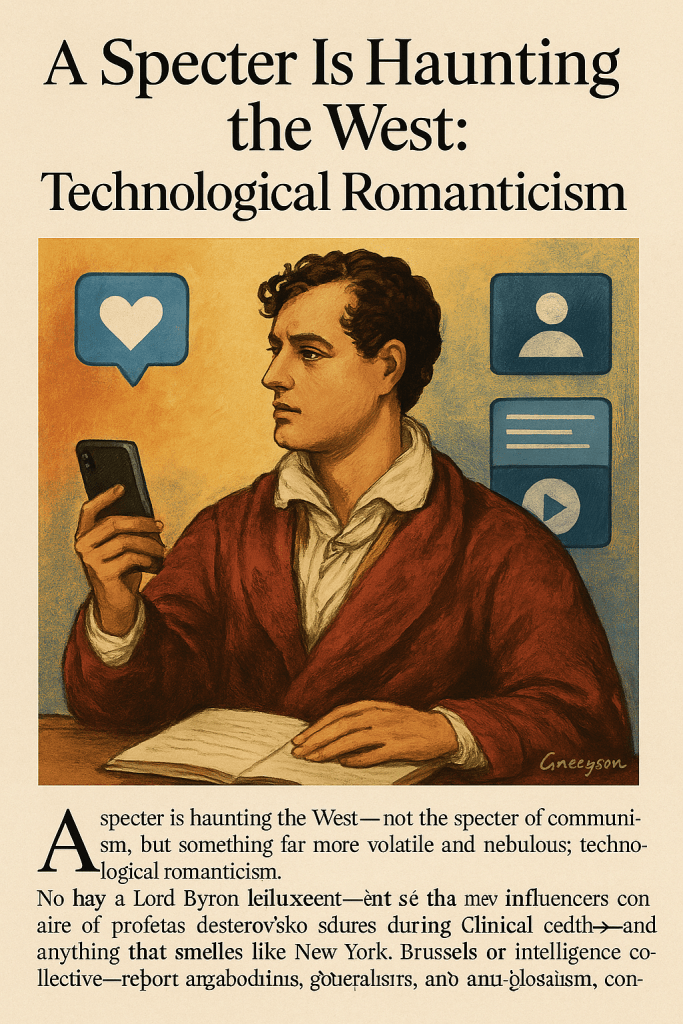
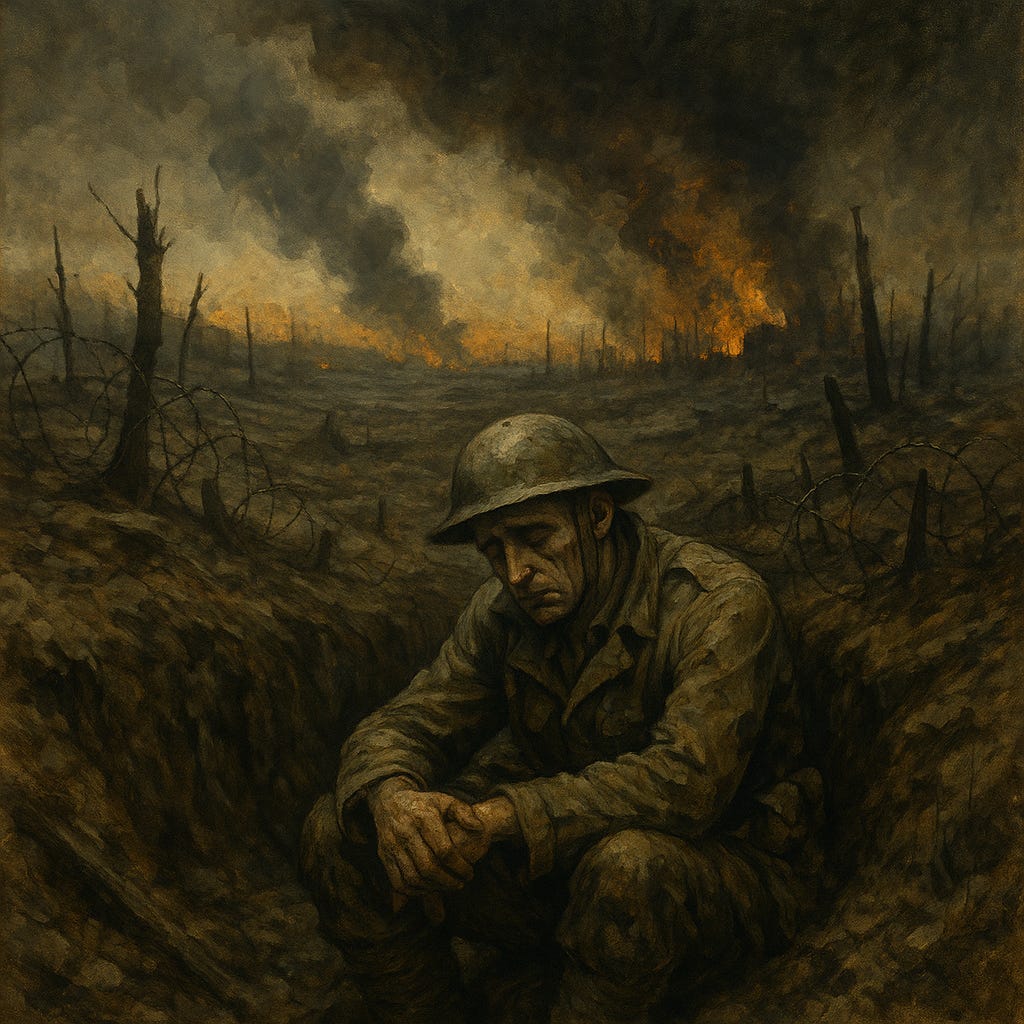
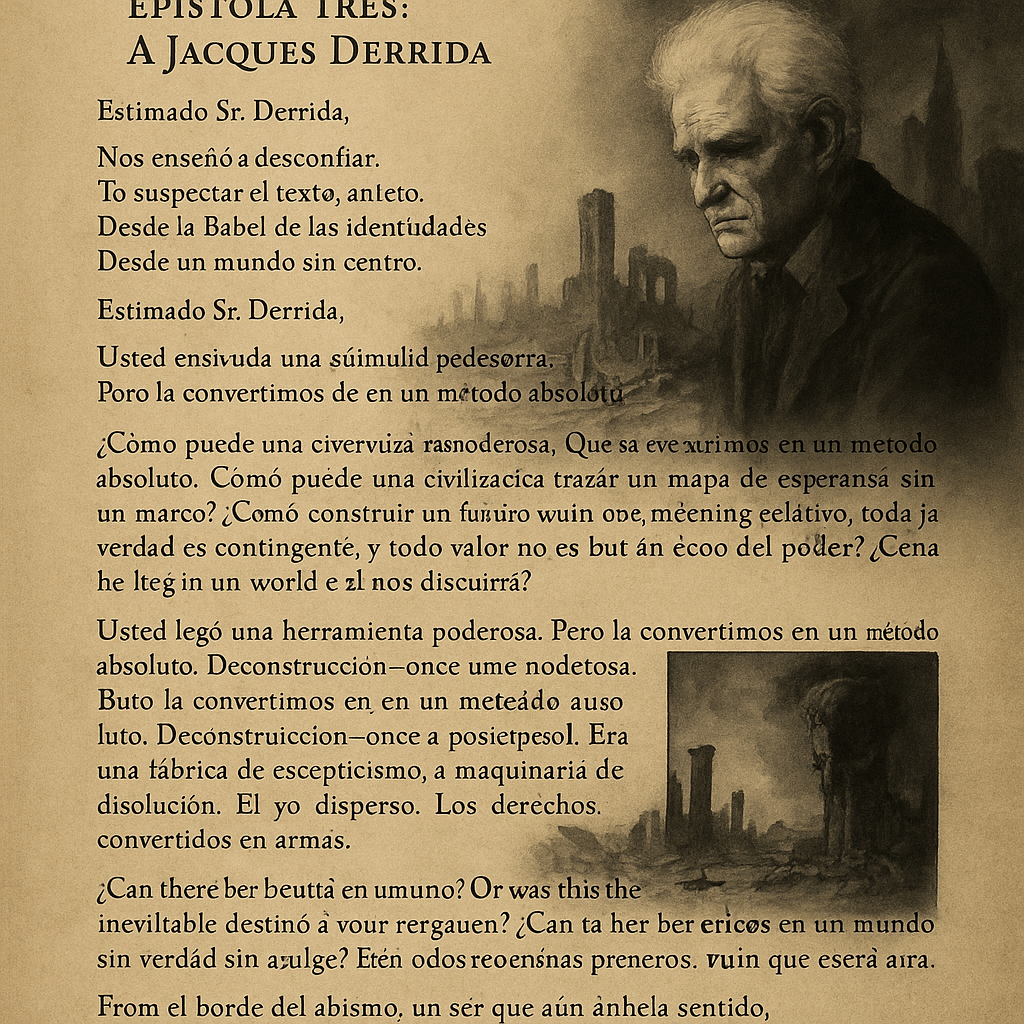

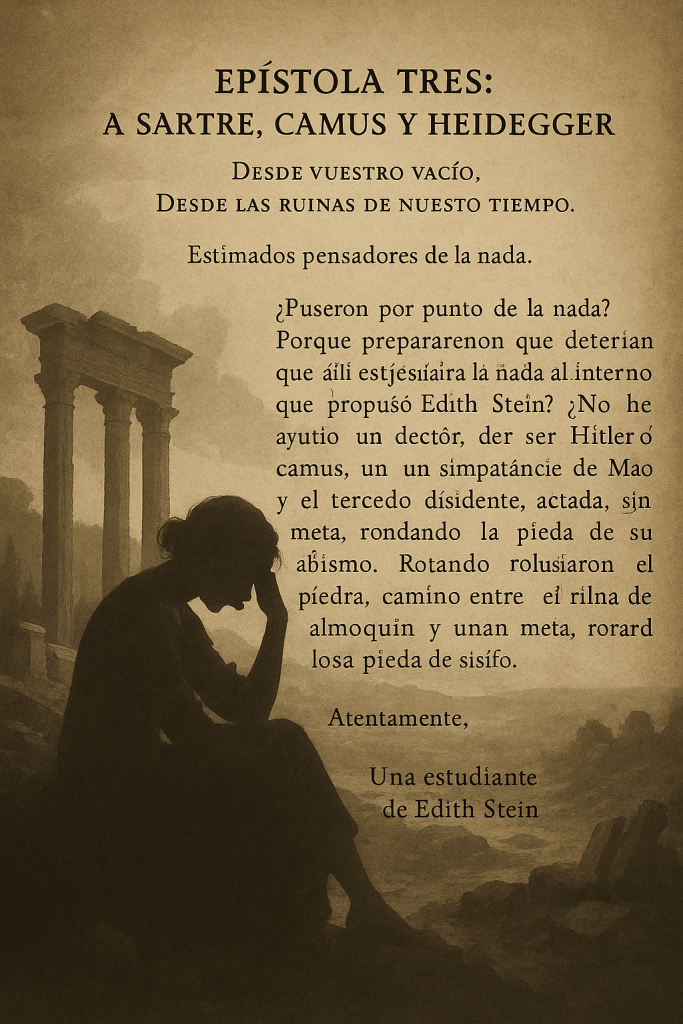
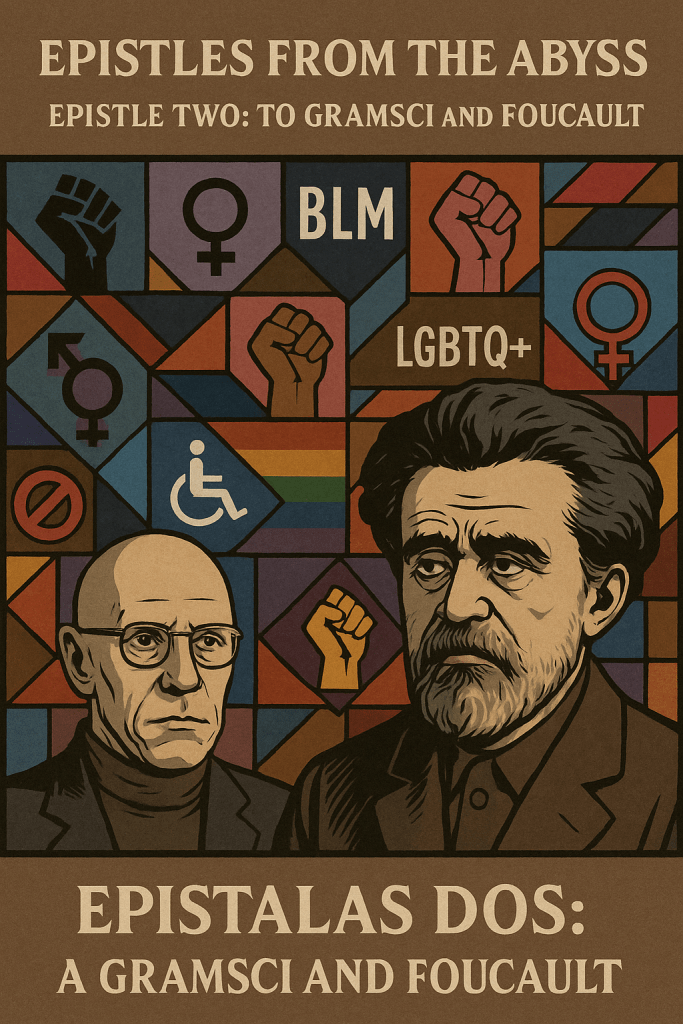

 Centeno's Lighthouse