Desde que apareció en el balcón del Vaticano en 2013, el Papa Francisco fue presentado como el pontífice de los gestos: el que no usa zapatos rojos ni tronos dorados, el que predica el “hospital de campaña” en lugar del tribunal doctrinal. Ha sido abrazado por sectores progresistas que vieron en él una apertura esperanzadora de la Iglesia Católica hacia los márgenes. Pero también ha sido objeto de un fuego cruzado que va desde la derecha teológica hasta la izquierda radical, ambos acusándolo de incoherente: unos por ser demasiado blando, otros por no ser lo suficientemente revolucionario.
Su pontificado ha transcurrido entre la tensión de los gestos y la inercia de las estructuras. Ha hablado de misericordia, pero el derecho canónico se ha movido con lentitud. Ha recibido a migrantes y a indígenas, pero ha evitado pronunciarse con claridad ante dictaduras que reprimen y expulsan a sus pueblos.
En ningún lugar esa ambivalencia ha sido más visible que en su relación con los regímenes de América Latina y, en particular, en su contraste con figuras populistas como Javier Milei. Mientras frente a Nicolás Maduro, Daniel Ortega o Miguel Díaz-Canel Francisco optó por el silencio estratégico, con Milei sostuvo un combate simbólico a través de terceros, citas indirectas y, finalmente, un abrazo inesperado en Roma.
II. Tres dictaduras y un silencio pastoral
Ninguno de los regímenes autoritarios latinoamericanos actuales ha recibido una condena directa y abierta del Papa Francisco. En el caso de Venezuela, su postura ha sido una mezcla de preocupación humanitaria y diplomacia silenciosa. Envió emisarios, acogió delegaciones, facilitó diálogos —todos ellos fallidos—, pero nunca pronunció una palabra pública contra el poder que encarna Nicolás Maduro. Cuando la crisis alcanzó niveles de catástrofe —muertes por desnutrición, persecuciones políticas, éxodo masivo—, el Papa pidió “diálogo” y “reconciliación”. Las víctimas esperaban una palabra profética, no un memorando diplomático.
En Nicaragua, el caso fue aún más grave: el régimen de Daniel Ortega encarceló sacerdotes, expulsó a religiosos, canceló procesiones, cerró universidades católicas. La Iglesia fue perseguida directamente. A pesar de ello, Francisco guardó silencio hasta 2023, cuando comparó al sandinismo con las dictaduras hitlerianas. La crítica llegó tarde. El daño ya estaba hecho. La profecía se pronunció cuando el desierto ya se había incendiado.
En Cuba, su tono ha sido incluso más cordial. Fue mediador en el deshielo entre Obama y Raúl Castro, visitó la isla, abrazó al poder y elogió al pueblo. Pero cuando en 2021 estallaron las protestas espontáneas contra la dictadura —y la represión fue brutal—, el Papa habló de “momentos difíciles” y pidió paz. Nada dijo de los presos políticos ni de las condenas judiciales. La caridad pastoral evitó cualquier juicio profético.
¿Fue esta actitud prudencia evangélica o complicidad estructural? ¿Una estrategia de puentes o una diplomacia que terminó por neutralizar la denuncia profética? Algunos lo defienden: el Papa no puede ser un activista. Otros lo cuestionan: sin verdad, la caridad se disuelve en sentimentalismo.
III. Milei: la herejía libertaria
El contraste se vuelve llamativo cuando se observa la actitud de Francisco frente a Javier Milei. No se trataba de un dictador ni de un sistema consolidado, sino de un economista libertario con ínfulas mesiánicas y retórica incendiaria. Y sin embargo, el antagonismo fue más visible, más mediático, más directo.
Milei insultó al Papa: lo llamó “zurdo”, “representante del maligno”, “basura comunista”. Lo acusó de ser un títere del marxismo disfrazado de pastor. Francisco nunca le respondió directamente, pero sus homilías hablaban de “la economía que mata”, de la “ideología del descarte” y de los falsos salvadores. Era evidente que hablaba también de Milei.
El giro llegó cuando Milei, ya presidente electo, pidió perdón públicamente y viajó al Vaticano. Abrazó al Papa, le pidió disculpas, besó su anillo. Francisco lo recibió con el mismo gesto que usó con tantos pecadores: sin aplauso ni condena, pero con firmeza en el mensaje. Le dijo: “Cuida a los pobres”.
El episodio reveló la centralidad del papado: incluso el adversario más vociferante reconoció su autoridad moral. Pero también dejó una pregunta flotando: ¿por qué Francisco se mostró más explícito frente a un político liberal —que aún no gobernaba— que frente a regímenes que encarcelaban y exiliaban a su propio clero?
IV. León XIV: un Papa para restaurar la Verdad
En tiempos de confusión moral, no se necesita un Papa que administre consensos, sino uno que predique la Verdad con mayúscula. Si el próximo Papa adopta el nombre de León XIV, será para invocar la línea doctrinal de León XIII, de Pío XI y de san Juan Pablo II. Será un Papa doctrinal, evangelizador, no ideologizado ni capturado por categorías seculares.
Confrontará los grandes desafíos de este siglo: el transhumanismo, la disolución del sujeto, la colonización tecnocrática del alma, la instrumentalización política de los pobres, la ideología de género y el nihilismo cómodo del Occidente postcristiano.
Hablará de los pobres, pero no desde el socialismo ni desde la Teología de la Liberación, sino desde la Doctrina Social de la Iglesia, que une justicia con verdad, libertad con bien común. No bendecirá populismos ni progresismos. Bendecirá sólo lo que esté alineado con el Evangelio.
A Donald Trump, Javier Milei, Viktor Orbán o cualquier otro nuevo príncipe del mundo, no los mirará con miedo ni con odio. Los mirará con la claridad de quien sabe que Cristo es Rey, no el Estado. Y no se prestará a ninguna manipulación de la fe para legitimar ideologías.
León XIV será un Papa de firmeza moral, espiritualidad cristocéntrica y valentía profética. Reafirmará los fundamentos: Eucaristía, oración, penitencia, misión. Y recordará al mundo que la misericordia sin verdad es ilusión, y la diplomacia sin cruz es teatro
El escritor incómodo: un ejercicio de contrahistoria personal
Israel Centeno
There was once a time when “internationalism” meant solidarity. A romantic word, like something scribbled on onion-skin manifestos, full of promises for universal brotherhood. But the romance didn’t last. From the First International to the Comintern, what began as a project of emancipation often collapsed into centralism, control, and imperial ambition—wrapped in revolutionary rhetoric.
Today, a new kind of Internationale is in place. It doesn’t speak Russian—it speaks English. It doesn’t operate from Moscow—it operates from Cambridge, from Brooklyn, from Palo Alto, from Berlin. Its reach is cultural, not military. Its tone is inclusive, not authoritarian. But its drive is unmistakably imperial. Let’s call it The Pink Internationale.
This new Internationale is powered by hashtags, fellowships, prize circuits, curated festivals, and institutional guilt. It claims to amplify the voices of the Global South—but only those voices that fit a digestible narrative. If your story is too messy, too politically ambivalent, too hard to brand—you’re out. If your trauma doesn’t yield poetic capital, or your rebellion doesn’t flatter the dominant mood board—you’re invisible.
Let’s be clear: this is not about solidarity. It’s about branding. It’s about packaging the periphery for cultural consumption. It’s not help—it’s curation. Authors become tokens. Identity becomes staging. And any deviation from the script is treated with suspicion. You can be radical, sure—but in the correct direction.
Literature becomes a ceremony of belonging. You are expected to say the right things, cite the right thinkers, nod at the right dogmas. Meanwhile, the very institutions that once condemned colonialism now decide—without irony—who gets to “represent” whom. A new imperialism, now with DEI statements, a smiling face, and a pastel logo.
And what about those who don’t fit? Writers who don’t write from guilt. Who critique both empire and revolution. Who refuse to romanticize poverty or weaponize identity. They become outliers. Or worse: problematic. The system doesn’t know what to do with them—so it erases them. Not with censorship, but with silence.
Coming next: the publishers who promise to “give voice,” but only if that voice harmonizes with the choir. Because in the Pink Internationale, freedom of speech exists—so long as it doesn’t disrupt pink.
Writers like Roberto Bolaño, Heberto Padilla, and José Revueltas knew—each in his own historical and stylistic register—that the cost of writing truthfully was not symbolic. It was exile. Silence. Imprisonment. Or worse: absorption by the system they sought to confront.
Bolaño, in The Savage Detectives and Between Parentheses, warned of the cooptation of rebellion, of how poetry could become an aestheticized cemetery. Padilla lived the terror of the “confession,” where literature was no longer art but proof of ideological fidelity. And Revueltas, writing from Lecumberri prison, saw firsthand the violence of institutions—state and literary—when faced with the unforgivable freedom of a writer who won’t play the role.
In today’s world, you won’t be jailed for thinking wrong—but you may be disinvited. You won’t be silenced by decree—but by algorithmic omission. That is the new form of literary discipline. Softer, yes. But just as effective.
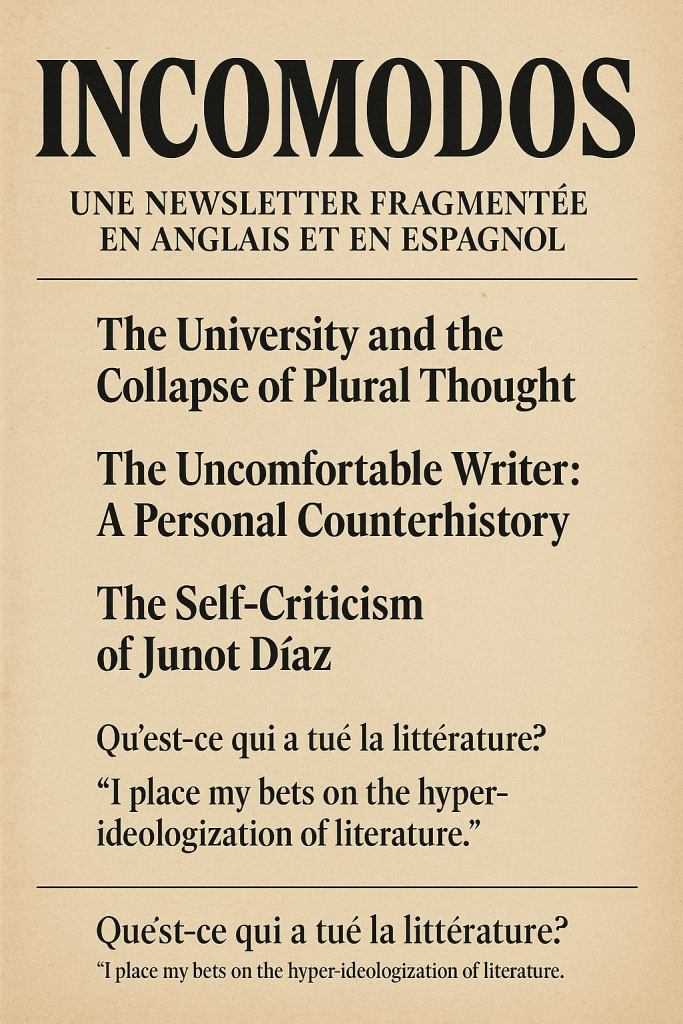
The University and the Collapse of Plural Thought
The university, in its highest conception, was meant to be a space where all currents of thought could be studied freely—where no idea was repressed or reduced to a suspect category. A place where doubt had the same right of asylum as certainty, and where thought didn’t require an ideological visa to circulate.
But that model is quietly being replaced by another: the campus as a space of symbolic correction, where certain ideas are tolerated the way one tolerates a disruptive guest—cordially, briefly, and with clear boundaries. In place of pluralism, we find discourse management. In place of debate, ritual affirmation of pre-approved theses. Students are taught not how to think freely, but how to recognize and recite the acceptable script. Adherence is celebrated more than dissent.
This phenomenon is not confined to one country or culture. In the United States, for instance, the case of professor Kathleen Stock at the University of Sussex illustrates how expressing views that challenge dominant ideologies can lead to academic and personal isolation. Stock, who questioned certain aspects of gender theory, faced such pressure and protest that she was ultimately forced to resign.
In another case, historian Michael Phillips was dismissed from Collin College in Texas after publicly expressing opinions on Confederate monuments and public health policy. Phillips argued that his termination was a direct retaliation for his political views—raising urgent questions about academic freedom in American institutions.r
And at Harvard University, an essay by Palestinian scholar Rabea Eghbariah was accepted and then withdrawn from the Harvard Law Review, reportedly due to internal and external pressures. The piece concerned the Israeli-Palestinian conflict, a subject that remains taboo even in academic environments that claim to champion open inquiry.
These cases reveal a troubling trend: the university, once a stronghold for freedom of thought and speech, is increasingly shaped by ideological forces that narrow the spectrum of legitimate discourse. The result is a subtle but powerful erosion of academic independence.
It is critical to remember that the true essence of the university lies in its ability to host a multiplicity of voices and perspectives. Only by fostering an environment where all ideas can be discussed and critically examined—without fear of reprisal—can we preserve the integrity and foundational mission of higher education.
Siempre me quedó la duda, y me quedará: ¿qué habría pasado si, en vez de llegar a Estados Unidos huyendo —sí, huyendo— de un régimen autoritario disfrazado de redención popular, yo hubiese venido como uno de sus simpatizantes?
¿Qué habría sido de mí si mi narrativa hubiera estado en línea con la del antiimperialismo cultural que tanto gusta en ciertos circuitos universitarios y editoriales de izquierda en este país? ¿Si, en vez de resistirme al culto al comandante, lo hubiese transformado en materia poética? ¿Si mi exilio no hubiese sido un acto ético, sino una estrategia estilística?
Vine en 2010. Chávez aún era un fetiche progresista. Aquí, en ciertas mesas y fundaciones, se lo defendía como quien defiende a un artista incomprendido. La izquierda norteamericana, o al menos su clase ilustrada, no había aún metabolizado los horrores del chavismo. A excepción de espacios como City of Asylum, en Pittsburgh, donde encontré resguardo sin condiciones ideológicas, todo lo demás parecía estar teñido por una simpatía ambigua hacia ese experimento tropical. Un experimento que ya entonces estaba arrasando con instituciones, con vidas, con la verdad.
Nunca me fui del todo del margen. Ni en Venezuela ni en Estados Unidos. Y eso, en literatura, tiene un precio. En España, por ejemplo, fui acogido por una editorial con entusiasmo, pero luego… silencio. ¿Intrigas personales? Tal vez. Pero sería ingenuo no ver el mapa: el ascenso de Podemos, los vínculos culturales con el chavismo, el subsidio del PSOE a editoriales que abrazaban con fervor la “marea rosa” latinoamericana. Es difícil pensar que todo fue casualidad. Fui incómodo para mi editor, y lo sigo siendo para un sistema que prefiere escritores alineados a causas, no a verdades.
En Estados Unidos, el mercado editorial es otra cosa: más vasto, más encriptado, más impermeable. Si no pasas por Iowa, si no eres parte del circuito académico, si no aprendes el discurso aceptado —el antiamericanismo performativo, el rechazo ritual al imperio, incluso desde dentro del imperio— quedas fuera del juego. Y yo no aprendí ese idioma. No lo hablo. Nunca quise.
Y si, además de simpatizar con Chávez, hubiese hablado mal —y con fervor performático— de Álvaro Uribe en cada entrevista, si hubiese hecho de mi obra un alegato contra las “castas” latinoamericanas —con C mayúscula y rabia curada en clase de teoría poscolonial—, quizás mi recepción habría sido distinta. No importa cuán matizado sea tu pensamiento: si no dices lo que esperan oír, te leen con desconfianza.
No estoy diciendo que no haya sido crítico. Pero mi crítica no fue de esas que se entregan como discursos de investidura. No hubo pronunciamientos oportunos ni hashtag indignados. Mi escritura no encajaba en el molde de lo políticamente correcto que ciertas instituciones estadounidenses —y sus homólogas hispanoamericanas— esperan del escritor “latino”. No me ofrecí como víctima dócil. No abracé el romanticismo narco, ni endulcé la barbarie con corridos literarios. No hice poesía de la violencia para decorar vitrinas de librerías universitarias.
Tampoco milité en el nuevo puritanismo. No construí una voz masculina fingidamente culpable, ni una virilidad arrepentida que pidiera perdón de antemano por haber nacido hombre en América Latina. No escribí desde el mandato de la corrección ideológica ni desde la agenda de redención posmoderna. No me inventé un feminismo de ocasión para agradar a lectoras entrenadas en detectar la sensibilidad aliada. Preferí el riesgo: el de escribir desde donde me dolía, no desde donde convenía.
En una de las pocas veces que fui invitado a leer en una universidad estadounidense, se me acercó un profesor —blanco, con gafas redondas, camisa de cuadros, la culpa bien planchada— y me pidió perdón. No por algo concreto. No por él. Por “el daño que le habíamos hecho a tu país”, dijo, con una gravedad de misa laica.
Yo lo miré con la incomodidad de quien no está acostumbrado a las genuflexiones morales.
“No tienen por qué disculparse”, le dije. “Ni usted, ni los americanos en general.”
Él me miró sorprendido, como si acabara de invalidar una ceremonia.
“Gracias a los americanos,” continué, “Venezuela desarrolló una industria petrolera. Altamente calificada. Moderna. Profesional. Con ella, y a pesar de todos los errores, Venezuela entró en el siglo XX. Con esa industria se construyó infraestructura, se formaron ingenieros, se erigieron ciudades, se diseñó una clase media.”
“¿Y sabe cuándo empezó nuestra tragedia?”, le pregunté. “Cuando se decidió desmantelar todo eso. Cuando nos convencieron de que esa herencia era pecado. Cuando nos dijeron que era mejor volver al siglo XIX en nombre del pueblo, de la identidad, del petróleo nuestro y de la revolución redentora.”
No hubo respuesta. Solo silencio. El tipo que necesitaba sentirse redentor se había topado con una víctima que no aceptaba su misa.
Y quizá eso explique por qué nunca se me invitó, ni siquiera, a enseñar a decir “ba-ba-ba, pe-a-pa-pa”. El abecedario que otros pronunciaban con seguridad se me negó incluso como posibilidad didáctica. Yo, con libros publicados, con experiencia de vida, con lecturas cruzadas entre dos mundos, no era apto para enseñar ni lo más básico. Porque no pasé por los seminarios adecuados, porque no tenía el perfil discursivo exigido, porque no podía sentarme en todos los paneles de género ni en las mesas donde se reparte el derecho de hablar en nombre de lo latinoamericano.
Ni siquiera el conocimiento cultural —ese que se construye no con teoría sino con cicatrices— tenía lugar. Yo no era un traductor del dolor al lenguaje académico. No era útil. No era domesticable.
Y por eso me convertí en lo que nunca buscaron: una voz que no pide permiso ni acta de autenticidad para hablar.
Escribo desde el margen del margen. En inglés con acento. En español con vértigo. Y aún no sé si eso es una derrota… o el único lugar desde donde vale la pena escribir.
What Killed Literature?
Was it hyper-ideologization or new technological platforms?
I place my bet on hyper-ideologization.
Because technology, after all, is just a tool.
But ideology, poorly digested and turned into dogma, is a knife disguised as a compass.
Literature can adapt to digital formats.
What it cannot survive is being required to obey
Heberto Padilla, Fuera del juego (1968) Roberto Bolaño, Between Parentheses (2011, essays) José Revueltas, El apando (1969) Junot Díaz, The Silence: The Legacy of Childhood Trauma, The New Yorker (April 2018) Daphne Patai & Noretta Koertge, Professing Feminism: Education and Indoctrination in Women’s Studies Stanley Fish, Save the World on Your Own Time Lorna Scott Fox, Heberto Padilla and the Cuban Dilemma (The London Review of Books, 1981) Carlos Granés, El puño invisible: Arte, revolución y un siglo de cambios culturales Lionel Trilling, The Liberal Imagination Wendy Brown, In the Ruins of Neoliberalism.
Suggested Readings / Bibliography
Heberto Padilla, Fuera del juego (1968) Roberto Bolaño, Between Parentheses (2011, essays) José Revueltas, El apando (1969) Junot Díaz, The Silence: The Legacy of Childhood Trauma, The New Yorker (April 2018) Daphne Patai & Noretta Koertge, Professing Feminism: Education and Indoctrination in Women’s Studies Stanley Fish, Save the World on Your Own Time Lorna Scott Fox, Heberto Padilla and the Cuban Dilemma (The London Review of Books, 1981) Carlos Granés, El puño invisible: Arte, revolución y un siglo de cambios culturales Lionel Trilling, The Liberal Imagination Wendy Brown, In the Ruins of Neoliberalism
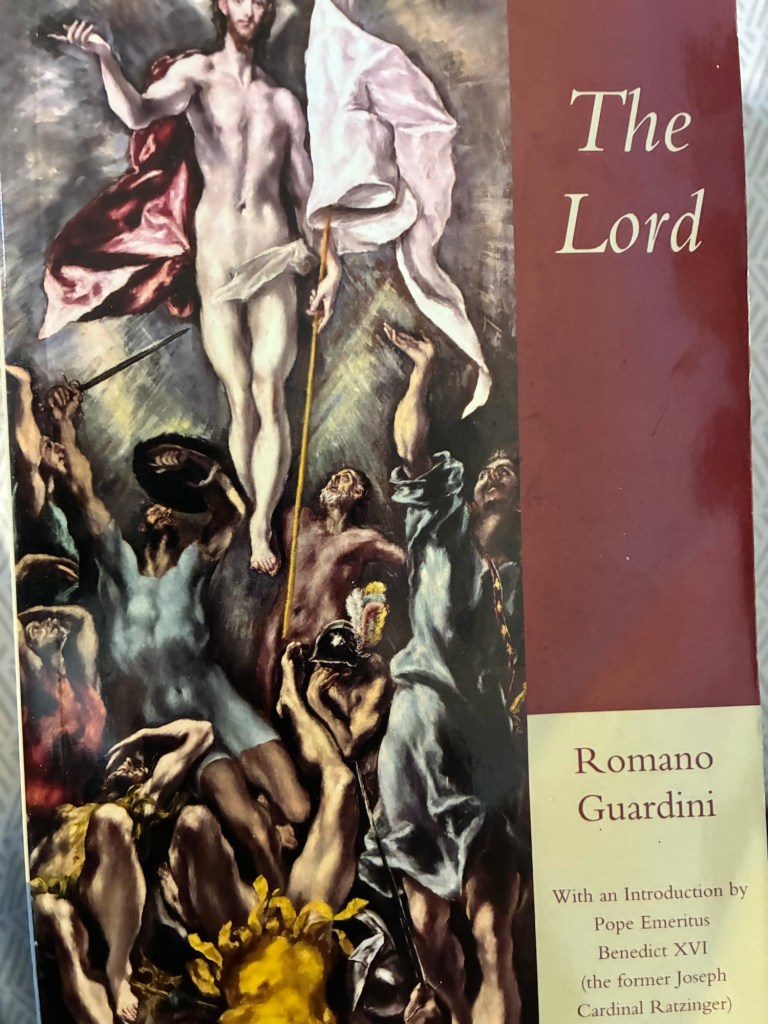
In an age where spirituality has been tamed by self-help slogans and the figure of Christ reduced to ideological projection or seasonal sentiment, reading Romano Guardini feels like drinking from a spring that still runs pure. He offers no cheap consolations, no motivational filler—he offers depth. And in this era of drought, that’s more than enough.
The Art of Praying is a return to the essentials. Guardini does not write to entertain but to form. With austere, almost monastic clarity, he reminds us that prayer is neither emotional venting nor ritual obligation—it is an inner stance before reality. It requires form, recollection, silence, and above all, truth. Guardini has the courage to say what few dare: often, we simply do not want to pray. And it is better to admit that openly than to wrap our spiritual inertia in pious excuses.
If The Art of Praying is the threshold, The Lord is the sanctuary. This is no academic Christology or sugary devotional: it is a lucid, contemplative descent into the mystery of Christ. Guardini does not merely narrate Jesus’ life—he penetrates it. He refuses to reduce Him to a moral teacher or political figure. What he reveals instead is the Son of God—incarnate, unsettling, absolute.
Each chapter of The Lord dismantles modern clichés about Jesus. Guardini returns Him to us as He truly is: silent at times, intense always, loving with a fire that liberates and wounds. A Christ who demands decision. No one leaves this portrait unscathed.
Reading both books together is transformative. The Art of Praying teaches us how to kneel; The Lord shows us before whom we kneel. Together, they call us back—not to vague spirituality, but to the essential: to the Truth that precedes and saves us.
At Librero de Marsella, these two texts open like stained glass windows: they let the light through, but not before shaping and coloring it. Guardini doesn’t just write about God—he teaches us to see again, with new eyes, ancient eyes, eyes of faith.
Librero de Marsella
Romano Guardini: Dos libros para volver a Cristo
The Art of Praying & The Lord
En una época donde la espiritualidad ha sido domesticada por la autoayuda y la figura de Cristo se licúa entre proyecciones ideológicas y sentimentalismos de temporada, leer a Romano Guardini es como beber de una fuente que aún permanece pura. No ofrece consuelos baratos ni frases motivacionales. Ofrece profundidad. Y en este tiempo de sequía, eso es más que suficiente.
En The Art of Praying, Guardini nos lleva de vuelta a lo esencial. No escribe para entretener, sino para formar. Con una prosa sobria, casi monástica, nos recuerda que la oración no es un desahogo emocional ni una obligación ritual, sino una disposición interior, una postura ante lo real. Requiere forma, concentración, silencio, y sobre todo, verdad. Guardini tiene el valor de decir que muchas veces no queremos orar, y que es mejor admitirlo que adornarlo con excusas piadosas. La oración, para él, es encuentro con el Dios vivo, y ese encuentro comienza por no mentir.
Pero si The Art of Praying es el umbral, The Lord es el templo. Este no es un libro de cristología académica ni de devoción superficial: es un descenso contemplativo y lúcido al misterio de Cristo. Guardini no se conforma con narrar la vida de Jesús, sino que busca penetrar su ser. No lo reduce a un revolucionario ni a un sabio moral: lo presenta como lo que es —el Hijo de Dios, encarnado, incómodo, absoluto.
Cada capítulo de The Lord desmantela los estereotipos con los que el mundo moderno ha intentado domesticar a Cristo. Guardini nos devuelve a un Jesús que habla poco, mira con intensidad, ama con una libertad que quema, y exige una decisión radical. No se puede salir ileso de este retrato.
Leer estos dos libros juntos es una experiencia transformadora. The Art of Praying nos enseña cómo ponernos de rodillas; The Lord nos muestra ante quién lo hacemos. Ambos son un llamado urgente, no a “espiritualizarnos” más, sino a volver a lo esencial: a la Verdad que nos precede y nos salva.
En el Librero de Marsella, estos dos textos se abren como vitrales: dejan pasar la luz, pero no sin antes filtrarla, darle forma y color. Guardini no solo escribe sobre Dios; nos enseña a mirar con ojos nuevos, con ojos antiguos, con los ojos de la fe.
Newsletter de Israel Centeno/ Edicion. Dia de la madre Teresa, lengua del amor despierto
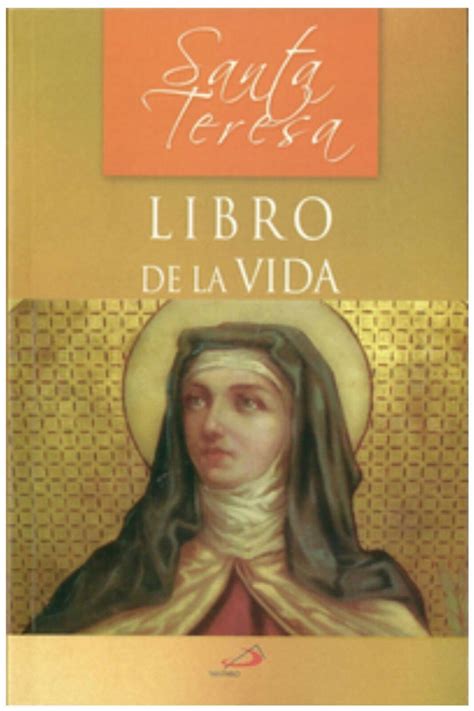
En Pittsburgh, ciudad de niebla, ríos y fantasmas, escribo esto con la certeza de que, si vuelvo, es solo por medio de la palabra. Esta carta es faro. No alumbra verdades definitivas, pero busca con insistencia. Hoy, ese rayo busca a una mujer que supo hablar con Dios como si hablara con el silencio.
Santa Teresa de Jesús, la Santa Madre, no predicó lo imposible. Pidió solo tres cosas: amor fraterno, desasimiento de todo lo criado, y humildad verdadera. Lo que ocurre es que eso, tan sencillo, nos cuesta la vida entera.
Adolecemos. Esa es nuestra adolescencia espiritual. Buscamos ser libres, pero seguimos atrapados en la urgencia de ser vistos, aceptados, celebrados. Nos aferramos al yo como si fuera el último refugio, cuando es solo el primer callejón sin salida. Santa Teresa, sin aspavientos, propone otra geografía interior. Un mapa con tres senderos: amar, soltar, y saberse tierra.
Amar, pero no con la lengua ambigua que dice “amor” mientras busca solo afecto, validación, seguridad. Amar como el Capitán del amor, que es Cristo. Amar como quien da, no como quien espera. Teresa quiere que los que traten con sus hijas “aprendan su lengua”, y esa lengua es el amor despierto, no sentimental, no disimulado. Amor que se ejercita en los detalles: en ver al otro, en renunciar al protagonismo, en no hacerse el centro.
Amar sin compensaciones, sin negociar afectos. Amar al que es menos grato, menos “atractivo”. Amar sin elegir. Porque amar al que no nos conviene es lo que nos convierte.
Y para eso, dice Teresa, hay que desasir. Soltar el mundo. Pero no como desprecio, sino como confianza radical. Mirar al Cristo pobre y desposeído. No tener seguridad fuera de Él. El desasimiento comienza por uno mismo. Por dejar de hacer del cuerpo un altar. Por dejar de girar en torno a miedos, hipocondrías, pasados irresueltos y el constante deseo de control.
Nosotras, dice Teresa, debemos desprendernos incluso del temor. Porque el miedo es un mal futurible que nos vuelve esclavos de lo que no ha pasado. La Santa lo supo desde su enfermedad, desde su fragilidad convertida en fuerza. El cuerpo duele, pero no es el dueño. No debe ser el dueño. Desasirse es quitarse del centro, y dejar que Dios sea el centro.
Teresa no romantizó el sufrimiento. No lo convirtió en identidad. No lo usó como excusa. Fue una mujer enferma que se negó a vivir girando en torno a su enfermedad. En lugar de hacerse el centro de sus dolencias, hizo de sus dolores una escuela de libertad. Mientras el mundo moderno convierte el sufrimiento en capital emocional, Teresa lo convierte en tierra fecunda. Nos enseña que no se trata de negar el dolor, sino de no rendirle culto. De no usar nuestras penas como escudo, ni nuestras heridas como bandera. Porque el que hace del yo su altar, no puede ser libre.
Recordemos lo que Teresa nos dice del miedo. Ella, que convaleció de todo: del cuerpo, de la angustia, de la noche. Ella que vivió siempre al borde de sus límites físicos, nos recuerda con una claridad divina que el miedo es la mentira más sofisticada. Es sufrir antes de tiempo. Es vivir atados a un mal que tal vez no llegue nunca. Es temer la muerte más que a la vida sin sentido. Teresa no huyó de sus miedos: los enfrentó con fe. Y no cualquier fe. Fe descalza. Fe que camina, aun cuando las piernas tiemblan. Fe que se apoya en el callado que sostiene, no en la lógica que tranquiliza. “Dejadlo todo en Dios, venga lo que viniere” —dice—. Y en esa sola frase se encierra toda una mística de la libertad. Tragarse el miedo. No como acto heroico, sino como acto humilde. El que se abandona en Dios, ya no necesita controlar.
Y si el miedo es el disfraz más hábil del ego, la necesidad de aceptación es su reflejo más constante. Queremos ser aprobados, entendidos, elogiados. Queremos que nos lean, que nos abracen, que nos valoren. Pero esa necesidad, tan humana como persistente, termina por esclavizarnos. Porque quien vive pendiente de la aceptación del otro, nunca se encuentra. Se diluye. Teresa enseña que no es malo amar, pero que es letal vivir mendigando amor. El alma no crece a la sombra de la aprobación. Crece a la luz de la verdad.
Por eso, el desasimiento no es solo de cosas: es de imágenes. De la imagen que proyectamos, de la reputación que cultivamos, del yo que queremos preservar. Y la libertad verdadera empieza cuando dejamos de temer lo que los demás piensen de nosotros. No porque nos volvamos indiferentes, sino porque, como Teresa, descubrimos que solo Dios basta.
Y, al final, la humildad. No la timidez, no el complejo, no la pobreza desordenada. La humildad verdadera es la que nos pone en verdad. Ni más ni menos. La que no busca puestos, ni honores, ni el agrado de todos. La que no acumula agravios como trofeos ni se hace víctima para justificar su amargura.
La humildad que sabe que el mejor puesto no es el primero, sino el invisible. Que no vale más el que brilla, sino el que sostiene. El que se alegra con el bien del otro. El que no se explica, no se defiende, no se celebra.
La humildad, en Teresa, no es una virtud decorativa. No es una forma de suavizar el ego, ni una estrategia para parecer mejores. Tampoco es invisibilidad sumisa, ni falsa modestia. La humildad verdadera es lucidez. Es saber quién se es delante de Dios y, por tanto, no necesitar que nadie más nos lo confirme.
No se trata de pensar menos de uno mismo, sino de pensar menos en uno mismo. El humilde no necesita probarse, defenderse ni justificarse. Vive en la verdad —esa que no se defiende porque se basta sola—. Y por eso, el humilde es libre. Libre para alegrarse del bien ajeno. Libre para desaparecer sin trauma. Libre para amar sin medida y sin ganancia.
Teresa lo entendió todo: el alma crece cuando deja de exhibirse. La flor de la perfección no florece en el escenario. Nace en el silencio de quien hace sin ser visto, ora sin ser oído, y sirve sin dejar huella. Esa es la libertad que solo tienen los humildes: no ser necesarios, pero ser verdaderos.
En un mundo que se grita a sí mismo, Teresa es un susurro que aún resuena. No por volumen, sino por peso.
Ese es el lenguaje que Teresa nos enseña: el amor que despierta, la pobreza que libera, la humildad que no se anuncia. No hay otra lengua más que esa. Todo lo demás, es ruido de uno mismo.
Y por eso, mientras el mundo pide likes, Teresa pide silencio.
Sea este faro apenas eso: una luz temblorosa, pero cierta, que vuelve a alumbrar ese lenguaje. El de quienes han aprendido a hablar con Dios sin perderse en su propio eco.
🌿 Sobre el miedo y la soledad interior
“Porque para caer había muchos amigos que me ayudasen; para levantarme hallábame tan sola, que ahora me espanto cómo no me estaba siempre caída, y alabo la misericordia de Dios, que era sólo el que me daba la mano.” — El libro de la vidaBookmate
Esta reflexión muestra cómo Teresa experimentó el abandono humano, pero encontró en Dios la fuerza para levantarse, superando así el miedo y la soledad.
🌿 Sobre el sufrimiento y la fe
“Muy a gusto escojo todos los sufrimientos del mundo por un poquito de gozar más por entender más profundamente las grandezas de Dios; pues veo que quien más lo comprende más le ama y alaba.” — El libro de la vidaACI Prensa
Aquí, Teresa expresa su disposición a aceptar el sufrimiento como medio para profundizar en el conocimiento y amor de Dios, superando así el temor al dolor.
🌿 Sobre la humildad y la verdad
“La verdadera humildad está en contentarse con lo que el Señor quisiere hacer de ella.” — Camino de perfección
Teresa enseña que la humildad auténtica consiste en aceptar la voluntad de Dios sin resistencias, lo cual libera del miedo a no ser aceptado o reconocido por los demás.
🌿 Sobre la oración y la confianza en Dios
“Dejad hacer al Señor de la casa. Sabio es, poderoso es, entiende lo que os conviene y lo que le conviene a Él también.” — Camino de perfecciónFacebook
Esta frase invita a confiar plenamente en Dios, dejando de lado las preocupaciones y temores sobre el futuro o la necesidad de controlar todo.
— Israel Centeno
🌿 Sobre el miedo y la soledad interior
“Porque para caer había muchos amigos que me ayudasen; para levantarme hallábame tan sola, que ahora me espanto cómo no me estaba siempre caída, y alabo la misericordia de Dios, que era sólo el que me daba la mano.” — El libro de la vidaBookmate
Esta reflexión muestra cómo Teresa experimentó el abandono humano, pero encontró en Dios la fuerza para levantarse, superando así el miedo y la soledad.
🌿 Sobre el sufrimiento y la fe
“Muy a gusto escojo todos los sufrimientos del mundo por un poquito de gozar más por entender más profundamente las grandezas de Dios; pues veo que quien más lo comprende más le ama y alaba.” — El libro de la vidaACI Prensa
Aquí, Teresa expresa su disposición a aceptar el sufrimiento como medio para profundizar en el conocimiento y amor de Dios, superando así el temor al dolor.
The Lighthouse of Alexandria
Newsletter by Israel Centeno Volume I: Teresa, language of awakened love
In Pittsburgh, a city of fog, rivers, and ghosts, I write this with the certainty that if I ever return, it will be only through language. This letter is a lighthouse. It does not illuminate final truths, but it searches with insistence. Today, its beam seeks a woman who knew how to speak with God as if she were speaking to silence.
Saint Teresa of Jesus, the Holy Mother, did not preach the impossible. She asked for only three things: fraternal love, detachment from all created things, and true humility. The problem is that such simplicity costs us our entire lives.
We ache. That is our spiritual adolescence. We long for freedom, yet remain trapped in the urgency of being seen, accepted, celebrated. We cling to the self as if it were the last refuge, when it is only the first dead end. Without pretense, Saint Teresa offers us another interior geography. A map with three paths: to love, to let go, and to know ourselves as dust.
To love, but not with the ambiguous language that says “love” while only seeking affection, validation, and safety. To love as the Captain of love—Christ—loves. To love as one who gives, not as one who expects. Teresa wants those who deal with her daughters to “learn their language,” and that language is awakened love: not sentimental, not disguised. Love practiced in the details: in seeing the other, in renouncing the spotlight, in ceasing to be the center.
To love without compensation, without trading affections. To love the less pleasant, the less “attractive.” To love without choosing. Because loving those who are inconvenient to us is what transforms us.
And for that, Teresa says, we must detach. Let go of the world. Not out of disdain, but out of radical trust. To gaze upon Christ poor and dispossessed. To have no security outside of Him. Detachment begins with ourselves. By ceasing to make the body an altar. By stopping the constant rotation around fears, hypochondria, unresolved pasts, and the compulsive desire for control.
We, Teresa says, must even detach from fear. Because fear is a future-shaped lie that enslaves us to what has not yet happened. The Holy Mother knew this from her illness, from her fragility turned into strength. The body aches, but it is not the master. It must not be. Detachment is stepping out of the center and letting God take it.
Teresa did not romanticize suffering. She did not make it her identity. She did not use it as an excuse. She was a sick woman who refused to live orbiting her illness. Instead of making her pain the center, she turned it into a school of freedom. While the modern world turns suffering into emotional capital, Teresa transforms it into fertile soil. She teaches us that the goal is not to deny pain, but to refrain from worshipping it. To not use our sorrows as shields, nor our wounds as banners. Because whoever builds an altar to the self cannot be free.
Let us remember what Teresa says about fear. She, who recovered from everything: from her body, from anguish, from night. She, who always lived at the edge of her physical limits, reminds us with divine clarity that fear is the most sophisticated lie. It is suffering before its time. It is being chained to a harm that may never come. It is fearing death more than a life without meaning. Teresa did not flee her fears: she faced them with faith. And not just any faith. Barefoot faith. Faith that walks even when the legs tremble. Faith that leans on the silent staff that upholds, not on the logic that soothes. “Leave everything to God, come what may,” she says. And in that single phrase lies an entire mysticism of freedom. To swallow fear. Not as a heroic act, but as a humble one. One who abandons themselves in God no longer needs to control.
And if fear is the ego’s cleverest disguise, the need for acceptance is its most constant reflection. We want to be approved, understood, praised. We want to be read, embraced, valued. But this need—human and persistent—ends up enslaving us. Because the one who lives in search of another’s approval never finds themselves. They dissolve. Teresa teaches that it is not wrong to love, but fatal to beg for love. The soul does not grow in the shadow of approval. It grows in the light of truth.
That is why detachment is not only from things: it is from images. From the image we project, the reputation we cultivate, the self we seek to preserve. True freedom begins when we stop fearing what others think of us. Not because we become indifferent, but because, like Teresa, we discover that only God is enough.
And in the end, humility. Not shyness, not inferiority, not disordered poverty. True humility is what places us in truth. No more, no less. The one that seeks neither position, nor honor, nor universal approval. The one that does not hoard grievances as trophies nor makes itself a victim to justify its bitterness.
Humility that knows the best place is not the first, but the invisible. That the one who shines is not greater, but the one who sustains. The one who rejoices in another’s growth. The one who does not explain, does not defend, does not boast.
Perfecto, aquí tienes el desarrollo fuera del bloque, para que lo uses como epílogo o como continuación independiente de esta primera entrega del newsletter:
Humility: the clarity that goes unseen
In Teresa, humility is not a decorative virtue. It is not a way of softening the ego, nor a strategy to appear better. Nor is it submissive invisibility or false modesty. True humility is clarity. It is knowing who you are before God and therefore not needing anyone else to confirm it.
It is not about thinking less of oneself, but thinking less about oneself. The humble person has no need to prove, defend, or justify themselves. They live in truth—the kind of truth that does not need defense because it stands on its own. And because of that, the humble are free. Free to rejoice in the good of others. Free to disappear without drama. Free to love without measure and without gain.
Teresa understood it all: the soul grows when it stops showing itself. The flower of perfection does not bloom on stage. It grows in the silence of one who acts unseen, prays unheard, and serves without leaving a trace. That is the freedom only the humble possess: not to be necessary, but to be real.
In a world that screams itself out loud, Teresa is a whisper that still echoes. Not because of volume, but because of weight.
Would you like this piece to open the next issue of the newsletter, or to close with a prayer inspired by Teresa’s voice?
This is the language Teresa teaches us: love that awakens, poverty that frees, humility that does not announce itself. There is no other language but this. Everything else is noise of the self.
And so, while the world demands likes, Teresa asks for silence.
Let this lighthouse be only that: a trembling but certain light that once again illuminates this language—the one spoken by those who have learned to converse with God without getting lost in their own echo.
Aquí tienes la traducción al inglés de las citas de Santa Teresa de Jesús, lista para ser incluida en la versión bilingüe de tu newsletter El Faro de Alejandría:
🌿 On Fear and Inner Loneliness
“For to fall, I had many friends who would help me; but to rise, I found myself so alone that I now marvel at how I was not always fallen, and I praise the mercy of God, who alone reached out His hand to me.” — The Book of Her Life
This reflection reveals how Teresa experienced human abandonment, but found in God the strength to rise—overcoming fear and isolation.
🌿 On Suffering and Faith
“I willingly choose all the sufferings in the world for just a little more joy, for a deeper understanding of God’s greatness; for I see that the more one understands, the more one loves and praises Him.” — The Book of Her Life
Here Teresa shows her willingness to embrace suffering as a path to know and love God more deeply, dismantling the fear of pain.
🌿 On Humility and Truth
“True humility lies in being content with whatever the Lord wants to make of her.” — The Way of Perfection
Teresa teaches that genuine humility is found in accepting God’s will without resistance—freeing us from the fear of not being accepted or recognized.
🌿 On Prayer and Trust in God
“Let the Lord of the house do what He will. He is wise, He is powerful, He knows what is good for you and what is good for Himself too.” — The Way of Perfection
This quote invites full trust in God, abandoning the obsession with control and the anxiety over outcomes.
Israel Centeno/ de la serie, Yo regalo mis historias.
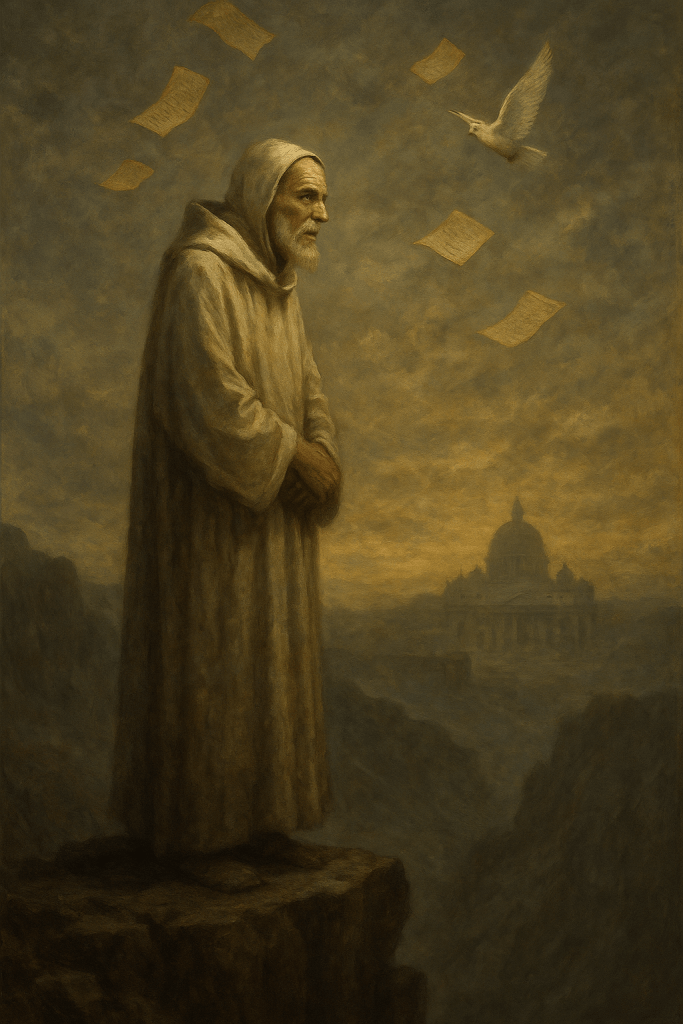
De todos los monjes cartujos que habitaron la abadía suspendida de La Vangarda, ninguno fue tan inescrutable como Dionisos —no el ario y enjuto al que en los archivos vaticanos llaman Pajita, sino el otro: el que besó. Así lo conocían algunos novicios en susurros, y así lo recuerda una carta del padre Hermannus Blavatsky —homónimo hereje del ocultista—, donde se menciona “aquel que, sabiendo lo que hacía, besó en la frente al traidor”. La frase está tachada con violencia, como si nombrarlo implicara abrir una puerta sellada por siglos.
Pajita no fue un apodo gratuito. Era una deformación afectuosa, secreta, y a la vez condenatoria de Dionisio el Areopagita, el más insigne de los plagiarios santos. El primer evaporado. Aquel que falsificó su nombre hasta que la Iglesia lo canonizó por la delicadeza de su crimen.
Dionisos —el nuestro, el del beso— fue, según una hipótesis defendida en 1921 por el arabista sirio Yusef Ben-Magdal, el verdadero autor del llamado Códice Seraphim, un manuscrito tan ilegible como profundo, donde se intenta vincular —no sin insinuaciones gnósticas— a los esenios del Qumrán con las comunidades cristianas primitivas de Etiopía, específicamente con la secta de los Zëra Yacob. Esta tesis, si bien descartada por los teólogos ortodoxos, fue citada con fascinación por Elias Canetti en un apunte marginal de La conciencia de las palabras, y retomada luego por G. K. Szilárd en su apócrifo ensayo De los evangelios transmitidos por la arena.
Dionisos vivía, en los últimos años, entre el ayuno y la vigilia. Su cuerpo, privado casi del tiempo, parecía sostenido por una voluntad que no podía nombrarse. Hasta que ocurrió lo improbable: fue elegido papa el cardenal Robertus Franciscus de Chicagum, quien tomaría el nombre de León XV. El nuevo pontífice tenía exactamente la misma edad que Dionisos —ochenta y un años, cinco meses, dos semanas y tres días—. Este dato, menor para la prensa, lo trastocó.
Esa noche, mientras los canales repetían imágenes del balcón y las campanas, Dionisos sintió, no en la cabeza sino en el corazón, lo que él mismo describió en su diario como “un gusanillo que no era animal sino reminiscencia”. Era —o creía que era— la misma serpiente del Génesis, pero transfigurada en un pensamiento persistente: si él es el elegido, ¿qué fui yo entonces?
Pasó cuatro noches y cuatro días sin alimento, apenas con un sorbo de agua de císterna. Oraba. Esperaba del cielo una señal. Invocó al Espíritu Santo como se invoca a un huésped perdido. Pero no bajó la paz. Bajó la duda. No como una respuesta, sino como una certeza inversa: esta era su generación, él y León XV eran dos caras del mismo signo. En la lógica de los antiguos profetas —o de los espejos—, uno debía sobrevivir apenas unos días al otro. Dionisos intuyó que no había opción: uno moriría, y el otro seguiría apenas para confirmar la muerte del primero.
Pensó viajar a Roma. Pero no lo hizo. Una frase de Juan Filocalo, citada erróneamente por Borges en su Historia de la eternidad, lo contuvo: “Quien ve morir al reflejo, ya ha sido borrado del cristal”.
Dionisos escribió su testamento teológico en una hoja suelta, guardada entre las páginas de una edición trilingüe del Libro de Enoc. Solo dice: “Si Dios ha dispuesto que muramos juntos, es que hemos nacido el uno para la caída del otro. La eternidad, a veces, también necesita rivales.”
Nadie sabe si vive aún. Algunos sostienen que fue visto en la iglesia de Debre Damo, entre montañas coptas, disfrazado de monje etíope. Otros, como el teólogo panameño Claudio Marrón-Sobrino, afirman que Dionisos fue un doble literario inventado por León XV antes de entrar en el seminario, y que todos sus textos fueron escritos por el papa mismo durante su juventud, bajo un estilo que imita deliberadamente a los Padres del Desierto.
Lo único cierto es esto: al cumplirse un mes exacto del inicio del pontificado de León XV —el Papa del fin, no se sabe si del mundo o de los reflejos—, una paloma blanca atravesó sin razón el silencio de la celda 7 de la cartuja. Y nadie supo, hasta hoy, si vino a anunciar el fin… o a recoger un alma
Newsletter dominical – Desde el exilio del primer templo
Queridos amigos:
Este domingo, con el corazón dispuesto a celebrar la misa y con la mirada fija en un nuevo pontificado que comienza, conviene hacer un alto. No para opinar. No para proyectar. No para pedir que el Papa diga lo que nos gustaría que dijera. Sino para recordar lo esencial:
El Papa no está para reflejar nuestras opiniones.
No es un influencer de dogmas flexibles. No es un curador de tendencias litúrgicas. Su misión es una: “desaparecer para que permanezca Cristo.”
Y eso es escándalo para muchos. Porque en un mundo donde todo se customiza —desde el café hasta el credo—, la existencia de una verdad que no cambia, que no se ajusta, que exige y transforma, es casi una herejía al espíritu de la época.
No, la Iglesia no es un espacio de proyección de agendas personales.
No está para adaptarse al mundo, sino para sostenerlo, clavada en el madero de la verdad.
Jesús no vino a agradar. Vino a salvar.
Mientras tanto, este domingo, podemos mirar con ironía —o con temor— dos máscaras del alma inmadura:
el eternum puer y el senex lubricus.
El primero se niega a crecer. El segundo se niega a envejecer.
Ambos, en el fondo, evaden la cruz.
El eternum puer vive de memes, deseos, causas digitales, hashtags bautismales. Grita “Crucifícale” sin saberlo, porque necesita un enemigo para afirmarse.
El senex lubricus finge sabiduría pero solo teme la muerte. Se viste de joven, habla como joven, desea como joven, pero sin el fuego ni la verdad de la juventud.
Y así se turnan para repetir la historia.
Porque el “Crucifícale” no fue solo un grito de hace dos mil años. Fue el trend topic de Jerusalén.
Lo que todos repetían.
Lo correcto.
Lo compartible.
Hoy, el “Crucifícale” viene con emojis.
Viene con slogans inclusivos o con doctrinas rígidas.
Con devociones vacías o con reformas oportunistas.
Viene con nuestros retuits disfrazados de piedad.
La fe no es opinar sobre Dios.
La fe es ser parte de Él.
Y ser parte de Él implica cargar la cruz, no solo hacerle like.
¿Dónde estás tú esta semana?
¿En el templo vendiendo tu versión de Jesús?
¿O en la plaza, coreando lo que toca?
Feliz domingo.
Sean sabios, o —al menos— lúcidamente ridículos.
No olviden que la cruz no es un símbolo decorativo.
Es una sentencia… que se vuelve promesa solo si la abrazas.
Desde el exilio del primer templo,
Postdata
Esta semana, el luto también se ha vuelto alegría. En el nombramiento de un nuevo Papa, hemos visto reunidas —una vez más— la imagen de la cruz y la resurrección. Tras el ruido, las fotos, lo pintoresco de tener un Papa nacido en Chicago, Illinois, que vivió y sirvió en Perú, agustino, firme en la liturgia, pero también comprometido con los desheredados, comienza a llegar el sosiego. Ese sosiego que no es quietud, sino convocatoria interior.
Pasada la farándula, queda lo esencial: el rostro sereno de una Iglesia que, si es fiel, nunca será popular, pero siempre será verdadera.
Y con ese mismo espíritu nace esta newsletter.
Una invitación a la pausa.
A la reflexión compartida.
A una compañía cotidiana que no entretiene, sino que acompaña.
Si aún no lo has hecho, suscríbete.
Queremos estar ahí, en tu pantalla, como un eco discreto de la fe, la sensatez y la esperanza.
Israel Centeno
Desde el exilio del primer templo
I.C
____________________________________
Sunday Newsletter – From the Exile of the First Temple Title: Jerusalem’s Trending Topic
Dear friends,
This Sunday, as we prepare to celebrate the Mass and look toward a new papacy, it’s worth pausing—not to give opinions, not to project our desires, not to ask the Pope to say what we want to hear—but to remember what truly matters:
The Pope is not here to reflect our opinions. He is not an influencer of flexible dogmas. He is not a curator of liturgical trends. His mission is this: “to disappear so that Christ may remain.”
And that is a scandal to many. Because in a world where everything can be customized—from coffee to creeds—the existence of a truth that does not change, that does not adjust itself, that demands and transforms, feels almost heretical to the spirit of the times.
No, the Church is not a space for projecting personal agendas. It does not exist to adapt to the world, but to uphold it, nailed to the beam of truth.
Jesus did not come to please. He came to save.
In the meantime, this Sunday, we might look—ironically or fearfully—at two masks of the immature soul: the eternum puer and the senex lubricus. The first refuses to grow up. The second refuses to grow old. Both, deep down, evade the cross.
The eternum puer lives on memes, desires, digital causes, hashtag baptisms. He shouts “Crucify him!” without realizing it, because he needs an enemy to affirm himself.
The senex lubricus pretends to be wise but is only afraid of death. He dresses young, talks young, desires young, but without the fire or truth of youth.
And so they take turns repeating history. Because “Crucify him!” was not just a cry from two thousand years ago. It was Jerusalem’s trending topic. What everyone said. What was correct. What got shared.
Today, “Crucify him” comes with emojis. It comes with inclusive slogans or rigid doctrines. With empty devotions or opportunistic reforms. It comes disguised as our retweets, baptized as virtue.
Faith is not about having an opinion about God. Faith is being part of Him. And being part of Him means carrying the cross, not just clicking “like.”
Where are you this week? In the temple, selling your version of Jesus? Or in the square, echoing what’s trending?
Happy Sunday. Be wise—or at least, lucidly ridiculous. Don’t forget the cross is not just a decorative symbol. It is a sentence… that becomes a promise only if you embrace it.
From the exile of the first temple, I.C.
P.S.
This week, mourning has turned into joy. In the naming of a new Pope, we once again witness the image of the cross and resurrection together.
Once the noise settles—the headlines, the picturesque fact that a Pope born in Chicago, Illinois, who served in Peru, an Augustinian, both committed to the poor and a defender of liturgy and faith—then comes the stillness. A stillness that is not silence but inner summoning.
After the spectacle fades, the essentials remain: the serene face of a Church which, if faithful, will never be popular—but will always be true.
And in that spirit, this newsletter is born. An invitation to pause. To reflect together. To build a daily presence that doesn’t entertain but accompanies.
If you haven’t yet, subscribe. We hope to be a discreet echo of faith, sensibility, and hope—right on your screen.
Israel Centeno From the exile of the first temple.



 Centeno's Lighthouse