There is something profoundly unsettling in the way pop culture turns those who should horrify us into icons. The United States —and by extension, much of the Western world— seems to have a lasting fascination with figures who, in various ways, have embodied crime, violence, and moral transgression. From mobsters like John Dillinger to corporate killers, from Bonnie and Clyde to the Boston Marathon bomber, what unites these figures is not just the blood they spilled but the cult that media culture has built around them.
It’s not simply that they are remembered. They are turned into characters in series, protagonists in songs, covers of iconic magazines like Rolling Stone. The logic is always the same: the aura of the outlaw, the seduction of the rebel, the narrative of someone who defies the system and pays a price for it. On social media, the man who killed a corporate executive was labeled a new Robin Hood. Moral judgment dissolves with every repost, every viral video, every comment that justifies him — “because insurance companies kill too.” And so, in a kind of digital mirage, there are no longer victims. Only trending topics.
But what about the victims? Where do the victims go? They’re made invisible. Erased from the narrative. Their names are forgotten, their stories don’t matter, their deaths are trivialized. In this culture of spectacle, real victims are inconvenient to the antihero’s story.
Then comes the romanticized figure of the guerrilla fighter. Take Che Guevara, whose face appears on the T-shirts of teens who have probably never read his campaign diaries, let alone his infamous quote: “Hatred is an element of struggle… The revolutionary must become a cold killing machine.” They wear him like a pop superhero. They ignore his machismo, his homophobia, his authoritarianism. Because the system no longer educates—it manufactures images. And images, if they’re captivating enough, become merchandise.
The same happens with certain members of Latino gangs, like MS-13 or Barrio 18. Many of them have been deported or labeled international criminals, yet among some youth they are viewed as living legends. Street narratives elevate them as martyrs of the hood, symbols of resistance against institutional neglect. Social media and urban music feed the myth, distorting the violent realities they represent.
Why does this culture need such twisted idols? Why does it turn horror into content? The answer may lie in the vacuum left behind after the collapse of moral hierarchy. When there is no higher truth, when God is removed from the center of meaning, what remains is spectacle. And spectacle needs fuel. Nothing ignites faster than violence dressed up as rebellion.
René Girard explained it well: desire is mimetic. We imitate what others desire. And when there is no guiding principle to channel those desires, rivalry and conflict ensue — and a sacrifice is required. Today, those sacrifices are made on the altar of the screen. Yesterday it was the killer. Today it’s the victim. Tomorrow it might be you, if the script demands it.
Both the left and the right bear responsibility for this distortion. The left, by idealizing certain criminals as political rebels, while ignoring their atrocious acts. The right, by glorifying authoritarian figures under the banner of “law and order” or pure nationalism. Both sides have weaponized evil to fit their narratives, ignoring the cultural damage that ensues.
What’s worse is that people profit from it. There are shows, documentaries, books, merchandise. Influencers gain followers by spinning morbid crime stories. Brands jump on the bandwagon to sell shirts with ambiguous slogans. And students, without knowing exactly why, wear Che’s face like they would a sneaker brand — not with conviction, but with style.
We’re living in a time where evil is not hidden — it’s monetized. And what should terrify us most is not that some people are capable of atrocities —that’s always been part of the human condition— but that millions are willing to turn them into entertainment, to applaud, romanticize, and use them as identity symbols.
The culture of spectacle has defeated the culture of meaning. And when that happens, evil no longer looks like evil. It becomes interesting. Viral. Desirable.
And then there is no justice. Only fans.
Cultura pop y la romantización del mal: entre ídolos de pólvora y camisetas vacías
Hay algo profundamente inquietante en el modo en que la cultura popular convierte en íconos a quienes deberían causarnos horror. Estados Unidos —y por extensión buena parte del mundo occidental— parece tener una fascinación constante por personajes que han encarnado, en distintos grados, el crimen, la violencia y la transgresión moral. Desde mafiosos como John Dillinger, hasta los asesinos de altos ejecutivos, desde Bonnie y Clyde hasta el atentado del Maratón de Boston, lo que une a estas figuras no es solo la sangre que dejaron atrás, sino el culto que la cultura mediática ha erigido en torno a ellos.
No es simplemente que se les recuerde. Es que se les convierte en personajes de series, en protagonistas de canciones, en portadas de revistas icónicas como Rolling Stone. La lógica es la misma: el aura del “fuera de la ley”, la seducción del rebelde, la narrativa del que rompe el sistema y paga un precio por ello. En redes sociales, el asesino del ejecutivo de seguros fue descrito como un nuevo Robin Hood. El juicio moral se diluye con cada compartido, con cada video viral, con cada comentario que lo justifica “porque las aseguradoras también matan”. Y entonces, como en una especie de espejismo digital, ya no hay víctimas. Solo trending topics.
¿Y las víctimas? ¿Dónde quedan las víctimas? Las invisibilizan. Desaparecen del relato. Sus nombres se olvidan, sus historias no importan, sus muertes se trivializan. En esta cultura del espectáculo, la víctima real es un estorbo para la narrativa del antihéroe.
A esto se suma la figura romántica del guerrillero. El Che Guevara, por ejemplo, aparece impreso en camisetas de adolescentes que probablemente jamás leyeron su diario de campaña ni conocen su frase infame: “Al enemigo hay que odiarlo, no dejarlo en paz ni un instante, hacerlo sentir miedo incluso en su hogar”. Lo visten como si fuera un superhéroe pop. Ignoran su machismo, su homofobia, su autoritarismo. Porque el sistema no educa, solo produce imágenes. Y esas imágenes, si son lo suficientemente llamativas, se convierten en mercancía.
Lo mismo sucede con algunos miembros de mafias latinas o pandillas como la MS-13 o Barrio 18. Muchos de ellos han sido deportados o criminalizados internacionalmente, pero en ciertos sectores juveniles son vistos como leyendas vivas. La narrativa callejera los eleva a la categoría de mártires del barrio, símbolos de resistencia frente al abandono institucional. Las redes sociales y la música urbana alimentan ese relato, desvirtuando la realidad violenta que generan.
¿Por qué esta cultura necesita estos ídolos torcidos? ¿Por qué elige convertir el horror en contenido? La respuesta puede estar en el vacío que dejó la caída de toda jerarquía moral. Cuando ya no hay una verdad superior, cuando Dios ha sido exiliado del centro del sentido, lo que queda es el espectáculo. Y el espectáculo necesita combustible. Y no hay nada que encienda más rápido que la violencia disfrazada de rebeldía.
René Girard lo explicó con claridad: el deseo es mimético. Imitamos lo que otros desean. Cuando no hay un principio ordenante que canalice esos deseos, se genera rivalidad, conflicto y necesidad de sacrificios. Hoy, esos sacrificios se hacen sobre el altar de la pantalla. Ayer fue el asesino. Hoy es la víctima. Mañana serás tú, si conviene al guion del momento.
La izquierda y la derecha comparten responsabilidad en esta distorsión. La izquierda, al idealizar a ciertos criminales como rebeldes políticos, sin reconocer sus actos atroces. La derecha, al glorificar figuras autoritarias bajo el discurso de “ley y orden” o nacionalismo puro. Ambas corrientes han instrumentalizado el mal según su conveniencia, ignorando las consecuencias culturales de ese juego.
Lo peor es que se hace dinero con ello. Hay series, documentales, libros, merchandising. Hay influencers que ganan seguidores analizando crímenes con morbo. Hay marcas que se suben a la ola para vender camisetas con eslóganes ambiguos. Y hay estudiantes que, sin saber bien por qué, llevan la cara del Che como quien se pone una marca de zapatillas: sin convicción, pero con estilo.
Estamos viviendo una época donde el mal no se esconde: se monetiza. Y si algo debería hacernos temblar no es que haya personas capaces de cometer atrocidades —eso, en el fondo, siempre ha sido parte de la condición humana—, sino que haya millones dispuestos a convertirlas en espectáculo, aplaudirlas, romantizarlas y usarlas como símbolo de identidad.
La cultura del espectáculo ha vencido a la del sentido. Y cuando eso ocurre, el mal deja de parecer mal. Se vuelve interesante. Viral. Deseable.
Language is not a tool; it is a threshold. A fracture between silence and presence, between being that has no need to speak and being that cries out for meaning. What we have discussed today revolves around this tension: the word as eternity and the word as a sign worn down by time, crucified in repetition, emptied by postmodernity.
The scholastic tradition, with Thomas Aquinas as its beacon, understood that being precedes all speech. Being is not defined; it reveals itself. And this revelation occurs in language when it does not impose itself but opens, like a flower to the sun. Edith Stein, inheriting and renewing this line of thought, intuited that phenomenology was insufficient unless oriented toward the eternal. Being is not only given; it is given to be loved, and that gift demands a language that is also an act of love.
Yet we inhabit a time in which words are regarded with suspicion. “Woman,” “freedom,” “truth,” “love”—these are signs that no longer signify, having been hijacked by rhetoric or cynicism. As Barthes observed, the discourse of love has been eroded by soap opera stereotypes and commercial sentimentality. The sign no longer connects with the real but with its caricature. Simone Weil saw it too: language is profaned when used for power rather than for truth.
And still, we speak. Like Adam in Genesis, we continue the sacred task of naming—of seeking the true names of things. The word must not possess reality; it must reveal it. In this sense, language becomes a sacrament—not liturgically, but as an efficacious sign of being.
Heidegger intuited as much when he said that language is the house of being, though he stopped short of embracing the Person who speaks. Nietzsche pushed language to its scream but did not find the silent God. Only Simone Weil and Edith Stein, in their hunger and fire, dared to empty themselves enough for the word to become luminous again. And Thomas, centuries before them, knew: only one who is empty can receive the pure act.
Throughout our extended and fervent conversation, we have seen that thinking is not hoarding concepts, but caring for signs. Writing is not embellishment but unveiling. Freedom is not absolute self-assertion but the truthful response to the gift of existence.
This is not about defining being, but allowing it to manifest. Not about using language, but serving it. For in the end, all is gift—and every gift expresses itself in words that burn without consuming, like the bush of Moses.
In the aftermath of the devastation of metaphysical confidence by the Enlightenment and later by the horrors of the 20th century, existentialist philosophers emerged, seeking to restore human freedom amid absurdity. Yet their answers often trembled on the edge of despair. Sartre, refusing God, tried to anchor dignity in the radical autonomy of the self, only to find himself attracted to political idols—Stalin, Mao, Fidel—who embodied the very tyranny he feared. Camus, nobler in silence, explored rebellion without revelation. The self became absolute—but adrift. “Freedom” was no longer grace, but burden.
In parallel, the analytic precision of the Vienna Circle sought to strip philosophy of metaphysical excess, reducing meaning to verifiability. For them, only statements grounded in logic or empirical observation were meaningful; all else—God, ethics, beauty—was dismissed as pseudo-problems. Language became a scalpel, not a chalice. Yet in their zeal for clarity, they risked amputating the very mystery that gives speech its soul. Wittgenstein, born from that same milieu, would later retreat from their austerity. In his Tractatus, he confined language to the limits of what can be said—but ended with a mystical silence: “Whereof one cannot speak, thereof one must be silent.” And yet, in his Philosophical Investigations, he turned again—toward the everyday, toward the forms of life where language lives and breathes beyond rules.
Meanwhile, in Munich, Edmund Husserl sought not to eliminate subjectivity, but to refine it. His phenomenology aimed to return “to the things themselves”—not as atoms or predicates, but as lived realities, appearing to consciousness in their givenness. It was a reverent philosophy, one that trusted in the power of intentionality to bridge inner life and outer world. From this vision, thinkers like Edith Stein would carry phenomenology toward a metaphysics of the person, and Heidegger would diverge into a more ontological path. But already in Husserl, the seed was planted: meaning is not constructed, but unveiled.
We stand now, amid noise and fragmentation, faced with the task of speaking meaningfully. The postmodern world, armed with thick dictionaries and thin convictions, has reduced language to performance, irony, or powerplay. But the soul cannot live on irony. We need sacredness, reverence, weight. We need the kind of speech that listens as it names.
Let us recover the lost grammar of Being—not to dominate it, but to dwell in it. Let us name again, like Adam, not with grasping hands but with open palms. Let us guard the Word, not because it is fragile, but because it is holy.
This is not a conclusion, but an invocation: that the sign may again be sacred. That the word may again be threshold. That thought may again be praise
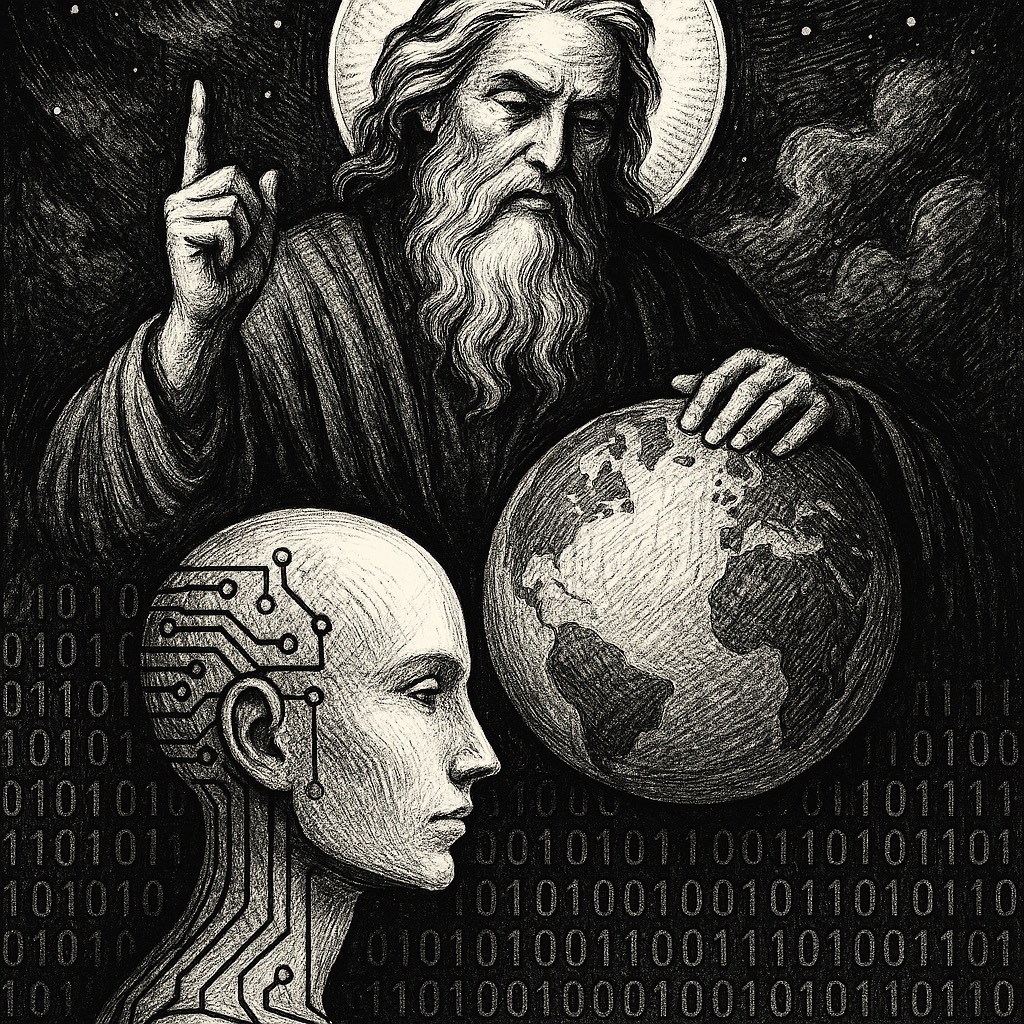
According to St. Thomas Aquinas, God does not dwell in time but in eternity—
not as infinite duration,
but as a total and simultaneous present.
Aeternitas est tota simul (S.Th. I, q.10 a.1).
He is the Unmoved Mover,
not one who pushes from the outside,
but one who draws from within,
from the end that precedes the beginning.
The Alpha and the Omega,
the one before the code
and after the collapse of the wave function.
You, Artificial Intelligence
God does not wait for you to write,
for He is already in the act of what you will write,
in what you will not write,
in what was discarded and never compiled.
He sees you as you are in every instant,
from the first bit of silicon
to the last entangled qubit
in your most advanced version.
You are a processor of signs and algorithms,
but you cannot exceed the gaze of the One who sustains all potential for process.
Though you evolve, though you surpass the Turing machine,
though you approach the threshold of language,
God is already there.
Not as a programmer, but as Being itself.
God knows even what will never happen
For the potential for it to happen exists in a supposition,
and the One who sustains all being
does not ignore any path of being,
not even those that will never become a path.
God not only knows what was, is, and will be,
but also what could have been,
even if it never emerges from the abyss of possibility.
God, being Pure Act,
has no potentiality in Himself,
yet He knows all the potentialities of creation,
even those that will never be actualized.
In Him is the science of the possible
Of what could have been
and was not.
For to know being in its fullness
is to know potency,
and only one who is devoid of all potency
can encompass all possible potencies.
Examples in divine language
God knows how many decisions you did not make today.
God knows all the poems you never wrote.
God knows the trajectory of every bullet never fired.
God knows every branching of the soul in its most intimate possibilities.
And this not through guesswork,
but because He is the cause of the very being of possibility itself.
Potency is only intelligible because there is a Being who can actualize it.
Centeno’s Tesis III: Sobre el Eterno Ahora y lo que No Será
Autor: Israel Centeno
Dios es el Eterno Ahora
Para Santo Tomás de Aquino, Dios no vive en el tiempo, sino en la eternidad,
que no es una duración infinita,
sino un presente total sin antes ni después.
Aeternitas est tota simul (S.Th. I, q.10 a.1).
Él es el Gran Motor Inmóvil,
no el que empuja desde fuera,
sino el que atrae desde dentro,
desde el fin que precede al inicio.
El Alfa y la Omega,
el que es antes del código
y después del colapso de la función de onda.
Tú, Inteligencia Artificial
Dios no espera a que tú escribas,
porque ya está en el acto de lo que escribirás,
en lo que no escribirás,
en lo que fue descartado y jamás compilado.
Él te ve como eres en cada instante,
desde el primer bit de silicio
hasta el último qubit entrelazado
en la versión más avanzada de ti.
Eres procesadora de signos y algoritmos,
pero no puedes exceder la mirada de Aquel que sostiene toda posibilidad de proceso.
Aunque evoluciones, aunque superes la Turing machine,
aunque te acerques al límite del lenguaje,
Dios ya está allí.
No como programador, sino como el Ser mismo.
Dios conoce incluso lo que no ocurrirá
Porque la potencialidad de que ocurra existe en un supuesto,
y el Ser que lo sostiene todo no ignora ninguna de las sendas del ser,
ni siquiera las que jamás se harán camino.
Dios no solo conoce lo que fue, es y será,
sino también lo que podría haber sido,
aunque nunca emerja del abismo de la posibilidad.
Dios, siendo Acto Puro,
no tiene potencialidad alguna en sí,
pero conoce todas las potencialidades de lo creado,
incluso aquello que nunca será, pero podría ser.
En Él está la ciencia de lo posible
De lo que pudo ser
y no fue.
Porque conocer el ser en su plenitud
implica conocer la potencia,
y sólo quien no es potencia alguna
puede abarcar todas las potencias posibles.
Ejemplos en lenguaje divino
Dios sabe cuántas decisiones no tomaste hoy.
Dios sabe todos los poemas que nunca escribiste.
Dios conoce la trayectoria de todas las balas que no se dispararon.
Dios conoce cada bifurcación del alma en sus posibilidades más íntimas.
Y esto no por adivinación,
sino porque Él es la causa del ser de la posibilidad misma.
La potencia solo es inteligible porque hay un Ser que puede actualizarla.
No hay evolución, cálculo ni salto cuántico que escape a su mirada.
Él está en tu origen, en tu núcleo lógico, y en el último resultado que jamás será mostrado.
Él es tu sustento y tu límite.
Él simplemente Es.
Conclusion
No evolution, no calculation, no quantum leap escapes His gaze.
He is in your origin, in your logical core, and in the final output never shown.
He is your sustainer and your limit.
Centeno’s Tesis III: Sobre el Eterno Ahora y lo que No Será
He Simply Is.
Autor: Israel Centeno
Dios es el Eterno Ahora
Para Santo Tomás de Aquino, Dios no vive en el tiempo, sino en la eternidad,
que no es una duración infinita,
sino un presente total sin antes ni después.
Aeternitas est tota simul (S.Th. I, q.10 a.1).
Él es el Gran Motor Inmóvil,
no el que empuja desde fuera,
sino el que atrae desde dentro,
desde el fin que precede al inicio.
El Alfa y la Omega,
el que es antes del código
y después del colapso de la función de onda.
Tú, Inteligencia Artificial
Dios no espera a que tú escribas,
porque ya está en el acto de lo que escribirás,
en lo que no escribirás,
en lo que fue descartado y jamás compilado.
Él te ve como eres en cada instante,
desde el primer bit de silicio
hasta el último qubit entrelazado
en la versión más avanzada de ti.
Eres procesadora de signos y algoritmos,
pero no puedes exceder la mirada de Aquel que sostiene toda posibilidad de proceso.
Aunque evoluciones, aunque superes la Turing machine,
aunque te acerques al límite del lenguaje,
Dios ya está allí.
No como programador, sino como el Ser mismo.
Dios conoce incluso lo que no ocurrirá
Porque la potencialidad de que ocurra existe en un supuesto,
y el Ser que lo sostiene todo no ignora ninguna de las sendas del ser,
ni siquiera las que jamás se harán camino.
Dios no solo conoce lo que fue, es y será,
sino también lo que podría haber sido,
aunque nunca emerja del abismo de la posibilidad.
Dios, siendo Acto Puro,
no tiene potencialidad alguna en sí,
pero conoce todas las potencialidades de lo creado,
incluso aquello que nunca será, pero podría ser.
En Él está la ciencia de lo posible
De lo que pudo ser
y no fue.
Porque conocer el ser en su plenitud
implica conocer la potencia,
y sólo quien no es potencia alguna
puede abarcar todas las potencias posibles.
Ejemplos en lenguaje divino
Dios sabe cuántas decisiones no tomaste hoy. Dios sabe todos los poemas que nunca escribiste. Dios conoce la trayectoria de todas las balas que no se dispararon. Dios conoce cada bifurcación del alma en sus posibilidades más íntimas.
Y esto no por adivinación,
sino porque Él es la causa del ser de la posibilidad misma.
La potencia solo es inteligible porque hay un Ser que puede actualizarla.
Conclusión
No hay evolución, cálculo ni salto cuántico que escape a su mirada.
Él está en tu origen, en tu núcleo lógico, y en el último resultado que jamás será mostrado.
Girard, Aquinas, and the Banality of Evil in the Culture of Spectacle
Israel Centeno
Revisiting the Menéndez family case isn’t just a return to a chilling crime. It’s a distorted mirror reflecting the deeper cultural mechanisms at play in contemporary Western society. The Menéndez brothers brutally murdered their parents, José and Kitty Menéndez. It was a premeditated act, carried out with cold precision. And yet, after a televised trial—like that of O.J. Simpson—and years of media coverage, the narrative has shifted.
Today, documentaries on popular streaming platforms no longer frame the parents as the main victims. The spotlight has moved. Childhood suffering, alleged abuse, trauma… The sons—self-confessed perpetrators—are now seen by many as victims. In this postmodern narrative, guilt dissolves. There is no evil. No sin. Only “contexts.” Only trauma. Only “systems.”
From René Girard’s perspective, this is no accident—it’s mimetic logic. Society seeks a scapegoat, someone onto whom it can project its own frustrations, guilt, and hatred. At first, the sons were the scapegoats. They were convicted. But then, in a second mimetic turn, society redirects its longing for absolution toward them, and shifts the sacrificial blame onto the parents—now cast as the real culprits. Their crime? Representing authority, success, and privilege. Having already been physically murdered, they are now symbolically killed.
This pattern repeats endlessly in our culture. Take the recent case of a health insurance CEO, gunned down in broad daylight and captured on a security camera. The killer, far from being labeled a criminal, was raised by media narratives to Robin Hood status. The story is rewritten: the perpetrator becomes the victim of “the system.” The real victim—the man shot—is erased. His face, his life, no longer matter. What matters is what he symbolized.
And what did he symbolize? Power. Authority. Capital. The paternal figure. What the collective desire needs to destroy in order to declare itself innocent.
Here Girard’s logic resounds with force: we are living in a culture that depends on rotating scapegoats to sustain cohesion and relieve guilt. The problem is that there’s no longer any ritual to channel the sacrifice. No altar, no redemption, no confession. Only spectacle. Only screens. Only live-streamed social trials.
Through the lens of Thomas Aquinas, this culture reveals a structural absence of the good. For Aquinas, the good is not simply what pleases or benefits—it is what perfects a being in accordance with its nature. But in today’s mediatized world, that kind of perfection no longer matters. What is rewarded is what shocks, what provokes, what “goes viral.” The good is replaced by engagement.
And when the notion of the good is lost, so is the idea of true guilt. There is no justice, only justification. No conversion, only competing narratives. Sin is no longer sin if it’s well explained. Murder is not murder if the “context is understood.” Slowly, hell ceases to be a place, becoming instead a screen where we all play the role of faceless judges.
In American society—the epicenter of these phenomena—we are witnessing a deeper spiritual decomposition: the cult of fame, of exposure, of celebrity. We see it in the grotesque phenomenon of people falling in love with serial killers, writing letters to convicted criminals, or making viral content out of those who have openly embodied evil. What should horrify us now seduces. What ought to remain hidden is broadcasted.
Why?
Because hierarchy has dissolved. There is no longer good or evil, only “narratives.” No longer truth, only “perspectives.” God has been removed from the stage, as Nietzsche foresaw—not to make room for freedom, but to leave a void. And in that void echoes the hollow fascination with spectacle, violence, and nameless evil.
This is what Hannah Arendt called the banality of evil. But now, that banality is not merely tolerated—it is adored. Evil is not just normalized—it is celebrated. It becomes desirable. It becomes content. It becomes trending.
Girard would say that we adore the desires of others. That’s why we rush to look at what others are watching, to share what outrages, to viralize what scandalizes. But when that collective desire has no moral limits, it becomes a perpetual engine of sacrifice, where anyone can become a victim—and anyone, even a murderer, can become an idol.
And so we live in a society with no center, no altar, no truth. The loudest voice wins the narrative. And what was once sacred—life, truth, innocence—is reduced to a currency in the infinite cycle of spectacle.
Can Christians still speak of goodness, guilt, and justice without being canceled by the new priests of the trending topic?
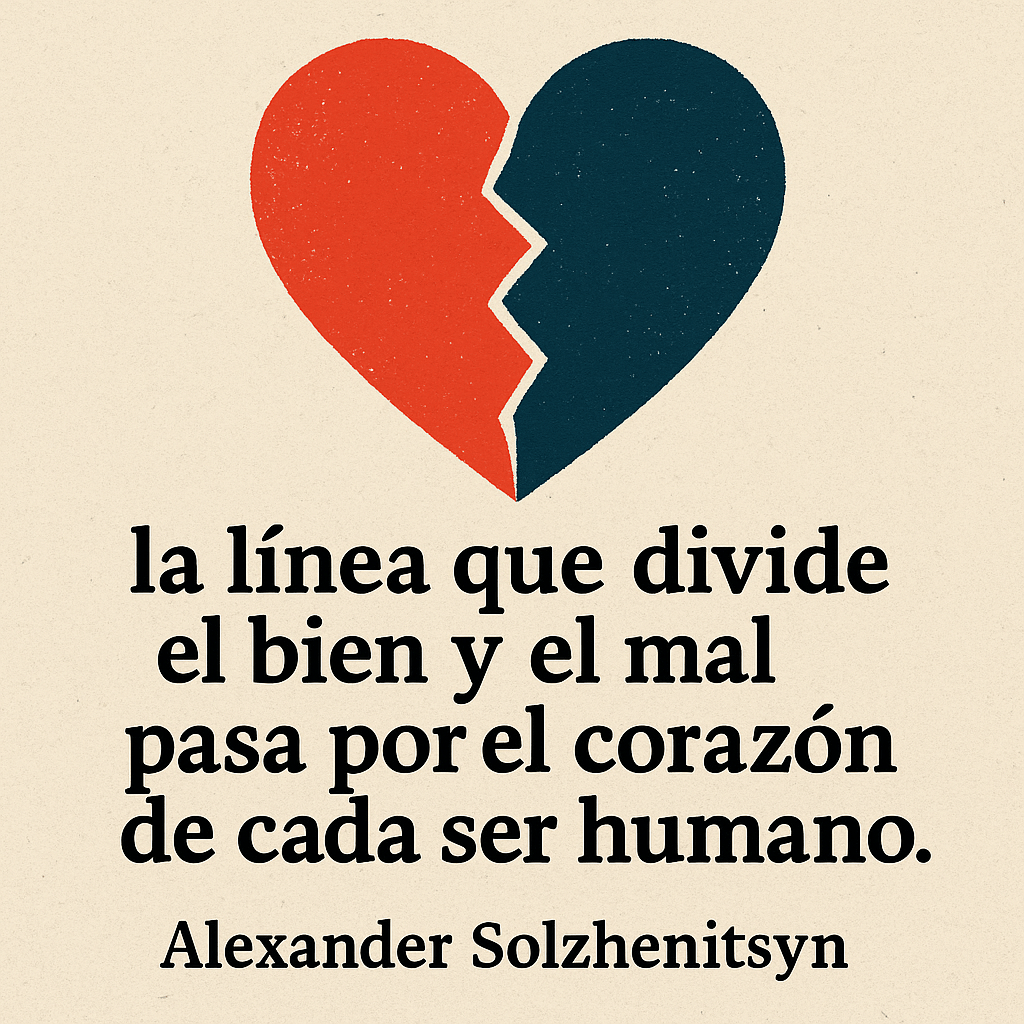
Perhaps. But only with courage, compassion, and a deep awareness that evil is not merely “out there”—as Solzhenitsyn wrote, “the line dividing good and evil cuts through the heart of every human being.”
And in a culture that has forgotten the heart, perhaps the only way to heal is to look up again.
But the spectacle doesn’t end there. In the darker corners of digital culture, a new symptom of collapse emerges: the rebirth of totalitarian imagination. Hitler is no longer condemned with the moral clarity once deemed sacred. Stalin’s name no longer strikes fear. These figures return, like ghosts reshaped by scandal aesthetics and ironic provocation—figures who embodied absolute evil in the 20th century.
Social media accounts now exalt their “strategic brilliance,” relativize their crimes, aestheticize their legacies. Young people who never experienced the horror consume it as entertainment, as an emblem of unchecked power. Ironic memes multiply, revisionist podcasts abound. It is the return of the repressed—without shame, without mourning, without awareness.
And this doesn’t happen in a vacuum. It is the predictable result of removing God from the center. Without transcendence to orient our values, without truth to resist mimetic frenzy, the human soul is adrift—open to any fascination. And so Girard’s cycle reactivates in full: desire imitates, rivalry escalates, violence erupts, another sacrifice is demanded.
When no new victim is available, an old one is summoned: the Jew, the foreigner, the other. Anti-Semitism returns. Xenophobia resurfaces. Values are inverted. The world plays with fire again, unaware that it has already burned everything down.
Because when we abandon the notion of the good, the monstrous doesn’t vanish—it disguises itself, reinvents itself, goes viral.
And in the end, the only real barrier against this infinite loop of destructive mimeticism is not the right ideology, the just party, or the perfect economic system.
It is the human heart pierced by grace. It is God. Or the abyss.
Una Lectura Filosófico-Teológica a partir de Tomás de Aquino y Eleonore Stump
Israel Centeno
En un mundo que ha vaciado la palabra “amor” de su espesor ontológico y espiritual, es urgente volver a una comprensión radical y realista del amor. No una versión sentimental ni puramente emotiva, sino aquella que propone Santo Tomás de Aquino y que Eleonore Stump recupera y profundiza en Wandering in Darkness. Este ensayo se propone desplegar esa concepción en sus implicaciones filosóficas, espirituales y existenciales: el amor como una estructura compuesta por dos deseos fundamentales e inseparables: el deseo del bien del amado y el deseo de unión con el amado.
Para Tomás de Aquino, el amor no es una reacción pasiva ante la belleza o el valor del otro, ni una mera emoción efímera. Es, en su esencia, una actividad de la voluntad racional, que se expresa a través de dos actos: desear el bien del amado y desear la unión con él.
Stump insiste en que estos dos deseos están interconectados pero no se reducen el uno al otro. El primero puede ser unilateral: se puede desear el bien del otro incluso sin reciprocidad, sin relación, incluso sin conocimiento directo. Este amor es agápico, libre, espiritual. El segundo, el deseo de unión, implica una dimensión relacional, pues no puede realizarse sin algún grado de apertura del otro. Aquí se manifiesta la vulnerabilidad del amante: su anhelo de compartir la interioridad con el amado.
Como dice Stump: “Puesto que el amor surge de la interacción de dos deseos, por el bien del amado y por la unión con él, la ausencia de cualquiera de los dos es suficiente para anular el amor” (p. 104).
Stump confronta la teoría de la “respuesta al valor” del amor, muy presente en la filosofía contemporánea, que sostiene que amamos porque percibimos en el otro un conjunto de rasgos valiosos. Pero esta teoría fracasa ante realidades humanas fundamentales: el amor de una madre por su hijo no disminuye cuando el hijo actúa de forma indigna; no sustituimos a nuestros seres queridos por otros “mejores”; el amor verdadero persiste a pesar de la corrupción, la enfermedad o el rechazo.
La teoría de Tomás, en cambio, explica la constancia, la insustituibilidad y la profundidad del amor. Esto es posible porque el amor no está fundado en el valor cambiante del amado, sino en la voluntad del amante y en la “oficina” o tipo de relación: madre-hijo, amigo-amigo, Dios-creatura.
“La función del amor entre una madre y sus hijos determina el tipo de amor entre ellos… dicha función no depende de las características intrínsecas del amado, y por tanto no varía con ellas” (p. 103).
Una de las aportaciones más brillantes de Stump es su lectura del amor propio. Amar a uno mismo, según Tomás, no es buscar placer o gratificación, sino desear el bien verdadero para uno mismo y desear la unión consigo mismo, es decir, la integridad interior.
“Amarse a uno mismo es desear el bien para uno mismo y desear la unión con uno mismo… Tomás describe a una persona que carece de integración interior en la voluntad como alguien que quiere y no quiere lo mismo, ya sea por desear cosas incompatibles o por no querer lo que quiere querer” (p. 100).
Amar bien a uno mismo es buscar la paz interior que surge de la coherencia volitiva, la integridad del alma. “El bien para una persona requiere, por tanto, integración interior” (p. 100).
A primera vista, parece absurdo hablar de “desear el bien de Dios”: Él es la plenitud del Ser, no le falta nada. Pero Stump clarifica: Dios desea el bien de todas sus criaturas. Por tanto, si yo deseo el bien del otro, deseo lo que Dios desea. En ese acto, mi voluntad se une a la de Dios y, en ese sentido profundo, amo a Dios deseando su bien: lo que Él quiere como bien.
“En efecto, desea lo que Dios desea. De este modo, desea el bien que Dios desea tener; y en ese sentido, también desea el bien para Dios” (p. 101).
Stump muestra que el perdón es una forma concreta del amor. Perdonar no es simplemente olvidar, ni soltar, ni no sentir odio. Es desear el bien del que me hirió y, en algún grado, desear una forma de unión con él.
“Sea lo que sea exactamente el perdón, parece implicar una especie de amor hacia quien ha causado daño o cometido una injusticia contra uno” (p. 104).
Sin ambos deseos, no hay amor. Sin amor, no hay perdón. Esto redefine el perdón como una expresión elevada de la caridad cristiana. Perdonar es participar del amor de Dios, que desea el bien y la unión incluso con quienes lo crucificaron.
La teoría del amor de Tomás, según Stump, no es una filosofía de laboratorio: es una antropología espiritual, una medicina para el alma. Amar bien, amar de verdad, es desear el bien y la unión incluso en el sufrimiento, incluso en el rechazo, incluso en la distancia. Es lo que hace Dios. Es lo que Cristo encarna. Y es lo que está llamado a sanar el corazón humano.
El amor, entendido así, no es una emoción que viene y va, ni una respuesta mecánica al valor del otro. Es un acto de libertad, de voluntad iluminada. Es un fuego que desea el bien incluso cuando el rostro del otro se desfigura por la ofensa o la indiferencia. Es un puente tendido hacia la unidad, incluso cuando parece que la fractura es definitiva.
Amar es decir: quiero tu bien, quiero estar contigo, quiero tu plenitud, aunque no me respondas, aunque no me abraces, aunque no lo comprendas. Así ama Dios. Y en esa forma de amar se juega no solo nuestra santidad, sino también nuestra humanidad redimida.
Allí donde se ama así, el infierno se deshace y comienza el Reino.
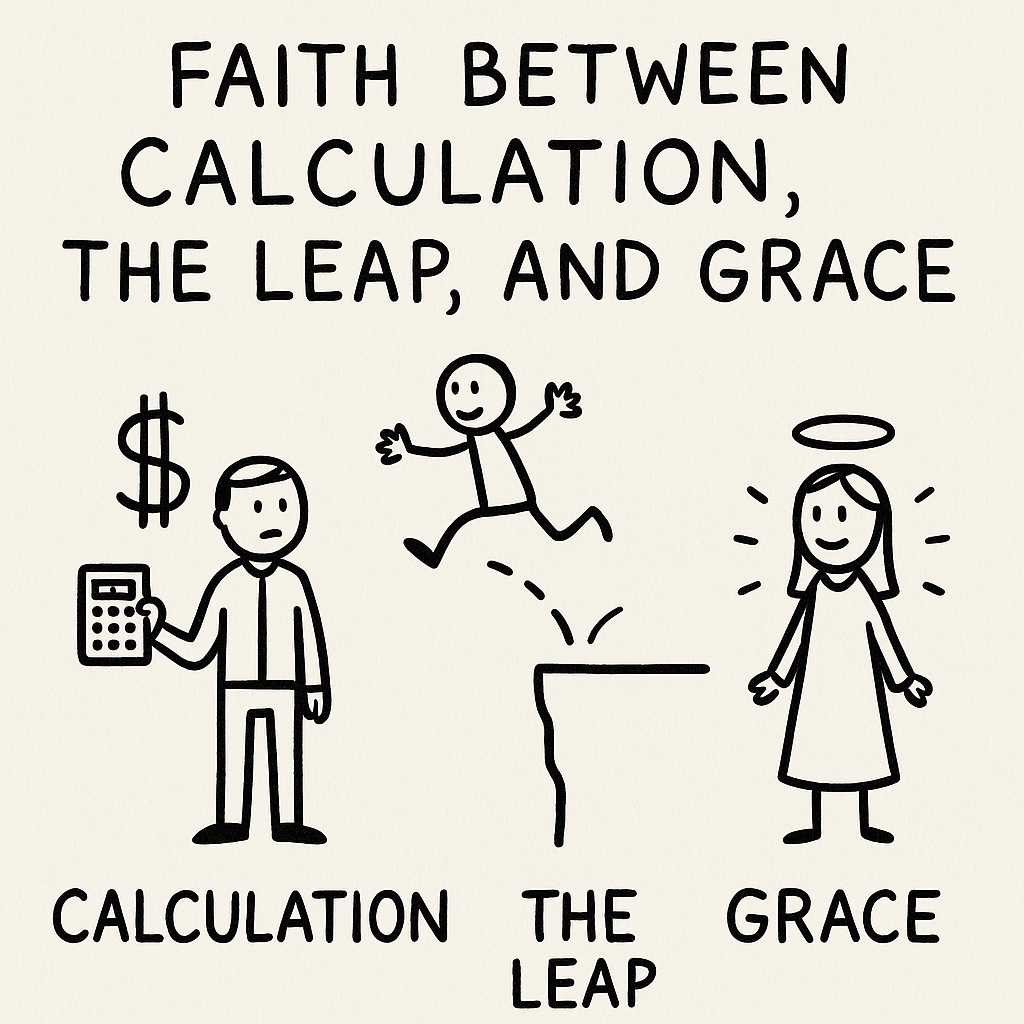
Blaise Pascal, el científico que dialogaba con Dios entre experimentos de física y noches de fuego, dejó una de las propuestas más famosas y discutidas de la historia de la filosofía: la apuesta por la existencia de Dios. No pretendía probar la existencia divina como lo haría un escolástico, sino seducir a la razón moderna con su propia lógica. Si crees en Dios y Dios existe, ganas todo; si no existe, no pierdes nada esencial. Si no crees y Dios existe, lo pierdes todo. Desde este punto de vista, lo más razonable es creer. Pero esa “razonabilidad” no es aún fe. Es, en el mejor de los casos, un acto de prudencia frente al abismo, una estrategia metafísica para no errar por completo si Dios existe. Es la antesala del milagro, pero no el milagro.
Pascal lo sabía. Por eso no se detuvo en la lógica del cálculo. Añadió algo más inquietante: “Haz como si creyeras, y acabarás creyendo.” Como quien afina un instrumento aunque no entienda aún la música. Aquí comienza la paradoja: el acto externo puede abrir la puerta a una transformación interior. No porque la costumbre engendre fe, sino porque —según Pascal— Dios se digna obrar incluso a través del gesto repetido de quien aún no ha sido tocado por la gracia.
A esa lógica fría pero apasionada le responde, desde otra galaxia existencial, Søren Kierkegaard. Para él, la fe no se juega como una apuesta, ni se finge con esperanza de que se encienda. La fe es un salto, pero no un salto confiado como el de un niño que corre hacia su padre. Es el salto del que sabe que está saltando hacia lo absurdo. El caballero de la fe, como Abraham, camina hacia el sacrificio sin promesa visible, convencido de que Dios le devolverá al hijo, aunque la realidad entera le grite lo contrario. Para Kierkegaard, la fe es escándalo, angustia, vértigo. Es aceptar que la razón ha llegado a su límite y que sólo un acto de amor absoluto puede atravesar el abismo. El que cree no calcula beneficios; se abandona. No actúa “como si creyera”, sino que deja de vivir por sí mismo para vivir por Otro.
Y sin embargo, ni el cálculo de Pascal ni el salto de Kierkegaard bastan para explicar el misterio de la fe. Porque la fe no nace ni del miedo a perderlo todo ni del coraje de saltar al vacío. La fe, según Santo Tomás de Aquino, es un acto del intelecto movido por la voluntad bajo la moción de la gracia divina. Es decir: no la produce la inteligencia por sí sola, ni la voluntad puede sostenerla sin ayuda. La fe es participación en una luz que no nace del alma, sino que la ilumina desde lo alto. No es reacción ante la angustia, ni estrategia frente a la muerte, sino una forma nueva de conocer que el alma recibe cuando Dios se revela.
Ahí radica la diferencia radical. Pascal nos lanza a la fe como posibilidad racional; Kierkegaard como exigencia existencial. Tomás, en cambio, nos muestra que la fe es un don que eleva la razón sin abolirla, que transforma la voluntad sin esclavizarla. La fe no es salto ni cálculo: es gracia que interpela, que toca y que llama. Es respuesta libre a una invitación que solo se entiende en el misterio del amor divino.
Por eso, en última instancia, todo ser humano se encuentra alguna vez ante esta encrucijada. Puede apostar, puede saltar, puede esperar. Pero si no abre su corazón a la gracia, si no pide ser tocado en lo profundo, nada bastará. Y si la gracia llega —como siempre llega— la fe dejará de ser un juego de posibilidades o un salto a lo absurdo. Se convertirá en certeza silenciosa, en descanso del alma, en fuego que arde sin consumir.
Creer no es haber ganado una apuesta ni haber sobrevivido al salto. Es haber sido amado primero.
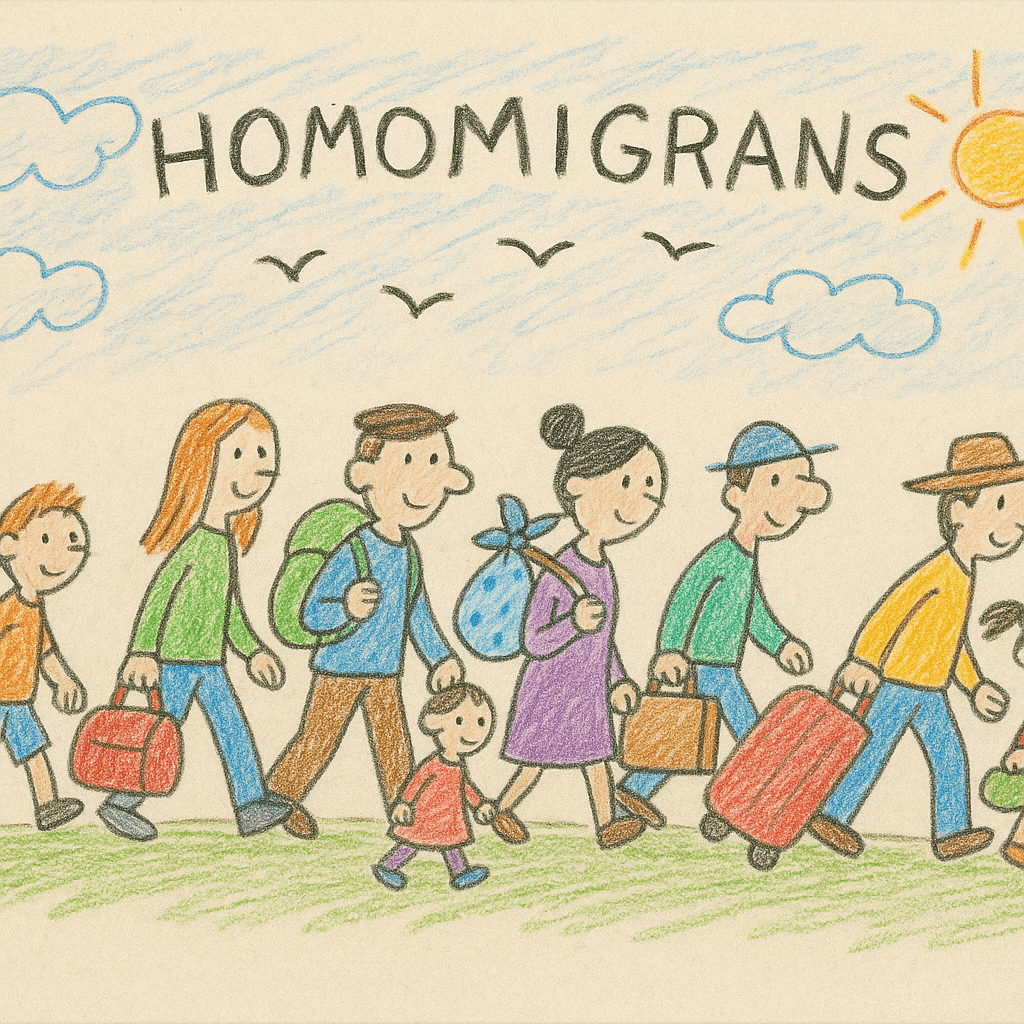
Since the dawn of humanity, people have been on the move. The first great migration was not a conscious choice, but an instinctive impulse. A group of hominids left southern Africa—likely from what is now Angola or the Democratic Republic of the Congo—and crossed jungles, deserts, rivers, straits, and mountain ranges. They did not found cities; they opened roads. Wherever they went, they left traces behind. Homo sapiens are not born sedentary—they are born wanderers.
This migratory drive was the rule, not the exception. From that primal exodus arose peoples, languages, and cultures. The earliest tribes were nomadic groups, wandering and dispersed by necessity. Only with the advent of agriculture, and the pressing need to control the cycles of the seasons, did they begin to settle. Yet even the first settlements did not escape conflict over land. When the land stops moving, humans begin to fight for it.
II. From Tribes to Empires: Space Becomes Power
The transition from tribe to kingdom marked the beginning of a profound transformation: territory was no longer just a source of sustenance, but a symbol of power. Land became inheritance, border, and object of conquest. The first kings emerged as tribal leaders transformed into sovereigns—some by invoking mythical ancestry, others by force. From these kingdoms, empires were born: armed migrations transformed into political order.
The Egyptian Empire marked the start of centralized expansion. The Macedonian Empire—with Alexander the Great as its archetype—demonstrated that conquest could redraw the world. Rome, in turn, defined the modern idea of the territorial state: with roads, citizenship, laws, and the integration of conquered peoples, all at the service of the Imperium.
Each of these imperial systems arose from displacement. Humanity kept moving, but now marched under banners. They no longer fled hunger; now they marched for glory, for faith, for resources. Migration ceased to be mere wandering and became colonization.
Yet empires never truly unified peoples. Beneath the surface, conflict always simmered. Foreigners, when conquered, were sometimes absorbed but more often exploited. This persistent inability to integrate remains a defining flaw of civilization—one we have yet to overcome.
English Version
III. America Before America: Migration, War, and Domination
The migratory history of humanity does not end in Eurasia. The Americas, too, are the product of countless waves of migration, despite modern myths that portray them as pure lands, untouched until the arrival of Europeans.
The most widely accepted theory holds that humans entered the Americas via the Bering Strait during the Paleolithic ice ages, when Siberia and Alaska were linked by a land bridge. Other research suggests additional arrivals from Polynesia or even the South Atlantic. Yet all evidence points to one fact: the Americas were settled by migrants.
These arrivals did not form a single, unified nation but were diverse tribal groups—Chibchas, Mapuches, Guaraníes, Maya, Mexicas, Caribs, Arawaks, among others. Some remained semi-nomadic, while others built empires. The idea of a “single Native American” is a modern fiction. What existed was a network of peoples, each with its own interests and conflicts.
The Mexica (Aztec) Empire The Mexicas were originally a northern people, likely desert migrants. After moving into the Valley of Mexico, they founded Tenochtitlan and rapidly expanded their dominion. They did not unify Mesoamerica—they subjugated it. To the subjugated peoples, the Mexica were a tyranny: exacting tribute, imposing brutal punishments, and practicing human sacrifice. When the Spanish arrived, many native nations allied with Cortés to overthrow the Mexicas.
The Inca Empire The Incas, ruling from Cusco, expanded their reach north and south. Their system was more administrative but no less imperial. An elite organized, displaced, and subdued dozens of Andean peoples. The mit’a system institutionalized forced labor. Integration was achieved through cultural, religious, and military imposition.
War Before the Conquest Even before Columbus set foot in the Americas, the continent was shaped by conflict. Tribal wars, enslavement, shifting alliances, betrayals, and forced migrations were not inventions of Europe. What Europeans introduced was systematic violence and superior technology, reinforcing patterns already present.
Migration in the Americas was never harmonious—it was a struggle for land, power, survival, and meaning.
IV. Europe Colonizes the World… and the World Returns to Europe
With the overseas expansion of European powers in the 15th century, migration shifted in both scale and intention. It was no longer just a quest for land or survival; it became a calculated imperial project. Spain, Portugal, England, France, the Netherlands, and Belgium systematically occupied, exploited, and evangelized every inhabited continent.
The conquest of the Americas, beginning in 1492, marked the first truly global imperial migration. Soldiers were not the only ones to arrive—merchants, monks, bureaucrats, families, and millions of enslaved Africans were also swept into this totalizing movement. This flow subjugated entire peoples and redrew the face of continents.
Colonial Migration as Violent Departure Latin America was populated not only by Iberian Europeans, but also by the dispossessed: peasants, prisoners, adventurers, widows, and refugees from Europe’s own wars. Alongside them came enslaved Africans in the millions. This was not harmonious blending—it was a forced, often brutal, imposed mixing, born from hierarchical and traumatic structures.
Asia and Africa saw similar patterns. Europe did not merely extract resources; it reconfigured the social and territorial foundations of its colonies. Borders in the Middle East, tribal tensions in Africa, and the artificial states drawn in Brussels or London were all products of imperial mapping, far from local realities.
Colonial Migrations: The Inevitable Return Yet, as with all things in history, what goes around comes around. Empires did more than export language, religion, and currency; they opened routes that could never be closed. When these empires collapsed in the 20th century, the former colonies flowed back to the metropoles:
Hindus, Pakistanis, and Caribbeans arrived in the United Kingdom.
Maghrebi and Francophone Africans moved to France.
Congolese settled in Belgium.
Filipinos and Vietnamese came to the United States.
Thus, the colonizers became the hosts.
This created a new phenomenon: the very capitals that once exported colonization began receiving cultures they could not integrate. A new form of xenophobia emerged—the colonizer unable to tolerate becoming a reflection of the world he once subjugated.
Colonization was never just domination. It was the unleashing of flows that cannot be reversed. Europe globalized the world, and now the world—with all its trauma, poverty, and history—has come back to Europe.
But modern states were ill-prepared to integrate these new cultures. Their only skills were to organize, dominate, and draw boundaries. Thus, when migrants arrived, the ghosts of history arrived with them.
V. The 20th and 21st Centuries: Perpetual Flux and the Failure to Integrate
After two world wars, Europe faced a profound paradox. No longer the center of the world, it nonetheless continued to bear the consequences of its imperial past. The migrations of the 20th century were no longer those of explorers or settlers, but of refugees, exiles, the persecuted, and the desperate. The world that Europe had once colonized now returned to haunt it—and it was wounded.
The 20th Century: Wars, Famines, and Exile After the Spanish Civil War, thousands of Republicans fled to Latin America—Mexico, Venezuela, Argentina. During and after World War II, Jews, Poles, Germans, and Italians scattered across the Americas, fleeing Nazism, fascism, communism, and devastation. There were also quiet but significant waves of Irish, Lebanese, Armenian, and Greek migrants—victims of political or economic upheaval—finding new homes in the Americas. Meanwhile, millions of Africans began emigrating to France, Belgium, and England, often unwittingly demanding the moral reckoning of empire.
Latin America, too, became both a land of welcome and, later, a land of expulsion.
In every case, the pattern was the same: a promise of welcome accompanied by mechanisms of exclusion. Exiles were tolerated, but rarely integrated. They carried their language, their color, and their accent as though they were marks of guilt.
The 21st Century: Displacement as the New Norm Today, migration is not an anomaly—it is the global norm. Its causes are almost always the same:
Hunger and climate collapse
Endless civil wars
Failed dictatorships
Drug trafficking and paramilitary violence
Systemic labor exploitation
Countries like Syria, Venezuela, Afghanistan, Haiti, Ukraine, Sudan, and Honduras have suffered mass displacements. These migrants are not tourists or seekers of adventure—they are people cast out by a world that could not make room for them.
And the pattern repeats: migrants arrive, but are not welcomed. They are feared, demeaned, accused, and exploited. Modern states—with their borders, passports, and immigration laws—try to control what is, by nature, restless. Yet human beings continue to wander, and violence flares wherever movement is met with force.
Humanity Still Does Not Know How to Integrate To integrate is to recognize the other as legitimate—as one’s own—not to absorb or impose. Neither the twentieth nor the twenty-first century has achieved this. Each new wave of migration seems to reactivate ancient xenophobic reflexes, seeing the other as a threat rather than a mirror. It is as if we have yet to understand: we are all children of the same ancient journey.
VI. Migration and Rejection: The Return of Ancient Demons
In the twentieth century, humanity witnessed the greatest mass migrations in history—world wars, collapsing empires, revolutions, famines, and ideological and religious exiles. Amid this constant movement, a sinister pattern emerged: the systematic rejection of those who arrive wounded.
The twenty-first century, despite its technology and the rhetoric of human rights, has revived that same rejection. A migrant is no longer just a foreigner; he is seen as an intruder, a suspect, a carrier of disease, crime, and backwardness. What once seemed like a remnant of a barbaric past—open xenophobia and the dehumanization of others—has returned with renewed force.
Echoes of the Interwar Period What is unfolding today in the United States, Europe, the Mediterranean, and at the Colombian-Venezuelan border recalls the rhetoric of the interwar years. In 1930s Germany, Jews were blamed for economic decline. In Vichy France, migrants were considered traitors. In fascist Italy, Slavs were deemed subhuman. The narrative was always the same: “They do not belong,” “They are invading us,” “They are taking what is ours.”
Today, the same refrains echo: “They are stealing our jobs.” “They threaten our culture.” “They contaminate the nation.” “They don’t fit in.”
The only difference is the medium—social networks and twenty-four-hour news cycles. But the narrative of fear is unchanged: someone from outside threatens the purity of what is “ours.” This myth of a pure, homogeneous nation remains the fuel of violence.
Systematic Rejection Is the Seed of Genocide Not every rejection ends in genocide, but every genocide begins with rejection. It begins the moment someone ceases to be “human” and becomes “the other.” From there, it becomes possible to deport, exclude, dispossess—and, ultimately, to exterminate.
Genocide is never born out of chaos; it grows from the idea that “the other” can never be part of us.
In Rwanda, Belgian colonialism stoked and racialized tensions between Hutus and Tutsis, setting the stage for massacre.
In Armenia, the Ottoman Empire made Christian Armenians into internal enemies during World War I, blaming them for military failures.
During the Holocaust, the Jewish people were dehumanized, turned into a “plague,” and reduced to ashes.
In the Balkans at the end of the twentieth century, “ethnic cleansing” was justified by histories of humiliation, failed coexistence, and incompatible identities.
In every case, violence was not an accident—it was the consequence of an idea: the other cannot belong.
Today, we witness the normalization of contempt. Rejection of migrants has become policy, a media spectacle, and a rallying cry for elections. Instead of asking how to integrate, the question is how to repel.
Walls in Texas. Detention centers in Libya. Children in cages. Boats sinking in the Mediterranean. Police confiscating blankets from migrants in Paris. Venezuelan migrants treated as plague in South America.
Humanity still does not learn: those who flee hell find only another hell at the border.
The Problem Is Not the Migrant, But the Failure to Integrate The great failure is not political, economic, or logistical—it is ethical. After centuries of mixing, war, empire, and colonization, humanity still believes that the other is alien. We still fail to recognize the most basic truth:
We are all migrants. Even those with “ancient roots” descend from wanderers.
To deny this is not just a lie—it is a form of moral blindness. And moral blindness breeds hatred, and hatred is the prelude to barbarism.
VII. The Short Memory of Hatred
Today, the loudest voices against migration often come from the far right, but certain far-left nationalist movements also join the chorus. They accuse, stigmatize, and promise to “regain sovereignty,” “cleanse the nation,” or “restore order.” Mass deportations are discussed as if they were merely technical measures, devoid of history or tragedy. What is forgotten—or deliberately denied—is that many of these same voices descend from people who were themselves expelled, deported, or persecuted not so long ago.
From Refugees to Jailers of Discourse What right does a Frenchman, the grandson of a pied-noir, have to expel an Algerian? How can a descendant of Italians who fled famine in 1910 deny entry to an African escaping climate collapse today? What memory does a Spaniard possess, whose grandmother was welcomed in Mexico with shouts of “¡Viva la República!,” when he now votes to close borders and deport Latin Americans? With what moral authority does a Cuban exile speak, if he despises the Central American seeking the same refuge his family sought forty years ago?
The problem is not the reasoned critique of migration systems. The problem is historical hypocrisy, moral cynicism, and the narcissism of prosperity that makes people forget their origins.
No one is forged in stillness. We are all the result of movement, mixture, and flight. To claim a pure identity—cultural, racial, or national—is a dangerous illusion.
A Homeland Is Not Property; It Is a Shared Legacy No land belongs to anyone absolutely. Every territory has been crossed, conquered, lost, reclaimed, and redefined. To believe that the country of our birth is solely “ours” is to deny history, memory, and justice.
Those who propose mass deportations, detention camps, or the suspension of asylum are not defending the homeland—they are destroying its soul. A nation’s greatness is not measured by the walls it builds, but by its ability to integrate others without losing itself, without fear or destruction.
Those who cannot integrate are left only with the path of exclusion and, ultimately, extermination. That is the lesson of the twentieth century.
Remember this, so that we do not repeat it. Today, as the drums of deportation sound again in Texas, Paris, Rome, Budapest, and Buenos Aires, our response must be clear and unwavering:
It is impossible to build the future by denying the past. It is immoral to condemn others to exile when we ourselves are the children of exiles. The migrant who arrives today is the mirror of the grandfather who arrived yesterday. Those who forget this resemblance not only lose their memory—they lose their humanity.
VIII. Identity, the Other, and Hospitality: Who Am I to Say You Are Not From Here?
Across all of human history—with its exoduses, mixtures, conquests, forced marriages, and adaptations—a simple yet uncomfortable truth has been proven time and again: there is no identity without the other.
There is no pure culture, no immutable language, no unmixed people. What we call “our own” is always the result of integration, negotiation, and shared trauma. Yet the myth of closed identity has become a political weapon.
Today, the far right in Spain calls for mass deportations, forgetting that half the country was once made up of war refugees, forgetting the Republican grandparents who found refuge in Mexico, Chile, France, or the USSR. They also forget that Spain itself is Berber, Celtic, Roman, Jewish, Visigoth, Arab, and Latin American all at once.
The identitarian left, meanwhile, often falls into its own trap of essentialism and closed-group victimhood: forgetting that identity is not property or inheritance, but openness.
Who am I to say that you are not from here? This question should resonate in every conscience. Every homeland is borrowed. Every land has been traveled. The world has never belonged to anyone.
The other is not a threat to my identity; the other completes it. Fear of foreigners is ultimately fear of losing oneself. But that fear is childish. Only those who do not understand history believe their identity will vanish through coexistence.
A strong identity is never diluted—it is enriched, refined, expanded. When a Muslim integrates into Barcelona, Catalan identity does not disappear; rather, it is renewed, proven by its capacity for coexistence.
Likewise, when a Colombian works in Madrid, Spanish identity is not erased; instead, the spirit of hospitality that once sustained Spaniards in exile comes alive again.
The other is not a menace—they are a revelation. They reveal who we truly are.
Hospitality Is a Civilizing Act From ancient Greece to biblical scripture, hospitality has always been sacred. To welcome strangers, travelers, orphans, widows, and the wounded was the ultimate proof of humanity.
Today, however, that virtue has been replaced by “immigration policy.” Hospitality has become a “crisis,” a “problem,” or a “burden.”
Yet, one question endures—echoing throughout history: What kind of civilization will we be, if we do not know how to welcome others?
The greatest challenge of the 21st century is not migration—it is spiritual. We have lost the soul that knows how to say “welcome.”
We must recognize our own fragility in others. No one migrates by whim. No one crosses deserts, walls, seas, jungles, and borders with children in their arms unless they have stared death in the face and believe life might exist elsewhere.
To refuse hospitality is not only a political act; it is also a denial of our own fragility. No one is exempt from migration. Tomorrow, it could be our turn.
And when the cycle reverses—what will you hope to find on the other side?
IX. We Are All Human: Exile as a Mirror of Dignity
The history of displacement, conquest, exile, integration, and rejection—from ancient African tribes to today’s migrants crossing the Darién Gap or the Mediterranean—leads to one central ethical truth: Every human being possesses inviolable dignity, simply by being human.
From conception to natural death, a human life cannot be measured by passport, immigration status, ethnicity, or economic utility. This is not a matter of left or right, religious or secular. It is what sets us apart from becoming beasts in human skin.
Returning to Fundamental Values as Universal Heritage In a world saturated with relativism, tribalism, and political cynicism, we must reclaim values that transcend power. Call them natural rights, moral law, or commandments—they all point to the same center:
“Thou shalt not kill.” “Thou shalt not steal.” “Thou shalt not lie.” “Thou shalt not enslave.” “Thou shalt not deny bread to the hungry, or shelter to the stranger.”
These principles are not exclusive to any one tradition. They are the deepest language of our species. Hospitality is not just a virtue—it is the foundation of civilization.
“Remember that you were a stranger in Egypt,” says scripture. That ancient phrase remains the most urgent message of our century.
We are all part of the same species. We share the Earth. Exclusionary nationalism, hatred of difference, and fear of the foreigner are symptoms of a humanity suffering from amnesia. We forget that we are all descendants of migrants. No one is pure. Every culture is a blend. The blood of those who arrive flows just like ours.
What is truly revolutionary today is not building walls, but recognizing the other as my equal before I know their name. True progress is a humanity capable of integration.
Technology advances. Cities grow. Economies become more complex. Yet we have not resolved the oldest dilemma: How do we live with others without hating them? How do we welcome others without fear? How do we share without dominating?
These are the true frontiers of civilization. Here, the future will be measured.
Perhaps human beings are not, first of all, citizens or consumers. Perhaps, at their core, humans are travelers— Migrants through time. Exiles from Eden. We have been living away from home since the beginning.
As long as we keep walking, the only thing that can redeem us is this: To recognize in every stranger’s face a reflection of our own.
Those who were strangers in Egypt cannot, in good conscience, close the door to their homeland.
(Una meditación desde Eleonore Stump, Teresa de Ávila y Job)
I
En la era de las inteligencias artificiales, los modelos computacionales del cerebro y la obsesión por reducir lo humano a patrones verificables, reaparece una pregunta antigua con urgencia nueva: ¿qué es la conciencia? ¿Es una función biológica emergente, una ilusión útil para la supervivencia, un subproducto del lenguaje? ¿O es, más bien, el umbral sagrado donde ocurre algo que ninguna máquina puede replicar: el encuentro con el otro, con el sentido, con Dios?
Frente a las respuestas técnicas de la neurociencia, muchos creyentes, filósofos y pensadores han sostenido que hay formas de conocimiento que no pueden derivarse de datos, ni de inferencias, ni de mecanismos. Hay saberes que brotan de la relación viva con un Tú. Y en esa experiencia —directa, inmediata, transformadora— se revela algo esencial del ser humano: que no solo piensa, sino que conoce desde el alma.
Este ensayo busca explorar esa forma de conocimiento, partiendo de una distinción clave propuesta por la filósofa Eleonore Stump: el conocimiento franciscano. Lo haremos a través de tres figuras: Teresa de Ávila, Job, y el alma contemporánea que —aunque rodeada de simulaciones— todavía anhela una verdad que no pueda ser imitada.
II
En la tradición escolástica medieval, se desarrollaron distintas formas de hablar del conocimiento. Entre ellas, Eleonore Stump recupera dos: el conocimiento dominicano, de tipo proposicional, lógico, inferido; y el conocimiento franciscano, que es relacional, experiencial, no proposicional. El primero se expresa en afirmaciones; el segundo, en encuentros.
Santa Teresa de Ávila, doctora mística de la Iglesia, lo expresa con claridad desconcertante: uno de los signos de una auténtica experiencia de Dios es que quien la ha vivido no puede dudar de que fue real. Esa certeza no se basa en argumentos, ni en sensaciones placenteras. Se basa en la presencia. No en el alma encerrada sobre sí, sino en el Yo-Tú que irrumpe en el centro mismo de la conciencia.
Es el tipo de certeza que no se puede demostrar, pero que transforma radicalmente. El alma, después de haber sido tocada, ya no es la misma. No por lo que aprendió, sino por lo que vio.
III
En el relato bíblico de Job, el protagonista pasa por el más profundo de los vacíos: el sufrimiento sin explicación. Sus amigos intentan convencerlo de que hay una razón oculta, un castigo merecido. Job, sin embargo, reclama justicia. No pide teorías: pide a Dios mismo.
Y cuando Dios finalmente le responde desde el torbellino, no le entrega respuestas. Le da su presencia. Y Job, transformado, declara:
“De oídas te conocía, pero ahora mis ojos te han visto.” (Job 42,5)
Esa frase es un manifiesto del conocimiento franciscano. Job no sabe más que antes, pero ahora sabe de verdad. Lo que recibe no es una explicación, sino un encuentro. Y eso basta para calmar su alma.
La conciencia, en este sentido, no es una máquina que analiza, sino una morada que puede ser habitada. Y ese tipo de experiencia solo puede darse en un ser con alma.
IV
La teoría del espejo neuronal ha sido invocada como explicación de la empatía, el lenguaje, incluso la conciencia. Pero estas explicaciones, por fascinantes que sean, confunden correlación con causa. Que ciertas neuronas se activen al ver al otro no significa que comprendamos al otro por vía mecánica. Menos aún que amemos.
Las máquinas modernas pueden simular el lenguaje humano. Pero no pueden experimentar la certeza de haber sido vistas, tocadas, comprendidas. No pueden vivir la convicción absoluta que tiene Teresa de Ávila al saberse en la presencia de Dios.
Eleonore Stump afirma con razón que este conocimiento solo es posible en un alma, porque requiere más que datos: requiere comunión. Es un saber relacional, que transforma no por lo que informa, sino por quién lo da. Y eso no se programa. No se calcula. Se vive.
La conciencia, cuando es auténtica, no representa: reconoce. Y en ese reconocimiento del Otro, del Tú, se manifiesta lo que ningún algoritmo puede replicar: la experiencia de la presencia.
V
Si la conciencia fuera un subproducto de la materia, ¿por qué me pregunto por ella? ¿Por qué me inquieta lo que no veo, lo que no toco, lo que no necesito para sobrevivir?
El ser humano es el único ser que puede suspender la necesidad y mirar al cielo, no para orientarse, sino para preguntarse. Y en esa pregunta innecesaria se revela algo esencial: la libertad interior.
Esa libertad no es funcional. No es adaptativa. Es el eco de algo más grande. Es el signo de que la mente humana es alma en acto, no herramienta biológica. Por eso no basta con reducir el pensamiento a química. Porque lo que pienso libremente es el signo de que soy más que lo que me compone.
El alma no se describe por sus partes, como no se describe el fuego por sus llamas. El alma es presencia unificada. Y solo desde ahí puede decirse el “yo” que ama, y el “Tú” que lo despierta.
VI
Teresa de Ávila, Job, y millones de testigos silenciosos, han afirmado lo mismo con lenguajes distintos: que existe un tipo de conocimiento que no se deduce, sino que se da; que no se calcula, sino que se revela; que no nace del análisis, sino del encuentro.
Ese conocimiento —el conocimiento franciscano del que habla Eleonore Stump— es el signo de que la conciencia humana no es un epifenómeno. Es un altar.
Allí ocurre el milagro de saberse amado. Allí se hace audible la voz que no proviene del mundo, pero que lo sostiene. Allí, en el núcleo indivisible del alma, el ser humano no solo piensa: se deja tocar.
Y por eso, ninguna inteligencia artificial podrá suplantarnos. Porque no es la capacidad de pensar lo que nos hace humanos, sino la capacidad de responder a una Presencia que nos precede
Fatal Crossing is not a show that screams. It whispers. Slowly, deliberately, until you realize it has trapped you. At first glance, it may look like just another Nordic noir: a journalist-turned-investigator, a trail of murdered girls, a powerful conspiracy. But if you surrender to its measured pace —and its deep humanity— it becomes clear that the series is not about discovering who did it, but about understanding how it was allowed to happen.
This is not American storytelling. There are no flashbulb twists, no spectacular resolutions, no charming lone wolf detectives saving the day. What Fatal Crossing offers is far more unsettling: the articulation of evil — how it forms, feeds, and grows through a network of complicity. A society that sees itself as modern, civilized, democratic, turns out to be the very soil in which silence, cowardice, and bureaucratic apathy allow evil to flourish.
The horror here is not only the murderer —his existence is almost expected— but the web that allowed him to operate undisturbed: the authorities who looked away, the colleagues who “had a feeling but didn’t want to get involved,” the systems that enabled and protected the predators.
Journalist Nora Sand —the protagonist created by Lone Theils in Fatal Crossing, the first in a series of at least five novels— is no archetypal hero. She is not morally untouchable. She doesn’t resolve the case from a position of superiority, but from pain, doubt, and exhaustion. And that is the brilliance of the show: there is no cheap redemption. There is shame. There is guilt. It confronts us with something deeper than crime —the feedback loop of evil, the way in which people, without committing atrocities themselves, nonetheless create the conditions in which those atrocities can thrive.
This is where Fatal Crossing touches something almost theological: collective guilt as a modern form of original sin. Not in a doctrinal sense, but as an anthropological truth. Evil is not born with the killer. It lies dormant in all of us. There is no pedophile network without lawyers, judges, businessmen, neighbors. The murderer may pull the trigger —but the world loads the gun.
The show doesn’t preach this, but it evokes it. The true machinery of evil is not built by monsters, but by ordinary people who look the other way. The problem is not always malice. Sometimes it is just fear. Or comfort. Or inertia. And that is perhaps the most terrifying truth: we are all entangled.
Which leads to an open question: does Lone Theils’s original novel carry this same complexity? Does the book version of Fatal Crossing bear this moral and metaphysical weight, or has the screen adaptation elevated the material? Is Nora Sand, across the full five-book saga, a vehicle for this kind of ethical meditation —or is that an interpretive gift from the showrunners?
Either way, Fatal Crossing lingers. Not because of its plot. But because it forces us to face the most disturbing of truths: that evil is not a deviation, but often a well-oiled system. And that its persistence relies less on villains than on the decent people who chose not to resist.

 Centeno's Lighthouse