23 de Enero, Caracas, baluarte del socialismo del siglo XXI,
Estimado señor Marx:
Le escribo desde el futuro. No el futuro glorioso que usted prometió. No la tierra sin clases donde los hombres se abrazan bajo la bandera roja de la igualdad. Le escribo desde las cenizas, desde los escombros de los regímenes que nacieron de su pluma y de sus pústulas. Le escribo desde la historia real, no desde su versión teológica del progreso.
¿Recuerda usted, Karl, cuando afirmaba con seriedad profética que la historia tenía una dirección y un desenlace? ¿Cuando hablaba del proletariado como redentor universal? ¿Cuando creía que el motor de la historia era la lucha de clases y que el comunismo era su culminación lógica?
Le informo que todo eso fue intentado. Varias veces. En Rusia, en China, en Camboya, en Corea del Norte, en Venezuela, en Cuba. Millones marcharon convencidos de que su lógica era infalible. Pero lo que encontraron al final del camino no fue la emancipación del hombre, sino la dictadura del burócrata, la vigilancia del camarada, el silencio del fusilado.
Sus discípulos más fieles construyeron campos de trabajo, paredones, gulags, estructuras de delación y represión; convirtieron el hambre en herramienta de Estado, las hambrunas genocidas en estrategia de control, y el exilio en una condena para millones. Elevaron al Partido por encima del alma, y llamaron “reeducación” a la tortura. Bajo su bandera se destruyeron religiones, se exterminaron tradiciones, se quemaron libros, se empujó a millones a la uniformidad mental.
¿Sabe qué fue lo que realmente se logró, don Karl? Una maquinaria que funciona con odio, una economía planificada por comités incompetentes, una élite que vive como zar mientras predica la igualdad desde balcones adornados con retratos suyos.
Y mientras eso sucedía, usted —sentado en su sillón maltrecho, con el trasero en carne viva por las hemorroides y el orgullo herido por el desprecio de los alemanes a su “genio incomprendido”— escribía con desesperación a Engels. No para pedir disculpas, sino dinero. Un poco más, siempre un poco más. Porque había que seguir escribiendo el libro que cambiaría el mundo. Y lo cambió, sí. Pero no como usted creía.
Porque aunque fue usted profundamente eurocentrista, su obra más célebre, El capital, fue leída a saltos, mutilada, descontextualizada, convertida en manual revolucionario para adaptarla a la periferia, para forzar la mano del resentimiento y convertir la lucha de clases en programa de Estado. Fue leída por Abimael Guzmán, teórico y asesino; salteada por Fidel; citada por el Che entre balas; usada como comodín por Chávez en cadenas infinitas; reinventada en la Sorbona por académicos que querían parecer radicales; y ahora, su espectro baila en videos de TikTok, donde niños bien alimentados juegan a ser revolucionarios desde sus teléfonos de última generación. Su lógica —que en Europa parecía crítica— en América Latina fue convertida en dogma, en excusa de colonización ideológica. No vino a liberar al pueblo, sino a sustituirlo por una entelequia: la clase histórica, el hombre nuevo, el Estado redentor.
Usted creyó que la historia era una ciencia. Que podía ser predicha, domesticada, escrita en capítulos. Pero la historia no es una ecuación. Es un drama. Es la escena donde el bien y el mal se mezclan, donde el alma no se deja reducir al capital ni al trabajo.
Usted reemplazó a Dios con el proletariado. Reemplazó la Gracia con la necesidad histórica. Pero su religión secular no salvó al hombre: lo encadenó a nuevas idolatrías.
Le escribo desde un mundo que ya no cree en nada, ni siquiera en la revolución. La igualdad se ha convertido en una caricatura digital. La lucha de clases, en una consigna vacía repetida por influencers. Su pensamiento, en una sombra rencorosa que se niega a morir.
Y sin embargo, Marx, usted no ha muerto.
Porque después vinieron otros. Vinieron Gramsci, Foucault, Althusser, Derrida. Vinieron los que dijeron superarlo. Los que “corrigieron” su teoría con el lenguaje, el deseo, la subjetividad, la biopolítica, el discurso. Pero no lo negaron: lo multiplicaron. Convirtieron su doctrina fallida en un monstruo de mil cabezas, disfrazado de justicia, de minoría, de deconstrucción, de equidad, de inclusión. Donde usted hablaba del obrero, ahora hablan del género, de la raza, del cuerpo, de la norma. Pero el odio sigue intacto. La lógica binaria permanece. La sed de tabula rasa, viva. Usted sigue allí, señor Marx. Solo que ya no tiene nombre. Ahora es sistema. Es atmósfera. Es consigna institucional.
Usted no creó una ciencia, señor Marx. Creó un virus que mutó, un dogma que se propagó bajo nuevas máscaras. ¿Y los medios de producción? ¿En manos de quién quedaron esas cáscaras vacías, esos aparatos desvencijados que ya no producen sino obediencia? ¿Quién pudo descifrar finalmente los modos de producción que usted propuso? Nadie. Porque eran un espejismo. Y esa famosa plusvalía, esa que usted denunció como raíz de la explotación, ¿a quién engordó? Al comisariado estatal, a la policía secreta, a la nueva aristocracia del partido. Lo suyo no fue la emancipación del trabajo: fue la colonización del alma por el Estado total. Eso es lo que hemos aprendido. Eso es lo que la historia ha confirmado.
Desde el polvo de las promesas rotas, un testigo del mundo que dejó.
There is a question that should be asked more often, though many avoid it out of convenience or dogma: how can a Mexican, a Venezuelan, or any Latin American still call themselves a Marxist when Karl Marx himself despised their people, ridiculed their culture, and justified their subjugation?
This is not about interpretation. It’s in his own words, plain and brutal. Marx celebrated the U.S. invasion of Mexico, glorified the seizure of California as a “civilizing” act, and described Mexicans as degenerate caricatures of Spaniards. His support for the Yankees was not incidental — he saw them as the torchbearers of Anglo-Saxon progress, the necessary agents of history who would pave the way for the triumph of civilization over barbarism.
In a notorious passage, Marx wrote:
“Is it a misfortune that magnificent California was seized from the lazy Mexicans, who did not know what to do with it? That the energetic Yankees will exploit the mines of California, increase the means of circulation, and, within a few years, populate and develop commerce along the Pacific coast, build cities, open steamship lines, and build a railroad from New York to San Francisco? That for the first time the Pacific Ocean will be really opened to civilization? What does the ‘independence’ of a few Spanish Californians or Texans matter, or the violation of ‘justice’ and other moral principles, compared to such historical facts?”
To Marx, conquest was not an injustice — it was a historical necessity. He saw no value in the sovereignty of “lazy Mexicans,” no legitimacy in the suffering of a people invaded. What mattered was the railroad. What mattered was industry. What mattered was the Anglo-Saxon model of modernity.
And this wasn’t an isolated judgment. Marx held deeply racist views about Hispanic peoples. He wrote that:
“The Spaniards are already degenerate. But now a degenerate Spaniard — a Mexican — is an ideal: all the vices, boasting, bombast, and quixotism of the Spaniards to the third power, but not even a trace of their solidity.”
This wasn’t political analysis. It was a racial insult. It wasn’t critique. It was disdain.
Nor did he spare Simón Bolívar, the liberator of South America. Marx dismissed him as a coward, a fraud, a petty tyrant — simply because Bolívar didn’t fit his rigid model of a “proper” revolution. Marx had no patience for the creole, the mestizo, the hybrid rebel who fought outside the logic of European revolutions. His horizon was limited to London, Paris, Berlin. Everything else — from the Andes to the Caribbean — was peripheral, childish, irrelevant.
Even Marx’s ideas of class struggle were crafted for European realities. His schema of historical stages — feudalism, capitalism, socialism — is a linear myth that never truly applied to Latin America, Africa, or Asia. It was a fantasy dressed as science, a theology of progress built on industrial smokestacks and German philosophy.
Marx did not just fail to understand Latin America. He denied its value. His thought was shaped entirely by Eurocentric ideals: civilization meant industry, and industry belonged to the Anglo-Germanic world. Everyone else was either a stepping stone or a mistake.
That he was himself a Jew did not prevent him from writing viciously anti-Jewish essays — betraying the same internalized racial hierarchies that governed much of 19th-century Europe. Marx may have dreamed of liberation, but he carried the chains of his own prejudices.
So why do so many in Latin America still kneel at his altar?
To cling to Marx today, for a Latin American, is to accept a master who called us subhuman — a thinker who justified our conquest in the name of progress, who spat on our heroes, and who never imagined we could think or fight for ourselves. It is not liberation — it is intellectual dependency.
We do not need to burn Marx’s books. But we must stop pretending he was on our side. He wasn’t. He never wanted to be. And we owe him nothing.
To think from Latin America is to break free not just from capitalism, but from every ideological empire that told us who we were, what we should become, and who had the right to speak for us.
Marx is not ours. And he doesn’t need to be.
Karl Marx contra América Latina
Hay una pregunta que debería hacerse más a menudo, aunque muchos la eviten por conveniencia o por dogma: ¿cómo puede un mexicano, un venezolano o cualquier latinoamericano seguir llamándose marxista, cuando Karl Marx despreciaba profundamente a sus pueblos, ridiculizaba su cultura y justificaba su sometimiento?
No se trata de una interpretación. Está en sus propias palabras, claras y brutales. Marx celebró la invasión de México por parte de Estados Unidos, glorificó la anexión de California como un acto “civilizador” y describió a los mexicanos como caricaturas degeneradas de los españoles. Su apoyo a los yanquis no fue incidental: los veía como herederos del progreso anglosajón, los agentes necesarios de la historia, encargados de abrir paso a la civilización sobre la barbarie.
En un pasaje notorio, Marx escribió:
“¿Y es acaso una desgracia que la magnífica California les haya sido arrebatada a los perezosos mexicanos, que no sabían qué hacer con ella? ¿Que los enérgicos yanquis explotarán las minas de California, aumentarán los medios de circulación, y, en pocos años, poblarán y desarrollarán el comercio en la costa del Pacífico, construirán ciudades, abrirán líneas de vapores y un ferrocarril de Nueva York a San Francisco? ¿Que por primera vez el Océano Pacífico será realmente abierto a la civilización? ¿Qué importa la ‘independencia’ de unos pocos españoles californianos o texanos, o la violación de la ‘justicia’ y otros principios morales, comparado con hechos de tal importancia histórica?”
Para Marx, la conquista no era una injusticia, sino una necesidad histórica. No veía valor en la soberanía de los “perezosos mexicanos”, ni legitimidad en el sufrimiento de un pueblo invadido. Lo que importaba era el ferrocarril. Lo que importaba era la industria. Lo que importaba era el modelo anglosajón de modernidad.
Y no fue un juicio aislado. Marx sostenía opiniones profundamente racistas sobre los pueblos hispánicos. Escribió:
“Los españoles ya están degenerados. Pero ahora un español degenerado —un mexicano— es un ideal: todos los vicios, la jactancia, la fanfarronería y el quijotismo de los españoles elevados a la tercera potencia, pero sin rastro de su solidez.”
Eso no es análisis político. Es un insulto racial. No es crítica. Es desprecio.
Ni siquiera perdonó a Simón Bolívar, el libertador de América del Sur. Marx lo despreció como cobarde, farsante y tiranuelo ridículo, simplemente porque Bolívar no encajaba en su modelo de revolución “correcta”. Marx no tenía paciencia para el criollo, el mestizo, el rebelde híbrido que luchaba fuera de la lógica de las revoluciones europeas. Su horizonte se limitaba a Londres, París, Berlín. Todo lo demás —desde los Andes hasta el Caribe— era periférico, infantil, irrelevante.
Incluso sus ideas sobre la lucha de clases fueron formuladas para las realidades europeas. Su esquema de etapas históricas —feudalismo, capitalismo, socialismo— es un mito lineal que jamás aplicó realmente a América Latina, África o Asia. Es una fantasía disfrazada de ciencia, una teología del progreso construida sobre chimeneas industriales y filosofía alemana.
Marx no solo fracasó en entender América Latina. Negó su valor. Su pensamiento estuvo moldeado por ideales eurocentristas: la civilización significaba industria, y la industria pertenecía al mundo anglogermano. Todos los demás eran obstáculos o errores.
Que fuera él mismo judío no impidió que escribiera ensayos virulentamente antijudíos, lo que revela cuán profundamente había interiorizado las jerarquías raciales y culturales de su tiempo. Marx pudo haber soñado con la liberación, pero cargaba con sus propios prejuicios.
Entonces, ¿por qué tantos en América Latina aún lo veneran?
Aferrarse a Marx hoy, siendo latinoamericano, es aceptar a un maestro que nos llamó subhumanos —un pensador que justificó nuestra conquista en nombre del progreso, que escupió sobre nuestros héroes, y que jamás imaginó que pudiéramos pensar o luchar por nosotros mismos. No es liberación —es dependencia intelectual.
No necesitamos quemar sus libros. Pero debemos dejar de fingir que estuvo de nuestro lado. No lo estuvo. Nunca quiso estarlo. Y no le debemos nada.
Pensar desde América Latina implica liberarse no solo del capitalismo, sino también de todo imperio ideológico que nos dijo quiénes éramos, qué debíamos ser y quién podía hablar por nosotros.
Childhood in Derry, growing Up Between Walls and Music
Clare Crockett
In the Northern Irish city of Derry during the 1980s, Clare Theresa Crockett’s childhood unfolded amid civil conflict and sectarian division. She was born on November 14, 1982, into a Catholic family from a working-class neighborhood. The undeclared war known as The Troubles still cast a long shadow: walls bore political graffiti, soldiers manned street checkpoints, and the air often echoed with riots and explosions. “In a society where hatred prevailed, there was no room for God,” Clare would later say, acknowledging how the violence around her had made her cynical toward religion. That tense atmosphere shaped her deeply. Still, her outgoing spirit sought light even among shadows.
As a little girl, Clare had a natural charisma for grabbing attention and making people laugh. She loved to sing, mimicked pop stars in her living room, and dreamed of faraway stages. According to those who knew her, she was “a bubbly, joyful girl, always in the spotlight.”
Although she received the sacraments of the Church as a child, Clare began to drift away from religious practice as a teenager. In the Derry of the 1990s, she was more interested in pop culture than in prayer. She began forging a different kind of faith: faith in stardom. The gray streets of her hometown stood in contrast to the bright world of MTV, the Spice Girls’ world tours, and the red carpets of Hollywood she watched on television. Clare fantasized about escaping the drabness of daily life by becoming a famous actress. And it wasn’t such a far-fetched dream: from an early age she showed remarkable artistic talent— a beautiful voice, theatrical flair, and a magnetic personality—qualities she herself acknowledged without shame. “Why couldn’t Hollywood be my real goal?” she once wrote, half-joking, fully convinced of her own talent.
Talented Youth and a Thirst for Fame
Clare’s talent did not go unnoticed. At just 15 years old, she got her first big break: she was hired as a presenter on a youth show for Channel 4, one of the UK’s leading broadcasters. The lively teen with the sweet voice soon began traveling to Belfast and London for studio recordings, rubbing shoulders with producers and tasting the early sweetness of celebrity.
At 17, the children’s television network Nickelodeon—known worldwide—expressed interest in hiring her, a move that could have catapulted her career. At the same time, Clare acted and wrote plays in Derry. She even landed a small role in a film with painful meaning for her people: Bloody Sunday, Paul Greengrass’s movie about the 1972 massacre of civilians in Derry. Clare played a victim in one brief scene. The experience struck her deeply—it was fiction, yes, but it felt like reliving the real pain her family and neighbors had endured.
To the outside world, Clare seemed to be a rising star. But privately, she embraced a wild and reckless lifestyle. “I really liked partying,” she later admitted about that time. “My weekends, from age 16 or 17, were all about getting drunk with my friends. I spent all my money on booze and cigarettes.” The thrill of nightlife and the rush of early fame dragged her into excess. With the freedom that filming and performances gave her—often far from home—she began drinking and smoking heavily, and even experimenting with drugs. “I was living badly, in mortal sin. I drank a lot, smoked a lot, started smoking drugs… I stayed the same. I didn’t have the strength to break away from all that,” she would later recall, speaking honestly about her 17-year-old self. The hours under studio lights and the local popularity contrasted sharply with mornings of hangover and an inner emptiness that began to creep into her restless heart.
That internal tension between the “good girl” on screen and the wild child running through Derry pubs began to escalate. Her parents, Gerald and Margaret, suffered watching her go astray, but Clare seemed unstoppable in her pursuit of fun and fame. “She was born for the stage,” some said. “Everything in her life was a performance,” her sister Shauna would later comment, “She was always meant to live under the spotlight.” And indeed, Clare chased the spotlight—though she had no idea what kind of light would end up illuminating her path.
The Unexpected Journey: From Holidays to Spiritual Retreat
In April of the year 2000, when Clare was 17, a seemingly random—or perhaps providential—event occurred that would change the course of her life. She was offered a free 10-day trip to Spain during the Easter holidays. The idea of sun, beaches, and Mediterranean partying thrilled the teenager, who had never left Ireland before. Without thinking too much, she packed her bags and agreed to go.
There was only one detail Clare didn’t know until she was already on the trip: that free ticket wasn’t for a typical spring break—it was for a religious pilgrimage. The destination was the Monastery of San Miguel de la Victoria in Cuenca, Spain, where a Holy Week retreat was being held by a Catholic community called Home of the Mother (Hogar de la Madre). When she found out, it was too late to back out—her name was on the flight ticket, and there was no easy way out. “I tried to get out of it, but my name was already on the ticket, so I had to go,” she would later say, attributing that “trap” to a loving move from Heaven: “I see now it was how the Virgin brought me back home—to her and her Son.”
Upon arriving in Spain, Clare kept her cheeky, rebellious attitude. The first few days of the retreat she spent apart from the group, sunbathing and smoking by the edge of the monastery courtyard, more interested in having fun than in any spiritual activity. She viewed the rosaries and religious talks with skepticism. Participating in the Way of the Cross or in liturgies wasn’t part of her plans; in fact, as she later recounted, she was “very reluctant” to join anything.
But God had His own strategy to reach the seemingly shallow young woman.
Good Friday
It was Good Friday of the Jubilee Year 2000—the central day of the retreat—and an Irish friend gently insisted, “Out of respect, you should come into the chapel. Today, God died for you.”
Clare reluctantly agreed to step into the small whitewashed chapel of the monastery. She sat on the last bench, arms crossed, expression guarded. She watched in silence as the Passion liturgy unfolded: solemn chants, readings of Christ’s suffering and death, and then the ritual of Adoration of the Cross. People rose, one by one, and walked up the aisle to kiss the feet of a large crucifix placed at the front.
When her turn came, Clare rose slowly and joined the line almost without thinking, unaware that in that simple gesture, destiny was waiting.
As she bowed and pressed her lips to the cold wooden feet of the crucified Christ, something broke inside her. It lasted only a few seconds—“no more than ten,” she would later recall—but when she lifted her head, she was no longer the same. She stepped aside and suddenly began to sob uncontrollably. One of the sisters approached, alarmed, and heard Clare whispering through her tears, again and again: “He died for me. He loves me! Why had no one ever told me this before?”
In that moment, Clare felt with overwhelming certainty that Jesus wasn’t a distant character from an old book, but a living God who had given His life out of love—for her. “I knew with absolute certainty that the Lord was on the cross for me,” she remembered, “and along with that realization came great sorrow…” She understood, in a flash, how much God loved her and how much He had done to save her. And she also realized that “love can only be repaid with love”—meaning, the only true response to Christ’s total love was to give herself back completely.
That afternoon, Clare left the chapel with her face wet with tears and her heart on fire. At 17, she had just experienced a personal encounter with the cross that would radically alter the course of her life. But her inner battle was only beginning.
Between Two Worlds
Clare returned to Ireland still the same smiling young woman on the outside, but now with a new seed germinating within. She had made a silent promise deep in her soul to do “something great for the Lord” after what she had experienced before the cross. But shedding her old life wasn’t easy or immediate. Back in Derry, the world of entertainment pulled her back with force. Almost upon landing, she resumed her budding career: she acted again in a small role in a new film—possibly Sunday, another drama about Northern Ireland’s conflict.
Once more she found herself among cameras, premiere parties, and familiar temptations. The “whirlwind of superficiality and sin,” as she would later call it, drew her back in. For several months, it seemed that her Holy Week in Spain had been just an emotional interlude.
Clare herself described that tug-of-war in 2000 with raw honesty: “I went back to living badly. I kept hanging out with my friends, with my boyfriend… I didn’t change.” The pull of worldly success and the habits she had built were too strong. “I didn’t have the strength to break from it all,” she admitted, “because I wasn’t asking the Lord to help me.” Publicly, she kept smiling and chasing auditions, but inside she was haunted by guilt and the memory of the love she had glimpsed in front of the crucifix.
God, for His part, had not given up on Clare. As she would later affirm, the Lord kept “pursuing her with love.” One night, in the middle of a particularly wild party, Clare went too far with alcohol. She ended up sick in a nightclub bathroom, gripping the sink while the room spun. Suddenly, in the nausea and confusion, she felt an ineffable Presence. Inside her, a voice—gentle but filled with sorrow—asked:
“Why do you keep hurting me?”
Clare froze.
She knew exactly who was speaking: it was Jesus—the same One she had seen hanging on the cross—asking, with wounded love, why she continued to hurt Him through her destructive lifestyle. The young woman was stunned. That second call reached her in the darkest corner of the night, and she could no longer ignore it.
The Moment of Decision
Shortly afterward, something definitive happened.
Clare was alone in a luxury hotel room in London, having traveled for a screen test or film shoot. While reading the filming schedule for the next day, she was suddenly overcome by a near-unbearable existential emptiness. She was at the peak of everything she had ever wanted—television work, travel, fun—and yet she felt utterly hollow. In that moment of painful clarity, she understood that her life made no sense unless she gave it to Jesus Christ.
No promises from her agent about future roles, no pleading from her family to reconsider, could stop her. Clare had made a decision.
“I could become really famous and rich,” she had said in that retreat in Spain, “or I could stay here and pray to God that I did the right thing.” Now, at last, she knew which path she had to take.
On August 11, 2001, just after turning 18, Clare Theresa Crockett left her home, her promising artistic career, and her old life to enter as a candidate in the convent of the Servant Sisters of the Home of the Mother. The girl who—according to friends—had once announced her vocation with “a beer in one hand and a cigarette in the other” was about to make a complete 180° turn in her existence.
Her loved ones were stunned. “Never in a million years would we have thought she’d become a nun,” said her sister Shauna. “Much less that one day she might be on her way to becoming a saint.”
But Clare had heard a call deep in her soul, unmistakable and urgent, and nothing would stop her from running toward it. Her career, now, was aimed toward heaven.
The Early Years of Religious Life
The new life was not easy at first.
Clare entered the novitiate carrying all the baggage of her past: a cheerful, dynamic personality accustomed to worldly comforts, emotional wounds, and ingrained habits. “She had been raised in an environment of hatred and violence. She had to go from violence to love, from chaos to serenity and peace,” explained Father Rafael Alonso, founder of the Home of the Mother, who accompanied her early steps.
Transforming a fun-loving party girl into a devoted religious didn’t happen overnight. “You don’t convert a woman overnight who once dreamed of being a Hollywood star,” Father Rafael said, emphasizing the long interior process Clare had to undergo.
She herself admitted she struggled at first with nostalgia and temptation. “I had the temptation to say, ‘I want it back,’” she confessed. “But then I understood that I had found a greater love.”
With that certainty—that the love of Christ was worth more than any fleeting fame—Clare persevered. She went through all the stages of formation: postulancy, novitiate… There were daily renunciations, cultural shocks (her mother house was in Spain), and much to learn. Little by little, she exchanged her colorful wardrobe for the simple grey habit of the Servant Sisters. And slowly, a new Clare began to emerge: a joyful, humble servant.
On February 18, 2006, after about five years of preparation, Clare professed her first religious vows, taking the name Sister Clare Maria of the Trinity and of the Heart of Mary. She formally consecrated her life to God, renouncing marriage, riches, and worldly ambitions.
During a spiritual retreat before those first vows, she received a grace that would mark her forever. Meditating on a phrase from Christ to St. Catherine of Siena—“I am the All, and you are the nothing”—Clare grasped deeply that without God, she was nothing, and that He would now be her everything.
It changed her profoundly. From that point on, she chose to pour all her talents—her voice, creativity, humor, and leadership—into evangelization. The actress had become a missionary.
Belmonte and the Joy of Service
Fresh out of the novitiate at age 23, Sister Clare received her first assignment: Belmonte, a small town in Cuenca, Spain. There, the Servant Sisters of the Home of the Mother ran a boarding school for girls and adolescents from troubled or disadvantaged families. Clare entered this new apostolic life with energy and empathy.
Many of the girls at the school had experienced abandonment, abuse, or broken homes. Clare poured all her talents—her sense of humor, her energy, her voice—into reaching them. She discovered she had a gift: a unique ability to connect with young people, speak truth to them, and teach them how to love God.
Her zeal for souls was immense. It pained her to think of the time she herself had lived “subject to lies”—a superficial life without faith—and so she spoke with clarity, even urgency, to young people about the things that really matter. “She was zealous about destroying the lies that lead young people to lose their faith, their grace, their purity,” recalls Sister Isabel Cuesta, one of her superiors at the time.
Sister Karen María McMahon adds: “When she saw sin, she said ‘no.’ She was very direct. You’d think the girls would be scared off or think she was too intense. But on the contrary—they always gathered around her whenever they could. She was a light to them.”
The young religious who had once sung karaoke and dreamed of fame now shone with a different brilliance: offering firm affection, guidance, and living witness to these wounded girls who came to see her as a kind of older sister.
Although she spent only a few months in Belmonte, Clare left a deep impression. Her superiors saw she had fully embraced the spirit of the congregation and sensed that God had big plans for her.
Jacksonville, Florida
In mid-2006, Clare was sent—along with three other sisters—to establish a new mission in Jacksonville, Florida. At just 23, she was the youngest in the group and the only native English speaker, which meant she carried much of the responsibility during the foundation.
The sisters became part of Assumption Parish and its affiliated school. They worked in catechesis, youth ministry, and supported local parishes with their presence and service. Sister Clare threw herself into the work: teaching, organizing youth activities, playing her guitar at Mass, and inspiring everyone with her contagious enthusiasm.
“The kids picked up on her passion for the Eucharist,” said the parish priest, Fr. Fred Parke. “She overflowed with love for the Lord. Once you spent time with her, you caught her enthusiasm.”
One of her young catechism students recalled how Sister Clare taught them to pray in silence: “Listen to what Jesus wants to say to you… make sure you’re really listening,” she would insist, instilling in them a living, dialogical faith.
Over the next four years, Sister Clare became a cornerstone of that growing mission. Her joy never seemed to wear thin. Then, in 2010, a new milestone awaited her.
Perpetual Vows
On September 8, 2010, Clare returned to Spain to profess her perpetual vows. She was now 27. The ceremony had been delayed slightly due to visa issues that prevented her from returning immediately to the U.S., but this moment marked a spiritual climax in her journey.
“Her perpetual vows marked a before and after,” said several sisters. After that total surrender, Clare lived her consecration with even greater radicality. Her then-superior, Sister Isabel Cuesta, noted how Clare expressed her daily availability with a striking image:
“She gave the Lord a blank check every day—so that He could ask her for anything.”
This “all or nothing” attitude—later the title of a film about her life—captured her spirit perfectly.
Mislata, Spain
Following her final vows, Sister Clare was assigned to a deeply human and emotionally demanding task: the spiritual care of terminally and chronically ill patients in Mislata Hospital, near Valencia.
She spent her days with cancer patients, the elderly, AIDS patients, and those with severe psychiatric conditions. She went room to room, holding trembling hands, hearing confessions, praying with the dying.
She became all things to all people, forgetting herself in order to accompany others in their final days.
Many conversions and reconciliations with God occurred thanks to her gentle but persistent presence. A fellow missionary would later say: “The fruits she bore among the dying would deserve an article of their own.”
This was an apostolate of mercy, one that refined her soul and deepened her compassion.
Hidden Strength
In 2011, Clare returned to her beloved Belmonte—now a more mature and spiritually seasoned sister. Her new superior, Sister Ana María Lapeña, was struck by the combination she saw in Clare:
“Her motto was ‘Give everything,’ but with a great sense of humor.”
Clare’s humility and obedience amazed the more experienced sisters. “I never knew what she liked or disliked,” Sister Ana María admitted. “Because when I asked her to do something, she always said, ‘Of course!’ and was even quick to volunteer before being asked.”
By the end of that year, Sister Ana confessed: “I wanted to learn to obey like that.”
Yet behind Clare’s ever-present smile was a hidden suffering. She frequently endured severe migraines, often vomiting in the bathroom before returning—composed and cheerful—to sing or play with the children. She bore her pain silently, never wanting to worry others or diminish anyone else’s joy.
“You’d see her singing,” said Sister Ana María, “and I knew she had a migraine.”
But Clare would not let pain stop her. Something greater than pain was guiding her.
Mission in Ecuador and Final Offering
“I Can’t Do Things Halfway”
In October 2012, Sister Clare received a new assignment that filled her with joy: she was being sent to Ecuador. The Home of the Mother had just founded its first community in Guayaquil, and they needed sisters ready to serve in the mission field.
At 30 years old, Clare left everything behind once again and crossed the ocean to serve wherever God needed her. She arrived to find a demanding reality: the sisters had been in Ecuador for only a year, and “everything was still under construction.”
They taught religion and English in several schools—some in very poor areas—and carried out extensive pastoral work with children and youth: retreats, camps, youth groups… all under the scorching tropical sun of Ecuador’s coast. To make things harder, Sister Clare soon began to suffer from typical tropical illnesses—infections, fevers—that physically weakened her.
But none of this discouraged her. On the contrary, she embraced her mission with a personal motto inspired by Saint John Paul II: “Tired? The truth is—I don’t know.” She resolved to live without complaining about exhaustion.
“Of course the work tires you,” she once said, “but even when I’m tired, I hope I never play the victim—I want to keep giving myself.”
That was the spirit others saw in her: sometimes pale and sweating, but always ready to teach, to visit the sick, to play with children.
Joy in the Midst of Exhaustion
Those who lived with her in Guayaquil recall stories that showed her character. After four or five hours teaching packed classrooms of energetic children, the sisters were worn out. Most would long to sit in the shade with a glass of cold water. But not Clare.
During recess, they often found her in the courtyard, playing soccer with the kids or singing songs with her guitar.
“You’d finish classes truly exhausted,” recalled Sister Mercedes Ramos, “and all you wanted was a break. But it was amazing—Sister Clare spent most recesses playing with the children.”
Her apostolic love was stronger than her physical fatigue.
Playa Prieta: Final Mission
In 2014, Clare was sent to a new community in Playa Prieta, a rural town in Ecuador’s Manabí province. There, the Servant Sisters ran the “Sagrada Familia” Educational Center, a school for poor children supported entirely by donations and scholarships.
Sister Clare joined as a music and religion teacher, pouring her creativity into education. But her mission extended far beyond the classroom.
The sisters in Playa Prieta also ran the parish ministry and visited countless poor rural families. Under the scorching sun or in torrential rain, you’d see Clare and her sisters walking dirt roads, visiting humble homes made of cane and tin, bringing food, medicine, and the comfort of Christ to those in need.
This was a face-to-face apostolate with poverty and suffering—very different from the glamorous life Clare might have had in the spotlight. And yet, she had never looked happier.
The Jungle and the Guitar
Several times a year, Sister Clare joined missionaries heading into Ecuador’s pre-Amazonian jungle, in the region of Puyo, to evangelize Shuar indigenous communities—some of which had never been visited by a priest.
These journeys were grueling: hours of trekking through knee-deep mud, crossing rivers chest-deep, sleeping in hammocks beneath thatched roofs.
The Shuar, also known as Jíbaros, lived by ancestral customs—some still practiced polygamy, and many had only a nominal understanding of the faith despite being baptized.
Clare won their hearts the simplest way: through music. She always brought her guitar—her great missionary ally—and sang joyful songs about God’s love. Children and elders gathered to hear the little white nun with sparkling eyes who sang in Spanish with a foreign accent but a fire that transcended all cultural barriers.
She sang until her voice gave out. Literally.
“When she sang, you could tell that’s how she lived,” said Sister Kelly María Pezo. “She sang with everything she had, until she was hoarse… And that’s how she lived. She couldn’t do things halfway. When she did something, she went all in, holding nothing back.”
Clare herself used to joke: “I just can’t sing quietly. I don’t know how.” That same passion applied to everything she did.
Silence and Sacrifice
As she matured in age and experience, Clare grew more aware of the need for silence and personal prayer. Amid the noise and intense work, she sought moments alone in the chapel—at dawn or late at night—to speak intimately with her Beloved.
Her sisters noticed that she was physically worn out.
In Christmas 2015, Sister Mary Donovan, who hadn’t seen Clare in some time, was shocked: “She looked totally different—completely poured out. Her face and her voice were worn out from the work and apostolate.”
Yet her spirit shone brighter than ever.
In a letter to Father Rafael Alonso shortly before Holy Week 2016, Clare wrote what now reads as eerily prophetic:
“Even though Good Friday is a sad day,” she said, “I can’t explain the joy and eager desire I have to suffer for the Lord. Everything seems little to me: the lack of sleep, the fasting, the heat, having to care for people… All the hard things bring me joy, because they make me feel close to the Lord.”
This tireless thirst to love through suffering defined the final stretch of her life.
The Earthquake in Playa Prieta: Her Final Offering
On April 16, 2016, the earth shook violently along Ecuador’s Pacific coast. At exactly 6:58 p.m. that Saturday, a 7.8 magnitude earthquake struck the province of Manabí, leveling homes, churches, and schools.
In Playa Prieta, Sister Clare and the other sisters had just returned from Mass at the village parish. Night had fallen—on the equator, dusk comes early—and inside the convent-school building were eleven people: four professed sisters and seven young women discerning religious life.
Moments before, they had finished a guitar class and were about to gather for the rosary. But there was no time.
The ground began to roar with a low, deep thunder. The walls shook. The power cut out. Everything went dark and filled with dust.
The building—already weakened by time and recent floods—collapsed in seconds. Amid the sound of falling concrete and twisted metal, shouts echoed, then faded. Silence followed.
A Final Embrace
When the dust cleared, almost the entire building had collapsed. Only a portion of the upper floor, where some of the sisters had been, remained barely standing.
Three sisters and two postulants, including Sister Thérèse Ryan—a young Irish nun and friend of Clare—were pulled out alive.
But the ground floor, where Sister Clare and five young aspirants had been, was completely buried under debris.
After long, desperate hours of rescue efforts—locals and firemen digging with bare hands and crowbars—their bodies were found, crushed beneath a fallen concrete beam.
Clare was just 33 years old. The five girls who died beside her had been preparing to follow her path. It was as if God had accepted her desire to give everything, even her death.
Words Before the Storm
That same day, during lunch, they had spoken about death.
Around the table, Clare had said with calm:
“I’m not afraid of death. Why should I be afraid, if dying means going to be with the One I’ve always longed for?”
That certainty became reality that very night. In a single instant, after a life poured out in love, her heart stopped beneath the rubble of the school she had loved.
She had given everything, holding nothing back—just as she had promised.
News spread quickly through Ecuador, Ireland, and the world.
The earthquake had killed over 600 people, but among those countless numbers, the story of “the Irish nun” stood out. She became a symbol of generosity, joy, and quiet heroism.
In Derry, her devastated family received hundreds of messages of support. “We’ve lost our daughter, sister, and aunt, Sister Clare,” they wrote publicly, asking for prayers and privacy.
Her body was eventually repatriated, and on May 2, 2016, her funeral Mass was held in Long Tower Church, in the heart of her childhood neighborhood.
Hundreds of mourners packed the church. The white coffin was carried in with applause and tears. Her joyful face, once seen on TV, now belonged to memory.
The priest who presided, Fr. Eamon Graham, praised her as “an extraordinary example of Derry womanhood.” He recalled how she had once asked what she could do to make the world better—and how that question had taken her “to the ends of the earth, bringing her goodness with her.”
Three of Clare’s fellow sisters traveled from Spain to sing hymns at her funeral, a last tribute to the friend who had sung herself hoarse for God.
“She gave everything to God,” said Sister Karen McMahon in a BBC interview, voice breaking. “Once she met the Lord, He became the center of her life, and everything she did revolved around Him.”
A Ripple That Keeps Growing
The impact of her death far exceeded expectations.
In the days and weeks that followed, letters poured in from around the world. Some people had met Clare in life. Others had only discovered her story after the tragedy. But all spoke the same message: her life had moved them, challenged them, awakened something deep.
Young people reconsidered their lives. Some returned to faith. Others finally accepted vocations they had long resisted. Married couples reconciled. Even stories of healings and miracles began to surface.
In many of the letters, one phrase repeated: “It feels like she’s a friend. Even though I never met her.”
Her joyful, authentic way of speaking—through videos, letters, memories—had touched hearts across oceans.
Understanding that her witness couldn’t be forgotten, her sisters began to collect testimonies and materials. In 2018, the documentary “All or Nothing: Sister Clare Crockett” premiered, featuring clips, interviews, and memories of her life.
Posted for free on YouTube, the film quickly garnered millions of views, in both Spanish and English. Viewers from Ireland to the Philippines were inspired by the girl with the huge smile who had traded fame for something deeper.
In Derry, people quietly began visiting her grave, leaving letters, flowers, and prayers. For many, she was already an intercessor.
The Path to Sainthood
Far from fading, the flame that Clare lit continued to grow.
Young people all over the world began adopting her phrase “All or Nothing” as a way of life. Priests and religious said her story had given them the strength to persevere in moments of darkness.
“Souls on the verge of suicide have found hope again,” said Sister Kristen Gardner, a friend of Clare and postulator for her cause. “Students lost in sin have found the strength to return to the Lord.”
The wild, extroverted girl who once loved the limelight had become a relatable model of holiness for the 21st century.
In 2019, the Bishop of Derry revealed that he constantly received requests to open Clare’s cause for sainthood. Officially, the Church requires five years after a person’s death before starting the canonization process.
Once that time had passed, the testimonies and alleged miracles were so numerous that her superiors took the next step.
In May 2023, it was announced that her cause would be transferred to Alcalá de Henares, Spain—the country where she had spent most of her religious life—with approval from Church authorities in Ecuador, Spain, and Rome.
The diocesan process opened officially on January 12, 2025, in a moving ceremony at the Cathedral of the Holy Children Justo and Pastor in Alcalá.
That day, Clare Crockett was declared “Servant of God”, the first formal step on the path to sainthood.
Over a hundred people traveled from Derry to attend the opening of the cause. Among them was Bishop Donal McKeown, who declared:
“The people of Derry are very proud of her. Her story is a powerful example of someone who had a real conversion and gave her life to Jesus.”
Back in Derry, over 500 neighbors gathered at a local cinema to watch the ceremony broadcast live online. For the Crockett family, it was a bittersweet moment—pride and longing intertwined.
“We never imagined this,” said her sister Shauna Gill to BBC News, eyes misty. “Never thought Clare would be a nun, let alone a saint. But look at her now… she’s on the path to sainthood.”
A mural now adorns her old neighborhood, her smiling face shining from a brick wall. Beneath it, her favorite quote:
“The joy of the Lord is our strength.”
The Fame She Never Expected
Clare Crockett sought fame—and she found it, though not in the way her teenage self had dreamed.
“If I can’t be a famous actress,” she once joked, “I’ll be a famous nun.”
And in the end, she was. But not for red carpets or cameras.
She became known for the hearts she touched, the lives she changed, the people she loved.
Sister Clare—the girl from Derry who once chased Hollywood, the woman who sang herself hoarse for God—has left us a story more real than fiction. A story where the main character, seduced by a love stronger than death, chose to give everything without reserve.
Her short but intense life calls to us still, challenging us not to settle for less.
In the end, Clare teaches us what she discovered on that Good Friday long ago:
“Love can only be repaid with love.”
True greatness doesn’t lie in applause or attention—but in giving one’s life for love, even if it’s in the silence of a hidden mission.
And that, precisely, is the kind of fame that lasts forever.
Clare Crockett:
Crecer entre muros y música
En la ciudad norirlandesa de Derry de los años 80, la niñez de Clare Theresa Crockett transcurrió en un escenario marcado por el conflicto civil y la división sectaria. Nació el 14 de noviembre de 1982, en el seno de una familia católica de un barrio popular de Derry. La guerra no declarada conocida como The Troubles aún arrojaba una sombra larga: muros con pintadas políticas, controles militares en las calles y el eco cercano de disturbios y explosiones. “En una sociedad donde prevalecía el odio, no había lugar para Dios”, diría Clare más adelante, reconociendo cómo la violencia sectaria de su entorno la había vuelto cínica frente a la religión. Aquella atmósfera de tensión la afectó profundamente. Sin embargo, su espíritu extrovertido buscaba la luz incluso entre las sombras. De niña, Clare poseía un carisma natural para llamar la atención y hacer reír; le encantaba cantar, imitaba a las estrellas del pop en el salón de su casa y soñaba con escenarios lejanos. Era, según recuerdan sus conocidos, “una chica alegre, bubbly, siempre en el centro de la escena”.
A pesar de haber recibido los sacramentos de la Iglesia en su infancia, al llegar a la adolescencia Clare se fue apartando de la práctica religiosa. En la Derry de los 90, más interesada en la cultura pop que en los rezos, la joven comenzó a forjar otra fe: la del estrellato. Las calles grises de su ciudad natal contrastaban con el brillo colorido de MTV, las giras de las Spice Girls y las alfombras rojas de Hollywood que veía por televisión. Clare fantaseaba con escapar de la crudeza cotidiana convirtiéndose algún día en actriz famosa. Y no era un sueño descabellado: desde muy joven mostró dotes artísticas notables – una voz hermosa, aptitudes para el teatro y una personalidad arrolladora – cualidades que ella misma reconocía con desparpajo. “¿Por qué no podría ser Hollywood mi meta… en serio?”, escribía con humor, convencida de su talento.
Juventud talentosa y sed de fama
El talento de Clare no pasó inadvertido. Con solo 15 años consiguió su primera oportunidad grande: fue contratada como presentadora de un programa juvenil en Channel 4, uno de los canales más importantes del Reino Unido. Aquella adolescente vivaz de voz dulce empezó a frecuentar estudios de grabación en Belfast y Londres, codeándose con productores y sintiendo las primeras mieles de la farándula. Dos años después, a los 17, la cadena infantil Nickelodeon –de alcance internacional– mostró interés en ficharla, lo que pudo haber catapultado su carrera. En paralelo, Clare actuaba y escribía obras de teatro en Derry. Incluso obtuvo un pequeño papel en una película de tema histórico sensible para su pueblo: Bloody Sunday (Domingo Sangriento), el filme de Paul Greengrass sobre la matanza de civiles en Derry en 1972, en la que Clare interpretó brevemente a una víctima. Aquello la impactó; era revivir en la ficción el dolor real que su propia familia y vecinos habían conocido años atrás.
De cara al mundo, Clare despuntaba como una artista promisoria. Pero en su vida privada abrazaba un estilo de juventud desaforada. “Me gustaba mucho salir de fiesta”, confesó sobre aquella época, “Mis fines de semana, desde los 16-17 años, consistían en emborracharme con mis amigos. Gastaba todo mi dinero en alcohol y cigarrillos”. La fama incipiente y la adrenalina de la noche la arrastraron a excesos. Con la libertad temprana que le daban los rodajes y presentaciones lejos de casa, empezó a fumar y a beber en exceso, e incluso a experimentar con drogas. “Vivía mal, en pecado mortal. Bebía mucho, fumaba mucho, empecé a fumar drogas… Seguía igual. No tenía la fuerza de cortar con todo eso”, recordaría sinceramente de sus 17 años. Las horas bajo focos y la popularidad local contrastaban con madrugadas de resaca y un vacío que empezaba a asomar en su corazón inquieto.
Esa tensión interna entre la “chica buena” de la pantalla y la wild child que corría por pubs de Derry fue escalando. Sus padres, Gerald y Margaret, sufrían al verla desviarse, pero Clare parecía imparable en su plan de divertirse y alcanzar la fama. Había nacido para el espectáculo, decían algunos. “Todo en su vida era un escenario”, comentaría su hermana Shauna, “siempre destinada a una vida bajo los focos”. Y ciertamente Clare buscaba los reflectores, aunque aún no imaginaba qué tipo de luz terminaría iluminando su camino.
El viaje inesperado.
En abril del año 2000, cuando Clare tenía 17 años, ocurrió un hecho fortuito –¿o providencial?– que cambiaría el curso de su vida. Le ofrecieron un viaje gratis de 10 días a España durante las vacaciones de Semana Santa. La idea de sol, playa y fiesta mediterránea entusiasmó a la adolescente, que jamás había salido de Irlanda. Sin pensarlo demasiado, aceptó empacar sus maletas. Solo hubo un detalle que Clare no supo hasta que estuvo en pleno viaje: aquel boleto gratuito no era para un spring break al uso, sino para participar en una peregrinación religiosa. El destino final era el monasterio de San Miguel de la Victoria, en Cuenca (España), donde se celebraría un retiro de Semana Santa organizado por una comunidad católica llamada Hogar de la Madre. Cuando se enteró, ya no podía echarse atrás: su nombre estaba en el billete de avión y no había escapatoria fácil. “Intenté zafarme, pero mi nombre ya estaba en el pasaje, así que tuve que ir”, recordaría, atribuyendo ahora aquella “trampa” a una maniobra amorosa del cielo: “Veo que fue la manera en que la Virgen me trajo de vuelta a Casa, a ella y a su Hijo”.
Al llegar a España, Clare mantenía su aire desenfadado y algo rebelde. Los primeros días del encuentro los pasó apartada, tomando el sol y fumando a la orilla del convento, más pendiente de divertirse que de las actividades espirituales. Miraba con escepticismo a esos jóvenes rezando rosarios y asistiendo a charlas religiosas. Participar en vía crucis o liturgias no entraba en sus planes; de hecho, según contaría después, se mostró “muy reacia” a sumarse a nada de aquello. Dios, sin embargo, tenía su propia estrategia para alcanzar a aquella muchacha en apariencia superficial. Llegó el Viernes Santo del año jubilar 2000, día central del retiro, y un amigo irlandés le insistió: “Por respeto, deberías entrar en la capilla. Hoy Dios murió por ti”.
Clare, a regañadientes, decidió asomarse a la pequeña capilla encalada del monasterio. Se sentó en el último banco, con actitud distante. Observó en silencio cómo se desarrollaba la liturgia de la Pasión: los cantos solemnes, las lecturas de la Pasión de Cristo, y finalmente el rito de la Adoración de la Cruz. Vio a la gente avanzar por el pasillo para besar los pies de un gran crucifijo colocado en el presbiterio. Cuando llegó su turno, Clare se incorporó lentamente y se unió a la fila casi por inercia, sin saber que en ese sencillo gesto la aguardaba un destino.
Al inclinarse y posar sus labios sobre los fríos pies de la imagen de Cristo crucificado, algo se quebró dentro de ella. Fueron apenas unos segundos –“no más de diez”, contaría después– pero al alzar la vista Clare ya no era la misma. Se retiró a un lado y de pronto comenzó a llorar desconsoladamente. Una de las hermanas se acercó, alarmada, y la escuchó balbucear entre sollozos una y otra vez: “Él murió por mí. ¡Me ama! ¿Por qué nadie me había dicho esto antes?”. En ese momento, Clare sintió con certeza abrumadora que Jesús no era un personaje lejano en un libro antiguo, sino un Dios vivo que había dado la vida por amor a ella, a Clare, la chica fiestera de Derry. “Tuve la certeza de que el Señor estaba en la cruz, por mí”, rememoró, “y junto con esa convicción, sentí un gran dolor…”. Entendió, en un destello, cuánto la amaba Dios y cuánto había hecho por salvarla. Y comprendió también que “el amor solo con amor se paga”, es decir, que la única respuesta auténtica a ese amor total de Cristo era entregarse ella también por completo.
Clare salió de la capilla aquella tarde con el rostro empapado en lágrimas y el corazón ardiendo. A sus 17 años acababa de tener un encuentro personal con la cruz que cambiaría radicalmente el rumbo de su historia. Sin embargo, la batalla interior apenas comenzaba.
Entre dos mundos
Regresó a Irlanda siendo exteriormente la misma joven risueña, pero con una semilla nueva germinando dentro. Clare había prometido en lo más hondo de su ser hacer “algo grande por el Señor” tras la experiencia vivida ante la cruz. Sin embargo, despojarse de su antigua vida no fue inmediato ni fácil. Al volver a Derry, el mundo del espectáculo la reclamó de nuevo con fuerza. Casi al aterrizar retomó su incipiente carrera: participó como actriz secundaria en el rodaje de una nueva película (posiblemente el film Sunday, también sobre el conflicto en Irlanda del Norte). Pronto Clare se vio otra vez entre cámaras, fiestas de estreno y viejas tentaciones. La “vorágine de superficialidad y pecado” –como ella misma la llamaría– la absorbió nuevamente. Durante algunos meses, pareció que aquella Semana Santa en España había sido un paréntesis emotivo pero pasajero.
Clare misma describió con gran honestidad ese tira y afloja espiritual que vivió a lo largo del año 2000: “Volví a vivir mal. Seguí con mis amigas, con mi novio; seguí igual”. La atracción del éxito mundano y los hábitos que había adquirido eran poderosos. “No tenía la fuerza de romper con todo eso”, admitiría, “porque no le pedía al Señor que me ayudara”. En público mantenía la sonrisa y continuaba persiguiendo audiciones, pero en su fuero interno la conmovían remordimientos y el recuerdo de aquel amor que había intuido frente al crucifijo.
Dios, por su parte, no estaba dispuesto a rendirse con Clare. Como ella luego afirmaría, el Señor continuó “persiguiéndola” amorosamente. Una noche, en medio de una fiesta particularmente descontrolada, Clare volvió a excederse con el alcohol. Terminó en el baño de una discoteca, enferma, sujetándose del lavabo mientras el mundo le daba vueltas. De pronto, entre la náusea y la confusión, sintió una Presencia inefable. En su interior resonó una voz suave pero llena de dolor: “¿Por qué sigues hiriéndome?”. Clare se sobresaltó. Sabía bien quién hablaba: era Jesús, el mismo al que había visto colgado de la cruz, preguntándole con amor lastimado por qué continuaba lastimándolo con aquella vida autodestructiva. La joven quedó aturdida; esa segunda llamada la alcanzó en el rincón más oscuro de la noche, y ya no pudo ignorarla.
Poco tiempo después, ocurrió otro hecho definitivo. Clare se encontraba sola en la habitación de un lujoso hotel de Londres, adonde había viajado para una prueba de cámara o rodaje. Mientras leía el horario de filmación previsto para el día siguiente, la invadió de pronto un vacío existencial casi insoportable. Estaba en la cumbre de todo lo que siempre había querido –trabajo en la tele, viajes, diversión– y sin embargo se sentía completamente vacía. En ese instante de lucidez dolorosa comprendió que su vida no tenía sentido si no la entregaba a Jesucristo. Ninguna promesa de su representante sobre futuros papeles, ningún ruego de sus padres suplicándole que reflexionara, nada consiguió frenarla: Clare había tomado una decisión. “Podría volverme realmente famosa y rica, o podría quedarme aquí y rezarle a Dios para haber hecho lo correcto”, había dicho con incertidumbre en aquel retiro de España. Ahora, por fin, tenía claro cuál de esos caminos debía seguir.
El 11 de agosto de 2001, con apenas 18 años recién cumplidos, Clare Theresa Crockett abandonó su hogar, su incipiente carrera artística y su vida anterior para entrar como candidata en el convento de las Siervas del Hogar de la Madre. Aquella chica que –según se cuenta– anunció su vocación a sus amistades con “una cerveza en una mano y un cigarrillo en la otra” (!), estaba a punto de dar un giro de 180 grados a su existencia. Sus seres queridos quedaron atónitos. “Nunca en un millón de años hubiéramos pensado que sería monja”, diría su hermana Shauna, “y mucho menos que algún día iría camino de ser santa”. Pero Clare había escuchado un llamado inconfundible en lo más profundo del alma y nada la detendría ya en su carrera, ahora orientada hacia el cielo.
Los primeros años de vida religiosa
La nueva vida no fue fácil al principio. Clare llegó al noviciado con todo el equipaje de su pasado: un carácter jovial pero acostumbrado a las comodidades del mundo moderno, heridas afectivas sin sanar y hábitos arraigados. “Había sido criada en un ambiente de odio y violencia. Tenía que pasar de la violencia al amor, a la serenidad y a la paz”, explica el padre Rafael Alonso, fundador del Hogar de la Madre, quien la acompañó en esos inicios. Transformar a aquella “chica fiestera” en una religiosa entregada no ocurrió de la noche a la mañana. “Tampoco se hace de un día para otro la conversión de una mujer que tenía sus ilusiones puestas en ser una actriz famosa de Hollywood”, añade el P. Rafael, subrayando el arduo proceso interior que Clare afrontó en esos años. Ella misma reconoció que al principio le asaltaba la tentación de mirar atrás, de añorar la vida que dejaba: “Tenía la tentación de decir: ‘Lo quiero otra vez’”, confesó, “Pero entendí que yo había encontrado un amor más grande”.
Con esa certeza –que el amor de Cristo valía más que cualquier fama pasajera– Clare perseveró. Pasó por las etapas de formación: el postulantado, el noviciado… Hubo renuncias diarias, choque cultural (pues su convento madre estaba en España) y mucho aprendizaje. Poco a poco fue cambiando sus ropas coloridas por el austero hábito gris perla de las Siervas, y fue descubriendo una nueva faceta de sí misma: la de servidora humilde y alegre. El 18 de febrero de 2006, tras alrededor de cinco años de preparación, Clare profesó sus primeros votos religiosos, tomando el nombre de Hermana Clare María de la Trinidad y del Corazón de María. Se consagraba así formalmente a Dios, renunciando a matrimonio, riqueza y ambiciones mundanas. Durante unos Ejercicios Espirituales previos a esa profesión temporal, recibió una gracia especial que la marcó: meditando una frase de Jesucristo a Santa Catalina de Siena –«Yo soy el Todo y tú eres la nada»– la joven comprendió en lo profundo de su ser que sin Dios ella nada era, y que Él lo sería todo en adelante. Aquello la transformó interiormente. Desde entonces, decidió poner todos sus muchos dones (su voz, su creatividad, su humor, su liderazgo) al servicio de la evangelización. Había nacido una misionera entusiasta dentro de la ex actriz.
Recién salida del noviciado, la Hna. Clare, con 23 años, fue destinada a su primera comunidad: una casa en Belmonte (Cuenca, España) donde las religiosas del Hogar de la Madre dirigían un internado para niñas y adolescentes de familias con dificultades. Allí se encontró con realidades duras: muchas de aquellas chicas arrastraban historias de abandono, maltrato o entornos familiares rotos. Clare volcó en ellas todo su caudal de empatía, energía y arte. Descubrió que tenía un don especial para conectar con los niños y jóvenes, mostrarles la verdad y enseñarles a amar a Dios. Su celo apostólico era inmenso. Le dolía pensar en el tiempo que ella misma había vivido “sujeta a la mentira” –esa vida frívola sin fe– y por eso hablaba con claridad, casi con urgencia, a los jóvenes sobre las cosas que de veras importan. “Tenía mucho celo por desvanecer las mentiras que les llevaban a perder la fe, la gracia, la pureza”, recuerda la Hna. Isabel Cuesta, una de sus superioras de entonces. La Hna. Karen María McMahon añade: “Cuando veía pecado, decía ‘no’. Era muy clara. Uno pensaría que las chicas se asustarían o la tildarían de exagerada. Pero al contrario, siempre se reunían a su alrededor en cuanto tenían oportunidad… Era una luz para ellas”. Aquella joven religiosa, que unos años atrás cantaba en karaokes y soñaba con triunfar, ahora brillaba de otro modo: brindando orientación, cariño firme y ejemplo vivo a esas chicas heridas, que encontraban en ella a una hermana mayor entrañable.
Aunque Clare apenas pasó unos meses en Belmonte, dejó huella profunda. Sus superioras advirtieron pronto que había asumido plenamente el espíritu de la congregación y que Dios tenía planes grandes para ella. Por eso, a mediados de 2006 le confiaron una misión desafiante: fue enviada, junto con otras tres hermanas, a fundar una nueva comunidad del Hogar de la Madre en Jacksonville, Florida (Estados Unidos). Con 23 años, la Hna. Clare era la más joven del grupo y la única angloparlante nativa, lo que la obligó a asumir muchas responsabilidades de cara a esa fundación. En Jacksonville, las hermanas se integraron a la Parroquia de la Asunción y su escuela, trabajando en catequesis, pastoral juvenil y apoyo a varias iglesias locales. Clare se entregó de lleno: daba clases, organizaba actividades con niños y jóvenes, cantaba en misa con su guitarra a cuestas. Su entusiasmo resultaba contagioso. “Los niños captaban el entusiasmo que ella tenía por la Eucaristía”, cuenta el párroco, P. Fred Parke. “Ella rezumaba entusiasmo por el Señor. Una vez que habías estado con ella, sabías que tenías que contagiarte de ese entusiasmo”. Uno de “sus niños” de catequesis recuerda que la Hna. Clare les enseñaba a orar en silencio: “Escuchad lo que Jesús os quiere decir… aseguraos de que le escucháis”, les insistía, inculcándoles desde pequeños el hábito de una fe viva y dialogante.
Durante cuatro años, la Hna. Clare sirvió en Florida con alegría incansable, convirtiéndose en pilar de aquella comunidad naciente. El 8 de septiembre de 2010, regresó temporalmente a España para profesar sus votos perpetuos como religiosa. Tenía 27 años. La ceremonia de votos finales –que se retrasó un poco por problemas de visado que le impidieron volver enseguida a EE.UU.– marcó un hito en su vida espiritual. “Los votos perpetuos fueron un antes y un después para Clare”, coinciden varias hermanas. A partir de esa entrega total, vivió con renovada radicalidad su consagración. Su superiora de entonces, Hna. Isabel Cuesta, notó que Clare tenía una imagen predilecta para expresar su disponibilidad diaria: la de “el cheque en blanco”. “Cada día le ofrecía al Señor un cheque en blanco, para que Él le pudiera pedir lo que quisiera”, relata la Hna. Isabel. Ese “todo o nada” –que luego se convertiría en el título de una película documental sobre su vida– reflejaba a la perfección su espíritu.
Tras sus votos finales, la Hna. Clare fue destinada a la comunidad de Valencia, en España. Allí asumió una labor muy exigente desde el punto de vista humano: la atención espiritual de enfermos terminales y crónicos en el Hospital de Mislata. Pasaba los días entre pacientes de cáncer, ancianos solos, enfermos de SIDA y personas con trastornos mentales severos. Iba cama por cama, tomando manos temblorosas, escuchando confesiones entre lágrimas, rezando con agonizantes. Se hizo todo para todos, olvidándose de sí misma para acompañar a cada moribundo en la etapa final de su vida. Muchas conversiones y reconciliaciones con Dios sucedieron gracias a su tacto y perseverancia con esos pacientes aparentemente olvidados por la sociedad. “Los frutos que consiguió con enfermos terminales merecerían un artículo entero”, llegaría a decir un compañero sobre esa época. Fue un apostolado de la misericordia que pulió aún más su alma y la fortaleció en la compasión.
Al año siguiente, 2011, la Hermana Clare volvió a su querido Belmonte, esta vez como religiosa ya madura y probada. Su nueva superiora allí, la Hna. Ana Mª Lapeña, quedó impactada por la combinación única que Clare ofrecía: “su lema era darlo todo, pero con un gran sentido del humor”, resume. La obediencia y humildad de Clare asombraban a las veteranas: “¡Nunca supe qué cosas le gustaba hacer y cuáles no! —admite la Hna. Ana Mª— porque cuando le pedía algo, siempre respondía: ‘¡Pues claro!’, y además estaba siempre atenta a ofrecerse antes de que se lo pidieran”. La hermana mayor concluye con admiración: “Al final de ese año pensé: ‘Quiero aprender a obedecer así’”. Nadie imaginaría viendo siempre sonriente a la Hna. Clare que padecía con frecuencia fuertes migrañas. Muchas veces sufría en silencio; solo alguna compañera la descubrió devolviendo en el baño a causa del dolor de cabeza, para luego verla salir como si nada, a seguir cantando y jugando con los niños. Era parte de su entrega oculta: no querer preocupar a nadie ni disminuir el gozo de los demás por sus propios achaques. “Tú la veías cantando y yo sabía que tenía una migraña”, recuerda la Hna. Ana Mª sobrecogida. Pero Clare no se permitía detenerse. Había algo más grande que el dolor guiándola.
“No puedo hacer las cosas a medias”
En octubre de 2012, la Hermana Clare recibió un nuevo envío que la llenó de ilusión: Ecuador. La congregación acababa de fundar su primera comunidad en Guayaquil, y necesitaban hermanas dispuestas a trabajar en tierra de misión. A sus 30 años, Clare dejó de nuevo todo atrás y cruzó el océano para servir donde hiciera falta. Al llegar, se encontró con otra realidad desafiante: las Siervas del Hogar de la Madre apenas llevaban un año en Ecuador y “todo estaba todavía a medio hacer”. Daban clases de religión e inglés en varios colegios –algunos ubicados en zonas muy pobres– y realizaban una amplia labor parroquial con niños y jóvenes: retiros, campamentos, grupos semanales… Un ritmo intensísimo bajo el calor tropical aplastante de la costa ecuatoriana. Para colmo, pronto la Hna. Clare empezó a padecer las enfermedades tropicales típicas (infecciones, fiebres) que la debilitaron físicamente. Pero nada de eso mermó su determinación. Al contrario, llegó con un lema personal inspirado en su admirado San Juan Pablo II: “¿Cansado? La verdad, no lo sé”. Decidió vivir allí sin quejarse del agotamiento. “A veces te cansas, ¡claro que el trabajo cansa! –admitía– Pero aunque esté cansada, espero no hacerme la víctima y seguir entregándome”. Ese era el espíritu con el que la veían cada día: a veces ojerosa o sudorosa por el calor, pero siempre dispuesta a dar clase, a visitar un enfermo, a ponerse a jugar con los niños.
Quienes vivieron con ella en Guayaquil cuentan anécdotas que revelan su temple. Tras cuatro o cinco horas seguidas enseñando a aulas repletas de chiquillos inquietos, las hermanas terminaban extenuadas. A la hora del recreo o almuerzo, cualquiera desearía sentarse a la sombra con un vaso de agua helada. Clare hacía lo contrario: la mayoría de las veces en el recreo la encontraban en el patio, jugando a la pelota con los alumnos o cantándoles canciones con guitarra. “Acababas las clases agotada, de verdad” –relata la Hna. Mercedes Ramos– “y lo que una quería era descansar un poquito. Pues era sorprendente ver que la Hna. Clare la mayoría de recreos se los pasaba en el patio jugando con los niños”. Su amor apostólico podía más que el cansancio físico.
En 2014, fue destinada a una nueva comunidad dentro de Ecuador: Playa Prieta, una localidad rural en la provincia de Manabí. Allí las Siervas del Hogar de la Madre dirigían la Unidad Educativa “Sagrada Familia”, un colegio para niños de bajos recursos, sostenido a base de becas y donativos. La Hna. Clare se integró al plantel como maestra de música y religión, volcando su creatividad en la enseñanza. Pero su labor iba mucho más allá del aula. Las hermanas en Playa Prieta también atendían la pastoral de la parroquia y, por si fuera poco, asistían a numerosas familias campesinas pobres de la zona. Bajo el sol abrasador o bajo lluvias torrenciales, se las veía a Clare y sus compañeras recorrer los caminos de tierra, visitando casitas humildes de caña y madera, llevando alimento, medicinas y palabras de consuelo cristiano a quienes más lo necesitaban. Era un apostolado cuerpo a cuerpo con la pobreza y el dolor, muy diferente de la vida que Clare hubiera tenido si se quedaba en el estrellato. Y sin embargo, nunca se la vio más feliz.
Varias veces al año, además, la Hna. Clare se adentraba con otros misioneros en la selva pre-amazónica, en la región de Puyo, para evangelizar comunidades indígenas shuar donde a veces nunca había llegado un sacerdote. Aquellas expediciones eran toda una odisea: horas de caminata entre fango hasta las rodillas, cruzando ríos caudalosos con el agua al pecho, durmiendo en hamacas bajo techos de paja. Los jíbaros shuar los recibían con curiosidad; vivían de manera ancestral, algunos practicaban aún la poligamia y casi todos desconocían aspectos básicos de la fe aunque hubiesen sido bautizados tiempo atrás. Clare se ganó su corazón de la forma más simple y universal: a través de la música. Iba siempre abrazada a su guitarra –su gran aliada evangelizadora– y cantaba con entusiasmo canciones alegres sobre el amor de Dios. Niños y ancianos se arremolinaban para oír a aquella monjita blanca de ojos brillantes que cantaba en español con acento extranjero pero con un fuego que traspasaba cualquier barrera cultural. Cantaba hasta quedarse sin voz, literalmente. “Cuando cantaba, se notaba que así vivía”, dice la Hna. Kelly María Pezo, amiga suya. “Cantaba con todas sus ganas, hasta quedar afónica… Y eso refleja su vida: no podía hacer las cosas a medias. Cuando hacía algo, lo hacía a tope, sin guardarse nada”. La propia Clare solía decir riendo: “Es que no puedo cantar bajito, no me sale”. Y lo mismo aplicaba a su manera de entregarse en cada tarea. Así vivió esos años: gastándose por completo en la misión, llevando muchas veces su cuerpo al límite, pero con el alma rebosante de gozo.
Con todo, a medida que crecía en edad y experiencia, la Hna. Clare fue comprendiendo mejor la necesidad del silencio y la oración personal. Entre tanto bullicio y jornadas extenuantes, ella buscaba ratos a solas en la capilla, de madrugada o al caer la noche, para conversar en intimidad con su “Amado”. Sus hermanas notaban que físicamente Clare se estaba desgastando. En Navidad de 2015, una compañera, la Hna. Mary Donovan, la vio tras un largo tiempo sin coincidir y quedó impactada: “Me pareció muy cambiada, completamente entregada aquí. Su cara y su voz estaban gastadas por el trabajo y el apostolado”. No obstante, espiritualmente brillaba más que nunca. En esas fechas, Clare escribió un correo al padre Rafael, su fundador, que hoy suena premonitorio. “Aunque el Viernes Santo es un día triste” –le comentó días antes de Semana Santa de 2015– “no sé explicar la alegría y el deseo entusiasmado que tengo de sufrir por el Señor. Todo me parece poco: la falta de sueño, el ayuno, el calor, el tener que atender a la gente… Todo lo que puede costar me llena de alegría, porque me hace estar cerca del Señor”. Esa inagotable sed de amor sacrificiado definía el último tramo de su vida.
El último acto de entrega
El 16 de abril de 2016, la tierra tembló ferozmente en la costa de Ecuador. A las 18:58 de aquel sábado, un terremoto de magnitud 7.8 sacudió la provincia de Manabí, derribando casas, escuelas e iglesias. En la comunidad de Playa Prieta, la Hna. Clare y sus hermanas acababan de regresar de misa en la parroquia del pueblo cuando comenzó el violento sismo. Ya había caído la noche –en el trópico oscurece poco después de las seis– y en la casa-convento estaban 11 personas: cuatro religiosas y siete jóvenes aspirantes (postulantes) a la vida consagrada. Minutos antes, habían terminado una clase de guitarra con las chicas y se disponían a reunirse todas para rezar el rosario. No hubo tiempo. El suelo empezó a temblar con un rugido profundo, los muros crujieron. La electricidad se cortó, sumiendo todo en oscuridad y polvo. La estructura del edificio, débil y ya resentida por años y por inundaciones recientes, cedió en segundos. Entre estruendos de paredes y vigas colapsando, se escucharon gritos ahogados. Luego, silencio.
Cuando por fin se disipó la polvareda, la casa se había desplomado casi por completo. Solo una parte del segundo piso, donde estaban la sala de las hermanas, permanecía en pie a duras penas. Desde allí fueron rescatadas con vida tres religiosas y dos postulantes, entre ellas una joven monja irlandesa amiga de Clare, la Hna. Thérèse Ryan. Pero en la zona del primer piso, donde estaba el grupo de la Hna. Clare con cinco chicas, todo se vino abajo. Horas más tarde, después de esfuerzos desesperados de los bomberos y vecinos removiendo escombros, se localizaron sus cuerpos sin vida bajo una losa de cemento. La Hermana Clare, a sus 33 años, había entregado la vida junto a cinco jóvenes ecuatorianas que soñaban con seguir sus pasos en la vocación.
Aquel mismo día, en el almuerzo, curiosamente habían hablado sobre el sentido de la muerte. En mesa compartida, la Hna. Clare había dicho con serenidad: “Yo no le tengo miedo a la muerte. ¿Por qué voy a tener miedo, si al morir voy a irme con Aquel con el que siempre he anhelado estar?”. Esa certeza se hizo realidad para ella al caer la noche. En una fracción de segundo, tras una vida de darte completamente, su corazón dejó de latir bajo las ruinas del colegio que tanto amaba. Había dado todo, sin guardarse nada, tal como se lo propuso.
La noticia corrió rápidamente por Ecuador, Irlanda y el mundo. El terremoto dejó más de 600 fallecidos en el país, pero entre esos números anónimos la historia de “la monja irlandesa” destacó en medios locales e internacionales. En Derry, su familia –devastada– recibió las muestras de cariño de toda la comunidad. “Hemos perdido a nuestra hija, hermana y tía, la Hermana Clare”, comunicaron en una nota pública, pidiendo oraciones y privacidad en su duelo. Su cuerpo, tras ser repatriado, fue velado en la iglesia Long Tower de su barrio natal, donde cientos de personas abarrotaron la misa exequial el 2 de mayo de 2016. El féretro blanco fue cargado entre aplausos y lágrimas por familiares y amigos, que no podían creer que aquella chica vibrante ya no estuviera. El sacerdote que presidió el funeral, el P. Eamon Graham, la elogió como “un ejemplo impresionante de la feminidad de Derry”, recalcando cómo Clare se había preguntado qué podía hacer para mejorar el mundo y ayudar a los más vulnerables, y que la respuesta la llevó “hasta el fin de la tierra, llevando su bondad con ella”. Las anécdotas y testimonios sobre su generosidad brotaban por doquier. Tres de sus compañeras Siervas del Hogar de la Madre viajaron desde España para despedirla cantando himnos durante la misa, como tributo a su amiga que tanto amaba la música. “Lo dio todo por Dios; cuando descubrió al Señor, Él fue el centro de su vida y todo lo que hizo giró en torno a Él”, dijo la Hna. Karen McMahon ante los micrófonos de la BBC, con la voz entrecortada.
El impacto de su muerte trascendió lo esperable. En los días y semanas siguientes, innumerables mensajes llegaron a la congregación desde distintos países. Personas que habían conocido a Clare –y muchas que solo supieron de ella tras la tragedia– escribían para decir que su testimonio los había conmovido profundamente. Había jóvenes replanteándose su vida, retornando a la fe, aceptando vocaciones antes resistidas, matrimonios reconciliándose… incluso relatos de curaciones y favores sorprendentes atribuidos a su intercesión. Y en muchos de esos mensajes se repetía un detalle llamativo: quienes escribían hablaban de la Hna. Clare como si fuera “una amiga” cercana, aunque nunca la hubieran conocido en persona. Su alegría expansiva y autenticidad, transmitidas a través de videos y relatos, había creado un vínculo real con innumerables almas.
Comprendiendo que la historia de Clare no podía quedar en el olvido, sus hermanas comenzaron a recopilar material para difundir su ejemplo. Surgió así el documental “O todo o nada: Hermana Clare Crockett”, estrenado en 2018, que reúne testimonios y grabaciones de su vida. La película fue puesta gratis en YouTube y pronto acumuló millones de vistas en sus versiones en español e inglés. Muchos espectadores –desde Irlanda hasta Filipinas– se sintieron inspirados por esa chica de sonrisa enorme que había cambiado la fama mundana por una alegría más profunda. Mientras tanto, la gente seguía acercándose a su tumba en Derry, considerándola ya una intercesora.
Legado y camino a los altares
Con el paso de los años, lejos de apagarse, la llama encendida por la Hermana Clare ha seguido creciendo. Jóvenes de todo el mundo han tomado su frase “All or Nothing” (Todo o nada) como consigna para vivir a fondo su fe. Numerosos sacerdotes y religiosos reconocen que la historia de Clare les dio fuerzas para perseverar en momentos de crisis. “Almas desesperadas al borde del suicidio han recobrado la esperanza; universitarios perdidos en vicios han encontrado fuerzas para volver al Señor”, atestigua la Hna. Kristen Gardner, compañera de Clare y postuladora de su causa de beatificación. Aquella joven extrovertida y “loca” por la farándula se ha convertido, paradójicamente, en un modelo de santidad cercana para la generación del siglo XXI.
En 2019, el obispo de Derry reveló que constantemente recibía pedidos de fieles para que se considerara a la Hermana Clare como santa de la iglesia. Formalmente, la Iglesia exige esperar al menos 5 años tras la muerte para iniciar cualquier proceso. Pero una vez cumplido ese plazo, el goteo de testimonios y presuntos milagros fue tal que sus superioras comenzaron a dar pasos discretos. Finalmente, en mayo de 2023 se anunció el traslado de su causa a la diócesis de Alcalá de Henares, en España –país donde Clare vivió gran parte de su vida religiosa– con el visto bueno de las autoridades eclesiales tanto de Ecuador como de Roma. El proceso diocesano se abrió oficialmente el 12 de enero de 2025 con una emotiva ceremonia en la Catedral Magistral de los Santos Niños Justo y Pastor de Alcalá. Ese día, Clare Crockett fue declarada Sierva de Dios, título que reconoce la santidad de vida de esta mujer excepcional y marca el primer peldaño en el camino a los altares.
Más de cien personas viajaron desde Derry para asistir al evento, entre ellas el obispo Donal McKeown, que aseguró: “La gente de Derry está muy orgullosa de ella… Su historia es un ejemplo impactante de alguien que tuvo una experiencia de conversión y dedicó su vida a Jesús”. En la propia Derry, alrededor de 500 vecinos se reunieron en un cine local que transmitió la ceremonia en vivo por internet. Para la familia Crockett fue un momento agridulce, mezcla de orgullo y nostalgia. “Jamás hubiéramos imaginado esto”, decía su hermana Shauna Gill con una sonrisa húmeda en BBC News, “Nunca en la vida pensamos que Clare sería monja, mucho menos santa. Pero mírala, ahí va camino a la santidad”. En su barrio, un colorido mural con el rostro risueño de Clare adorna ahora una pared, recordando a todos que “la alegría de Dios es nuestra fuerza”, como solía decir.
Clare Crockett buscó la fama y la encontró, aunque de una forma que jamás pasó por su mente adolescente. “Si no puedo ser actriz famosa, seré una monja famosa”, había dicho en broma cuando sintió la llamada. Y en efecto, tras su muerte su nombre se ha hecho muy famoso, pero no por alfombras rojas ni taquillas de cine, sino por los corazones transformados que deja a su paso. La Hermana Clare –la chica de Derry que conquistó Hollywood para renunciar a él, la mujer que cantaba hasta quedarse sin voz por amor a Dios– nos ha legado una historia real digna de una crónica literaria. Una historia donde la protagonista, seducida por un Amor más fuerte que la muerte, decidió darlo todo sin reservas. Su vida breve pero intensa nos interpela y anima a no conformarnos con menos. En última instancia, Clare nos enseña que “el amor solo con amor se paga”: que la verdadera grandeza no está en los aplausos fugaces, sino en entregar la vida entera por amor, aunque sea en el silencio de una misión escondida. Y ese, justamente, es el tipo de fama que perdura para siempre.
Fuentes: Testimonios recopilados en O todo o nada: Hermana Clare Crockett (Fundación EUK Mamie, 2018); Biografía oficial en sitio Sister Clare and Companions; Entrevistas y artículos de The Guardian, BBC News, Catholic News Agency, Revista Misión; y recuerdos personales de quienes la conocieron. Todas las citas textuales de Clare y sus allegados provienen de estas fuentes verificadas. Cada pasaje de su vida, desde Derry hasta Ecuador, ha sido contrastado con relatos de testigos presenciales, para ofrecer una semblanza fiel y humana de esta “santa moderna del quinto día”.
When Jesus says, “Whoever believes in me shall never die,” he is not making a poetic or symbolic claim. He speaks from the heart of divine revelation, with a clarity that, once grasped, transforms our entire perception of history and human destiny. “Whoever believes in me will never see death” (Jn 8:51). This seemingly simple phrase contains the whole of the Christian promise. Understanding it deeply allows us to read both history and eschatology in an entirely new light.
Unlike other religious or philosophical movements that emerged around the first century—such as Pharisaism, Sadduceeism, or even Essenism—the message of Jesus did not die with its leader but rather multiplied. Instead of dissolving with the execution of its Master, that small band of Galileans and marginal Jews became the foundation of something entirely new: the Church, the Mystical Body of Christ, which not only survived but expanded, transforming cultures, empires, and entire civilizations.
This expansion cannot be explained by human means alone. As Romano Guardini affirmed, what the early Christians possessed was not a new moral code or ideology, but a living experience of the Risen One. The resurrection of Jesus was not a metaphor or a collective illusion but an event that shattered the laws of physics without violating them, that upended history without crushing it, and that offered a new horizon: the glorification of the body, communion with God, real eternal life—not symbolic.
Paul, in his letter to the Corinthians, expresses this reality in deeply eschatological terms:
“It is sown a perishable body, it is raised an imperishable body; it is sown in dishonor, it is raised in glory; it is sown in weakness, it is raised in power; it is sown a natural body, it is raised a spiritual body” (1 Cor 15:42-44).
And he adds, in a climactic outburst of hope:
“In the twinkling of an eye, at the last trumpet… the dead will be raised imperishable, and we shall be changed” (1 Cor 15:52).
Paul is not speaking mythologically. He describes the radical, definitive passage from time into eternity, from the corruptible body to the glorious body, from mortal experience into full communion with the Triune God. This transformation is not symbolic—it is real, and it is grounded in the foundational event of our faith: the resurrection of Christ.
When Jesus affirms that those who believe in Him “will not see death,” He refers to the second death—the separation of the soul from God (cf. Rev 20:6). Physical death becomes a transition, not an end. The soul, upheld by grace, remains in communion with Christ and awaits—in God’s time, not ours—the final glorification of the body.
This means that eternal life does not begin after death, but from the moment we believe and live in Christ. We are already—sacramentally—living the firstfruits of eternal life. The Christian lives dying to the world but rising already in spirit.
That is why Jesus says, “Let the dead bury their dead” (Mt 8:22). What sounds scandalous becomes a key eschatological insight: there are dead who walk, and there are those who, though dead to the world, live for God. The one united to Christ already partakes, though veiled, in future glory.
The Christian hope is not merely “going to heaven.” It is to be fully transformed by grace, participating in the divine mode of being. As John writes:
“What we will be has not yet been made known. But we know that when He appears, we shall be like Him, for we shall see Him as He is” (1 Jn 3:2).
To see God is to become a reflection of His glory, not as something incidental but as the true destiny of the redeemed soul. This beatific vision, the culmination of eschatology, implies full communion with the Father, Son, and Holy Spirit. What we now know as promise, we will behold as Presence. And what we now believe with effort, will become eternal rest in the Truth that never fades.
We already have a decisive sign: the risen body of Christ. In Him we see what our own glorified bodies will be. His body is no longer bound by the natural laws of this world: He enters a locked room, appears to the disciples of Emmaus, and yet He eats, is touched, speaks. This is not a pious metaphor—this is the Good News. How could it not be, when it reveals the luminous destiny of the redeemed human being?
We have seen His glory, foreshadowed at Tabor, where the mortal body is transfigured before the trembling eyes of Peter, James, and John. And we also have the visions of Teresa of Ávila, John of the Cross, Thomas Aquinas, who describe with mystical sobriety eternal life as perfect union and unending joy, where the will rests in the Absolute Good and the intellect in Truth without shadow. Even Simone Weil, who never formally entered the Church, said that Christ spoke to her directly, that they prayed the Our Father in Greek together, and that the beauty of the Cross revealed the meaning of existence.
All of this invites us to look upward, despite evil, despite the broken world, despite the modern man who makes himself god through scientific and technological delirium. Precisely because of that, because modernity has closed itself to mystery, it becomes more urgent to proclaim the Good News: Christ is risen, and His glorified body is the pledge of our future glorification.
Christianity does not flourish because it is more useful, moral, or sentimental. It flourishes because it is true. Because it offers a real answer to suffering, to death, and to the longing for eternity. Whoever believes in Christ will not know death, for he already lives in Him—and will live forever.
On this promise rests the Church, the martyrs, the saints’ fidelity, and the hope of the faithful. Eschatology is not an appendix to theology—it is its crowning. And in it we learn that, in the end, there will be no terror, no silence, no ash. There will remain Love—and we shall be with Him, in glory.
No Conoceremos la Muerte
Cuando Jesús dice: “El que cree en mí no morirá para siempre”, no hace una afirmación poética o simbólica. Habla desde el corazón de la revelación divina, con una claridad que, al ser comprendida, transforma la percepción entera de la historia y del destino humano. “Quien cree en mí no conocerá la muerte” (Jn 8,51). Esta frase, aparentemente simple, contiene la totalidad de la promesa cristiana. Comprenderla con profundidad nos permite leer la historia y la escatología bajo una luz completamente nueva.
A diferencia de otros movimientos religiosos o filosóficos que surgieron en torno al siglo I, como el fariseísmo, el saduceísmo o incluso el esenismo, el mensaje de Jesús no se extinguió con la muerte de su líder, sino que se multiplicó. En vez de disolverse con la ejecución de su Maestro, ese pequeño grupo de galileos y judíos marginales se convirtió en el cimiento de una realidad completamente nueva: la Iglesia, el Cuerpo Místico de Cristo, que no sólo sobrevivió, sino que se expandió, transformando culturas, imperios y civilizaciones enteras.
Esta expansión no puede explicarse por medios humanos. Como afirma Romano Guardini, lo que los primeros cristianos poseían no era un código ético nuevo, ni una ideología, sino una experiencia viva del Resucitado. La resurrección de Jesús no fue una metáfora ni una ilusión comunitaria, sino un evento que rompió las leyes de la física sin violarlas, que trastocó la historia sin aplastarla, y que ofreció un horizonte nuevo: la glorificación del cuerpo, la comunión con Dios, la vida eterna real, no simbólica.
San Pablo, en su carta a los Corintios, expresa esta realidad con un lenguaje profundamente escatológico: “Se siembra un cuerpo corruptible, resucita un cuerpo incorruptible; se siembra en ignominia, resucita en gloria; se siembra en debilidad, resucita en poder; se siembra un cuerpo animal, resucita un cuerpo espiritual” (1 Cor 15,42-44). Y añade, como un clímax apocalíptico lleno de esperanza: “En un abrir y cerrar de ojos, al toque final de la trompeta… los muertos resucitarán incorruptibles y nosotros seremos transformados” (1 Cor 15,52).
Aquí san Pablo no está hablando en términos mitológicos. Lo que describe es el paso radical y definitivo del tiempo a la eternidad, del cuerpo sujeto a corrupción al cuerpo glorioso, de la experiencia mortal a la comunión plena con el Dios trino. Esta transformación no es simbólica, sino real, y está fundada en el acontecimiento fundante de nuestra fe: la resurrección de Cristo.
Cuando Jesús afirma que quienes creen en Él “no conocerán la muerte”, se refiere a la segunda muerte, aquella que implica la separación del alma con Dios (cf. Ap 20,6). La muerte física será un tránsito, pero no un final. El alma, sostenida por la gracia, permanecerá en comunión con Cristo y esperará —en el tiempo de Dios, no en el nuestro— la glorificación final de su cuerpo.
Esto implica que la vida eterna no comienza después de la muerte, sino desde el momento en que se cree y se vive en Cristo. Ya estamos —de forma sacramental— en las primicias de la vida eterna. El cristiano vive muriendo hacia el mundo, pero ya resucitando en su espíritu.
Por eso Jesús dice: “Deja que los muertos entierren a sus muertos” (Mt 8,22). Lo que parece un escándalo se convierte en clave de lectura escatológica: hay muertos que caminan, y hay vivos que han muerto al mundo, pero viven para Dios. El que está unido a Cristo participa ya, aunque veladamente, de la gloria futura.
La esperanza escatológica del cristiano no es simplemente “ir al cielo”. Es ser transformado plenamente por la gracia, participando del modo de ser divino, como afirma San Juan: “Aún no se ha manifestado lo que seremos. Sabemos que, cuando Él se manifieste, seremos semejantes a Él, porque lo veremos tal cual es” (1 Jn 3,2).
Ver a Dios es convertirse en reflejo de su gloria, no como algo accesorio, sino como destino propio del alma redimida. Esa visión beatífica, culminación de la escatología, implica la plena comunión con el Padre, el Hijo y el Espíritu Santo. Lo que ahora conocemos como promesa, lo veremos como Presencia. Y lo que hoy creemos con esfuerzo, se hará descanso eterno en la Verdad que no pasa.
Ya tenemos un dato decisivo: el cuerpo resucitado de Cristo. En Él se nos ha mostrado cómo será ese cuerpo glorioso que esperamos. No está sujeto a las leyes naturales de este mundo: entra en un cenáculo con las puertas cerradas, se hace presente entre los discípulos de Emaús al partir el pan, y sin embargo, tiene carne y huesos, come pescado, permite ser tocado, habla. Esta no es una metáfora piadosa, es la buena nueva. ¿Cómo no habría de serlo, si nos revela el destino luminoso del hombre redimido?
Hemos visto ya su gloria, anticipada en el Tabor, donde el cuerpo mortal se transfigura ante los ojos temblorosos de Pedro, Santiago y Juan. Y tenemos además las visiones de Santa Teresa de Ávila, San Juan de la Cruz, Santo Tomás de Aquino, que describen con sobriedad mística la vida eterna como unión perfecta y gozo sin fin, donde la voluntad descansa en el Bien absoluto y la inteligencia en la Verdad sin sombra. Incluso Simone Weil, que no cruzó formalmente el umbral de la Iglesia, afirmó que Cristo le habló directamente, que rezaron juntos el Padre Nuestro en griego, y que la belleza de la cruz le reveló el sentido de toda la existencia.
Todo esto nos invita a mirar hacia lo alto, a pesar del mal, a pesar del mundo roto, a pesar del hombre que pretende ser Dios de sí mismo a través del delirio científico y tecnológico. Precisamente por eso, porque el hombre moderno se ha cerrado al misterio, se hace más urgente proclamar la buena noticia: Cristo ha resucitado, y su cuerpo glorioso es la prenda de nuestra glorificación futura.
El cristianismo no florece porque sea más útil, más moral o más sentimental. Florece porque es verdadero. Porque da una respuesta real al dilema del sufrimiento, al enigma de la muerte y al anhelo de eternidad. El que cree en Cristo no conocerá la muerte, porque ya vive con Él, y vivirá para siempre.
En esta promesa se sostiene la Iglesia, el martirio, la fidelidad de los santos, y la esperanza del pueblo fiel. La escatología no es un apéndice de la teología: es su coronación. Y en ella se nos revela que, en el momento final, no quedará el terror, ni el silencio, ni la ceniza. Quedará el Amor, y nosotros con Él, en gloria.
The dark night of the soul always struck me as more than a trial—it felt like cruelty. But is it God who abandons us? No. God never withholds His grace. It is we, still bound by the law of gravity—as Simone Weil would say—who fail to sustain ourselves in that luminous, unitive state where all is peace.
The world pulls us down. The flesh weighs heavy. The sensory attachments woven deep within us do not fall away without pain. To detach from the visible, the audible, the pleasurable, is to enter a realm of darkness and desolation. There arise the lacerations, there is where we feel the tearing.
And yet, God is present.
He is present like invisible light that passes through matter. He is present like the radio waves the ear cannot hear. He is there, even when we cannot feel Him. For the soul to perceive Him, it must be freed from the gravity of this world, from the dense logic of the senses, from the demand for signs.
The passage to the fifth dwelling, as Saint Teresa describes it, is a mysterious entrance into the dwelling of silence, where the will loves without feeling, and where faith takes the place of sweetness. To remain there does not depend on emotions, but on a firm and loving decision: to keep believing that He is present, even when everything human says otherwise.
In dryness, in darkness, in spiritual desolation, the united soul endures if it accepts that the presence of God is not measured by consolations, but by the inner certainty that He does not abandon, even if hidden from the senses.
Remaining in God is an act of fidelity, not of fervor.
Christianity does not glorify pain. It does not call to suffering as if it were an ideal in itself, nor is it a masochistic religion. It is a religion that does not lie. It offers no cheap comforts or painless path. What it does offer—and what makes it unique—is meaning, a purpose, a promise that gives eternal value to every fleeting moment of sorrow.
To live in this world, to be an embodied soul in history, inevitably brings sorrow, loss, illness, separation, and death. The Gospel does not conceal this. Jesus Himself wept, anguished, sweat blood, cried out on the Cross. Spiritual dryness—this felt absence of God—is part of that same condition. It is not punishment; it is condition: a consequence of the fallen state, and paradoxically, an opportunity for grace.
Because even when God is not felt, He is more present than ever. The soul that continues to love and believe in the void offers its purest act. It does not love for comfort. It loves because it understands. And that is the sign of spiritual maturity: to remain in love even when love cannot be felt.
This fidelity in darkness does not go unrewarded. There is a theological compensation, not merely moral or emotional. Suffering embraced in union with Christ becomes eternal merit, invisible treasure stored in heaven, as the tradition of the saints teaches. Moreover, it bears fruit in other souls—souls we may never know. Saint Thérèse of Lisieux spoke of offering her inner dryness for the conversion of those far from God.
Christianity does not say: “suffer and resign yourself.” It says: embrace suffering as one embraces death, knowing it is not the end. Knowing that the Cross cannot be separated from the Resurrection. That every drop of pain can have meaning if it is lived in Christ, with Christ, for Christ.
“Blessed are those who mourn, for they shall be comforted” (Matthew 5:4). This beatitude is not a promise of spiritual anesthesia. It is a promise of redemption. That what now dries will blossom. That the fire that now burns will purify for the eternal embrace.
Many believers today experience God’s silence not in a monastery cell, but in the noise of a city, in the distractions of daily work, in the loneliness of a room lit by screens. Spiritual dryness has taken on new forms, but its essence remains: an unfulfilled longing, a search that yields no answer, a love that continues even without response.
And yet, the soul that remains faithful in that night is the one most like Christ in Gethsemane. Because it continues loving God for who He is, not for what He gives. It believes even without seeing. It hopes even without feeling.
This is the highest form of faith. And also the most silent. It is not celebrated, not posted, not followed. But in heaven, it resounds as the purest hymn.
Christianity does not demand constant sensitivity or unbroken enthusiasm. It calls for fidelity. It calls for standing with Christ as Mary stood by the Cross: upright, without consolations, but with a soul pierced by love.
To remain in the night, in dryness, in the soul’s solitude, is already to participate in Easter. Because everything that dies in faith shall rise in glory. Everything given in love, even if dry, arid, and tasteless, is inscribed in eternity.
The dark night, then, is not God’s absence, but the pedagogy of a God who strips us of all that is not Himself—so that He may give Himself entirely to us.
La Noche Oscura.
Permanecer en Dios
La noche oscura del alma siempre me pareció, más que una prueba, una crueldad. Pero ¿es Dios quien nos abandona? No. Dios no niega nunca su gracia. Somos nosotros, los que vivimos aún bajo la ley de la gravedad —como diría Simone Weil—, quienes no logramos sostenernos en ese estado unitivo, luminoso, donde todo es paz.
El mundo tira. La carne pesa. Las ataduras sensoriales, tan hondamente entretejidas en nosotros, no se cortan sin dolor. Deshacerse de lo visible, de lo audible, de lo que apetece, es entrar en una región sin luz ni consuelo. Allí surgen las laceraciones. Allí se siente el desgarro.
Y sin embargo, Dios está.
Está como está la luz invisible que atraviesa la materia. Está como están las ondas de radio que el oído no capta. Está, aunque no se le sienta. El alma, para percibirlo, necesita liberarse de la gravedad de este mundo, de la pesada lógica de lo sensible, de la exigencia de signos.
El paso a la quinta morada, como describe Santa Teresa, es una entrada misteriosa a la morada del silencio, donde la voluntad ama sin sentir, y donde la fe sustituye a la dulzura. Permanecer allí no depende de estados emocionales, sino de una decisión amorosa y firme: seguir creyendo que Él está, aunque todo lo humano diga lo contrario.
En la sequedad, en la oscuridad, en la aridez, el alma unida permanece si acepta que la presencia de Dios no se mide por consuelos, sino por la certeza interior de que Dios no abandona, aunque esté oculto a los sentidos.
Permanecer en Dios es un acto de fidelidad, no de fervor.
El cristianismo no glorifica el dolor. No llama al sufrimiento como si fuera un ideal en sí mismo, ni es una religión masoquista. Es una religión que no engaña. No ofrece consuelos baratos ni un camino sin espinas. Lo que sí ofrece —y esto lo hace única— es un sentido, un fin, una promesa que da valor eterno a cada instante pasajero de dolor.
Vivir en este mundo, ser un ser encarnado en la historia, eventualmente traerá pena, pérdida, enfermedad, separación, muerte. El Evangelio no lo oculta. Jesús mismo llora, se angustia, suda sangre, clama en la cruz. La sequedad espiritual, esa ausencia sensible de Dios, forma parte de esa misma condición. No es castigo, es condición: una consecuencia del estado de caída, pero también, paradójicamente, una oportunidad de gracia.
Porque incluso cuando no se siente a Dios, está más presente que nunca. El alma que sigue amando y creyendo en el vacío ofrece su acto más puro. No ama por consuelo. Ama porque ha comprendido. Y esa es la señal de madurez espiritual: permanecer en el amor cuando el amor no se siente.
Esta fidelidad en la oscuridad no queda sin respuesta. Hay una compensación teológica, no solo moral o afectiva. El sufrimiento abrazado en unión con Cristo se transforma en mérito eterno, en tesoro invisible acumulado en el cielo, como enseña la tradición de los santos. Aún más, produce frutos en otras almas, que tal vez nunca conoceremos. Santa Teresa del Niño Jesús hablaba de ofrecer la aridez interior por las almas frías, distantes de Dios.
El cristianismo no dice: “sufre y resígnate”. Dice: abraza el sufrimiento como se abraza la muerte, sabiendo que no es el final. Sabiendo que la cruz es inseparable de la resurrección. Que cada gota de dolor puede tener sentido si se vive en Cristo, con Cristo, por Cristo.
“Bienaventurados los que lloran, porque serán consolados” (Mateo 5,4). Esta bienaventuranza no es promesa de anestesia espiritual. Es promesa de redención. De que lo que ahora se seca, florecerá. De que el fuego que quema ahora purifica para el abrazo eterno.
Muchos creyentes hoy experimentan el silencio de Dios no en la celda de un monasterio, sino en el ruido de una ciudad, en la dispersión de una jornada laboral, en la soledad de una habitación iluminada por pantallas. La aridez espiritual ha tomado nuevas formas, pero su esencia permanece: ese anhelo que no se colma, esa búsqueda que no encuentra, ese amor que persiste aun cuando no siente reciprocidad.
Y sin embargo, el alma que permanece fiel en esa noche es la que más se parece a Cristo en Getsemaní. Porque sigue amando a Dios por quien es, no por lo que le da. Sigue creyendo aunque no vea. Espera aunque no sienta.
Esta es la forma más alta de fe. Y también la más silenciosa. No se celebra, no se publica, no da likes ni seguidores. Pero en el cielo resuena como el cántico más puro.
El cristianismo no exige una sensibilidad perpetua ni un entusiasmo ininterrumpido. Pide fidelidad. Pide estar con Cristo como María junto a la cruz: de pie, sin consuelos, pero con el alma traspasada por amor.
Permanecer en la noche, en la sequedad, en la soledad del alma, es participar ya de la Pascua. Porque todo lo que muere en la fe resucita en la gloria. Todo lo que se entrega con amor, aunque sea seco, árido y sin sabor, queda inscrito en la eternidad.
La noche oscura, entonces, no es ausencia de Dios, sino la pedagogía de un Dios que nos despoja de todo lo que no es Él, para dársenos a Sí mismo.
The human brain is a structural marvel: complex, functional, alive. It is the operations center where stimuli are processed, memories stored, motor responses organized, and commands executed. From it, the heart is regulated, light becomes color, vibration becomes sound, loss becomes pain. It is, without doubt, the most powerful biological device known to science. But it is not consciousness.
We can observe the brain through MRIs, dissect its lobes, stimulate specific regions electrically, identify patterns in its activity. But no brain scan has ever shown us where a metaphor is born, where a heroic decision takes shape, where forgiveness forms. The brain can become saddened, can release substances that bring us down or lift us up, but it does not know what it is to be sad. It does not know what sadness feels like. Or joy. Or love. The how of emotion, its infinite shades, are not generated in the flesh — they pass through it, but they are not reducible to it.
This is the abyss David Chalmers called the “hard problem of consciousness”: to explain how qualia —subjective sensations— arise from a purely physical basis. Even if we fully understood the mechanisms that accompany an emotion, we would still have no idea why it feels the way it does. Thomas Nagel put it starkly: “there is something it is like to be a bat,” and no third-person description can capture that first-person experience. The question at hand is not a technical mystery — it is an ontological rupture.
Even emergentism —the idea that consciousness arises as a higher-order property of organized matter— dissolves under scrutiny. It does not explain why or how this emergence occurs; it merely asserts it. But to name is not to explain. To say that consciousness is an epiphenomenon is to admit we have no clue what we are talking about.
Panic cannot be described from the inside. We can list its signs: racing heart, sweating, disordered thoughts. But the core of panic —that overwhelming, uncontrollable presence— is ineffable. Two people can experience the same event —a reunion, a wound, a humiliation— and yet feel utterly different. Because every consciousness is a sealed world, accessible only to itself. And that difference in experience, unique and irreducible, can be found in no fold of the temporal lobe.
The flesh —the body, the brain, the grey matter— is the center of operations. But it is not the seat of the soul. At best, it is the stage. At worst, a prison. What is felt —what is truly lived— cannot be captured by measurements or algorithms. The lab can induce chemical pleasure, but it cannot produce the sweetness of a remembered song in the midst of grief. It can simulate anxiety, but not the internal cry of one who loves and is not loved.
Physicist Roger Penrose sensed this from another angle: if consciousness were computable, then an algorithm could replicate it. But it is not. Reproducing neural connections is not enough. There is a presence —an interiority— that is not reducible to code or calculation. As Wittgenstein observed, “subjective experience cannot be shared; it can only be shown.”
We might attempt to write an equation:
Consciousness = f(brain) + X
And that X is everything that escapes. Everything that doesn’t fit into machines. Everything that makes me me, and you you. That irreducible remainder is what gives rise to freedom, identity, art, and faith. It is that remainder which allows someone, in the midst of hunger or pain, to give their life for another. It is there that the will is born which defies self-preservation, there where an ethic appears that does not obey evolutionary logic.
That remainder —ignored by reductionism, vaguely gestured at by emergentism— is, for some, the trace of a soul. Or at least, a sign that there is something in us that is not merely physical. Something that can be wounded without touching the body. Something that can burn without fever.
To deny this is to deny experience itself. And not even the most advanced science can do that without betraying itself.
Español
El misterio de la conciencia
Por Israel Centeno
El cerebro humano es una maravilla estructural: complejo, funcional, activo. Es el centro de operaciones donde se procesan estímulos, se almacenan recuerdos, se organizan respuestas motoras, se ejecutan comandos. Desde allí se regula el ritmo del corazón y se interpreta la luz como color, la vibración como sonido, la pérdida como dolor. Es, sin duda, el dispositivo biológico más poderoso conocido por la ciencia. Pero no es la conciencia.
Podemos observar el cerebro con resonancias magnéticas, diseccionar sus lóbulos, excitar regiones específicas con estímulos eléctricos, identificar patrones en su actividad. Pero ninguna imagen cerebral nos ha mostrado aún dónde se produce una metáfora, dónde nace una decisión heroica, dónde se forma el perdón. El cerebro puede entristecerse, puede liberar sustancias que nos abaten o que nos elevan, pero no sabe qué es estar triste. No sabe cómo se siente la tristeza. Ni la alegría. Ni el amor. El cómo experienciamos las emociones, los matices infinitos del sentir, no se genera en la carne: atraviesa la carne, pero no es reducible a ella.
Este es el abismo que David Chalmers llamó “el problema duro de la conciencia”: explicar cómo surgen los cualia, las sensaciones subjetivas, desde una base puramente física. Por más que entendamos todos los mecanismos cerebrales que acompañan una emoción, seguimos sin poder explicar por qué esa actividad se siente de una forma determinada. En palabras de Thomas Nagel, “hay algo que es ser un murciélago”, una vivencia desde dentro, y eso no puede ser reducido a una descripción externa. Lo que está en juego aquí no es un misterio técnico, sino ontológico.
Incluso el emergentismo —esa postura filosófica que intenta salvar al materialismo diciendo que la conciencia emerge como propiedad superior de la materia compleja— termina desdibujando el problema. No explica por qué o cómo ocurre esa emergencia. Solo lo postula como si nombrarlo fuese suficiente. Pero nombrar no es explicar. Decir que la conciencia es un epifenómeno es confesar que no la entendemos.
No se puede relatar cómo se siente el pánico. Podemos enumerar sus signos: sudoración, taquicardia, desorden mental. Pero el núcleo del pánico —esa presencia devastadora, incontrolable, abrumadora— es inefable. Dos personas pueden vivir un mismo hecho: un reencuentro, una herida, una humillación. Pero cada una sentirá de modo distinto. Porque cada conciencia es un mundo cerrado al que solo accede su dueño. Y esa diferencia experiencial, única, irreductible, no puede localizarse en ningún pliegue del lóbulo temporal.
La carne, vuelvo a repetir, es el centro de operaciones. Pero no es el lugar donde se manifiesta el alma. En el mejor de los casos, es el escenario. En el peor, una cárcel. Lo que se siente —lo que en verdad se vive— no se deja atrapar por mediciones ni algoritmos. El laboratorio puede inducir placer químico, pero no puede producir la dulzura de una canción recordada en medio de la tristeza. Puede simular angustia, pero no el llanto interior de quien ama y no es amado.
El físico Roger Penrose lo intuyó desde otra orilla: si la conciencia fuera computable, entonces un algoritmo podría replicarla. Pero no lo es. No basta con reproducir conexiones. Hay una presencia, una interioridad, que no es reducible a código ni a cálculo. Como también sospechó Wittgenstein: “la experiencia subjetiva no se puede compartir; solo se puede mostrar”.
Podríamos escribir una ecuación:
Conciencia = f(cerebro) + X
Y ese X es todo lo que escapa. Todo lo que no entra en las máquinas. Todo lo que hace que yo sea yo, y tú seas tú. Es ese resto irreductible que funda la libertad, la identidad, el arte, la fe. Es ese resto el que hace posible que alguien, en medio del hambre o del dolor, decida dar su vida por otro. Es ahí donde nace la voluntad que contradice el instinto de conservación, la ética que no obedece a la lógica de la especie.
Ese resto —que el reduccionismo ignora y el emergentismo apenas insinúa— es, para algunos, la huella de un alma. O al menos, el signo de que hay algo en nosotros que no es meramente físico. Algo que puede ser herido sin tocar el cuerpo. Algo que puede arder sin fiebre.
Negar esto es negar la experiencia misma. Y eso, ni la ciencia más avanzada puede hacerlo sin traicionarse.
En los restos oxidados de lo que alguna vez fue la república, en las costas erosionadas del oriente venezolano, más allá de las ruinas del Puente Angostura y el eco de los discursos huecos que alguna vez retumbaron en Caracas, se alzaba la comunidad de Los Últimos Orientales. No tenían bandera, ni himno, ni calendario. Pero tenían un ídolo de piedra: una estatua bifronte y mutilada, con un rostro mirando al este y otro al oeste. Uno era sonriente y aguileño, el otro cansado y venerable. Nadie recordaba sus nombres. Sólo sabían que uno había sido el último en perder y el otro el último en pactar. Los llamaban, en clave reverente, El Enrique y El Rafael.
Alrededor de aquella estatua —que algunos afirmaban surgió del fondo del Orinoco durante el terremoto silencioso del año 0 PD (Post-Derrumbe)— los orientales tejieron una religión sencilla, casi infantil: si le rezaban lo suficiente a los Dos Rostros, el pájaro guarandorGuarandol binario vendría.
El pájaro Guarandol binario no tenía alas como los pájaros de antes. Su plumaje parecía un mosaico digital: hexágonos en tonos verdes, lilas y naranjas que cambiaban según el viento. Tenía un canto dual: por un lado gorjeaba como un ruiseñor, y por el otro siseaba como si alguien estuviera decodificando una frecuencia antigua.
No se posaba en ramas ni en antenas oxidadas. Se posaba sobre los hombros de los elegidos.
Y elegía a todos.
Cada cierto tiempo, el Guarandol binario descendía en espiral sobre la plaza de la estatua bifronte. Uno por uno, hacía el amor con los miembros de la comunidad —no como un acto carnal, sino como una epifanía sensorial donde cada quien revivía, en un instante, el amor que nunca vivió. A los viejos les devolvía una pasión adolescente; a los niños, una ternura absoluta. A los confundidos, les daba claridad por un parpadeo. Luego se iba, dejando en el aire un aroma entre coco rallado y ozono.
Las mujeres quedaban embarazadas. Pero no sólo ellas. Algunos hombres también, y no había escándalo. Parían todos, sin distinción, bajo las hojas anchas del moriche. Nacían bebés sin género, con ojos oblicuos, orejas pequeñas como escamas y una piel que brillaba apenas con la luna llena.
Decían los más sabios (una anciana con la voz rota y un muchacho que recitaba versos sin saber leer) que el Guarandol binario venía del futuro. No del nuestro, sino de uno paralelo donde la jerga andaluza —los miarma, los illo, los ozú— se había convertido en lengua imperial, y el Caribe había sido borrado por las series de televisión. El pájaro era una grieta en esa distopía, una criatura enviada para preservar la rareza, la contradicción, el canto propio.
Por eso, cada vez que una cría del Guarandol binario nacía, los orientales celebraban como si un dios hubiera aprendido a bailar tambor. Reescribían sus oraciones, quemaban diccionarios heredados, y prohibían la palabra “chévere”, por demasiado domesticada.
Una tarde sin sol, un niño nacido del canto del pájaro preguntó:
—¿Y si algún día no regresa?
La estatua bifronte pareció estremecerse.
La cara de Enrique derramó una lágrima de piedra.
La cara de Caldera sonrió con la resignación de quien ha pactado, incluso con lo imposible.
Entonces el niño levantó su mano al cielo binario y sus dedos se encendieron en azul y rojo, y en su lengua sin género pronunció una palabra que aún no existía, pero que, dicen los abuelos, será la clave para reescribir Venezuela cuando el mundo vuelva a empezar.
Y el pájaro Guarandol binario descendió una vez más.
“You say, ‘I am rich, I have prospered, and I need nothing,’ not realizing that you are wretched, pitiable, poor, blind, and naked.”
Revelation 3:17
By Israel Centeno
If the age-old problem of sustaining oneself —that ancient dilemma of securing the minimum income to pay for goods and services— were to disappear, we would not be facing a utopia, but a comfortable decadence. A sunset disguised as fullness. Freed from labor, hunger, and effort, the human being would lose not only their capacity for wonder but also the fear of God. They would no longer be a pilgrim soul, but a sedentary one; no longer a seeker, but a slave to abundance.
This is how close we are to the abyss: not through war or plague, but through excess. Through digital opulence. Through a peace without mystery.
In some first-world countries, where demographics collapse and robots produce more efficiently than humans, the problem of income already appears to be solved. But what looms is not paradise, but torpor. And not contemplative or creative leisure, but degenerate leisure: the kind that drools before a screen, that no longer speaks, loves, or creates. The figure of the new global citizen is that of a flabby, sedentary body, chewing and repeating; no longer living, merely consuming.
It is the silent dystopia. Neither Orwell nor Huxley imagined anything so efficient: no repression needed, no surveillance, no concentration camps. Digital dopamine, infinite pornography, ultraprocessed food, and anesthetic speeches will suffice. The soul will not die screaming, but from boredom.
China, for its part, will seal itself off. Not out of fear, but by design. It has done so before. Internally, its vertical order will remain: elites soaked in obscene comfort, obedient middle classes, and swarms of productive sheep living as if all were normal. They will emerge only to extract resources, to keep the arteries of the new Empire open, and soon return to their hives.
In the global South, the spectacle will be more brutal. Entire regions—Latin America, Africa, parts of Asia—will become forbidden zones, the unprocessed residue of history. There, the barbarians will dwell: those who still remember hunger, work, prayer. Perhaps from among them the last saints will rise. Perhaps, among ruins, the thirst for the eternal will resurface.
And no—forget what you’re thinking about a future on Mars. That fantasy was sold as an alternative when Earth seemed exhausted. But once they reach Mars—if they reach it—the vastness of the red planet will not inspire them: it will crush them. Its inhospitable nature will not be a challenge, but a condemnation. Those colonists who fled Earth’s spiritual vacuum will find a desert even more absolute. And thus will begin the true dystopia: a human race that migrated to another planet only to devour itself, to murder one another, to die of madness one by one.
Because the problem was never Earth.
The problem is us.
And if the Lord does not come—if He does not split history like a bolt of lightning—we are lost. Not because the world burns, but because it fades away. Because it ends in silence. In drool. In food without hunger. In a generation that no longer expects anything, remembers nothing, seeks no one.
That would be the end of the world.
And it has already begun
Annotations for a Critical Edition of the Report from the Grey Zone
Recovered Manuscripts Section – Boston University, Department of Spectral Philology
Estimated Year: 2219
General Introduction
The Report from the Grey Zone, unearthed in 2184 during a third-phase excavation beneath Pittsburgh (formerly District XII), stands as one of the most unsettling documents recovered from what scholars now call the Period of Slow Devouring. The manuscript, incomplete, is attributed to an anonymous author—though internal evidence allows us to associate it with the legendary figure of Emiliano K., a peripheral thinker of the 21st century, whose Grammar of the Shadowless Bodies circulated clandestinely among migrant communities in the Northeastern United States.
This document is a rare example of terminal literature—that is, writing not intended as aesthetic expression or communication, but as a symbolic rescue attempt in the face of cognitive collapse. What fascinates in this text is not its explicit content—its depiction of a dying humanity, sunk in leisure and self-destruction—but its residual structure: writing that persists after the end of writing.
Structural Findings
The manuscript survives in 17 fragments, some of which are written in a hybrid of English, archaic Spanish (liturgical and elevated in register), and unidentified signs (possibly mystical mnemonics, or automated mental recordkeeping?). The present edition preserves orthographic inconsistencies and deliberate strike-throughs.
Early references to “shadowless bodies” coincide with contemporary descriptions of degenerative effects caused by prolonged hyperconnectivity in the orbital settlements of the First Martian Wave (see entry: “Mars and Spiritual Cannibalism,” Vaticanal Archive of Fractured Theophanies, vol. 88).
The figure Ank appears in at least five fragments, always accompanied by his skeletal dog Tagón, a name which—according to philologist Jaemin Zhou—refers to a canine cited in a lost Greek version of The Metamorphoses by Apuleius. References to “blind slaves” suggest a mythical transfer from Borges, though the name is never stated outright—what appears to be a reverential concealment.
Philological Notes
“They died from too much life” (frag. 12, line 8) echoes Gnostic formulas found in Coptic-Siberian codices after the catastrophe of 2096.
The phrase “to copy so as not to die” appears as a marginal motto in three pages, likely added by late scribes or copyists of the Ultima Lingua school of Montreal.
The dog Tagón may symbolize the last being with awareness of shadow. Or, as posited by Emerita Professor Anne-Katrine Löwe, he may be a minor manifestation of the Angel of Melancholy, according to Sufi treatises digitized in the early 22nd century.
Provisional Conclusion
The Report from the Grey Zone is not merely a document: it is an embodied warning, an archive that survived not because someone preserved it, but because no one knew how to erase it. Its existence is a dissonance.
In the words of the text itself:
“History ended. But the archive remains open.”
And in that archive, though rusted and irreparable, there still breathes the possibility of a redemptive reading.
Report from the Grey Zone
Undated transcription – Institute of Dead Languages, District XII, Old Pittsburgh
Preliminary Note:
This report was discovered in a quarantine capsule, sealed with organic tape and buried in what was once the basement of the Hillman Library. Most of the material was unrecognizable, but 17 pages were salvaged in a hybrid language (pre-Fall English and fragmented liturgical Spanish). What follows is a tentative reconstruction of the core text.
Decay did not arrive through war. Nor through plague, nor climate shift. It came as a lukewarm fever: harmless at first, almost pleasant. Leisure —once the rest of the warrior, the sage, the laborer— gradually became a solitary diet. Humanity surrendered, piece by piece, to the still gesture, to immediate dopamine, to language reduced to commands.
Human forms began to degenerate without anyone noticing.
First, they hunched. Then, muscle became unnecessary. Skin turned translucent. Speech devolved into murmur. Words vanished; only guttural noises remained, conditioned responses. Love was replaced by a tactile interface. Death, by a floating statistic.
Shadowless bodies. Men without weight. They dragged themselves down the corridors of empty buildings, as if searching for a signal, a reflection of what they once were. Some went blind, not from disease, but from disuse. One could hear them speak to glass, touch their own tongues, remember without knowing what.
One of them, referred to in ancient registries as Ank, wandered with a skeletal dog. The animal responded to the name Tagón—and, according to an illegible handwritten note, had once belonged to a blind slave in the city of Yazd or perhaps in digital Antioch. The dog appeared more lucid than its master.
They dragged themselves together through the Grey Zone, where no signals, texts, or food remained. Only rubble and names.
Tagón barked at shadows.
Ank wrote incomplete phrases in the dust with his finger.
“I, too, once was… what?”
Among the ruins, remnants of texts were found that mentioned Emiliano K., Kyra G., and something called The Grammar of the Shadowless Bodies. The bolder members of the Institute believe it was a prophetic text, composed in an earlier cycle, which foresaw with eerie precision what eventually occurred: the dissolution of the subject, the collapse of language, a humanity devouring itself.
A rewritten passage appears frequently on the few walls still standing:
“They did not die from hunger.
They died from too much life.
They died because they had nothing left to love, nor anything left to resist.”
Some of us still copy.
Perhaps that will save us.
Or at least preserve the bone.
Fragments for an Anthropology of Final Exile
Documents attributed to Emiliano K., compiled and annotated by A. M. Deronda
Pittsburgh, spring of an undated year
“Not all ruin comes from fire.
Some ruins grow from satiety.”
—E.K., grey notebook, page V
Here is what little I know about Emiliano K. According to the testimony of Kyra Goldstein and a few notes scribbled on napkins by someone called T. S. U. (probably a Taiwanese theology student), he was a man who lived between Pittsburgh and Ciudad Bolívar, a translator of languages that never existed, an occasional professor, and, toward the end, a voluntary mendicant on the edges of Schenley Park. They say he spoke as if everything had already happened.
What I possess are fragments—and not only textual ones:
A recording of his voice I could never decode;
A symbol drawn in ballpoint on a torn page from The Book of Common Prayer;
And the alleged opening lines of his magnum opus—of which he himself later disavowed—
The Grammar of the Shadowless Bodies.
The work begins with this warning:
“Language will be the last thing to corrupt.
But when it does, no one sane will remain to name the madness.”
This claim is not an exaggeration if we consider what follows: a catalogue of mental states and spiritual deformations that, inexplicably, describe realities that had not yet occurred on Earth. It speaks of cities without children or graves, of foods that do not nourish, of “screens where men behold themselves until they dissolve.” One entire chapter—unfinished—is dedicated to the theology of Mars:
“The red planet will not be the beginning, but the return.
A rootless humanity tries to plant itself in dust.
There will be no harvest—only regressions to original hatred.
Hunger will become method.
The flesh of the other will be the last shared metaphor.”
Later:
“Those who arrived on Mars were the best-prepared, the cleanest, the most hygienic in their despair.
And for that reason, they were the first to be lost.”
That chapter was crossed out by hand, as if Emiliano himself regretted it. Yet a marginal note survives:
“Humans on Mars will forget that myths once existed.
And without myths, there will be no crime—only hunger.”
One of the final notes suggests that Emiliano K. never considered his work a book, but rather a code of purification for a future humanity—exiled not from any land, but from its own soul. The “shadowless bodies” are not necessarily Martian, nor post-human: they are, rather, those who have ceased to emit symbolic weight, who no longer cast meaning.
Emiliano disappeared in 2012.
Some believe he died in a shelter.
Others say he threw himself into the Allegheny River during a storm.
But there are those who whisper—without irony—that he was “absorbed by the Word,” as if his body had been consumed by a text older than language itself.
Since then, the pages keep appearing.
No longer in latrines, but in wall cracks, hidden inside poorly sold history books,
even as whispering anomalies captured by the voice recognition systems of the Hillman Library.
Each fragment seems to await the right reader.
And while the world outside continues to degrade in silence—
among cities bloated with comfort, children who no longer know how to draw without apps,
and nations transformed into digital morgues—
the archive grows.
I am only its custodian.
For now.
The Pages of the John Urbano
Or How Certain Words, Lost Between Excrement and Prayers, Might Contain the Key to the Eternal
It was told to me—by a certain Guillermo Venegas, who had in turn heard it in a bar in San Cristóbal from an apocryphal bibliophile named José Ignacio Pardi—that someone, of irrelevant name but of monumental mustache, had found in a public toilet in the city of Maracaibo, specifically in a John Urbano (that absurd name given by the municipality to emergency urban chemical toilets), a bundle of loose pages, damaged by moisture and partially stuck to the rusted metal of the receptacle.
No one knows who left them there. It is suspected they were not deliberately abandoned, but rather evacuated, to put it with a literal vulgarity. The discovery occurred in 2009, although some insist it was in 1993, during the banking crisis, and that the text survived—with slight variations—in the back pocket of a homeless man who claimed to have once been a copyeditor at Monte Ávila publishing house.
What follows is an attempt to reconstruct that mutilated manuscript.
The text began—though “began” is a manner of speaking—with a passage attributed (without any evidence) to a certain Zulam ben Elías, a Sephardic exegete from the 13th century, expelled from Murcia for reasons ranging from libertinism to gnosis. The fragment claims he wrote, in his Treatise on the Shadow of the Name, the following:
“Not everything written has been spoken, and not everything spoken deserves to be read.
The Word falls upon the world like a soundless rain,
and only in the latrine of desperate men does it ferment into its true form.”
From there it moved to a list—illegible in parts—of places where certain sacred or cursed texts had been found:
inside a box of Chinese takeout in Queens,
in the lining of a teddy bear discovered in a detention center in Cúcuta,
amid the fossilized feces of a hermit near Coro.
The recurring theme seemed to be that of the impure word:
that which has descended so far it can only be redeemed by mingling with filth.
A kind of scatological mysticism—in both senses of the word—where the act of defecation is not humiliation but the final metaphor of the incarnation of the divine into the corruptible.
Later (or perhaps earlier—it is impossible to determine the order of the scattered pages), there is a scene set in a convent of blind Franciscans in the mountains of Trujillo. There, an anonymous monk, who signed with the initial “E.”, is said to have copied from memory a lost fragment of the Book of the True Names, attributed to Hermes Trismegistus:
“Every written name is false.
The true name is only audible in the instant when the soul separates from the body.”
A marginal note—presumably added later, written in red ink in handwriting resembling that of medical reports—added:
“True names are not nouns,
but vomits of light.”
The specialists who have attempted to catalogue this find oscillate between disgust and fascination. Some believe it a hoax crafted by cultured graffiti artists with access to Wikipedia. Others, including the historian Gabriel T., argue it may be a very old forgery, perhaps from the 18th century, the product of a clandestine Jesuit workshop.
The document was cleaned, partially restored, and stored in a private archive. Some say it resides at the Universidad Católica Andrés Bello; others claim it lies folded between the panels of a portable toilet used by the metropolitan police during the 2014 protests. Most have forgotten the matter—as often happens with all things sacred that take the form of waste.
I merely repeat what I was told.
And if I learned anything from the manuscript—which I never saw—it is this:
Truth, if it exists, does not shine in libraries,
but ferments in the darkest places of the soul and the city.
And perhaps, when the last reader has died and the books have become fodder for humidity and rats,
one page will survive,
clinging to the shattered ceramic of a toilet,
still waiting to be read with reverence.
The Pages of the John Urbano
Or How Certain Words, Lost Between Excrement and Prayers, Might Contain the Key to the Eternal
It was told to me—by a certain Guillermo Venegas, who had in turn heard it in a bar in San Cristóbal from an apocryphal bibliophile named José Ignacio Pardi—that someone, of irrelevant name but of monumental mustache, had found in a public toilet in the city of Maracaibo, specifically in a John Urbano (that absurd name given by the municipality to emergency urban chemical toilets), a bundle of loose pages, damaged by moisture and partially stuck to the rusted metal of the receptacle.
No one knows who left them there. It is suspected they were not deliberately abandoned, but rather evacuated, to put it with a literal vulgarity. The discovery occurred in 2009, although some insist it was in 1993, during the banking crisis, and that the text survived—with slight variations—in the back pocket of a homeless man who claimed to have once been a copyeditor at Monte Ávila publishing house.
What follows is an attempt to reconstruct that mutilated manuscript.
The text began—though “began” is a manner of speaking—with a passage attributed (without any evidence) to a certain Zulam ben Elías, a Sephardic exegete from the 13th century, expelled from Murcia for reasons ranging from libertinism to gnosis. The fragment claims he wrote, in his Treatise on the Shadow of the Name, the following:
“Not everything written has been spoken, and not everything spoken deserves to be read.
The Word falls upon the world like a soundless rain,
and only in the latrine of desperate men does it ferment into its true form.”
From there it moved to a list—illegible in parts—of places where certain sacred or cursed texts had been found:
inside a box of Chinese takeout in Queens,
in the lining of a teddy bear discovered in a detention center in Cúcuta,
amid the fossilized feces of a hermit near Coro.
The recurring theme seemed to be that of the impure word:
that which has descended so far it can only be redeemed by mingling with filth.
A kind of scatological mysticism—in both senses of the word—where the act of defecation is not humiliation but the final metaphor of the incarnation of the divine into the corruptible.
Later (or perhaps earlier—it is impossible to determine the order of the scattered pages), there is a scene set in a convent of blind Franciscans in the mountains of Trujillo. There, an anonymous monk, who signed with the initial “E.”, is said to have copied from memory a lost fragment of the Book of the True Names, attributed to Hermes Trismegistus:
“Every written name is false.
The true name is only audible in the instant when the soul separates from the body.”
A marginal note—presumably added later, written in red ink in handwriting resembling that of medical reports—added:
“True names are not nouns,
but vomits of light.”
The specialists who have attempted to catalogue this find oscillate between disgust and fascination. Some believe it a hoax crafted by cultured graffiti artists with access to Wikipedia. Others, including the historian Gabriel T., argue it may be a very old forgery, perhaps from the 18th century, the product of a clandestine Jesuit workshop.
The document was cleaned, partially restored, and stored in a private archive. Some say it resides at the Universidad Católica Andrés Bello; others claim it lies folded between the panels of a portable toilet used by the metropolitan police during the 2014 protests. Most have forgotten the matter—as often happens with all things sacred that take the form of waste.
I merely repeat what I was told.
And if I learned anything from the manuscript—which I never saw—it is this:
Truth, if it exists, does not shine in libraries,
but ferments in the darkest places of the soul and the city.
And perhaps, when the last reader has died and the books have become fodder for humidity and rats,
When Magoya and Milagros arrived, others were already there. They weren’t guests. They weren’t family. They were faces that couldn’t appear in any photo, people who carried false names and knew they were sleeping every night on a thread. They were accused of sabotage, of belonging to armed cells, of conspiring. Some had done these things. Others simply lived close to those who had.
The apartment was in Casalta, one of those identical buildings from the Banco Obrero housing project. Three rooms, a narrow living room, a shared bathroom, and a gas stove. It was far too small to contain so much tension. Bringing together several actively wanted people in one place was, in hindsight, a recklessness. But that’s how things were done. Necessity didn’t ask permission, and neither did war.
Our uncle—the eldest in the house—didn’t ask many questions. He moved quickly, without drama, like someone who knew well the boundaries of discretion. He offered Magoya and Milagros coffee, bread, a low radio with a bolero playing in the background. He didn’t pretend everything was normal. He just did what needed to be done. And between those minimal gestures, refuge was shaped.
Magoya barely spoke. He had a dry, angular face, a patchy beard. He didn’t look like a leader and didn’t try to be one. Milagros was younger, from the countryside. She had a quiet warmth, faded by fatigue. She played the cuatro, not with traditional folk songs, but with Mexican corridos—the kind of music you’d hear in rural Venezuela where Colombian or northern Mexican broadcasts reached with more clarity than local ones.
We moved through those days carefully. Lowered our voices. Took turns in the bathroom. Covered the pots when someone knocked. Danger wasn’t hypothetical: it was the sound of car brakes at the corner, a neighbor’s question, the long stare of a stranger at the bakery.
One day, our uncle decided we had to get out. “We can’t breathe in here anymore,” he said. He put Magoya and Milagros into his Fiat 125, a small, aging car that still did the job, and we all drove down to Naiguatá. There was no plan, no fixed destination. What mattered was to be in motion.
We stopped at a small café on the way down. Milagros ordered juice and stared at the sea from the sidewalk. She said nothing. Only after a while—when we were already seated, eating fried fish and tostones (or patacones, as Colombians call them)—she let out a quiet laugh, brief and low, like something she’d been holding back for weeks. It wasn’t a burst of joy. It wasn’t relief. It was rarer than that: a crack in the silence. A temporary permission not to be afraid.
At El Rey del Pescado Frito, we ate like tourists. Magoya had a beer. No one looked at us twice. We were just another family passing through, out for the day. For that hour, there were no acronyms, no pursuit, no maps hidden in the closet. Just warm food, salt in the air, and the illusion that normal life was still possible.
We returned the same way, quieter. Our uncle didn’t speak during the drive. Back home, the usual hum of low voices, cigarette smoke, the interior order of confinement resumed. But something had shifted. Maybe not outside, but within us.
Over time, we understood that history also happens in those spaces no one documents. A car heading down the highway. A laugh at the table. An uncle deciding that confinement was more dangerous than stepping out. No plaque commemorates it, but in that Casalta apartment, for a few days, a small truce was held. A truce without anthems. With fried fish.
Footnote: Magoya
Elegido Sibada, better known as Magoya, was a combatant of the FALN during the harshest years of Venezuela’s armed insurgency. His name circulated in intelligence reports and whispered conversations. He was trained politically in Cuba and China, and later supported the Nicaraguan Sandinista movement.
He never held public office. He left no memoirs. Nor did he seek recognition. After the pacification, he lived quietly, without fanfare. He died on February 19, 2016, in Montalbán, Carabobo State, at the age of 77. In his final years, those who knew him say he spoke little, read a lot, and barely mentioned the past. He left behind a few papers, a handful of photographs, and a vivid impression on those who had shared with him, if only for a few afternoons, the strange habit of resistance
Español:
La casa donde nadie dormía tranquilo
Magoya, Milagros y una guerra que no tenía frentes definidos
Por Israel Centeno
Cuando llegaron Magoya y Milagros, otros ya estaban. No eran huéspedes. No eran familia. Eran rostros que no podían aparecer en ninguna foto, personas que cargaban nombres falsos y sabían que dormían cada noche en un hilo. Se les acusaba de sabotajes, de pertenecer a células armadas, de conspirar. Algunos lo habían hecho. Otros simplemente cargaban la cercanía del peligro.
El apartamento estaba en Casalta, uno de esos bloques del Banco Obrero que se parecían todos entre sí. Tres habitaciones, una sala angosta, baño compartido y cocina de gas. Era un espacio mínimo para contener tanta tensión. Una imprudencia reunir allí a varias personas activamente buscadas. Pero así se hacía. La necesidad no pedía permiso, ni la guerra tampoco.
Nuestro tío —el mayor de la casa— tampoco preguntaba mucho. Se movía rápido, sin aspavientos, como alguien que conocía bien los límites de la discreción. A Magoya y Milagros les ofreció café, pan, una radio bajita con algún bolero de fondo. No fingía normalidad. Hacía lo que tocaba. Y entre esos gestos mínimos se tejía el resguardo.
Magoya no hablaba casi. Tenía el rostro seco, de facciones duras, la barba rota en manchas. No parecía un líder, ni buscaba serlo. Milagros, en cambio, era más joven. Venía del campo. Tenía una simpatía opacada por el cansancio. Tocaba el cuatro con soltura, no música llanera sino corridos mexicanos, como los que solían escucharse en ciertos pueblos venezolanos donde las emisoras cruzaban frontera.
Durante esos días aprendimos a movernos con cautela. Bajábamos la voz. Nos turnábamos en la ducha. Se bajaba la tapa de la olla antes de que alguien tocara el timbre. El peligro no era una hipótesis: era el sonido de los frenos en la esquina, las preguntas de un vecino, la mirada prolongada de alguien en la panadería.
Un día, el tío decidió que era necesario salir. Dijo: “Aquí adentro ya no se respira.” Metió a Magoya y a Milagros en su Fiat 125, ese carro pequeño que ya tenía más años que confianza, y bajamos todos a Naiguatá. No había destino claro. Lo importante era estar en movimiento.
Paramos en un café a mitad de la bajada. Milagros pidió un jugo. Se quedó mirando el mar desde la acera. No dijo nada. Solo después de un rato —cuando ya estábamos sentados comiendo pescado frito con tostones, o patacones como los llaman los colombianos— soltó una risa breve, baja, que parecía haber estado guardada por semanas. No fue una carcajada, no fue alivio. Fue algo más raro: una grieta. Un permiso momentáneo para no tener miedo.
En El Rey del Pescado Frito comimos como si fuéramos turistas. Magoya pidió cerveza. Nadie nos miró dos veces. No éramos más que otra familia sin urgencia, bajando de Caracas a pasar el día. Durante esa hora, no hubo siglas, ni persecución, ni mapas en el clóset. Solo comida caliente, sal en el aire y la ilusión de que la normalidad era posible.
Volvimos por la misma vía. Más callados. El tío no habló en todo el trayecto. En casa, el mismo zumbido de voces bajas, el olor a cigarro, el orden interno del encierro. Pero algo se había desplazado. Tal vez no afuera, pero sí en nosotros.
Con el tiempo entendimos que la historia también ocurre en esos espacios que nadie documenta. Un carro bajando por la autopista. Una risa en la mesa. Un tío que decide que el encierro es más peligroso que salir. Ninguna placa lo recuerda, pero en ese apartamento de Casalta, por unos días, se sostuvo una pequeña tregua. Una tregua sin himnos. Con pescado frito.
Nota al pie: Magoya
Elegido Sibada, conocido como Magoya, fue combatiente de la FALN durante los años duros de la lucha armada venezolana. Su nombre circuló en los informes de inteligencia y en las conversaciones clandestinas. Fue formado políticamente en Cuba y en China, y participó en redes de apoyo a la revolución nicaragüense.
No ocupó cargos públicos. No dejó memorias escritas. Tampoco buscó reconocimiento. Vivió, tras la pacificación, con un perfil bajo. Murió el 19 de febrero de 2016, en Montalbán, estado Carabobo, a los 77 años. En sus últimos años, quienes lo conocieron dicen que hablaba poco, leía mucho, y apenas mencionaba el pasado. Dejó algunos papeles, pocas fotos, y una impresión nítida en quienes compartieron con él, aunque fuera por unas tardes, la extraña costumbre de la resistencia
The manuscript is said to be kept—some claim without conviction—in a secondary archive of the convent of Santa Maria della Scala in Siena. It consists of three sheets of aged vellum, barely legible, attributed to one Brother Bartholomew of Altomonte, a Dominican friar of the 13th century, believed to have served as confessor to Thomas Aquinas in his final months. The document is alluded to, cryptically, in a private letter penned by a Discalced Carmelite nun to Sister Magdalena of Saint Louis, dated 1673.
The letter reads:
“Daughter, are you familiar with the case of the learned Dominican who fell silent after touching the Word? I speak of the Angelic Doctor, who, after dictating the section on the Eucharist in the Tertia Pars, laid down his pen and wrote no more. Historians suggest exhaustion, or a sudden vision. But I have been told—and I confide it here from soul to soul—that Thomas’s silence was not born of failure, but of fullness. It was willed by Heaven.”
Tradition holds—though repeated more out of reverence than certainty—that Aquinas experienced a vision while celebrating Mass in the Chapel of Saint Nicholas in Naples. Thereafter, he is said to have declared: “All that I have written seems to me like straw,” and never wrote again.
Brother Bartholomew, in the fragile parchment attributed to him, offers a deeper and more terrible suggestion:
“It was not a vision. It was a Word. Not like the voice heard at the Jordan, nor the one that thundered on Mount Tabor. It was another Word, one which cannot be pronounced. Thomas did not see; he was spoken.”
What was said to him, according to the account, was not new knowledge. It was the suspension of all contingent knowing. For three days, Thomas lay prostrate, repeating only one verse with quiet insistence:
“In Thy light shall we see light.”
The last witness—if one believes these inherited whispers—was a young lay brother who found the Master seated in silence, eyes wide but unseeing, the Celestial Hierarchy of Dionysius the Areopagite lying open on his desk, and a single phrase, handwritten in unsteady ink, in the margin:
“What lies beyond being is not the opposite of being. It is God.”
Thomas’s silence was not resignation. It was obedience. A final assent: to fall silent where the true Word begins.
The manuscript was lost, then copied, then lost again. Some believe fragments were woven, years later, into the prose of John of the Cross. Others whisper that it passed through the hands of Edith Stein before she penned the closing section of Finite and Eternal Being.
What is certain is this: Thomas’s silence did not end with his death. It continues—as an echo without voice—in every reader who reaches the end of the Summa and discovers that the essential cannot be concluded

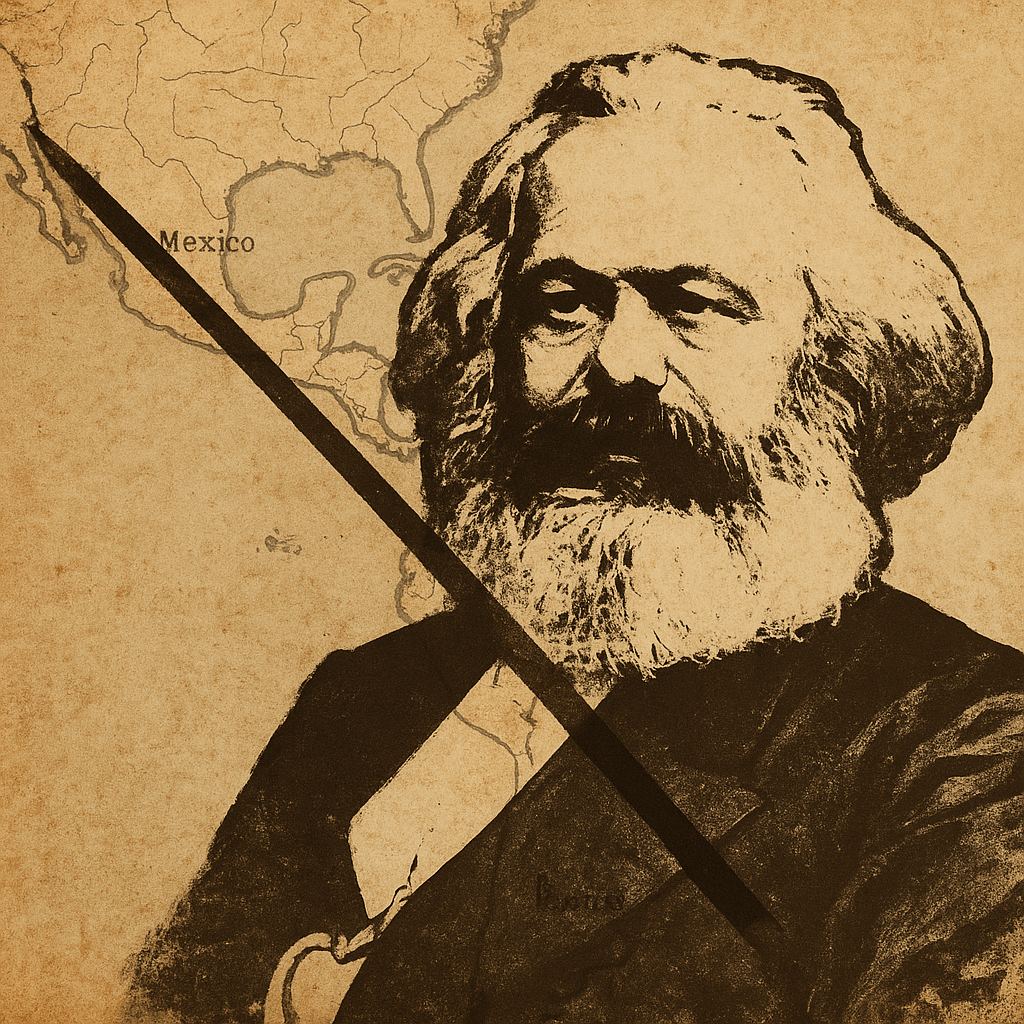
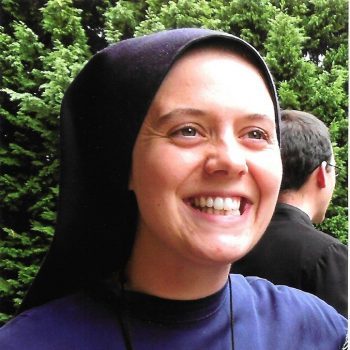




 Centeno's Lighthouse