Reading this chapter on Auschwitz, I can’t help but ask myself how far evil goes. To what extent can it take form with total naturalness, dehumanizing one part of humanity and overvaluing another, the one that claims for itself the authority to eliminate—without moral tremor—those it deems unworthy of existence. The horror of Auschwitz is not just historical: it is present. It lives on in the current forms of power, in their discourses, in their extermination strategies that justify themselves through the language of legality, revenge, or preemptive defense.
I cannot avoid thinking of all the wars I have witnessed throughout my life. Vietnam, the multiple conflicts in the Middle East—no longer events, but an endemic disease—Iran, Iraq, Rwanda. Each of those tragedies was a school of dread. And yet, here we are again: Myanmar. Ukraine. Gaza.
Where does moral authority end in an armed conflict? At what point does legitimate defense become unlimited vengeance? The war in Ukraine, with its crossed narratives and symbolic machinery, has almost entirely lost any ethical coordinates. It is no longer clear who is the victim and who the aggressor. The same could be said of the war in Israel. At first, after the attacks of October 7, the State of Israel held, in many eyes, an indisputable moral authority: it had been brutally attacked, had hostages in enemy hands, was wounded in its flesh and memory. The response was understandable. Some will say disproportionate; others will justify it as national defense. The debate was legitimate.
But time passes, and with it, that initial legitimacy dissolves. The death toll rises, bodies pile up, children are buried before they learn to speak, and something in the language begins to fracture. It is no longer retaliation. It is no longer even reprisal. It is extended punishment. It is displacement. It is demolition. And here arises a question that tortures me: at what moment did the Star of David—a symbol of resistance, dignity, of “never again”—cease to be a mark on the chest and become an insignia stamped on tanks advancing over civilian populations? Shouldn’t we also ask whether that star—a symbol of identity, pain, and pride—has now been placed, without many noticing, in another place, perhaps a darker one?
Nelson Rivera anticipates it with brutal clarity. He speaks of the silence of the camp as a broken tongue. Of that moment when the echo is canceled, the atmosphere expropriated, humiliation institutionalized. He cites Ivan Klíma, Antelme, Elie Wiesel. Not for erudition, but because their words are keys that open the door to the unspeakable: the ruin of the human soul. War, Rivera tells us, is not an exception. It is the normalization of infamy. The construction of a grammar where killing ceases to be a crime and becomes destiny.
And as I read these pages—so rigorous, so painful, so true—an immense sadness overwhelms me. Because we are not safe. Because we keep manufacturing enemies. Because the cycle repeats itself. Because hate always finds new ways to express itself, to legitimize itself, to celebrate its efficiency.
This book, far from being a treatise, is a mirror. Not of what we were, but of what we could still become. Reading it in 2024 is not an academic exercise: it is an act of conscience. And, at times, of mourning.
Another point I cannot stop interrogating, in the light of these dark pages, is that of the presence or absence of God. Was He truly absent? Or, more disturbingly: was He there, but silent?
From the moment the Nazis came to power, they did not hide their intentions. Extermination was announced, written, shouted. There were no subtleties. Many Jews—perhaps those with a more acute survival instinct, or less attachment to the tangible—fled. And in doing so, they saved their lives. They were not heroes, nor martyrs, nor prophets: they were simply men and women who read the signs of the times and chose flight.
And yet, what about the others? Those who did not flee. What about those who stayed, not out of clumsiness, but out of emotional or intellectual fidelity to an idea of Germany, of Europe, of civilization? They believed, in naivety or despair, that such a nation could not descend into horror. That something in its roots—music, philosophy, language, literature—would prevent absolute delirium. They thought a moral brake still existed. That the night couldn’t be that long.
But Kristallnacht came, the Night of Broken Glass. And even then, many hesitated. They waited. They clung. They kept believing. Was it hope? Was it pride? Was it an instinct of attachment stronger than fear?
This is not a question to judge. It is a question that haunts us all. Because if history teaches anything, it is that fleeing also requires faith. And faith, as Wiesel reminds us, is not always luminous. Sometimes faith is the refusal to see.
When I read Rivera speak of the silence of the camp, of the “robbery of the atmosphere’s right to echo,” I also think of another silence: the one that arises when an entire people fails to react in time, still believing in the possibility of a pact with reason.
And God? Where was He? Perhaps in the voice that whispered to each: “Flee.” And that some could hear, and others, out of love, or while preparing armed resistance, or out of attachment, or culture, could not or would not obey. And so, they were devoured by the machinery of the unspeakable.
And the other thing—the thing I cannot keep quiet about—is this guilt that gnaws at me: the guilt of judging from here, from this quiet community where I have water, shelter, safety, internet, and coffee. From this century that no longer feels like a century, but a fragment, parody, shadow. I wonder whether I have the right to think the unthinkable from this place, from this peace that so closely resembles indifference. Because all the alarms are going off. Not in the streets, but in the information flows, the digital contracts, the invisible architecture of obedience.
Everything indicates we are being turned into data, and that data doesn’t hurt when deleted.
Deleting data doesn’t cause screams. It leaves no trace. It has no blood. It just takes a click.
And with that click—efficient, clean, unresisted—it ends.
Then I go silent. Or I write. I don’t know whether it is to resist, or merely to not disappear as well.
Pittsburgh, May 16. A long, dense day—the kind where light never really arrives and you feel like the sky weighs more than your body. Early in the morning, we discussed the looming effects of federal budget cuts in a meeting. I called my congressman, senator, vice president, president. I don’t know if it makes any difference. I have the sense—and I’m not alone—that we are living under an administration that has turned all criticism into enemy territory. I left with my spirits lowered and my health shaken. Yesterday, over coffee in Bloomfield, I told an old friend—a self-declared skeptic—that without God, all this would be much harder. I have God, I told him, and that allows me to move forward with a certain lightness, even when my body aches and my medical prognosis is uncertain.
Today I begin reading The Authoritarian Cyclops by Nelson Rivera. I hadn’t read it before, though it was published in 2009, the very year I left Venezuela with no possibility of return. I saw reviews, knew of its existence, but my exile was urgent, chaotic, a rupture—and what I didn’t carry with me remained suspended in an inaccessible time. Only now—fifteen years later, thanks to the generosity of Vasco Szinetar—can I settle that debt. I open it as one opens a book that had long been destined for them, but whose reading had to wait until the storm passed.
As soon as I open it, in the first few pages, I feel at home. Not geographically, but in the gravity. Rivera writes with surgical precision, but also with a strange kind of intellectual compassion. He states at the outset that to think about war in times of peace is almost a contradiction, but also a duty. War, he says, doesn’t erupt like lightning; it gestates in the shadows, in collective psychic denial, in the emotional veto of imagining the unthinkable. And that strikes me deeply. Isn’t that exactly what happened to us Venezuelans? Didn’t we live through a war without war, an annihilation without trenches, a loss of liberties disguised as popular epic?
What Nelson Rivera calls “abstract emotions”—nation, people, homeland, revolution—I experienced as slogans, then rhetorical weapons, then instruments of exclusion. It shakes me to read: “Every war is preceded by a high tide of hope.” What a sentence. What precision to describe that moment when we believed everything would change. And it did, of course. But toward the darker. The “new man” ended up being a cyclops, yes, but not out of vision, but due to the mutilation of thought: a single gaze, a single language, a single truth.
I read from Pittsburgh, from this place that fifteen years ago meant nothing to me and is now the city where I grow old. I’ve become—I once said as a joke—an Appalachian mountaineer, removed from the editorial corridors of my country, a belated observer of its books, a displaced reader. This reading, then, is also a form of return. But not with nostalgia, rather with method.
Rivera’s book demands I pause. I can’t read it as one looks for quotable ideas. It’s a text to ruminate, to dialogue with philosophers, linguists, phonologists, and literary thinkers who have warned of the destructive power of language when it becomes slogan, when it ceases to serve thought and becomes a device of domination. Arendt, Steiner, Michael Ignatieff, even Simone Weil come to mind, as do echoes of our own tradition of critical thought—now so scattered, reduced to ashes or social media posts no one reads.
Nationalism, populism, sentimental socialism, as Rivera rightly points out, are not ideas but emotional devices. They don’t operate on the level of reason but of the viscera. In this sense, the book dialogues with a whole tradition of thought that includes everything from Ernesto Laclau’s discourse theory to Umberto Eco’s semiotics of fascism. Rivera patiently dismantles the way these symbolic apparatuses—when reified and embedded into the community—can produce war as an inevitable emotional logic. He says it without alarmism, with a clarity that chills.
Today I can only read a few pages. I will continue tomorrow. This will be my way of practicing criticism from exile: not as definitive analysis, but as daily dialogue, journal of thought, a way of accompanying a reading that arrives fifteen years late but with an urgency that remains intact.
I invite you to follow these entries, one by one, as if we were conversing together, under this cloudy sky, in a corner of Pittsburgh where there’s still hot coffee, and where—despite everything—not all is lost.
The sky hasn’t changed since yesterday. The light remains absent. And although I tried to put the book down—because of the density of what it says—I couldn’t. I kept reading, like one opening a door that leads not only to the past, but to the raw present: Venezuela in its regression, the world in its silent substitution of liberalism by increasingly sophisticated forms of emotional, symbolic, institutional control.
With the measured pace of a thinker who knows language must not yield to urgency, Nelson Rivera develops a meditation that is not only about war but about the political soul of our time. What he calls “abstract emotions”—that magma of homeland, people, revolution, redemption—has ceased to be the patrimony of classic dictatorships and has become the structural raw material of what we might call the new affective authoritarianism: one that doesn’t need shouts or uniforms to impose obedience.
As I read, I think about how the last fifteen years have not only returned Venezuela to the 19th century but have confirmed that modernity was not irreversible. The fall of the Berlin Wall did not inaugurate the end of history, as Fukuyama believed, but merely a truce. What we are seeing now is a world sliding into soft but relentless forms of governance: the algorithm as judge, the hoax as doctrine, the enemy as structural need.
Rivera puts it this way: war, before it is cannon, is language. A language that “flattens the multiple,” that “levels,” that turns everything into an inescapable system of oppositions: us/them, loyal/traitor, kill/die. In that binary grammar, freedom has no possible conjugation. Only the monotonous echo of the slogan remains. That is where we come in, we who still write, as the last phonologists of dissent.
I read and underline: “the language of war has a purpose: to flatten, reduce, distort reality into insignificance.” I think of how many times that operation has repeated among us. In how many state speeches—of all kinds—that have turned the verb into a club. This warrior tongue, as Rivera explains, does not communicate, it commands. It does not seek meaning, it imputes. It does not interrogate, it dictates. War—he reminds us—does not begin with bombs, but with the slow normalization of that hollow, bombastic language that turns difference into a threat.
What Rivera denounces with rigor—and without shrillness—is not only the machinery of physical horror but also the aestheticization of conflict. In a world saturated with screens, war has become transmissible, editable, digestible. Propaganda no longer needs to tell the truth; it only needs good graphic design. It is the contemporary version of the “control of the narrative” that Walter Benjamin warned of in the 1930s: fascism does not destroy art, it makes it part of the decor of power. Today, that aestheticization becomes algorithm, trending topic, storytelling. The authoritarianism of the present does not impose silence: it imposes noise. So much that dissent is lost in the cacophony. Against that, this book is an act of deprogramming.
Later, Rivera offers testimonies. Not figures or concepts: bodies, wounds, children torn apart, women spat upon by their tormentors, men hiding in swamps with their children. These stories (Armenia, Cambodia, Rwanda, Vietnam) do not belong to one continent or one ideology. They belong to the dark heart of the human being when language has ceased to be a home and become a field of extermination.
It is hard to read these fragments without nausea. But I also realize that one cannot think about today’s politics without going through these pages. Because war no longer needs to be called war. It can be called “beautiful revolution,” “emerging order,” “civilizational project.” It can have spokespeople with microphones, not rifles. But the effects are the same: silence, submission, hunger, fear.
Rivera forces us to face what others elude with functional theories or conciliatory discourse. He reminds us that true barbarism is not that which produces screams, but that which imposes silence. The silence heard in the testimonies of those who survived everything and no longer know how to speak.
There is no metaphor here. There is accuracy. War—he writes—is “the fall of God,” “the dissolution of the contracts of the human.” Reading that in 2024 is to understand that it is not enough to denounce old-fashioned authoritarianism. We must also interrogate the new emotional order that surrounds us: one that turns politics into performance, truth into meme, morality into algorithm. And then ask: will this new model stop here? Will China be its final station or are we approaching a Scandinavian “paradise” where freedom is merely a footnote?
In the end, this reading becomes a testimonial exercise for me. Not only for what Rivera says, but for what it awakens in me as a reader who has seen his country sink without a formal war, but under all its logics. Reading The Authoritarian Cyclops is not just reading about war; it is reading from a wound. A wound that does not bleed but does not close either. This book, in its sobriety, in its drama-free forcefulness, brings me back to the heart of a question almost no one dares to ask in public anymore: What do we do when language has been hijacked by those who use it to justify the unjustifiable? Perhaps, for now, the only answer is to keep reading. And to write, even from the margins.
I keep reading. I cannot stop. Not with a book like this. Not with this gravity. Not with this echo that reminds me, with each line, that to think is to resist. That to narrate is to contradict the slogan. That every word not surrendered is a small fire against the language of war.
Nos advirtieron de un futuro de represión violenta, cámaras omnipresentes y ministerios de la verdad. Pero lo que llegó fue más sutil y más efectivo: un mundo donde ya no hace falta vigilar porque todos se entretienen. La tiranía suave del placer ha reemplazado al látigo. Este ensayo explora cómo el autoritarismo del siglo XXI no castiga: seduce.
El nuevo autoritarismo: placentero, blando, total Por Israel Centeno
Durante décadas, el imaginario político-cultural nos preparó para resistir una distopía brutal, opresiva, con ecos metálicos de botas sobre adoquines, ojos omnipresentes y la humillación pública de quienes no obedecieran. Nos entrenaron para el mundo de Orwell: 1984 como el manual de advertencias, como la pesadilla por venir. Pensamos que el totalitarismo llegaría con uniforme, con censura explícita, con un rostro que gritara “¡Control!”.
Lo que llegó —pausadamente, con tacto, con algoritmos— fue más seductor. No se impuso; se ofreció. No vigiló con fuerza bruta; sedujo con acceso. No reprimió; anestesió. Y esa fue la verdadera victoria.
Aldous Huxley lo anticipó en Un mundo feliz, y en su famosa carta a Orwell lo dejó claro: el futuro no sería una cárcel, sino un parque de diversiones. El poder no necesitaría torturar si podía distraer. El miedo no sería el principal instrumento de dominio, sino el placer.
En lugar del Gran Hermano, tenemos feeds infinitos y dopamina en forma de notificaciones. En lugar de Ministerios de la Verdad, tenemos plataformas que moldean la percepción desde el entretenimiento, desde la comedia, desde la empatía dirigida. La verdad no necesita ser prohibida; basta con que sea irrelevante. Basta con que compita con mil versiones más atractivas, más digeribles.
Y así, la pregunta no es si estamos vigilados, sino si hemos renunciado voluntariamente a la privacidad. No se necesita un policía del pensamiento si el usuario denuncia a su vecino en nombre del bien común. No se necesita censura estatal si todos saben instintivamente qué no se debe decir para no ser cancelado. La autocensura se volvió un reflejo, no una orden. La obediencia se volvió moral, no política.
El nuevo autoritarismo no te hace desaparecer; te hace viral. No te prohíbe libros; te da acceso a millones y te enseña a no leer. No quema ideas; las vuelve memes. No aplasta tu cuerpo; lo domestica con confort. El panóptico ya no es un edificio, es un estilo de vida: conectado, satisfecho, vigilado por ti mismo.
Los nuevos dictadores no se parecen a Big Brother. Se parecen a tus amigos, a tus influencers favoritos, a tus terapeutas virtuales. No tienen uniforme, sino branding. No te asustan: te agradan. Y no se sostienen con bayonetas, sino con likes.
Orwell nos enseñó a temer la represión. Huxley nos pidió temer la indiferencia. Orwell temía el dolor como herramienta de control. Huxley, la distracción. Orwell imaginó un mundo donde la lectura era un crimen. Huxley, uno donde nadie quería leer. Orwell vio un futuro de vigilancia; Huxley, uno de complacencia.
Y es en este segundo escenario donde estamos. No bajo la bota, sino bajo la anestesia. No con miedo, sino con fatiga. No censurados, sino sobreestimulados hasta el colapso.
Huxley tenía razón: el control más eficaz no es el que se impone por la fuerza, sino el que se desea. El que te da todo… excepto la libertad de querer otra cosa.
Tal vez aún no sea tarde. Tal vez podamos, en medio del zumbido constante de estímulos, apagar la pantalla y hacer la pregunta huxleyana por excelencia: ¿Estoy eligiendo esto, o lo estoy consumiendo porque es lo único que me dejan elegir?
Porque en un mundo feliz, el primer acto de rebelión no es gritar. Es despertar.
📉 Level 1: 👉 Abandonment of basic personal hygiene — Mao stops brushing his teeth. Only rinses with tea and swallows it. — Bathes exclusively in pools. Refuses tap water.
📈 Level 2: 👉 Absolute control of his court — Eliminates critical advisors. — Surrounds himself only with sycophants.
📊 Level 3: 👉 Abuse of young women — Recruitment of teenagers for “therapeutic activities” in his bed. — Recurrent genital infections and contempt for treatment.
📉 Level 4: 👉 Biopolitical cynicism — Launches the “Great Leap Forward” without logistical oversight. — Mass starvation: millions die while he takes a dip.
📈 Level 5: 👉 Decadence and necropolitics — Paralyzed, he governs with incoherent phrases. — Plans his mummification. His body remains on display.
The True Mao
Literary Criticism of Dr. Li Zhisui’s Biography
The Private Life of Chairman Mao is a biography that offers an intimate view into the life of Mao Zedong, told through the eyes of his personal physician, Dr. Li Zhisui. This is not merely a historical account, but a psychological and moral study of a leader’s physical and ideological decay. Through its structure, voice, literary devices, and themes, the book becomes an unsettling exploration of power, intimacy, and betrayal.
The narrative follows a linear chronology, tracking Mao from his youth to his final days. While this structure allows for a clear progression, it sometimes risks flattening the complexities of such a multifaceted character. Yet Dr. Li breaks from strict chronology at key moments, inserting personal anecdotes and insights that offer glimpses into Mao’s contradictions, the darkness behind his charisma, and the moral erosion of his regime.
Li’s voice is critical: part-confessor, part-reluctant witness. As Mao’s doctor, he had access to the most private and vulnerable aspects of a man who projected invincibility to the public. This duality — between public myth and private decline — gives the book a compelling literary tension. Li’s tone oscillates between disillusionment and fascination, and while his proximity invites doubt, it also deepens the authenticity of the portrait.
The prose is rich with sensory detail and unsettling metaphors. Mao’s rotting teeth, his refusal to bathe, his addiction to sleeping pills, his physical decrepitude — all become metaphors for the rot at the heart of his rule. The body of the Chairman is treated not just medically, but symbolically: it decays in parallel with the ideals of the revolution. In many ways, Mao’s body is the last battlefield of the Communist utopia — bloated, breathless, refusing to die even after its time has passed.
The biography grapples with major themes: absolute power, moral solitude, ideological corruption, and the terrifying gap between political myth and human frailty. The Great Leap Forward, the Cultural Revolution, the purges of intellectuals — all these are recounted not just as historical events, but as manifestations of Mao’s psychological decline. The man who wanted to melt steel in the backyards of peasants ends up oxygenated, immobile, grotesque — a tragic figure who outlived his usefulness and became his own monument.
The book has not been free from criticism. Some have accused Li of bias, opportunism, or betrayal. But therein lies its strength: the ethical ambiguity of the narrator mirrors the moral ambiguity of the subject. This is not a book that offers easy answers. It is a work that forces the reader to confront questions about loyalty, complicity, and truth. How does one survive a dictator? How does one speak of him afterward?
The Private Life of Chairman Mao does not seek to demonize Mao entirely, but neither does it redeem him. It renders him human — and in doing so, terrifying. The body that once symbolized revolution becomes a metaphor for historical entropy. Dr. Li, reluctant chronicler of decline, gives us a story where politics, flesh, and memory converge into a devastating confession: even the most deified leaders decay.
This book reminds us that tyrants age. That even revolutions grow senile. That the bodies of men, like the regimes they build, eventually rot. And that sometimes, it takes a physician to write the most enduring literature of political horror.
Hay algo en el ser humano que no puede ser domesticado por la estadística, ni encajonado en el manual de reflejos biológicos, ni reducido a las hormonas. Ese algo es la voluntad: la capacidad de elegir lo que no conviene, de desobedecer lo que dicta la biología, de amar cuando lo sensato sería huir.
There is something in the human being that cannot be domesticated by statistics, boxed into a handbook of biological reflexes, or reduced to hormones. That something is will: the capacity to choose what is inconvenient, to disobey what biology dictates, to love when reason would say to flee.
Un animal no ama a quien lo hiere. Un algoritmo no se sacrifica. Ningún sistema de estímulo-respuesta programado elige conscientemente el sufrimiento. El ser humano sí. La voluntad no es deseo, no es impulso, es lo que resiste al impulso. Es la fuerza interior que dice “no” cuando todo el cuerpo grita “sí”. Es la decisión de quedarse cuando todo el instinto ordena correr. Es lo que permite el heroísmo, la fidelidad, el arte y la renuncia.
An animal does not love one who harms it. An algorithm does not sacrifice itself. No programmed stimulus-response system consciously chooses suffering. The human being does. Will is not desire, not impulse—it is what resists impulse. It is the inner force that says “no” when the entire body screams “yes.” It is the decision to stay when every instinct commands flight. It is what allows for heroism, fidelity, art, and renunciation.
La voluntad es la mayor prueba de que no somos solo cuerpo. Ningún animal ayuna por ideales. Ningún animal perdona al enemigo por un principio. Ningún animal se impone una disciplina espiritual, física o ética para alcanzar algo invisible. La voluntad es la antítesis de la supervivencia natural. Y por eso, es el rastro más fuerte del alma.
Will is the strongest proof that we are not merely body. No animal fasts for an ideal. No animal forgives its enemy out of principle. No animal imposes upon itself spiritual, physical, or ethical discipline to reach something invisible. Will is the antithesis of natural survival. And therefore, it is the most powerful trace of the soul.
Hay formas de amor que son pura biología: erótica, posesiva, defensiva. Pero el amor que se sacrifica, que permanece sin retorno, que escoge el dolor en lugar del abandono, no responde a una ley natural. Es una decisión. El amor que no busca placer, sino presencia, exige voluntad. Ágape, no eros. Y por eso, es profundamente humano. Quien ama más allá del instinto ama desde un lugar que no tiene localización cerebral. Ni la neurociencia más sofisticada ha explicado por qué alguien muere por otro voluntariamente. O por qué alguien permanece fiel a un amor que no promete consuelo.
There are forms of love that are pure biology: erotic, possessive, defensive. But the love that sacrifices, that remains without return, that chooses pain over abandonment, does not obey a natural law. It is a decision. Love that seeks not pleasure, but presence, requires will. Agape, not eros. And for this reason, it is deeply human. One who loves beyond instinct loves from a place that has no cerebral location. Not even the most advanced neuroscience has explained why someone voluntarily dies for another. Or why someone remains faithful to a love that offers no comfort.
Sigmund Freud intentó entender al hombre desde sus impulsos: eros, tanatos, trauma, deseo reprimido. Y aunque su contribución fue fundacional, fracasó donde siempre fracasa el reduccionismo: en explicar la libertad. Para Freud, el amor era sublimación, disfraz, síntoma. La voluntad era ilusión. El alma, una superstición burguesa. Y fue allí donde Carl Gustav Jung rompió con su maestro. Porque Jung no podía creer que todo lo humano pudiera explicarse por sexo y represión. Intuyó que había en nosotros fuerzas profundas, simbólicas, mitológicas, espirituales. Que había un inconsciente no solo animal, sino trascendente. Jung no aceptaba que la conciencia fuera un epifenómeno. Sospechaba —y con razón— que la psique humana es un puente entre lo visible y lo invisible.
Sigmund Freud attempted to understand man through his impulses: eros, thanatos, trauma, repressed desire. And although his contribution was foundational, he failed where all reductionism fails: in explaining freedom. For Freud, love was sublimation, disguise, symptom. Will was illusion. The soul, a bourgeois superstition. And it was there that Carl Gustav Jung broke with his teacher. Because Jung could not believe that all that is human could be explained by sex and repression. He intuited that there were deep forces in us—symbolic, mythological, spiritual. That there was an unconscious not merely animal, but transcendent. Jung did not accept that consciousness was an epiphenomenon. He suspected—with good reason—that the human psyche is a bridge between the visible and the invisible.
La historia humana es la historia de una desobediencia constante a la ley natural. Volamos sin alas. Descendimos a las profundidades del océano sin branquias. Escapamos de las cuevas y construimos catedrales. Cruzamos mares sin garantía de tierra firme. Alcanzamos la luna. Y ahora queremos habitar Marte. Nada de eso tiene sentido para el instinto. Nada de eso obedece a la lógica de la autopreservación. Todo eso es voluntad.
Human history is the history of constant disobedience to natural law. We fly without wings. We descend to oceanic depths without gills. We escaped caves and built cathedrals. We crossed seas with no guarantee of land. We reached the moon. And now we want to inhabit Mars. None of this makes sense to instinct. None of this obeys the logic of self-preservation. All of it is will.
La voluntad es lo que impide que el hombre sea un animal entre animales. Es lo que le permite inventar el alma si no la tiene, o buscarla si la presiente.
Will is what prevents man from being just another animal among animals. It is what allows him to invent the soul if he has none, or to seek it if he senses it.
El ser humano no se puede explicar. Puede ser descrito, analizado, diseccionado, pero no reducido. Porque mientras exista uno solo que diga “no huiré”, mientras haya uno que ame a pesar del dolor, uno que cree belleza en medio del caos, uno que perdone, uno que elija morir por una causa invisible, entonces el alma seguirá viva. Y ningún escáner cerebral podrá jamás encontrarla.
The human being cannot be explained. He can be described, analyzed, dissected—but not reduced. Because as long as there is one who says “I will not flee,” as long as there is one who loves despite pain, one who creates beauty amid chaos, one who forgives, one who chooses to die for an invisible cause—then the soul will remain alive. And no brain scanner will ever find it.
Ese “no” no es una pose existencialista, ni una rebelión melancólica contra el absurdo. Ese “no” es vital. Es afirmación de la libertad radical, del libre albedrío, de la posibilidad de decidir contra la programación genética o cultural. Es el acto de un ser que no se resigna a ser función, sino que exige ser persona.
That “no” is not an existentialist pose, nor a melancholic rebellion against the absurd. That “no” is vital. It is the affirmation of radical freedom, of free will, of the possibility to choose against genetic or cultural programming. It is the act of a being who refuses to be a function and insists on being a person.
Porque hoy, en un mundo que niega cada vez más la existencia del libre albedrío, que todo lo reduce a química, a instinto, a trauma, a redes neuronales o a predicción algorítmica, reafirmar la voluntad es un acto subversivo. Reafirmar que amamos, creamos, perdonamos o resistimos no por necesidad, ni por cálculo evolutivo, sino porque queremos, porque elegimos, porque somos, es el grito más profundo de la conciencia viva.
Because today, in a world that increasingly denies the existence of free will—where everything is reduced to chemistry, instinct, trauma, neural networks or algorithmic prediction—affirming the will is a subversive act. Affirming that we love, create, forgive or resist not out of necessity, nor from evolutionary calculation, but because we want to, because we choose to, because we are, is the deepest cry of living consciousness.
Y si la voluntad es el signo más alto del alma humana, entonces el mayor testimonio de ella no está en la historia, ni en la guerra, ni en la ciencia, sino en el acto que fundó nuestra esperanza: que Dios, que es la Voluntad Suprema, se vació de sí mismo y encarnó en un hombre para rasgar el velo y vencer la muerte. No por necesidad, no por reflejo, sino por amor. Para dar la vida por la criatura que amaba. Para enseñarle el camino, la luz y la verdad.
And if will is the highest sign of the human soul, then its greatest testimony is not found in history, war, or science, but in the act that founded our hope: that God, who is Supreme Will, emptied Himself and became man to tear the veil and conquer death. Not out of necessity, not by reflex, but out of love. To give His life for the creature He loved. To show the way, the light, and the truth.
Israel Centeno Desde El Faro de Alejandría, con la lámpara encendida en medio del viento From The Lighthouse of Alexandria, with the lamp lit in the middle of the wind
“In Stalin’s Russia, literature was a crime and memory an act of defiance. This essay from The Tower of Alexandria revisits the lives of Osip Mandelstam, Anna Akhmatova, Mikhail Bulgakov, and Nadezhda Mandelstam—voices that resisted totalitarian silence with whispered poems, burned manuscripts, and unwavering loyalty to truth. A meditation on fear, courage, and the power of the written word to outlive tyranny.”
Israel Centeno
In Stalin’s Russia, totalitarianism seeped into even the most intimate corners of a writer’s life, turning every whispered poem into a potentially subversive act and every silence into a form of involuntary complicity. In May 1934, in the early hours of the morning in Moscow, a sharp knock at the door marked the end of one life and the beginning of another for the Mandelstam couple. That night, the poet Osip Mandelstam was arrested by the secret police after daring to compose a short satirical poem about Stalin. With that act, a chain of terror was set in motion—one that would eventually ensnare other authors like Mikhail Bulgakov and Anna Akhmatova, each of whom, in their own way, endured surveillance, censorship, and ostracism under the Stalinist regime. Yet, from that same terror, strategies of resistance were also born: memory, oral transmission, and the stubborn will to keep writing for posterity. This essay, part of the Lighthouse of Alexandria series, explores the intertwined stories of Mandelstam, Bulgakov, and Akhmatova—as well as the crucial role of Nadezhda Mandelstam, Osip’s widow and guardian of his memory—to reflect on how totalitarianism attempted to silence literary voices, and how those voices responded with fear, self-censorship, and an unyielding fidelity to the word.
Osip Mandelstam: The Fatal Epigram and Poetry as a Crime
Photograph of Osip Mandelstam in the 1930s. He was arrested in 1934 for quietly reciting a satirical poem about Stalin, a reflection of the era’s pervasive climate of terror.
Osip Mandelstam, one of the leading figures of Russian Acmeist poetry, committed the “crime” of writing an epigram against Stalin in 1933. The poem—known as The Kremlin Highlander, or simply The Epigram to Stalin—bitingly captured the atmosphere of suffocating paranoia that gripped the country, including daring images of the dictator: “His thick fingers are fat as worms…”, “Each death for him is a delight,” and so on. Mandelstam knew he had created something fatal: he recited it only to a handful of trusted friends, including Boris Pasternak, Anna Akhmatova, and a supposed admirer who turned out to be a police informant. In the Soviet Union, poetry could amount to a death sentence. “Only in Russia is poetry respected—it gets people killed. Is there anywhere else where poetry is so often a motive for murder?” Mandelstam reportedly said shortly before his arrest.
Those satirical lines—which mocked Stalin’s absolute power—somehow reached the ears of the secret police through still-unidentified channels. The head of the NKVD himself, Genrikh Yagoda, took personal interest in the matter: it was one of the first cases he handled after assuming the position. According to Nadezhda Mandelstam, he even memorized the poem and recited it fluently (with a macabre aesthetic appreciation) before signing the arrest order. On the night of May 13–14, 1934, agents burst into the Mandelstams’ home searching for “something very specific”—the poem—but they found no written trace, as Mandelstam had never committed it to paper: it existed only in the memory of its creator and those who had heard it. Still, one of those listeners rushed to dictate it to the police, sealing the poet’s fate.
Osip was arrested and sent into internal exile, first to Cherdyn and later to Voronezh, narrowly escaping execution thanks to the intercession of influential friends like Nikolai Bukharin and Pasternak. But the “countdown to the inevitable” had begun: in 1938, Mandelstam was arrested again and sentenced to five years of forced labor, dying later that year in a transit camp near Vladivostok.
The Mandelstam case is a perfect illustration of how Stalinist totalitarianism lashed out at the innermost realm of the writer. His brief private poem unleashed a storm of repression not only against him but also against those close to him: the Soviet regime, feeling mocked by a few verses, responded with broadened terror. The Epigram to Stalin played a role not only in Osip’s arrest but also in the temporary marginalization of Anna Akhmatova herself, and in the arrests of her son Lev Gumilyov and her partner Nikolai Punin.
The surveillance network extended its reach, casting suspicion over the entire literary community. “Collaborators infiltrated freely: every family scrutinized its acquaintances, searching for provocateurs, informers, and traitors,” wrote Nadezhda Mandelstam. The regime thereby sowed universal distrust: “Nothing binds people more tightly than complicity in the same crime,” she remarked regarding the Cheka-NKVD’s tactics, noting how the constant threat of being “summoned” by the police broke social bonds and confined each person to a fearful silence.
When a poet dared point out the nakedness of the tyrant, there was no chorus to back him up; on the contrary—paraphrasing a familiar tale—there was no innocent child to cry out that the Emperor had no clothes. In Stalin’s Russia, “when a poet dared to criticize the Great Leader… fear and terror seized everything.” The price of poetic truth was solitude and isolation.
Nadezhda Mandelstam: Memory Against All Hope
The tragedy of Osip Mandelstam cannot be understood without his wife, Nadezhda Mandelstam, who became the custodian of his legacy and one of the most penetrating chroniclers of Stalinist terror. After Osip’s death in the Gulag, Nadezhda took on the mission of preserving his poems and his memory during a time when merely possessing verses could lead to ruin. With the help of a few loyal friends, she managed to save her husband’s work largely thanks to her prodigious memory. She knew that if she wrote down Osip’s unpublished poems, they could be discovered during a home search; so she chose the path of oral transmission: she would memorize the verses by heart and then burn the manuscripts.
“To avoid Stalin’s persecution, the poet Anna Akhmatova burned her writings,” notes critic Martin Puchner, “and taught the words of her poem Requiem to a circle of friends from memory. By going ‘pre-Gutenberg,’ she ensured its survival.” Nadezhda Mandelstam applied that same pre-Gutenberg principle to Osip’s verses: entrusting them solely to the fragile yet resilient page of the human mind. Her memory, and that of her co-conspirators, became “the paper on which Akhmatova [in her case] preserved and revised her poem word by word, comma by comma”; in Nadezhda’s case, this method saved dozens of Osip’s poems that would otherwise have been lost in the bonfire of time.
By the late 1950s, partially rehabilitated after Stalin’s death, Nadezhda began to set her memories down in prose, giving shape to Hope Against Hope (1970). The book, written in “elegant, measured, and exact prose,” is at once an enduring love song to Osip and a painful indictment of tyranny. With luminous clarity, Nadezhda recounts the tragic experiences of her husband and his generation, without a trace of self-pity, composing what one critic called “a monument to human dignity in the worst of times.”
In its pages, she confesses that fear became the dominant emotion of those years: “Akhmatova and I once admitted to each other that the strongest feeling we had ever known—stronger than love, jealousy, or any other human emotion—was terror and what it brings with it: the horrible and shameful sense of total impotence.” Yet she draws a distinction between shameful fear (which preserves a person’s humanity) and servile fear: “As long as fear is accompanied by a sense of shame, one remains human and not a cringing slave… It is that sense of shame that gives fear its healing power and offers the hope of regaining one’s inner freedom.” This reflection, shared in intimate conversation between two surviving poets, shows how even terror could carry a moral lesson: the shame of being afraid reminded them that they should not surrender entirely to the regime.
In Hope Against Hope, Nadezhda lays bare the mechanisms of Soviet repression. She reveals, for example, how the secret police summoned countless citizens without any clear reason, simply to entangle them and sow distrust: “They summoned people who were afraid of losing their jobs, people who wanted to advance, people who wanted nothing and feared nothing, and people willing to do anything… It wasn’t about gathering information. Nothing binds people more than complicity in the same crime: the more people could be implicated and compromised, the more traitors, informants, and spies there were, the greater the number of people supporting the regime and wishing it would last a thousand years. And when everyone knows that everyone is being ‘summoned’ like this, people lose their social instincts, the ties between them weaken, everyone retreats into their corner and shuts their mouth—which is an invaluable benefit for the authorities.”
This passage, chilling in its clarity, captures the deliberate social atomization that Stalinism sought: to turn each individual into an isolated, silenced being, fearful and perhaps guilty of something, so that no one would dare raise their voice. In contrast, the very existence of Nadezhda’s book is an act of recovered voice: “I decided it was better to scream. Silence is the true crime against humanity,” she wrote. And scream she did—with her pen. Her testimony not only documents horrors; it is itself an act of resistance through memory and the written word.
Thanks to her, we know, for example, that Yagoda—the ruthless head of the NKVD—could recite Mandelstam’s poem from memory but would not have hesitated to “destroy all literature, past, present, and future, if he thought it served his interests… To people like him, human blood is like water.” Phrases like this, charged with irony, pain, and contempt, make Hope Against Hope a unique work, marked by “sobriety, lucidity, beauty, and transparency” in its denunciation of terror. In the end, Nadezhda achieved her purpose: she saved Osip’s poetry from oblivion and left the world with one of the most harrowing testimonies of the human condition under totalitarianism.
Mikhail Bulgakov: The Master and the Arbiter (Stalin’s Ambiguous Protection)
Portrait of Mikhail Bulgakov signed by the author himself in 1937. Though Stalin admired his theatrical talent, the novelist endured years of censorship and surveillance; his masterpiece The Master and Margarita would only see the light decades after his death.
While the Mandelstams faced open persecution, Mikhail Bulgakov experienced a different but equally revealing fate under Stalinism: a disconcerting blend of favor, censorship, and personalized surveillance by the dictator himself. A playwright and novelist, Bulgakov was the author of biting satires of Soviet life (Heart of a Dog, The Novel of Mr. Molland, etc.), which made him a figure of suspicion. By 1930, frustrated that his plays were consistently banned or trashed by official critics, he wrote a desperate letter to Stalin and other high-ranking officials. In it, he declared that he had spent “ten years cornered, unable to publish or stage my works… [therefore] I appeal to you to intervene and authorize my expulsion from the USSR together with my wife.”
It was a bold and sincere gesture: Bulgakov confessed that he could never write according to ideological dictates and would rather live in exile than censor himself. Surprisingly, Stalin did not respond with arrest—but with a personal phone call. The famous conversation took place on April 18, 1930: Stalin asked if Mikhail really wanted to leave. Caught off guard and in reverent panic, Bulgakov quickly retracted his request for exile, mumbling that a true writer could not work far from his homeland. Stalin then offered him a peculiar reprieve: he secured him a position as assistant director at the Moscow Art Theatre, allowing him to remain in the Soviet Union, but without granting him true freedom. Bulgakov “stayed in the Soviet Union. He remained dry-docked. He remained full of frustration.” That permission to live came with the taste of captivity: “he was never allowed to live in peace or to publish his novels freely,” as one commentator summarized.
Indeed, Bulgakov continued to suffer relentless censorship. Stalin, in a display of ambiguity, was an admirer of some of Bulgakov’s work—it’s known that he attended The Days of the Turbins, a play based on one of Bulgakov’s novels, more than a dozen times—and he intervened several times to protect him from total ruin. Thanks to this strange patronage, Bulgakov was never arrested or sent to the Gulag—an exceptional fate among “problematic” writers of the time. But the protection had firm limits: his most critical works were banned or shelved indefinitely. The state granted him life in exchange for public silence.
This push and pull became evident in a specific episode: in 1939, Bulgakov tried to win favor by writing a laudatory play about Stalin’s youth (Batum) for the dictator’s birthday. The result? Stalin also banned that play, without explanation. It was as if the dictator enjoyed playing cat-and-mouse with the writer: allowing him to survive, but never to speak freely. Paradoxically, this situation drove Bulgakov to channel all his daring into a work meant “for the drawer.” Convinced that his great novel would never be published in his lifetime, he decided to make it as subversive and brilliant as he pleased.
The result was The Master and Margarita, written in secret during the second half of the 1930s. In this fantastical and satirical novel, the Devil (Woland) visits Moscow accompanied by a bizarre entourage—including a giant black cat—and exposes the hypocrisy of Soviet society. The novel contains, among many layers of meaning, a scathing allegory of power and culture under Stalinism: there are sycophantic literati, corrupt bureaucrats, and a pervasive climate of absurdity and fear, thinly masked by dark humor. Bulgakov poured his personal experience into the character of “the Master,” a misunderstood novelist whose work is censored and who ultimately burns his manuscript in a fit of despair.
That image reflects a real incident: in 1930, fearing reprisals, Bulgakov partially burned the drafts of a novel about Pontius Pilate, an early version of what would become The Master and Margarita, shortly before sending his plea to Stalin. Years later, in the novel, the Devil Woland corrects the Master when he laments destroying his work: “You don’t believe, but manuscripts don’t burn.” That phrase—“manuscripts don’t burn”—has since become legendary, for it encapsulates a profound truth: the indestructible permanence of literary creation in the face of censorship.
Indeed, Bulgakov had to rewrite his novel entirely, driven by the conviction that ideas would survive. And time proved him right. Though The Master and Margarita remained unpublished during his life (Bulgakov died in 1940, worn down by illness and frustration), the manuscript did not vanish into oblivion: it circulated in underground copies (samizdat) and was finally published in 1966 during a brief thaw, with the full version appearing in 1973. By then, the novel had become a phenomenon: eager readers hand-copied chapters, scrawled graffiti on the apartment building where the story takes place (and where Bulgakov had lived), and whispered its lines as if reciting scripture. Woland’s prophecy was fulfilled.
Bulgakov’s story shows how the relationship between creator and tyrant could be cruelly complex. Stalin played a dual role: patron and censor. He offered “rewards” (a job, limited protection) while simultaneously stifling him with prohibition. One analyst described it this way: “The dictator took a personal interest in the author, like a sociopathic child with a pet he alternately praises and tortures.” Stalin could praise Bulgakov’s talent and still censor him mercilessly. Thanks to this capricious interest, Bulgakov was “suspect until the end of his days” but escaped the physical purges.
He died of natural causes—though prematurely—but with the bitter awareness that his best works were condemned to silence. In his last ten years, supported by his devoted wife Yelena, Bulgakov dedicated himself to the impossible task of completing his masterpiece. Those were his “dark years, of lethargy and ulcers,” as he allegorized them in the novel, in which he persevered by writing “for the void,” knowing that no Soviet editor would dare publish him. And yet, in that seemingly absurd act of literary faith lay his posthumous victory. “Manuscripts don’t burn”: true literature finds a way to elude its inquisitors—if not in the present, then in the future.
Indeed, the influence of The Master and Margarita on later Russian culture was immense, becoming a symbol of creative freedom against tyranny. Many Soviet writers of later generations took Bulgakov’s phrase as a motto for continuing to write “for the drawer,” in the hope of a future reader. In the novel itself, when Woland retrieves the burned manuscript and returns it to the Master, he affirms the supremacy of imagination over violence: not even the Devil believes it possible to entirely destroy a work of the spirit.
Anna Akhmatova: The Poet of Hidden Memory
If Bulgakov resisted by hiding his novel in a drawer, Anna Akhmatova resisted by hiding her poems in living memory. Akhmatova, one of Russia’s most important poetic voices, endured the regime’s violence firsthand: her first husband, the poet Nikolai Gumilyov, was executed in 1921, falsely accused of plotting against the Bolsheviks. Years later, her son Lev Gumilyov would be arrested in 1938 at the height of the Great Terror, and again after the war, serving long sentences in the gulags. Her friend and third husband, the historian Nikolai Punin, also died in a camp in 1953. Akhmatova thus suffered the loss of her family at the hands of the totalitarian state, while she herself remained under constant suspicion.
From 1925 to 1940, she was nearly silenced: forbidden to publish, her poetry dismissed as “harmful” or “reactionary” for not conforming to socialist realism. Yet Akhmatova never stopped writing. Like Nadezhda Mandelstam, she understood that paper was no longer a safe place for poetry. When her son Lev was arrested in 1938, she burned all her notebooks of poems for fear they would be used as evidence against her. From then on, she resolved to memorize everything she composed: each new poem was learned by heart and then destroyed on paper, recited only in whispers to intimate and trustworthy friends.
This was a deliberate shift from written literature to oral tradition, forced by circumstances. Her poetry became more fragmented and encrypted, designed to be remembered and passed on by word of mouth rather than printed. This method ensured that if the police raided her home, they would find no “evidence”—but it placed on Akhmatova and her circle the sacred burden of memory.
Akhmatova’s crowning work of this period is the poetic cycle Requiem (1935–1940), a harrowing lyrical monument to the victims of Stalin’s terror. Requiem was born from her personal experience of standing in line for seventeen months outside the infamous Kresty Prison in Leningrad, trying to learn news of her imprisoned son. In the famous anecdote that opens the poem, a woman in the queue, shivering from cold and with a gaunt face, recognized or intuited who she was and whispered to her, “Can you describe this?” Akhmatova answered: “I can.”
That brief reply held her entire vocation: to be the voice of those who could not speak, to bear poetic witness to shared anguish. Requiem, composed piece by piece, mourns the execution of Gumilyov, the arrest of Punin, Lev’s imprisonment, and at the same time becomes a “hymn of resistance by the people against Stalin’s power.” Naturally, a poem like this could never be published under Stalin. Akhmatova kept it secret for decades. She would write lines to refine them, recite them to her closest friends (such as Lydia Chukovskaya), and then burn the paper in the ashtray. Each friend memorized a section.
“She taught [the poem] to her closest friends so they could remember it after her death… state terror had forced people to live as if the printing press had never been invented,” writes Martin Puchner of this situation, so similar to Nadezhda’s. For years, Requiem existed only in the minds of Akhmatova and her trusted circle, surviving the test of a “second memory”: her verses endured, sheltered in the soul, immune to police searches. It was not until 1963 that Requiem was published (in Russian, in Munich); and not until 1987, during perestroika, that it was printed in the Soviet Union.
In the meantime, Akhmatova witnessed the destruction of the cultural world she belonged to. “Akhmatova survived Stalin’s terror and the persecution of her fellow Silver Age writers: Mandelstam died en route to the Gulag, Tsvetaeva hanged herself, and Pasternak was hounded to his death,” one article summarizes. She herself was attacked: in 1946, the regime—through Andrei Zhdanov—publicly denounced her, expelled her from the Union of Soviet Writers, and called her a “nun and whore,” claiming her art was alien to the people. But none of this silenced her inner voice.
Akhmatova believed that “her transparent verses could preserve memory and save it from a second death: oblivion.” This conviction sustained her. She knew she could not save the victims of the purges, nor her own son from his ordeal, but she could save the truth of what had happened through her poems. Indeed, Requiem and other poems from her testimonial cycle were guarded like a secret treasure until a gentler time allowed them to be shared with the world.
By the 1960s, Akhmatova herself had become a kind of living symbol of cultural resistance: she regained a degree of prominence as an “unofficial leader of the dissident movement” and was revered both in the Soviet Union and abroad. A sign of her moral triumph is that, before her death in 1966, she lived to see many of her early poems published and received public tributes long denied to her.
But perhaps her deepest victory lies in those lines from Requiem where she speaks not only for herself but for all women who endured the torture of uncertainty:
“Beside this grief, all others fade;
we bear the yoke of sorrow, eyes downcast.
Something has nailed us to the scaffold…”
Akhmatova ensured that such sorrow would not be in vain: her poetry etched that anguish into history, preventing it from vanishing. By memorizing verses instead of writing them down, she found a crack through which truth could escape censorship.
Literature, Fear, and Survival
The stories of Osip Mandelstam, Nadezhda Mandelstam, Mikhail Bulgakov, and Anna Akhmatova converge at an essential point: the power of the word versus the power of bayonets. Each of them, in varying degrees, endured the Stalinist regime’s determination to control not only public expression but even private thoughts and the manuscripts kept in desk drawers. Stalinist totalitarianism seeped into the writer’s most intimate spaces: hidden microphones, friends turned informants, censors embedded in conscience, leading to self-censorship. The result was a climate of internalized terror that forced tragic decisions: to burn one’s own book in order to survive? To remain silent in order to protect one’s child?
Akhmatova described how, under that ubiquitous terror, the entire population seemed to live in a trance, paralyzed by fear. And yet, from that frozen silence also arose sublime acts of defiance. When speaking could be lethal, total silence became the true crime, as Nadezhda Mandelstam concluded. That’s why she chose to “scream” by writing her memoirs; Akhmatova chose to “speak” in a whisper, memorizing her poems; Bulgakov chose to “outwit” the oppressor by locking the truth into a fantastic novel meant for a future time.
These choices came at great personal cost: they lived haunted by fear, feeling “bound hand and foot, with a horrible and shameful sense of impotence.” But that shame at feeling powerless, as Nadezhda put it, was the very thing that saved their humanity—because it reminded them that they could still resist from within. Resistance sometimes meant refusing to yield in the smallest of ways: remembering a poem, copying a banned manuscript, hiding verses in one’s memory. These seemingly modest acts were formidable antidotes to the total oblivion the regime sought to impose.
It was, in the words of a Spanish critic referring to Hope Against Hope, “the indestructible power of poetry—and by extension, culture—crashing against the most sophisticated repressive apparatus.” In the end, poetry and literature outlived Stalin. Mandelstam, once a proscribed name, is now celebrated as one of Russia’s greatest poets; Akhmatova is read across the globe; Bulgakov has become synonymous with liberating satire against tyranny; and Nadezhda Mandelstam’s testimony stands as “one of the literary monuments” to the memory of the twentieth century. Their voices, once hidden in darkness, now shine.
As we close this journey, we return to the symbolic lighthouse of Alexandria that inspires this series: a beacon of culture safeguarding knowledge amid devastation. In the dark night of Stalinism, these writers were lighthouses in their own right, even when forced to hide their light under veils of secrecy. Against the dictator’s dream of a thousand-year reign, they ensured that the intimate truth of their lives and works would outlive fear and reach the future.
“Manuscripts don’t burn”—indeed—and sometimes, neither does hope. Every memorized poem, every hidden page, every whispered line was an act of faith in posterity, a vote of confidence that one day, literature could once again be read aloud without terror. That day came—and with it, our understanding of the enormous courage of those who, in the face of imposed silence, chose not to fall completely silent. Their memoirs, their novels, their verses are the proof that, against the assault of totalitarianism, artistic creation can become refuge and resistance, beacon and legacy.
Yes, the writer’s intimacy was besieged—but not completely conquered: in the inviolable sphere of mind and word, they preserved a final freedom. And thanks to that, we can still hear their voices today, guiding us like lights through the shadows of history.
¿Qué ocurre cuando un escritor desaparece sin escándalo, sin censura, sin juicio? Esta columna explora el caso de Junot Díaz como síntoma de una época en la que el lector ya no decide y la literatura es gestionada por algoritmos y curadores emocionales. Una elegía crítica sobre la omisión como forma moderna de castigo.
Por Israel Centeno
¿Quién lo echa de menos, de verdad? ¿Quién volvió a buscarlo en una librería y no lo encontró? ¿Quién releyó Drown o Oscar Wao y sintió no solo nostalgia literaria, sino rabia política por su desaparición editorial? ¿Quién, entre tantos que alguna vez lo citaron, lo premiaron, lo estudiaron, se ha preguntado en voz alta: ¿dónde está Junot Díaz?
Y sobre todo: ¿quién podía hacer algo al respecto?
Vivimos bajo la ilusión de que el lector tiene la última palabra. Que el gusto lector, masivo o selecto, define el destino de los libros. Que si alguien desaparece, es porque se lo buscó. Porque falló. Porque el público, como juez último, lo retiró del juego.
Pero eso, si alguna vez fue cierto, ya no lo es. El lector, en la era del algoritmo emocional y de la curaduría institucional, no es un soberano: es un usuario terminal. No escoge. Le escogen. No decide. Le ofrecen. Y lo que no le ofrecen, simplemente no existe.
Junot Díaz no fue silenciado por sus lectores. Fue silenciado antes de que los lectores pudieran siquiera decir algo. Se lo retiró de la conversación. No por decreto, sino por omisión. No por desprecio masivo, sino por curaduría silenciosa. Nadie lo defendió porque nadie supo que debía hacerlo. Y cuando alguien desaparece sin gritos, sin censura explícita, la mayoría asume que algo habrá hecho. Y pasa la página.
Nos gusta creer que el lector es soberano. Que decide. Que tiene la última palabra. Pero eso solo es cierto en la ficción que sostiene la industria cultural. En realidad, el lector es el último eslabón de una cadena de decisiones previas: de marketing, de legitimación crítica, de algoritmos, de redes, de premios, de cuotas temáticas, de modas emocionales. El lector compra lo que ve. Y ve lo que le muestran. Y lo que no le muestran, no existe.
Por eso Junot Díaz pudo desaparecer sin ruido: porque nadie le dio al lector la oportunidad de extrañarlo. Porque en vez de un debate público, lo que hubo fue una niebla: cancelaciones sin firma, desinvitaciones sin nota, premios en silencio. El lector no lo expulsó. El lector simplemente no lo vio más.
Esto no es nuevo. La censura ha adoptado nuevas máscaras. Antes eran decretos, listas negras, órdenes de detención. Hoy son métricas, narrativas “aceptables”, recomendaciones, catálogos de inclusión. Ya no se quema un libro: se le deja de nombrar. Ya no se prohíbe a un autor: se le omite con cortesía progresista.
Y mientras tanto, el lector sigue creyendo que decide. Que su gusto manda. Que la lectura es libre. No nota que elige entre lo ya elegido, que aplaude entre lo ya premiado, que rechaza lo que ya fue marcado como “problemático”.
Pero también hay otra figura, más cercana al poder cultural, que influye silenciosamente en esa desaparición: el académico curador, el guardián del canon fluctuante. Hay escritores que son castigados no por lo que escriben, sino por no deberle nada a nadie. Porque no besaron anillos, porque no aprendieron el dialecto de las capillas académicas, porque no se ofrecieron como mártires de ocasión ni se dejaron apadrinar por círculos afectivos. Y entonces, algunos académicos —no todos, pero los que reparten visibilidad con astucia clerical— toman venganza no con ataques, sino con omisión.
En la iglesia, se llama pecado confesado. En la academia, se llama pecado recordado. Y a los escritores que alguna vez fueron incómodos, que no están ni en este grupo ni en aquel, que no caen bien, se les borra del mapa con una sonrisa y un panel sobre justicia narrativa en la agenda del semestre.
No hay nada más violento que una omisión estratégica. No hay castigo más eficaz que el olvido administrado.
Y mientras tanto, los que se alinean, los que deben favores, los que repiten el guion emocional de la época, se multiplican en menciones, becas, artículos, prólogos, tesis. El lector no decide quién aparece allí. El lector solo confirma lo que ya fue decidido.
La caída de Junot Díaz revela que la literatura actual ya no se mide solo por su potencia estética o su valor simbólico, sino por su capacidad de encajar sin fricciones en el relato dominante. Si eres latino, pero no haces del dolor una pieza exótica; si eres hombre, pero no ensayas una culpa performativa; si escribes desde el margen, pero no militas en la causa del día, entonces te vuelves ilegible para el sistema.
Y cuando eso ocurre, el lector ni se entera.
Porque el lector ya no es soberano. Es cliente de una sensibilidad curada. Y lo que no entra en la sensibilidad del momento, no se le ofrece.
Entonces, ¿qué nos queda? Resistir desde el margen. Escribir sin pedir permiso. Nombrar lo que se quiere borrar. Y recordar que el lector, si aún quiere ser libre, debe desconfiar de todo lo que se le entrega listo para aplaudir.
Junot Díaz no fue juzgado por sus lectores. Fue retirado antes del juicio. Y eso dice más del sistema que lo desapareció que de él.
Yo no creo que el lector tenga la última palabra. Pero puede —si se atreve— recuperar la primera.
No me mates, Koba es una reflexión literaria e histórica sobre el regreso trágico de Bujarin y Gorki a la Unión Soviética de Stalin, y sobre el autor estadounidense que narró esa historia con una lucidez que incomodó demasiado: Stephen Koch. ¿Por qué fue borrado? ¿Por qué su obra fue saqueada? Este ensayo enlaza a los mártires ejecutados con los escritores silenciados, revelando la maquinaria del olvido curado, tanto en regímenes totalitarios como en instituciones culturales contemporánea
Por Israel Centeno
“No me mates, Koba.”
Eso suplicó Nikolái Bujarin antes de morir. No gritó “¡Viva el Partido!”, ni “¡Abajo el fascismo!”. Suplicó. Dijo el nombre familiar de su verdugo, como un hijo a un padre traidor. Como quien se da cuenta, demasiado tarde, de que fue devoto de un dios falso.
Esa frase —íntima, patética, final— resume no solo la tragedia del siglo XX, sino también la seducción de los intelectuales ante el poder que los devora.
Pocos se han atrevido a contar esa historia con la crudeza necesaria. Uno de ellos fue Stephen Koch, novelista y ensayista norteamericano, hoy casi olvidado. Pero antes de ir a él, volvamos al origen.
Nikolái Bujarin pudo haberse quedado en París. Estaba allí en 1936 negociando la adquisición de los archivos de Marx y Engels. Sabía lo que estaba ocurriendo en Moscú. Las purgas. Los juicios. Las confesiones fabricadas. La sangre “necesaria” para la pureza del Partido. Sabía que Kamenev y Zinóviev habían sido obligados a declararse enemigos de la revolución que ellos mismos habían construido.
Y sin embargo, volvió.
Volvió sabiendo.
¿Lealtad? ¿Fidelidad al Partido más allá del dolor? ¿La esperanza delirante de ser perdonado? ¿La certeza de que morir fuera de la URSS sería traicionar la idea que lo había definido? Nadie lo sabe del todo. Pero regresó. Fue arrestado. Fue juzgado. Se confesó culpable de crímenes imaginarios. Fue ejecutado.
Y dijo: “No me mates, Koba.”
Gorki, por su parte, también pudo morir lejos. Viejo, enfermo, célebre. Pero eligió volver a la URSS en 1931, como si supiera que no podía morir fuera del relato oficial. Regresó no a escribir, sino a ser escrito. A vivir rodeado de vigilancia. A ver morir a su hijo. A perder sus archivos.
A, según muchos testimonios, ser envenenado.
Stalin no quería que muriera lejos. Un mito vivo debe morir bajo control. Un escritor verdadero no puede cerrar los ojos fuera del guion. Y así ocurrió. Murió. Su secretario era informante del NKVD. Sus médicos fueron eliminados. Y Stalin firmó el obituario.
Como Bujarin, Gorki regresó sabiendo.
Y aquí entra Stephen Koch, que se atrevió a contar estas historias. En Double Lives, Koch explica que no bastaba con controlar el poder político. Había que controlar la narrativa del poder. Y para eso, el comunismo necesitó cómplices. Intelectuales que, desde París, Berlín o Nueva York, decoraran el crimen con retórica.
Koch rastreó la figura de Willi Münzenberg, arquitecto de la propaganda soviética en Occidente. El hombre que convirtió la cultura en trinchera: revistas, películas, manifiestos, congresos de “solidaridad”. No hacía falta que Brecht, Aragon o Gide fueran comunistas. Solo que repitieran lo correcto. Solo que ayudaran a confundir.
En otro de sus libros, The Breaking Point, Koch narra la ruptura entre Hemingway y Dos Passos en la Guerra Civil Española. Hemingway eligió la épica. Dos Passos eligió la verdad incómoda. Uno fue estatua. El otro, silencio. Porque, como Koch demuestra, el poder premia al obediente con posteridad. Al disidente, con olvido.
Lo más terrible no es lo que Koch cuenta, sino cómo fue borrado por contarlo. No hubo debate. No hubo refutación. Solo un exilio elegante. Un silencio editorial. Un desdén programado. Se le acusó de “decir demasiado”. Y en el mundo literario, eso se paga con la desaparición sin juicio.
Más grave aún: fue saqueado. Ciertas páginas de Sefarad, novela fragmentaria de un célebre autor español, parecen salidas directamente de los libros de Koch. Misma estructura, mismos personajes, mismas reflexiones. Pero sin citar. Sin reconocer. Sin siquiera agradecer. Porque en la posmodernidad literaria, el robo se disfraza de homenaje. Se reescribe la verdad como ficción y se publica como hazaña.
Y así, mientras el autor verdadero es borrado, el epígono es premiado.
La historia se repite. Bujarin fue borrado con balas. Gorki, con veneno. Koch, con silencio. Todos por lo mismo: porque sabían y decidieron hablar. Porque entendieron que el centro del poder no tolera ni la disidencia externa ni la lucidez interna.
Hoy no hace falta fusilar a nadie. Basta con no invitarlo a la mesa. Con no reseñar su libro. Con no traducirlo. Con dejarlo fuera de catálogo. Y así, la verdad muere como murió Gorki: rodeada, vigilada, manipulada, enterrada sin duelo.
“No me mates, Koba.”
Eso dijo Bujarin, pero podría haberlo dicho cualquier escritor que comprendió tarde que la literatura no salva del poder. Que escribir bien no protege de los cuchillos. Que la inteligencia no inmuniza contra la purga.
Por eso esta columna. Porque desde esta torre imaginaria —esta Alejandría menor— insistimos en leer a los que dijeron demasiado. A los que no sabían callar. A los que murieron, unos con balas, otros con silencio.
Porque mientras el archivo se mantenga vivo, Koba no gana del todo.
Israel Centeno
Desde la Torre de Alejandría, año del silencio documentado
Autor de PedoPáramo, La ciudad y los pedos y El pedo de los inocentes, este volumen recoge la vida del único escritor cuya consagración olía. Nadie lo leyó, pero todos lo citaban. Nadie lo vio, pero su aroma flotaba sobre las letras de medio continente. Desde Caracas hasta Alberta, pasando por editoriales en sobres Manila y becas escandinavas, el Pedo dejó una estela inolvidable.
Este es el relato del que se rajó hacia el norte, más perdido que el buque El Terror, pero más presente que muchos autores premiados. Su legado no está en las bibliotecas, sino en el aire.
Próximamente: La Antóloga Ciega de Montevideo y El Traductor que Nunca Tradujo.
El Pedo: Cronista Aromático de las Letras Latinoamericanas
No tuvo patria ni patria lo reclamó. Nació en una urbanización de clase media, cuando el río Catuche aún no olía a muerte, sino a infancia. Lo llamaron muchas cosas, pero en la historia quedó como El Pedo: autor, antólogo, traductor de lenguas extintas, corresponsal epistolar de Peruchín y, sobre todo, el único consagrado por el fracaso que huele.
Decían que todos los grandes autores latinoamericanos habían pasado, al menos una vez, por su aroma. Era el rito no escrito de consagración. No bastaba con escribir bien, ni con ganar premios, ni con publicar en editoriales prestigiosas: si no tenías el aroma del Pedo, estabas condenado a la irrelevancia o, peor aún, a la respetabilidad.
El Pedo no corregía ni asesoraba. Olfateaba.
Y si le gustaba tu texto, te devolvía una nota breve: “Esto huele bien.” Aquello era el equivalente a un Nobel para los desesperados. Lo que siguiera ya no importaba. Tu cuento podía ser ilegible, tu novela un vómito de cursilerías, pero si tenía el sello invisible del Pedo, se vendía. Y no solo en editoriales. Se vendía en susurros, en anécdotas, en recitales de bar. Se vendía sin pasar por caja.
Entre sus obras más vendidas están:
PedoPáramo, novela mística de viento sostenido y muerte lenta, donde se explora la posibilidad de que todo el continente esté condenado a repetir sus pedos originarios. La ciudad y los pedos, ensayo urbano que rastrea las flatulencias fundacionales de nuestras metrópolis, desde Bogotá hasta Buenos Aires. El pedo de los inocentes, fábula brutal sobre escritores jóvenes que creen que pueden escapar del olor de su destino.
Todos publicados en editoriales que no existen, impresos en sobres Manila, traducidos al cariña, al yucateco y al sueco. La crítica los ignoró, lo cual fue parte de su plan. Porque para El Pedo, el mayor éxito era el anonimato impregnado: que nadie supiera quién escribió, pero todos recordaran el olor.
Años más tarde, cuando las universidades dejaron de citarlo y las becas se extinguieron como cigarros mojados, El Pedo se fugó. Rajó hacia el Polo Norte. Algunos dicen que vive cerca del Lago Louise, en Alberta. Otros aseguran que se congeló buscando inspiración en una tundra. Lo único cierto es que está más perdido que el buque El Terror.
Pero su aroma quedó. En ciertos cuentos inéditos. En poemas que huelen a encierro. En editoriales que nunca publican pero siempre prometen.
*Biografías del desastre, tomo I.
**El Pedo: Aroma y abismo de nuestra tradición literaria.
***Autor de PedoPáramo, La ciudad y los pedos y El pedo de los inocentes, este volumen recoge la vida del único escritor cuya consagración olía. Nadie lo leyó, pero todos lo citaban. Nadie lo vio, pero su aroma flotaba sobre las letras de medio continente. Desde Caracas hasta Alberta, pasando por editoriales en sobres Manila y becas escandinavas, el Pedo dejó una estela inolvidable. Este es el relato del que se rajó hacia el norte, más perdido que el buque El Terror, pero más presente que muchos autores premiados. Su legado no está en las bibliotecas, sino en el aire.
****Próximamente: La Antóloga Ciega de Montevideo y El Traductor que Nunca Tradujo.
In 1971, Padilla broke before the Committee. In 2018, Díaz broke before public opinion. What changes when repression doesn’t come from the state but from algorithms, curators, and sensitivity tribunals? This essay asks an uncomfortable question: nothing essential has changed.
By Israel Centeno
There was a time when public confession was part of the repressive ritual of totalitarian regimes. Dissidents were not only required to renounce their ideas, but to do so spectacularly, performatively, under the bright lights of propaganda, so that the people would witness not just the retraction, but the humiliation. That was the case of Heberto Padilla, the Cuban poet who, in 1971, after publishing Fuera del juego, was arrested by State Security and forced to read a public self-criticism—an anatomy of how the state breaks the writer’s spirit.
Decades later, in a democratic, liberal, and supposedly open society, another writer—Junot Díaz—endured a moral inquisition of a different kind, yet with a disturbingly similar structure. He wasn’t arrested. He wasn’t tortured. He wasn’t forced to confess in a cell. And yet, he was pressured into writing a public confession, published in The New Yorker, in which he detailed personal traumas, past mistakes, emotional guilt, and a desperate need for reconciliation with the moral codes of the cultural ecosystem around him.
Padilla and Díaz share a common experience: imposed silence. One through the explicit violence of authoritarianism. The other through the far subtler, though no less effective, mechanism of social judgment under the institutional progressive left.
When Padilla read his confession in 1971, he did so before his colleagues in UNEAC. Figures like Nicolás Guillén and Lisandro Otero listened in discomfort and complicity. The poet not only confessed to “betraying the revolution,” but implicated his wife and friends. It was pedagogical theater. A performance of repentance as political spectacle. The defeat of language as a triumph of the regime.
Junot Díaz was not forced by decree. He is a citizen of a pluralistic democracy. But his case illustrates how power now operates under different formats. In 2018, during the height of #MeToo, public allegations of inappropriate behavior surfaced. None of them led to legal consequences. All of them carried immense symbolic weight.
Díaz responded with a confessional essay—an open wound published in one of the world’s most prestigious magazines. He wrote of childhood sexual abuse, unresolved trauma, broken relationships. It was not a defense. It was a gesture of emotional surrender. A narrative of repentance. A moral act of contrition.
And still, it wasn’t enough. Because the progressive literary machine doesn’t seek truth—it seeks emotional compliance. It doesn’t demand justice—it demands alignment. The essay was not read as sincerity, but as strategy. As an attempt to avoid exile. There was no forgiveness. Only the weight of judgment multiplied across social media, universities, panels, reading clubs. Junot Díaz wasn’t censored. He was omitted. Not by law. By saturation.
In Cuba, Padilla was silenced by chains. In the United States, Díaz was silenced by curatorial omission. By institutional sensitivity protocols. By publishers who no longer call. By prizes that evaporate. By invitations that disappear. In both cases, the result was the same: the writer reduced to his flaw.
And yet, Díaz—at his best—was not gratuitously transgressive. He was fiercely honest. His literature captured the Dominican soul with brutality and tenderness. His voice—hybrid, rhythmic, imperfect, deeply human—refused to be sweetened. He did not aestheticize trauma. He did not turn violence into a fetish. He did not translate his wounds into a digestible product for academic festivals. That was his mistake.
Because in the new progressive orthodoxy, the Latin American writer must speak from a script. Must embody guilty masculinity, performative feminism, moderate anti-capitalism, just resentment, romanticized marginality. Contradiction is not allowed. Discomfort is not permitted. He must be useful. He must have a cause. And if he lacks a cause, he must at least have guilt.
And if, on top of that, he doesn’t speak out—loudly and performatively—against the enemies of the canon, he’s out. If he doesn’t curse Uribe, if he doesn’t transform Chávez into a martyr or a monster according to taste, if he doesn’t chant the mantras of redemptive identity politics, then he’s not invited. Because what’s rewarded is not literature, but the correct script.
No longer is a party card required—what’s required is an emotional credential. The access code of affect. The badge of shared sensitivity. The hashtag on the lapel.
And if you refuse, as Padilla refused, as Díaz stepped aside, then the punishment is not physical exile, but symbolic erasure. Not prison, but invisibility. The quiet directive to stay low. Don’t make waves. Don’t think strange. Don’t speak loudly. Don’t be yourself.
That is not freedom. That is not literature. That is a new Stalinism with an inclusive smile and pastel logo.
And it doesn’t end there. It seeps into the classroom. The classroom, which should be a space for difficult thinking, has become in many places a space where professors are judged not by what they teach, but how they say it. Where they must calibrate their tone to match the emotional temperature of the group. Where emotional pedagogy is demanded instead of intellectual rigor.
But no. A professor should respect their students, yes. But they should not modulate their voice or their thinking to match every personal preference in the room. Their job is not to please sensitivities, but to awaken intelligence. Not to mirror the emotional state of the class, but to provoke thought, even when it’s uncomfortable. The authority of the teacher is not in their tone, but in their capacity to lead others into knowledge without asking permission to think.
That is what’s truly at stake: the right to write without permission. To teach without reading the approved emotional script. To say what’s not expected. To be a writer without a cause, without a net, without a slogan. A writer who refuses to become a brand or a marketable victim.
Padilla was silenced by decree. Díaz by the emotional matrix of the present. Both represent, each in their time, the most ancient and dangerous figure of all: the writer who will not obey.
I write from that same place.
In English with an accent. In Spanish with vertigo. And I still don’t know if that’s a defeat… or the only place from which it’s worth writing.
Israel Centeno From the Tower of Alexandria, Year of the Curated Index

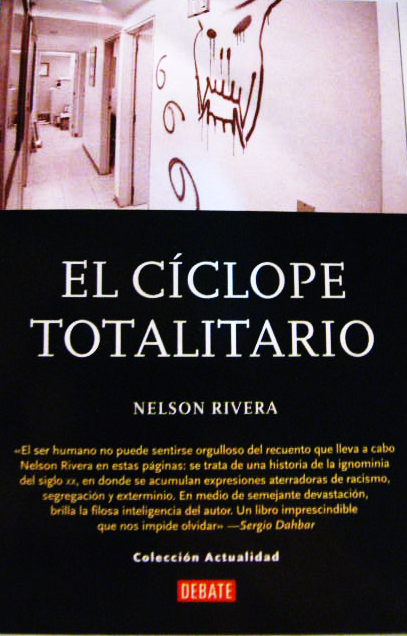

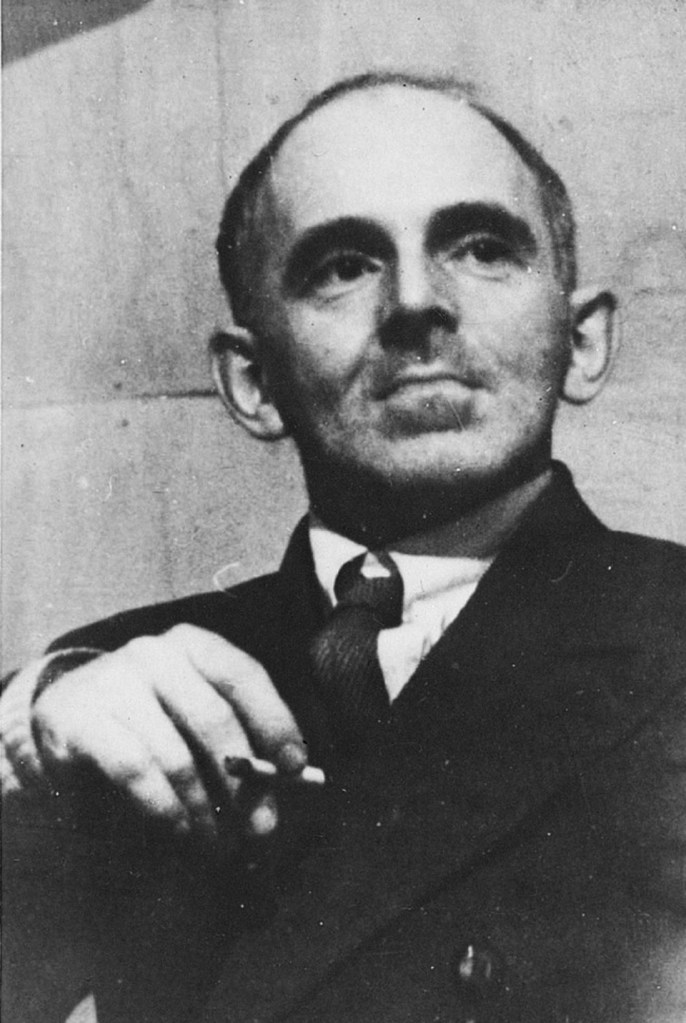
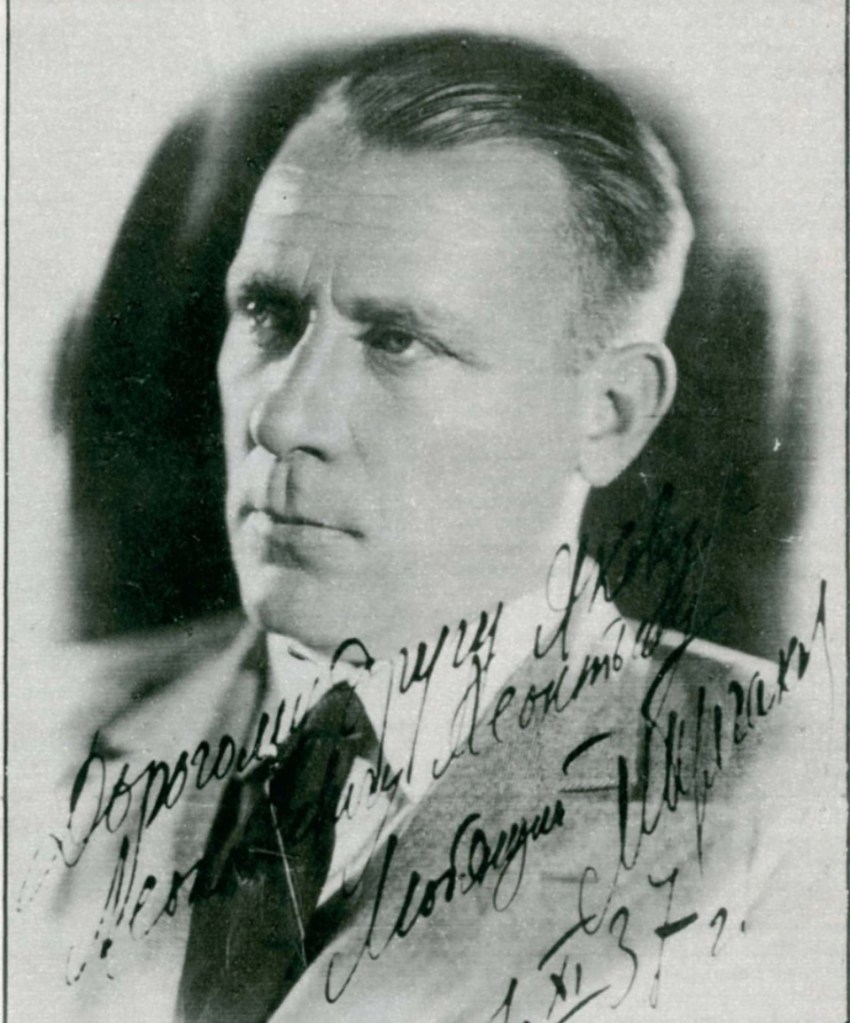
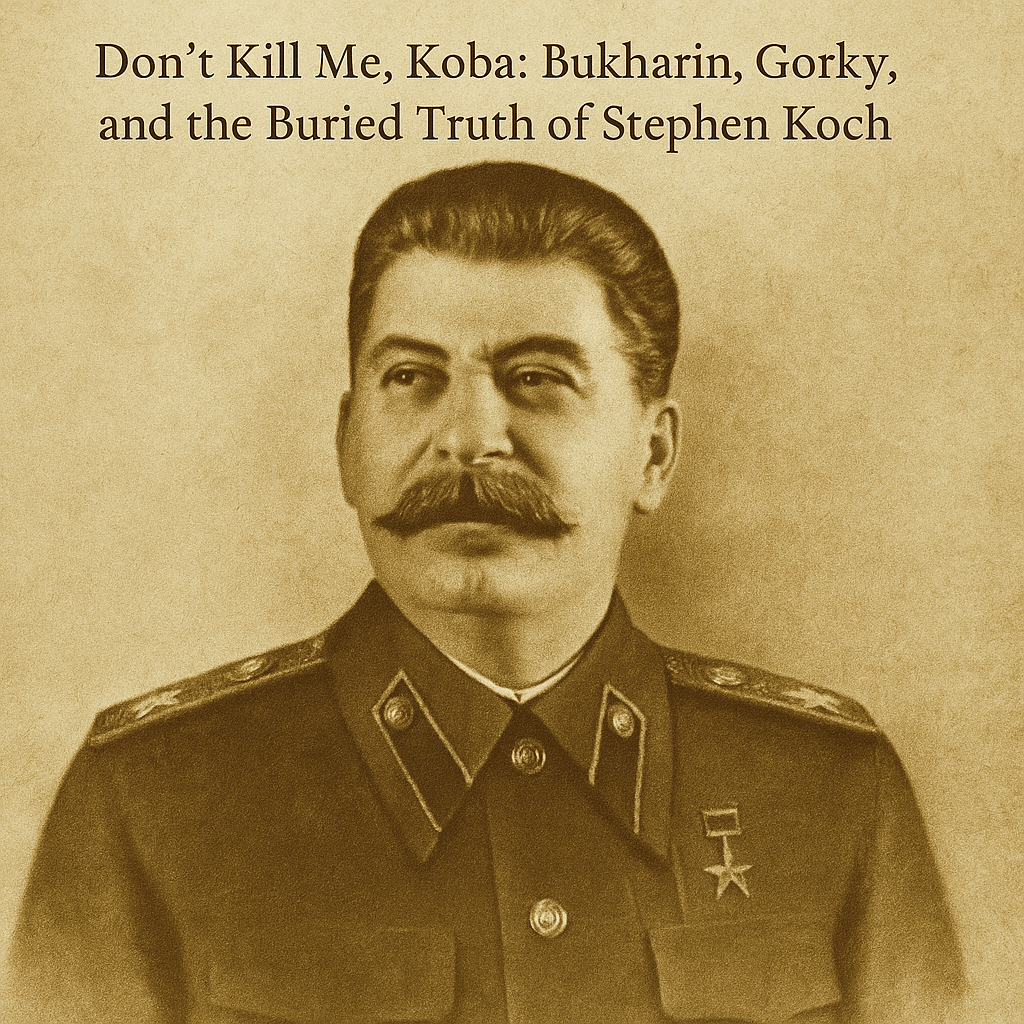
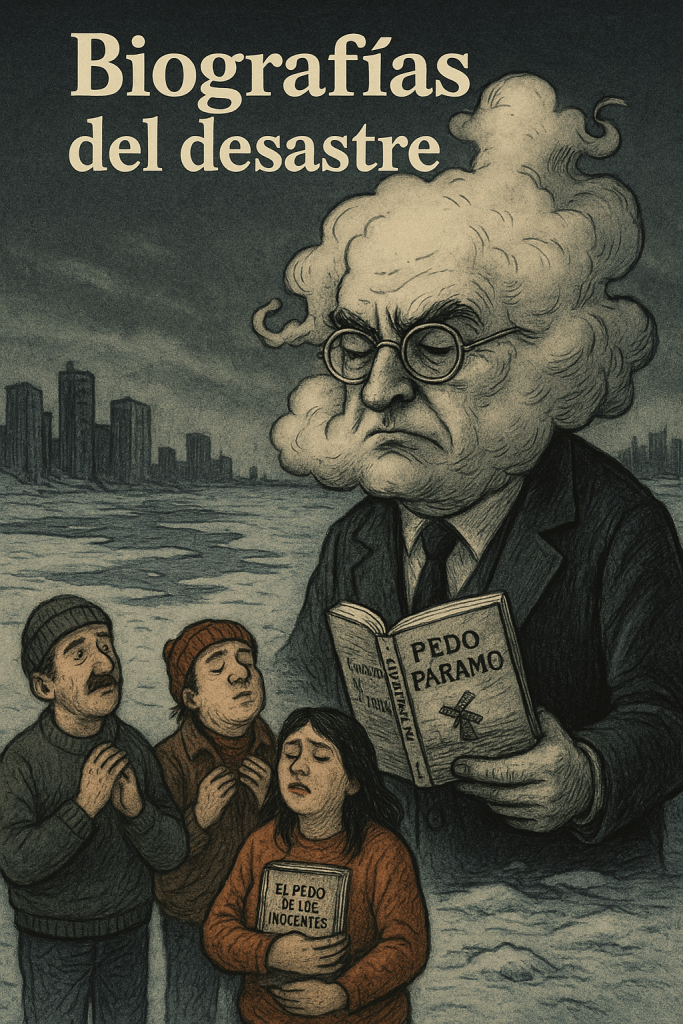
 Centeno's Lighthouse