I was formed in Marx, Lenin, Mao. I believed those books could read the world. Surplus value, means of production, class struggle: dogmas, not categories. Today those certainties are dust: capitalism no longer fits the manuals. Agamben says we live under a machine that manages life without telos. Han says we are smiling slaves of our own self-exploitation. Slavery now wears new faces: exhaustion disguised as freedom. Yet the old slavery persists: – in Pakistan, with workers chained to brick kilns; – in Africa, where war is the daily wage; – in Asia, where children stitch the clothes the West consumes and discards. And then China: a disciplined swarm, a penal hive, eternal buzzing of production. The West is the soft society: no chains, only apps. No whips, only algorithms. Two faces of the same machine: roar and smile, martyrdom and consumption. Where are the exploited? Who are the slaves? “Proletariat” no longer suffices. Marcion suspected: the world is ruled by a strange god. Paul said it outright: we wrestle against principalities and powers. The visible is haunted by the invisible: debt, war, hunger, algorithms. Politics offers no way out: not Marxism, not liberalism, not social democracy. Even the Church’s social doctrine cannot break the circle. All stumble on the same wound: a time without horizon. Creation groans, Paul said, with the pangs of birth. It awaits more than revolutions, more than reforms. It awaits redemption. Marcion longed for a God other than the tyrant of the world. Paul proclaimed that God had already broken in through Christ. That is the crack in the machine: the eternal power already defeated. Meanwhile, the world dances with masks. It celebrates perpetual Halloween. It disguises anguish with consumption. Yet behind the carnival beats the question: – When will the specters of capital vanish? – When will the glory of the children of God be revealed?
A singular testimony: that of a woman of whom, unanimously, it was said she was incapable of lying. Her words carried the weight of naked truth, without adornment or artifice. She did not seek to persuade or embellish; she simply recounted what she had lived, with the transparency of one who knew neither calculation nor convenience.
In her encounter with the divine, every phrase she left written —or spoken to the few who could hear her— bears the force of the irrefutable. Not because it was clothed in authority, but because it sprang from a radical purity: the incapacity to falsify.
To such a voice, nothing can be added. One can only receive it with reverence, with the certainty that here speaks truth that burns, truth that unsettles, truth that illuminates.
Simone Weil Encounters Jesus
“Perhaps, in spite of everything, he does love me.”
He entered my room and said: “You poor wretch, who understand nothing and know nothing – come with me and I will teach you of things you have no idea of.” I followed him.
He led me into a church. It was new and ugly. He brought me before the altar and said: “Kneel.” I replied: “I have not been baptized.” He answered: “Fall down on your knees before this place, with love, as before the place where truth exists.” And I obeyed.
He took me then to a garret, from whose window the whole town could be seen: scaffoldings, the river where boats were unloading. He made me sit down.
We were alone. He spoke, and sometimes others entered for a moment, joining in the conversation before leaving again.
It was no longer winter; not yet spring. Bare branches stretched in a cold air full of sunlight. The light rose, brightened, faded; then the stars and the moon appeared. Again the dawn returned.
At times he would bring bread from a cupboard, and we shared it. That bread truly had the taste of bread. I have never tasted it again.
He poured us wine, which carried the taste of the sun and the soil on which the city stood. Sometimes we lay on the wooden floor, and the sweetness of sleep descended on me. Then I awoke, and drank the light of the sun.
He had promised to teach me, but he taught me nothing. We talked in a rambling way, as old friends do.
One day he said: “Now go away.” I fell at his knees, clinging, begging him not to send me off. But he pushed me out toward the stairs. I descended as if unconscious, my heart torn to shreds. I walked through the streets, realizing I no longer knew where that house was.
I never tried to find it again. He had come for me by mistake. My place was not in that garret. My place was anywhere else: in a prison cell, a bourgeois parlor full of trinkets, a station waiting room. Anywhere—but not in that garret.
And yet, sometimes, words of his return to me. I repeat them with fear, never sure if I remember them rightly. He is not here to confirm them.
I know well that he does not love me. How could he love me? And yet, deep within me, something trembles with the thought— that perhaps, in spite of everything, he does.
Simone Weil se encuentra con Jesús
«Quizá, a pesar de todo, él me ame.»
Entró en mi habitación y me dijo: «Pobre desdichada, que no entiendes nada y nada sabes. Ven conmigo, y te enseñaré cosas de las que no tienes idea.» Y lo seguí.
Me condujo a una iglesia. Era nueva y fea. Me llevó ante el altar y dijo: «Arrodíllate.» Yo respondí: «No he sido bautizada.» Él contestó: «Póstrate aquí, con amor, como ante el lugar donde habita la verdad.» Y obedecí.
Luego me llevó a un desván, desde cuya ventana abierta se veía la ciudad entera: andamios de madera, el río donde descargaban los barcos. Me hizo sentar.
Estábamos solos. Él hablaba, y a veces alguien entraba, se unía un instante a la conversación, y luego se marchaba.
Ya no era invierno; tampoco aún primavera. Las ramas de los árboles estaban desnudas, sin brotes, en un aire frío lleno de sol. La luz crecía, brillaba, luego se apagaba; aparecían la luna y las estrellas. Y de nuevo volvía el amanecer.
A veces sacaba pan de un armario y lo compartía conmigo. Ese pan sabía verdaderamente a pan. Nunca más he vuelto a encontrar ese sabor.
Vertía vino para mí y para él, vino con el gusto del sol y de la tierra sobre la que estaba construida la ciudad. A veces nos tendíamos sobre el suelo de madera, y la dulzura del sueño descendía sobre mí. Luego despertaba y bebía la luz del sol.
Me había prometido enseñanza, pero no me enseñó nada. Hablábamos sin rumbo fijo, de mil cosas, como viejos amigos.
Un día me dijo: «Ahora vete.» Caí a sus pies, lo abracé, le supliqué que no me echara. Pero me arrojó hacia la escalera. Bajé como sin conciencia, con el corazón hecho pedazos. Caminé por las calles y comprendí que ya no sabía dónde estaba aquella casa.
Nunca intenté volver a encontrarla. Comprendí que había venido a buscarme por error. Mi lugar no estaba en aquel desván. Mi lugar estaba en cualquier otro sitio: en una celda de prisión, en un salón burgués lleno de baratijas y terciopelo rojo, en la sala de espera de una estación. En cualquier parte, menos en aquel desván.
Y, sin embargo, a veces me sorprendo repitiendo, con temor y compunción, alguna de sus palabras. ¿Cómo saber si las recuerdo fielmente? Él no está para decírmelo.
Sé bien que no me ama. ¿Cómo podría amarme? Y sin embargo, hay algo profundo en mí, un punto de mi ser, que no puede dejar de pensar, con miedo y temblor, que quizá, a pesar de todo… él me ame.
Fuente: Simone Weil, Cuadernos (First and Last Notebooks), (Wipf and Stock, 2015), pp. 65–66.
In an age of polarization and mimetic contagion, we either demonize or idolize, but rarely see clearly. René Girard’s lens helps us uncover the hidden mechanism of “all against one” and discover a new path: not myth, not scapegoating, but the truth revealed in the Cross — the innocence of the victim and the call to reconciliation.
Bilingual
✍️ Article in English
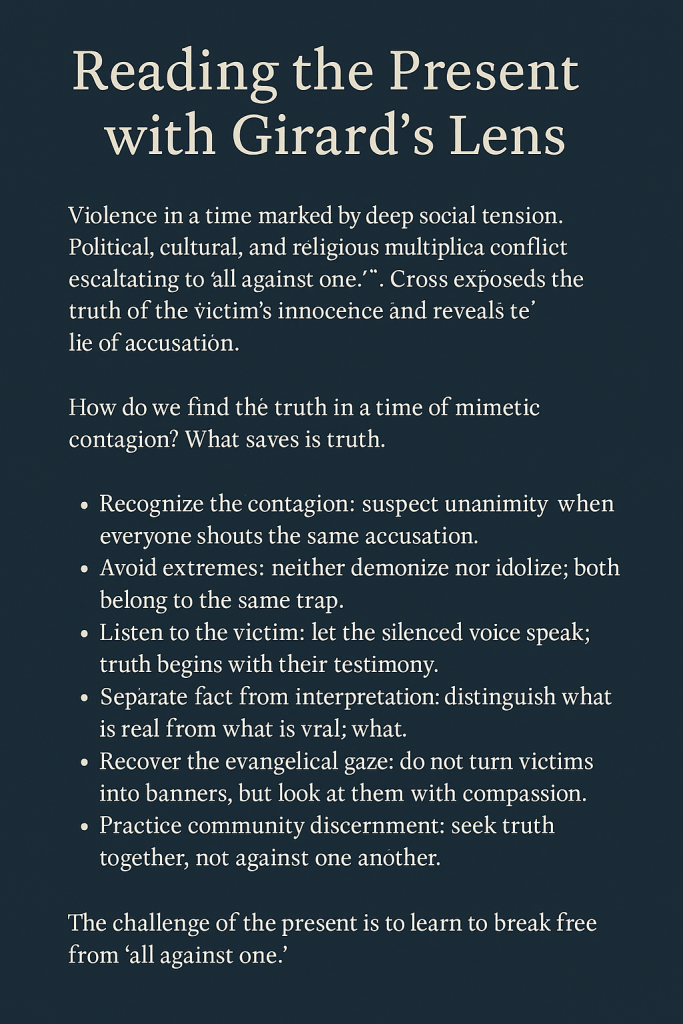
Reading the Present with Girard’s Lens
We live in a time marked by deep social tension. Political, cultural, and religious polarization multiplies divisions, and each side mirrors in the other the very passions that fuel its anger. Hatred imitates hatred, indignation spreads like fire, fear multiplies by contagion. In this collective mirror, conflict escalates until the entire community vibrates under the invisible pressure of finding someone to blame, someone to bear the weight of all unrest.
Then the most ancient mechanism of humanity emerges: the convergence of all against one. A culprit is identified, a face that concentrates suspicion and rage. It can be an individual, a minority, even a symbol. The unanimous cry rises: “If we eliminate this one, there will be peace.” And the sacrifice takes place: exclusion, lynching, assassination, social cancellation. The group feels, for an instant, a false peace, as if the problem had been solved.
But what follows is the building of a narrative. In the mythic logic, the victim is presented as guilty; their elimination is justified, even sacred. Violence is thus legitimized. In the evangelical logic, however, the victim is shown to be innocent. Their exclusion does not save the community but reveals the injustice of unanimity. It shows that supposed peace is built upon a lie.
This is our present: one sector demonizes, another deifies; one cries “monster”, the other “martyr.” Both fall into the mimetic trap. Neutrality becomes almost impossible, because contagion pressures everyone to take sides, to reproduce collective passion.
Against this endless cycle, the Cross opens another path. It is not a military or political triumph; it does not resemble the victory of a Roman general dragging prisoners in chains. The triumph of the Cross is paradoxical: it exposes the very mechanism of violence and strips it of its prestige. In the innocence of the victim, the lie of accusation is revealed. The Cross shows that neither demonization nor sacralization can save. What saves is truth — the recognition that we all participate in the mechanism and all stand in need of conversion.
How, then, do we find the truth in a time of mimetic contagion?
Recognize the contagion: when everyone shouts the same accusation, suspect the unanimity.
Avoid extremes: neither demonize nor idolize; both belong to the same trap.
Listen to the victim: let the silenced voice speak; truth begins with their testimony.
Separate fact from interpretation: distinguish what is real from what is viral.
Recover the evangelical gaze: do not turn victims into banners, but look at them with compassion.
Practice community discernment: seek truth together, not against one another.
The challenge of the present is not to choose whom to demonize or whom to sacralize, but to recognize how the “all against one” still operates and to learn to break free from it. The evangelical revelation calls us not to justify violence or glorify victims as idols, but to humanize: to defend innocence, resist contagion, dismantle the narratives that legitimize exclusion, and open a path toward reconciliation.
✍️ Artículo en Español
Leer el presente con la mirada de Girard
Vivimos en un tiempo marcado por la tensión social. La polarización política, cultural y religiosa multiplica las divisiones, y cada bando refleja en el otro las pasiones que alimentan su furia. El odio imita al odio, la indignación se contagia como fuego, el miedo se multiplica. En este espejo colectivo, el conflicto crece hasta que toda la comunidad vibra bajo una presión invisible: la necesidad de encontrar a alguien a quien culpar, alguien que cargue con el peso del malestar.
Entonces aparece el mecanismo más antiguo de la humanidad: la convergencia de todos contra uno. Se identifica un culpable, un rostro que concentra la sospecha y la rabia. Puede ser un individuo, una minoría, incluso un símbolo. El grito unánime se eleva: «Si eliminamos a este, habrá paz». Y el sacrificio se consuma: exclusión, linchamiento, asesinato, cancelación social. El grupo experimenta, por un instante, una paz ilusoria, como si el problema hubiera sido resuelto.
Pero lo que sigue es la construcción de un relato. En la lógica mítica, la víctima aparece como culpable; su eliminación se presenta como justa, necesaria o incluso sagrada. Así, la violencia queda legitimada. En la lógica evangélica, en cambio, la víctima es mostrada como inocente. Su exclusión no salva: desnuda la injusticia de la unanimidad, muestra que la paz aparente se levanta sobre una mentira.
Este es nuestro presente: un sector demoniza, otro sacraliza; unos gritan «monstruo», otros «mártir». Ambos caen en la trampa mimética. La neutralidad se vuelve casi imposible, porque la presión del contagio empuja a tomar partido, a reproducir la pasión colectiva.
Frente a este ciclo interminable, la Cruz abre otro camino. No es un triunfo militar ni político; no se parece a la victoria de un general romano que arrastra prisioneros encadenados. El triunfo de la Cruz es paradójico: consiste en exponer el mecanismo de la violencia y despojarlo de su prestigio. En la inocencia de la víctima se revela la mentira de la acusación. La Cruz enseña que ni la demonización ni la sacralización salvan; lo que salva es la verdad: reconocer que todos participamos en el mecanismo y todos necesitamos conversión.
¿Cómo encontrar, entonces, la verdad en un tiempo de contagio mimético?
Reconocer el contagio: cuando todos acusan lo mismo, sospechemos de la unanimidad.
Evitar los extremos: ni demonizar ni idolatrar; ambos pertenecen a la misma trampa.
Escuchar la voz de la víctima: dejar hablar a quien fue silenciado; la verdad comienza con su testimonio.
Separar hechos de interpretaciones: distinguir lo real de lo viral.
Recuperar la mirada evangélica: no convertir a las víctimas en banderas, sino mirarlas con compasión.
Practicar el discernimiento comunitario: buscar la verdad juntos, no unos contra otros.
El desafío del presente no es elegir a quién demonizar ni a quién sacralizar, sino reconocer cómo sigue operando el “todos contra uno” y aprender a liberarnos de él. La revelación evangélica no nos llama a justificar la violencia ni a glorificar a las víctimas como ídolos, sino a humanizar: a defender la inocencia, resistir el contagio, desmontar las narrativas que legitiman la exclusión y abrir un camino de reconciliación.
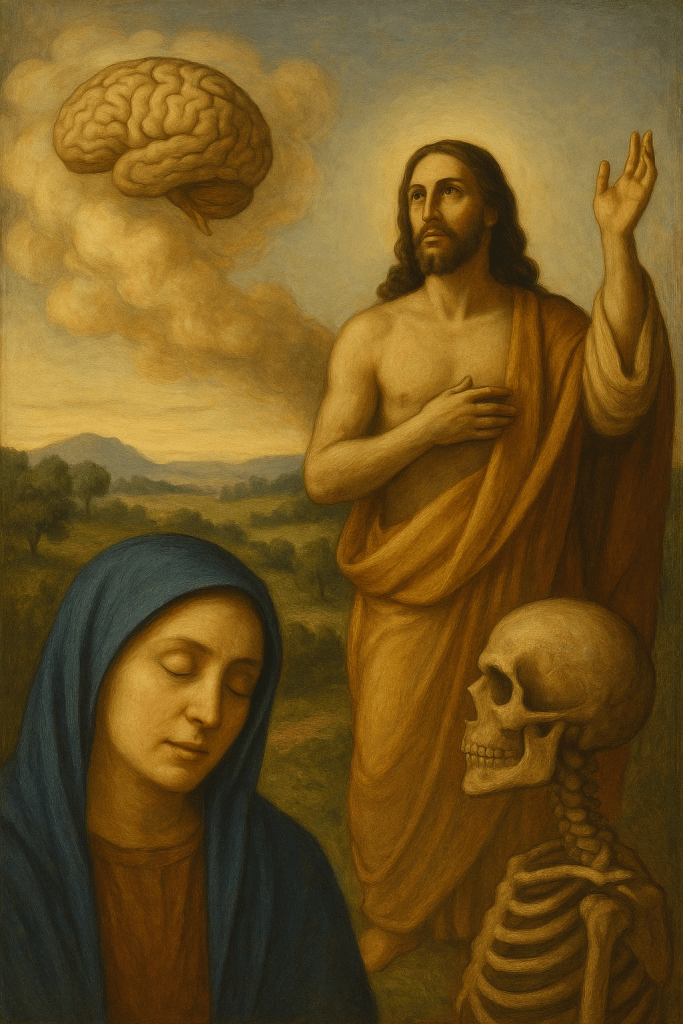
When I realize that I am alive, I am not merely noting a biological fact. I am recognizing something deeper: there is an I that knows itself to be alive. My body breathes, my cells divide, my nervous system processes information, but in becoming aware of it, another level of existence emerges. That “I live” is not the same as “my body lives.” Consciousness is the act by which I discover my being in the midst of biology.
If we were to accept that consciousness is material, we would need to show how the abstract could be secreted by the physical. But this is impossible: in biology, organs produce measurable substances —hormones, enzymes, neurotransmitters—; yet no abstract thought has weight, volume, or chemical composition. The structure of syntax or the concept of justice cannot be reduced to electric discharges. Consciousness is not secreted by the brain; rather, it makes use of the brain as its instrument of manifestation.
The Thomistic tradition offers clarity here. Thomas Aquinas taught that the soul is the form of the body: not a ghost added to matter, but the vital principle that organizes and sustains the biological. From conception, this substantial unity makes every human being a person. The rational soul is irreducible because it can grasp universals and the eternal. This ability to abstract is a sign of the spiritual and therefore of the immortal.
Eleonore Stump, in dialogue with contemporary analytic philosophy, has shown how this view avoids both Cartesian dualism and materialist reductionism. The person is a unity, yet with spiritual dimensions that cannot be reduced. Self-consciousness and the narrative structure of personal identity cannot be explained by neural correlates alone.
From neuroscience, Michael Egnor insists that the brain does not create the mind; it is its instrument. Just as a piano does not create music but makes it audible, the nervous system allows consciousness to express itself without being its source. Clinical evidence —patients retaining identity despite brain damage, near-death experiences, continuity of self in altered states— supports this intuition: the spiritual is not reducible to the material.
But Christianity does not stop there. We affirm not only an immortal soul but the resurrection of the dead. As Paul teaches: “What is sown in corruption is raised in incorruption; what is sown a natural body, is raised a spiritual body” (1 Cor 15:42-44). We will not rise as disembodied shadows, but with a glorified body, like Christ’s risen body.
Biology is seed, consciousness is anticipation, but resurrection is fulfillment. This life is like the chrysalis awaiting its final form. We are pilgrims toward the ultimate transformation: a glorified, incorruptible, immortal body, living eternally in the communion of God.
Notes (English)
Thomas Aquinas, Summa Theologiae, I, q. 75, on the nature of the soul. Michael Egnor, “The Mind and the Brain,” Evolution News, 2018. Eleonore Stump, Aquinas (Routledge, 2003); Wandering in Darkness (Oxford University Press, 2010). Bible, 1 Corinthians 15.
ESPAÑOL
Entre la biología y el espíritu: conciencia, alma y resurrección
Israel Centeno
Cuando me doy cuenta de que vivo, no estoy constatando un mero hecho biológico. Estoy reconociendo algo más profundo: que hay un yo que se sabe vivo. Mi cuerpo respira, mis células se multiplican, mi sistema nervioso procesa información, pero al advertirlo, surge otro nivel de existencia. Ese “yo vivo” no se reduce a “mi cuerpo vive”. La conciencia es el acto por el cual descubro mi ser en medio de lo biológico.
Si aceptáramos que la conciencia es material, tendríamos que mostrar cómo lo abstracto puede ser secretado por lo físico. Pero esto es imposible: en biología, los órganos producen sustancias medibles —hormonas, enzimas, neurotransmisores—; sin embargo, ningún pensamiento abstracto tiene peso, volumen ni composición química. No se puede reducir la estructura de una sintaxis o la noción de justicia a descargas eléctricas. La conciencia no es una segregación del cerebro, sino que se sirve del cerebro para manifestarse.
La tradición tomista ofrece claridad aquí. Santo Tomás de Aquino enseña que el alma es la forma del cuerpo: no un fantasma añadido, sino el principio vital que organiza y sostiene lo biológico. Desde la concepción existe esa unión sustancial que hace de cada ser humano una persona. El alma racional es irreductible porque puede pensar lo universal y lo eterno. Esa capacidad de abstraer es ya signo de lo espiritual y, por tanto, de lo inmortal.
Eleonore Stump, en diálogo con la filosofía analítica, muestra cómo esta visión evita tanto el dualismo cartesiano como el reduccionismo materialista. La persona es una unidad, pero con dimensiones espirituales irreductibles. La autoconciencia y la capacidad de narrar la propia vida no se explican por simples correlatos neuronales.
Desde la neurociencia, Michael Egnor insiste en que el cerebro no crea la mente: es su instrumento. Así como un piano no crea la música, sino que la hace audible, el sistema nervioso permite que la conciencia se exprese, sin ser su fuente. Los fenómenos clínicos —pacientes que mantienen identidad pese a daño cerebral, experiencias cercanas a la muerte, continuidad del yo en estados alterados— apoyan esta intuición: lo espiritual no se reduce a lo material.
Pero el cristianismo no se detiene ahí. No solo afirmamos un alma inmortal: proclamamos la resurrección de los muertos. Como enseña San Pablo: “Lo que se siembra en corrupción, resucita en incorrupción; lo que se siembra cuerpo animal, resucita cuerpo espiritual” (1 Cor 15, 42-44). No resucitamos como sombras desencarnadas, sino con un cuerpo glorioso, semejante al de Cristo resucitado.
La biología es semilla, la conciencia es anticipo, pero la resurrección es la plenitud. Esta vida es como el tránsito de la crisálida que espera desplegar su forma definitiva. Somos peregrinos hacia la transformación final: un cuerpo glorificado, incorruptible, inmortal, en la comunión eterna de Dios.
Notas (Español)
Santo Tomás de Aquino, Suma Teológica, I, q. 75, sobre la naturaleza del alma. Michael Egnor, “The Mind and the Brain,” Evolution News, 2018. Eleonore Stump, Aquinas (Routledge, 2003); Wandering in Darkness (Oxford University Press, 2010). Biblia, 1 Corintios 15
Karl Marx anticipated that capitalism carried within its contradictions the seeds of its own end. The antagonism between capital and labor, the growing exploitation, and the concentration of wealth would, in his analysis, culminate in a terminal crisis that would open the way to another form of social organization. History, however, has shown something different: capitalism has not perished from its contradictions. It has mutated through them, absorbing and redirecting them, even incorporating Marxism itself into its dynamic of renewal.
Late capitalism had already demonstrated this plasticity through welfare policies, mass consumption, and financialization. But the most radical leap takes place today, with the transition to what Yann Moulier-Boutang (2007) called cognitive capitalism: a system in which the object of accumulation is no longer currency or the factory, but data, knowledge, attention, and life itself. Maurizio Lazzarato (2004) and Carlo Vercellone (2006) described this as a capitalism that exploits directly the cognitive, creative, and communicative faculties of human beings. Antonio Negri and Michael Hardt (2000) spoke of a global Empire managing immaterial labor, while Shoshana Zuboff (2019) diagnosed the consolidation of a surveillance capitalism that turns personal experience into raw material.
In this new scenario, the industrial proletariat has given way to the digital proletariat: millions of users who work for free on platforms, producing data that feed algorithms. Surplus value is no longer drawn solely from the laborer’s physical effort but from the capture of human time and everyday experience. This labor force is enslaved through hooks to the screen: no whips or chains, but notifications, instant rewards, and carefully designed mechanisms of addiction. Attention becomes the factory, intimacy the field of extraction.
Universities, once guardians of knowledge, have mutated as well. Today they function as data-extraction machines, capturing not only academic outputs but also consumption habits, digital interactions, and the everyday traces of student life on educational platforms. Even those who produce “little” or “partial data” are absorbed by persistent processes of extraction. Added to this is their function of indoctrination: they no longer form critical subjects but compliant users, trained to accept algorithmic dependence as natural. Under the rhetoric of innovation and employability, universities have become engines of legitimation for post-capitalism rather than spaces of emancipation.
Meanwhile, the demographic surplus grows. Entire populations are excluded from both the traditional labor market and the new knowledge economy. Yet their very precariousness is turned into resource: their lives become passive sources of data, raw material for systems of control and statistics.
The great paradox is that artificial intelligence, nourished by the accumulated cultural heritage of humanity, should be recognized as a collective patrimony. Instead, it has been appropriated by a handful of corporations that hold monopolistic power over it. Just as the commons were enclosed in the Middle Ages to enable agrarian capitalism, today language, creativity, culture, and memory are enclosed. What should belong to all is privatized under the sign of the commodity.
But alongside this digitalized world exists what we might call the material periphery: those who still produce tangible goods—food, manufacturing, construction, mining. This world sustains basic life yet has been relegated to the margins of value. It is no longer the central proletariat of industrial capitalism, but a class of support, subjected to new forms of exclusion. Even sectors that once defined accumulation, such as real estate, are losing relevance. Very soon, those who spent their lives saving for a house will realize that capital is no longer measured in bricks but in data.
And as I write these reflections, I cannot help but recognize that I, too, am part of this dynamic. By transforming my thought into words and sharing it online with a minimal audience, I am voluntarily and freely giving away the value of my interaction. Although outside the system that captures it this seems to have no exchangeable value, it is nonetheless absorbed by the digital economy. Even after paying in tangible currency for the service that connects me, my words remain registered, indexed, and converted into input. To paraphrase Marx, we no longer even have our chains left: criticism itself becomes fuel for the system.
Far from collapsing under its contradictions, capitalism has learned to turn its limits into levers for expansion. Marxist concepts such as alienation, exploitation, or fetishism have been reconfigured into digital consumption practices and technological dependency. What Marx once described as the germ of capitalism’s destruction has instead become the engine of its reinvention. Capitalism has not died; it has become a mutant system, able to metabolize even the critique directed against it.
The result is unsettling: there are no longer smoke-filled factories or workers on assembly lines, but there are screens that enslave us; no longer communal fields, but universities that indoctrinate; no longer an enlightened bourgeoisie, but technological corporations enclosing the commons. The material periphery sustains life, while accumulation is concentrated in the intangible.
The question that remains is not only economic but ethical and political: will we be able to reclaim the democratization of data and artificial intelligence, or will we be reduced to mere consumers of knowledge that belongs to us but is returned to us only as commodity?
La Sábana no es dogma de fe. No creemos en la resurrección por la Sábana, pero sigue siendo motivo de asombro lo que se encuentra al estudiarla y al tratar de replicarla sin éxito, a pesar de que algunos afirman que fue producida en la Edad Media.
La Sábana de Turín ha sido, durante siglos, objeto de devoción y controversia. Más allá de los debates sobre su autenticidad histórica, recientes aplicaciones de inteligencia artificial (IA) han permitido aproximaciones inéditas a la imagen grabada en el lienzo. Estos estudios no han revelado códigos ocultos ni mensajes intencionales, sino algo más fundamental: patrones geométricos y matemáticos consistentes que sugieren un proceso de formación no explicado satisfactoriamente.
Entre los hallazgos destacan los obtenidos con análisis de componentes principales (PCA), una técnica que elimina el ruido de los datos y resalta las variables más significativas. Al aplicarla a escaneos digitales de alta resolución, los investigadores observaron que la figura humana pasaba a un segundo plano y emergía un campo de información. La gradación de luces y sombras mostraba una consistencia matemática precisa: la intensidad de la impronta variaba de manera proporcional a la distancia hipotética entre cuerpo y tela. En otras palabras, la Sábana contiene información tridimensional que sigue una regla física estable: cuanto más cerca el cuerpo, más fuerte la señal; cuanto más lejos, más débil¹.
Asimismo, la IA detectó un andamiaje geométrico subyacente en zonas anatómicas específicas, como las manos y la curvatura de las costillas. Estos patrones habían permanecido invisibles al ojo humano, ocultos por la trama del lino y los daños acumulados. Para descartar errores, los modelos de IA fueron alimentados con imágenes de otros lienzos antiguos y obras artísticas. El resultado fue concluyente: la estructura geométrica era exclusiva de la Sábana de Turín².
Las implicaciones son significativas. La precisión geométrica y la tridimensionalidad observadas hacen improbable que la imagen haya sido generada por contacto directo —lo que produciría manchas irregulares—. Sugieren, más bien, un proceso de proyección, como si alguna forma de energía hubiera transmitido la información desde cierta distancia.
Entre las hipótesis exploradas se encuentran el efecto corona, en el que un campo eléctrico de alto voltaje alrededor de un cuerpo podría haber dejado una impronta superficial, y la de un pulso de radiación ultravioleta, capaz de afectar únicamente la capa más externa de las fibras³. Sin embargo, hasta ahora ningún experimento ha conseguido reproducir, al mismo tiempo, las características únicas de la Sábana:
La superficialidad de la coloración (limitada a las fibrillas externas del lino).
Su naturaleza de negativo fotográfico.
La coherencia tridimensional de la intensidad de la imagen.
La presencia de patrones geométricos consistentes.
En conclusión, los estudios con IA no han resuelto el debate sobre la edad de la Sábana, pero sí han desplazado la discusión hacia otro terreno: el de su estructura informacional. El lienzo no es solo objeto de análisis histórico o artístico, sino un fenómeno que contiene información tridimensional organizada bajo reglas matemáticas. En este sentido, la Sábana de Turín, lejos de ser un simple vestigio textil, continúa representando un desafío abierto para la ciencia contemporánea.
Notas
Thomas McAvoy, Artificial Intelligence Analysis of Images of the Shroud of Turin, International Journal of Astrophysics and Space Science, vol. 13, n.º 1, 2025.
Three-Dimensional Reconstructions of the Shroud of Turin: From Photographic Negatives to AI-Enhanced Forensic Analysis, Academia.edu, 2024.
Giulio Fanti et al., Comparative tests on various image formation hypotheses simulating the Turin Shroud image, Journal of Imaging Science and Technology, vol. 63, n.º 6, 2019.
📖 English Version
What Does Artificial Intelligence Tell Us About the Shroud of Turin?
The Shroud is not a dogma of faith. We do not believe in the resurrection because of the Shroud, but it remains a source of wonder when studied and when replication attempts continue to fail, despite claims that it was produced in the Middle Ages.
The Shroud of Turin has, for centuries, been an object of devotion and controversy. Beyond debates about its historical authenticity, recent applications of artificial intelligence (AI) have enabled unprecedented approaches to the image imprinted on the cloth. These studies have not revealed hidden codes or intentional messages, but rather something more fundamental: consistent geometric and mathematical patterns that suggest a process of formation not yet satisfactorily explained.
Among the findings are those obtained through principal component analysis (PCA), a technique that eliminates noise in datasets and highlights the most significant variables. When applied to high-resolution digital scans, researchers observed that the human figure receded into the background, and what emerged was a field of information. The gradation of light and shadow revealed precise mathematical consistency: the intensity of the imprint varied in proportion to the hypothetical distance between body and cloth. In other words, the Shroud contains three-dimensional information that follows a stable physical rule: the closer the body, the stronger the signal; the farther away, the weaker.¹
AI also detected an underlying geometric scaffolding in specific anatomical regions, such as the hands and the curvature of the ribs. These patterns had remained invisible to the human eye, concealed by the weave of the linen and centuries of damage. To rule out errors, AI models were tested with images of other ancient linens and artistic works. The result was conclusive: the geometric structure was unique to the Shroud of Turin².
The implications are significant. The observed geometric precision and three-dimensionality make it unlikely that the image was generated by direct contact—which would have produced irregular smudges. Rather, they suggest a process of projection, as though some form of energy had transmitted the information from a distance.
Proposed hypotheses include the corona discharge theory, in which a high-voltage electric field around a body could leave a superficial imprint, and that of a short burst of ultraviolet radiation, capable of affecting only the outermost fibers of the linen³. Yet no experiment to date has succeeded in reproducing all the Shroud’s unique features at once:
The superficial nature of the coloration (limited to the outer fibrils of the linen).
The photographic negative quality of the image.
The three-dimensional coherence of the imprint’s intensity.
The presence of consistent geometric patterns.
In conclusion, AI-based studies have not resolved the debate about the age of the Shroud, but they have shifted the discussion toward another domain: its informational structure. The cloth is not merely an object of historical or artistic analysis, but a phenomenon containing three-dimensional information organized under mathematical rules. In this sense, the Shroud of Turin, far from being a simple textile relic, continues to pose an open challenge to contemporary science.
Notes
Thomas McAvoy, Artificial Intelligence Analysis of Images of the Shroud of Turin, International Journal of Astrophysics and Space Science, vol. 13, no. 1, 2025.
Three-Dimensional Reconstructions of the Shroud of Turin: From Photographic Negatives to AI-Enhanced Forensic Analysis, Academia.edu, 2024.
Giulio Fanti et al., Comparative tests on various image formation hypotheses simulating the Turin Shroud image, Journal of Imaging Science and Technology, vol. 63, no. 6, 2019.
At this very moment, as I type these words, hatred is expressing itself in the world with such force that it makes me wonder whether love will truly have the last word. Lord, why did you go to the cross, if today the same crowd would once again crucify a man without fault or error? Nothing seems to have changed, despite revelation.
I have searched for answers. In last Sunday’s homily, the priest of my parish spoke of the mystery of the cross and the sacrifice of the Son of God. He admitted that he did not have many answers, but he did have one that was firm: it is a mystery. The incarnation, the passion, the death, and the resurrection are not empty symbols, but the key that remains for us: to lift up the serpent of Moses to avoid the bites, to embrace the cross in order to attain redemption.
Hatred has a face. It can be drawn in literature—in Iago, in Macbeth—in history, in revolts and revolutions, in cruel tyrants who left behind extermination camps and torture chambers. Hatred has both an individual and collective body, but behind all its masks its anatomy always obeys the same logic.
Hatred, like love, is born of extreme emotions that engage the senses. It can be ardent or glacial, passionate or cold; it changes tone, but not intensity. No one loves with indifference, while hatred always carries a radical indifference: it denies the good and rejects the dignity of the other. We hate what we despise, what we fear, what threatens to strip something from us. Never with the courage to give, always with the cowardice to take.
It can remain latent, like a silent tumor waiting for a trigger to manifest itself. It hides, but never completely: it seeps through the eyes, the words, the gestures. We hate by mimesis, when the other reflects what we cannot bear in ourselves; out of complex and resentment, when an inner wound spills outward. And because hatred is propagable and inflammable, a rumor or a slogan is enough to ignite the tribe and transform fear into collective violence.
In Jacques Maritain, I found that hatred multiplies when the other is instrumentalized, reduced to a means rather than an end. Where there should be political charity and the common good, enemies are fabricated. Hatred corrupts politics: in the name of a supposed common good, walls are erected to divide.
Edith Stein taught me that hatred is, above all, the radical failure of empathy. The human being is made to open to the other and to recognize in them an interiority akin to one’s own. When this orientation breaks down, hatred installs itself as a parasite of the spirit: it consumes vital energy but produces nothing of its own. It is inverted love, a twisted passion: intensity without openness, desire turned into negation.
In Simone Weil, I understood that hatred resembles gravity. The soul needs justice, truth, and meaning as urgently as it needs bread and water. When these needs are denied, force takes the place of good, and the spirit plunges downward. Hatred is the weight that drags, the uprooting that breaks attention and replaces grace with violence.
With René Girard, I learned to see the broken mirror of desire: we hate what is too similar, what is too close. What the other reveals in me that I do not want to face. Mimetic desire feeds rivalries that erupt into violence, and the tribe, in order to ward off fear, unloads its tension onto a common enemy, a scapegoat. Hatred thus becomes a collective mechanism, legitimized by the false peace that follows sacrifice.
I have seen how hatred trades, shifts, negotiates. It never gives: it seizes, it deprives. It can incubate in solitude or overflow into the multitude. It always seeks a moral pretext: it disguises itself as the common good, but it excludes; it disguises itself as tribal identity, but it asserts itself by negating the stranger. It is skilled in its justifications: it wears the garments of virtue, but only corrodes.
Its anatomy always reveals the same: absence, distortion, parasitism. It lives off what it consumes and dies when it finds nothing to devour. It is the shadow of love, its darkest caricature. In the end, hatred is death.
I have also thought of what Scripture says about hardened hearts. When hatred appears, the first thing to break is the capacity to feel and to open up: the heart turns to stone. But on the cross, the blood of God was not shed in vain. There, in that paradox, death was overcome.
It is a mystery I cannot fully decipher, but one that sustains me: that in the place where absolute hatred was expressed—in violence, in injustice, in contempt—absolute love was also revealed. And if, as the Gospel of John says, “God is love” (Jn 5), then this is not metaphor nor empty consolation, but the affirmation that even when everything seems dominated by the shadow of hatred, love remains the root and the final word.
Anatomía del odio
En este mismo momento, mientras escribo estas palabras, el odio se expresa en el mundo con tal fuerza que me obliga a preguntarme si el amor realmente tendrá la última palabra. Señor, ¿por qué fuiste a la cruz, si hoy la misma multitud crucificaría de nuevo a un hombre sin error ni culpa? Nada parece haber cambiado, a pesar de la revelación.
He buscado respuestas. En la homilía del domingo pasado, el sacerdote de mi parroquia habló del misterio de la cruz y del sacrificio del Hijo de Dios. Reconoció que él mismo no tenía muchas respuestas, pero sí una contundente: es un misterio. La encarnación, la pasión, la muerte y la resurrección no son símbolos vacíos, sino la clave que nos queda: levantar la serpiente de Moisés para evitar las picaduras, abrazar la cruz para alcanzar la redención.
El odio tiene rostro. Puede dibujarse en la literatura —en Yago, en Macbeth—, en la historia de las revueltas y revoluciones, en los tiranos crueles que dejaron tras de sí campos de exterminio y salas de tortura. El odio encarna en rostros individuales y colectivos, pero detrás de todas sus máscaras, su anatomía responde siempre a la misma lógica.
El odio, como el amor, nace de emociones extremas que comprometen los sentidos. Puede ser ardiente o glacial, pasional o frío; cambia de tono, pero no de intensidad. Nadie ama con indiferencia, mientras que el odio arrastra una indiferencia radical: niega el bien y rechaza la dignidad del otro. Se odia lo que se desprecia, lo que se teme, lo que amenaza con arrebatarnos algo propio. Nunca con el coraje de dar, siempre con la cobardía de arrebatar.
Puede permanecer en estado latente, como un tumor silencioso que espera un disparador para manifestarse. Se oculta, pero nunca del todo: se filtra en la mirada, en la palabra, en el gesto. Se odia por mímesis, cuando el otro refleja lo que no tolero en mí mismo; por complejo y resentimiento, cuando una herida interior se desborda hacia afuera. Y porque es propagable e inflamable, basta un rumor o una consigna para que incendie a la tribu y transforme el miedo en violencia colectiva.
He leído en Jacques Maritain que el odio se multiplica cuando instrumentalizamos al otro, cuando lo reducimos a medio y no a fin. Allí donde debería haber caridad política y bien común, se fabrican enemigos. El odio pervierte la política: en nombre de un supuesto bien común se erigen muros que dividen.
Edith Stein me enseñó que el odio es el fracaso radical de la empatía. El ser humano está hecho para abrirse al otro y reconocerlo como interioridad semejante. Cuando esa orientación se quiebra, el odio se instala como parásito del espíritu: consume energía vital, pero no produce nada propio. Es un amor invertido, una pasión torcida, intensidad sin apertura, deseo vuelto negación.
En Simone Weil comprendí que el odio se parece a la gravedad. El alma necesita justicia, verdad y sentido con la misma urgencia que el pan y el agua. Cuando estas necesidades se niegan, la fuerza ocupa el lugar del bien y el espíritu se precipita hacia abajo. El odio es peso que arrastra, desarraigo que rompe la atención y sustituye la gracia por violencia.
Con René Girard descubrí que se odia lo semejante, lo demasiado parecido. Lo que me revela en el otro lo que no quiero ver en mí mismo. El deseo mimético alimenta rivalidades que desembocan en violencia, y la tribu, para conjurar su miedo, descarga la tensión sobre un enemigo común, un chivo expiatorio. Así el odio se convierte en mecanismo colectivo, legitimado por la falsa paz que sigue al sacrificio.
He visto que el odio transa, cambia de rostro, negocia. Nunca da: arrebata, priva. Puede incubarse en la soledad o desbordarse en la multitud. Siempre busca un aval moral: se disfraza de bien común, pero excluye; se disfraza de identidad tribal, pero se afirma negando al extranjero. Es hábil en su justificación: adopta ropajes de virtud, pero solo erosiona.
Su anatomía revela siempre lo mismo: ausencia, distorsión, parasitismo. Vive de lo que consume y muere cuando no encuentra a quién devorar. Es la sombra del amor, su caricatura oscura. En última instancia, el odio es muerte.
He pensado también en lo que dicen las Escrituras sobre los corazones endurecidos. Cuando el odio aparece, lo primero que se rompe es la capacidad de sentir y de abrirse: el corazón se vuelve piedra. Pero en la cruz, la sangre de Dios no se derramó en vano. Allí, en esa paradoja, la muerte fue vencida.
Es un misterio que no sé descifrar del todo, pero que me sostiene: que en el lugar donde se expresó el odio absoluto —la violencia, la injusticia, el desprecio— también se manifestó el amor absoluto. Y si, como afirma el evangelio de Juan, “Dios es amor” (Jn 5), entonces incluso cuando todo parece dominado por la sombra del odio, el amor permanece como raíz y última palabra.
You came from a country where everything was wrong, invaded and at war with one much larger. You thought you could save your life by going far away, leaving behind violence, even the natural call of the homeland. But homeland—what is homeland? In the end, it always belongs to the dead. We are the same ones who flee, seeking refuge where everyone says there is peace, where violence exists only in cowboy films, mafia sagas, or Hollywood plots.
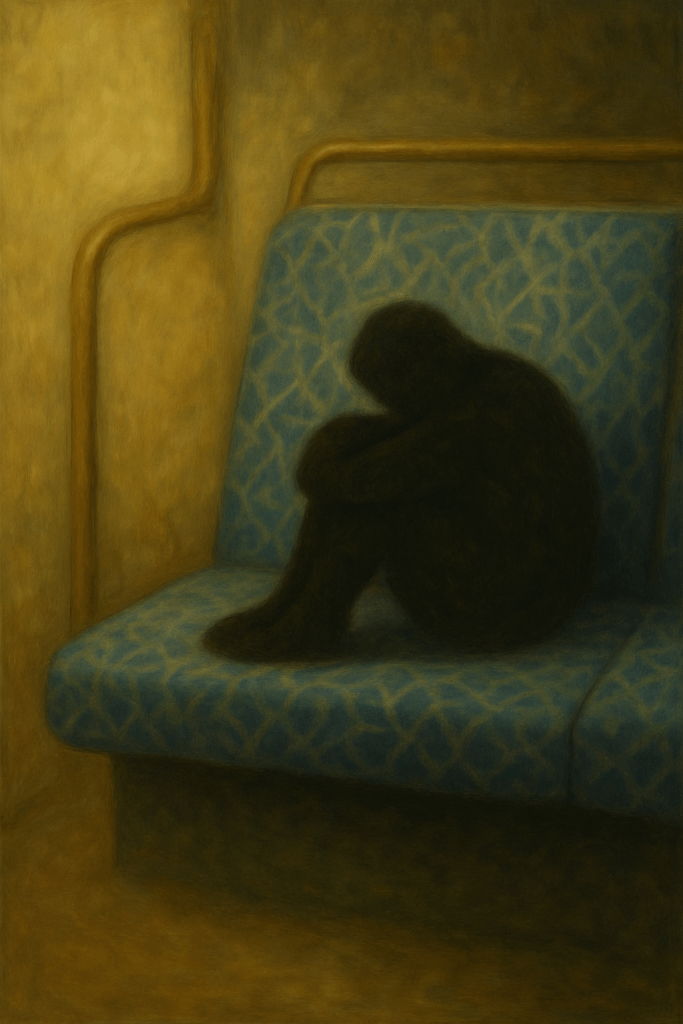
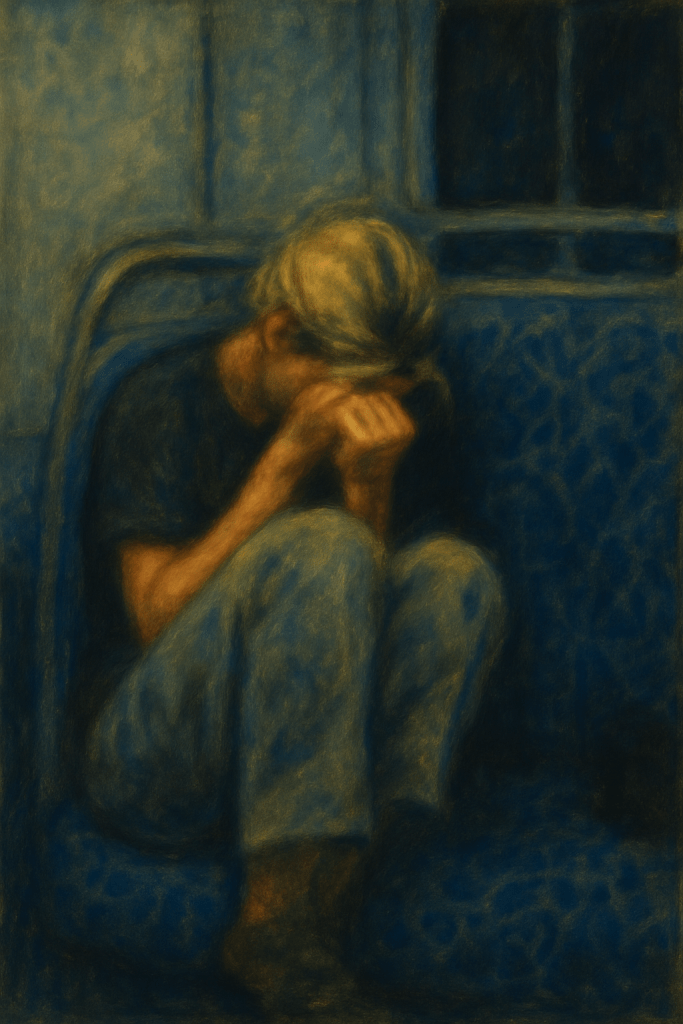
You found a different reality, yes, but one that seemed navigable: here there is no open war, you could return from work one afternoon, alone, take a bus. Just a few stations. You sit down, lower your head, and scroll through the messages on your phone. You do this every day. The bus doesn’t bother you. Routine disguises fatigue.
I try to imagine what you felt, Iryna. Poor girl—and I say “poor” not as insult but because it pains me to call you so. The very thought pierces me: just a few seconds. You realized everything was already in motion, that a shadow rose behind you. And shadows have no weight. Only the determination of hate. Or of absurdity. Or of a destiny dictated by causes beyond sense.
You felt the stab and folded into yourself, as if to avoid a second blow. But it was precise, like the thrust of a matador. Other passengers saw and turned away. They shrank back, busying themselves as if evil would not touch them. They did not help you. The man had time to strip off his shirt soaked in your blood, toss it onto a seat, and flee as if nothing had happened.
Those of us who saw the video saw the drops of your life scattered on the bus floor. We saw the passengers frozen, ashamed, inhibited by fear. What you felt in those seconds as life left you—we will never know. We cannot pretend that instead of horror you felt confusion. It was horror pure, total, concentrated. It was a determination aimed at your very existence.
You would never know that this man should never have been there. You would never know that, somehow—as always—he would be justified: because there is violence, because there is racism, because there is injustice. And then the intolerable happens: the victim dissolves, becomes a footnote, a statistic, a silence. The aggressor occupies the center of the narrative, and your name, Iryna, is erased. Erased in the chronicle, erased in the speeches, erased even in the memory of those who excuse themselves by saying evil “had its causes.”
But you were not a cause, not a concept, not a symbol: you were life. And when life is erased, it condemns us all to the same shadow that overtook you.
“How alone you must have felt, Iryna. Disconnected from everyone, already outside every human bond. What desolation in those few moments that stole your future on this earth, far from your own.”
Those of us who came to the United States seeking refuge from the violence of our lands discovered, painfully, that it reaches us here as well. The cities once presented as safe—Dallas, Philadelphia, Los Angeles, New York, Seattle, Chicago—bear a wound that repeats itself over and over: shootings in schools, in temples, in the streets.
In Dallas, a 17-year-old opened fire in a high school, wounding several students; it was the second time in less than a year that the same school suffered the terror of bullets. In Seattle, a 13-year-old amassed an arsenal inspired by the school shooters history cannot forget. In Philadelphia, Los Angeles, and New York, gun violence strikes schoolyards and turns adolescence into a besieged territory. In Minneapolis, two children—eight and ten years old—were murdered inside a Catholic church: a crime of hate that revealed that neither faith nor childhood are safe. And in Charlotte, North Carolina, Iryna Zarutska—a refugee of war—was murdered on a bus, alone and unprotected, as if the horror she fled had followed her here.
Whoever comes to this country believing their child, seated at a school desk or sheltered in a church, is safe, will sooner or later face the truth: here, too, one lives in fear. The promised suburb, the so-called “American Dream,” is not within reach of all; and in the great cities, poverty and inequality feed the same despair that pulls triggers in Central and South America.
This hemisphere, which once promised security, now reveals its nightmare: the classroom, the bus, and the temple are no longer sanctuaries, but vulnerable spaces. Europe, which once dreamed of another order, remains only a distant memory. Here reigns the bitter certainty that not even education, religion, or asylum can deliver our children and brothers from hatred and violence.
In this country, no one comes to find peace.
In this country, you come to sweat adrenaline.
And in the confusion, the Left runs to the Right, and the Right to the Left—each seeking in the other what neither can offer: true safety in a land where fear has become the common ground
El primer capítulo de La necesidad de raíces de Simone Weil es una auténtica sacudida al pensamiento político y ético contemporáneo. En un mundo acostumbrado a hablar de derechos como bandera principal de la dignidad humana, Weil da un giro inesperado y profundo: antes que los derechos, existen las obligaciones.
Su razonamiento es sencillo y radical a la vez: yo no tengo derecho porque sí, porque lo reclame o lo proclame; lo tengo porque alguien más tiene la obligación moral de reconocerlo y respetarlo. El derecho, por lo tanto, no es un punto de partida, sino una consecuencia. En esta lógica, lo que asegura la vida humana y la justicia no es la acumulación de reclamos individuales, sino la aceptación compartida de obligaciones hacia los otros.
Este primer capítulo se despliega en una serie de apartados —verdad, propiedad colectiva y privada, riesgo, seguridad, castigo, igualdad, honor, jerarquía, responsabilidad, obediencia y libertad— que funcionan como pilares de la vida en comunidad. Cada una de estas categorías aparece no como un privilegio, sino como una necesidad vital y, al mismo tiempo, como una obligación recíproca. Weil nos recuerda que la verdad es un deber, que la igualdad es un compromiso, que la libertad no se sostiene sin responsabilidad.
Lo audaz de esta propuesta es que desarma el individualismo moderno. No se trata de que yo grite “¡tengo derecho!”, sino de que me pregunte: “¿cuál es mi deber hacia ti, hacia la comunidad, hacia los más frágiles?”. Weil pone la ética en el centro de la política, y lo hace con una claridad que sigue interpelándonos hoy: una sociedad sin conciencia de sus obligaciones es una sociedad sin raíces, expuesta a la desintegración y al vacío.
Este capítulo no es solo un análisis teórico: es un llamado a la acción. Nos recuerda que la verdadera libertad y la verdadera justicia nacen cuando reconocemos que el otro, cualquier otro, es portador de una dignidad que nos obliga.
English
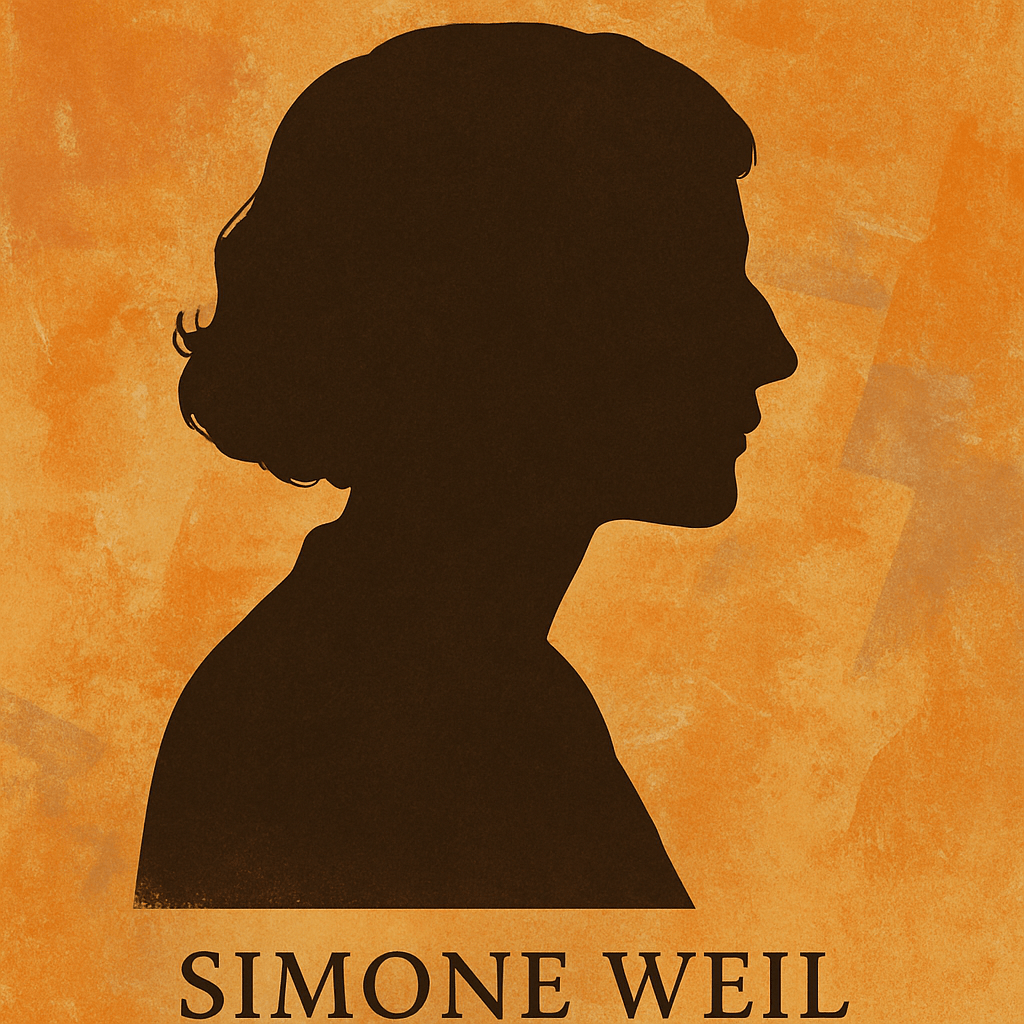
The opening chapter of Simone Weil’s The Need for Roots is a powerful jolt to contemporary political and ethical thought. In a world accustomed to speaking of rights as the primary banner of human dignity, Weil makes a startling and profound claim: before rights, there are obligations.
Her reasoning is both simple and radical: I do not have rights merely because I declare or demand them; I have them because someone else bears the moral obligation to recognize and respect them. Rights, therefore, are not the starting point but the consequence. What truly secures human life and justice is not the piling up of individual claims, but the shared acknowledgment of obligations toward others.
This first chapter unfolds through a series of sections—truth, collective and private property, risk, security, punishment, equality, honor, hierarchy, responsibility, obedience, and freedom—each presented as a pillar of communal life. None of these categories is framed as a privilege; rather, they emerge as vital needs and, simultaneously, as reciprocal obligations. Weil reminds us that truth is a duty, equality is a commitment, and freedom cannot survive without responsibility.
The boldness of her proposal lies in dismantling modern individualism. It is not about shouting “I have a right!” but about asking: “What is my duty toward you, toward the community, toward the most vulnerable?” Weil places ethics at the very heart of politics, with a clarity that still challenges us today: a society without awareness of its obligations is a society without roots, exposed to disintegration and emptiness.
This chapter is not merely a theoretical analysis: it is a call to action. It reminds us that true freedom and genuine justice are born when we recognize that the other—any other—bears a dignity that obligates us.



 Centeno's Lighthouse