“Y vi, y he aquí que el Cordero estaba de pie sobre el monte Sion, y con Él ciento cuarenta y cuatro mil que tenían Su nombre y el nombre de Su Padre escrito en la frente. Y oí una voz como el estruendo de muchas aguas, y como el sonido de un gran trueno; y la voz que oí era como la de varios arpistas que tocaban sus arpas. Y cantaban como un cántico nuevo delante del trono; y nadie podía aprender el cántico sino aquellos ciento cuarenta y cuatro mil, pues eran vírgenes. Estos siguen al Cordero dondequiera que va…”
Hay algunos que aun en esta tierra pertenecen ya a esa “generación pura como la luz”; ya llevan en sus frentes el nombre del Cordero y el de Su Padre. “El nombre del Cordero”: por su semejanza y conformidad con Aquel a quien san Juan llama “el Fiel y el Verdadero” y que nos muestra “vestido con un manto teñido en sangre”; ellos también son fieles y verdaderos, y su manto está teñido con la sangre de su sacrificio constante. “El nombre de Su Padre”: porque en ellos resplandece la belleza de Sus perfecciones. Todos los atributos divinos se reflejan en esas almas, y son como cuerdas que vibran y entonan “el cántico nuevo”. Ellos también “siguen al Cordero dondequiera que va”, no solo por los caminos amplios y fáciles, sino también por los senderos espinosos y las veredas llenas de zarzas. Por eso esas almas son vírgenes: libres, separadas, despojadas; libres de todo excepto de su amor, apartadas de todo, especialmente de sí mismas, vaciadas de todas las cosas tanto en el orden natural como en el sobrenatural.
¡Qué salida de sí mismo implica eso! ¡Qué muerte! Digamos con san Pablo: “Quotidie morior.” El gran santo escribió a los colosenses: “Habéis muerto, y vuestra vida está escondida con Cristo en Dios.” Esa es la condición: ¡debemos estar muertos! Sin eso, podemos ocultarnos en Dios en ciertos momentos, pero no VIVIMOS habitualmente en Él, porque nuestras emociones, búsquedas y deseos nos arrastran fuera de Su presencia. El alma que contempla fijamente a su Maestro con ese “ojo único que llena todo el cuerpo de luz” permanece guardada “de las profundidades de iniquidad” de las que se queja el profeta. El Señor la ha introducido en “ese lugar espacioso”, que no es otro sino Él mismo; allí todo es puro, todo es santo. ¡Oh bienaventurada muerte en Dios! ¡Oh dulce y suave pérdida de sí mismo en el Ser amado, que permite al alma clamar: “Vivo, pero ya no yo, sino que Cristo vive en mí. Y la vida que ahora vivo en este cuerpo de muerte, la vivo en la fe del Hijo de Dios, que me amó y se entregó por mí”!
🙏 Oración Señor Jesús, Cordero inmolado, enséñanos a seguirte por los caminos estrechos, a dejar atrás el yo y sus ansias, a morir cada día para vivir solo en Ti. Que nuestro nombre esté escrito junto al Tuyo, y que en nuestro rostro resplandezca el Amor del Padre. Amén.
🇬🇧 Sixth Day
“And I saw, and behold, the Lamb was standing upon Mount Sion, and with Him a hundred and forty-four thousand having His name and the name of His Father written on their foreheads. And I heard a voice like the sound of many waters, and like the voice of loud thunder; and the voice that I heard was as of several harpers playing on their harps. And they were singing as it were a new song before the throne; and no one could learn the song except those hundred and forty-four thousand, for they were virgins. These follow the Lamb wherever He goes…”
There are some who, even here below, already belong to that “generation pure as the light.” They bear on their foreheads the name of the Lamb and of His Father. “The name of the Lamb”: through their likeness and conformity with Him whom St. John calls “the Faithful and True,” and who is shown to us “clothed in a robe stained with blood.” They too are faithful and true, and their garments are dyed with the blood of their constant sacrifice. “The name of His Father”: because His beauty radiates in them, the reflection of His divine perfections. All His attributes shine in their souls, like strings that vibrate and sing “the new song.” They “follow the Lamb wherever He goes,” not only along broad and easy roads, but through thorny paths and brambled ways. That is why these souls are virgins — free, set apart, stripped; free from all save their love, detached from everything, especially from themselves, emptied of all things both natural and supernatural.
What a departure from self this implies! What a death! Let us say with St. Paul: “Quotidie morior” — “I die daily.” The great Apostle wrote to the Colossians: “You have died, and your life is hidden with Christ in God.” That is the condition: we must be dead! Without that, we may hide ourselves in God at moments, but we do not habitually LIVE in Him, for our emotions, self-seeking, and desires draw us out again. The soul that gazes steadfastly on its Master with that “single eye that fills the whole body with light” is preserved “from the depths of iniquity” of which the prophet complains. The Lord has brought it into “a spacious place,” which is nothing less than Himself; there all is pure, all is holy. O blessed death in God! O sweet and gentle loss of self in the Beloved Being, which allows the creature to cry: “I live, yet not I, but Christ lives in me. And the life I now live in this body of death, I live by faith in the Son of God, who loved me and gave Himself for me.”
🙏 Prayer Lord Jesus, slain Lamb, teach us to follow You through narrow ways, to abandon the restless self, to die daily so that only You may live within us. May our name be written beside Yours, and may the light of the Father’s love shine upon our faces. Amen.
Quinto dia “Vi una gran multitud que nadie podía contar… Estos son los que han pasado por la gran tribulación y han lavado sus vestiduras en la Sangre del Cordero. Están delante del trono de Dios y le sirven día y noche en su templo… el Cordero será su pastor, y los conducirá a las fuentes de las aguas de la vida, y Dios enjugará toda lágrima de sus ojos.”
Todos aquellos elegidos que sostienen palmas en sus manos, bañados en la gran luz de Dios, primero pasaron por la “gran tribulación” para conocer esa pena “inmensa como el mar”. Antes de contemplar “a rostro descubierto la gloria del Señor”, compartieron la aniquilación de Su Cristo; antes de ser “transformados de claridad en claridad”, fueron conformados a la imagen del Verbo encarnado.
El alma que desea servir a Dios día y noche en Su templo—este santuario interior del que san Pablo dice: “el templo de Dios es santo, y vosotros sois ese templo”—debe decidir compartir plenamente la Pasión de su Maestro. Es un alma redimida que, a su vez, redime a otras. Por eso canta: “Me glorío en la Cruz de Jesucristo.” “Con Cristo estoy clavada en la Cruz.” Y aún más: “Sufro en mi cuerpo lo que falta a la Pasión de Cristo por el bien de Su cuerpo, que es la Iglesia.”
“La Reina estaba a tu derecha”; tal es la postura de esta alma: camina por el Calvario junto a su Rey crucificado, humillado pero majestuoso, fuerte y firme. Él asocia a Su Esposa en la obra de redención. Este camino doloroso se convierte para ella en vía de Bienaventuranza, no solo porque conduce allí, sino porque el Maestro le enseña a ir más allá de la amargura y a descansar en ella.
Entonces puede servir a Dios “día y noche en Su templo”. Ninguna prueba, interna o externa, la arranca del santuario en el que Su Maestro la ha colocado. Ya no siente “hambre ni sed”, pues aunque anhela la Bienaventuranza, se alimenta del alimento de Su Maestro: la voluntad del Padre. Ya no siente “el calor del sol”, es decir, no sufre por el sufrimiento. El Cordero la conduce a las fuentes de la vida. No mira los caminos sino al Pastor que la guía.
Dios se inclina con amor hacia esta alma, tan conformada a la imagen de Su Hijo—“el primogénito entre todas las criaturas”—y la reconoce entre los que ha predestinado, llamado y justificado. Su Corazón de Padre se estremece al consumar Su obra: glorificarla en Su Reino, donde cantará sin cesar “la alabanza de Su gloria.”
Señor Jesús, Tú que fuiste crucificado por amor, enséñale a mi alma a caminar contigo por el camino del Calvario, sin resistir el peso de la Cruz, hallando en ella la paz que prometiste.
Haz que te sirva día y noche en el templo silencioso de mi corazón. Que el dolor se transforme en alabanza, y que, cuando me cubra la oscuridad, la fe sea mi única luz.
Condúceme, Cordero de Dios, a las fuentes del agua viva. Que tu voluntad sea mi alimento, tu amor mi descanso, y tu gloria mi canto eterno.
Fifth Day – “I saw a great multitude which no man could number… These are they who have come out of the great tribulation and have washed their robes and made them white in the Blood of the Lamb. Therefore they are before the throne of God, and serve Him day and night in His temple… the Lamb will be their shepherd, and He will lead them to the fountains of the waters of life, and God will wipe away every tear from their eyes.”
All these elect who hold palms in their hands, bathed in the great light of God, first passed through the “great tribulation” to know that sorrow “immense as the sea.” Before contemplating “with unveiled face the glory of the Lord,” they shared in the annihilation of His Christ; before being “transformed from brightness to brightness,” they were conformed to the image of the Incarnate Word.
The soul that wishes to serve God day and night in His temple—this inner sanctuary of which St. Paul says, “the temple of God is holy, and you are that temple”—must resolve to share fully in the Passion of its Master. It is a redeemed soul that, in turn, must redeem others. So it sings: “I glory in the Cross of Jesus Christ.” “With Christ I am nailed to the Cross.” And again: “I suffer in my body what is lacking in the Passion of Christ for the sake of His body, which is the Church.”
“The Queen stood at your right hand,” such is the posture of this soul: she walks Calvary beside her crucified King, humiliated yet majestic, strong but steadfast. He associates His Bride in His work of redemption. This sorrowful path becomes for her a way of Beatitude, not only because it leads there, but because her Master teaches her to go beyond bitterness and rest in it.
Then she can serve God “day and night in His temple.” No trial, internal or external, can force her from the sanctuary her Master has placed her in. She no longer feels “hunger or thirst,” because though she longs for Beatitude, she is fed on her Master’s food: the Father’s will. She no longer feels “heat of the sun,” that is, she no longer suffers from suffering. The Lamb leads her to the fountains of life. She looks not at paths but at the Shepherd who leads her.
God bends lovingly over this soul, so conformed to His Son’s image—“the firstborn among all creatures”—and names her among those He has predestined, called, and justified. His Fatherly Heart thrills at completing His work: glorifying her in His Kingdom, where she will sing endlessly “the praise of His glory.”
Lord Jesus, You who were crucified out of love, teach my soul to walk beside You on the road to Calvary — not resisting the weight of the Cross, but finding in it the peace You promised.
Let me serve You day and night in the silent temple of my heart. When pain comes, may it be transformed into praise. When darkness covers me, may faith become my only light.
Lead me, O Lamb of God, to the fountains of living water. Let Your will be my food, Your love my rest, and Your glory my song forever.
“Hemos sido predestinados, según el designio de Aquel que realiza todas las cosas conforme al consejo de su voluntad, para ser alabanza de su gloria.” — Efesios 1, 11–12
Es San Pablo quien nos anuncia esta elección divina — San Pablo, que penetró tan profundamente el “misterio escondido desde la eternidad en el corazón de Dios.” Luego ilumina esta vocación a la que hemos sido llamados: “Dios nos eligió en Él antes de la creación del mundo, para que fuéramos santos e inmaculados en su presencia, en el amor.”
Si comparo estas dos explicaciones del plan divino, eterno e inmutable, concluyo que, para cumplir dignamente mi obra de Laudem Gloriae, debo permanecer “en la presencia de Dios” en todo momento. Y no solo eso: el Apóstol añade in caritate, “en el amor”, es decir, en Dios mismo, porque Deus caritas est. Es el contacto con el Ser divino lo que hace al alma “santa e inmaculada” ante sus ojos.
Relaciono todo esto con la hermosa virtud de la simplicidad, de la cual un autor piadoso escribió: “Da al alma el reposo del abismo.” Es decir, el descanso en Dios, el Abismo insondable — preludio y eco del descanso eterno del que habla San Pablo: “Los que hemos creído entraremos en ese reposo.”
Los bienaventurados poseen este reposo del abismo porque contemplan a Dios en la simplicidad de su esencia. “Le conocen —dice nuevamente San Pablo— como son conocidos por Él”, es decir, por una visión intuitiva, una mirada simple. Y por eso, continúa el gran Apóstol, “son transformados de claridad en claridad a su misma imagen, por la acción de su Espíritu.” Entonces se convierten en una alabanza de gloria incesante del Ser divino, que contempla en ellos su propio esplendor.
Me parece que daríamos inmensa alegría al Corazón de Dios si perfeccionáramos ya, en el cielo de nuestra alma, esta ocupación de los bienaventurados: adherirnos a Él mediante una contemplación simple, semejante a la del hombre en estado de inocencia, antes del pecado original, cuando Dios lo creó “a su imagen y semejanza.”
Ese fue el sueño del Creador: poder contemplarse a sí mismo en su criatura, ver reflejadas en ella todas sus perfecciones y su belleza, como en un cristal puro y sin mancha. ¿No es eso, de algún modo, una prolongación de su propia gloria?
El alma, mediante la simplicidad de la mirada que fija en su divino Objeto, se aparta de todo lo que la rodea —y, sobre todo, de sí misma. Entonces resplandece con ese “conocimiento de la gloria de Dios” del que habla el Apóstol, porque permite que el Ser divino se refleje en ella, y todos sus atributos se le comunican.
En verdad, esa alma es una alabanza de gloria de todos sus dones; a través de todo, incluso de los actos más ordinarios, canta el canticum magnum, el canticum novum, y ese cántico conmueve las profundidades de Dios.
“Tu luz se alzará en las tinieblas, y tu oscuridad será como el mediodía. El Señor te guiará continuamente, saciará tu alma en la sequía y fortalecerá tus huesos. Serás como un jardín bien regado, como una fuente cuyas aguas no faltan. Y te haré cabalgar sobre las alturas de la tierra.” — Isaías 58, 10–11.14
“El Reposo del Abismo”
Esta meditación de Santa Isabel de la Trinidad se adentra en uno de los ejes más profundos de su mística: la vocación del alma a ser alabanza de gloria. En ella, el alma ya no busca dones ni consuelos; busca al Dador mismo. La contemplación se vuelve su respiración interior.
El alma sencilla, unificada, deja de dispersarse entre deseos, pensamientos o emociones; se convierte en un espejo claro donde Dios puede reflejarse sin distorsión. Para Isabel, la simplicidad no es pasividad, sino una forma de heroísmo espiritual: el reposo absoluto en Dios, el “sabbat eterno”, prefigurado ya aquí, en la tierra.
El “reposo del abismo” no es quietud sin vida, sino el movimiento perfecto del amor en armonía con el Amor. El alma deja de mirar hacia fuera y se vuelve hacia el centro donde habita Dios. Desde ahí, toda acción —incluso la más cotidiana— se vuelve canto, reflejo, canticum novum.
La imagen final, tomada de Isaías, encierra el misterio de la vida espiritual: la luz que nace de la oscuridad, el alma que se vuelve jardín regado, fuente que no se agota. Esa es la obra del Espíritu: transformar la aridez en canto, y el silencio en adoración.
🇬🇧 Third Day — The Rest of the Abyss
“We have been predestined by the decree of Him who works all things according to the counsel of His will, so that we may be the praise of His glory.” — Ephesians 1:11-12
It is Saint Paul who announces to us this divine election — Saint Paul who penetrated so deeply the “mystery hidden from eternity in the heart of God.” Then he sheds light on this vocation to which we are called: “God,” he says, “chose us in Him before the creation of the world, that we might be holy and immaculate in His presence, in love.”
If I compare these two explanations of the divine and eternal, unchanging plan, I conclude that to fulfill worthily my work of Laudem Gloriae, I must remain “in the presence of God” through everything. And that is not all: the Apostle adds in caritate — in love — that is, in God Himself, Deus caritas est. It is contact with the divine Being that makes the soul “holy and immaculate” in His eyes.
I relate all this to the beautiful virtue of simplicity, of which a pious author has written: “It gives the soul the repose of the abyss.” That is to say, rest in God — the unfathomable Abyss — a prelude and echo of the eternal Sabbath of which Saint Paul speaks: “We then who have believed shall enter into this rest.”
The glorified possess this repose of the abyss because they contemplate God in the simplicity of His essence. “They know Him,” Saint Paul says again, “as they are known by Him.” That is, through intuitive vision — a simple gaze. And that is why, the great Apostle continues, “they are transformed from brightness to brightness into His very image by the power of His Spirit.” Then they become an unceasing praise of glory of the divine Being, who contemplates in them His own splendor.
It seems to me that it would give immense joy to the Heart of God if we would begin even now, in the heaven of our souls, this occupation of the blessed — if we would cling to Him through this simple contemplation that resembles that of man in the state of innocence before original sin, when God created him “in His image and likeness.”
Such was the Creator’s dream: to be able to contemplate Himself in His creature, to see reflected there all His perfections and beauty, as through a pure and flawless crystal. Is that not, in a sense, an extension of His own glory?
The soul, by the simplicity of the gaze it fixes on its divine Object, finds itself set apart from all that surrounds it — and, above all, set apart from itself. Then it shines with that “knowledge of the glory of God” of which the Apostle speaks, because it allows the divine Being to be reflected within it, and all His attributes are communicated to it.
Truly, such a soul is the praise of glory of all His gifts; through everything — even the most commonplace acts — it sings the canticum magnum, the canticum novum; and this canticle reaches to the very depths of God.
“Your light shall rise in the darkness, and your gloom shall be as the noonday. The Lord will guide you continually, and will satisfy your soul in drought, and make strong your bones; you shall be like a watered garden, like a spring of water whose waters never fail. And I will lift you above the high places of the earth.” — Isaiah 58:10-11, 14
Would you like me to format it next as a bilingual blog post layout (with flag icons, parallel text, and a short contemplative introduction)? It would align perfectly with the previous entries in your Meditaciones de Isabel de la Trinidad.
Dijiste:
The🇬🇧 Spiritual Curatorship — Third Day: “The Rest of the Abyss”
This meditation by Saint Elizabeth of the Trinity unfolds one of the deepest dimensions of her mysticism: the soul’s vocation to become a praise of glory. Here, the soul no longer seeks gifts or consolations — it seeks the Giver Himself. Contemplation becomes its inner breath.
The simple, unified soul no longer scatters itself among desires, thoughts, or emotions; it becomes a clear mirror in which God can reflect Himself without distortion. For Elizabeth, simplicity is not passivity but a form of spiritual heroism — the absolute rest in God, the “eternal Sabbath,” already anticipated here on earth.
The “rest of the abyss” is not lifeless stillness, but the perfect motion of love in harmony with Love itself. The soul ceases to look outward and turns toward the center where God dwells. From there, every action — even the most ordinary — becomes a hymn, a reflection, a canticum novum.
The final image, drawn from Isaiah, contains the secret of spiritual life: light rising from darkness, the soul becoming a watered garden, a fountain whose waters never fail. This is the work of the Spirit — to turn dryness into song and silence into adoration.ights of the earth.”
“Dios nos ha predestinado a la adopción de hijos por Jesucristo, en unión con Él, según el decreto de su voluntad, para hacer resplandecer la gloria de su gracia, por la cual nos ha justificado en su Hijo amado. En cuya sangre tenemos redención, la remisión de nuestros pecados, según las riquezas de su gracia, que ha sobreabundado en nosotros en toda sabiduría y prudencia…”
“El alma, ahora verdadera hija de Dios, es, en palabras del Apóstol, movida por el Espíritu Santo mismo: ‘Todos los que son guiados por el Espíritu de Dios son hijos de Dios’. Y de nuevo: ‘No hemos recibido un espíritu de esclavitud para volver a tener temor, sino el espíritu de adopción como hijos en el cual clamamos: ¡Abba, Padre! El Espíritu mismo da testimonio a nuestro espíritu de que somos hijos de Dios. Y si somos hijos, también somos herederos; herederos de Dios y coherederos con Cristo, si sufrimos con Él para ser glorificados con Él’.”
“Es para llevarnos a este abismo de gloria que Dios nos ha creado a su imagen y semejanza. Ved, dice san Juan, qué amor tan grande nos ha dado el Padre: que seamos llamados hijos de Dios; ¡y lo somos! Ahora somos hijos de Dios, y aún no se ha manifestado lo que seremos. Sabemos que cuando Él aparezca, seremos semejantes a Él, porque lo veremos tal cual es. Y todo el que tiene esta esperanza en Él se purifica a sí mismo, así como Él es puro.”
“Esta es la medida de la santidad de los hijos de Dios: ser santos como Dios, santos con la santidad de Dios; y lo hacemos viviendo cerca de Él en lo más profundo del abismo interior. Entonces el alma parece asemejarse a Dios, quien aunque se complace en todas las cosas, no se deleita en ellas tanto como en sí mismo, pues posee dentro de sí un bien supereminente ante el cual todos los demás desaparecen. Así, todas las alegrías que recibe el alma son recordatorios que la invitan a preferir aquel bien que ya posee y con el cual nada se compara. ‘Padre nuestro que estás en el cielo…’. Es en ‘este pequeño cielo’ que Él ha hecho en el centro de nuestra alma donde debemos buscarlo y, sobre todo, donde debemos permanecer.”
“Cristo dijo un día a la samaritana que el Padre busca verdaderos adoradores en espíritu y en verdad. Para dar alegría a su Corazón, seamos esos verdaderos adoradores. Adorémoslo en espíritu, es decir, con nuestros corazones y pensamientos fijos en Él, y nuestra mente llena de su conocimiento impartido por la luz de la fe. Adorémoslo en verdad, es decir, por nuestras obras, porque es sobre todo con nuestras acciones que demostramos ser verdaderos. Esto es hacer siempre lo que agrada al Padre, de quien somos hijos. Y finalmente, adoremos en espíritu y en verdad, es decir, por Jesucristo y con Jesucristo, porque solo Él es el verdadero adorador en espíritu y en verdad.”
“Entonces seremos hijas de Dios; conoceremos con conocimiento experiencial la verdad de estas palabras de Isaías: ‘Serás llevada al pecho y Él te acariciará en sus rodillas’. De hecho, Dios parece estar enteramente ocupado en colmar al alma de caricias y muestras de afecto, como una madre que cría a su hijo y lo alimenta con su propia leche. ¡Oh! Estemos atentos a la misteriosa voz de nuestro Padre: ‘Hija mía, dame tu corazón’.”
Segunda oración (35–37) “Dios, que es rico en misericordia, movido por su inmenso amor, aun cuando estábamos muertos por nuestros pecados, nos ha devuelto a la vida en Cristo Jesús… Porque todos pecaron y necesitan de la gloria de Dios, son justificados gratuitamente por su gracia, mediante la redención que está en Cristo, a quien Dios ha presentado como propiciación por los pecados, mostrando que Él es justo y que justifica al que tiene fe en Él.”
“El pecado es un mal tan terrible que, para buscar cualquier bien o evitar cualquier mal, no debe cometerse jamás un pecado. Y, sin embargo, hemos cometido muchísimos. ¿Cómo no desmayar en adoración al sumergirnos en el abismo de la misericordia y fijar los ojos de nuestra alma en este hecho: Dios ha quitado nuestros pecados? Él mismo lo dijo: ‘Borraré todas sus iniquidades y no me acordaré más de sus pecados’. El Señor, en su misericordia, quiso volver nuestros pecados contra sí mismos para nuestro beneficio; encontró la manera de hacerlos útiles para nosotros, de convertirlos en nuestras manos en un medio de salvación. Pero esto no debe disminuir de ningún modo nuestro horror de pecar ni nuestro dolor por haber pecado. Más bien, nuestros pecados se han convertido en fuente de humildad para nosotros.”
“Cuando el alma considera en lo profundo de sí misma, con los ojos ardiendo de amor, la inmensidad de Dios, su fidelidad, las pruebas de su amor, sus favores que no añaden nada a su felicidad; y luego, al mirarse a sí misma, ve sus crímenes contra este Señor inmenso, se vuelve a su propio centro con tal desprecio de sí que no sabe cómo soportar su horror. Lo mejor que puede hacer es quejarse ante Dios, su Amigo, de la fuerza de su amor propio que la traiciona al no dejarla colocarse tan bajo como quisiera. Se resigna a la voluntad de Dios, y en la abnegación encuentra la verdadera, invencible y perfecta paz que nada puede perturbar. Porque se ha sumergido en un abismo tan profundo que nadie la buscará allí.”
“Si alguien afirmara que encontrar el fondo del abismo es estar inmerso en la humildad, no lo contradeciría. Sin embargo, me parece que ser sumergido en la humildad es ser sumergido en Dios, porque Dios es el fondo del abismo. Por eso la humildad, como la caridad, es siempre capaz de crecer. Y puesto que un corazón humilde es el vaso necesario, el vaso capaz de contener la gracia que Dios quiere derramar en él, seamos humildes. Los humildes nunca pueden colocar a Dios lo suficientemente alto ni a sí mismos lo suficientemente bajo. Pero aquí está la maravilla: su debilidad se convierte en sabiduría, y la imperfección de sus actos, siempre insuficientes a sus ojos, será el mayor deleite de su vida. Quien posee humildad no necesita de muchas palabras para ser instruido; Dios le dice más cosas de las que puede aprender; así fue en el caso de los discípulos del Señor.”
Esta novena meditación nos introduce en el corazón mismo de la fe: somos hijos en el Hijo, predestinados a la gloria. Santa Isabel insiste en la filiación como misterio de identidad y destino: no somos esclavos, sino herederos; no vivimos bajo el miedo, sino bajo la confianza filial.
La santidad aquí no se mide por méritos humanos, sino por la capacidad de vivir arraigados en el “pequeño cielo” del alma, donde Dios habita. La adoración verdadera se expresa tanto en el recogimiento del espíritu como en la coherencia de las obras: espíritu y verdad, interioridad y acción, unidos en Cristo.
La meditación desciende después hacia la humildad. El alma, consciente de sus pecados, no se hunde en la desesperación, sino en el abismo de la misericordia. El pecado, al ser reconocido, se convierte en fuente de humildad, y la humildad abre espacio para la gracia. El fondo del abismo —nos dice Isabel— es Dios mismo: sumergirse en humildad es sumergirse en Él.
El itinerario es claro: filiación, adoración, humildad. Así, el alma se descubre amada, sostenida y llamada a reflejar la santidad misma de Dios.
Padre del Cielo, nos has llamado a ser tus hijos, herederos con Cristo, y nos has sellado con el Espíritu de adopción. Enséñanos a vivir en tu amor, a adorarte en espíritu y en verdad, y a caminar humildemente en la luz de tu misericordia. Por Cristo nuestro Señor. Amén.
Ninth Meditation with Saint Elizabeth of the Trinity
First Prayer (31–34) “God has predestined us to the adoption of children through Jesus Christ, in union with Him, according to the decree of His will, to make the glory of His grace blaze forth, by which He has justified us in His beloved Son. In whose blood we have redemption, the remission of our sins, according to the riches of His grace, which has abounded beyond measure in us in all wisdom and prudence…”
“The soul, now a true daughter of God, is, in the words of the Apostle, moved by the Holy Spirit Himself: ‘All who are led by the Spirit of God are children of God.’ And again: ‘We have not received a spirit of slavery to be still led by fear, but the spirit of adoption as children in which we cry out: Abba, Father! The Spirit Himself gives witness with our spirit that we are children of God. But if we are children, we are heirs as well; I mean heirs of God and co-heirs with Jesus Christ if only we suffer with Him so as to be glorified with Him.’”
“It is to bring us to this abyss of glory that God has created us in His image and likeness. ‘See,’ says St. John, ‘what manner of love the Father has bestowed on us, that we should be called children of God; and such we are. Now we are the children of God, and we have not yet seen what we shall be. We know that when He appears, we shall be like Him, for we shall see Him just as He is. And everyone who has this hope in Him makes himself holy, just as He Himself is holy.’”
“This is the measure of the holiness of the children of God: to be holy as God, to be holy with the holiness of God; and we do this by living close to Him in the depths of the bottomless abyss within. Then the soul seems in some way to resemble God who, even though He delights in all things, yet does not delight in them as much as He does in Himself, for He possesses within Himself a supereminent good before which all others disappear. Thus all the joys which the soul receives are so many reminders inviting her to enjoy by preference the good she already possesses and to which nothing else can compare. ‘Our Father who art in Heaven…’. It is in this ‘little heaven’ that He has made in the center of our soul that we must seek Him and above all where we must remain.”
“Christ said one day to the Samaritan woman that ‘the Father seeks true adorers in spirit and truth.’ To give joy to His Heart, let us be these true adorers. Let us adore Him in spirit, that is, with our hearts and our thoughts fixed on Him, and our mind filled with His knowledge imparted by the light of faith. Let us adore Him in truth, that is, by our works, for it is above all by our actions that we show we are true. This is to do always what is pleasing to the Father whose children we are. And finally, let us adore in spirit and in truth, that is, through Jesus Christ and with Jesus Christ, for He alone is the true Adorer in spirit and truth.”
“Then we will be daughters of God; we will know with an experiential knowledge the truth of these words of Isaiah: ‘You will be carried at the breast and He will caress you on His knees.’ In fact, God seems to be wholly occupied with overwhelming the soul with caresses and marks of affection like a mother who brings up her child and feeds it with her own milk. Oh! Let us be attentive to the mysterious voice of our Father: ‘My daughter, give me your heart.’”
Second Prayer (35–37) “God who is rich in mercy, impelled by His exceeding love, even when we were dead because of our sins, has brought us back to life in Christ Jesus… Because all have sinned and have need of the glory of God, they are justified freely by His grace, through the redemption which is in Christ, whom God has set forth as a propitiation for sins, showing both that He is just and that He makes just him who has faith in Him.”
“Sin is such a terrifying evil that in order to seek any good whatsoever, or to avoid any evil whatsoever, no sin should be committed. And yet, we have committed very many. How can we keep from fainting in adoration when we plunge into the abyss of mercy and the eyes of our soul are fixed upon this fact: God has taken away our sins? He said so Himself: ‘I will blot out all their iniquities and I will no longer remember their sins.’ The Lord, in His mercy, willed to turn our sins against themselves to our advantage; He found a way to make them useful for us, to convert them in our hands into a means of salvation. But do not let this diminish in any way our horror of sinning, nor our sorrow for having sinned. Rather, our sins have become a source of humility for us.”
“When the soul considers deep within itself, its eyes burning with love, the immensity of God, His fidelity, the proofs of His love, His favors which can add nothing to His happiness; then, looking at itself it sees its crimes against this immense Lord, it turns to its own center with such self-contempt that it does not know how it can endure its horror. The best thing for it to do is to complain to God, its Friend, of the strength of its self-love which betrays it by not letting it place itself as low as it would wish. It resigns itself to the will of God, and in self-abnegation, finds true, invincible, and perfect peace, which nothing can disturb. For it has plunged into such a deep abyss that no one will seek it there.”
“If anyone should affirm to me that to find the bottom of the abyss is to be immersed in humility, I would not contradict him. However, it seems to me that to be plunged into humility is to be plunged into God, for God is the bottom of the abyss. That is why humility, like charity, is always capable of increasing. Since a humble heart is the vessel needed, the vessel capable of containing the grace God wants to pour into it, let us be humble. The humble can never rank God high enough nor themselves low enough. But here is the wonder: their weakness turns into wisdom, and the imperfection of their acts, always insufficient in their eyes, will be the greatest delight of their life. Whoever possesses humility has no need of many words to be instructed; God tells him more things than he can learn; such was the case with the Lord’s disciples.”
Curated Reflection
This ninth meditation brings us to the very center of Christian faith: we are children in the Son, predestined for glory. Elizabeth insists on divine sonship as identity and destiny: no longer slaves but heirs; not ruled by fear but led by filial trust.
Holiness is measured not by external achievements but by the ability to live rooted in the “little heaven” within, where God Himself dwells. True adoration is expressed in both contemplation and action: to adore in spirit and in truth is to unite inner recollection with faithful deeds, through and with Christ, the perfect Adorer.
The meditation then descends into humility. The soul, confronted with its sins, does not despair but falls into the abyss of mercy. Sin, once confessed, becomes a source of humility; and humility becomes the vessel that holds grace. At the bottom of this abyss, Elizabeth says, is God Himself: to be plunged into humility is to be plunged into God.
The journey unfolds in three movements: sonship, adoration, humility. In this path, the soul discovers itself deeply loved, held in mercy, and called to mirror the very holiness of God.
Heavenly Father, you have called us to be your children, heirs with Christ, and you have sealed us with the Spirit of adoption. Teach us to live in your love, to adore you in spirit and in truth, and to walk humbly in the light of your mercy. Through Christ our Lord. Amen.
curada por Israel Centeno Bilingual- Spanish and English
Séptimo Día
Primera oración
Español «Dios nos eligió en Él antes de la creación, para que fuéramos santos e inmaculados en su presencia, en el amor» (Ef 1,4). La Trinidad Santa nos creó a su imagen, según el designio eterno que guardaba en su seno antes de que existiera el mundo. En ese “principio sin principio”, como diría Bossuet siguiendo a San Juan: “En el principio era el Verbo” (Jn 1,1). Y podríamos añadir: en el principio no había nada, porque Dios, en su soledad eterna, ya nos llevaba en su pensamiento.
El Padre, al contemplarse en el abismo de su fecundidad, engendra al Hijo, su Verbo eterno. Y en Él, arquetipo de toda criatura, ya habitábamos sin haber salido aún del vacío. Esa vida eterna que poseíamos en Dios es la causa de nuestra creación.
Nuestra esencia creada pide ser reunida con su principio. El Verbo es el esplendor del Padre, el modelo eterno que nos atrae hacia sí. Dios quiere que nos liberemos de nosotros mismos y elevemos los brazos hacia nuestro ejemplar, hacia la plenitud. En esta contemplación se abre el alma a horizontes inesperados: anticipa, de algún modo, la corona que le espera.
Las inmensas riquezas que Dios posee por naturaleza, nosotros podemos poseerlas por amor, por su morada en nosotros y nuestra morada en Él. El amor imprime en nosotros la verdadera imagen de su majestad, para que, como dice el Apóstol, podamos ser santos e inmaculados en su presencia (Ef 1,4) y cantar con David: «Seré intachable y me guardaré del pecado en lo profundo de mí» (Sal 18,24).
Segunda oración
«Sed santos, porque yo soy santo» (Lv 11,44). Así habla el Señor. Sea cual sea nuestra forma de vida o nuestro modo de vestir, cada uno de nosotros está llamado a ser santo de Dios. ¿Quién es, entonces, el más santo? Aquel que más ama, que contempla por más tiempo a Dios, que satisface más plenamente los deseos de su mirada.
La santidad es dejar que Dios refleje en nosotros su propia imagen, como el sol en un cristal puro. «Hagamos al hombre a nuestra imagen y semejanza» (Gn 1,26): ese fue el gran deseo en el corazón de Dios. Y su gracia es la que imprime esa semejanza. Nuestra disposición interior, nuestra integridad en volvernos hacia Él, determina la medida de su don.
La perfección más alta en esta vida, dice un autor piadoso, consiste en permanecer tan unidos a Dios que el alma, con todas sus potencias, repose en Él. La memoria, la inteligencia y la voluntad deben ser impregnadas hasta reflejar la imagen divina: el sello en la cera, la marca en el objeto. Entonces el alma se transforma, iluminada, encendida y consumida por la plenitud de Dios.
Señor, Tú me pensaste antes de la creación, imprime en mí tu imagen de amor. Hazme santo en lo pequeño, fiel en lo oculto, y que mi vida sea un reflejo de tu gloria. Amén.
English
Lord, You held me in Your thought before creation, imprint upon me Your image of love. Make me holy in what is small, faithful in what is hidden, and let my life be a reflection of Your glory. Amen.
“God chose us in Him before creation, that we should be holy and immaculate in His presence, in love” (Eph 1:4). The Holy Trinity created us in its image, according to the eternal design it carried within before the world began. In that “beginning without beginning,” as Bossuet says following St. John: “In the beginning was the Word” (Jn 1:1). And we might add: in the beginning was nothing, for God, in His eternal solitude, already bore us in His thought.
The Father, contemplating Himself in the abyss of His fecundity, engenders the Son, His eternal Word. In Him, archetype of all creatures, we already dwelt before coming forth from the void. That eternal life which we possessed in God is the cause of our creation.
Our created essence longs to be reunited with its principle. The Word is the splendor of the Father, the eternal model drawing us to Himself. God wills that we be freed from ourselves and lifted up towards our exemplar, towards the fullness. In this contemplation the soul opens to unexpected horizons: in a way, it already crowns what it desires.
The immense riches God possesses by nature, we may possess by love, by His dwelling in us and our dwelling in Him. Love imprints upon us the true image of His majesty, so that, as the Apostle says, we may be holy and immaculate in His presence (Eph 1:4) and sing with David: “I will be unblemished and keep myself from deep sin within me” (Ps 18:24).
“Be holy, for I am holy” (Lev 11:44). Thus speaks the Lord. Whatever our way of life or outward clothing, each of us is called to be God’s holy one. Who then is the holiest? The one who loves the most, who gazes longest upon God, who most fully satisfies the desire of His gaze.
Holiness means letting God reflect His own image in us, like the sun shining through pure crystal. “Let us make man in our own image and likeness” (Gen 1:26): such was the great desire in God’s heart. Grace impresses that likeness. Our interior readiness, the integrity with which we turn towards Him, opens the measure of His gift.
The highest perfection in this life, says a pious author, consists in remaining so closely united to God that the soul with all its faculties rests in Him. Memory, intellect, and will must be shaped until they bear His image: like the seal on wax, the imprint on its object. Then the soul is transformed—illuminated, enkindled, and consumed—by the fullness of God.
No cabe duda: el ser humano comparte con los animales su naturaleza gregaria. Como muchos otros, vive en manada, protege a su grupo, establece jerarquías y sanciona a quienes rompen el orden. Basta observar lobos, elefantes o primates superiores: la manada impone una disciplina que garantiza la supervivencia colectiva. Y cuando alguien desafía esa jerarquía, suele ser castigado por el líder, restableciendo así el equilibrio. Podríamos incluso hablar de “organizaciones tribales” en el reino animal.
Pero en los animales, el castigo termina allí. Nunca aparece, después del acto, el remordimiento. Ningún lobo se atormenta por haber mordido a su rival, ningún león se arrepiente de haber devorado a la cría de una manada enemiga. El remordimiento, esa punzada íntima que pesa sobre la conciencia, no entra en el cálculo de la evolución biológica. Desde el punto de vista de la caza y la supervivencia, el remordimiento es incluso una desventaja: debilita al cazador, lo hace vacilar, lo vuelve menos apto frente al instinto.
Y sin embargo, el hombre siente remordimiento. No sólo por quitar la vida dentro de su grupo, sino también por herir o matar a un extraño, incluso de otra especie. Ninguna ley evolutiva explica este dolor del alma. Es algo más: un signo de interioridad. Edith Stein lo llamó la capacidad de autoposesión y autotrascendencia del espíritu humano1.
Lo mismo ocurre con el heroísmo. En la naturaleza, el más débil queda atrás: la manada sigue adelante, porque detenerse pondría en peligro la supervivencia de todos. Pero el ser humano es el único que se devuelve, arriesga su vida, enfrenta al enemigo y protege al herido. Ese gesto heroico no se explica por el instinto: responde a una ley más alta, inscrita en el corazón.
La rivalidad y la mímesis, que René Girard estudió como núcleo de la condición humana, también se observan en el mundo animal. Los machos compiten por el territorio, por la hembra, por la primacía, y la imitación del deseo genera choques inevitables. Incluso el mecanismo del chivo expiatorio —el sacrificio de un individuo que momentáneamente restaura la paz del grupo— aparece, de manera más elemental, en algunas especies2. Pero en el hombre, estos impulsos toman una forma cualitativamente distinta: se transforman en violencia ritual, en linchamiento colectivo, en sacrificios humanos y divinos.
¿Dónde se rompe este ciclo? Según Girard, sólo en Cristo3. El Hijo de Dios, el inocente sin pecado, acepta ser el chivo expiatorio universal, pero al resucitar revela la falsedad de la violencia sacrificial. En Él, el ciclo de la mímesis y de la rivalidad encuentra su fin: ya no hay víctima que sostenga la paz a costa de la sangre, sino un reino donde “los sordos oyen, los ciegos ven, los cojos caminan y los muertos se levantan” (cf. Mt 11,5). Cristo, que es todo bondad y todo amor, inaugura un camino distinto: la comunión no fundada en el sacrificio de otro, sino en el don de sí mismo para redimir a todos.
El hombre, claro, sigue siendo un animal cruel. Su historia está marcada por violencia, dominio y venganza. Pero a diferencia de otros animales, su alma nunca lo deja en paz. Esa alma —creada a imagen y semejanza de Dios4— lleva en sí misma la bondad y la verdad. Y por eso el hombre vive en conflicto: entre los impulsos de la carne y la voz de su conciencia, entre la brutalidad del instinto y la llamada a la eternidad.
Aristóteles lo intuyó cuando dijo que el hombre es zoón logikón, el animal racional5. Tomás de Aquino lo desarrolló al afirmar que el hombre es capaz de Dios (capax Dei), precisamente porque posee un alma espiritual6. Heidegger, desde otro horizonte, reconoció que somos el ser que se pregunta por el Ser mismo7. Y Charles Taylor, más recientemente, subrayó que el hombre no sólo actúa, sino que se interpreta a sí mismo8.
En todos ellos, desde la filosofía antigua hasta el pensamiento contemporáneo, resuena la misma intuición: lo que nos separa del resto de los animales no es la manada, ni la jerarquía, ni el instinto de supervivencia. Es el alma. Un alma que, al buscar la verdad y el bien, se convierte en el escenario de un conflicto interminable. Y quizá allí, en ese conflicto, resida la verdadera dignidad del hombre y su trascendencia hacia una forma superior de vida que no está limitada por el espacio ni por el tiempo, sino que es eterna porque es plena, como lo prometió Cristo: agua viva que nunca se agota (cf. Jn 4,14).
English
There is no doubt: the human being shares with animals its gregarious nature. Like many others, he lives in a herd, protects his group, establishes hierarchies, and sanctions those who break the order. One only needs to observe wolves, elephants, or higher primates: the herd imposes a discipline that guarantees collective survival. And when someone challenges that hierarchy, he is usually punished by the leader, thus restoring balance. We could even speak of “tribal organizations” in the animal kingdom.
But in animals, punishment ends there. Remorse never appears after the act. No wolf torments itself for biting a rival, no lion regrets devouring the offspring of an enemy herd. Remorse, that intimate pang weighing on conscience, does not enter into the calculation of biological evolution. From the perspective of hunting and survival, remorse is even a disadvantage: it weakens the hunter, makes him hesitate, renders him less fit against instinct.
And yet, man feels remorse. Not only for taking life within his group, but also for harming or killing a stranger, even of another species. No evolutionary law explains this pain of the soul. It is something more: a sign of interiority. Edith Stein called it the capacity for self-possession and self-transcendence of the human spirit1.
The same is true of heroism. In nature, the weakest are left behind: the herd moves on, for to stop would endanger the survival of all. But the human being is the only one who turns back, risks his life, confronts the enemy, and protects the wounded. That heroic gesture cannot be explained by instinct: it responds to a higher law inscribed in the heart.
Rivalry and mimesis, which René Girard studied as central to the human condition, are also observed in the animal world. Males compete for territory, for the female, for primacy, and the imitation of desire generates inevitable clashes. Even the scapegoat mechanism—the sacrifice of an individual that momentarily restores the peace of the group—appears, in a more elementary form, in some species2. But in man, these impulses take a qualitatively different form: they become ritual violence, collective lynching, human and divine sacrifices.
Where is this cycle broken? According to Girard, only in Christ3. The Son of God, the innocent without sin, accepts being the universal scapegoat, but in rising again reveals the falsehood of sacrificial violence. In Him, the cycle of mimesis and rivalry meets its end: there is no longer a victim to sustain peace through blood, but a kingdom where “the deaf hear, the blind see, the lame walk, and the dead are raised” (cf. Mt 11:5). Christ, who is all goodness and all love, inaugurates a different way: communion not founded on the sacrifice of another, but on the gift of Himself to redeem all.
Man, of course, remains a cruel animal. His history is marked by violence, domination, and vengeance. But unlike other animals, his soul never leaves him in peace. That soul—created in the image and likeness of God4—carries within itself both goodness and truth. And that is why man lives in conflict: between the impulses of the flesh and the voice of his conscience, between the brutality of instinct and the call to eternity.
Aristotle intuited it when he said that man is zoón logikón, the rational animal5. Thomas Aquinas developed it by affirming that man is capable of God (capax Dei), precisely because he possesses a spiritual soul6. Heidegger, from another horizon, recognized that we are the being who asks about Being itself7. And Charles Taylor, more recently, underlined that man not only acts, but interprets himself8.
In all of them, from ancient philosophy to contemporary thought, the same intuition resounds: what separates us from the rest of the animals is not the herd, nor hierarchy, nor the instinct for survival. It is the soul. A soul that, in seeking truth and goodness, becomes the stage of an unending conflict. And perhaps there, in that conflict, lies the true dignity of man and his transcendence toward a higher form of life that is not bound by space or time, but is eternal because it is full, as Christ promised: living water that never runs dry (cf. Jn 4:14).
Notes
Footnotes
Edith Stein, Endliches und ewiges Sein (Ser finito y ser eterno / Finite and Eternal Being), 1936. ↩↩2
René Girard, La violencia y lo sagrado (Violence and the Sacred), 1972. ↩↩2
René Girard, Yo veía a Satanás caer como el relámpago (I Saw Satan Fall Like Lightning), 1999. ↩↩2
A Elisa, como una invitación a leer las Escrituras desde su centro.
La Escritura no es una colección dispersa de relatos antiguos ni un archivo de sabiduría arcaica, sino una historia unificada: la historia de la salvación. El Antiguo Testamento prepara, el Nuevo Testamento cumple. Pero la clave hermenéutica que da sentido a todo es Cristo. Sólo a través de Él podemos comprender la creación, la Ley, los profetas y la esperanza de Israel.
Jesús mismo lo revela en el camino de Emaús: “Y comenzando por Moisés y por todos los profetas, les explicó lo que se decía de Él en todas las Escrituras” (Lc 24,27). Todo el Antiguo Testamento es anuncio, sombra y figura; en Cristo se convierte en realidad. Los estudiosos de la Biblia han mostrado con abundancia esta unidad: cientos de referencias cruzadas vinculan los dos Testamentos, y todas convergen en el misterio de Cristo. Cada promesa, cada figura, cada profecía se cumple en Él.
En el Génesis, el hombre aparece creado a imagen y semejanza de Dios, imagen herida por el pecado pero no borrada. La historia entera de Israel es la historia de una alianza: un Dios que llama y un pueblo que responde, unas veces con fidelidad y otras con infidelidad. El propósito original era caminar en comunión con Dios, pero esa comunión alcanza su plenitud sólo en Cristo, el Hijo amado, que revela que nuestro destino no es simplemente obedecer una ley, sino llegar a ser hijos en el Hijo: “A todos los que lo recibieron les dio poder de ser hijos de Dios” (Jn 1,12).
La Ley fue dada como guía, como pedagogo, pero por sí sola no podía dar vida. Cristo, en el evangelio de Juan, abre el horizonte definitivo: “Yo he venido para que tengan vida, y la tengan en abundancia” (Jn 10,10). La verdadera vida no se mide en años ni en posesiones, sino en la comunión con el Padre por medio del Hijo. La existencia humana queda transfigurada: ya no es mera supervivencia ni búsqueda de glorias pasajeras, sino vocación a la eternidad, permaneciendo en Cristo como el sarmiento en la vid.
Israel fue el pueblo elegido, portador de las promesas; en Cristo esas promesas se abren a todas las naciones. La Iglesia nace de su costado traspasado, como la nueva Eva del nuevo Adán. Allí se proclama la Palabra, los sacramentos comunican la vida divina, y la caridad hace visible al Dios que es Amor. La Iglesia no es un añadido a la revelación, sino la forma histórica en la que el misterio de Cristo se prolonga y se comparte.
El Antiguo Testamento, leído a esta luz, incluye también la voz de los Salmos, donde Cristo mismo ora con las palabras de su pueblo. En la cruz hace suyo el grito del Salmo 22: “Dios mío, Dios mío, ¿por qué me has abandonado?”. Lo que en el Salterio era súplica y promesa, en Él se convierte en cumplimiento. La Iglesia reza los Salmos no como piezas del pasado, sino como oración viva de Cristo que asume la voz de todos.
En los libros de Jueces, Samuel y Reyes se percibe la sed de liberación y de un reino. Los jueces levantados por Dios dan respiro, pero sus victorias son parciales y pasajeras; sólo en Cristo aparece el juez definitivo cuya justicia no falla. En los Reyes vemos la expectativa de un reino: Saúl, David, Salomón… hombres grandes, pero frágiles, que no cumplieron las promesas. Su fracaso apunta al verdadero Rey, el Hijo de David, que reinará para siempre no con la espada ni con riquezas, sino con la entrega de su vida. Los evangelios presentan a Jesús como ese Mesías esperado, que inaugura un reino que no es de este mundo.
En el Deuteronomio, Moisés anuncia que Dios suscitará un profeta como él. Los evangelios muestran que esa profecía se cumple en Cristo, el nuevo Moisés que entrega la Ley definitiva, no escrita en piedra sino en los corazones. Allí donde Moisés intercedió y renovó la alianza, Cristo sella con su propia sangre una alianza eterna. La obediencia que el Deuteronomio pedía para alcanzar la bendición encuentra en Cristo su plenitud: Él cumple la Ley y en Él la maldición del pecado queda rota.
El Evangelio revela a Dios, que ya se había manifestado en el Antiguo Testamento, pero ahora de manera concreta y definitiva. En Cristo, ese Dios que antes hablaba en promesas y figuras se muestra con rostro humano, con una voz que llama por nuestro nombre, con una vida derramada en amor. Él mismo dice: “Yo soy el camino, la verdad y la vida; nadie va al Padre sino por mí” (Jn 14,6). Y también: “El Padre y yo somos uno” (Jn 10,30), “Yo estoy en el Padre y el Padre en mí” (Jn 14,10), mostrando la íntima comunión a la que somos invitados. Él no sólo anuncia, sino que señala con claridad hacia dónde debemos ir: es la luz que vence a las tinieblas, la verdad que nos libera, la vida que no acaba. Y nos entrega la clave de esa comunión que anticipa la eternidad: “El que coma de este pan vivirá para siempre” (Jn 6,51). En la Eucaristía nos deja la prenda de la vida eterna, el anticipo de la gloria, la certeza de que en Él todo se cumple.
Después vienen las cartas apostólicas, especialmente las de Pablo, que amplían aún más el horizonte. En la primera carta a los Corintios, Pablo habla del misterio del cuerpo resucitado: “Se siembra en corrupción, resucita en incorrupción; se siembra en ignominia, resucita en gloria; se siembra en debilidad, resucita en poder; se siembra un cuerpo natural, resucita un cuerpo espiritual” (1 Co 15,42-44). El Apóstol recuerda que lo que ahora vemos es apenas semilla de lo que será plenitud. También habla del “tercer cielo”, de lo que “nadie vio ni oyó, ni vino a la mente del hombre” (2 Co 12,2-4; 1 Co 2,9), mostrando que la gloria futura supera toda imaginación. Pero Pablo no limita todo al futuro: afirma que ya ahora estamos llamados a dejar que “Cristo viva en nosotros” (Ga 2,20), de modo que en la debilidad se manifieste la fuerza de Dios, porque “cuando soy débil, entonces soy fuerte” (2 Co 12,10).
Pablo transmite además lo que se considera el primer credo cristiano, también en su primera carta a los Corintios: “Que Cristo murió por nuestros pecados, según las Escrituras; que fue sepultado y que resucitó al tercer día, según las Escrituras; y que se apareció a Cefas y luego a los Doce” (1 Co 15,3-5). Aquí se condensa el núcleo de la fe: la muerte y resurrección de Cristo como centro y sentido de la historia. Y en ese mismo espíritu Pablo compone su himno al amor: “El amor es paciente, es bondadoso… todo lo cree, todo lo espera, todo lo soporta. El amor no pasa nunca” (1 Co 13,4-8). Así confirma la gran revelación de Juan: “Dios es amor” (1 Jn 4,8). Lo que Cristo revela con su vida y entrega, los apóstoles lo proclaman como esencia misma de Dios y camino del hombre.
Finalmente, el Apocalipsis abre la visión del cumplimiento último: Cristo es el Alfa y la Omega, el principio y el fin, el que era, el que es y el que ha de venir (Ap 1,8). En Él se cierra el arco de la revelación, y en Él la humanidad alcanza su destino definitivo: la comunión plena con Dios en el cielo nuevo y la tierra nueva, donde no habrá más llanto ni muerte, porque todo habrá sido hecho nuevo.
Christ-Centered Reading of Scripture
To Elisa, as an invitation to read Scripture from its center.
Scripture is not a scattered collection of ancient stories or an archive of archaic wisdom, but a unified history: the history of salvation. The Old Testament prepares, the New Testament fulfills. But the hermeneutical key that gives meaning to it all is Christ. Only through Him can we understand creation, the law, the prophets, and the hope of Israel.
Jesus Himself reveals this on the road to Emmaus: “Beginning with Moses and all the Prophets, He explained to them what was said in all the Scriptures concerning Himself” (Lk 24:27). The entire Old Testament is announcement, shadow, and figure; in Christ it becomes reality. Biblical scholars have shown just how profound this unity is: hundreds of cross-references link the two Testaments, and all converge on the mystery of Christ. Every promise, every figure, every prophecy is fulfilled in Him.
In Genesis, man appears created in the image and likeness of God, an image wounded by sin but not erased. The entire history of Israel is the story of a covenant: a God who calls, and a people who respond, sometimes in fidelity, other times in infidelity. The original purpose was to walk in communion with God, but that communion reaches its fullness only in Christ, the beloved Son, who reveals that our destiny is not merely to obey a law, but to become children in the Son: “To all who received Him, He gave the power to become children of God” (Jn 1:12).
The Law was given as a guide, as a pedagogue, but on its own it could not give life. Christ, in the Gospel of John, opens the definitive horizon: “I came that they may have life, and have it abundantly” (Jn 10:10). True life is not measured in years or possessions, but in communion with the Father through the Son. Human existence is transfigured: no longer mere survival or pursuit of fleeting glory, but a vocation to eternity, abiding in Christ like the branch in the vine.
Israel was the chosen people, bearer of the promises; in Christ those promises are opened to all nations. The Church is born from His pierced side, as the new Eve from the new Adam. There the Word is proclaimed, the sacraments communicate divine life, and charity makes visible the God who is Love. The Church is not an addition to revelation, but the historical form in which the mystery of Christ is prolonged and shared.
The Old Testament, read in this light, also includes the voice of the Psalms, where Christ Himself prays in the words of His people. On the cross He makes His own the cry of Psalm 22: “My God, my God, why have you forsaken me?” What was once supplication and promise becomes fulfillment in Him. The Church prays the Psalms not as relics of the past but as the living prayer of Christ who gives voice to all.
In the books of Judges, Samuel, and Kings we see Israel’s yearning for deliverance and for a king. The judges rise and fall, delivering their people only temporarily; in Christ appears the final Judge, whose justice never fails. Saul, David, and Solomon show both greatness and failure, pointing beyond themselves to the true King, the Son of David, whose reign is not of this world. Jesus is proclaimed as that Messiah, inaugurating a kingdom of life, justice, and peace that no sword can overthrow.
In Deuteronomy, Moses promises that God will raise up a prophet like him. The Gospels present Jesus as the fulfillment of that prophecy, the new Moses who delivers the definitive Law—not on tablets of stone, but written on hearts. Where Moses interceded for the people and renewed the covenant, Christ offers His own blood as the seal of an eternal covenant. The blessings and curses that marked the old covenant find their fulfillment in Him: He fulfills the Law, and in Him the curse of sin is broken forever.
The Gospel reveals God, who had already manifested Himself in the Old Testament, but now in a concrete and definitive way. In Christ, that God who once spoke in promises and figures now shows Himself with a human face, with a voice that calls us by name, with a life poured out in love. He Himself says: “I am the way, the truth, and the life; no one comes to the Father except through me” (Jn 14:6). And He also declares: “The Father and I are one” (Jn 10:30), “I am in the Father and the Father is in me” (Jn 14:10), showing the intimate communion into which we are invited. He is not only the One who announces, but the One who clearly points out where we must go: He is the light that conquers darkness, the truth that sets us free, and the life that never ends. And He gives us the key to that communion which anticipates eternity: “Whoever eats this bread will live forever” (Jn 6:51). In the Eucharist He leaves us the pledge of eternal life, the foretaste of glory, the certainty that in Him every purpose is fulfilled.
Then come the apostolic letters, especially those of Paul, which open the horizon even further. In his first letter to the Corinthians, he speaks of the mystery of the resurrected body: “It is sown in corruption, it is raised in incorruption; it is sown in dishonor, it is raised in glory; it is sown in weakness, it is raised in power; it is sown a natural body, it is raised a spiritual body” (1 Cor 15:42–44). Here the Apostle reminds us that what we see now is only the seed of what will be fullness. He also speaks of the “third heaven,” of that which “no eye has seen, no ear has heard, nor has it entered into the human heart” (2 Cor 12:2–4; 1 Cor 2:9), indicating that future glory surpasses all imagination. Yet Paul does not limit himself to the future: he affirms that even now we are called to let “Christ live in us” (Gal 2:20), so that in our weakness the power of God may be revealed, for “when I am weak, then I am strong” (2 Cor 12:10).
Paul also hands on what is considered the first Christian creed, again in his first letter to the Corinthians: “That Christ died for our sins according to the Scriptures, that He was buried, that He was raised on the third day according to the Scriptures, and that He appeared to Cephas, and then to the Twelve” (1 Cor 15:3–5). Here the core of faith is condensed: the death and resurrection of Christ as the center and meaning of history. And in that same spirit Paul writes his hymn to love: “Love is patient, love is kind… it bears all things, believes all things, hopes all things, endures all things. Love never fails” (1 Cor 13:4–8). Thus he confirms the great revelation of John: “God is love” (1 Jn 4:8). What Christ reveals with His life and His self-giving, the apostles proclaim as the very essence of God and the path of man.
Finally, the Book of Revelation opens the vision of ultimate fulfillment: Christ is the Alpha and the Omega, the beginning and the end, the One who was, who is, and who is to come (Rev 1:8). In Him the arc of revelation is completed, and in Him humanity finds its ultimate destiny: full communion with God in the new heaven and the new earth, where every tear will be wiped away and death will have no power.
Nunca dijo que la Iglesia estaría libre del mal en cada uno de sus pasos, solo que el mal se alzaría… y que, al final, no prevalecería».*
Mitos sobre la Iglesia Católica: Entre la leyenda negra y la historia
Israel Centeno
Introducción
Pocas instituciones han sido objeto de tantas críticas, caricaturas y leyendas como la Iglesia Católica. Su peso en la historia de Occidente la convirtió en blanco de propaganda anticlerical durante el Renacimiento, la Reforma y la Ilustración, y más tarde del laicismo moderno. Por supuesto, la Iglesia ha cometido errores y pecados graves: nadie puede negarlos sin caer en una apologética ciega. Pero tampoco puede reducirse una institución de dos milenios a clichés de panfleto. La llamada leyenda negra —alimentada por los rivales de España, por el anticatolicismo protestante y por la propaganda ilustrada— ha fijado en la memoria popular imágenes que muchas veces no resisten el contraste con la historia real.
Este ensayo revisa algunos de los principales mitos: las Cruzadas, la Inquisición, Galileo, la acusación de idolatría, los papas corruptos, el Opus Dei, la pederastia, el Banco Ambrosiano, la supuesta oposición a la ciencia, la evangelización en América, la esclavitud y otros episodios. La intención no es justificar ni encubrir, sino separar la sombra de la caricatura y reconocer la luz donde se ha querido ocultar.
Las Cruzadas: entre defensa y mito
Mito: Las Cruzadas fueron guerras de fanáticos religiosos que invadieron tierras ajenas y asesinaron inocentes en nombre de la fe.
Realidad: Las Cruzadas surgen como respuesta a siglos de expansión islámica sobre territorios cristianos y a las amenazas contra los peregrinos en Tierra Santa. No fueron una “invasión sin causa”, sino un intento —imperfecto y cargado de intereses políticos— de recuperar los lugares santos y defender a los fieles orientales. Hubo excesos y episodios vergonzosos, como el saqueo de Constantinopla en la Cuarta Cruzada, pero reducir todo el movimiento a barbarie fanática es una simplificación nacida de la propaganda ilustrada y laicista.
Paradójicamente, mientras se exagera la violencia de las Cruzadas, se silencian episodios mucho más sangrientos ocurridos en países protestantes o laicos. En territorios calvinistas —Suiza, Escocia, Países Bajos, regiones de Alemania— las cacerías de brujas cobraron decenas de miles de vidas. Solo en el Sacro Imperio Germánico se calcula que unas 15.000 mujeres fueron ejecutadas por supuesta brujería. Inglaterra, tras la Reforma, vivió oleadas similares de persecución. Y en Francia, bajo el Terror revolucionario, la guillotina acabó con más vidas en unos pocos años que la Inquisición en siglos.
Así, el mito de las Cruzadas como “máxima expresión del fanatismo católico” oculta el contexto histórico que las originó e ignora violencias aún mayores desatadas en otras latitudes. La historia exige matices: ni glorificación ingenua ni caricatura propagandística.
La Inquisición: mito y propaganda
Lejos del mito popular, la Inquisición española no fue una orgía sangrienta que devoró millones de inocentes. La investigación histórica más seria muestra que, en tres siglos de actividad, las ejecuciones estuvieron entre tres y cinco mil: una cifra muy inferior a la “leyenda negra” difundida por los enemigos de la monarquía hispana. Y si se compara, el contraste es abrumador: en la Inglaterra de la Reforma, las cacerías de brujas se cobraron decenas de miles de vidas; en la Francia revolucionaria, la guillotina del Terror despachó a más de 16.000 personas en pocos años; y las revoluciones modernas, herederas de ese espíritu, multiplicaron el baño de sangre en nombre de la libertad y la igualdad.
En la propia España, no eran pocos los que preferían caer en manos de la Inquisición antes que en las cárceles del rey. El tribunal eclesiástico, con todos sus defectos, era más garantista que los procesos civiles: ofrecía defensa, abogados y apelaciones. La leyenda negra que se levantó contra el Santo Oficio se alimentó de la imprenta, nacida en países enemigos políticos y religiosos de España. Panfletos, grabados y libelos circularon por Europa mostrando supuestos tormentos que en realidad correspondían a prácticas seculares del norte, pero que se atribuían al tribunal español para desacreditarlo. Así se forjó una imagen monstruosa más de propaganda que de archivo.
Galileo y la ciencia
Otro mito recurrente acusa a la Iglesia de enemiga de la ciencia, de haber perseguido a Galileo por defender la verdad. La realidad es más matizada. Galileo era católico, amigo de cardenales, protegido por el papa Urbano VIII, y trabajaba en una institución que ya apoyaba la astronomía copernicana. El conflicto fue más político y personal que científico: Galileo insistió en presentar su modelo como verdad absoluta cuando aún no había pruebas concluyentes, y ridiculizó a su propio protector en un diálogo publicado. Fue condenado por desobediencia, no por hacer ciencia.
Esto no exonera a la Iglesia de su error, pero muestra que no se trató de una persecución sistemática contra el conocimiento. Prueba de ello es que la Iglesia fundó universidades, observatorios y academias científicas. Y hoy, lejos del mito, no existe un dogma “antievolucionista”: desde Pío XII hasta Juan Pablo II y Francisco, la teoría de la evolución se reconoce como compatible con la fe, siempre que se afirme que el alma humana es don divino.
Acusación de idolatría
Se acusa a los católicos de ser “idólatras”, adoradores de imágenes. La teología distingue entre latría (adoración solo a Dios), dulía (veneración a los santos) e hiperdulía (a la Virgen María). Las imágenes no son dioses, sino medios pedagógicos y devocionales. Ya el Antiguo Testamento contenía signos materiales: los querubines del Arca, la serpiente de bronce en el desierto. La iconoclasia protestante redujo esa riqueza simbólica a un rechazo absoluto, confundiendo símbolo con ídolo.
Papas corruptos y corrupción institucional
Es cierto que hubo papas corruptos: el “siglo oscuro” del X o los Borgia en el Renacimiento son ejemplos vergonzosos. Pero estos casos fueron excepcionales dentro de 266 pontífices que incluyen mártires, santos y reformadores. Lo sorprendente no es que haya habido papas corruptos, sino que, a pesar de ellos, la doctrina se haya mantenido intacta: el depósito de la fe sobrevivió a sus peores guardianes, cumpliéndose la promesa de Cristo.
Del mismo modo, instituciones eclesiales se corrompieron en épocas concretas, pero siempre surgieron santos y reformadores: Francisco de Asís, Teresa de Ávila, Catalina de Siena. La corrupción existe, pero también la santidad que florece en la misma Iglesia.
Escándalos modernos: pederastia y Banco Ambrosiano
Sería falso negar que la Iglesia ha vivido escándalos terribles. Los abusos sexuales cometidos por clérigos y las omisiones en su manejo son una herida abierta. Por décadas primó una cultura de silencio que pretendía proteger la institución a costa de las víctimas. Hoy la Iglesia reconoce ese pecado y ha adoptado políticas de tolerancia cero, ha expulsado sacerdotes culpables, creado protocolos de prevención y colaborado con la justicia. No es una batalla ganada, pero es un camino asumido.
En lo financiero, el caso del Banco Ambrosiano mostró la vulnerabilidad del Vaticano cuando se mezcla con intereses de poder y dinero. Fue un escándalo que impulsó reformas de transparencia, auditorías y control, aunque la mancha histórica quedó.
Estos pecados no son mitos, sino realidades dolorosas. Pero es falso hacer de ellos la esencia de la Iglesia. Ella misma ha demostrado capacidad de autocrítica y reforma, sin abandonar su misión espiritual.
El mito del Opus Dei
El Opus Dei ha sido presentado como “la mano siniestra” de la Iglesia: conspirativa, elitista, manipuladora. La realidad es más compleja. Hay exmiembros que denuncian abusos y secretismo, pero también fieles que lo viven como vocación seria de santificación en la vida ordinaria. Periodistas como John Allen Jr. han mostrado que gran parte de su mala fama proviene del sensacionalismo o de novelas como El Código Da Vinci. No es una secta fuera de control, sino una prelatura personal aprobada por la Iglesia, con luces y sombras como cualquier otra institución.
Evangelización en América
Se dice que la evangelización fue solo imposición y destrucción cultural. Pero junto a abusos reales, hubo una corriente de defensa y respeto. Antonio de Montesinos denunció la esclavitud en 1511; Bartolomé de las Casas dedicó su vida a los indígenas; Francisco de Vitoria elaboró el derecho de gentes reconociendo su dignidad.
Lejos de destruir lenguas, los misioneros escribieron gramáticas y catecismos en náhuatl, quechua, guaraní. La primera imprenta del continente imprimió en lenguas nativas. Las reducciones jesuíticas de Paraguay fueron comunidades autónomas donde el guaraní fue lengua oficial y florecieron la música y el arte. Hubo imposición, sí, pero también defensa, diálogo y protección.
La Iglesia y la esclavitud
Se afirma que la Iglesia apoyó la esclavitud desde el inicio. Pero ya a finales del siglo XV, el cardenal Cisneros aconsejó a los Reyes Católicos no permitirla. En 1537, Paulo III declaró en Sublimis Deus que los indios “son verdaderamente hombres” y no podían ser esclavizados. Los dominicos, jesuitas y teólogos de Salamanca denunciaron la esclavitud como contraria al derecho natural.
Al no hallar justificación en el Evangelio, los colonizadores recurrieron a Aristóteles y su noción de “esclavos por naturaleza” para legitimar lo injustificable. El Evangelio no sostiene la esclavitud; proclama la dignidad de todo ser humano.
Es cierto que hubo contradicciones: silencio frente a la esclavitud africana, clérigos cómplices, aplicación débil de principios. Pero las primeras críticas sistemáticas a la esclavitud en la era moderna surgieron precisamente desde dentro de la Iglesia.
Conclusión
La Iglesia Católica tiene sombras reales: papas corruptos, silencios vergonzosos, abusos criminales. Pero también ha sido víctima de caricaturas propagandísticas que exageran o deforman episodios. Cruzadas, Inquisición, Galileo, evangelización, esclavitud: ninguno puede entenderse sin contexto histórico y sin reconocer la ambivalencia humana que atraviesa toda institución.
El Evangelio no justifica la esclavitud, la fe católica no prescribe idolatría, y la ciencia nunca fue sistemáticamente perseguida por la Iglesia. Los mitos sobreviven porque simplifican. La verdad, en cambio, exige reconocer lo complejo: la Iglesia es santa en su origen, pero pecadora en sus miembros. Su historia no es relato de perfección, sino de gracia que actúa en medio del barro.
*“Jesus said: the evil one shall not prevail.
He never said the Church would be free of evil at every step, only that evil would rise —and yet would not prevail.”*
Myths about the Catholic Church: Between the Black Legend and History
Introduction
Few institutions have been the target of so many criticisms, caricatures, and legends as the Catholic Church. Its weight in the history of the West made it the focus of anticlerical propaganda during the Renaissance, the Reformation, and the Enlightenment, and later of modern secularism. Of course, the Church has committed grave errors and sins—no one can deny them without falling into blind apologetics. But neither can an institution of two millennia be reduced to pamphlet clichés. The so-called Black Legend—fueled by Spain’s rivals, Protestant anti-Catholicism, and Enlightenment propaganda—has fixed in popular memory images that often do not withstand historical scrutiny.
This essay revisits some of the main myths: the Crusades, the Inquisition, Galileo, the accusation of idolatry, corrupt popes, Opus Dei, clerical abuse, the Banco Ambrosiano, the supposed opposition to science, forced evangelization in the Americas, slavery, and other episodes. The aim is not to justify or conceal, but to separate shadow from caricature, and to acknowledge the light where it has been deliberately obscured.
The Crusades: between defense and myth
Myth: The Crusades were nothing more than wars of fanatic religious zealots invading foreign lands and killing innocents in the name of faith.
Reality: The Crusades arose as a response to centuries of Islamic expansion into Christian territories and to threats against pilgrims in the Holy Land. They were not an “unprovoked invasion,” but an attempt—imperfect and laden with political interests—to recover holy places and defend Eastern Christians. There were excesses and shameful episodes, such as the sack of Constantinople in the Fourth Crusade, but reducing the entire movement to fanatical barbarism is a simplification born of later Enlightenment and secular propaganda.
Paradoxically, while the violence of the Crusades is exaggerated, far bloodier episodes in Protestant or secular countries are often ignored. In Calvinist strongholds—Switzerland, Scotland, the Netherlands, and parts of Germany—the witch hunts claimed tens of thousands of lives. In the Holy Roman Empire alone, around 15,000 women were executed for alleged witchcraft. England, after the Reformation, witnessed similar waves of persecution. And in France, during the secular Terror, the guillotine executed more lives in a few short years than the Inquisition did in centuries.
Thus, the myth of the Crusades as the “supreme expression of Catholic fanaticism” hides the historical context that gave rise to them and ignores even greater violence unleashed elsewhere. History demands nuance: neither naïve glorification nor propagandistic caricature.
The Inquisition: myth and propaganda
Far from the popular myth, the Spanish Inquisition was not a bloodthirsty machine devouring millions of innocents. Serious historical research shows that, in three centuries of activity, executions numbered between three and five thousand—a figure vastly lower than the “Black Legend” spread by Spain’s political enemies. Compared to other contexts, the contrast is striking: in Reformation England, witch hunts took tens of thousands of lives; in revolutionary France, the secular guillotine of the Terror dispatched more than 16,000 people in just a few years; and modern revolutions, heirs of that spirit, multiplied the bloodshed in the name of liberty and equality.
In Spain itself, many preferred to fall into the hands of the Inquisition rather than the king’s prisons. The ecclesiastical tribunal, with all its flaws, offered more guarantees than civil courts: defense, lawyers, appeals. The “Black Legend” against the Holy Office fed on the printing press, born in countries that were both political and religious enemies of Spain. Pamphlets, engravings, and libels circulated across Europe depicting supposed torments that in fact belonged to secular practices in the north, but were attributed to the Spanish tribunal to discredit it. Thus was forged a monstrous image owed more to propaganda than to the inquisitorial archives.
Galileo and science
Another recurring myth accuses the Church of being an enemy of science, persecuting Galileo for defending the truth. The reality is more nuanced. Galileo was Catholic, friend of cardinals, protected by Pope Urban VIII, and worked within an institution that already supported Copernican mathematical astronomy. The conflict was more political and personal than scientific: Galileo insisted on presenting his model as absolute truth when conclusive evidence was not yet available, and he ridiculed his own protector in a published dialogue. He was condemned for disobedience, not for doing science.
This does not exonerate the Church’s mistake, but it shows there was no systematic persecution of knowledge. Proof lies in the fact that the Church founded universities, observatories, and scientific academies. Today, far from the myth, there is no “anti-evolutionist” dogma: from Pius XII to John Paul II to Francis, evolution has been recognized as scientifically valid and compatible with faith, provided the human soul is affirmed as a divine gift.
The charge of idolatry
Catholics are often accused of “idolatry,” of worshiping images and statues. Catholic theology distinguishes clearly between latria (adoration of God alone), dulia (veneration of saints), and hyperdulia (the Virgin Mary). Images are pedagogical and devotional means, not gods. Even in the Old Testament, material symbols appear: the Ark of the Covenant adorned with cherubim, the bronze serpent in the desert. Protestant iconoclasm simplified this symbolic richness into absolute rejection, confusing symbol with idol.
Corrupt popes and institutional corruption
It is true there have been corrupt popes: the 10th century “Dark Age,” or the Borgia papacy in the Renaissance, present scandalous figures of worldliness. But these cases, though real, are exceptions within a history of 266 popes that includes martyrs, saints, and reformers. What is surprising is not that there were corrupt popes, but that despite them doctrine remained intact: the deposit of faith survived its worst guardians, fulfilling Christ’s promise.
Likewise, ecclesial institutions have been corrupted at various times, but movements of reform always arose from within: Francis of Assisi, Teresa of Ávila, Catherine of Siena. Corruption is real, but so too is the holiness that flourishes inside the same Church.
Modern scandals: clerical abuse and the Banco Ambrosiano
It would be false to deny that the Church has endured terrible scandals in recent times. Sexual abuse by clergy and omissions in handling it remain an open wound. For decades a culture of cover-up prevailed, thought to protect the institution at the cost of victims. Today the Church acknowledges this sin and has advanced toward zero-tolerance policies, laicization of guilty clerics, prevention protocols, and collaboration with civil justice. It is not a battle won, but a path assumed.
Financially, the Banco Ambrosiano case revealed the Vatican’s vulnerability when mingled with power and money. The scandal prompted reforms in transparency, auditing, and control, though the historical stain remains.
These sins are not “myths”: they are painful realities. But it is false to make them the Church’s essence. She has shown herself capable of self-criticism and reform, without abandoning her spiritual mission.
The myth of Opus Dei
Opus Dei has been depicted as the Church’s “sinister hand”: conspiratorial, elitist, manipulative. The reality is more complex. There are testimonies from ex-members denouncing abusive practices, aggressive recruitment, or secrecy, but there are also faithful who live it as a serious vocation of sanctification in ordinary life. Journalists like John Allen Jr. have shown that much of its bad reputation comes from sensationalism or novels like The Da Vinci Code. Opus Dei is not a rogue sect but a personal prelature approved by the Church, with lights and shadows like any other institution.
Forced evangelization in the Americas
It is often said that evangelization of native peoples was nothing but imposition and cultural destruction. History shows another side: alongside real abuses, there was a strong current of defense and respect. Fray Antonio de Montesinos denounced slavery in 1511; Bartolomé de las Casas devoted his life to indigenous causes; Francisco de Vitoria elaborated the law of nations recognizing their dignity.
Far from destroying languages, missionaries wrote grammars and catechisms in Nahuatl, Quechua, and Guaraní. The first printing press in the Americas produced books in native tongues. Jesuit reductions in Paraguay were experiments in autonomous communities where Guaraní was the official language and music and arts flourished. There was imposition, yes, but there was also defense, dialogue, and protection.
The Church and slavery
Another myth says the Church supported slavery from the start. In truth, as early as the 15th century, Cardinal Cisneros advised the Catholic Monarchs not to permit it. In 1537, Pope Paul III, in Sublimis Deus, declared that the Indians “are truly men” and could not be enslaved. Dominicans, Jesuits, and Salamanca theologians denounced slavery as contrary to natural law.
Colonial powers, unable to find justification in the Gospels, turned instead to Aristotle and his idea of “natural slaves” to legitimize the unjustifiable. The Gospel offers no support for slavery; rather, it proclaims the dignity of every human being.
Contradictions did exist: silence regarding African slavery, complicit clerics, weak application of principles. Yet the first systematic modern critiques of slavery arose precisely from within the Church.
Conclusion
The Catholic Church bears real shadows: corrupt popes, shameful silences, criminal abuses. But she has also been the target of caricatures and propaganda, exaggerating or distorting episodes to discredit her. The Crusades, the Inquisition, Galileo, evangelization, slavery—none of these can be understood without historical context and the recognition of human ambivalence in every institution.
The Gospels do not justify slavery, Catholic faith does not prescribe idolatry, nor was science systematically opposed by the Church. Myths survive because they simplify. Truth, on the other hand, demands complexity: the Church is holy in her origin, but sinful in her members. Her history is not a tale of perfection, but of grace at work in the midst of human frailty.
The Catholic Church in the U.S. Is Leaving Its Children Alone
The Catholic Church in the United States faces a paradox. It is rich in resources, with impressive buildings, structured parishes, and a long history. Yet, too often, it feels absent in the very thing that defines it: pastoral presence.
I say this not as an outsider, but as someone who has lived the journey. My conversion to the Church happened before 2011. I was married in the Church, my daughters were baptized, I received and confirmed the sacraments. But I lived distracted—career, politics, personal ambitions—faith was at the margins. I was, at best, lukewarm.
Then came exile, violence, and loss. Between 2009 and 2010, I endured beatings, kidnapping, a short period of torture, and the collapse of my country under messianic populism. I discovered the solitude of abandonment—only shallow sympathy on Facebook or Twitter. And yet, in Montserrat, through the Virgin, I received a grace from the Holy Spirit that changed everything. It was there that my Catholic faith ceased to be cultural and became life itself.
But faith does not grow in a vacuum. I tried to form my daughters in the faith. I failed. First, because I did not firmly warn them against a church that calls itself Christian but is not recognized as such by interfaith consensus. Their contact with it only deepened their prejudice against Catholicism. Later, when we moved to the U.S., I failed again: I did not resist the ideological reprogramming in universities. Out of naivety, I believed academia was neutral. I did not see that my daughters were being reshaped, that they were losing their faith under the guise of education. The irony is bitter: we are still in debt for the privilege of financing that “re-wiring.”
And where was the Church? Where was the pastor to guide us? In America, I found closed churches, communities difficult to enter, pastoral care nearly invisible. Even when I sought spiritual direction in writing, the answers were absent or perfunctory.
That vacuum has been filled—by influencers and YouTubers. Many present themselves as guides, but they are often more concerned with their brand, their followers, or their ideology than with the Gospel. Protestants, for all our differences, show greater consistency in their evangelizing mission. They are out in the streets, on the phone, in people’s homes. The Catholic Church, meanwhile, risks leaving her children adrift in the hands of algorithms.
I cannot leave the Church. The sacraments bind me to Christ for eternity. But I must say it clearly: the Church in the United States is too often absent where it should be most present. If it continues this way, many more Catholics will look for their answers elsewhere—and they will find only noise, ideology, and manipulation.
The solution is not complicated. Open the churches. Lengthen the hours. Train and send more confessors and spiritual directors. Make pastors visible. Show up. The Gospel cannot be reduced to office schedules or parish bureaucracy.
I remain Catholic, and I reaffirm my faith in the creed and the sacraments. But I cry out as a son of the Church: do not leave us alone. Do not abandon the field to digital mirages and charismatic impostors. The pastoral mission of the Catholic Church is to walk with her people. If we do not see that presence, we risk losing not just a generation, but the soul of the Church’s mission in this land.
The prologue of the Gospel of John is perhaps one of the most sublime texts in all of Scripture: “In the beginning was the Word… in Him was life, and the life was the light of men. The light shines in the darkness, and the darkness has not overcome it” (Jn 1:1,4–5). Here the Christian faith recognizes not merely a symbol, but an ontological truth: Christ is the Light.
Modern physics offers us an intuition which, far from contradicting, seems to resonate with this mystery. Light—in its physical reality, photons—is that which does not experience time as we know it. At the speed of light there is no succession of instants; there is no “before” and “after.” In some sense, one touches an eternal present. Theology names this eternity: an absolute now, without measure or decay.
When John proclaims that Christ is the Light of the world, he is affirming that in Him the eternal now of God has broken into history. Whoever receives this Light enters already into contact with the eternal. Whoever turns away from it remains in darkness, which is death. There is no third realm—no gray between light and shadow—for all that has been created is ordered toward the Light. All was created by the Light and for the Light. What does not participate in it is not another principle, but nothingness. Darkness is not an opposing force; it is the radical absence of that which gives existence.
For this reason, the ultimate end of human life can be nothing other than to enter into the Light. The Incarnation is precisely this: the eternal Light made flesh, the Word who assumed our temporality to open for us the way into eternity. As John says: “The true light that enlightens every man was coming into the world” (Jn 1:9). The destiny of all existence is not dispersion but irradiation; not decline, but consummation in clarity. The entire universe, with its galaxies and its silences, was created for the Light. And the history of every person, with its wounds and longings, finds its final horizon in that radiance which does not fade.
This is why the Apocalypse proclaims: “I am the Alpha and the Omega, the first and the last, the beginning and the end” (Rev 22:13). Alpha and Omega are not mere letters: they are the whole alphabet of creation, the origin and its fulfillment. To say this is to affirm that in Christ all begins and all reaches completion; that in Him there is no unfolding of time, but the eternal now where God Himself declares: “Here I am; I made all things, and you may live here with Me.”
This invitation is a call to love. Yet here love is not a fleeting passion, but a free act of the will: the decision to choose the true Light. It is not to love the brightness streaming through my window, nor the artificial brilliance the world produces and extinguishes, but to love the Light with a capital L, Christ incarnate, who asks us to live as He lived—humble, compassionate, obedient to the Father.
But illusions abound. There are lights which are not light, fleeting glimmers crafted by finite means for finite ends. They captivate and enslave. Behind them lies a prince—the prince of this world—whose reign is illusion and shadow. The soul, placed before this choice, hears the inner call: either choose the Light that never fades, or surrender to the shadow of the mirage.
The mystics knew this well. St. John of the Cross spoke of the “Living Flame of Love,” the Light that burns without consuming, that transforms the beloved into itself. St. Teresa of Ávila wrote of the “most interior light” that expands and dilates the soul within its dwelling. There, in the innermost depths, the Light does not dazzle but kindles; it does not annihilate but recreates.
In Christ, the incarnate Light, the Alpha and the Omega, humanity discovers the path into God’s eternal now. Eternity is not endless time, but the fullness of life in the Light. And to love this Light is already to begin to inhabit eternity within time.
La Luz como Principio y Fin del Ser
El prólogo del Evangelio de Juan es, quizá, uno de los textos más sublimes de toda la Escritura: “En el principio era el Verbo… en Él estaba la vida, y la vida era la luz de los hombres. La luz brilla en las tinieblas, y las tinieblas no la vencieron” (Jn 1,1.4-5). Aquí la fe cristiana reconoce no sólo un símbolo, sino una verdad ontológica: Cristo es la Luz.
La física moderna nos ofrece una intuición que, lejos de contradecir, parece resonar con este misterio. La luz —en su realidad física, los fotones— es aquello que no conoce el tiempo tal como lo conocemos nosotros. A la velocidad de la luz no hay sucesión de instantes; no existe un “antes” y un “después”. Se toca, en cierto modo, un eterno presente. La teología llama a esto la eternidad: un ahora absoluto, sin medida ni caducidad.
Cuando Juan proclama que Cristo es la luz del mundo, lo que está afirmando es que en Él ha irrumpido en la historia ese eterno ahora de Dios. Quien recibe esa luz entra ya en contacto con lo eterno. Quien se aparta de ella queda en tinieblas, es decir, en la muerte. No se trata de que haya un tercer espacio —un gris entre la luz y las tinieblas—, sino de que todo lo creado está ordenado hacia la luz. Todo fue creado por la luz y para la luz, y lo que no participa de ella no es que esté en otra categoría, sino que está en la nada. La oscuridad no es un principio opuesto, sino la ausencia radical de lo que da existencia.
Por eso, el fin último de la vida humana no puede ser otro que entrar en la luz. La Encarnación es precisamente esto: que la Luz eterna se hizo carne, que el Verbo asumió nuestra temporalidad para abrirnos la entrada en la eternidad. Como dice Juan: “La luz verdadera, que ilumina a todo hombre, venía al mundo” (Jn 1,9). El destino de toda existencia no es la dispersión, sino la irradiación; no es el ocaso, sino la consumación en la claridad. El universo entero, con sus galaxias y sus silencios, fue creado para la luz. Y la historia de cada persona, con sus búsquedas y heridas, tiene como último horizonte ese resplandor que no se apaga.
De aquí se entiende también lo que proclama el Apocalipsis: “Yo soy el Alfa y la Omega, el primero y el último, el principio y el fin” (Ap 22,13). Alfa y Omega no son solo letras: son el alfabeto entero de la creación, el principio y el fin en una sola presencia. Decir esto es afirmar que en Cristo todo comienza y todo culmina; que en Él no hay tiempo desplegado, sino un eterno ahora en el que Dios mismo declara: “Aquí estoy; yo hice todas las cosas, y tú puedes vivir aquí conmigo”.
Esa invitación es un llamado al amor. Pero el amor aquí no es emoción pasajera, sino acto libre de la voluntad: un decidirse por la Luz verdadera. No se trata de amar la claridad que se filtra por la ventana, ni los destellos finitos del mundo, sino de amar a la Luz con mayúscula, Cristo encarnado, que pide de nosotros un comportamiento semejante al suyo: humildad, compasión, obediencia al Padre.
Los espejismos abundan: hay luces que no son luz, fulgores que fascinan y esclavizan. Tras ellos se esconde un príncipe —el príncipe de este mundo—, cuyo reino es la ilusión y la tiniebla. El alma, puesta ante esta disyuntiva, escucha el llamado interior: o eliges la Luz que no declina, o te entregas a la sombra del espejismo.
Los místicos han visto en este llamado la consumación del alma. San Juan de la Cruz lo expresó en su Llama de amor viva: la Luz que incendia sin consumir, que transforma en sí misma al amado. Teresa habló de la “luz tan interior” que ensancha y dilata el alma en su morada. Allí, la Luz no deslumbra, sino que enciende; no destruye, sino que recrea.
En Cristo, Luz encarnada, Alfa y Omega, el ser humano encuentra el acceso al eterno ahora de Dios. La eternidad no es un tiempo sin fin, sino la plenitud de la vida en la Luz. Y amar esa Luz es comenzar a habitar ya la eternidad en medio del tiempo.
La afirmación de Jesús “Yo soy la Luz” ha sido entendida de muchas maneras: como símbolo espiritual, metáfora ética o proclamación teológica. Sin embargo, cuando la confrontamos con los descubrimientos de la física moderna y con la tradición filosófica, el alcance se abre en dimensiones inesperadas. La luz, tanto en su realidad física como en su misterio simbólico, se convierte en puerta hacia el ser eterno.
Desde Parménides hasta Heidegger, la filosofía ha intuido que el ser se vincula con la manifestación, con el “des-cubrimiento” que permite al ente mostrarse. La luz, más que un fenómeno sensible, es condición de posibilidad de la presencia. En la mística cristiana, ese fulgor se transforma en signo de lo divino: la luz revela, no solo objetos, sino la hondura del misterio que los sostiene.
La física, a su manera, no está tan lejos de estas intuiciones. Para Einstein, la luz ocupa el lugar de límite cósmico: el fotón, sin masa, se desplaza siempre a velocidad constante, indiferente al paso del tiempo. Allí donde la materia se dilata y se consume en energía, la luz parece vivir en un presente absoluto. Einstein lo expresó con rigor: “Para la luz, el intervalo de tiempo propio entre dos eventos es siempre igual a cero.” De modo que, desde la perspectiva del fotón, no existe ni pasado ni futuro, solo un ahora eterno.
Frente al “eterno retorno” de Nietzsche —ese ciclo infinito donde todo vuelve idéntico, donde la existencia es peso que se repite— la luz ofrece otra lectura del tiempo. No un círculo de cansancio, sino la apertura hacia un eterno ahora, donde lo que existe se cumple en plenitud. La eternidad, en esta clave, no es repetición, sino presencia absoluta: cada instante, totalidad.
Cuando Jesús dice “Yo soy la Luz”, no está jugando únicamente con una metáfora moral. Está proclamando que en Él se halla la fuente misma del ser. Así como la luz física sostiene la vida y marca el límite del tiempo, Cristo sostiene la creación y abre el acceso a esa eternidad que se vislumbra en la misma estructura del cosmos. Su ser-luz no es símbolo vacío, sino una verdad ontológica: Él es la Vida que no muere, la Presencia que no se apaga, la Eternidad que irrumpe en la historia.
La resurrección es la confirmación de este misterio: el destino humano no es quedar atrapado en la rueda del tiempo, sino participar de un cuerpo glorioso, capaz de trascender el límite de la materia y de la velocidad. Lo que comenzó en el tiempo puede, en Cristo, abrirse hacia el ser eterno. De la misma manera que el fotón no conoce el desgaste de la temporalidad, el ser humano en Cristo es llamado a entrar en un estado donde el tiempo mismo se consuma en plenitud.
El ser, la luz y la eternidad confluyen en esta visión: la realidad última no es devenir ciego ni repetición absurda, sino plenitud de presencia. Y en esa plenitud, cuando Cristo declara “Yo soy la Luz”, está diciendo más de lo que nuestra razón alcanza: nos está mostrando que en Él la física y la mística, la carne y el infinito, la historia y la eternidad, se abrazan en un mismo resplandor.
Being and Light: Eternity, Physics, and the Word of Christ
Jesus’ statement “I am the Light” has been understood in many ways: as a spiritual symbol, an ethical metaphor, or a theological proclamation. Yet when we place it alongside the discoveries of modern physics and the philosophical tradition, its scope unfolds in unexpected dimensions. Light, both in its physical reality and its symbolic depth, becomes a gateway to the eternal being.
From Parmenides to Heidegger, philosophy has intuited that being is tied to manifestation, to the “un-veiling” that allows things to appear. Light, more than a sensible phenomenon, is the very condition for presence. In Christian mysticism, that radiance becomes the sign of the divine: light reveals not only objects but also the hidden depth that sustains them.
Physics, in its own way, is not far from these intuitions. For Einstein, light occupies the cosmic threshold: the photon, without mass, always moves at a constant speed, untouched by the passage of time. Where matter dilates and consumes itself in energy, light seems to dwell in an absolute present. Einstein expressed it with precision: “For light, the proper time interval between two events is always equal to zero.” From the photon’s perspective, there is neither past nor future, only an eternal now.
In contrast to Nietzsche’s “eternal return”—that infinite cycle where everything repeats itself identically, where existence is a burden—light offers another reading of time. Not a circle of fatigue, but an opening toward the eternal now, where what exists is fulfilled in plenitude. Eternity here is not repetition but absolute presence: each instant, totality.
When Jesus says “I am the Light”, He is not merely using a moral metaphor. He is proclaiming that in Him lies the very source of being. Just as physical light sustains life and marks the boundary of time, Christ sustains creation and opens access to the eternity glimpsed in the very structure of the cosmos. His being-light is no empty symbol but an ontological truth: He is the Life that does not die, the Presence that does not fade, the Eternity that breaks into history.
The resurrection confirms this mystery: human destiny is not to remain trapped in the wheel of time but to share in a glorious body, capable of transcending the limits of matter and velocity. What began in time can, in Christ, open itself to eternal being. Just as the photon knows nothing of temporal decay, the human being in Christ is called to enter into a state where time itself is consumed in fullness.
Being, light, and eternity converge in this vision: ultimate reality is not blind becoming nor absurd repetition, but plenitude of presence. And in that plenitude, when Christ declares “I am the Light”, He is saying more than reason alone can grasp: He is revealing that in Him physics and mysticism, flesh and infinity, history and eternity, embrace in one single radiance.
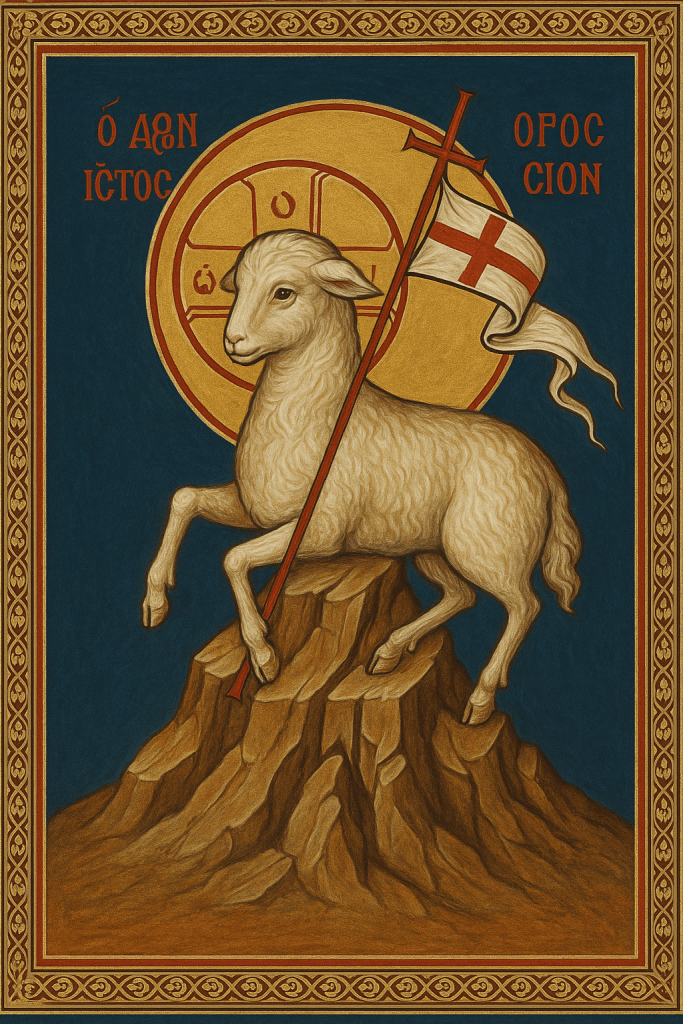


 Centeno's Lighthouse