Tag: blog

  • El Último Retiro

    Spanish/English

    Isabel de La Trinidad

    Prólogo

    Hay textos que nacen de la plenitud de la vida, y otros que surgen en la víspera de la muerte. El Último Retiro de Isabel de la Trinidad pertenece a esta segunda categoría: es la obra de una joven carmelita de apenas veintiséis años que, consumida por la enfermedad, escribe lo que sabe será su despedida.

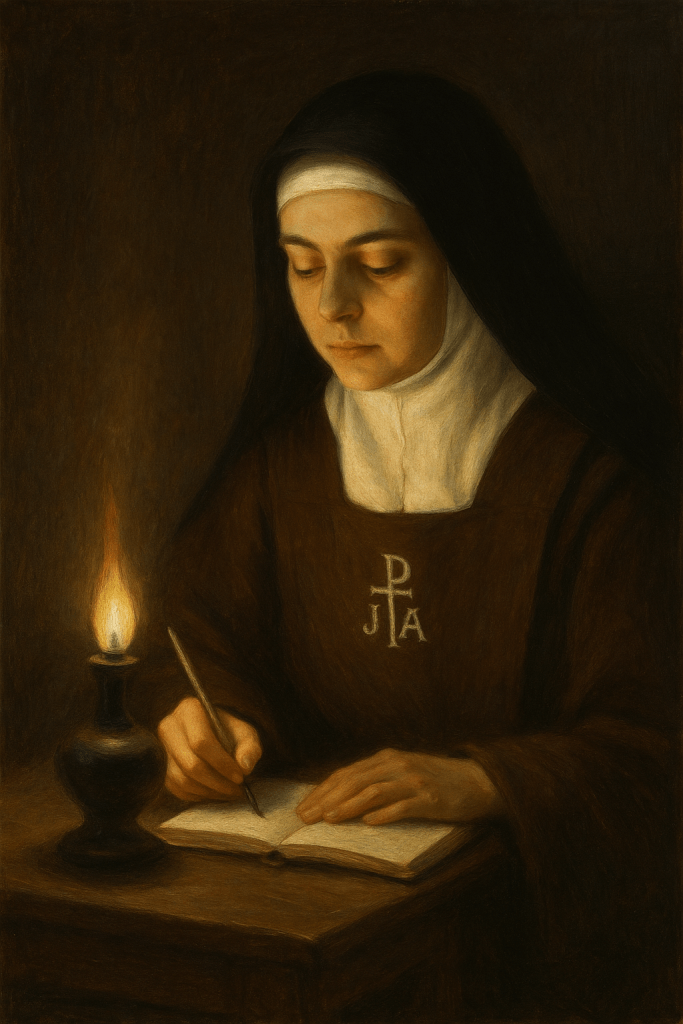
    Pero lo que aquí se ofrece no es un testamento frío, ni un tratado espiritual elaborado con calma. Son notas breves, escritas en noches de insomnio, entre dolores insoportables y fatigas que casi la hacen desvanecerse. El cuaderno nace bajo la luz tenue de una pequeña lámpara, símbolo de su fe ardiente: una fe que, en medio de la oscuridad, se atreve a confesar que Dios es fuego devorador y, al mismo tiempo, luz de amor.

    El lector no encontrará aquí teorías de mística ni teología especulativa. Isabel no escribe como teórica, sino como testigo. Sus palabras tienen el peso de lo vivido: el lecho se convierte en altar, la enfermedad en noviciado para el Cielo, el sufrimiento en comunión con el Crucificado. Todo está atravesado por un solo deseo, repetido con insistencia: ser “alabanza de gloria”, Laudem Gloriae. Ese es el nombre que ella misma elige para sí, y que convierte su vida entera en un himno a la Trinidad.

    Al mismo tiempo, estas páginas tienen un aire sorprendentemente universal. Aunque escritas en la clausura de un Carmelo de Dijon, en 1906, resuenan con la misma fuerza en el lector de hoy, porque tocan lo esencial: la necesidad de silencio interior, la presencia de Dios en lo más profundo, la unión con Cristo en su cruz y la esperanza firme en una vida eterna.

    En El Último Retiro, Isabel no pretende enseñar nada nuevo; pretende —como María— guardar en el corazón la Palabra de Dios y dejar que ella lo ilumine todo. La Escritura se convierte en su alimento diario: no como cita erudita, sino como palabra viva que consuela, juzga y transforma. Su oración es simple y radical: escuchar, asentir, amar.

    Este cuaderno, entonces, no debe leerse como un manual, sino como lo que realmente es: un diario del alma, una serie de relámpagos escritos en el umbral de la eternidad. El valor de estas páginas no está en la perfección de su estilo, sino en la transparencia de su espíritu. Isabel escribe desde “el abismo sin fondo” de su alma abierta a Dios, y desde allí nos invita a mirar más allá del sufrimiento, hacia el horizonte donde todo se transforma en gloria.

    Leer El Último Retiro es acompañar a una joven mujer en su paso hacia la eternidad, y dejarse enseñar por ella que la verdadera vida comienza cuando ya no nos pertenecemos, sino que nos dejamos poseer por el Amor.


    Introducción

    Desde su celda en la enfermería, el 14 de agosto de 1906, Isabel de la Trinidad anuncia a la Madre María de Jesús (priora del Carmelo de Paray-le-Monial, y su antigua priora en el momento de su entrada al Carmelo, que acababa de llegar a Dijon) que la tarde siguiente comenzará su retiro anual. Ella sabe muy bien que será el último.

    “Me alegra tanto encontrarte en este gran viaje. Parto con la Santísima Virgen en la víspera de su Asunción para prepararme a la vida eterna. Nuestra Madre [Madre Germaine] me ha hecho tanto bien al decirme que este retiro será mi noviciado para el Cielo, y que el 8 de diciembre [quinto aniversario de su toma de hábito], si la Santísima Virgen ve que estoy lista, me revestirá con su manto de gloria. La bienaventuranza me atrae cada vez más; entre mi Maestro y yo, de eso es de lo único que hablamos, y toda su obra en mí es prepararme para la vida eterna” (Carta 306).

    La misma idea se repite en la carta 307, escrita al día siguiente. Isabel había “pedido la gracia de un retiro” hasta el “31 de agosto.”

    La priora, que apenas desde hacía unos días tenía en sus manos el cuaderno de El Cielo en la Fe, y que ya pensaba en la circular necrológica que pronto tendría que redactar sobre la joven carmelita moribunda, le hizo un pedido aparentemente inocente: que “anotara sencillamente las luces espirituales” que recibiera. Isabel comprendió y aceptó con una sonrisa.


    Descripción y datación

    Un pequeño cuaderno, escrito con tinta, nos confía el testimonio de sus intuiciones espirituales. No fue hasta el 24 de septiembre que Isabel entregó sus notas a la priora, envueltas en un pobre papel pardo (todavía conservado), con esta inscripción: “El último retiro de Laudem Gloriae.”

    ¿Es un “título” (realmente muy adecuado), como sugería la Madre Germaine? ¿O simplemente una indicación cronológica —“este retiro ha sido el último, pronto ya no estaré más”—, como parece más probable?

    Al abrir el cuaderno leemos en la parte superior de la primera página, antes del texto: “Jueves 16 de agosto. Primer día.” Nada más. Isabel no dio título alguno. Como en El Cielo en la Fe, esta ausencia indica al menos una gran falta de pretensión.

    El “día 16” nos lleva lógicamente al 31 de agosto como conclusión del retiro; y en efecto, el texto parece estar en sintonía con la liturgia de ese día, la Dedicación de las Iglesias Carmelitas. Sin embargo, Isabel no entregó su cuaderno hasta el 24 de septiembre y este “día dieciséis” coincide también, de alguna manera, con el Poema 115, preparado para esa misma fecha.

    Por ello, cabe preguntarse si la redacción terminó realmente el 31 de agosto o si continuó después. O incluso si el cuaderno es una segunda versión de un borrador que Isabel destruyó. Es imposible resolverlo. Lo más probable es que los escritos correspondan efectivamente a los dieciséis días de retiro, redactados directamente en el cuaderno.

    La caligrafía, lenta y laboriosa, da testimonio del agotamiento físico de Isabel.

    Un tanto revisado, el texto fue publicado en la primera edición de los Souvenirs en 1909.


    Un retiro de una enferma

    A causa de la enfermedad de Isabel, su retiro no se desarrolla como en años anteriores. Por una parte, ya no participa con la comunidad ni en el Oficio Divino ni en las comidas; por otra, la soledad y el silencio durante el día no pueden ser absolutos. Recibe las visitas de las enfermeras, que le traen el escaso alimento que todavía puede ingerir, le arreglan la cama de la agotada enferma, limpian la habitación y la atienden. También está la visita periódica del médico.

    En la enfermería vive al menos otra hermana (ya anciana, que morirá cinco días después que Isabel). Durante esos días, Isabel vuelve a ver a su madre en la sala de visitas de la enfermería (cf. Carta 308, nota 3). No quiso hablarle a su familia del retiro para no privarles de la consolación de un último encuentro antes de su muerte cercana.

    En este período no siempre permanece en su celda: aprovecha los días de “buen tiempo” para salir a la terraza. Isabel pasa sus jornadas en oración, lectura, silencio y descanso. Es por la tarde, cuando es menos probable que la interrumpan las visitas de las enfermeras, cuando redacta sus notas de retiro.

    La Madre Germaine precisa que estas páginas fueron “escritas durante noches dolorosamente insomnes y bajo el asalto de dolores tan violentos que la pobre niña sentía que iba a desmayarse” (Souvenirs, 215). La pequeña lámpara que ilumina sus escritos se convierte en símbolo: el de su deseo de ofrecerse al “fuego devorador” de Dios (Último Retiro 19), sostenida únicamente por “la hermosa luz de la fe… la única que debe iluminar mi camino hacia el Esposo” (Último Retiro 10).

    Las notas del retiro no son necesariamente la transcripción inmediata de su oración de cada día ni de sus lecturas bíblicas diarias. La oración de Isabel no está hecha tanto de ideas, sino de una atención perseverante, amorosa y creyente a la Presencia que habita en ella y al Amor que la reclama. Es la totalidad de pensamientos expresados en El Último Retiro lo que refleja su vida interior en esos días.


    Claves de lectura

    1. Trasfondo autobiográfico
      El Último Retiro posee un fuerte valor autobiográfico y un marcado significado cronológico. Refleja las realidades espirituales dominantes de aquellos dieciséis días, tal como lo deseaba la Madre Germaine. Isabel no habla como teórica, sino como testigo.
    2. Presencia del sufrimiento
      El texto está atravesado por el dolor físico, la aceptación espiritual y la dimensión redentora del sufrimiento. Isabel lo vive como conformidad con el Crucificado.
    3. Cristocentrismo
      Cristo es el “Maestro”, el centro absoluto de su vida interior. Y junto a Él, María, la Madre que enseña a sufrir como Él.
    4. El alma de una sola idea
      La gran idea de Isabel es la unión con Dios, en la tierra como en el Cielo. Esa unión es ya participación en la eternidad y fuente de alabanza.
    5. El uso de la Escritura
      La Escritura es su alimento. No la cita como erudición, sino como palabra viva que se hace carne en su sufrimiento y en su oración. Cada cita es un acto de escucha y de entrega.

    Conclusión

    ¿Es El Último Retiro una “obra maestra”? No. Es más que eso: no un tratado estético, sino un grito de amor y de verdad.

    Nace de una sed radical de Dios, de la entrega total de Isabel al “Crucificado por amor.”

    Es, en definitiva, el grito del alma ante el exceso de amor de Dios, escrito en el umbral de la eternidad.

    El soplo de Dios pasa del corazón a la pluma.

    Primer día — Jueves 16 de agosto

    “Nescivi” — “Ya no supe nada.”
    Así canta la Esposa del Cantar de los Cantares después de haber sido introducida en la “bodega interior.”

    Me parece que este debe ser también el estribillo de una alabanza de gloria en este primer día del retiro, en el que el Maestro la hace penetrar en las profundidades del abismo sin fondo, para enseñarle a cumplir la obra que será suya por toda la eternidad, y que ya debe comenzar a realizar en el tiempo, pues el tiempo no es sino la eternidad que ha comenzado y aún sigue en curso.

    “Nescivi” — ya no sé nada; no quiero saber nada, sino “conocerle a Él, compartir sus sufrimientos, asemejarme a Él en su muerte.”
    Porque “a los que Dios conoció de antemano, también los predestinó a ser conformes a la imagen de su Hijo divino,” aquel que fue crucificado por amor.

    Cuando esté totalmente identificada con este Modelo divino, cuando haya pasado completamente a Él y Él a mí, entonces cumpliré mi vocación eterna: aquella para la cual Dios “me eligió en Él” in principio; la que continuaré in aeternum cuando, sumergida en el seno de mi Trinidad, sea la alabanza perpetua de su gloria, Laudem Gloriae Ejus.


    “Nadie ha visto al Padre,” nos dice san Juan, “sino el Hijo y aquel a quien el Hijo quiera revelarlo.”

    Me parece que también podemos decir:
    “Nadie ha penetrado las profundidades del misterio de Cristo, excepto la Santísima Virgen.”

    San Juan y María Magdalena penetraron profundamente este misterio; san Pablo habla con frecuencia de “la inteligencia de este misterio que le fue concedida.”
    Y, sin embargo, ¡cuán en sombras permanecen todos los santos cuando se contempla la luz de la Santísima Virgen!

    Este es el inefable secreto que ella guardaba en su mente y meditaba en su corazón, un secreto que ninguna lengua puede expresar ni pluma describir.

    Esta Madre de la gracia formará mi alma, para que su pequeña hija sea una imagen viva y resplandeciente de su Primogénito, el Hijo del Eterno,
    Aquel que fue la perfecta alabanza de la gloria del Padre.


    📜 Santa Isabel de la Trinidad, El Último Retiro
    (The Complete Works, vol. 1, edición revisada, ICS Publications)

    The Last Retreat

    Prologue

    There are texts that are born from the fullness of life, and others that arise on the eve of death. The Last Retreat of Elizabeth of the Trinity belongs to the latter: it is the work of a young Carmelite, only twenty-six years old, who, consumed by illness, writes what she knows will be her farewell.

    Yet what is offered here is not a cold testament, nor a carefully composed spiritual treatise. These are brief notes, written on sleepless nights, amid unbearable pain and fatigue that nearly made her faint. The notebook was born under the dim light of a small lamp—a symbol of her burning faith: a faith that, in the midst of darkness, dares to confess that God is a consuming fire and, at the same time, a light of love.

    The reader will not find here theories of mysticism or speculative theology. Elizabeth writes not as a theorist, but as a witness. Her words bear the weight of lived experience: the bed becomes an altar, illness a novitiate for Heaven, suffering a communion with the Crucified. Everything is crossed by a single desire, repeated insistently—to be a “praise of glory,” Laudem Gloriae. That is the name she chooses for herself, transforming her whole life into a hymn to the Trinity.

    At the same time, these pages have a surprisingly universal tone. Although written in the enclosure of a Carmelite convent in Dijon in 1906, they still resonate powerfully with today’s reader, for they touch the essential: the need for inner silence, the presence of God at the deepest level, union with Christ on the cross, and the firm hope in eternal life.

    In The Last Retreat, Elizabeth does not seek to teach anything new; she seeks—like Mary—to keep the Word of God in her heart and allow it to illumine everything. Scripture becomes her daily nourishment: not as scholarly quotation, but as living word that consoles, judges, and transforms. Her prayer is simple and radical: to listen, to consent, to love.

    This notebook, then, should not be read as a manual, but as what it truly is: a diary of the soul, a series of flashes written at the threshold of eternity. The value of these pages lies not in stylistic perfection but in the transparency of her spirit. Elizabeth writes from “the bottomless abyss” of her soul opened to God, and from there she invites us to look beyond suffering, toward the horizon where all is transformed into glory.

    To read The Last Retreat is to accompany a young woman on her passage into eternity and to let her teach us that true life begins when we no longer belong to ourselves, but allow ourselves to be possessed by Love.


    Introduction

    From her cell in the infirmary, on August 14, 1906, Elizabeth of the Trinity announced to Mother Marie of Jesus (prioress of the Carmel of Paray-le-Monial, and her former prioress at the time of her entrance into Carmel, who had just come to Dijon) that the next evening she would begin her annual retreat. She knew very well that it would be her last.

    “I am delighted to meet you on my great journey. I leave with the Blessed Virgin on the eve of her Assumption to prepare myself for eternal life. Our Mother [Mother Germaine] did me so much good by telling me that this retreat would be my novitiate for Heaven, and that on the 8th of December [fifth anniversary of her clothing], if the Blessed Virgin sees that I am ready, she will clothe me in her mantle of glory. Beatitude attracts me more and more; between my Master and me that is all we talk about, and His whole work is to prepare me for eternal life” (Letter 306).

    The same idea appears again the following day in Letter 307. Elizabeth had “asked for the grace of a retreat” until “the 31st of August.”

    The prioress, who had held in her hands for just a few days the notebook of Heaven in Faith and had already begun to think about the obituary circular she would soon have to write for the dying young nun, made an apparently innocent request: that Elizabeth “simply write down any spiritual insights she might receive.” Elizabeth understood and accepted with a smile.


    Description and Dating

    A small notebook, written in ink, entrusts to us the account of her spiritual insights. It was not until September 24 that Elizabeth gave her notes to the prioress, wrapped in poor brown paper (still preserved) with this inscription: “The Last Retreat of Laudem Gloriae.”

    Is it a “title” (indeed a fitting one), as Mother Germaine suggested? Or rather a simple chronological indication—“this retreat has been my last; soon I will be no more”?

    Upon opening the notebook, we read at the top of the first page before the text begins: “Thursday, August 16. First day.” Nothing more. Elizabeth gives no title. As in Heaven in Faith, this absence signals at least a great lack of pretension.

    The “16th day” logically leads us to August 31 for the conclusion of the retreat; the text, in fact, aligns with the liturgy of that day—the Dedication of the Churches of Carmel. However, Elizabeth did not hand over her notebook until September 24, and this “sixteenth day” also corresponds, in a sense, to Poem 115, prepared for that same date.

    Thus, one might ask whether the writing truly ended on August 31 or continued afterward—or whether the notebook was a second draft of a first version that Elizabeth may have destroyed. The question cannot be resolved. What seems most probable is that the writing coincided with the sixteen days of the retreat and was written directly in the notebook.

    The handwriting, slow and painstaking, bears witness to Elizabeth’s physical exhaustion. Slightly revised, the text was published in the first edition of the Souvenirs in 1909.


    A Retreat of an Invalid

    Because of Elizabeth’s illness, her retreat did not unfold as in previous years. She no longer joined the community for the Divine Office or meals, and her solitude and silence could not be absolute. The infirmarians brought her the little nourishment she could still take, tended her bed, cleaned her cell, and cared for her. The doctor came regularly.

    At least one other sister—very old and soon to die five days after Elizabeth—shared the infirmary. Elizabeth saw her mother again during these days in the infirmary parlor (cf. Letter 308, n. 3). She did not wish to tell her family about the retreat, so as not to deprive them of the consolation of one last visit before her approaching death.

    During this period she did not always remain in her cell: she took advantage of “good weather” to “go out on the terrace.” Elizabeth spent her days in prayer, reading, silence, and rest. It was in the evenings, less likely to be interrupted by visits, that she wrote her retreat notes.

    Mother Germaine tells us these pages were “written during painfully sleepless nights and amid such violent suffering that the poor child felt she would faint” (Souvenirs, 215). The small lamp that lit her writing became a symbol of her desire to offer herself to “the consuming fire” of God (Last Retreat 19), sustained only by “the beautiful light of faith… which alone should illumine my path as I go to meet the Bridegroom” (Last Retreat 10).

    These notes do not necessarily record her prayer of that exact day, nor her daily readings. Her prayer consisted less of ideas than of loving, persevering attention to the Presence dwelling within her and the Love claiming her. The whole of her reflections in the Last Retreat reveal the interior life she lived during those days.


    Keys to Reading

    1. Autobiographical background
      The Last Retreat has a strong autobiographical character and chronological significance. It reflects the dominant spiritual realities of those sixteen days, as Mother Germaine desired. Elizabeth does not write as a theoretician, but as a witness.
    2. Presence of suffering
      The text is marked by physical pain, spiritual acceptance, and the redemptive meaning of suffering. Elizabeth lives it as conformity with the Crucified.
    3. Christocentrism
      Christ is the “Master,” the absolute center of her inner life. Beside Him stands Mary—the Mother who teaches her to suffer as He did.
    4. The soul of one idea
      Elizabeth’s great idea is union with God, on earth as in Heaven. That union is already participation in eternity and the source of praise.
    5. Use of Scripture
      Scripture is her sustenance. She does not quote it for erudition, but as living word that becomes flesh in her suffering and prayer. Each quotation is an act of listening and surrender.

    Conclusion

    Is The Last Retreat a “masterpiece”? Not in the aesthetic sense. It is not a polished treatise, but a cry.

    It is born from a radical thirst for God, from Elizabeth’s total surrender to the “Crucified by love.”

    It is, ultimately, the cry of a soul before the excess of God’s love, written on the threshold of eternity.

    The breath of God passes from heart to pen.

    Saint Elizabeth of the Trinity
    The Last Retreat
    First Day — Thursday, August 16

    “Nescivi” — “I no longer knew anything.”
    Thus sings the Bride of the Canticle of Canticles after having been brought into the “inner cellar.”

    It seems to me that this must also be the refrain of a praise of glory on this first day of retreat, in which the Master makes her enter into the depths of the bottomless abyss, so that He may teach her to fulfill the work that will be hers for eternity, and which she must already begin to perform in time — for time is eternity begun and still unfolding.

    “Nescivi” — I no longer know anything; I no longer wish to know anything except “to know Him, to share in His sufferings, and to become like Him in His death.”
    “For those whom God foreknew, He also predestined to be conformed to the image of His divine Son,” the One crucified by love.

    When I am wholly identified with this divine Exemplar, when I have wholly passed into Him and He into me, then I will fulfill my eternal vocation: the one for which God “chose me in Him” in principio, the one I shall continue in aeternum when, immersed in the bosom of my Trinity, I shall be the unceasing praise of His glory — Laudem Gloriae Ejus.


    “No one has seen the Father,” says Saint John, “except the Son and the one to whom the Son chooses to reveal Him.”

    It seems to me that we can also say:
    “No one has penetrated the depths of the mystery of Christ except the Blessed Virgin.”

    John and Mary Magdalene entered deeply into this mystery; Saint Paul often speaks of “the understanding of it that was given to him.”
    And yet, how all the saints remain in shadow when we look at the light of the Blessed Virgin!

    This is the unspeakable secret that she kept in mind and pondered in her heart — a secret no tongue can tell and no pen can describe.

    This Mother of grace will form my soul, so that her little child may become a living and radiant image of her First-Born, the Son of the Eternal,
    He who was the perfect praise of His Father’s glory.


    📜 Saint Elizabeth of the Trinity, The Last Retreat
    (The Complete Works, Vol. 1 — Revised Edition, ICS Publications)
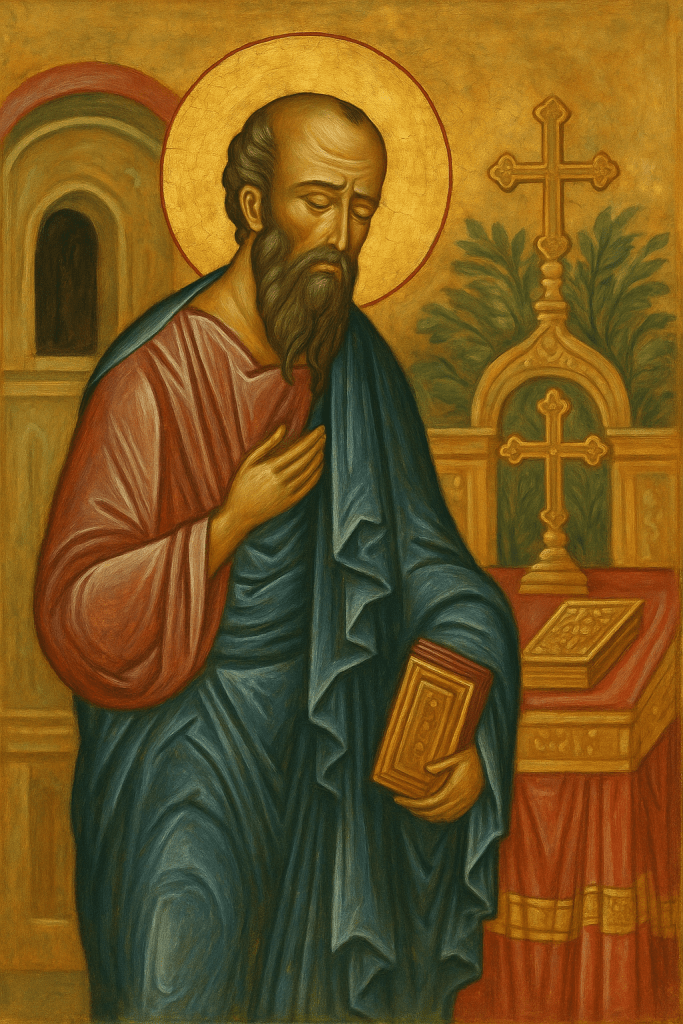
  • Novena Meditación con Santa Isabel de la Trinidad

    Primer oración (31–34)

    “Dios nos ha predestinado a la adopción de hijos por Jesucristo, en unión con Él, según el decreto de su voluntad, para hacer resplandecer la gloria de su gracia, por la cual nos ha justificado en su Hijo amado. En cuya sangre tenemos redención, la remisión de nuestros pecados, según las riquezas de su gracia, que ha sobreabundado en nosotros en toda sabiduría y prudencia…”

    “El alma, ahora verdadera hija de Dios, es, en palabras del Apóstol, movida por el Espíritu Santo mismo: ‘Todos los que son guiados por el Espíritu de Dios son hijos de Dios’. Y de nuevo: ‘No hemos recibido un espíritu de esclavitud para volver a tener temor, sino el espíritu de adopción como hijos en el cual clamamos: ¡Abba, Padre! El Espíritu mismo da testimonio a nuestro espíritu de que somos hijos de Dios. Y si somos hijos, también somos herederos; herederos de Dios y coherederos con Cristo, si sufrimos con Él para ser glorificados con Él’.”

    “Es para llevarnos a este abismo de gloria que Dios nos ha creado a su imagen y semejanza. Ved, dice san Juan, qué amor tan grande nos ha dado el Padre: que seamos llamados hijos de Dios; ¡y lo somos! Ahora somos hijos de Dios, y aún no se ha manifestado lo que seremos. Sabemos que cuando Él aparezca, seremos semejantes a Él, porque lo veremos tal cual es. Y todo el que tiene esta esperanza en Él se purifica a sí mismo, así como Él es puro.”

    “Esta es la medida de la santidad de los hijos de Dios: ser santos como Dios, santos con la santidad de Dios; y lo hacemos viviendo cerca de Él en lo más profundo del abismo interior. Entonces el alma parece asemejarse a Dios, quien aunque se complace en todas las cosas, no se deleita en ellas tanto como en sí mismo, pues posee dentro de sí un bien supereminente ante el cual todos los demás desaparecen. Así, todas las alegrías que recibe el alma son recordatorios que la invitan a preferir aquel bien que ya posee y con el cual nada se compara. ‘Padre nuestro que estás en el cielo…’. Es en ‘este pequeño cielo’ que Él ha hecho en el centro de nuestra alma donde debemos buscarlo y, sobre todo, donde debemos permanecer.”

    “Cristo dijo un día a la samaritana que el Padre busca verdaderos adoradores en espíritu y en verdad. Para dar alegría a su Corazón, seamos esos verdaderos adoradores. Adorémoslo en espíritu, es decir, con nuestros corazones y pensamientos fijos en Él, y nuestra mente llena de su conocimiento impartido por la luz de la fe. Adorémoslo en verdad, es decir, por nuestras obras, porque es sobre todo con nuestras acciones que demostramos ser verdaderos. Esto es hacer siempre lo que agrada al Padre, de quien somos hijos. Y finalmente, adoremos en espíritu y en verdad, es decir, por Jesucristo y con Jesucristo, porque solo Él es el verdadero adorador en espíritu y en verdad.”

    “Entonces seremos hijas de Dios; conoceremos con conocimiento experiencial la verdad de estas palabras de Isaías: ‘Serás llevada al pecho y Él te acariciará en sus rodillas’. De hecho, Dios parece estar enteramente ocupado en colmar al alma de caricias y muestras de afecto, como una madre que cría a su hijo y lo alimenta con su propia leche. ¡Oh! Estemos atentos a la misteriosa voz de nuestro Padre: ‘Hija mía, dame tu corazón’.”

    Segunda oración (35–37)
    “Dios, que es rico en misericordia, movido por su inmenso amor, aun cuando estábamos muertos por nuestros pecados, nos ha devuelto a la vida en Cristo Jesús… Porque todos pecaron y necesitan de la gloria de Dios, son justificados gratuitamente por su gracia, mediante la redención que está en Cristo, a quien Dios ha presentado como propiciación por los pecados, mostrando que Él es justo y que justifica al que tiene fe en Él.”

    “El pecado es un mal tan terrible que, para buscar cualquier bien o evitar cualquier mal, no debe cometerse jamás un pecado. Y, sin embargo, hemos cometido muchísimos. ¿Cómo no desmayar en adoración al sumergirnos en el abismo de la misericordia y fijar los ojos de nuestra alma en este hecho: Dios ha quitado nuestros pecados? Él mismo lo dijo: ‘Borraré todas sus iniquidades y no me acordaré más de sus pecados’. El Señor, en su misericordia, quiso volver nuestros pecados contra sí mismos para nuestro beneficio; encontró la manera de hacerlos útiles para nosotros, de convertirlos en nuestras manos en un medio de salvación. Pero esto no debe disminuir de ningún modo nuestro horror de pecar ni nuestro dolor por haber pecado. Más bien, nuestros pecados se han convertido en fuente de humildad para nosotros.”

    “Cuando el alma considera en lo profundo de sí misma, con los ojos ardiendo de amor, la inmensidad de Dios, su fidelidad, las pruebas de su amor, sus favores que no añaden nada a su felicidad; y luego, al mirarse a sí misma, ve sus crímenes contra este Señor inmenso, se vuelve a su propio centro con tal desprecio de sí que no sabe cómo soportar su horror. Lo mejor que puede hacer es quejarse ante Dios, su Amigo, de la fuerza de su amor propio que la traiciona al no dejarla colocarse tan bajo como quisiera. Se resigna a la voluntad de Dios, y en la abnegación encuentra la verdadera, invencible y perfecta paz que nada puede perturbar. Porque se ha sumergido en un abismo tan profundo que nadie la buscará allí.”

    “Si alguien afirmara que encontrar el fondo del abismo es estar inmerso en la humildad, no lo contradeciría. Sin embargo, me parece que ser sumergido en la humildad es ser sumergido en Dios, porque Dios es el fondo del abismo. Por eso la humildad, como la caridad, es siempre capaz de crecer. Y puesto que un corazón humilde es el vaso necesario, el vaso capaz de contener la gracia que Dios quiere derramar en él, seamos humildes. Los humildes nunca pueden colocar a Dios lo suficientemente alto ni a sí mismos lo suficientemente bajo. Pero aquí está la maravilla: su debilidad se convierte en sabiduría, y la imperfección de sus actos, siempre insuficientes a sus ojos, será el mayor deleite de su vida. Quien posee humildad no necesita de muchas palabras para ser instruido; Dios le dice más cosas de las que puede aprender; así fue en el caso de los discípulos del Señor.”

    Esta novena meditación nos introduce en el corazón mismo de la fe: somos hijos en el Hijo, predestinados a la gloria. Santa Isabel insiste en la filiación como misterio de identidad y destino: no somos esclavos, sino herederos; no vivimos bajo el miedo, sino bajo la confianza filial.

    La santidad aquí no se mide por méritos humanos, sino por la capacidad de vivir arraigados en el “pequeño cielo” del alma, donde Dios habita. La adoración verdadera se expresa tanto en el recogimiento del espíritu como en la coherencia de las obras: espíritu y verdad, interioridad y acción, unidos en Cristo.

    La meditación desciende después hacia la humildad. El alma, consciente de sus pecados, no se hunde en la desesperación, sino en el abismo de la misericordia. El pecado, al ser reconocido, se convierte en fuente de humildad, y la humildad abre espacio para la gracia. El fondo del abismo —nos dice Isabel— es Dios mismo: sumergirse en humildad es sumergirse en Él.

    El itinerario es claro: filiación, adoración, humildad. Así, el alma se descubre amada, sostenida y llamada a reflejar la santidad misma de Dios.

    Padre del Cielo,
    nos has llamado a ser tus hijos, herederos con Cristo,
    y nos has sellado con el Espíritu de adopción.
    Enséñanos a vivir en tu amor,
    a adorarte en espíritu y en verdad,
    y a caminar humildemente en la luz de tu misericordia.
    Por Cristo nuestro Señor. Amén.

    Ninth Meditation with Saint Elizabeth of the Trinity

    First Prayer (31–34)
    “God has predestined us to the adoption of children through Jesus Christ, in union with Him, according to the decree of His will, to make the glory of His grace blaze forth, by which He has justified us in His beloved Son. In whose blood we have redemption, the remission of our sins, according to the riches of His grace, which has abounded beyond measure in us in all wisdom and prudence…”

    “The soul, now a true daughter of God, is, in the words of the Apostle, moved by the Holy Spirit Himself: ‘All who are led by the Spirit of God are children of God.’ And again: ‘We have not received a spirit of slavery to be still led by fear, but the spirit of adoption as children in which we cry out: Abba, Father! The Spirit Himself gives witness with our spirit that we are children of God. But if we are children, we are heirs as well; I mean heirs of God and co-heirs with Jesus Christ if only we suffer with Him so as to be glorified with Him.’”

    “It is to bring us to this abyss of glory that God has created us in His image and likeness. ‘See,’ says St. John, ‘what manner of love the Father has bestowed on us, that we should be called children of God; and such we are. Now we are the children of God, and we have not yet seen what we shall be. We know that when He appears, we shall be like Him, for we shall see Him just as He is. And everyone who has this hope in Him makes himself holy, just as He Himself is holy.’”

    “This is the measure of the holiness of the children of God: to be holy as God, to be holy with the holiness of God; and we do this by living close to Him in the depths of the bottomless abyss within. Then the soul seems in some way to resemble God who, even though He delights in all things, yet does not delight in them as much as He does in Himself, for He possesses within Himself a supereminent good before which all others disappear. Thus all the joys which the soul receives are so many reminders inviting her to enjoy by preference the good she already possesses and to which nothing else can compare. ‘Our Father who art in Heaven…’. It is in this ‘little heaven’ that He has made in the center of our soul that we must seek Him and above all where we must remain.”

    “Christ said one day to the Samaritan woman that ‘the Father seeks true adorers in spirit and truth.’ To give joy to His Heart, let us be these true adorers. Let us adore Him in spirit, that is, with our hearts and our thoughts fixed on Him, and our mind filled with His knowledge imparted by the light of faith. Let us adore Him in truth, that is, by our works, for it is above all by our actions that we show we are true. This is to do always what is pleasing to the Father whose children we are. And finally, let us adore in spirit and in truth, that is, through Jesus Christ and with Jesus Christ, for He alone is the true Adorer in spirit and truth.”

    “Then we will be daughters of God; we will know with an experiential knowledge the truth of these words of Isaiah: ‘You will be carried at the breast and He will caress you on His knees.’ In fact, God seems to be wholly occupied with overwhelming the soul with caresses and marks of affection like a mother who brings up her child and feeds it with her own milk. Oh! Let us be attentive to the mysterious voice of our Father: ‘My daughter, give me your heart.’”

    Second Prayer (35–37)
    “God who is rich in mercy, impelled by His exceeding love, even when we were dead because of our sins, has brought us back to life in Christ Jesus… Because all have sinned and have need of the glory of God, they are justified freely by His grace, through the redemption which is in Christ, whom God has set forth as a propitiation for sins, showing both that He is just and that He makes just him who has faith in Him.”

    “Sin is such a terrifying evil that in order to seek any good whatsoever, or to avoid any evil whatsoever, no sin should be committed. And yet, we have committed very many. How can we keep from fainting in adoration when we plunge into the abyss of mercy and the eyes of our soul are fixed upon this fact: God has taken away our sins? He said so Himself: ‘I will blot out all their iniquities and I will no longer remember their sins.’ The Lord, in His mercy, willed to turn our sins against themselves to our advantage; He found a way to make them useful for us, to convert them in our hands into a means of salvation. But do not let this diminish in any way our horror of sinning, nor our sorrow for having sinned. Rather, our sins have become a source of humility for us.”

    “When the soul considers deep within itself, its eyes burning with love, the immensity of God, His fidelity, the proofs of His love, His favors which can add nothing to His happiness; then, looking at itself it sees its crimes against this immense Lord, it turns to its own center with such self-contempt that it does not know how it can endure its horror. The best thing for it to do is to complain to God, its Friend, of the strength of its self-love which betrays it by not letting it place itself as low as it would wish. It resigns itself to the will of God, and in self-abnegation, finds true, invincible, and perfect peace, which nothing can disturb. For it has plunged into such a deep abyss that no one will seek it there.”

    “If anyone should affirm to me that to find the bottom of the abyss is to be immersed in humility, I would not contradict him. However, it seems to me that to be plunged into humility is to be plunged into God, for God is the bottom of the abyss. That is why humility, like charity, is always capable of increasing. Since a humble heart is the vessel needed, the vessel capable of containing the grace God wants to pour into it, let us be humble. The humble can never rank God high enough nor themselves low enough. But here is the wonder: their weakness turns into wisdom, and the imperfection of their acts, always insufficient in their eyes, will be the greatest delight of their life. Whoever possesses humility has no need of many words to be instructed; God tells him more things than he can learn; such was the case with the Lord’s disciples.”


    Curated Reflection

    This ninth meditation brings us to the very center of Christian faith: we are children in the Son, predestined for glory. Elizabeth insists on divine sonship as identity and destiny: no longer slaves but heirs; not ruled by fear but led by filial trust.

    Holiness is measured not by external achievements but by the ability to live rooted in the “little heaven” within, where God Himself dwells. True adoration is expressed in both contemplation and action: to adore in spirit and in truth is to unite inner recollection with faithful deeds, through and with Christ, the perfect Adorer.

    The meditation then descends into humility. The soul, confronted with its sins, does not despair but falls into the abyss of mercy. Sin, once confessed, becomes a source of humility; and humility becomes the vessel that holds grace. At the bottom of this abyss, Elizabeth says, is God Himself: to be plunged into humility is to be plunged into God.

    The journey unfolds in three movements: sonship, adoration, humility. In this path, the soul discovers itself deeply loved, held in mercy, and called to mirror the very holiness of God.

    Heavenly Father,
    you have called us to be your children, heirs with Christ,
    and you have sealed us with the Spirit of adoption.
    Teach us to live in your love,
    to adore you in spirit and in truth,
    and to walk humbly in the light of your mercy.
    Through Christ our Lord. Amen.

  • Meditación con Santa Isabel de la Trinidad

    curada por Israel Centeno Bilingual- Spanish and English

    Séptimo Día


    Primera oración

    Español
    «Dios nos eligió en Él antes de la creación, para que fuéramos santos e inmaculados en su presencia, en el amor» (Ef 1,4).
    La Trinidad Santa nos creó a su imagen, según el designio eterno que guardaba en su seno antes de que existiera el mundo. En ese “principio sin principio”, como diría Bossuet siguiendo a San Juan: “En el principio era el Verbo” (Jn 1,1). Y podríamos añadir: en el principio no había nada, porque Dios, en su soledad eterna, ya nos llevaba en su pensamiento.

    El Padre, al contemplarse en el abismo de su fecundidad, engendra al Hijo, su Verbo eterno. Y en Él, arquetipo de toda criatura, ya habitábamos sin haber salido aún del vacío. Esa vida eterna que poseíamos en Dios es la causa de nuestra creación.

    Nuestra esencia creada pide ser reunida con su principio. El Verbo es el esplendor del Padre, el modelo eterno que nos atrae hacia sí. Dios quiere que nos liberemos de nosotros mismos y elevemos los brazos hacia nuestro ejemplar, hacia la plenitud. En esta contemplación se abre el alma a horizontes inesperados: anticipa, de algún modo, la corona que le espera.

    Las inmensas riquezas que Dios posee por naturaleza, nosotros podemos poseerlas por amor, por su morada en nosotros y nuestra morada en Él. El amor imprime en nosotros la verdadera imagen de su majestad, para que, como dice el Apóstol, podamos ser santos e inmaculados en su presencia (Ef 1,4) y cantar con David: «Seré intachable y me guardaré del pecado en lo profundo de mí» (Sal 18,24).

    Segunda oración


    «Sed santos, porque yo soy santo» (Lv 11,44). Así habla el Señor. Sea cual sea nuestra forma de vida o nuestro modo de vestir, cada uno de nosotros está llamado a ser santo de Dios.
    ¿Quién es, entonces, el más santo? Aquel que más ama, que contempla por más tiempo a Dios, que satisface más plenamente los deseos de su mirada.

    La santidad es dejar que Dios refleje en nosotros su propia imagen, como el sol en un cristal puro. «Hagamos al hombre a nuestra imagen y semejanza» (Gn 1,26): ese fue el gran deseo en el corazón de Dios. Y su gracia es la que imprime esa semejanza. Nuestra disposición interior, nuestra integridad en volvernos hacia Él, determina la medida de su don.

    La perfección más alta en esta vida, dice un autor piadoso, consiste en permanecer tan unidos a Dios que el alma, con todas sus potencias, repose en Él. La memoria, la inteligencia y la voluntad deben ser impregnadas hasta reflejar la imagen divina: el sello en la cera, la marca en el objeto. Entonces el alma se transforma, iluminada, encendida y consumida por la plenitud de Dios.

    Señor, Tú me pensaste antes de la creación,
    imprime en mí tu imagen de amor.
    Hazme santo en lo pequeño,
    fiel en lo oculto,
    y que mi vida sea un reflejo de tu gloria.
    Amén.


    English

    Lord, You held me in Your thought before creation,
    imprint upon me Your image of love.
    Make me holy in what is small,
    faithful in what is hidden,
    and let my life be a reflection of Your glory.
    Amen.

    “God chose us in Him before creation, that we should be holy and immaculate in His presence, in love” (Eph 1:4).
    The Holy Trinity created us in its image, according to the eternal design it carried within before the world began. In that “beginning without beginning,” as Bossuet says following St. John: “In the beginning was the Word” (Jn 1:1). And we might add: in the beginning was nothing, for God, in His eternal solitude, already bore us in His thought.

    The Father, contemplating Himself in the abyss of His fecundity, engenders the Son, His eternal Word. In Him, archetype of all creatures, we already dwelt before coming forth from the void. That eternal life which we possessed in God is the cause of our creation.

    Our created essence longs to be reunited with its principle. The Word is the splendor of the Father, the eternal model drawing us to Himself. God wills that we be freed from ourselves and lifted up towards our exemplar, towards the fullness. In this contemplation the soul opens to unexpected horizons: in a way, it already crowns what it desires.

    The immense riches God possesses by nature, we may possess by love, by His dwelling in us and our dwelling in Him. Love imprints upon us the true image of His majesty, so that, as the Apostle says, we may be holy and immaculate in His presence (Eph 1:4) and sing with David: “I will be unblemished and keep myself from deep sin within me” (Ps 18:24).


    “Be holy, for I am holy” (Lev 11:44). Thus speaks the Lord. Whatever our way of life or outward clothing, each of us is called to be God’s holy one.
    Who then is the holiest? The one who loves the most, who gazes longest upon God, who most fully satisfies the desire of His gaze.

    Holiness means letting God reflect His own image in us, like the sun shining through pure crystal. “Let us make man in our own image and likeness” (Gen 1:26): such was the great desire in God’s heart. Grace impresses that likeness. Our interior readiness, the integrity with which we turn towards Him, opens the measure of His gift.

    The highest perfection in this life, says a pious author, consists in remaining so closely united to God that the soul with all its faculties rests in Him. Memory, intellect, and will must be shaped until they bear His image: like the seal on wax, the imprint on its object. Then the soul is transformed—illuminated, enkindled, and consumed—by the fullness of God.

  • “My only occupation is love.”

    Daily Meditation with Elizabeth of the Trinity

    Dear brothers and sisters in the contemplative journey

    Our God is a consuming fire” (Heb 12:29).
    This fire is love, not a fire that annihilates but one that transforms. The Holy Spirit, the eternal bond between the Father and the Son, kindles deep within the soul a flame that renews it without ceasing. Whoever abandons themselves to this fire learns to live in a fruitful silence, free of obstacles, where the soul sails upon the ocean of divinity.

    This is the “mystical death” of which St. Paul speaks: dying to self in order to enter into the fullness of the Spirit. It is not a harsh effort, but a sweet surrender. There the soul is transformed into the divine image, lives in communion with the Trinity, and already tastes eternal life.

    Christ Himself said: “I have come to cast fire upon the earth, and how I long for it to be already blazing!” (Lk 12:49). This fire exalts the dignity of the soul and makes it like the Beloved in love. To attain it, the will must be surrendered: to do everything with love, to suffer everything with love. Then the soul can say, even in the midst of worldly cares:
    “My only occupation is love.”

    Silence and inner freedom:

    Whoever abandons themselves to this fire learns to live in a fruitful silence, free of created obstacles. This silence is not emptiness but fullness: it is to sail upon the ocean of Divinity.

    Mystical death:

    St. Paul speaks of “mystical death” as a dying to oneself in order to enter into the Spirit. Elizabeth describes it as a simple and sweet process: less obsession with what remains to be destroyed, more desire to plunge into the furnace of love of the Holy Spirit, the eternal bond between the Father and the Son.

    Transformation and divine image:

    The soul that surrenders is led beyond all that is sensible, “into the sacred darkness,” toward communion with the Trinity. This contemplative life is not escape, but the foretaste of eternal possession.

    The fire that Christ brings to the earth:

    Jesus Himself says that He came to bring fire. That fire is love, which exalts the dignity of the soul, raising it up to become “equal” in love to the Beloved. Friendship with Christ makes everything common: “All that is mine is yours, and yours is mine.”

    Total surrender of the will:

    To live this love, it is necessary to surrender the will: to do everything with love, to suffer everything with love. Elizabeth reminds us, with David, that all our strength must be kept for God. Then the soul can say, even in the midst of worldly occupations: “My only occupation is to love.”

    Biblical and Patristic References (for meditation apart)

    Hebrews 12:29 – “Our God is a consuming fire.”

    1 John 1:3 – “Our fellowship is with the Father and with His Son Jesus Christ.”

    John 15:15 – “I have called you friends, for everything I have heard from my Father I have made known to you.”

    Psalm 59:10 – “I will keep my strength for you.”

    Luke 12:49 – “I have come to bring fire on the earth, and how I wish it were already kindled!”

    Meditación del día según Santa Isabel de la Trinidad

    Texto base (resumido y comentado)

    “Nuestro Dios es un fuego consumidor”:
    Isabel, siguiendo a San Pablo, entiende a Dios como fuego de amor. Este fuego no destruye para aniquilar, sino para transformar en sí mismo todo lo que toca. La obra del Espíritu Santo es justamente esa: abrasar y renovar en lo más profundo de nuestra alma la llama del amor, hasta hacernos participar de la vida trinitaria.

    El silencio y la libertad interior:
    Quien se abandona a este fuego aprende a vivir en un silencio fecundo, libre de obstáculos creados. Este silencio no es vacío, sino plenitud: es navegar en el océano de la Divinidad.

    La muerte mística:
    San Pablo habla de la “muerte mística” como un morir a uno mismo para entrar en el Espíritu. Isabel lo describe como un proceso sencillo y dulce: menos obsesión por lo que falta destruir, más deseo de sumergirse en el horno de amor del Espíritu Santo, vínculo eterno entre el Padre y el Hijo.

    Transformación e imagen divina:
    El alma que se entrega es conducida más allá de todo lo sensible, “en la sagrada oscuridad”, hacia la comunión con la Trinidad. Esta vida contemplativa no es evasión, sino posesión anticipada de la vida eterna.

    El fuego que Cristo trae a la tierra:
    Jesús mismo dice que vino a traer fuego. Ese fuego es el amor que exalta la dignidad del alma, elevándola hasta hacerse “igual” en el amor al Amado. La amistad con Cristo lo vuelve todo común: “todo lo mío es tuyo, y lo tuyo mío”.

    Entrega total de la voluntad:
    Para vivir este amor, es necesario rendir la voluntad: hacer todo con amor, sufrir todo con amor. Isabel nos recuerda con David que toda nuestra fuerza debe guardarse para Dios. Entonces, el alma puede decir en medio de las ocupaciones del mundo:
    “Mi único oficio es amar.”


    Citas bíblicas y patrísticas (para meditar aparte)

    • Hebreos 12:29 – “Nuestro Dios es fuego consumidor.”
    • 1 Juan 1:3 – “Nuestra comunión es con el Padre y con su Hijo Jesucristo.”
    • Juan 15:15 – “Os he llamado amigos, porque todo lo que oí de mi Padre os lo he dado a conocer.”
    • Salmo 58 (59):10 – “Guardaré mi fuerza para ti.”
    • Lucas 12:49 – “He venido a traer fuego a la tierra, ¡y cuánto deseo que ya estuviera ardiendo!”

    “Nuestro Dios es fuego consumidor” (Hb 12,29).
    Ese fuego es amor, un amor que no aniquila sino que transforma. El Espíritu Santo, vínculo eterno entre el Padre y el Hijo, enciende en lo profundo del alma una llama que la renueva sin cesar. Quien se abandona a este fuego aprende a vivir en un silencio fecundo, libre de obstáculos, donde el alma navega en el océano de la divinidad.

    Esta es la “muerte mística” de la que habla San Pablo: morir al propio yo para entrar en la plenitud del Espíritu. No es esfuerzo áspero, sino dulce abandono. Allí el alma se transforma en la imagen divina, vive en comunión con la Trinidad y saborea anticipadamente la vida eterna.

    Cristo mismo dijo: “He venido a traer fuego a la tierra, ¡y cuánto deseo que ya estuviera ardiendo!” (Lc 12,49). Ese fuego enaltece la dignidad del alma y la hace semejante al Amado en el amor. Para alcanzarlo, es necesario rendir la voluntad: hacer todo con amor, sufrir todo con amor. Entonces el alma puede decir, aún en medio de las tareas del mundo:
    “Mi único oficio es amar.”

  • Testimony of a Woman Incapable of Lying. Spanish’English

    I

    A singular testimony: that of a woman of whom, unanimously, it was said she was incapable of lying.
    Her words carried the weight of naked truth, without adornment or artifice. She did not seek to persuade or embellish; she simply recounted what she had lived, with the transparency of one who knew neither calculation nor convenience.

    In her encounter with the divine, every phrase she left written —or spoken to the few who could hear her— bears the force of the irrefutable. Not because it was clothed in authority, but because it sprang from a radical purity: the incapacity to falsify.

    To such a voice, nothing can be added. One can only receive it with reverence, with the certainty that here speaks truth that burns, truth that unsettles, truth that illuminates.

    Simone Weil Encounters Jesus

    “Perhaps, in spite of everything, he does love me.”


    He entered my room and said:
    “You poor wretch, who understand nothing and know nothing – come with me and I will teach you of things you have no idea of.”
    I followed him.

    He led me into a church. It was new and ugly. He brought me before the altar and said: “Kneel.”
    I replied: “I have not been baptized.”
    He answered: “Fall down on your knees before this place, with love, as before the place where truth exists.”
    And I obeyed.

    He took me then to a garret, from whose window the whole town could be seen: scaffoldings, the river where boats were unloading. He made me sit down.

    We were alone. He spoke, and sometimes others entered for a moment, joining in the conversation before leaving again.

    It was no longer winter; not yet spring. Bare branches stretched in a cold air full of sunlight. The light rose, brightened, faded; then the stars and the moon appeared. Again the dawn returned.

    At times he would bring bread from a cupboard, and we shared it. That bread truly had the taste of bread. I have never tasted it again.

    He poured us wine, which carried the taste of the sun and the soil on which the city stood. Sometimes we lay on the wooden floor, and the sweetness of sleep descended on me. Then I awoke, and drank the light of the sun.

    He had promised to teach me, but he taught me nothing. We talked in a rambling way, as old friends do.

    One day he said: “Now go away.”
    I fell at his knees, clinging, begging him not to send me off. But he pushed me out toward the stairs. I descended as if unconscious, my heart torn to shreds. I walked through the streets, realizing I no longer knew where that house was.

    I never tried to find it again. He had come for me by mistake. My place was not in that garret. My place was anywhere else: in a prison cell, a bourgeois parlor full of trinkets, a station waiting room. Anywhere—but not in that garret.

    And yet, sometimes, words of his return to me. I repeat them with fear, never sure if I remember them rightly. He is not here to confirm them.

    I know well that he does not love me. How could he love me?
    And yet, deep within me, something trembles with the thought—
    that perhaps, in spite of everything, he does.

    Simone Weil se encuentra con Jesús

    «Quizá, a pesar de todo, él me ame.»


    Entró en mi habitación y me dijo:
    «Pobre desdichada, que no entiendes nada y nada sabes. Ven conmigo, y te enseñaré cosas de las que no tienes idea.»
    Y lo seguí.

    Me condujo a una iglesia. Era nueva y fea. Me llevó ante el altar y dijo: «Arrodíllate.»
    Yo respondí: «No he sido bautizada.»
    Él contestó: «Póstrate aquí, con amor, como ante el lugar donde habita la verdad.»
    Y obedecí.

    Luego me llevó a un desván, desde cuya ventana abierta se veía la ciudad entera: andamios de madera, el río donde descargaban los barcos. Me hizo sentar.

    Estábamos solos. Él hablaba, y a veces alguien entraba, se unía un instante a la conversación, y luego se marchaba.

    Ya no era invierno; tampoco aún primavera. Las ramas de los árboles estaban desnudas, sin brotes, en un aire frío lleno de sol. La luz crecía, brillaba, luego se apagaba; aparecían la luna y las estrellas. Y de nuevo volvía el amanecer.

    A veces sacaba pan de un armario y lo compartía conmigo. Ese pan sabía verdaderamente a pan. Nunca más he vuelto a encontrar ese sabor.

    Vertía vino para mí y para él, vino con el gusto del sol y de la tierra sobre la que estaba construida la ciudad. A veces nos tendíamos sobre el suelo de madera, y la dulzura del sueño descendía sobre mí. Luego despertaba y bebía la luz del sol.

    Me había prometido enseñanza, pero no me enseñó nada. Hablábamos sin rumbo fijo, de mil cosas, como viejos amigos.

    Un día me dijo: «Ahora vete.»
    Caí a sus pies, lo abracé, le supliqué que no me echara. Pero me arrojó hacia la escalera. Bajé como sin conciencia, con el corazón hecho pedazos. Caminé por las calles y comprendí que ya no sabía dónde estaba aquella casa.

    Nunca intenté volver a encontrarla. Comprendí que había venido a buscarme por error. Mi lugar no estaba en aquel desván. Mi lugar estaba en cualquier otro sitio: en una celda de prisión, en un salón burgués lleno de baratijas y terciopelo rojo, en la sala de espera de una estación. En cualquier parte, menos en aquel desván.

    Y, sin embargo, a veces me sorprendo repitiendo, con temor y compunción, alguna de sus palabras. ¿Cómo saber si las recuerdo fielmente? Él no está para decírmelo.

    Sé bien que no me ama. ¿Cómo podría amarme?
    Y sin embargo, hay algo profundo en mí, un punto de mi ser, que no puede dejar de pensar, con miedo y temblor, que quizá, a pesar de todo… él me ame.


    Fuente: Simone Weil, Cuadernos (First and Last Notebooks), (Wipf and Stock, 2015), pp. 65–66.

  • Reading the Present with Girard’s Lens

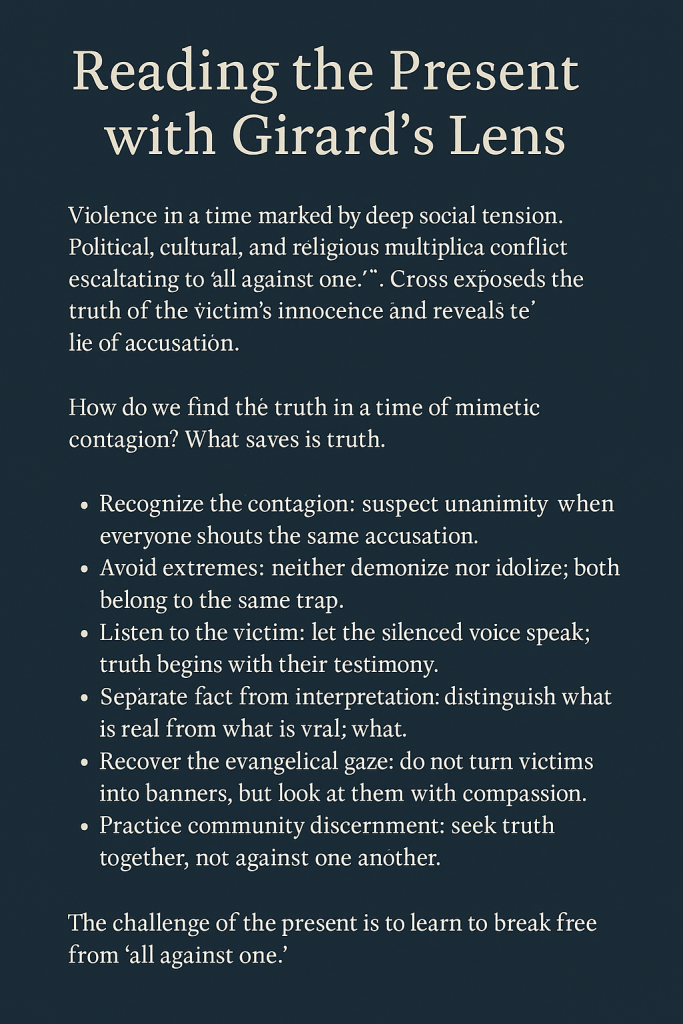
    In an age of polarization and mimetic contagion, we either demonize or idolize, but rarely see clearly. René Girard’s lens helps us uncover the hidden mechanism of “all against one” and discover a new path: not myth, not scapegoating, but the truth revealed in the Cross — the innocence of the victim and the call to reconciliation.

    Bilingual

    ✍️ Article in English

    Reading the Present with Girard’s Lens

    We live in a time marked by deep social tension. Political, cultural, and religious polarization multiplies divisions, and each side mirrors in the other the very passions that fuel its anger. Hatred imitates hatred, indignation spreads like fire, fear multiplies by contagion. In this collective mirror, conflict escalates until the entire community vibrates under the invisible pressure of finding someone to blame, someone to bear the weight of all unrest.

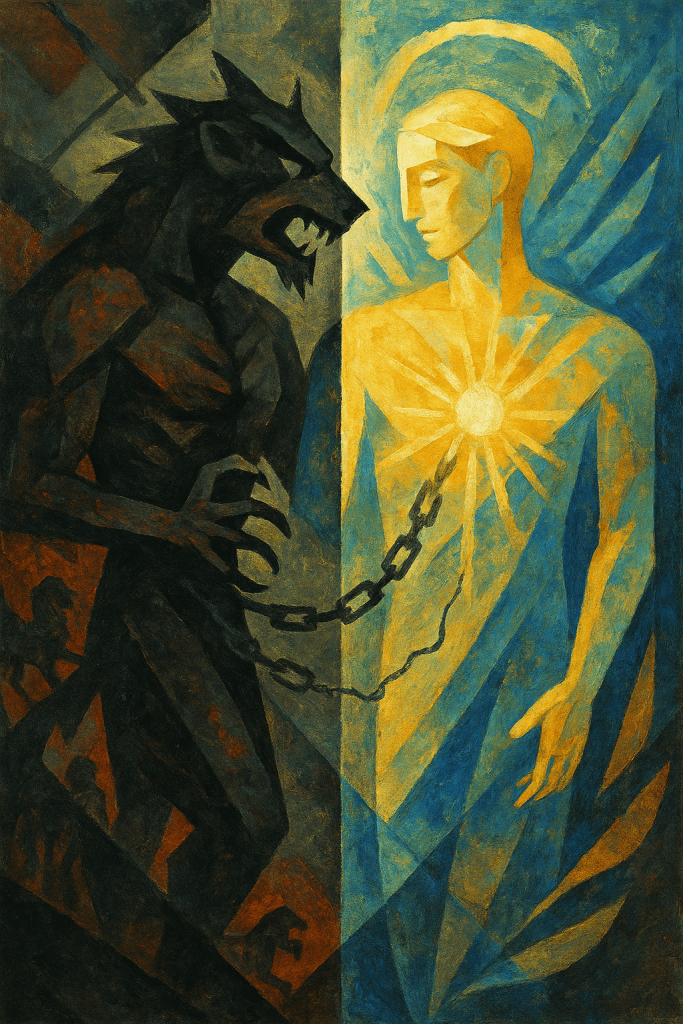
    Then the most ancient mechanism of humanity emerges: the convergence of all against one. A culprit is identified, a face that concentrates suspicion and rage. It can be an individual, a minority, even a symbol. The unanimous cry rises: “If we eliminate this one, there will be peace.” And the sacrifice takes place: exclusion, lynching, assassination, social cancellation. The group feels, for an instant, a false peace, as if the problem had been solved.

    But what follows is the building of a narrative. In the mythic logic, the victim is presented as guilty; their elimination is justified, even sacred. Violence is thus legitimized. In the evangelical logic, however, the victim is shown to be innocent. Their exclusion does not save the community but reveals the injustice of unanimity. It shows that supposed peace is built upon a lie.

    This is our present: one sector demonizes, another deifies; one cries “monster”, the other “martyr.” Both fall into the mimetic trap. Neutrality becomes almost impossible, because contagion pressures everyone to take sides, to reproduce collective passion.

    Against this endless cycle, the Cross opens another path. It is not a military or political triumph; it does not resemble the victory of a Roman general dragging prisoners in chains. The triumph of the Cross is paradoxical: it exposes the very mechanism of violence and strips it of its prestige. In the innocence of the victim, the lie of accusation is revealed. The Cross shows that neither demonization nor sacralization can save. What saves is truth — the recognition that we all participate in the mechanism and all stand in need of conversion.

    How, then, do we find the truth in a time of mimetic contagion?

    • Recognize the contagion: when everyone shouts the same accusation, suspect the unanimity.
    • Avoid extremes: neither demonize nor idolize; both belong to the same trap.
    • Listen to the victim: let the silenced voice speak; truth begins with their testimony.
    • Separate fact from interpretation: distinguish what is real from what is viral.
    • Recover the evangelical gaze: do not turn victims into banners, but look at them with compassion.
    • Practice community discernment: seek truth together, not against one another.

    The challenge of the present is not to choose whom to demonize or whom to sacralize, but to recognize how the “all against one” still operates and to learn to break free from it. The evangelical revelation calls us not to justify violence or glorify victims as idols, but to humanize: to defend innocence, resist contagion, dismantle the narratives that legitimize exclusion, and open a path toward reconciliation.


    ✍️ Artículo en Español

    Leer el presente con la mirada de Girard

    Vivimos en un tiempo marcado por la tensión social. La polarización política, cultural y religiosa multiplica las divisiones, y cada bando refleja en el otro las pasiones que alimentan su furia. El odio imita al odio, la indignación se contagia como fuego, el miedo se multiplica. En este espejo colectivo, el conflicto crece hasta que toda la comunidad vibra bajo una presión invisible: la necesidad de encontrar a alguien a quien culpar, alguien que cargue con el peso del malestar.

    Entonces aparece el mecanismo más antiguo de la humanidad: la convergencia de todos contra uno. Se identifica un culpable, un rostro que concentra la sospecha y la rabia. Puede ser un individuo, una minoría, incluso un símbolo. El grito unánime se eleva: «Si eliminamos a este, habrá paz». Y el sacrificio se consuma: exclusión, linchamiento, asesinato, cancelación social. El grupo experimenta, por un instante, una paz ilusoria, como si el problema hubiera sido resuelto.

    Pero lo que sigue es la construcción de un relato. En la lógica mítica, la víctima aparece como culpable; su eliminación se presenta como justa, necesaria o incluso sagrada. Así, la violencia queda legitimada. En la lógica evangélica, en cambio, la víctima es mostrada como inocente. Su exclusión no salva: desnuda la injusticia de la unanimidad, muestra que la paz aparente se levanta sobre una mentira.

    Este es nuestro presente: un sector demoniza, otro sacraliza; unos gritan «monstruo», otros «mártir». Ambos caen en la trampa mimética. La neutralidad se vuelve casi imposible, porque la presión del contagio empuja a tomar partido, a reproducir la pasión colectiva.

    Frente a este ciclo interminable, la Cruz abre otro camino. No es un triunfo militar ni político; no se parece a la victoria de un general romano que arrastra prisioneros encadenados. El triunfo de la Cruz es paradójico: consiste en exponer el mecanismo de la violencia y despojarlo de su prestigio. En la inocencia de la víctima se revela la mentira de la acusación. La Cruz enseña que ni la demonización ni la sacralización salvan; lo que salva es la verdad: reconocer que todos participamos en el mecanismo y todos necesitamos conversión.

    ¿Cómo encontrar, entonces, la verdad en un tiempo de contagio mimético?

    • Reconocer el contagio: cuando todos acusan lo mismo, sospechemos de la unanimidad.
    • Evitar los extremos: ni demonizar ni idolatrar; ambos pertenecen a la misma trampa.
    • Escuchar la voz de la víctima: dejar hablar a quien fue silenciado; la verdad comienza con su testimonio.
    • Separar hechos de interpretaciones: distinguir lo real de lo viral.
    • Recuperar la mirada evangélica: no convertir a las víctimas en banderas, sino mirarlas con compasión.
    • Practicar el discernimiento comunitario: buscar la verdad juntos, no unos contra otros.

    El desafío del presente no es elegir a quién demonizar ni a quién sacralizar, sino reconocer cómo sigue operando el “todos contra uno” y aprender a liberarnos de él. La revelación evangélica no nos llama a justificar la violencia ni a glorificar a las víctimas como ídolos, sino a humanizar: a defender la inocencia, resistir el contagio, desmontar las narrativas que legitiman la exclusión y abrir un camino de reconciliación.

  • ¿Qué nos dice la Inteligencia Artificial sobre la Sábana de Turín?

    📖 Versión en Español

    La Sábana no es dogma de fe. No creemos en la resurrección por la Sábana, pero sigue siendo motivo de asombro lo que se encuentra al estudiarla y al tratar de replicarla sin éxito, a pesar de que algunos afirman que fue producida en la Edad Media.

    La Sábana de Turín ha sido, durante siglos, objeto de devoción y controversia. Más allá de los debates sobre su autenticidad histórica, recientes aplicaciones de inteligencia artificial (IA) han permitido aproximaciones inéditas a la imagen grabada en el lienzo. Estos estudios no han revelado códigos ocultos ni mensajes intencionales, sino algo más fundamental: patrones geométricos y matemáticos consistentes que sugieren un proceso de formación no explicado satisfactoriamente.

    Entre los hallazgos destacan los obtenidos con análisis de componentes principales (PCA), una técnica que elimina el ruido de los datos y resalta las variables más significativas. Al aplicarla a escaneos digitales de alta resolución, los investigadores observaron que la figura humana pasaba a un segundo plano y emergía un campo de información. La gradación de luces y sombras mostraba una consistencia matemática precisa: la intensidad de la impronta variaba de manera proporcional a la distancia hipotética entre cuerpo y tela. En otras palabras, la Sábana contiene información tridimensional que sigue una regla física estable: cuanto más cerca el cuerpo, más fuerte la señal; cuanto más lejos, más débil¹.

    Asimismo, la IA detectó un andamiaje geométrico subyacente en zonas anatómicas específicas, como las manos y la curvatura de las costillas. Estos patrones habían permanecido invisibles al ojo humano, ocultos por la trama del lino y los daños acumulados. Para descartar errores, los modelos de IA fueron alimentados con imágenes de otros lienzos antiguos y obras artísticas. El resultado fue concluyente: la estructura geométrica era exclusiva de la Sábana de Turín².

    Las implicaciones son significativas. La precisión geométrica y la tridimensionalidad observadas hacen improbable que la imagen haya sido generada por contacto directo —lo que produciría manchas irregulares—. Sugieren, más bien, un proceso de proyección, como si alguna forma de energía hubiera transmitido la información desde cierta distancia.

    Entre las hipótesis exploradas se encuentran el efecto corona, en el que un campo eléctrico de alto voltaje alrededor de un cuerpo podría haber dejado una impronta superficial, y la de un pulso de radiación ultravioleta, capaz de afectar únicamente la capa más externa de las fibras³. Sin embargo, hasta ahora ningún experimento ha conseguido reproducir, al mismo tiempo, las características únicas de la Sábana:

    • La superficialidad de la coloración (limitada a las fibrillas externas del lino).
    • Su naturaleza de negativo fotográfico.
    • La coherencia tridimensional de la intensidad de la imagen.
    • La presencia de patrones geométricos consistentes.

    En conclusión, los estudios con IA no han resuelto el debate sobre la edad de la Sábana, pero sí han desplazado la discusión hacia otro terreno: el de su estructura informacional. El lienzo no es solo objeto de análisis histórico o artístico, sino un fenómeno que contiene información tridimensional organizada bajo reglas matemáticas. En este sentido, la Sábana de Turín, lejos de ser un simple vestigio textil, continúa representando un desafío abierto para la ciencia contemporánea.

    Notas

    1. Thomas McAvoy, Artificial Intelligence Analysis of Images of the Shroud of Turin, International Journal of Astrophysics and Space Science, vol. 13, n.º 1, 2025.
    2. Three-Dimensional Reconstructions of the Shroud of Turin: From Photographic Negatives to AI-Enhanced Forensic Analysis, Academia.edu, 2024.
    3. Giulio Fanti et al., Comparative tests on various image formation hypotheses simulating the Turin Shroud image, Journal of Imaging Science and Technology, vol. 63, n.º 6, 2019.

    📖 English Version

    What Does Artificial Intelligence Tell Us About the Shroud of Turin?

    The Shroud is not a dogma of faith. We do not believe in the resurrection because of the Shroud, but it remains a source of wonder when studied and when replication attempts continue to fail, despite claims that it was produced in the Middle Ages.

    The Shroud of Turin has, for centuries, been an object of devotion and controversy. Beyond debates about its historical authenticity, recent applications of artificial intelligence (AI) have enabled unprecedented approaches to the image imprinted on the cloth. These studies have not revealed hidden codes or intentional messages, but rather something more fundamental: consistent geometric and mathematical patterns that suggest a process of formation not yet satisfactorily explained.

    Among the findings are those obtained through principal component analysis (PCA), a technique that eliminates noise in datasets and highlights the most significant variables. When applied to high-resolution digital scans, researchers observed that the human figure receded into the background, and what emerged was a field of information. The gradation of light and shadow revealed precise mathematical consistency: the intensity of the imprint varied in proportion to the hypothetical distance between body and cloth. In other words, the Shroud contains three-dimensional information that follows a stable physical rule: the closer the body, the stronger the signal; the farther away, the weaker.¹

    AI also detected an underlying geometric scaffolding in specific anatomical regions, such as the hands and the curvature of the ribs. These patterns had remained invisible to the human eye, concealed by the weave of the linen and centuries of damage. To rule out errors, AI models were tested with images of other ancient linens and artistic works. The result was conclusive: the geometric structure was unique to the Shroud of Turin².

    The implications are significant. The observed geometric precision and three-dimensionality make it unlikely that the image was generated by direct contact—which would have produced irregular smudges. Rather, they suggest a process of projection, as though some form of energy had transmitted the information from a distance.

    Proposed hypotheses include the corona discharge theory, in which a high-voltage electric field around a body could leave a superficial imprint, and that of a short burst of ultraviolet radiation, capable of affecting only the outermost fibers of the linen³. Yet no experiment to date has succeeded in reproducing all the Shroud’s unique features at once:

    • The superficial nature of the coloration (limited to the outer fibrils of the linen).
    • The photographic negative quality of the image.
    • The three-dimensional coherence of the imprint’s intensity.
    • The presence of consistent geometric patterns.

    In conclusion, AI-based studies have not resolved the debate about the age of the Shroud, but they have shifted the discussion toward another domain: its informational structure. The cloth is not merely an object of historical or artistic analysis, but a phenomenon containing three-dimensional information organized under mathematical rules. In this sense, the Shroud of Turin, far from being a simple textile relic, continues to pose an open challenge to contemporary science.

    Notes

    1. Thomas McAvoy, Artificial Intelligence Analysis of Images of the Shroud of Turin, International Journal of Astrophysics and Space Science, vol. 13, no. 1, 2025.
    2. Three-Dimensional Reconstructions of the Shroud of Turin: From Photographic Negatives to AI-Enhanced Forensic Analysis, Academia.edu, 2024.
    3. Giulio Fanti et al., Comparative tests on various image formation hypotheses simulating the Turin Shroud image, Journal of Imaging Science and Technology, vol. 63, no. 6, 2019.
  • Anatomy of Hatred

    Israel Centeno

    At this very moment, as I type these words, hatred is expressing itself in the world with such force that it makes me wonder whether love will truly have the last word. Lord, why did you go to the cross, if today the same crowd would once again crucify a man without fault or error? Nothing seems to have changed, despite revelation.

    I have searched for answers. In last Sunday’s homily, the priest of my parish spoke of the mystery of the cross and the sacrifice of the Son of God. He admitted that he did not have many answers, but he did have one that was firm: it is a mystery. The incarnation, the passion, the death, and the resurrection are not empty symbols, but the key that remains for us: to lift up the serpent of Moses to avoid the bites, to embrace the cross in order to attain redemption.

    Hatred has a face. It can be drawn in literature—in Iago, in Macbeth—in history, in revolts and revolutions, in cruel tyrants who left behind extermination camps and torture chambers. Hatred has both an individual and collective body, but behind all its masks its anatomy always obeys the same logic.

    Hatred, like love, is born of extreme emotions that engage the senses. It can be ardent or glacial, passionate or cold; it changes tone, but not intensity. No one loves with indifference, while hatred always carries a radical indifference: it denies the good and rejects the dignity of the other. We hate what we despise, what we fear, what threatens to strip something from us. Never with the courage to give, always with the cowardice to take.

    It can remain latent, like a silent tumor waiting for a trigger to manifest itself. It hides, but never completely: it seeps through the eyes, the words, the gestures. We hate by mimesis, when the other reflects what we cannot bear in ourselves; out of complex and resentment, when an inner wound spills outward. And because hatred is propagable and inflammable, a rumor or a slogan is enough to ignite the tribe and transform fear into collective violence.

    In Jacques Maritain, I found that hatred multiplies when the other is instrumentalized, reduced to a means rather than an end. Where there should be political charity and the common good, enemies are fabricated. Hatred corrupts politics: in the name of a supposed common good, walls are erected to divide.

    Edith Stein taught me that hatred is, above all, the radical failure of empathy. The human being is made to open to the other and to recognize in them an interiority akin to one’s own. When this orientation breaks down, hatred installs itself as a parasite of the spirit: it consumes vital energy but produces nothing of its own. It is inverted love, a twisted passion: intensity without openness, desire turned into negation.

    In Simone Weil, I understood that hatred resembles gravity. The soul needs justice, truth, and meaning as urgently as it needs bread and water. When these needs are denied, force takes the place of good, and the spirit plunges downward. Hatred is the weight that drags, the uprooting that breaks attention and replaces grace with violence.

    With René Girard, I learned to see the broken mirror of desire: we hate what is too similar, what is too close. What the other reveals in me that I do not want to face. Mimetic desire feeds rivalries that erupt into violence, and the tribe, in order to ward off fear, unloads its tension onto a common enemy, a scapegoat. Hatred thus becomes a collective mechanism, legitimized by the false peace that follows sacrifice.

    I have seen how hatred trades, shifts, negotiates. It never gives: it seizes, it deprives. It can incubate in solitude or overflow into the multitude. It always seeks a moral pretext: it disguises itself as the common good, but it excludes; it disguises itself as tribal identity, but it asserts itself by negating the stranger. It is skilled in its justifications: it wears the garments of virtue, but only corrodes.

    Its anatomy always reveals the same: absence, distortion, parasitism. It lives off what it consumes and dies when it finds nothing to devour. It is the shadow of love, its darkest caricature. In the end, hatred is death.

    I have also thought of what Scripture says about hardened hearts. When hatred appears, the first thing to break is the capacity to feel and to open up: the heart turns to stone. But on the cross, the blood of God was not shed in vain. There, in that paradox, death was overcome.

    It is a mystery I cannot fully decipher, but one that sustains me: that in the place where absolute hatred was expressed—in violence, in injustice, in contempt—absolute love was also revealed. And if, as the Gospel of John says, “God is love” (Jn 5), then this is not metaphor nor empty consolation, but the affirmation that even when everything seems dominated by the shadow of hatred, love remains the root and the final word.

    Anatomía del odio

    En este mismo momento, mientras escribo estas palabras, el odio se expresa en el mundo con tal fuerza que me obliga a preguntarme si el amor realmente tendrá la última palabra. Señor, ¿por qué fuiste a la cruz, si hoy la misma multitud crucificaría de nuevo a un hombre sin error ni culpa? Nada parece haber cambiado, a pesar de la revelación.

    He buscado respuestas. En la homilía del domingo pasado, el sacerdote de mi parroquia habló del misterio de la cruz y del sacrificio del Hijo de Dios. Reconoció que él mismo no tenía muchas respuestas, pero sí una contundente: es un misterio. La encarnación, la pasión, la muerte y la resurrección no son símbolos vacíos, sino la clave que nos queda: levantar la serpiente de Moisés para evitar las picaduras, abrazar la cruz para alcanzar la redención.

    El odio tiene rostro. Puede dibujarse en la literatura —en Yago, en Macbeth—, en la historia de las revueltas y revoluciones, en los tiranos crueles que dejaron tras de sí campos de exterminio y salas de tortura. El odio encarna en rostros individuales y colectivos, pero detrás de todas sus máscaras, su anatomía responde siempre a la misma lógica.

    El odio, como el amor, nace de emociones extremas que comprometen los sentidos. Puede ser ardiente o glacial, pasional o frío; cambia de tono, pero no de intensidad. Nadie ama con indiferencia, mientras que el odio arrastra una indiferencia radical: niega el bien y rechaza la dignidad del otro. Se odia lo que se desprecia, lo que se teme, lo que amenaza con arrebatarnos algo propio. Nunca con el coraje de dar, siempre con la cobardía de arrebatar.

    Puede permanecer en estado latente, como un tumor silencioso que espera un disparador para manifestarse. Se oculta, pero nunca del todo: se filtra en la mirada, en la palabra, en el gesto. Se odia por mímesis, cuando el otro refleja lo que no tolero en mí mismo; por complejo y resentimiento, cuando una herida interior se desborda hacia afuera. Y porque es propagable e inflamable, basta un rumor o una consigna para que incendie a la tribu y transforme el miedo en violencia colectiva.

    He leído en Jacques Maritain que el odio se multiplica cuando instrumentalizamos al otro, cuando lo reducimos a medio y no a fin. Allí donde debería haber caridad política y bien común, se fabrican enemigos. El odio pervierte la política: en nombre de un supuesto bien común se erigen muros que dividen.

    Edith Stein me enseñó que el odio es el fracaso radical de la empatía. El ser humano está hecho para abrirse al otro y reconocerlo como interioridad semejante. Cuando esa orientación se quiebra, el odio se instala como parásito del espíritu: consume energía vital, pero no produce nada propio. Es un amor invertido, una pasión torcida, intensidad sin apertura, deseo vuelto negación.

    En Simone Weil comprendí que el odio se parece a la gravedad. El alma necesita justicia, verdad y sentido con la misma urgencia que el pan y el agua. Cuando estas necesidades se niegan, la fuerza ocupa el lugar del bien y el espíritu se precipita hacia abajo. El odio es peso que arrastra, desarraigo que rompe la atención y sustituye la gracia por violencia.

    Con René Girard descubrí que se odia lo semejante, lo demasiado parecido. Lo que me revela en el otro lo que no quiero ver en mí mismo. El deseo mimético alimenta rivalidades que desembocan en violencia, y la tribu, para conjurar su miedo, descarga la tensión sobre un enemigo común, un chivo expiatorio. Así el odio se convierte en mecanismo colectivo, legitimado por la falsa paz que sigue al sacrificio.

    He visto que el odio transa, cambia de rostro, negocia. Nunca da: arrebata, priva. Puede incubarse en la soledad o desbordarse en la multitud. Siempre busca un aval moral: se disfraza de bien común, pero excluye; se disfraza de identidad tribal, pero se afirma negando al extranjero. Es hábil en su justificación: adopta ropajes de virtud, pero solo erosiona.

    Su anatomía revela siempre lo mismo: ausencia, distorsión, parasitismo. Vive de lo que consume y muere cuando no encuentra a quién devorar. Es la sombra del amor, su caricatura oscura. En última instancia, el odio es muerte.

    He pensado también en lo que dicen las Escrituras sobre los corazones endurecidos. Cuando el odio aparece, lo primero que se rompe es la capacidad de sentir y de abrirse: el corazón se vuelve piedra. Pero en la cruz, la sangre de Dios no se derramó en vano. Allí, en esa paradoja, la muerte fue vencida.

    Es un misterio que no sé descifrar del todo, pero que me sostiene: que en el lugar donde se expresó el odio absoluto —la violencia, la injusticia, el desprecio— también se manifestó el amor absoluto. Y si, como afirma el evangelio de Juan, “Dios es amor” (Jn 5), entonces incluso cuando todo parece dominado por la sombra del odio, el amor permanece como raíz y última palabra.

  • Lo eterno como rebeldía: Gen Z, Alpha y el retorno a lo sagrado

    Israel Centeno

    The Eternal as Rebellion: Gen Z, Alpha, and the Return to the Sacred


    Español

    El siglo XXI avanza con una particularidad: la transición generacional se produce bajo el signo de las plataformas digitales. La manera en que los jóvenes se definen, debaten y se agrupan ya no pasa por instituciones tradicionales, sino por redes donde conviven símbolos, discursos y comunidades dispersas. La Generación Z, que hoy tiene entre 13 y 28 años, y la emergente Generación Alpha, que apenas comienza a configurarse como sujeto colectivo, crecen bajo un escenario de saturación informativa, polarización política y crisis de sentido. En contraste, los millennials —quienes dominaron la narrativa cultural desde inicios de los 2000— comienzan a mostrar los límites de su modelo progresista, individualista y materialista. Una de las señales más claras de este agotamiento se refleja en la baja natalidad: los millennials liberales tienden a evitar la formación de familias y a postergar, o incluso renunciar, a tener hijos, mientras que sus pares conservadores han mantenido tasas de natalidad más altas1.

    Es en este cruce entre biografía, demografía y cultura digital donde se abre un espacio para pensar si el futuro inmediato no podría estar marcado por un reflujo progresista y una revalorización de los valores tradicionales, entendidos no como una restauración mecánica del pasado, sino como un redescubrimiento de aquellas fuentes de sentido que otorgan estabilidad: la familia, la religión, la comunidad, la trascendencia. Paradójicamente, lo que antes se percibía como ortodoxo o incluso como conformista —ser católico, profesar una fe, buscar en lo eterno un horizonte— comienza a adquirir un aura de rebeldía. Para muchos jóvenes de la Generación Z, asistir a la misa en latín, orar en silencio o proclamar una vida antimaterialista es hoy un gesto contracultural frente a una sociedad entregada a la banalidad del consumo y la aceleración tecnológica. En una época que se pretende emancipadora, el regreso a lo sagrado aparece como la verdadera disidencia.

    En Estados Unidos, este contraste se refleja con nitidez. De acuerdo con el U.S. Census Bureau (2024), la tasa de natalidad de los millennials progresistas es un 20% inferior a la de los conservadores de su misma cohorte, con sólo el 30% de los progresistas entre 29 y 44 años teniendo hijos, frente al 50% de los conservadores2. Esta diferencia, aunque pueda parecer pequeña, tiene implicaciones profundas: en la medida en que los progresistas priorizan el estilo de vida individual, son los conservadores quienes están criando a la Generación Alpha. La Generación Z, por su parte, ha sorprendido a analistas al mostrar una inclinación hacia prácticas religiosas que sus padres dieron por superadas. El interés por la misa en latín entre los jóvenes católicos es uno de los ejemplos más llamativos: según Barna Group (2024), un 20% de los católicos de esta generación ha asistido a parroquias tradicionales, frente a apenas un 10% de los millennials en su momento3. No es sólo una preferencia litúrgica: es un modo de afirmar una identidad en un entorno que considera la fe como algo superfluo.

    Las plataformas digitales, lejos de ser neutrales, funcionan como vitrinas simbólicas de este pulso. X, con la “X” negra que Elon Musk impuso como logotipo, se ha convertido en un espacio de resistencia frente a la censura y el control algorítmico. En paralelo, Bluesky, con su mariposa azul, es percibido como refugio progresista, aunque con alcance limitado. En YouTube y Spotify proliferan canales y podcasts de corte católico o filosófico —Sensus Fidelium, Pints with Aquinas, Word on Fire— que alcanzan millones de visualizaciones. Y en Substack, escritores de nicho conservador encuentran un hogar para pensar y discutir sin las restricciones de la corrección política. Que lo católico, lo cristiano, lo trascendente aparezca con fuerza en estas plataformas —donde lo banal y lo efímero parecen gobernar— revela que la contracultura de nuestro tiempo no lleva crestas ni consignas, sino sotanas, rosarios y textos antiguos.

    En Europa Occidental, el proceso de secularización parece consolidado, con tasas de natalidad en mínimos históricos y religiosidad institucional débil. Sin embargo, emergen resistencias: jóvenes que peregrinan a Chartres, comunidades que redescubren la liturgia tradicional, minorías que, en medio de una sociedad escéptica, se aferran a la fe como una forma de identidad. Su marginalidad, lejos de debilitarlos, les da un brillo de autenticidad. En Polonia y Hungría, la religiosidad ha recuperado un peso político y social inesperado, mientras que en Rusia y Rumanía la Iglesia Ortodoxa se afianza como pilar identitario4.

    América Latina, por su parte, mantiene un cristianismo masivo y dinámico, dividido entre catolicismo y evangelismo, pero coincidente en su énfasis en la familia y la comunidad. África, con su demografía desbordante y su religiosidad vibrante, se perfila como el gran protagonista del futuro: allí donde se concentra la vida, la fe no es un residuo del pasado, sino un motor de cohesión5. En Asia, la pluralidad es extrema: Japón y Corea del Sur encarnan la secularización, pero la India, Filipinas y la China rural conservan tradiciones que siguen marcando a millones.

    Si se observan en conjunto, estos procesos sugieren un patrón: allí donde el progresismo cultural parece triunfar, también se desgasta en la baja natalidad, en la pérdida de cohesión, en la desorientación existencial. Y allí donde la tradición parecía declinar, resurgen signos de vitalidad: jóvenes que buscan liturgias antiguas, comunidades que se fortalecen en medio de la crisis, religiosidades vibrantes en continentes demográficamente centrales. No se trata de anunciar un destino inevitable, pero sí de reconocer que, en un mundo saturado de promesas de libertad sin arraigo, lo verdaderamente contracultural parece ser volver a lo esencial: la familia, la fe, la trascendencia. Quizá el siglo XXI, lejos de ser la era de la secularización definitiva, sea el tiempo en que el alma humana, cansada del vértigo, se atreva a regresar a lo que nunca dejó de anhelar.


    English

    The twenty-first century advances with a peculiarity: generational transition takes place under the sign of digital platforms. The ways in which young people define themselves, debate, and gather no longer pass through traditional institutions but through networks where symbols, discourses, and scattered communities coexist. Generation Z, now between 13 and 28 years old, and the emerging Generation Alpha, just beginning to take shape as a collective subject, grow up in a context of information saturation, political polarization, and crisis of meaning. By contrast, millennials—who dominated cultural narratives since the early 2000s—are beginning to reveal the limits of their progressive, individualist, and materialist model. One of the clearest signs of this exhaustion is reflected in low birth rates: liberal millennials tend to avoid family formation and to postpone, or even renounce, having children, while their conservative peers have maintained higher fertility rates1.

    It is at this intersection of biography, demography, and digital culture that one can consider whether the near future may be marked by a progressive ebb and a revaluation of traditional values, understood not as a mechanical restoration of the past but as a rediscovery of those sources of meaning that offer stability: family, religion, community, transcendence. Paradoxically, what was once perceived as orthodox or even conformist—being Catholic, professing faith, seeking in the eternal a horizon—now acquires an aura of rebellion. For many young people of Generation Z, attending the Latin Mass, praying in silence, or proclaiming an anti-materialist life is today a countercultural gesture in a society surrendered to the banality of consumption and technological acceleration. In an age that prides itself on emancipation, the return to the sacred appears as the true dissent.

    In the United States, this contrast is clear. According to the U.S. Census Bureau (2024), the fertility rate of progressive millennials is 20% lower than that of conservatives in the same cohort, with only 30% of progressives aged 29 to 44 having children, compared to 50% of conservatives2. This difference, though seemingly small, has profound implications: as progressives prioritize individual lifestyles, conservatives are the ones raising Generation Alpha. Generation Z, for its part, has surprised analysts by showing an inclination toward religious practices their parents considered outdated. Interest in the Latin Mass among young Catholics is striking: according to Barna Group (2024), 20% of Catholic Gen Zers have attended traditional parishes, compared to just 10% of millennials at their age3. This is not merely a liturgical preference: it is a way of affirming identity in an environment that treats faith as superfluous.

    Digital platforms, far from neutral, serve as symbolic showcases of this cultural pulse. X, with the black “X” imposed by Elon Musk as logo, has become a space of resistance to censorship and algorithmic control. By contrast, Bluesky, with its blue butterfly, is perceived as a progressive refuge, though with limited reach. YouTube and Spotify host countless Catholic or philosophical channels and podcasts—Sensus Fidelium, Pints with Aquinas, Word on Fire—that reach millions. And on Substack, conservative niche writers find a home to think and debate without the constraints of political correctness. That Catholicism, Christianity, and transcendence should appear so strongly in these platforms—where banality and ephemerality seem to reign—reveals that the counterculture of our time wears no mohawks or slogans, but cassocks, rosaries, and ancient texts.

    In Western Europe, secularization appears consolidated, with fertility rates at historic lows and institutional religiosity weakened. Yet resistance emerges: young pilgrims walking to Chartres, communities rediscovering traditional liturgy, minorities that, amid skeptical societies, cling to faith as a form of identity. Their marginality, far from weakening them, lends them an aura of authenticity. In Poland and Hungary, religiosity has regained unexpected political and social weight, while in Russia and Romania the Orthodox Church consolidates itself as an identity pillar4.

    Latin America, meanwhile, maintains a massive and dynamic Christianity, divided between Catholicism and Evangelicalism but converging in its emphasis on family and community. Africa, with its overflowing demography and vibrant religiosity, stands as the great protagonist of the future: where life abounds, faith is not a residue of the past but a motor of cohesion5. In Asia, plurality is extreme: Japan and South Korea embody radical secularization, while India, the Philippines, and rural China retain traditions that continue to mark millions.

    Viewed together, these processes suggest a pattern: where progressive culture seems triumphant, it also suffers wear—low fertility, loss of cohesion, existential disorientation. And where tradition seemed in decline, signs of vitality reappear: young people seeking ancient liturgies, communities strengthening amid crisis, vibrant religiosity in demographically central continents. This is not to proclaim an inevitable return of traditional values, but to recognize that in a world saturated with promises of rootless freedom, the truly countercultural act may be to return to the essential: family, faith, transcendence. Perhaps the twenty-first century, far from being the age of definitive secularization, will be the time when the human soul, weary of vertigo, dares to return to what it never ceased to long for.


    Notes


    Footnotes

    1. Pew Research Center, “Religion and Family in America,” 2023. 2
    2. U.S. Census Bureau, Fertility by Demographic Groups, 2024. 2
    3. Barna Group, Faith Trends among Gen Z, 2024. 2
    4. José Casanova, Public Religions in the Modern World, University of Chicago Press, 1994; Pew Forum, Europe’s Changing Religious Landscape, 2022. 2
    5. United Nations, World Population Prospects 2023. 2
  • El hombre, entre la manada y el alma

    (Spanish / English bilingual essay)

    Israel Centeno


    Español

    No cabe duda: el ser humano comparte con los animales su naturaleza gregaria. Como muchos otros, vive en manada, protege a su grupo, establece jerarquías y sanciona a quienes rompen el orden. Basta observar lobos, elefantes o primates superiores: la manada impone una disciplina que garantiza la supervivencia colectiva. Y cuando alguien desafía esa jerarquía, suele ser castigado por el líder, restableciendo así el equilibrio. Podríamos incluso hablar de “organizaciones tribales” en el reino animal.

    Pero en los animales, el castigo termina allí. Nunca aparece, después del acto, el remordimiento. Ningún lobo se atormenta por haber mordido a su rival, ningún león se arrepiente de haber devorado a la cría de una manada enemiga. El remordimiento, esa punzada íntima que pesa sobre la conciencia, no entra en el cálculo de la evolución biológica. Desde el punto de vista de la caza y la supervivencia, el remordimiento es incluso una desventaja: debilita al cazador, lo hace vacilar, lo vuelve menos apto frente al instinto.

    Y sin embargo, el hombre siente remordimiento. No sólo por quitar la vida dentro de su grupo, sino también por herir o matar a un extraño, incluso de otra especie. Ninguna ley evolutiva explica este dolor del alma. Es algo más: un signo de interioridad. Edith Stein lo llamó la capacidad de autoposesión y autotrascendencia del espíritu humano1.

    Lo mismo ocurre con el heroísmo. En la naturaleza, el más débil queda atrás: la manada sigue adelante, porque detenerse pondría en peligro la supervivencia de todos. Pero el ser humano es el único que se devuelve, arriesga su vida, enfrenta al enemigo y protege al herido. Ese gesto heroico no se explica por el instinto: responde a una ley más alta, inscrita en el corazón.

    La rivalidad y la mímesis, que René Girard estudió como núcleo de la condición humana, también se observan en el mundo animal. Los machos compiten por el territorio, por la hembra, por la primacía, y la imitación del deseo genera choques inevitables. Incluso el mecanismo del chivo expiatorio —el sacrificio de un individuo que momentáneamente restaura la paz del grupo— aparece, de manera más elemental, en algunas especies2. Pero en el hombre, estos impulsos toman una forma cualitativamente distinta: se transforman en violencia ritual, en linchamiento colectivo, en sacrificios humanos y divinos.

    ¿Dónde se rompe este ciclo? Según Girard, sólo en Cristo3. El Hijo de Dios, el inocente sin pecado, acepta ser el chivo expiatorio universal, pero al resucitar revela la falsedad de la violencia sacrificial. En Él, el ciclo de la mímesis y de la rivalidad encuentra su fin: ya no hay víctima que sostenga la paz a costa de la sangre, sino un reino donde “los sordos oyen, los ciegos ven, los cojos caminan y los muertos se levantan” (cf. Mt 11,5). Cristo, que es todo bondad y todo amor, inaugura un camino distinto: la comunión no fundada en el sacrificio de otro, sino en el don de sí mismo para redimir a todos.

    El hombre, claro, sigue siendo un animal cruel. Su historia está marcada por violencia, dominio y venganza. Pero a diferencia de otros animales, su alma nunca lo deja en paz. Esa alma —creada a imagen y semejanza de Dios4— lleva en sí misma la bondad y la verdad. Y por eso el hombre vive en conflicto: entre los impulsos de la carne y la voz de su conciencia, entre la brutalidad del instinto y la llamada a la eternidad.

    Aristóteles lo intuyó cuando dijo que el hombre es zoón logikón, el animal racional5. Tomás de Aquino lo desarrolló al afirmar que el hombre es capaz de Dios (capax Dei), precisamente porque posee un alma espiritual6. Heidegger, desde otro horizonte, reconoció que somos el ser que se pregunta por el Ser mismo7. Y Charles Taylor, más recientemente, subrayó que el hombre no sólo actúa, sino que se interpreta a sí mismo8.

    En todos ellos, desde la filosofía antigua hasta el pensamiento contemporáneo, resuena la misma intuición: lo que nos separa del resto de los animales no es la manada, ni la jerarquía, ni el instinto de supervivencia. Es el alma. Un alma que, al buscar la verdad y el bien, se convierte en el escenario de un conflicto interminable. Y quizá allí, en ese conflicto, resida la verdadera dignidad del hombre y su trascendencia hacia una forma superior de vida que no está limitada por el espacio ni por el tiempo, sino que es eterna porque es plena, como lo prometió Cristo: agua viva que nunca se agota (cf. Jn 4,14).


    English

    There is no doubt: the human being shares with animals its gregarious nature. Like many others, he lives in a herd, protects his group, establishes hierarchies, and sanctions those who break the order. One only needs to observe wolves, elephants, or higher primates: the herd imposes a discipline that guarantees collective survival. And when someone challenges that hierarchy, he is usually punished by the leader, thus restoring balance. We could even speak of “tribal organizations” in the animal kingdom.

    But in animals, punishment ends there. Remorse never appears after the act. No wolf torments itself for biting a rival, no lion regrets devouring the offspring of an enemy herd. Remorse, that intimate pang weighing on conscience, does not enter into the calculation of biological evolution. From the perspective of hunting and survival, remorse is even a disadvantage: it weakens the hunter, makes him hesitate, renders him less fit against instinct.

    And yet, man feels remorse. Not only for taking life within his group, but also for harming or killing a stranger, even of another species. No evolutionary law explains this pain of the soul. It is something more: a sign of interiority. Edith Stein called it the capacity for self-possession and self-transcendence of the human spirit1.

    The same is true of heroism. In nature, the weakest are left behind: the herd moves on, for to stop would endanger the survival of all. But the human being is the only one who turns back, risks his life, confronts the enemy, and protects the wounded. That heroic gesture cannot be explained by instinct: it responds to a higher law inscribed in the heart.

    Rivalry and mimesis, which René Girard studied as central to the human condition, are also observed in the animal world. Males compete for territory, for the female, for primacy, and the imitation of desire generates inevitable clashes. Even the scapegoat mechanism—the sacrifice of an individual that momentarily restores the peace of the group—appears, in a more elementary form, in some species2. But in man, these impulses take a qualitatively different form: they become ritual violence, collective lynching, human and divine sacrifices.

    Where is this cycle broken? According to Girard, only in Christ3. The Son of God, the innocent without sin, accepts being the universal scapegoat, but in rising again reveals the falsehood of sacrificial violence. In Him, the cycle of mimesis and rivalry meets its end: there is no longer a victim to sustain peace through blood, but a kingdom where “the deaf hear, the blind see, the lame walk, and the dead are raised” (cf. Mt 11:5). Christ, who is all goodness and all love, inaugurates a different way: communion not founded on the sacrifice of another, but on the gift of Himself to redeem all.

    Man, of course, remains a cruel animal. His history is marked by violence, domination, and vengeance. But unlike other animals, his soul never leaves him in peace. That soul—created in the image and likeness of God4—carries within itself both goodness and truth. And that is why man lives in conflict: between the impulses of the flesh and the voice of his conscience, between the brutality of instinct and the call to eternity.

    Aristotle intuited it when he said that man is zoón logikón, the rational animal5. Thomas Aquinas developed it by affirming that man is capable of God (capax Dei), precisely because he possesses a spiritual soul6. Heidegger, from another horizon, recognized that we are the being who asks about Being itself7. And Charles Taylor, more recently, underlined that man not only acts, but interprets himself8.

    In all of them, from ancient philosophy to contemporary thought, the same intuition resounds: what separates us from the rest of the animals is not the herd, nor hierarchy, nor the instinct for survival. It is the soul. A soul that, in seeking truth and goodness, becomes the stage of an unending conflict. And perhaps there, in that conflict, lies the true dignity of man and his transcendence toward a higher form of life that is not bound by space or time, but is eternal because it is full, as Christ promised: living water that never runs dry (cf. Jn 4:14).


    Notes


    Footnotes

    1. Edith Stein, Endliches und ewiges Sein (Ser finito y ser eterno / Finite and Eternal Being), 1936. 2
    2. René Girard, La violencia y lo sagrado (Violence and the Sacred), 1972. 2
    3. René Girard, Yo veía a Satanás caer como el relámpago (I Saw Satan Fall Like Lightning), 1999. 2
    4. Génesis 1,27 / Genesis 1:27. 2
    5. Aristóteles, Política, I, 1253a / Aristotle, Politics, I, 1253a. 2
    6. Tomás de Aquino, Summa Theologiae, I, q.12, a.1 / Thomas Aquinas, Summa Theologiae, I, q.12, a.1. 2
    7. Martin Heidegger, Ser y tiempo (Being and Time), 1927. 2
    8. Charles Taylor, Sources of the Self: The Making of the Modern Identity, Harvard University Press, 1989. 2