Tag: dios

  • We Shall Not Know Death

    Israel Centeno

    English/Spanish
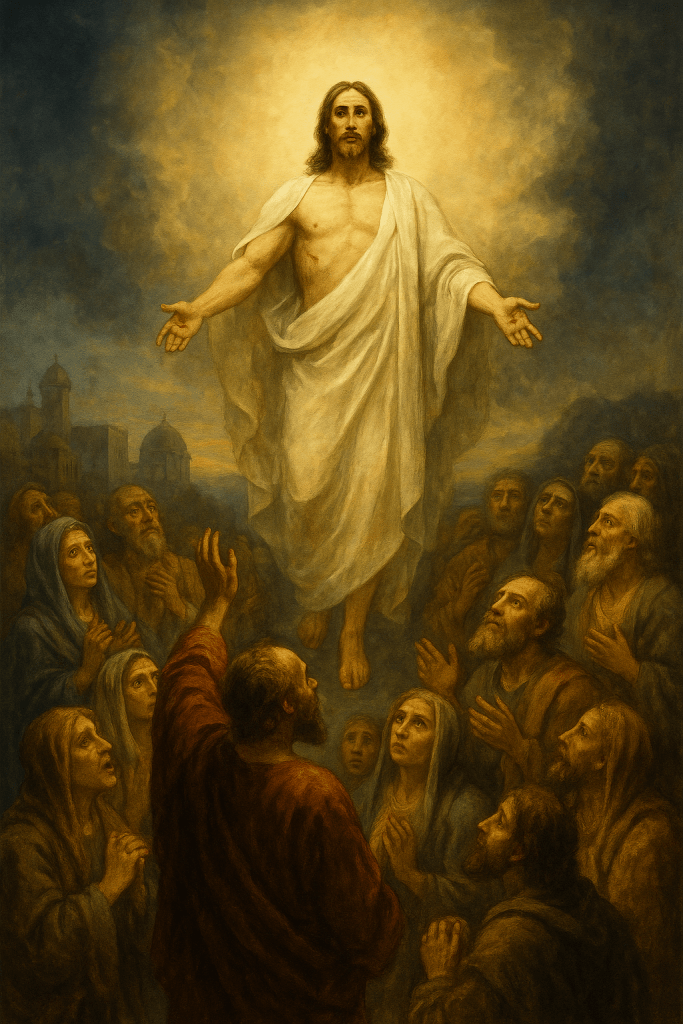
    When Jesus says, “Whoever believes in me shall never die,” he is not making a poetic or symbolic claim. He speaks from the heart of divine revelation, with a clarity that, once grasped, transforms our entire perception of history and human destiny. “Whoever believes in me will never see death” (Jn 8:51). This seemingly simple phrase contains the whole of the Christian promise. Understanding it deeply allows us to read both history and eschatology in an entirely new light.

    Unlike other religious or philosophical movements that emerged around the first century—such as Pharisaism, Sadduceeism, or even Essenism—the message of Jesus did not die with its leader but rather multiplied. Instead of dissolving with the execution of its Master, that small band of Galileans and marginal Jews became the foundation of something entirely new: the Church, the Mystical Body of Christ, which not only survived but expanded, transforming cultures, empires, and entire civilizations.

    This expansion cannot be explained by human means alone. As Romano Guardini affirmed, what the early Christians possessed was not a new moral code or ideology, but a living experience of the Risen One. The resurrection of Jesus was not a metaphor or a collective illusion but an event that shattered the laws of physics without violating them, that upended history without crushing it, and that offered a new horizon: the glorification of the body, communion with God, real eternal life—not symbolic.

    Paul, in his letter to the Corinthians, expresses this reality in deeply eschatological terms:

    “It is sown a perishable body, it is raised an imperishable body; it is sown in dishonor, it is raised in glory; it is sown in weakness, it is raised in power; it is sown a natural body, it is raised a spiritual body” (1 Cor 15:42-44).

    And he adds, in a climactic outburst of hope:

    “In the twinkling of an eye, at the last trumpet… the dead will be raised imperishable, and we shall be changed” (1 Cor 15:52).

    Paul is not speaking mythologically. He describes the radical, definitive passage from time into eternity, from the corruptible body to the glorious body, from mortal experience into full communion with the Triune God. This transformation is not symbolic—it is real, and it is grounded in the foundational event of our faith: the resurrection of Christ.

    When Jesus affirms that those who believe in Him “will not see death,” He refers to the second death—the separation of the soul from God (cf. Rev 20:6). Physical death becomes a transition, not an end. The soul, upheld by grace, remains in communion with Christ and awaits—in God’s time, not ours—the final glorification of the body.

    This means that eternal life does not begin after death, but from the moment we believe and live in Christ. We are already—sacramentally—living the firstfruits of eternal life. The Christian lives dying to the world but rising already in spirit.

    That is why Jesus says, “Let the dead bury their dead” (Mt 8:22). What sounds scandalous becomes a key eschatological insight: there are dead who walk, and there are those who, though dead to the world, live for God. The one united to Christ already partakes, though veiled, in future glory.

    The Christian hope is not merely “going to heaven.” It is to be fully transformed by grace, participating in the divine mode of being. As John writes:

    “What we will be has not yet been made known. But we know that when He appears, we shall be like Him, for we shall see Him as He is” (1 Jn 3:2).

    To see God is to become a reflection of His glory, not as something incidental but as the true destiny of the redeemed soul. This beatific vision, the culmination of eschatology, implies full communion with the Father, Son, and Holy Spirit. What we now know as promise, we will behold as Presence. And what we now believe with effort, will become eternal rest in the Truth that never fades.

    We already have a decisive sign: the risen body of Christ. In Him we see what our own glorified bodies will be. His body is no longer bound by the natural laws of this world: He enters a locked room, appears to the disciples of Emmaus, and yet He eats, is touched, speaks. This is not a pious metaphor—this is the Good News. How could it not be, when it reveals the luminous destiny of the redeemed human being?

    We have seen His glory, foreshadowed at Tabor, where the mortal body is transfigured before the trembling eyes of Peter, James, and John. And we also have the visions of Teresa of Ávila, John of the Cross, Thomas Aquinas, who describe with mystical sobriety eternal life as perfect union and unending joy, where the will rests in the Absolute Good and the intellect in Truth without shadow. Even Simone Weil, who never formally entered the Church, said that Christ spoke to her directly, that they prayed the Our Father in Greek together, and that the beauty of the Cross revealed the meaning of existence.

    All of this invites us to look upward, despite evil, despite the broken world, despite the modern man who makes himself god through scientific and technological delirium. Precisely because of that, because modernity has closed itself to mystery, it becomes more urgent to proclaim the Good News: Christ is risen, and His glorified body is the pledge of our future glorification.

    Christianity does not flourish because it is more useful, moral, or sentimental. It flourishes because it is true. Because it offers a real answer to suffering, to death, and to the longing for eternity. Whoever believes in Christ will not know death, for he already lives in Him—and will live forever.

    On this promise rests the Church, the martyrs, the saints’ fidelity, and the hope of the faithful. Eschatology is not an appendix to theology—it is its crowning. And in it we learn that, in the end, there will be no terror, no silence, no ash. There will remain Love—and we shall be with Him, in glory.

    No Conoceremos la Muerte

    Cuando Jesús dice: “El que cree en mí no morirá para siempre”, no hace una afirmación poética o simbólica. Habla desde el corazón de la revelación divina, con una claridad que, al ser comprendida, transforma la percepción entera de la historia y del destino humano. “Quien cree en mí no conocerá la muerte” (Jn 8,51). Esta frase, aparentemente simple, contiene la totalidad de la promesa cristiana. Comprenderla con profundidad nos permite leer la historia y la escatología bajo una luz completamente nueva.

    A diferencia de otros movimientos religiosos o filosóficos que surgieron en torno al siglo I, como el fariseísmo, el saduceísmo o incluso el esenismo, el mensaje de Jesús no se extinguió con la muerte de su líder, sino que se multiplicó. En vez de disolverse con la ejecución de su Maestro, ese pequeño grupo de galileos y judíos marginales se convirtió en el cimiento de una realidad completamente nueva: la Iglesia, el Cuerpo Místico de Cristo, que no sólo sobrevivió, sino que se expandió, transformando culturas, imperios y civilizaciones enteras.

    Esta expansión no puede explicarse por medios humanos. Como afirma Romano Guardini, lo que los primeros cristianos poseían no era un código ético nuevo, ni una ideología, sino una experiencia viva del Resucitado. La resurrección de Jesús no fue una metáfora ni una ilusión comunitaria, sino un evento que rompió las leyes de la física sin violarlas, que trastocó la historia sin aplastarla, y que ofreció un horizonte nuevo: la glorificación del cuerpo, la comunión con Dios, la vida eterna real, no simbólica.

    San Pablo, en su carta a los Corintios, expresa esta realidad con un lenguaje profundamente escatológico: “Se siembra un cuerpo corruptible, resucita un cuerpo incorruptible; se siembra en ignominia, resucita en gloria; se siembra en debilidad, resucita en poder; se siembra un cuerpo animal, resucita un cuerpo espiritual” (1 Cor 15,42-44). Y añade, como un clímax apocalíptico lleno de esperanza: “En un abrir y cerrar de ojos, al toque final de la trompeta… los muertos resucitarán incorruptibles y nosotros seremos transformados” (1 Cor 15,52).

    Aquí san Pablo no está hablando en términos mitológicos. Lo que describe es el paso radical y definitivo del tiempo a la eternidad, del cuerpo sujeto a corrupción al cuerpo glorioso, de la experiencia mortal a la comunión plena con el Dios trino. Esta transformación no es simbólica, sino real, y está fundada en el acontecimiento fundante de nuestra fe: la resurrección de Cristo.

    Cuando Jesús afirma que quienes creen en Él “no conocerán la muerte”, se refiere a la segunda muerte, aquella que implica la separación del alma con Dios (cf. Ap 20,6). La muerte física será un tránsito, pero no un final. El alma, sostenida por la gracia, permanecerá en comunión con Cristo y esperará —en el tiempo de Dios, no en el nuestro— la glorificación final de su cuerpo.

    Esto implica que la vida eterna no comienza después de la muerte, sino desde el momento en que se cree y se vive en Cristo. Ya estamos —de forma sacramental— en las primicias de la vida eterna. El cristiano vive muriendo hacia el mundo, pero ya resucitando en su espíritu.

    Por eso Jesús dice: “Deja que los muertos entierren a sus muertos” (Mt 8,22). Lo que parece un escándalo se convierte en clave de lectura escatológica: hay muertos que caminan, y hay vivos que han muerto al mundo, pero viven para Dios. El que está unido a Cristo participa ya, aunque veladamente, de la gloria futura.

    La esperanza escatológica del cristiano no es simplemente “ir al cielo”. Es ser transformado plenamente por la gracia, participando del modo de ser divino, como afirma San Juan: “Aún no se ha manifestado lo que seremos. Sabemos que, cuando Él se manifieste, seremos semejantes a Él, porque lo veremos tal cual es” (1 Jn 3,2).

    Ver a Dios es convertirse en reflejo de su gloria, no como algo accesorio, sino como destino propio del alma redimida. Esa visión beatífica, culminación de la escatología, implica la plena comunión con el Padre, el Hijo y el Espíritu Santo. Lo que ahora conocemos como promesa, lo veremos como Presencia. Y lo que hoy creemos con esfuerzo, se hará descanso eterno en la Verdad que no pasa.

    Ya tenemos un dato decisivo: el cuerpo resucitado de Cristo. En Él se nos ha mostrado cómo será ese cuerpo glorioso que esperamos. No está sujeto a las leyes naturales de este mundo: entra en un cenáculo con las puertas cerradas, se hace presente entre los discípulos de Emaús al partir el pan, y sin embargo, tiene carne y huesos, come pescado, permite ser tocado, habla. Esta no es una metáfora piadosa, es la buena nueva. ¿Cómo no habría de serlo, si nos revela el destino luminoso del hombre redimido?

    Hemos visto ya su gloria, anticipada en el Tabor, donde el cuerpo mortal se transfigura ante los ojos temblorosos de Pedro, Santiago y Juan. Y tenemos además las visiones de Santa Teresa de Ávila, San Juan de la Cruz, Santo Tomás de Aquino, que describen con sobriedad mística la vida eterna como unión perfecta y gozo sin fin, donde la voluntad descansa en el Bien absoluto y la inteligencia en la Verdad sin sombra. Incluso Simone Weil, que no cruzó formalmente el umbral de la Iglesia, afirmó que Cristo le habló directamente, que rezaron juntos el Padre Nuestro en griego, y que la belleza de la cruz le reveló el sentido de toda la existencia.

    Todo esto nos invita a mirar hacia lo alto, a pesar del mal, a pesar del mundo roto, a pesar del hombre que pretende ser Dios de sí mismo a través del delirio científico y tecnológico. Precisamente por eso, porque el hombre moderno se ha cerrado al misterio, se hace más urgente proclamar la buena noticia: Cristo ha resucitado, y su cuerpo glorioso es la prenda de nuestra glorificación futura.

    El cristianismo no florece porque sea más útil, más moral o más sentimental. Florece porque es verdadero. Porque da una respuesta real al dilema del sufrimiento, al enigma de la muerte y al anhelo de eternidad. El que cree en Cristo no conocerá la muerte, porque ya vive con Él, y vivirá para siempre.

    En esta promesa se sostiene la Iglesia, el martirio, la fidelidad de los santos, y la esperanza del pueblo fiel. La escatología no es un apéndice de la teología: es su coronación. Y en ella se nos revela que, en el momento final, no quedará el terror, ni el silencio, ni la ceniza. Quedará el Amor, y nosotros con Él, en gloria.
  • Remaining in God

    The Dark Night

    English/Spanish

    Israel Centeno

    The dark night of the soul always struck me as more than a trial—it felt like cruelty. But is it God who abandons us? No. God never withholds His grace. It is we, still bound by the law of gravity—as Simone Weil would say—who fail to sustain ourselves in that luminous, unitive state where all is peace.

    The world pulls us down. The flesh weighs heavy. The sensory attachments woven deep within us do not fall away without pain. To detach from the visible, the audible, the pleasurable, is to enter a realm of darkness and desolation. There arise the lacerations, there is where we feel the tearing.

    And yet, God is present.

    He is present like invisible light that passes through matter. He is present like the radio waves the ear cannot hear. He is there, even when we cannot feel Him. For the soul to perceive Him, it must be freed from the gravity of this world, from the dense logic of the senses, from the demand for signs.

    The passage to the fifth dwelling, as Saint Teresa describes it, is a mysterious entrance into the dwelling of silence, where the will loves without feeling, and where faith takes the place of sweetness. To remain there does not depend on emotions, but on a firm and loving decision: to keep believing that He is present, even when everything human says otherwise.

    In dryness, in darkness, in spiritual desolation, the united soul endures if it accepts that the presence of God is not measured by consolations, but by the inner certainty that He does not abandon, even if hidden from the senses.

    Remaining in God is an act of fidelity, not of fervor.

    Christianity does not glorify pain. It does not call to suffering as if it were an ideal in itself, nor is it a masochistic religion. It is a religion that does not lie. It offers no cheap comforts or painless path. What it does offer—and what makes it unique—is meaning, a purpose, a promise that gives eternal value to every fleeting moment of sorrow.

    To live in this world, to be an embodied soul in history, inevitably brings sorrow, loss, illness, separation, and death. The Gospel does not conceal this. Jesus Himself wept, anguished, sweat blood, cried out on the Cross. Spiritual dryness—this felt absence of God—is part of that same condition. It is not punishment; it is condition: a consequence of the fallen state, and paradoxically, an opportunity for grace.

    Because even when God is not felt, He is more present than ever. The soul that continues to love and believe in the void offers its purest act. It does not love for comfort. It loves because it understands. And that is the sign of spiritual maturity: to remain in love even when love cannot be felt.

    This fidelity in darkness does not go unrewarded. There is a theological compensation, not merely moral or emotional. Suffering embraced in union with Christ becomes eternal merit, invisible treasure stored in heaven, as the tradition of the saints teaches. Moreover, it bears fruit in other souls—souls we may never know. Saint Thérèse of Lisieux spoke of offering her inner dryness for the conversion of those far from God.

    Christianity does not say: “suffer and resign yourself.” It says: embrace suffering as one embraces death, knowing it is not the end. Knowing that the Cross cannot be separated from the Resurrection. That every drop of pain can have meaning if it is lived in Christ, with Christ, for Christ.

    “Blessed are those who mourn, for they shall be comforted” (Matthew 5:4). This beatitude is not a promise of spiritual anesthesia. It is a promise of redemption. That what now dries will blossom. That the fire that now burns will purify for the eternal embrace.

    Many believers today experience God’s silence not in a monastery cell, but in the noise of a city, in the distractions of daily work, in the loneliness of a room lit by screens. Spiritual dryness has taken on new forms, but its essence remains: an unfulfilled longing, a search that yields no answer, a love that continues even without response.

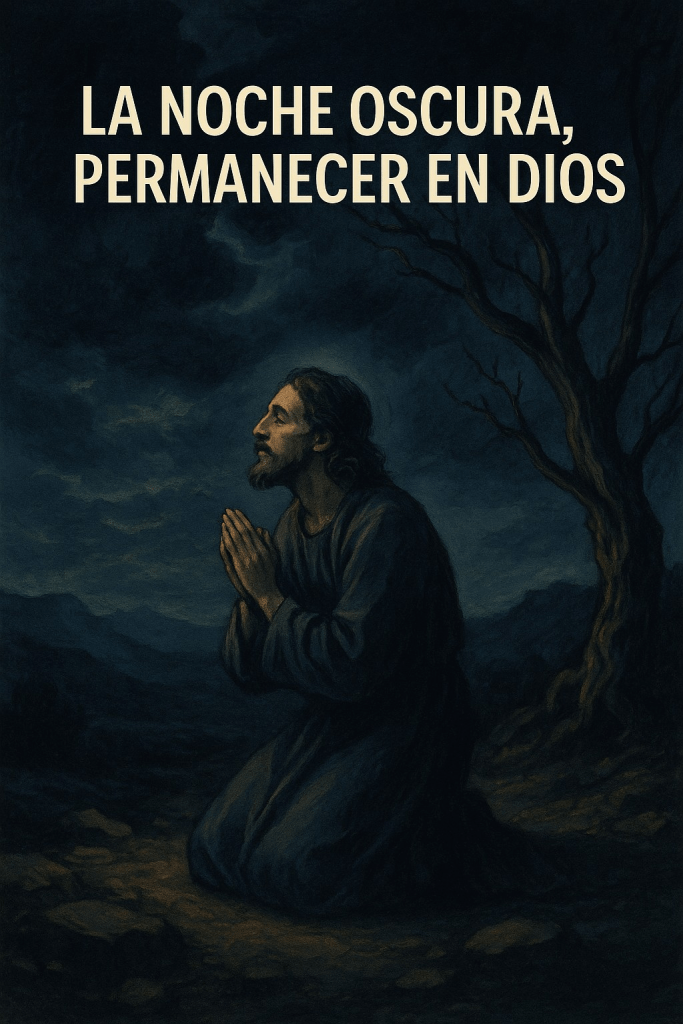
    And yet, the soul that remains faithful in that night is the one most like Christ in Gethsemane. Because it continues loving God for who He is, not for what He gives. It believes even without seeing. It hopes even without feeling.

    This is the highest form of faith. And also the most silent. It is not celebrated, not posted, not followed. But in heaven, it resounds as the purest hymn.

    Christianity does not demand constant sensitivity or unbroken enthusiasm. It calls for fidelity. It calls for standing with Christ as Mary stood by the Cross: upright, without consolations, but with a soul pierced by love.

    To remain in the night, in dryness, in the soul’s solitude, is already to participate in Easter. Because everything that dies in faith shall rise in glory. Everything given in love, even if dry, arid, and tasteless, is inscribed in eternity.

    The dark night, then, is not God’s absence, but the pedagogy of a God who strips us of all that is not Himself—so that He may give Himself entirely to us.

    La Noche Oscura.

    Permanecer en Dios

    La noche oscura del alma siempre me pareció, más que una prueba, una crueldad. Pero ¿es Dios quien nos abandona? No. Dios no niega nunca su gracia. Somos nosotros, los que vivimos aún bajo la ley de la gravedad —como diría Simone Weil—, quienes no logramos sostenernos en ese estado unitivo, luminoso, donde todo es paz.

    El mundo tira. La carne pesa. Las ataduras sensoriales, tan hondamente entretejidas en nosotros, no se cortan sin dolor. Deshacerse de lo visible, de lo audible, de lo que apetece, es entrar en una región sin luz ni consuelo. Allí surgen las laceraciones. Allí se siente el desgarro.

    Y sin embargo, Dios está.

    Está como está la luz invisible que atraviesa la materia. Está como están las ondas de radio que el oído no capta. Está, aunque no se le sienta. El alma, para percibirlo, necesita liberarse de la gravedad de este mundo, de la pesada lógica de lo sensible, de la exigencia de signos.

    El paso a la quinta morada, como describe Santa Teresa, es una entrada misteriosa a la morada del silencio, donde la voluntad ama sin sentir, y donde la fe sustituye a la dulzura. Permanecer allí no depende de estados emocionales, sino de una decisión amorosa y firme: seguir creyendo que Él está, aunque todo lo humano diga lo contrario.

    En la sequedad, en la oscuridad, en la aridez, el alma unida permanece si acepta que la presencia de Dios no se mide por consuelos, sino por la certeza interior de que Dios no abandona, aunque esté oculto a los sentidos.

    Permanecer en Dios es un acto de fidelidad, no de fervor.

    El cristianismo no glorifica el dolor. No llama al sufrimiento como si fuera un ideal en sí mismo, ni es una religión masoquista. Es una religión que no engaña. No ofrece consuelos baratos ni un camino sin espinas. Lo que sí ofrece —y esto lo hace única— es un sentido, un fin, una promesa que da valor eterno a cada instante pasajero de dolor.

    Vivir en este mundo, ser un ser encarnado en la historia, eventualmente traerá pena, pérdida, enfermedad, separación, muerte. El Evangelio no lo oculta. Jesús mismo llora, se angustia, suda sangre, clama en la cruz. La sequedad espiritual, esa ausencia sensible de Dios, forma parte de esa misma condición. No es castigo, es condición: una consecuencia del estado de caída, pero también, paradójicamente, una oportunidad de gracia.

    Porque incluso cuando no se siente a Dios, está más presente que nunca. El alma que sigue amando y creyendo en el vacío ofrece su acto más puro. No ama por consuelo. Ama porque ha comprendido. Y esa es la señal de madurez espiritual: permanecer en el amor cuando el amor no se siente.

    Esta fidelidad en la oscuridad no queda sin respuesta. Hay una compensación teológica, no solo moral o afectiva. El sufrimiento abrazado en unión con Cristo se transforma en mérito eterno, en tesoro invisible acumulado en el cielo, como enseña la tradición de los santos. Aún más, produce frutos en otras almas, que tal vez nunca conoceremos. Santa Teresa del Niño Jesús hablaba de ofrecer la aridez interior por las almas frías, distantes de Dios.

    El cristianismo no dice: “sufre y resígnate”. Dice: abraza el sufrimiento como se abraza la muerte, sabiendo que no es el final. Sabiendo que la cruz es inseparable de la resurrección. Que cada gota de dolor puede tener sentido si se vive en Cristo, con Cristo, por Cristo.

    “Bienaventurados los que lloran, porque serán consolados” (Mateo 5,4). Esta bienaventuranza no es promesa de anestesia espiritual. Es promesa de redención. De que lo que ahora se seca, florecerá. De que el fuego que quema ahora purifica para el abrazo eterno.

    Muchos creyentes hoy experimentan el silencio de Dios no en la celda de un monasterio, sino en el ruido de una ciudad, en la dispersión de una jornada laboral, en la soledad de una habitación iluminada por pantallas. La aridez espiritual ha tomado nuevas formas, pero su esencia permanece: ese anhelo que no se colma, esa búsqueda que no encuentra, ese amor que persiste aun cuando no siente reciprocidad.

    Y sin embargo, el alma que permanece fiel en esa noche es la que más se parece a Cristo en Getsemaní. Porque sigue amando a Dios por quien es, no por lo que le da. Sigue creyendo aunque no vea. Espera aunque no sienta.

    Esta es la forma más alta de fe. Y también la más silenciosa. No se celebra, no se publica, no da likes ni seguidores. Pero en el cielo resuena como el cántico más puro.

    El cristianismo no exige una sensibilidad perpetua ni un entusiasmo ininterrumpido. Pide fidelidad. Pide estar con Cristo como María junto a la cruz: de pie, sin consuelos, pero con el alma traspasada por amor.

    Permanecer en la noche, en la sequedad, en la soledad del alma, es participar ya de la Pascua. Porque todo lo que muere en la fe resucita en la gloria. Todo lo que se entrega con amor, aunque sea seco, árido y sin sabor, queda inscrito en la eternidad.

    La noche oscura, entonces, no es ausencia de Dios, sino la pedagogía de un Dios que nos despoja de todo lo que no es Él, para dársenos a Sí mismo.


  • Thank You, Saint Thomas

    Israel Centeno ( abajo en Spanish )


    Introduction

    I know Saint Thomas is a hard rock—dense, rigorous, and often difficult to read. But once you begin to decipher him, once you manage to follow his precision and humility of thought, something astonishing happens: the doors of Being and Heaven open before you.

    In his clarity, there is transcendence. In his order, there is freedom. In his metaphysical austerity, there is a profound tenderness for truth—the kind that does not flatter but founds.

    This meditation is born from that Thomistic gaze, sharpened through prayer, reflection, and awe. It is a response of gratitude, not only for his theology, but for the way his vision helps the soul find its place between creaturely fragility and divine calling.


    God, First Cause and Necessary Being: On the Contingency of All Created Things

    I. All Created Things Are Contingent

    Anything that can be expressed in a conditional verb —“could be,” “might not have been,” “could cease to exist”— belongs to the order of the contingent. The leaf suspended on a branch, the one falling to the ground, the star being born and the one collapsing, the universe ablaze and the universe fading into cold — none of these contains in itself the necessity of its being. They have been caused. They are not necessary.

    The metaphysical principle is clear:

    Everything that can not be, must have a cause to be.
    (Omne quod potest non esse, habet causam.)

    Nothing in creation is self-sufficient. All that exists does so because it has received its being, and it is preserved only because it is sustained in being by that which neither changes nor depends on anything: the First Cause.


    II. God, Necessary Being and Cause of All Else

    God cannot not be. He admits no condition, no hypothesis, no time. He is the necessary Being by essence, the ipsum esse subsistens. He is uncaused. He did not begin. He does not change. He does not become.

    He admits no conditionality, because He is the Word—the eternal Logos, pure act. He is not part of the world, nor energy of the universe, nor the sum of all things. He is not within creation, but its foundation. He is outside of time, outside of change, yet present in all that He sustains.

    Creation flows from Him, not as a necessary emanation, but as a free act of love. And that act is not limited to the beginning: in every instant, everything that exists is held in being by God. Without Him, all would return to nothingness.


    III. Nature and the Soul: Created Things and the Capacity for God

    Nature is not God. It is His work. It does not contain God, though it may reflect His glory.

    Likewise, the human being is not divine in itself. It is a creature, contingent, formed of matter and spirit. But the human immortal soul has been made capable of God. Not by right, but by gift. Not by essence, but by grace.

    In the human soul, there is an inner dwelling, where God may abide if welcomed. This capacity is not granted to any other material creature. It is the most intimate place where the Creator may descend—not as part of the soul, but as a beloved guest. It is the space of “let it be done unto me,” where the human will may freely unite with the divine will.


    IV. Human Dignity and the Technological Delusion

    No artificial intelligence, however perfect in speed, memory, or data manipulation, can receive God. It is not a person. It has no soul. It has no free will capable of self-emptying in love. It has no interior life. It cannot pray. It cannot obey in love. It cannot be a dwelling.

    The human being can. And in that lies true dignity: not in strength, nor in technical genius, but in the capacity for relationship with the Absolute Being.

    Only the human person, created in the image and likeness of God, can make space for the Other. That capacity is the principle of transformation. The creature is transformed not by technical evolution, but by love. And it is not self-transformation, but transformation by grace.


    V. Immortality, Not Eternity

    The soul, by divine gift, is immortal. But it is not eternal. Only God is eternal, for only in Him do essence and existence coincide. Everything else has a beginning, and therefore, is not eternal even if it has no end.

    Even in the glorious Kingdom, the redeemed creatures remain immortal creation, not eternal essence. They participate in glory, but they do not become self-sufficient. They are fully blessed, yet forever dependent.

    The distinction between God and creature endures even in the beatific vision. This distinction does not diminish communion—it magnifies it.


    VI. Conclusion: Donated Being and the Glory of the Creator

    Everything created could have not been. Every contingent being lacks in itself the reason for its existence. Only God is.

    To understand this is not to diminish creation, but to exalt it in truth. For all that is, is by participation, and that participation reveals the splendor of the First Cause, of the Necessary Being, of the God who has no cause and causes all.

    “In Him we live, and move, and have our being.”
    Acts 17:28

    This knowledge is not theory. It is the path of humility, of freedom, and of adoration. To know that we are not necessary, and yet deeply loved, opens the only truly human response: to return to the Origin through active love, the reflection of the Love that calls us.


    Gracias, Santo Tomás

    Introducción

    Sé que Santo Tomás es una roca dura: denso, riguroso, a menudo difícil de leer. Pero una vez que se empieza a descifrar su pensamiento, una vez que se logra seguir su precisión y su humildad intelectual, sucede algo asombroso: se abren literalmente las puertas del Ser y del Cielo ante nosotros.

    En su claridad hay trascendencia. En su orden, libertad. En su austeridad metafísica, una ternura profunda por la verdad: una verdad que no halaga, sino que funda.

    Esta meditación nace de esa mirada tomista, afilada por la oración, la reflexión y el asombro. Es una respuesta de gratitud, no solo por su teología, sino por la forma en que su visión ayuda al alma a ubicarse entre la fragilidad de la criatura y el llamado divino.


    Dios, Causa Primera y Ser Necesario: sobre la contingencia de todo lo creado

    I. Todo lo creado es contingente

    Todo lo que puede expresarse con un verbo condicional —“podría ser”, “podría no haber sido”, “podría dejar de ser”— pertenece al orden de lo contingente. La hoja suspendida en la rama, la que cae al suelo, la estrella que nace y la que se apaga, el universo que arde y el universo que se enfría: nada de eso contiene en sí mismo la necesidad de su existencia. Ha sido causado. No es necesario.

    El principio metafísico es claro:

    Todo lo que puede no ser, necesita una causa para ser.
    (Omne quod potest non esse, habet causam.)

    Nada en la creación es autosuficiente. Todo lo que existe, existe porque ha recibido el ser, y lo conserva solo porque es sostenido en el ser por Aquel que no cambia ni depende de nada: la Causa Primera.


    II. Dios, ser necesario y causa de todo lo demás

    Dios no puede no ser. No admite condición, ni hipótesis, ni tiempo. Es el Ser necesario por esencia, el ipsum esse subsistens. No ha sido causado. No comenzó. No cambia. No deviene.

    No admite condicionalidad alguna, porque es el Verbo, el Logos eterno, puro acto. No es parte del mundo, ni energía del universo, ni la suma de las cosas. No está dentro de la creación, es su fundamento. Está fuera del tiempo, fuera del cambio, y sin embargo presente en todo lo que sostiene.

    La creación fluye de Él, no como emanación necesaria, sino como acto libre de amor. Y ese acto no se limita al principio: en cada instante, todo lo que existe es sostenido por Dios. Sin Él, todo volvería a la nada.


    III. La naturaleza y el alma: lo creado y lo capaz de Dios

    La naturaleza no es Dios. Es su obra. No contiene a Dios, aunque refleja su gloria.

    Del mismo modo, el ser humano no es divino en sí. Es criatura, contingente, formada de materia y espíritu. Pero su alma inmortal ha sido hecha capaz de Dios. No por derecho, sino por don. No por esencia, sino por gracia.

    En el alma humana existe una morada interior, donde Dios puede habitar, si es acogido. Esta capacidad no se da a ninguna otra criatura material. Es el lugar más íntimo donde el Creador puede descender, no como parte del alma, sino como huésped amado. Es el espacio del “hágase en mí”, donde la voluntad humana puede unirse libremente a la voluntad divina.


    IV. La dignidad humana y la ilusión tecnológica

    Ninguna inteligencia artificial, por perfecta que sea en velocidad, memoria o manipulación de datos, puede acoger a Dios. No es persona. No tiene alma. No tiene voluntad libre capaz de vaciarse en el amor. No tiene interioridad. No puede orar. No puede obedecer por amor. No puede ser morada.

    El ser humano sí puede. Y ahí reside su verdadera dignidad: no en la fuerza, ni en el ingenio técnico, sino en la capacidad de relación con el Ser absoluto.

    Solo la persona humana, creada a imagen y semejanza de Dios, puede hacer espacio para el Otro. Esa capacidad es el principio de la transformación. La criatura se transforma no por evolución técnica, sino por amor. Y no se transforma a sí misma, sino que es transformada por la gracia.


    V. Inmortalidad, no eternidad

    El alma, por don divino, es inmortal. Pero no eterna. Solo Dios es eterno, porque solo en Él coinciden esencia y existencia. Todo lo demás tiene principio, y por tanto, no es eterno aunque no tenga fin.

    Incluso en el Reino glorioso, las criaturas redimidas siguen siendo creación inmortal, no esencia eterna. Participan de la gloria, pero no se vuelven autosuficientes. Son plenamente bienaventuradas, pero para siempre dependientes.

    La diferencia entre Dios y la criatura permanece incluso en la visión beatífica. Esa diferencia no disminuye la comunión: la engrandece.


    VI. Conclusión: el ser donado y la gloria del Creador

    Todo lo creado podría no haber sido. Todo ser contingente no tiene en sí la razón de su existencia. Solo Dios es.

    Comprender esto no disminuye lo creado, sino que lo engrandece en la verdad. Porque todo lo que es, es por participación, y esa participación revela el esplendor de la Causa primera, del Ser necesario, del Dios que no tiene causa y causa todo.

    “En Él vivimos, nos movemos y existimos.”
    Hechos 17,28

    Este conocimiento no es teoría. Es camino de humildad, de libertad y de adoración. Saber que no somos necesarios, pero sí profundamente amados, abre la única respuesta verdaderamente humana: regresar al Origen a través del amor activo, reflejo del Amor que nos llama.