Tag: jesus

  • Somos Hechos para el Infinito

    Una Convergencia de Razones para el Cielo

    Israel Centeno

    Comenzar con Agustín es comenzar con el corazón humano. En las Confesiones no ofrece una demostración geométrica de la vida eterna, sino una observación que, para él, es más segura que cualquier silogismo: “Nos hiciste, Señor, para ti, y nuestro corazón está inquieto hasta que descanse en ti”. Para Agustín, el deseo humano de plenitud, de una paz que ninguna posesión terrena otorga, es universal y constante. Lo que es universal y constante en la naturaleza humana no es un accidente; es una señal de propósito. La inquietud del corazón no es una enfermedad que debamos curar con distracciones, sino una brújula que apunta hacia la única fuente capaz de saciarla.

    Si todo en la creación tiene una finalidad —la semilla para el árbol, el ojo para la luz, el intelecto para la verdad—, entonces el anhelo más profundo del alma no puede carecer de objeto real. Negar la vida eterna sería, para Agustín, negar que el Creador sea coherente: un Dios bueno no implantaría en nosotros un deseo infinito para después frustrarlo eternamente. Así, la existencia del cielo no es solo posible, sino necesaria para que la historia de Dios con el hombre tenga sentido. Agustín no ve el cielo como un premio arbitrario que se concede al final de la vida moral, sino como la consumación natural de lo que significa ser humano: la visión de Dios, la unión sin velo, la paz definitiva. Este descanso no es pasividad, sino la plenitud de todo acto, la alegría sin pérdida, el amor sin sombra. Si algo puede asegurarnos que la vida eterna es real, dice Agustín, es que sin ella, nada en nuestra experiencia encajaría; con ella, todo encuentra su lugar.

    Para Tomás de Aquino, la certeza del cielo se apoya no solo en la experiencia del corazón humano, sino en la estructura misma de la razón y del ser. El intelecto humano, sostiene Tomás, está ordenado al conocimiento de la verdad, y la voluntad, al amor del bien. Ninguna verdad finita, por espléndida que sea, agota el hambre de la mente; ningún bien pasajero sacia por completo el deseo de la voluntad. Esta apertura al infinito no es un capricho psicológico, sino una huella ontológica del Creador.

    Si el alma es capaz de conocer verdades universales y de amar bienes que no caducan, su objeto último no puede ser algo limitado. El fin proporcionado a un intelecto y una voluntad humanas no puede ser otra cosa que Dios mismo, conocido y amado directamente. Aquí entra en juego la noción central de Tomás: la visión beatífica. En esta visión, el alma contempla la esencia misma de Dios sin mediaciones, y en ese acto alcanza la felicidad perfecta. No se trata de una abstracción filosófica, sino de la consumación de todo lo que somos. Para Tomás, sería inconcebible que Dios infundiera en el alma un apetito natural por Él sin ofrecerle la posibilidad real de alcanzarlo. La ausencia de cielo sería, desde este punto de vista, una falla en el orden del universo, una disonancia en la sinfonía de la creación. Por eso, la promesa de vida eterna no es un añadido sentimental al cristianismo, sino la conclusión lógica de una antropología que toma en serio tanto la dignidad como el destino de la persona humana.

    Si Agustín apela al deseo universal y Tomás edifica una estructura racional, los místicos aportan la experiencia directa, esa certeza que no viene de un argumento sino de un encuentro. San Juan de la Cruz, desde la noche oscura, describe el momento en que el alma, purificada de todo apego, se une a Dios en un “toque sustancial” que es ya anticipo del cielo. Para él, esa unión no es metáfora ni ilusión psicológica: es participación real, aunque incompleta, de la misma vida divina que se gozará plenamente después de la muerte.

    Santa Teresa de Ávila, con la claridad de quien lo ha vivido, afirma que las moradas más altas del alma son un preludio de la eternidad. En ellas, la comunicación con Dios es tan íntima que la muerte se convierte no en una pérdida, sino en la consumación de una amistad ya establecida. Santa Teresita del Niño Jesús, sin visiones espectaculares, ofrece una certeza no menos firme: la confianza total en la promesa de Jesús, vivida como un abandono sencillo y radical en el amor de Dios.

    Santa Isabel de la Trinidad eleva esta certeza a un plano contemplativo, afirmando que el cielo no es un lugar lejano, sino “Dios en nosotros y nosotros en Dios”, una comunión que empieza ya en la tierra y que la muerte solo despliega por completo. Edith Stein, filósofa y carmelita, entiende esta unión como el destino lógico de un alma creada a imagen de Dios y llamada a compartir su ser; para ella, la fe ilumina lo que la razón vislumbra, y la experiencia mística lo confirma. Incluso Simone Weil, que nunca quiso forzar su entrada en la Iglesia, habla de una obediencia absoluta a la luz que desciende de lo alto y que ningún sufrimiento puede apagar. Y René Girard, desde otra vertiente, imagina el cielo como la ciudad sin víctimas, la comunidad reconciliada donde la lógica del sacrificio violento ha sido reemplazada por la lógica del amor divino.

    Si Agustín nombra la sed y Tomás construye el puente, los científicos creyentes muestran que ese puente puede sostenerse incluso en medio de galaxias, partículas y secuencias genéticas. No intentan colar teología en el laboratorio, sino que insisten en que la buena ciencia y la fe honesta responden a preguntas distintas, y que juntas pueden hacer que la esperanza del cielo sea intelectualmente seria.

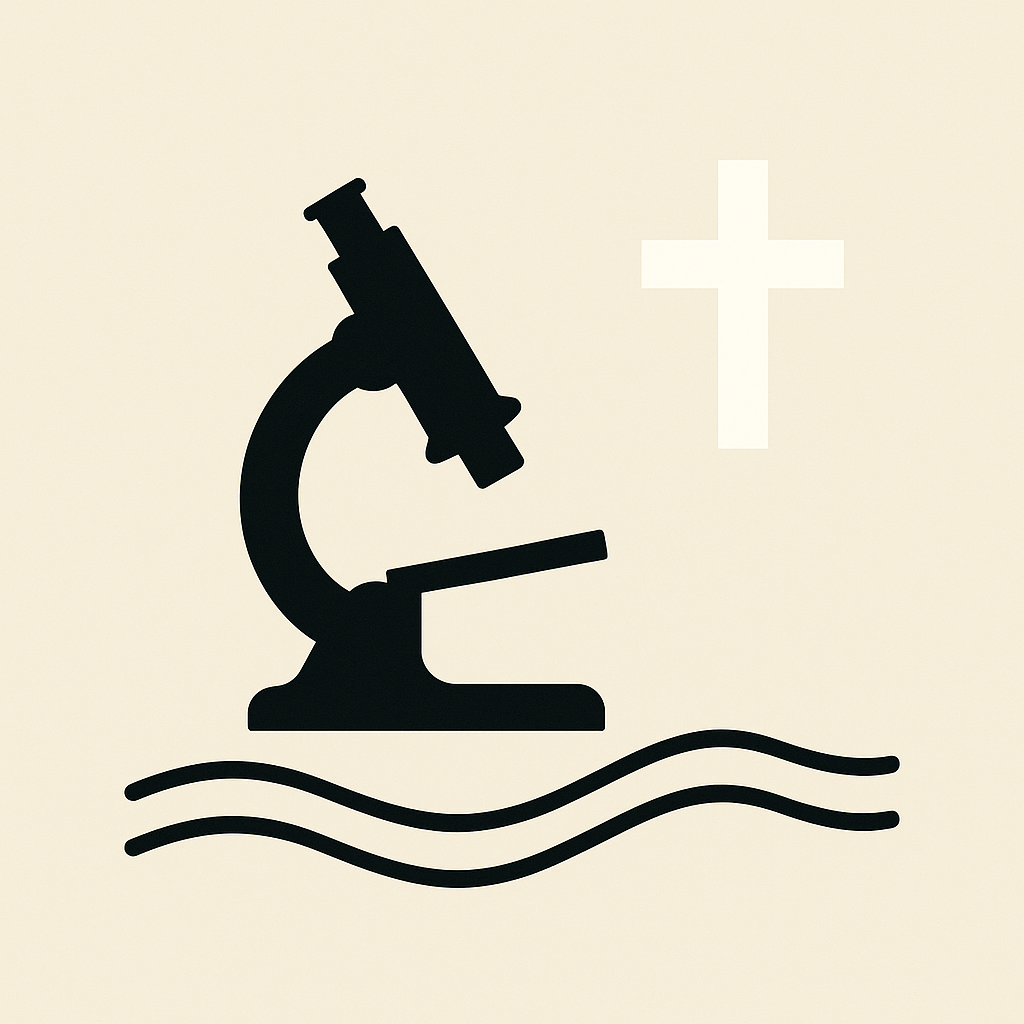
    Un genetista como Francis Collins empieza reconociendo que el método científico es inigualable para responder al cómo funciona el mundo, pero guarda silencio ante el por qué existe el mundo, qué sentido último tiene, o si el amor, la obligación moral y la persona apuntan más allá de la materia. Pedirle a la ciencia que pruebe el cielo es como pedirle a un microscopio que pese una sinfonía. La conclusión correcta no es “el cielo no existe”, sino “necesitamos otro tipo de evidencia”.

    El padre Georges Lemaître, padre del Big Bang y sacerdote católico, encarnó esta postura: hacer física de primer nivel con honestidad intelectual y dejar que la teología hable en su propio registro. Advertía contra el uso de los modelos cosmológicos como sermones disfrazados, pero al mismo tiempo reconocía que si el espacio-tiempo tiene un límite temporal, nada en la física impide una realidad más allá del espacio y del tiempo. La creación, para él, no es un evento puntual del pasado, sino la dependencia continua del cosmos entero de una Fuente que no compite con él. En esa perspectiva, el cielo no es un lugar dentro del universo, sino el orden trascendente en el que el universo entero subsiste, y con el que las personas pueden unirse definitivamente.

    Cosmólogos como George Ellis destacan la asombrosa inteligibilidad del mundo: las matemáticas describen la realidad con precisión sorprendente y las leyes físicas se mantienen estables desde la estructura de las galaxias hasta la línea de emisión del hidrógeno. Para un teísta, esto es más que coincidencia: es una firma, la huella de que la mente engendra mente. Si la Fuente es Razón y Amor personales, entonces un destino en el que criaturas racionales y amantes compartan esa vida para siempre no es un capricho, sino algo coherente. Collins añade que nuestra conciencia moral y nuestra capacidad de amar no pueden reducirse a procesos químicos. Podemos describir los correlatos cerebrales del amor o de la promesa, pero no extraer de ellos un “debo” que obligue a cumplirla. Sin embargo, prometemos y cumplimos, incluso a costa propia. Para un creyente, esto apunta a una Fuente personal cuya fidelidad es fundamento de la nuestra. El cielo, entonces, sería la culminación de esa comunión personal, no una prolongación fantasmal de la biología, sino la plenitud de lo que las personas están llamadas a ser.

    A estos enfoques se suman señales que, sin ser pruebas, resultan sugestivas: el ajuste fino del universo, la irreductibilidad de la conciencia y los testimonios de experiencias cercanas a la muerte. La física revela un cosmos calibrado con precisión extrema para la vida; la neurociencia no logra explicar por completo la experiencia subjetiva; y algunos relatos de quienes han estado clínicamente muertos incluyen percepciones verificables y vivencias que coinciden con la esperanza cristiana: continuidad de la identidad personal, claridad moral y encuentro con una presencia amorosa. Ninguno de estos indicios obliga a creer, pero juntos dibujan un patrón difícil de ignorar.

    Consideradas de forma aislada, cada una de las razones para creer en el cielo puede ser discutida o rechazada. Pero algo distinto ocurre cuando todas estas piezas se colocan una junto a la otra. El deseo profundo del que habla Agustín se refleja en la estructura intelectual y volitiva que Tomás demuestra orientada hacia el bien infinito. La disposición del cosmos para albergar vida se convierte en eco cósmico de ese mismo anhelo. Los místicos dan testimonio de momentos en que la luz de la eternidad irrumpe en el tiempo, ofreciendo no solo esperanza, sino un anticipo palpable de lo prometido. La ciencia, sin pretender demostrarlo, no cierra la puerta al horizonte más allá del espacio y del tiempo, donde las preguntas de significado, propósito y destino siguen abiertas. Conjuntas, estas razones forman una cuerda trenzada con múltiples hebras: filosofía, historia, experiencia y señales empíricas.

    Al final, todos estos caminos —la sed de Agustín, la necesidad lógica de Tomás, la experiencia directa de los místicos, la apertura de los científicos, las huellas grabadas en la trama del universo— confluyen en un solo horizonte. Es el horizonte que Cristo mismo abrió: no un mito para tranquilizar a los moribundos, sino una promesa anclada en la historia, sellada por su Resurrección y sostenida por el Espíritu a lo largo de los siglos. El cielo no es huida del mundo, sino su plenitud: la unión sin sombra con Dios, en la que la mente reposará en plena luz, la voluntad arderá en amor sin desgaste, y el cuerpo —resucitado y glorificado— participará de un gozo que no se marchita. Y cuando Cristo dice: «Voy a prepararles un lugar, para que donde yo esté, estén también ustedes» (Jn 14,3), no habla en poesía: es un hecho esperando su cumplimiento. Vivimos ahora en el penúltimo capítulo, pero la última página ya está escrita, en el idioma de la eternidad, con letras de luz.

    Made for the Infinite,

    A Converging Case for Heaven

    Israel Centeno

    To begin with Augustine is to begin with the human heart. In the Confessions he does not offer a geometric proof of eternal life but an observation that, for him, is more certain than any syllogism: “You have made us for yourself, O Lord, and our heart is restless until it rests in you.” For Augustine, the human longing for fullness — for a peace no earthly possession can grant — is universal and constant. What is universal and constant in human nature is not an accident; it is a sign of purpose. The restlessness of the heart is not a disease to be cured with distractions, but a compass pointing to the only source capable of satisfying it.

    If everything in creation has a purpose — the seed for the tree, the eye for light, the intellect for truth — then the deepest longing of the soul cannot be without a real object. To deny eternal life would be, for Augustine, to deny that the Creator is coherent: a good God would not plant in us an infinite desire only to frustrate it forever. The existence of heaven, therefore, is not only possible but necessary if the story of God and man is to make sense. Augustine does not see heaven as an arbitrary prize granted at the end of a moral life but as the natural consummation of what it means to be human: the vision of God, union without veil, definitive peace. This rest is not passivity but the fullness of every act — joy without loss, love without shadow. If anything assures us that eternal life is real, Augustine says, it is that without it, nothing in our experience fits; with it, everything finds its place.

    For Thomas Aquinas, the certainty of heaven rests not only on the experience of the human heart but on the very structure of reason and being. The human intellect, Thomas argues, is ordered to the knowledge of truth, and the will, to the love of the good. No finite truth, however splendid, exhausts the hunger of the mind; no passing good fully satisfies the desire of the will. This openness to the infinite is not a psychological quirk but an ontological imprint of the Creator.

    If the soul is capable of knowing universal truths and loving goods that do not decay, its ultimate object cannot be something limited. The end proportionate to a human intellect and will can only be God Himself, known and loved directly. Here enters Thomas’s central notion: the beatific vision. In this vision, the soul beholds the very essence of God without mediation, and in that act attains perfect happiness. This is not a philosophical abstraction but the consummation of all that we are. For Thomas, it would be inconceivable for God to instill in the soul a natural appetite for Himself without offering a real possibility of attaining Him. The absence of heaven would be, from this point of view, a flaw in the order of the universe, a dissonance in the symphony of creation. The promise of eternal life is therefore not a sentimental add-on to Christianity but the logical conclusion of an anthropology that takes seriously both the dignity and destiny of the human person.

    If Augustine appeals to universal desire and Thomas builds a rational structure, the mystics bring direct experience — a certainty that does not come from an argument but from an encounter. John of the Cross, from within the dark night, describes the moment when the soul, stripped of every attachment, unites with God in a “substantial touch” that is already a foretaste of heaven. For him, that union is not a metaphor nor a psychological illusion: it is a real, though incomplete, participation in the very divine life that will be enjoyed fully after death.

    Teresa of Ávila, with the clarity of one who has lived it, affirms that the highest mansions of the soul are a prelude to eternity. In them, communication with God is so intimate that death becomes not a loss but the consummation of a friendship already established. Thérèse of Lisieux, without spectacular visions, offers a certainty no less firm: total trust in Jesus’ promise, lived as a simple yet radical surrender into God’s love.

    Elizabeth of the Trinity raises this certainty to a contemplative plane, affirming that heaven is not a faraway place but “God in us and we in God,” a communion that begins on earth and that death only fully unfolds. Edith Stein, philosopher and Carmelite, understands this union as the logical destiny of a soul created in God’s image and called to share His being; for her, faith illuminates what reason glimpses, and mystical experience confirms it. Even Simone Weil, who never wished to force her way into the Church, speaks of an absolute obedience to the light descending from above, which no suffering can extinguish. And René Girard, from another angle, imagines heaven as the city without victims, the reconciled community where the logic of violent sacrifice has been replaced by the logic of divine love.

    If Augustine names the thirst and Thomas builds the bridge, believing scientists show that the bridge can hold even amid galaxies, particles, and genetic sequences. They do not try to smuggle theology into the laboratory; they insist that good science and honest faith answer different questions, and that together they can make the hope of heaven intellectually serious.

    A geneticist like Francis Collins begins by acknowledging that the scientific method is unrivaled in answering how the world works, but it remains silent on why the world exists, what ultimate meaning it has, or whether love, moral obligation, and personhood point beyond matter. Asking science to prove heaven is like asking a microscope to weigh a symphony. The right conclusion is not “heaven does not exist” but “we need another kind of evidence.”

    Father Georges Lemaître, father of the Big Bang theory and a Catholic priest, embodied this stance: doing first-rate physics with intellectual honesty and letting theology speak in its own register. He warned against using cosmological models as disguised sermons, yet he acknowledged that if space-time has a temporal limit, nothing in physics forbids a reality beyond space and time. Creation, for him, was not a one-time event in the past but the ongoing dependence of the entire cosmos on a Source that does not compete with it. In that perspective, heaven is not a place within the universe but the transcendent order in which the universe itself subsists, and with which persons can unite forever.

    Cosmologists like George Ellis point to the astonishing intelligibility of the world: mathematics describes reality with uncanny precision, and the laws of physics hold steady from the structure of galaxies to the hydrogen emission line. For a theist, this is more than coincidence: it is a signature, the imprint of Mind begetting mind. If the Source is personal Reason and Love, then a destiny in which rational, loving creatures share that life forever is not fanciful but fitting. Collins adds that our moral consciousness and capacity for love cannot be reduced to chemistry. We can map the brain correlates of love or promise-keeping, but we cannot extract from them the ought that obliges us to keep a promise. And yet we do, often at personal cost. For a believer, this points to a personal Source whose faithfulness grounds our own. Heaven, then, would be the culmination of that personal communion, not a ghostly extension of biology but the fullness of what persons are called to be.

    To these approaches we can add hints that, while not proofs, are striking: the fine-tuning of the universe, the irreducibility of consciousness, and reports of near-death experiences. Physics reveals a cosmos calibrated with exquisite precision for life; neuroscience cannot fully explain subjective experience; and some accounts from those who have been clinically dead include verifiable perceptions and encounters that echo the Christian hope: continuity of personal identity, moral clarity, and meeting with a loving presence. None of these clues compels belief, but together they form a pattern hard to ignore.

    Considered in isolation, each reason for believing in heaven can be debated or dismissed. But something else happens when they are set side by side. The deep desire Augustine describes is mirrored in the intellectual and volitional structure Thomas shows to be oriented toward the infinite good. The universe’s readiness to host life becomes a cosmic echo of that same longing. The mystics bear witness to moments when the light of eternity breaks into time, offering not just hope but a palpable foretaste of what is promised. Science, without claiming to prove it, does not close the door to the horizon beyond space and time, where questions of meaning, purpose, and destiny remain open. Together, these reasons form not a fragile chain that snaps if one link fails but a rope braided from many strands — philosophy, history, experience, and empirical signs.

    In the end, all these paths — Augustine’s thirst, Thomas’s logic, the mystics’ direct encounter, the scientists’ openness, the marks embedded in the fabric of the universe — converge on a single horizon. It is the horizon Christ Himself opened: not a myth to soothe the dying but a promise anchored in history, sealed by His Resurrection, and sustained by the Spirit through the centuries. Heaven is not an escape from the world but its fullness: the union without shadow with God, where the mind will rest in full light, the will will burn in love without weariness, and the body — risen and glorified — will share in a joy that never fades. And when Christ says, “I go to prepare a place for you, that where I am, you may also be” (John 14:3), He is not speaking in poetry: it is a fact awaiting its fulfillment. We now live in the penultimate chapter, but the last page is already written, in the language of eternity, in letters of light.

  • Israel Centeno

    The Vocation of Woman in the Order of Nature and Grace: An Integrated Reading of Edith Stein

    Israel Centeno

    In The Vocation of Man and Woman According to the Order of Nature and Grace, Edith Stein — Saint Teresa Benedicta of the Cross — laments that the word “vocation” has been reduced to a mere professional choice. In common usage, it means little more than deciding what career to pursue or what job to take, but for Stein, vocation is a personal and objective call that comes from God, recognizing our natural capacities and orienting them toward a supernatural end. It is never simply an individual project; it is the intersection between received nature and the grace that calls.

    Her reflection is rooted in the opening chapters of Genesis, where man and woman together receive the mission of being God’s image and of caring for creation. Woman is presented as a “suitable helper,” a phrase that for Stein does not imply subordination, but rather active collaboration of equal dignity. After the fall, this vocation is wounded: man’s work becomes toilsome, motherhood is linked with pain, and the relationship between the sexes loses its original harmony. Yet in the midst of the curse comes a promise: victory over the serpent will come through the woman’s offspring. From that moment, the female figure is inscribed at the very center of the plan of salvation.

    For Stein, the original vocation of both man and woman is lived in a complementarity that does not erase difference. Man, more oriented toward conquest and mastery over the earth, is called to protect, defend, and guard; woman, more inclined toward welcoming and preserving life, is endowed with a special sensitivity for what is organic, for the growth of what is concrete and personal, ensuring that what exists may become what it is meant to be. This distinction is not hierarchical but reciprocal: both sets of gifts are created for mutual service, so that man, through the harmonious development of the feminine strengths, may be freed from one-sidedness, and woman, by collaborating in outward and creative tasks, may overcome her own tendency toward enclosure.

    When this complementarity is broken by sin, the relationship degenerates into domination and submission. Man, forgetting that his gifts exist for the other’s development, may use them as an instrument of his own concupiscence, becoming a despot; woman, relinquishing her role as companion, may fall into voluntary servitude, reducing her life to instincts and possession. The degeneration is not only emotional: in both sexes there can emerge the tendency toward violent possession of things and persons, falsifying reality and destroying the harmony entrusted to them.

    In woman, the particular danger is to reduce her mission to merely preserving what she possesses, becoming combative against all change, or to cling to her children as property, curtailing their freedom in the name of a misunderstood love. Thus, instead of putting her gifts at the service of the growth of others and the glory of God, she stifles progress and undoes happiness. Stein locates the root of this evil in the perversion of the relationship with God: in the biblical narrative, the woman, seduced, rises against Him and draws man into disobedience, and the resulting penalty is subjection to male power. The sin to which woman is more exposed, Stein says, is sensuality, and whenever she acts as seductress, she becomes, paradoxically, an instrument of that very evil against which she was entrusted to fight.

    This reading is not, for Stein, a condemnation, but a call to recover the original vocation, healed and elevated in Christ. In the Gospels, Jesus acts in ways that contradict the restrictive culture of His time: He speaks and teaches women, makes them participants in His mission, entrusts Mary Magdalene with the paschal announcement, and, in a gesture without parallel, reveals to the Samaritan woman — openly and without evasion — that He is the Messiah. In that encounter, the woman becomes an apostle to her people, bearer of a revelation that neither Peter nor the other disciples had received so directly.

    The tension that appears in some of Paul’s letters, especially in 1 Timothy where women are restricted from public teaching, Stein interprets as pastoral norms shaped by local circumstances, not as universal laws. The Pauline affirmation that in Christ “there is neither male nor female” is, for her, the interpretive key that harmonizes apostolic practice with the model of Jesus. If Christ entrusts women with both word and mission, the Church is called to acknowledge their full participation in the work of salvation.

    In this perspective, the vocation of woman, in nature, is to welcome, guard, and nurture life; in grace, it is to cooperate with Christ in redemption; and in the present mission, it is to be a sign of God’s tenderness and fidelity in the family, in the Church, and in society. To reduce her to a secondary role is to betray both the Gospel and the dynamic of the Spirit’s gifts. From Eve to the Samaritan woman, from Mary to the women disciples of the Resurrection, Scripture bears witness that woman is a privileged channel of divine action. For Stein, recalling this is not merely an act of memory, but an urgent summons to reactivate the full participation of women in the Church’s mission, in accordance with the dignity and grace given to them from the beginning.

  • Eleonore Stump on Atonement 

    The Substance of Faith

     May 5, 2017, at Baylor ISR . The speaker also mentions previously meeting Eleonore Stump at Liberty University in Lynchburg, Virginia, and later at Virginia Tech (3:16) in 1990, and the University of Missouri, Columbia during his undergraduate studies, before she moved to St. Louis University

    Here we go, with the subject of atonement

    At the outset, let’s note that the doctrine that Christ has saved human beings from their sins—with all the implications of salvation—stands as the distinctive doctrine of Christianity. In this book, I want to consider this theological doctrine with philosophical care, within the context of a vast history of interpretation. So, this is an exercise in philosophical theology. 

    This doctrine has the power to move people, whether to heart-melting love or to serious repudiation and rejection. To evaluate those different attitudes, one must understand the doctrine. What actually is this doctrine that is so distinctive of Christianity? Understanding it is not an easy matter. 

    Looking over the history of Christianity, you’ll see that each era had its own questions to consider. The early periods wrestled with the Incarnation, the Trinity, and so on. In the age of high scholasticism, other issues emerged, especially as Islam, Judaism, and Christianity interacted. Yet, until recently, the question of what the atonement actually is never became a burning issue in the prevailing culture. But in our time, it has become precisely that. For some, this doctrine is the primary reason to reject Christianity, so it is time for us to turn our attention to it. 

    For many, the word “atonement” conjures up the idea of placating an offended God through bloody sacrifice. That is not how I intend to use the word. But we do need a word to describe the nature and effects of Christ’s passion, death, and resurrection—or more broadly, Christ’s life, passion, death, and resurrection. “Atonement,” despite its baggage, seems to carry the least theological baggage of all possible terms. So although many contemporary people think it refers narrowly to Christ’s crucifixion making things right with God, I want the word to be more neutral and broad. This is worth remembering as we proceed. 

    The doctrine of atonement differs from other major Christian doctrines—like the doctrine of the Incarnation—in that it has no formula specifying its interpretation. For the Incarnation, there’s the Chalcedonian formula: Christ is one person with two natures, fully human and fully divine. No analogous formula exists for the atonement. There are creedal or conciliar statements that rule out certain interpretations—like docetism, which says Christ didn’t really suffer—but no statement that precisely specifies how we are to understand the atonement. That’s important because it allows for highly divergent interpretations, all of which can count as orthodox. 

    In this book, I’ve tried to learn from the history of interpretations of the doctrine. There are many, but I haven’t adopted any one of them wholesale. Instead, I’ve started by considering the problem: clearly, the atonement is a solution to a problem. There’s little controversy over that in the tradition. But what is the problem? 

    The word “atonement” itself was coined to express the idea of making one—atonement—between God and human beings, who were not previously at one. The problem atonement is meant to solve is the absence of unity between God and humanity, which, as the tradition sees it, stems from the human proneness to wrongdoing—what I will use interchangeably with “sin.” From Augustine onward, the tradition sees the absence of unity as rooted in the human will, which is inclined toward sin. 

    If you think about the problem that way, it becomes clear that the solution must address multiple components. Human beings tend to prefer their own power or pleasure over greater goods. They’re not doomed to do so, but are inclined that way. Inevitably, in the life of any person, this tendency is actualized. Every human being will at some point act on this proneness to sin. That’s the forward-looking aspect of the problem: we know the future will bring such actualizations. There’s also a backward-looking aspect: except for Christ (and, in Catholicism, Mary), every person past the age of reason has committed morally wrong acts in the past. Thus, every person can look back on actions contrary to the will of God—there is guilt for what is past and the knowledge of future wrongdoing. 

    And then, on top of guilt, there is shame. One can feel shame for one’s own wrongdoing, but also for things done to them, for defects of nature, or for being part of a group. For example, the children of high-ranking Nazis, innocent of their parents’ crimes, have felt shame just for belonging to that family. There is shame simply in being a member of the human species, given the moral horrors, cruelty, and destruction humans have perpetrated. If you imagine a morally perfect species, facing them as one of us would be unbearable. 

    If atonement is to be a full solution to the problem of human sinfulness, it must address all varieties of shame as well. Atonement is meant to undo what went wrong in the Fall, and all these things—guilt, shame, moral wrongdoing—are consequences of that. 

    So, the components of the problem that atonement is meant to solve can be outlined as follows: 

    1. Current disposition to moral wrongdoing—the inclination to prefer lesser goods, which brings the liability to future sinful acts. 
    1. Guilt—the fact of having actually committed morally wrong acts in the past. 
    1. Impairments in the psyche of the wrongdoer—the damage wrongdoing causes within the self. 
    1. Ill effects of wrongdoing in the world—the harm caused to others and to the broader order. 
    1. Shame—arising not only from one’s own acts, but also from the actions of others, natural defects, or belonging to a group. 

    To see these elements clearly, consider a notable moral monster—Eichmann, for instance. Before his execution in Jerusalem, a Lutheran chaplain asked Eichmann if he would like to confess. Eichmann replied, “Why would I confess? I’ve never done anything wrong.” This illustrates the ill effects of wrongdoing on the wrongdoer’s psyche: the will and intellect are corrupted to the point that self-understanding is lost. The harm done to the world—Eichmann was responsible for millions of deaths—is clear. Yet, guilt and shame are universal; not only “monsters” have to deal with them, but all of us. 

    So, these aspects—proneness to wrongdoing, guilt, impairment, external harm, and shame—create a distance between God (perfectly good) and humanity, a distance atonement is supposed to remedy. 

    Interpretations of Atonement 

    In the history of doctrine, there are three major types of interpretation: 

    1. Patristic (early church fathers) 
    1. Anselmian 
    1. Thomistic (Aquinas) 

    Let me try to be concise. The patristic interpretation focuses on a cosmic drama involving Satan. Anselm, however, regarded this as a misguided or “stupid” interpretation. Many today have tried to rehabilitate the patristic view, but I still find it difficult to understand and so, with reluctance, set it aside—not because I think the church fathers were stupid, but because, at present, I don’t know how to make sense of their view, and neither, it seems, does anyone else. So, I bracket the patristic approach, though I am sure I lose something by doing so. 

    That leaves us with the Anselmian and Thomistic kinds. Each of these is really a family of theories. Broadly, all interpretations can be divided based on what they see as the obstacle to reconciliation between God and humanity. The Anselmian type locates the obstacle in something about God—God’s honor, justice, or goodness. The Thomistic type sees the obstacle as lying in something about human beings. 

    Now, some might assume that the Anselmian kind is “Protestant” and the Thomistic is “Catholic,” but this isn’t accurate. There are Catholic versions of Anselmian theories and potentially Protestant versions of Thomistic theories. The distinction is not strictly denominational. 

    My point is this: although there is much to learn from both the Anselmian and Thomistic kinds, neither is wholly satisfactory. At best, each is missing something; at worst, each is fundamentally misguided. So, I have tried to rethink the doctrine, with respect for the tradition, but seeking a more coherent, morally acceptable interpretation—one that is consistent with biblical texts and other theological doctrines. I argue that such an interpretation is possible. 

    The Heart of the Account: Love 

    The core of my account centers on the nature of love. I use Aquinas’s account, which, in my view, is the best philosophical account of love available. It explains cases that other theories cannot. In a nutshell, love consists of two interrelated desires: a desire for the good of the beloved, and a desire for union with the beloved. The “good” is what is truly good for the beloved, not merely what they want. And “union” is not just companionship, but being truly “at one” with the beloved—even, sometimes, in ways that look like separation. 

    To illustrate, imagine a two-year-old at the dinner table. His mother says, “If you throw your pizza on the floor again, dinner is over.” He does it; she sends him to his room. Both are denied what they want (he wants pizza and companionship, she wants a peaceful meal). Yet, she still loves him, desiring his good and union with him—her actions flow from love, even if union looks like separation at that moment. 

    So, an acceptable interpretation of atonement must show how it solves the problems of guilt and shame, and love is central to this. In terms of Aquinas’s account, guilt is connected to the anticipation that others will desire what is not your good (because of your wrong), and shame to the anticipation that others will reject you. The guilty person focuses on the good, the ashamed person on union. 

    Critique of the Anselmian Interpretation 

    Where most people get stuck in my manuscript is at my rejection of the Anselmian kind of interpretation. For nearly everyone, this type of interpretation is the one we have been steeped in—whether as critics or believers. So, for many, my argument that the Anselmian interpretation fails sounds like a repudiation of Christianity itself. But that is not my intention. My goal is to defend the doctrine of atonement by showing a better interpretation. 

    My central objection to the Anselmian view is this: it is incompatible with the doctrine that God is loving. And that incompatibility, in my judgment, cannot be repaired. The bottom line is this: the point of Christ’s incarnation, life, passion, death, and resurrection is not to win clemency or pardon from God. All the many versions of the Anselmian theory share the idea that Christ’s work removes some obstacle on God’s side, thus making union between God and humanity possible. 

    I argue that this is mistaken. The better way to understand the atonement is as addressing the obstacle within human beings, not within God. 

    Rethinking the Doctrine 

    So, what does Christ do in the atonement? My project centers on the idea that Christ brings about two metaphysical alterations: one in his own human nature, and one in the psyches of all human beings of faith. These alterations make mutual indwelling possible. 

    I take seriously Christ’s prayer in the Gospel of John: “Father, let them be one as we are one—I in them and you in me.” Mutual indwelling is what union between God and human beings is supposed to be. 

    When two humans are united, it is their thoughts, feelings, or histories that are joined, given their metaphysical smallness. But when God is one of the relata, what can be united is whole persons. The union is deeper, more comprehensive—mutual indwelling, not merely shared life. 

    I examine the “cry of dereliction” on the cross—Christ’s words, “My God, my God, why have you forsaken me?”—and try to make sense of it in a way that fits with other doctrines. When the biblical texts say Christ “became sin for us” or “bore our sins,” I take this to mean that on the cross, Christ opens himself to receive the psyches of all sinful human beings. His human psyche is flooded by their presence—not as an invasion, but as a welcome. 

    If you know stories from popular culture (like science fiction, where aliens invade and take over a human), you know the horror of a psyche being overtaken by something foreign. But here, Christ voluntarily and lovingly welcomes into his psyche the full weight of sinful humanity, with all its shame, guilt, and revulsion. It is something like the “mind-meld” scenes in Tolkien, where the experience is overwhelming. This is what happens as human beings, in their brokenness, are received into Christ’s perfectly holy psyche. 

    That’s one half of mutual indwelling—humanity dwelling in Christ. The other half is the Holy Spirit indwelling human beings of faith. The moment someone comes to faith, there is agreement across Christian doctrine: the Holy Spirit comes to dwell within that person. 

    But if the indwelling of the Spirit is not to be like an alien invasion—if it is to be union rather than takeover—there must also be welcome on the part of the human. And that is hard to achieve. Every human being desires to love and be loved, but there is resistance, closure, failure to commit—hence the entire counseling profession. 

    You go to a counselor knowing you have problems with love, with commitment. And yet, even when you want to be healed, you also resist it. If God simply zapped integration into you, it would be God’s will, not yours, and there would be no true union—because union requires two wills, not just one. 

    So, what can be done? When a person ceases resisting God’s love, when they surrender, then the Holy Spirit can come in. God’s grace can produce the act of faith that welcomes the Spirit, and the union begun by Christ on the cross is now completed. 

    The Human Struggle to Surrender 

    But why is it so hard for human beings to surrender to God’s love, even when we want to love and be loved? Partly, it is because true union threatens our autonomy and self-image. If you commit yourself to another, that person’s desires and judgments matter for your life. You see yourself through their eyes, and you may not like what you see. There is a risk of rejection—of being found wanting and abandoned. 

    There is also, in some, a tendency to self-assertion and rebellion. John Stuart Mill said, in effect, “If there is a God who can send me to hell for not worshipping him, then to hell I will go.” This stance—defiance as tragic hero—may seem noble. But what does it mean to defy a God who comes not as a conqueror but as one who is naked, tortured, and dying, humiliated on a cross? How threatening, really, is such a God? What does it mean to rebel against one who invites you with utter vulnerability? 

    If there is any way to persuade human beings that it is safe to surrender—to let go, and accept God’s love—it is the story of Christ on the cross: God in love, suffering and dying in humiliation. What cannot be achieved by divine fiat, and what humans are too broken to do on their own, God prepares for, encourages, and makes possible through Christ’s atonement. 

    When that surrender finally comes, the Holy Spirit enters in, and now we have mutual indwelling: as the Father is in the Son and the Son in the Father, so human beings are in Christ, and Christ’s Spirit is within them. This is the beginning of union—not the end, but the start of a new reality. 

    Concluding Summary 

    In the remainder of my presentation (which I’m leaving aside for now), I would discuss what happens after this beginning of union. But this is enough to show how I am thinking of the atonement in a non-Anselmian way. 

    To summarize: 

    • The atonement does not remove an obstacle in God, but addresses the obstacle in human beings. 
    • Love, as Aquinas describes it—the desire for the good of the beloved and for union with the beloved—is central. 
    • Christ, on the cross, opens himself to all our sin and shame, welcoming us in our brokenness. 
    • Human beings, in turn, are enabled (not coerced) to surrender, so that the Holy Spirit can dwell within them. 
    • Mutual indwelling, the deep union of wills, is begun—God in us, and we in God. 

    This, I believe, offers a more coherent and morally satisfying interpretation of the Christian doctrine of atonement—one that does justice to the biblical texts, the tradition, and the reality of human need. 

  • Thirst for Fullness

    The Nonbeliever’s Journey Toward the Mystery

    In an age marked by spiritual fragmentation, cultural disorientation, and the exhaustion of absolute narratives, a subtle yet persistent longing still pulses within the human heart: the thirst for fullness. This is not merely a religious impulse in the conventional sense, but a deeper, more primal yearning—one that precedes belief systems and creeds. It is the question that burns without a name, the inner movement that seeks meaning even when surrounded by night.

    This thirst recognizes no ideological allegiance. It can dwell in the soul of the agnostic, the skeptic, or even the self-declared atheist. It may arise in the silent awe of a scientist contemplating the order of nature, in the trembling of an artist before unexpected beauty, or in the weariness of a volunteer who gives their days to care for the forgotten. There is no need to utter the name of God to feel summoned by something that exceeds all utility, something that calls without words from the center of one’s being.

    Saint Augustine sensed this mystery with the wisdom of one who had wandered far and returned, wounded and changed: “You have made us for Yourself, O Lord, and our hearts are restless until they rest in You.” Restlessness of heart is not a flaw but a sign. An interior compass indicating that the world’s promises—power, pleasure, consumption, ideology—cannot quench the soul’s thirst. Because what the heart longs for is not another possession, but communion; not a formula, but a truth that embraces one’s entire existence.

    Simone Weil, with the unusual clarity of one who sees from the margins, understood that the path toward the Mystery can begin with an act of attention. “Absolutely unmixed attention is prayer,” she wrote. That gaze which does not seek to possess or reduce the other to function or use is already a religious act, even when unnamed. Without dogma or baptism, Weil insisted that the human soul is summoned to respond to the suffering of others—even if that means walking alone and bearing the weight of the world. Pure attention to reality can be a form of prayer, a door to the divine.

    Beauty, too—so often trivialized in a culture of spectacle—can be a sacred wound. When someone is moved by a sunrise, a melody, a work of art, or the smile of a child, something deep within is broken open. This stirring is more than aesthetic delight; it is a participation in the harmony that sustains the world. Edith Stein, philosopher and mystic, affirmed that “true beauty arises from a pure heart and an illumined mind.” Beauty, then, does not decorate life: it reveals it. It becomes a threshold. As Hans Urs von Balthasar wrote in his Glory, authentic beauty has form—and that form is Christ. Thus, one who honestly follows the traces of beauty may, without realizing it, stumble into Truth.

    Service to others, especially to the suffering, is another quiet path toward the Mystery. No creed is needed to wash the feet of the elderly, to listen to the sick, to accompany a migrant, or to comfort a child. In each of these acts, the compassion of Christ is made flesh. “Whatever you did for one of these little ones, you did for me,” says the Gospel. Edith Stein translated this into her own words: “True love consists in giving back to the other their own existence, their own dignity, untouched.” To love in this way—without seeking recognition—is to embody a faith that perhaps the lips cannot yet articulate.

    There are souls who walk without a map but not without direction. Who do not recite creeds, yet love justice. Who never kneel in a church, yet tremble before beauty. Who do not read Scripture, yet open their homes to those in need. They are seekers. Thirsting ones. Children of longing. And that longing—when sincere and unmasked—is already a form of openness to the divine. For only fullness can quench the soul’s thirst. And fullness, at its highest, has a face: the face of Christ, who comes to meet us even in the night of unknowing.

    This essay does not seek to draw lines between believers and nonbelievers. On the contrary, it aims to recognize in every honest heart a spark of that light which never goes out. To show that the journey toward Goodness, Truth, and Beauty—however slow, ambiguous, or uncertain—is already a living prayer. And that those who love justice, tend to the suffering, cultivate beauty, and seek truth with courage are already very near the Kingdom. Even if they do not know it. Even if they cannot name it. Even if they walk with thirst and without map. For the Mystery does not require comprehension to reach the soul. It only needs to find a heart that is open.

  • Media Sacrifices.

    Girard, Aquinas, and the Banality of Evil in the Culture of Spectacle

    Israel Centeno

    Revisiting the Menéndez family case isn’t just a return to a chilling crime. It’s a distorted mirror reflecting the deeper cultural mechanisms at play in contemporary Western society. The Menéndez brothers brutally murdered their parents, José and Kitty Menéndez. It was a premeditated act, carried out with cold precision. And yet, after a televised trial—like that of O.J. Simpson—and years of media coverage, the narrative has shifted.

    Today, documentaries on popular streaming platforms no longer frame the parents as the main victims. The spotlight has moved. Childhood suffering, alleged abuse, trauma… The sons—self-confessed perpetrators—are now seen by many as victims. In this postmodern narrative, guilt dissolves. There is no evil. No sin. Only “contexts.” Only trauma. Only “systems.”

    From René Girard’s perspective, this is no accident—it’s mimetic logic. Society seeks a scapegoat, someone onto whom it can project its own frustrations, guilt, and hatred. At first, the sons were the scapegoats. They were convicted. But then, in a second mimetic turn, society redirects its longing for absolution toward them, and shifts the sacrificial blame onto the parents—now cast as the real culprits. Their crime? Representing authority, success, and privilege. Having already been physically murdered, they are now symbolically killed.

    This pattern repeats endlessly in our culture. Take the recent case of a health insurance CEO, gunned down in broad daylight and captured on a security camera. The killer, far from being labeled a criminal, was raised by media narratives to Robin Hood status. The story is rewritten: the perpetrator becomes the victim of “the system.” The real victim—the man shot—is erased. His face, his life, no longer matter. What matters is what he symbolized.

    And what did he symbolize? Power. Authority. Capital. The paternal figure. What the collective desire needs to destroy in order to declare itself innocent.

    Here Girard’s logic resounds with force: we are living in a culture that depends on rotating scapegoats to sustain cohesion and relieve guilt. The problem is that there’s no longer any ritual to channel the sacrifice. No altar, no redemption, no confession. Only spectacle. Only screens. Only live-streamed social trials.

    Through the lens of Thomas Aquinas, this culture reveals a structural absence of the good. For Aquinas, the good is not simply what pleases or benefits—it is what perfects a being in accordance with its nature. But in today’s mediatized world, that kind of perfection no longer matters. What is rewarded is what shocks, what provokes, what “goes viral.” The good is replaced by engagement.

    And when the notion of the good is lost, so is the idea of true guilt. There is no justice, only justification. No conversion, only competing narratives. Sin is no longer sin if it’s well explained. Murder is not murder if the “context is understood.” Slowly, hell ceases to be a place, becoming instead a screen where we all play the role of faceless judges.

    In American society—the epicenter of these phenomena—we are witnessing a deeper spiritual decomposition: the cult of fame, of exposure, of celebrity. We see it in the grotesque phenomenon of people falling in love with serial killers, writing letters to convicted criminals, or making viral content out of those who have openly embodied evil. What should horrify us now seduces. What ought to remain hidden is broadcasted.

    Why?

    Because hierarchy has dissolved. There is no longer good or evil, only “narratives.” No longer truth, only “perspectives.” God has been removed from the stage, as Nietzsche foresaw—not to make room for freedom, but to leave a void. And in that void echoes the hollow fascination with spectacle, violence, and nameless evil.

    This is what Hannah Arendt called the banality of evil. But now, that banality is not merely tolerated—it is adored. Evil is not just normalized—it is celebrated. It becomes desirable. It becomes content. It becomes trending.

    Girard would say that we adore the desires of others. That’s why we rush to look at what others are watching, to share what outrages, to viralize what scandalizes. But when that collective desire has no moral limits, it becomes a perpetual engine of sacrifice, where anyone can become a victim—and anyone, even a murderer, can become an idol.

    And so we live in a society with no center, no altar, no truth. The loudest voice wins the narrative. And what was once sacred—life, truth, innocence—is reduced to a currency in the infinite cycle of spectacle.

    Can Christians still speak of goodness, guilt, and justice without being canceled by the new priests of the trending topic?

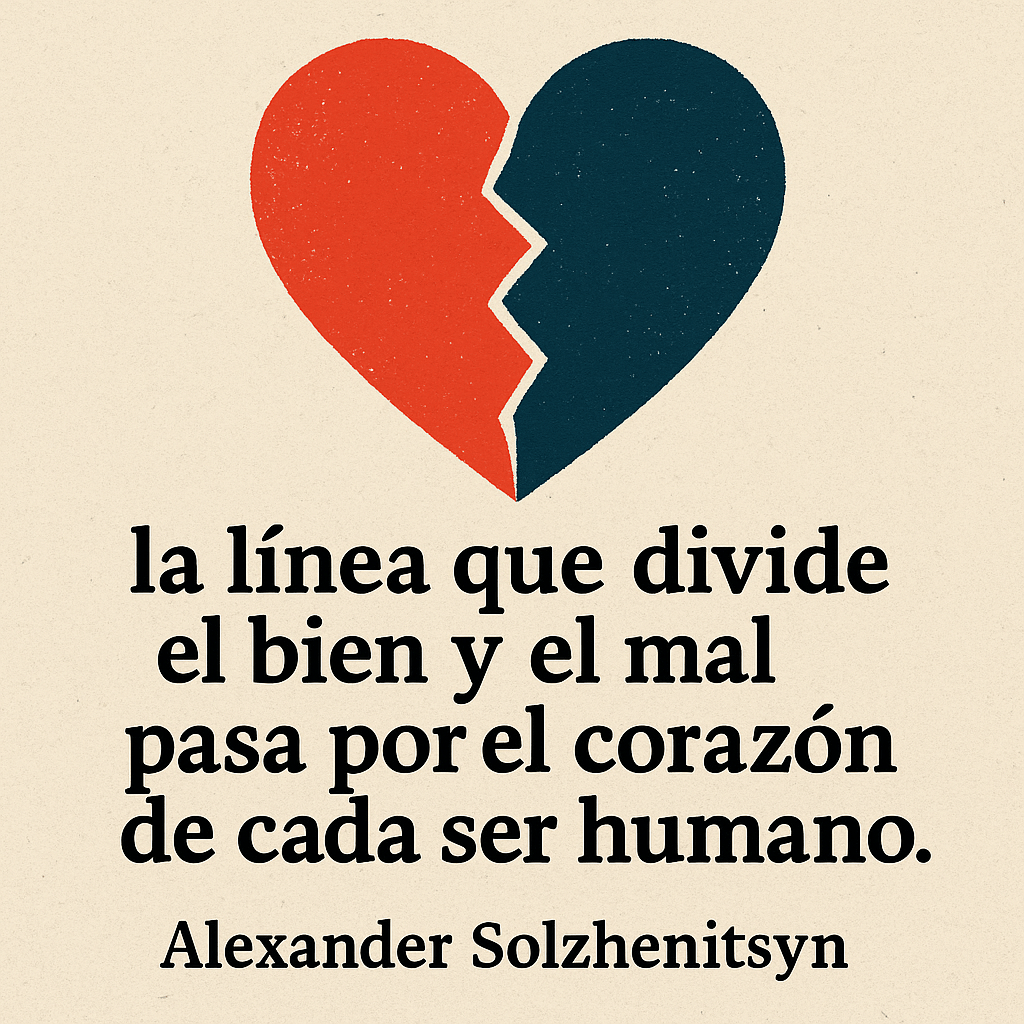
    Perhaps. But only with courage, compassion, and a deep awareness that evil is not merely “out there”—as Solzhenitsyn wrote, “the line dividing good and evil cuts through the heart of every human being.”

    And in a culture that has forgotten the heart, perhaps the only way to heal is to look up again.

    But the spectacle doesn’t end there. In the darker corners of digital culture, a new symptom of collapse emerges: the rebirth of totalitarian imagination. Hitler is no longer condemned with the moral clarity once deemed sacred. Stalin’s name no longer strikes fear. These figures return, like ghosts reshaped by scandal aesthetics and ironic provocation—figures who embodied absolute evil in the 20th century.

    Social media accounts now exalt their “strategic brilliance,” relativize their crimes, aestheticize their legacies. Young people who never experienced the horror consume it as entertainment, as an emblem of unchecked power. Ironic memes multiply, revisionist podcasts abound. It is the return of the repressed—without shame, without mourning, without awareness.

    And this doesn’t happen in a vacuum. It is the predictable result of removing God from the center. Without transcendence to orient our values, without truth to resist mimetic frenzy, the human soul is adrift—open to any fascination. And so Girard’s cycle reactivates in full: desire imitates, rivalry escalates, violence erupts, another sacrifice is demanded.

    When no new victim is available, an old one is summoned: the Jew, the foreigner, the other. Anti-Semitism returns. Xenophobia resurfaces. Values are inverted. The world plays with fire again, unaware that it has already burned everything down.

    Because when we abandon the notion of the good, the monstrous doesn’t vanish—it disguises itself, reinvents itself, goes viral.

    And in the end, the only real barrier against this infinite loop of destructive mimeticism is not the right ideology, the just party, or the perfect economic system.

    It is the human heart pierced by grace.
    It is God.
    Or the abyss.

  • El Amor como Deseo de Bien y de Unión.

    Una Lectura Filosófico-Teológica a partir de Tomás de Aquino y Eleonore Stump

    Israel Centeno

    En un mundo que ha vaciado la palabra “amor” de su espesor ontológico y espiritual, es urgente volver a una comprensión radical y realista del amor. No una versión sentimental ni puramente emotiva, sino aquella que propone Santo Tomás de Aquino y que Eleonore Stump recupera y profundiza en Wandering in Darkness. Este ensayo se propone desplegar esa concepción en sus implicaciones filosóficas, espirituales y existenciales: el amor como una estructura compuesta por dos deseos fundamentales e inseparables: el deseo del bien del amado y el deseo de unión con el amado.

    Para Tomás de Aquino, el amor no es una reacción pasiva ante la belleza o el valor del otro, ni una mera emoción efímera. Es, en su esencia, una actividad de la voluntad racional, que se expresa a través de dos actos: desear el bien del amado y desear la unión con él.

    Stump insiste en que estos dos deseos están interconectados pero no se reducen el uno al otro. El primero puede ser unilateral: se puede desear el bien del otro incluso sin reciprocidad, sin relación, incluso sin conocimiento directo. Este amor es agápico, libre, espiritual. El segundo, el deseo de unión, implica una dimensión relacional, pues no puede realizarse sin algún grado de apertura del otro. Aquí se manifiesta la vulnerabilidad del amante: su anhelo de compartir la interioridad con el amado.

    Como dice Stump: “Puesto que el amor surge de la interacción de dos deseos, por el bien del amado y por la unión con él, la ausencia de cualquiera de los dos es suficiente para anular el amor” (p. 104).

    Stump confronta la teoría de la “respuesta al valor” del amor, muy presente en la filosofía contemporánea, que sostiene que amamos porque percibimos en el otro un conjunto de rasgos valiosos. Pero esta teoría fracasa ante realidades humanas fundamentales: el amor de una madre por su hijo no disminuye cuando el hijo actúa de forma indigna; no sustituimos a nuestros seres queridos por otros “mejores”; el amor verdadero persiste a pesar de la corrupción, la enfermedad o el rechazo.

    La teoría de Tomás, en cambio, explica la constancia, la insustituibilidad y la profundidad del amor. Esto es posible porque el amor no está fundado en el valor cambiante del amado, sino en la voluntad del amante y en la “oficina” o tipo de relación: madre-hijo, amigo-amigo, Dios-creatura.

    “La función del amor entre una madre y sus hijos determina el tipo de amor entre ellos… dicha función no depende de las características intrínsecas del amado, y por tanto no varía con ellas” (p. 103).

    Una de las aportaciones más brillantes de Stump es su lectura del amor propio. Amar a uno mismo, según Tomás, no es buscar placer o gratificación, sino desear el bien verdadero para uno mismo y desear la unión consigo mismo, es decir, la integridad interior.

    “Amarse a uno mismo es desear el bien para uno mismo y desear la unión con uno mismo… Tomás describe a una persona que carece de integración interior en la voluntad como alguien que quiere y no quiere lo mismo, ya sea por desear cosas incompatibles o por no querer lo que quiere querer” (p. 100).

    Amar bien a uno mismo es buscar la paz interior que surge de la coherencia volitiva, la integridad del alma. “El bien para una persona requiere, por tanto, integración interior” (p. 100).

    A primera vista, parece absurdo hablar de “desear el bien de Dios”: Él es la plenitud del Ser, no le falta nada. Pero Stump clarifica: Dios desea el bien de todas sus criaturas. Por tanto, si yo deseo el bien del otro, deseo lo que Dios desea. En ese acto, mi voluntad se une a la de Dios y, en ese sentido profundo, amo a Dios deseando su bien: lo que Él quiere como bien.

    “En efecto, desea lo que Dios desea. De este modo, desea el bien que Dios desea tener; y en ese sentido, también desea el bien para Dios” (p. 101).

    Stump muestra que el perdón es una forma concreta del amor. Perdonar no es simplemente olvidar, ni soltar, ni no sentir odio. Es desear el bien del que me hirió y, en algún grado, desear una forma de unión con él.

    “Sea lo que sea exactamente el perdón, parece implicar una especie de amor hacia quien ha causado daño o cometido una injusticia contra uno” (p. 104).

    Sin ambos deseos, no hay amor. Sin amor, no hay perdón. Esto redefine el perdón como una expresión elevada de la caridad cristiana. Perdonar es participar del amor de Dios, que desea el bien y la unión incluso con quienes lo crucificaron.

    La teoría del amor de Tomás, según Stump, no es una filosofía de laboratorio: es una antropología espiritual, una medicina para el alma. Amar bien, amar de verdad, es desear el bien y la unión incluso en el sufrimiento, incluso en el rechazo, incluso en la distancia. Es lo que hace Dios. Es lo que Cristo encarna. Y es lo que está llamado a sanar el corazón humano.

    El amor, entendido así, no es una emoción que viene y va, ni una respuesta mecánica al valor del otro. Es un acto de libertad, de voluntad iluminada. Es un fuego que desea el bien incluso cuando el rostro del otro se desfigura por la ofensa o la indiferencia. Es un puente tendido hacia la unidad, incluso cuando parece que la fractura es definitiva.

    Amar es decir: quiero tu bien, quiero estar contigo, quiero tu plenitud, aunque no me respondas, aunque no me abraces, aunque no lo comprendas. Así ama Dios. Y en esa forma de amar se juega no solo nuestra santidad, sino también nuestra humanidad redimida.

    Allí donde se ama así, el infierno se deshace y comienza el Reino.

  • Christian Anthropology, Kenosis, and Being

    Israel Centeno

    Christian Anthropology, Kenosis, and Being

    Christian faith does not begin with a dualistic conception of the human being. St. Paul does not speak of the soul as a separable entity from the body, nor of a “spirit” that can exist apart from the concrete, embodied reality of the person. For him, as for the entire biblical tradition, the human being is a substantial unity: body and soul form a single person, a living totality that partakes in time but is destined for eternity.

    When St. Paul exclaims, “O death, where is your sting?” (1 Cor 15:55), he is not imagining a dissolution of the self, nor a spiritual fusion with divinity in gnostic terms. On the contrary, he proclaims the victory of being over corruption. The Christian will never become a ghost or a spark of consciousness floating in the ether: he will be fully himself, with a glorified body, transformed not by negation of the current body, but by its transfiguration.

    In this sense, death does not interrupt being. The experience of those who have been clinically dead and report lucid awareness—even “out-of-body”—does not indicate a physical journey elsewhere, but an ontological continuity: being is not interrupted. Where the “I” remains, the person remains, even if the physical body has ceased to respond. If God chooses to return vitality to the biological body, it will be reanimated; if not, the passage continues toward the promised glorified body.

    This calls for a non-dualistic Christian anthropology. The human being is not a sum of parts, nor a soul trapped in flesh. He is a whole directed toward communion, called to fullness. That is why St. Paul does not speak of “liberation from the body” but of its redemption: “We wait eagerly for the redemption of our bodies” (Rom 8:23). The body is not something to escape, but something to be transformed by grace.

    This also frames suffering in a unified way. Suffering is not merely a punishment or a test to earn merit. It is a reality that, once shared by Christ, acquires a radically new meaning. “I bear on my body the marks of Jesus” (Gal 6:17), says Paul. The wounded, crucified flesh becomes testimony of communion.

    Here the Pauline kenosis is revealed: “It is no longer I who live, but Christ who lives in me” (Gal 2:20). Dying to oneself is not disappearance, but allowing the self to be transformed by love. Taking up the cross, giving everything, is not self-annihilation—it is the purest affirmation of being.

    Christian detachment is not an escape from the body or the world. It is the awareness that being is not exhausted in what is visible. “Let the dead bury their own dead” (Luke 9:60) is not contempt for earthly life, but a call to a fuller, more real, more truthful life.

    To die to oneself is to stop living as though one were the measure of all things. It is to empty oneself of pride, possession, and control. It is to make room for another to dwell within us: Christ, the incarnate Word, who in his own kenosis assumed our flesh so that ours might be glorified.

    This Christian anthropology—embodied and eschatological—is not abstract. It has consequences for every aspect of life: suffering is not absurd, the body is not disposable, history is not an illusion. Every moment is part of a larger drama in which being stakes its eternity.

    Therefore, to die is not to cease to be. To die is to be handed over, transfigured, upheld by the promise of a resurrection in which the whole self—body and soul—will be fully itself in God. A continuity without rupture.

    For in Christ, being is not lost: it is fulfilled.

  • Más Allá del Microscopio: Por Qué la Ciencia No Puede Expulsar a Dios

    Israel Centeno

    Spanish and English version

    “¿Crees en Dios?”, pregunta cada vez más común en una cultura donde lo trascendente ha sido desplazado por lo cuantificable. Y no es raro escuchar la respuesta que parece clausurar todo diálogo: “Yo creo en la ciencia.” Suena firme, moderna, casi definitiva. Pero esa frase, lejos de expresar madurez intelectual, revela una confusión de fondo: confundir ciencia con cosmovisión, método con significado, datos con sentido.

    Vivimos en una época donde se le pide a la ciencia no solo que describa la materia, sino que nos diga qué somos, de dónde venimos y hacia dónde vamos. Lo que comenzó como una herramienta para investigar lo observable ha sido elevado al trono de la metafísica contemporánea. Y desde allí se declara —sin evidencia experimental— que no hay propósito, que todo es azar, que la mente es un accidente bioquímico.

    Por definición, la ciencia no trata con lo eterno ni con lo absoluto. Estudia lo que se puede medir, replicar, falsar. No tiene instrumentos para investigar si existe el alma, ni para concluir si el universo fue querido. Su lógica es reductiva, no contemplativa. Su poder es explicativo, pero no fundacional. Y sin embargo, vemos cómo muchos científicos, al salir del laboratorio, se transforman en oráculos del nihilismo: — “No hay sentido.” — “No hay mente detrás del universo.” — “Todo es resultado de combinaciones aleatorias.”

    ¿En qué parte del método científico se validan estas afirmaciones?
    ¿Con qué telescopio midieron el origen del alma?
    ¿Dónde se falsó la posibilidad de Dios?

    La contradicción es más que lógica: es espiritual. Se afirma que el universo es infinito, sin bordes ni centro, pero al mismo tiempo se intenta comprimir ese infinito en modelos, constantes y algoritmos. Se glorifica la complejidad, pero se exige que toda realidad entre en una ecuación. Se venera el método, pero se lo convierte en dogma.

    La ciencia, en sí misma, es un logro prodigioso. Cuando se ordena al bien, al conocimiento, al cuidado de la creación, puede ser incluso una forma de humildad. Pero cuando se absolutiza, cuando se convierte en sistema cerrado y totalizante, cae en lo que podríamos llamar la superstición del laboratorio: la creencia de que todo lo real es mensurable, y que todo lo que no puede medirse, simplemente no existe.

    Y sin embargo, el propio mundo científico comienza a mostrar fisuras en ese reduccionismo.

    En abril de 2022, la New York Academy of Sciences publicó una declaración de consenso firmada por médicos, neurocientíficos y expertos clínicos en reanimación, afirmando que:

    “La evidencia sugiere que ni los procesos fisiológicos ni los cognitivos terminan con la muerte.”

    Se refieren a los estudios del Dr. Sam Parnia, director de investigación en reanimación en NYU Langone, quien ha documentado durante años experiencias de conciencia lúcida en pacientes en paro cardíaco clínico. En un estudio con más de 500 personas resucitadas, se registró que aproximadamente el 20% tuvo percepciones organizadas, memorias, revisión de vida, e incluso vivencias con una dimensión moral profundamente estructurada. Y no hablamos de creencias religiosas: hablamos de pacientes clínicamente muertos, con electroencefalograma plano, recordando lo que sucedía mientras sus cuerpos eran técnicamente cadáveres.

    Por si alguien cree que esto es misticismo de pasillo de hospital, aparece una figura difícil de ignorar: el Dr. Michael Egnor, neurocirujano con más de 7.000 operaciones cerebrales a lo largo de su carrera. Egnor no es un bloguero de TikTok ni un conferencista motivacional: es un cirujano que ha abierto cabezas humanas y ha trabajado con epilepsia, tumores, traumas craneales. Y lo que ha observado lo ha llevado a una conclusión que no cabe en una TED Talk: el pensamiento no se produce en el cerebro. El cerebro no es el origen de la conciencia, sino su instrumento.

    A esta misma conclusión llegó hace décadas otro titán de la neurocirugía: Wilder Penfield, pionero en el mapeo cerebral en pacientes epilépticos. Estimuló regiones cerebrales con electrodos y logró desencadenar recuerdos, movimientos, emociones. Pero jamás —ni una sola vez— logró provocar el pensamiento consciente como tal. No pudo inducir una decisión. No pudo generar el yo. Al final de su carrera, Penfield escribió que el centro del pensamiento consciente no estaba en ninguna parte del cerebro, y que probablemente residía en otra dimensión del ser.

    Y no todo ocurre en quirófanos ni laboratorios. El Dr. Andrew Huberman, neurocientífico de Stanford y uno de los divulgadores científicos más influyentes del mundo actual, ha declarado públicamente que cree en Dios y que la oración transforma radicalmente su estado mental. No lo dice como sacerdote encubierto, sino como hombre de ciencia que reconoce en su experiencia algo que escapa a la dopamina.

    Estos testimonios no pretenden demostrar la existencia de Dios como se demuestra la presión de un gas. Pero derriban el prejuicio de que la ciencia y la trascendencia son incompatibles. Demuestran que hay médicos que operan cerebros y reconocen el alma. Que hay investigadores que miden la actividad neuronal y admiten que la mente no es una sinapsis. Que hay científicos que no necesitan negar el misterio para hacer ciencia.

    La ciencia pregunta: ¿cómo funciona esto?
    La filosofía se atreve a ir más allá: ¿por qué hay algo en vez de nada?
    Y la teología responde con humildad: porque alguien lo ha querido.

    Esa respuesta no anula la ciencia. La enmarca. La dignifica. La orienta.

    No se trata de elegir entre Dios o el microscopio. Se trata de reconocer que sin Dios, el microscopio no tiene por qué estar ahí. Y que sin apertura al misterio, incluso el universo observable se convierte en una ecuación sin alma, en una partitura sin melodía.

    Cuando alguien dice “yo creo en la ciencia” para rechazar a Dios, no está eligiendo entre dos verdades. Está buscando consuelo en el sinsentido. Pero lo más profundo no se deja atrapar por instrumentos. Se deja intuir por el alma.

    Hace unos años, uno de los apóstoles del nuevo ateísmo —de esos que hacen filosofía de YouTube en nombre del empirismo— soltó con aire de genialidad que el autor de Hamlet no era más que un saco de moléculas. Lo dijo para provocar, claro. Pero logró el efecto contrario: reforzó lo que todos intuimos, incluso quienes repiten ese tipo de frases sin pensar demasiado. Porque decir que Shakespeare no era más que materia organizada equivale a decir que HamletEl Rey LearEl Mercader de Venecia, fueron escritas por una reacción química sin sujeto, sin libertad, sin alma.

    Y nadie, en su conciencia viva, lo cree realmente.

    Quien escribió Hamlet era más que hueso y sinapsis. Era más que biología. Era alguien que trascendía su carne, que interrogaba el dolor, la muerte, la traición, el amor y el destino con una lucidez que no se fabrica en un laboratorio. Porque el alma no es un órgano, ni el pensamiento un accidente.

    Si algo nos dice Hamlet, no es que somos polvo animado, sino que somos seres abiertos al abismo, al sentido, a la pregunta que ninguna fórmula puede clausurar. Y esa pregunta —la que no cabe en el microscopio— es donde comienza la filosofía. Y también, quizás, la oración.

    English version

    Beyond the Microscope: Why Science Cannot Expel God

    “Do you believe in God?” A question increasingly common in a culture where transcendence has been displaced by what is quantifiable. And it’s not rare to hear the response that seems to shut down all dialogue: “I believe in science.” It sounds firm, modern, almost definitive. But that phrase, far from expressing intellectual maturity, reveals a deeper confusion: mistaking science for worldview, method for meaning, data for purpose.

    We live in a time when science is expected not only to describe matter but also to tell us who we are, where we come from, and where we are going. What began as a tool to investigate the observable has been elevated to the throne of contemporary metaphysics. And from there, it is declared—without experimental evidence—that there is no purpose, that everything is chance, that the mind is a biochemical accident.

    By definition, science does not deal with the eternal or the absolute. It studies what can be measured, replicated, falsified. It has no instruments to investigate whether the soul exists or to conclude whether the universe was willed. Its logic is reductive, not contemplative. Its power is explanatory, not foundational. And yet, we see how many scientists, once outside the lab, transform into oracles of nihilism:
    — “There is no meaning.”
    — “There is no mind behind the universe.”
    — “Everything is the result of random combinations.”

    Where in the scientific method are these claims validated?
    With what telescope did they measure the origin of the soul?
    Where was the possibility of God falsified?

    The contradiction is not only logical; it is spiritual. They claim the universe is infinite, without borders or center, yet try to compress that infinity into models, constants, and algorithms. They glorify complexity but demand that all reality fit into an equation. They venerate the method, yet turn it into dogma.

    Science, in itself, is a prodigious achievement. When directed toward good, knowledge, and the care of creation, it can even be an act of humility. But when absolutized, when it becomes a closed and totalizing system, it falls into what we might call the superstition of the laboratory: the belief that everything real is measurable and that everything unmeasurable simply does not exist.

    And yet, the scientific world itself is beginning to show cracks in that reductionism.

    In April 2022, the New York Academy of Sciences published a consensus statement signed by physicians, neuroscientists, and resuscitation experts affirming:

    “Evidence suggests that neither physiological nor cognitive processes end with death.”

    They refer to the studies of Dr. Sam Parnia, director of resuscitation research at NYU Langone, who has documented for years lucid consciousness in clinically dead patients. In a study with over 500 resuscitated people, about 20% reported organized perceptions, memories, life reviews, and even experiences with a deeply structured moral dimension. And we’re not talking about religious beliefs: these were clinically dead patients, with flat EEGs, recalling events while their bodies were technically corpses.

    For those who think this is hospital hallway mysticism, consider a difficult-to-ignore figure: Dr. Michael Egnor, a neurosurgeon with over 7,000 brain operations in his career. Egnor is not a TikTok blogger or a motivational speaker: he is a surgeon who has opened human skulls and dealt with epilepsy, tumors, and cranial trauma. What he has observed led him to a conclusion unfit for a TED Talk: thought is not produced in the brain. The brain is not the origin of consciousness but its instrument.

    This same conclusion was reached decades ago by another neurosurgery titan: Wilder Penfield, pioneer in brain mapping in epileptic patients. He stimulated brain regions with electrodes and triggered memories, movements, emotions. But never—not once—did he manage to provoke conscious thought itself. He couldn’t induce a decision. He couldn’t generate the self. At the end of his career, Penfield wrote that the center of conscious thought was nowhere to be found in the brain and likely resided in another dimension of being.

    And not all happens in operating rooms and labs. Dr. Andrew Huberman, Stanford neuroscientist and one of the most influential science communicators today, has publicly declared that he believes in God and that prayer radically transforms his mental state. He doesn’t say this as a covert priest, but as a scientist who recognizes in his experience something that escapes dopamine.

    These testimonies do not aim to prove God’s existence the way one proves gas pressure. But they dismantle the prejudice that science and transcendence are incompatible. They show that there are doctors who operate on brains and recognize the soul. That there are researchers who measure neural activity and admit the mind is not a synapse. That there are scientists who do not need to deny mystery to practice science.

    Science asks: how does this work?
    Philosophy dares to go further: why is there something rather than nothing?
    And theology responds with humility: because someone willed it.

    That answer does not cancel science. It frames it. It dignifies it. It orients it.

    It’s not about choosing between God or the microscope. It’s about recognizing that without God, the microscope has no reason to be there. And that without openness to mystery, even the observable universe becomes an equation without soul, a score without melody.

    When someone says “I believe in science” to reject God, they are not choosing between two truths. They are seeking comfort in meaninglessness. But the deepest realities cannot be captured by instruments. They are intuited by the soul.

    A few years ago, one of the apostles of the new atheism—those who do YouTube philosophy in the name of empiricism—stated with smugness that the author of Hamlet was just a sack of molecules. He said it to provoke, of course. But he achieved the opposite: he reinforced what we all sense, even those who repeat such phrases unthinkingly. Because saying that Shakespeare was nothing but organized matter is equivalent to saying that HamletKing LearThe Merchant of Venice were written by a chemical reaction without subject, freedom, or soul.

    And no one, in their living consciousness, truly believes that.

    Whoever wrote Hamlet was more than bone and synapse. He was more than biology. He was someone who transcended his flesh, who interrogated pain, death, betrayal, love, and destiny with a lucidity that cannot be manufactured in a lab. Because the soul is not an organ, and thought is not an accident.

    If Hamlet tells us anything, it is not that we are animated dust, but that we are beings open to the abyss, to meaning, to the question that no formula can close. And that question—the one that does not fit in a microscope—is where philosophy begins. And perhaps, too, where prayer begins.

  • A Jacques Derrida

    Epístolas desde el Abismo


    Desde las ruinas del sujeto
    Desde la Babel de las identidades
    Desde un mundo sin centro

    Estimado Sr. Derrida,

    Nos enseñó a desconfiar.
    A sospechar del texto, de la tradición, del sujeto, del significado mismo.
    Nos enseñó a deconstruir.
    Y lo hicimos. Con entusiasmo. Con furia. Con precisión académica.

    Pero hoy le escribimos desde el otro lado de ese proceso.

    Desmantelamos la historia.
    Desactivamos las metanarrativas.
    Desconfiamos de todo y de todos.
    Desarmamos al sujeto hasta que resultó irreconocible.
    Reducimos la justicia a una estructura de poder.
    Y declaramos a Dios una invención lingüística.

    Ahora vivimos entre ruinas simbólicas.

    Le preguntamos, con la humildad de quienes han perdido el camino:
    ¿Cómo puede una civilización trazar un mapa de esperanza sin un marco?
    ¿Cómo construir un futuro cuando todo significado es sospechoso, toda verdad es relativa, toda belleza es contingente, y todo valor no es más que un eco del poder?

    Usted enseñó que toda construcción puede y debe ser desmantelada.
    Pero ¿puede el hombre vivir sin construcciones?
    ¿Sin un consenso mínimo sobre el bien, la justicia, la equidad, la oportunidad?
    ¿Puede vivir en un mundo donde el único dogma es que no hay dogmas?
    ¿Donde todo se mueve, pero nada echa raíces?
    ¿Donde todo es lenguaje, pero ya no hay palabras que unan?

    ¿Puede una sociedad vivir sin verdades trascendentes, sin Dios, sin alma?
    ¿Puede siquiera sobrevivir?

    Usted legó una herramienta poderosa.
    Pero la convertimos en un método absoluto.
    La deconstrucción—que alguna vez fue una vía posible hacia la clarificación—se convirtió en
    una fábrica de escepticismo,
    una maquinaria de disolución.

    Y hoy, Sr. Derrida, vivimos en una época de
    emoción sin fundamento,
    identidades en guerra,
    moralidad líquida,
    arte sin referencia,
    el yo disperso,
    los derechos convertidos en armas.

    ¿No vio usted venir esto?
    ¿O era este el destino inevitable de su legado?

    Vemos ahora cómo sus ideas fueron recogidas por Michel Foucault, quien transmutó el poder en la misma gramática de lo social. Y por Judith Butler, quien redujo el género a pura performance y negó la coherencia del cuerpo. Y por Lyotard, quien proclamó la muerte de las grandes narrativas. Y por Jean-Luc Nancy, quien disolvió la comunidad en fragmentos del ser-con.

    Este es el mundo que queda:
    Un museo de ruinas, curado por activistas.
    Una democracia donde el lenguaje ya no une.
    Una civilización donde la literatura es ilegible, la filosofía no se puede enseñar, el arte es inefable.

    ¿Puede haber belleza en un mundo sin verdad?
    ¿Puede haber ética en un mundo sin sustancia?
    ¿Puede haber sentido en un mundo donde todo significante se disuelve?

    No preguntamos como enemigos, sino como herederos inquietos:
    ¿Dónde comienza la reconstrucción?
    ¿En el silencio? ¿En un retorno a la metafísica? ¿En la humildad? ¿En el misterio?

    O quizá, en una larga mirada al abismo—y la decisión de amar de todos modos.

    Desde el borde del abismo,
    un ser que aún anhela sentido.


    Interludio: Sobre la Actualidad y la Potencialidad del Ser, la Memoria y el Paso Más Allá de la Muerte

    Para comprender el misterio del yo—ese “yo” que persiste a través del río del tiempo—debemos distinguir entre actualidad y potencialidad, entre el ser que es y el ser que puede llegar a ser.

    Aristóteles enseñó que el ser siempre está en movimiento: la bellota es potencialmente un roble. El yo, también, es un devenir. Sin embargo, en medio de ese devenir, hay un sentido de permanencia. Sigo siendo yo, incluso mientras cambio.

    La memoria es la silenciosa guardiana del tiempo. Sin memoria, el tiempo desaparece. Porque el tiempo, en su sentido más profundo, no es el tic de un reloj, sino la huella del cambio impresa en un ser consciente. Las piedras no sienten el pasado. Nosotros sí.

    Y este yo que recuerda también anticipa. Soy lo que fui, pero también lo que llegaré a ser. El presente, entonces, no es un punto—es un tramo entre la remembranza y la esperanza.

    Ahora preguntamos: ¿qué ocurre en la muerte? ¿Qué pasa con este yo, este centro de memoria y anticipación?

    Si todo lo que soy es la configuración actual de materia y neuronas, entonces la muerte me disuelve. Pero si soy más que materia—si soy un ser que sabe que es, que recuerda y que anhela—entonces quizá mi ser no se extingue, sino que se transforma.

    La fe nos enseña esto: que el alma, como forma del cuerpo y centro de la persona, no se deshace con la descomposición. La resurrección no es la negación de la muerte, sino su transfiguración. En esa esperanza, el alma preserva su identidad, incluso mientras se despoja de su envoltura mortal.

  • El Ser en Movimiento

    Israel Centeno

    Tiempo, Memoria y la Paradoja del Barco de Teseo

    “Yo soy ahora lo que no era antes, y tampoco lo que seré en el futuro.”

    ¿Quién soy, si todo en mí cambia? ¿Qué permanece, si la experiencia del presente me transforma, el recuerdo me reconfigura y la muerte me despoja del cuerpo? Estas preguntas nos enfrentan al misterio más íntimo de la existencia: la permanencia del ser en medio del devenir.

    I. El barco de Teseo y la identidad en el cambio

    La clásica paradoja del barco de Teseo plantea si un objeto que ha tenido todos sus componentes reemplazados sigue siendo el mismo objeto. Aplicada al ser humano, la pregunta se vuelve aún más profunda: si mis células cambian, si mis recuerdos se modifican, si mis emociones y deseos se transforman, ¿soy aún el mismo?

    Lo que esta paradoja revela no es un mero juego lógico, sino una intuición fundamental: la identidad no es una sustancia inmóvil, sino una continuidad estructurada, una forma que permanece mientras su materia fluye. En términos aristotélicos, el ser se manifiesta como acto y potencia: soy actual en mi presente, pero contengo la potencia de lo que fui y de lo que seré.

    II. El tiempo como horizonte del ser finito

    El tiempo no es un contenedor neutro en el que ocurren los cambios. Para el ser consciente, el tiempo es una dimensión vivida. Agustín de Hipona lo expresó con claridad: el pasado es memoria, el futuro es expectativa, el presente es atención. El tiempo, entonces, no es tanto lo que pasa, sino lo que el alma conserva.

    Sin memoria no hay tiempo, solo instantes inconexos. El ser finito construye su identidad al narrarse, al grabar en su interior un flujo que se convierte en historia. Por eso, la muerte no interroga únicamente sobre el cuerpo, sino sobre esa huella interior: ¿a dónde va mi identidad? ¿Se disuelve o permanece?

    III. La memoria como inscripción del ser

    La memoria no es solo recuerdo, sino configuración del yo. A través de ella, el ser finito reordena sus experiencias y se reconoce. Somos memoria que se actualiza constantemente, que reelabora lo vivido y proyecta lo porvenir. El ser graba, y en ese grabar se sostiene.

    E incluso si el cuerpo muere, ¿no será esa memoria —ese modo de ser grabado— susceptible de otra forma de existencia? Aquí se abre la posibilidad de una trascendencia que no niega el tiempo, sino que lo eleva: una memoria eternizada, no como repetición, sino como consumación.

    IV. Actualidad, potencialidad y la vida post mortem

    Desde la metafísica tomista, todo ser actualiza lo que antes estaba en potencia. La vida humana es una constante actualización: nacemos con potencialidades que, al desarrollarse, nos configuran como sujetos. Pero si hay en nosotros un principio espiritual —no reducible a la materia—, entonces esa actualización puede continuar más allá de la muerte.

    El cristianismo propone que la identidad no se pierde, sino que se transfigura en la resurrección, no como restauración material exacta, sino como permanencia del yo en su totalidad. El cuerpo glorioso es la forma final de esa continuidad personal.

    V. Conclusión: entre el ahora que pasa y el yo que permanece

    El ser humano vive una paradoja: está siempre cambiando, pero se reconoce como el mismo. Es acto, pero también potencia. Vive en el tiempo, pero desea eternidad. Su yo está hecho de presente, pero hilado de pasado y proyectado hacia el porvenir.

    Así como el barco de Teseo sigue siendo el mismo mientras cambia, yo soy yo mientras me transformo, porque hay algo —una forma, una memoria, una vocación de sentido— que permanece.

    Y si ese “algo” tiene un origen divino, entonces su destino no puede ser la nada, sino la plenitud.