Author: Israel Centeno

  • Daughters of the Miracle: Impossible Motherhood and Consecrated Births

    Israel Centeno

    In the vast and polyphonic narrative of the Bible—so rich in genealogies and epiphanies—there is a theme that emerges time and again with the force of a golden thread intertwining the human and the divine: motherhood as miracle. Not as a natural function, but as sacred intervention. As that moment when God bends the laws of the body to inscribe a promise into the flesh.

    Sarah, Rebekah, Rachel. Three names, three stories, three barren wombs that knew the long pedagogy of waiting. In the Bible, barrenness is not just a medical condition: it is a symbol. It represents the absence of future, the silence of lineage, the feeling of having been forgotten by God. But it is also the privileged place where eternity chooses to break in.

    Sarah, in her old age, laughs when she hears she will become a mother. Her laughter is not joyful, but sarcastic—like someone who has stopped hoping. But God disarms her. Isaac is born of her disbelieving surrender, like a flower daring to bloom in winter. In him, the first great promise is fulfilled: a people, a lineage.

    Rebekah, Isaac’s wife, waits as well. Two decades of silent pleading before her womb stirs with twin brothers, Esau and Jacob—two men who will struggle over birthright and blessing, as if divine favor could be measured in ounces of flesh or seconds of birth.

    Rachel, Jacob’s beloved wife, lives in the fertile shadow of her sister Leah. She, the loved one, is barren. “Give me children, or I shall die,” she cries to her husband. It is the cry of many, then and now. Her prayer, like the others, does not fall into the void. She gives birth to Joseph, the dreamer, and later to Benjamin. She dies giving life, as though her body had been only the prelude to something greater.

    But they are not alone.

    There is also Manoah’s wife—unnamed, like so many women in Scripture. Her barrenness does not prevent an angel from appearing to her, announcing she will bear a son: Samson. And with that announcement come strict instructions: drink no wine, eat nothing unclean, do not cut his hair. Her son will be a Nazirite.

    That word—Nazirite—deserves a pause. It does not simply mean someone consecrated. It means someone set apart for God from the womb. Someone who belongs neither to their family nor to the world. Someone marked by a mission they may never fully grasp.

    Samson, with all his excesses, embodies that paradox. Superhuman strength, untamed desire, tragic fate. His life is a tension between what he was called to be and what he chose to be. But his story begins, like the others, in a barren womb touched by promise.

    Samuel, son of Hannah, is also born of prayer and surrender. And later, John the Baptist is announced to Zechariah and Elizabeth—another barren woman—as a voice crying in the wilderness.

    A pattern emerges—a sacred logic: God chooses the ones who cannot. And the children born of them are set apart for Him.

    Then comes Mary.

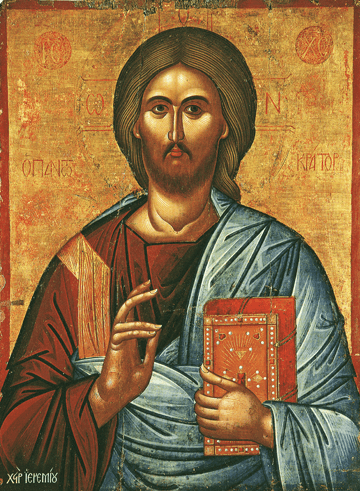
    She is not barren, but she is a virgin. Untouched by man, yet inhabited by the Word. Her body becomes the temple of a logic that defies flesh. Her yes—that “Let it be done to me according to your word”—is not the submission of a passive woman, but the alignment of a soul with mystery.

    The angel Gabriel announces a child and offers her a sign: “Your cousin Elizabeth, the barren one, is also with child.” Two women. Two wombs that should not conceive. Two forms of the impossible blossoming under the same sun.

    And so we understand: at the heart of the Bible, fruitfulness is always a sign of grace. What is born of the Spirit is not measured in genetics, but in mission.

    Jesus will be called the Nazarene, not just because he lived in Nazareth, but because he belongs to that lineage of those set apart for God. Like Samson, like Samuel, like John. But his consecration does not come from a mother’s vow—it comes from eternal design. His strength lies not in hair or voice, but in perfect obedience, in radical surrender.

    Here begins the faith of the New Testament. A faith not grounded in sight, or in lineage, or in logic. A faith bold enough to say, like Mary, “Let it be.” A faith that trusts the promise more than the prognosis. That believes in resurrection not because it understands it, but because it has heard the voice that called Lazarus out of the tomb. A faith that no longer needs the womb to be fertile, but the heart to be open. Because now, anyone who believes can give birth to eternal life.

    In Christ, motherhood becomes universal. The believer is a mother. The Church is a mother. Each of us can be Mary, if we allow the Word to take flesh within us. It is no longer only about awaiting a child, but about bearing the fruits of the Spirit: love, patience, peace, mercy.

    And today, in a world that often confuses producing with bearing fruit, and dispersing with becoming, perhaps the essential question is: what are we willing to host? What interior space—secret, useless to the world—are we keeping open for something that does not come from us?

    Because perhaps it is not about having great visions, but about becoming small Nazareths.

    About allowing the unexpected to take root.

    And seeing, once again, the impossible come to pass.

  • The Dark Church and the Light of the Soul

    By Israel Centeno

    Imagine, for a moment, that the human soul is like a gothic church cloaked in shadow—a silent space where stained glass windows, rich with forms, colors, and symbols, stand intact but unseen. Everything is there, but only dimly perceived, awaiting a light that has not yet arrived.

    In this darkness, beauty exists, but it is dormant. The soul moves by faith, guided by signs, comforted by symbols. And yet, something is missing: the light that reveals the fullness of what is already within.

    This metaphor, though not found literally in the writings of St. Thomas Aquinas, serves to illustrate a core element of his theology: the distinction between our knowledge of God in this life and the direct vision of God in eternity.

    In the Summa Theologiae (I, q.12, a.1–10), Aquinas reflects on the words of St. Paul, “Now we see through a glass, darkly” (1 Corinthians 13:12). That is, even when illuminated by faith, we know God only through mediated, imperfect images, distorted by language and shaped by our limitations.

    Similarly, in the Summa Contra Gentiles (Book III, Chapter 51), Aquinas explains that our understanding of God is constrained by the senses and the natural mode of the human intellect. Yet, in the life to come, the soul will be perfected by the “light of glory” and will behold God directly—without intermediaries, without veils, without darkened glass.

    Thus, we offer this metaphor: the soul as a shadowed church illuminated by divine light. In this life, the stained glass is present, yes—but the soul perceives only outlines, symbols, color without radiance. In the beatific vision, however, God Himself becomes the light that floods that inner church, making every hidden element of the soul shine with meaning.

    This is not mere poetic ornamentation. It is a visual translation of a deeply contemplative doctrine. The windows of our existence—etched with choices, wounds, hopes—await the light that comes not from the world, but from the Creator.

    And when that light bursts in, the soul ceases to interpret. It beholds.

    Then, truly, the soul shall know as it is known.

    And the dark church shall become a house of glory

  • ¿Dónde está el cuerpo glorificado de Cristo?

    Israel Centeno

    (Una carta para mi sobrino)

    Haces una buena pregunta, quizás la única que realmente importa: ¿Dónde está el cuerpo de Cristo—ahora, de verdad? No hablo de ideas o recuerdos, sino de la realidad. No es sólo curiosidad, ¿verdad? Es algo más profundo—una inquietud, como si hubiéramos entreabierto la antigua puerta marcada “Ascensión” y algo brillante y extraño nos esperara detrás.

    Hablamos de Cristo sentado a la derecha del Padre, pero eso no se refiere a una posición física. No es geografía. No se trata de “dónde”, sino de cómo. Porque si su cuerpo—todavía herido, todavía carne—ha resucitado más allá de la corrupción y la distancia, y sigue siendo cuerpo, entonces quizás siempre hemos entendido mal lo que “cuerpo” realmente significa.

    La desaparición de Jesús en Emaús, la de Felipe tras bautizar al etíope… no son trucos. Son señales. No de ausencia, sino de otro tipo de presencia. El cuerpo de Cristo resucitado no es menos real—es más real. Es la realidad, encendida por la gloria.

    ¿Y la Eucaristía? No es sólo pan. Pero tampoco es magia. No responde a “dónde está Jesús” como lo haría un GPS. Es un velo que se corre, un destello de un mundo justo debajo del nuestro. La Eucaristía no ubica a Cristo—lo manifiesta. Y por eso necesitamos al Espíritu Santo: para percibir a Cristo, no como fue, sino como es. Sí, esto roza el misterio—pero no para ocultar la verdad, sino para invitarte a entrar.

    Quizás nunca hayas oído de la Sofiología, pero es una corriente antigua que habla de la Sabiduría divina—Sofía—no como concepto, sino como la estructura misma de la realidad. Cristo no está separado del mundo. Él es el mundo transfigurado. Su cuerpo glorificado no está “allá afuera”, sino que es la semilla de lo que el mundo está llamado a ser. La Ascensión no es una partida—es una revelación.

    Jesús dijo que el Reino de los Cielos es como un grano de mostaza. Pequeño, casi invisible, pero con un poder que lo llena todo. Y también dijo: “El Reino está dentro de ustedes”. No como poesía—como verdad profunda. Santa Isabel de la Trinidad lo entendió: “Llevo la Trinidad dentro de mí y me refugio allí”. No era metáfora. Era su lugar real de encuentro con Dios.

    Pero el Reino no está sólo dentro. También está más allá del tiempo y el espacio. Nos rodea, nos sostiene. Cristo, como Logos, no sólo mantiene unido al universo: lo canta a la existencia, nota por nota. El Reino es esa música que hemos olvidado escuchar.

    ¿Y la Eucaristía? No es metáfora. Es el punto donde todo se une: tiempo y eternidad, carne y espíritu, cielo y tierra. No es un recuerdo dramatizado. Es el recuerdo hecho presente. Es el Calvario y las bodas del Cordero al mismo tiempo. El altar no es un escenario—es un umbral.

    Cada misa, en cualquier parte del mundo, no es una repetición. Es participación en el único sacrificio eterno. Una sola llama, vista desde muchas ventanas. Un solo Cristo, ofrecido una vez, presente para siempre. No repetimos el Calvario—entramos en él.

    ¿Y el velo? Es más delgado de lo que crees. No se rompe con fuerza, se aparta con consentimiento. No se atraviesa a la fuerza—se descubre. Se pasa como el aliento en medio del silencio. Y el portal no se abre sólo en el altar, sino en toda alma lo bastante hambrienta para ver.

    Entonces, ¿dónde está el cuerpo glorificado de Cristo?

    En el Reino. En tu alma. En la Eucaristía. En ese pequeño acto de fe del tamaño de un grano de mostaza. Porque ese grano diminuto contiene el peso entero de una nueva creación.

    El portal ya está abierto. El velo es delgado. Y la invitación sigue en pie: Ven y verás.

  • Two Decisions, One Fracture: The Mirage of Due Process in U.S. Immigration Policy

    Israel Centeno

    In the span of a single week, the U.S. immigration system has laid bare a troubling duality. What some hailed as a triumph of the rule of law quickly unraveled into a display of selective protection, revealing a system that shields a few while exposing hundreds of thousands to danger. At the heart of this contradiction lies the Supreme Court —speaking in two voices, acting with two hands.

    I. Due process for a few, abandonment for the many

    On May 16, 2025, the Supreme Court blocked the Trump administration’s attempt to invoke the Alien Enemies Act of 1798 to summarily deport 176 Venezuelan migrants detained in Texas, accused without public evidence of belonging to the Tren de Aragua gang. The Court emphasized that even in cases involving alleged security threats, due process must be upheld —a reaffirmation of basic legal principles.

    But just three days later, on May 19, the same Court —by a lopsided 8-1 vote— allowed the administration to revoke Temporary Protected Status (TPS) for over 350,000 Venezuelans, many of whom have lived legally in the U.S. for years. These individuals face forced return to a country that the U.S. government itself classifies as extremely dangerous, plagued by political repression, economic collapse, and systemic violence.

    The contradiction is staggering: due process is fiercely defended for a handful of detainees accused of gang affiliation, while legal status is stripped en masse from hundreds of thousands who have committed no crime, and whose only transgression is having fled a collapsing state.

    II. Afghanistan: another silent betrayal

    The contradiction deepens with the decision to end TPS protections for roughly 14,600 Afghan nationals, effective July 14, 2025. These individuals fled after the Taliban’s return to power in 2021, seeking refuge from one of the most oppressive regimes in the world. Forcing them back amounts not only to a diplomatic failure, but a humanitarian one —sending people back into the arms of the very danger they escaped.

    III. South Africa: a curious privilege

    Meanwhile, on May 12, 2025, the Trump administration welcomed 59 white South Africans —mostly Afrikaners— under a fast-track refugee process. They cited racial discrimination and violence in South Africa, though these claims have been widely questioned by international observers and the South African government itself.

    This move sparked outrage among faith groups and human rights advocates. The Episcopal Church of the United States suspended its cooperation with the refugee resettlement program, denouncing what it described as a racially and politically biased asylum process.

    The contrast could not be more stark. While Venezuelans and Afghans are being told their protection is no longer valid —despite real, ongoing threats— a group of white South Africans are granted privileged access to the asylum system on the basis of contested claims.

    IV. The Court speaks loudly —but in two tongues

    In theory, justice is blind and consistent. In practice, the Court this week protected a small number of high-profile detainees, while abandoning hundreds of thousands to legal limbo and existential risk.

    Only Justice Ketanji Brown Jackson dissented in the TPS decision, standing as a solitary voice of concern over the arbitrary and disproportionate removal of humanitarian protections. Her dissent reminds us of what’s at stake: not just legal status, but moral integrity.

    When law becomes strategy

    This week’s immigration decisions reveal more than just legal inconsistencies —they expose a political calculus masquerading as law. The U.S. is protecting some and discarding others, not based on need, but on optics, race, and ideology.

    Refugee status is not being granted where the risk is greatest, but where the political symbolism is most convenient.
    This is not law. This is strategy.
    And in the shadow of this strategy, hundreds of thousands are left with nothing but fear and a closing door.

    Justice must speak the same language to all.
    This week, it whispered to the powerful —and shouted silence to the rest.

  • Diario de lectura.

    Lectura Crítica del Cíclope Autoritario, de Nelson Rivera. Debate 2007

    Israel Centeno

    Una lectura crítica y contemplativa de El cíclope autoritario de Nelson Rivera (Editorial Debate, 2007).

    Escrito con convicción y asombro, este ensayo explora el colapso moral de las ideologías modernas y la urgencia persistente de la verdad, el testimonio y el amor al prójimo.

    Esta presentación reúne los textos del blog correspondientes a El Cíclope Autoritario, incluyendo los días que no habían sido previamente publicados. Ya estaban disponibles el Día 1, Día 2 y Día 3. A partir del Día 3 en adelante, los textos inéditos ahora están integrados en esta entrega.

    Abre el vínculo:

  • The Stallone Canticle

    Sunday’ Stories

    (Una aparición americana)

    Nota hallada en reverso de Pedro Páramo

    transcrita sin corrección ni comentario editorial

    Lo que sigue apareció escrito a lápiz, con trazo grueso y desesperado, en el reverso de una edición deteriorada de Pedro Páramo.

    El libro fue encontrado por un estudiante en Polish Hill, dentro de una bolsa plástica que también contenía un guante de boxeo zurdo, una cajetilla de Camel vacía y una nota que decía simplemente:

    “You don’t need to win. Just finish the round.”

    No se han podido verificar ni la autoría ni la fecha exacta del texto. Algunos afirman que es parte del diario inédito de Ismar Arias. Otros dicen que es una visión inducida por fiebre o falta de hierro.

    Su título, escrito a mano en la primera línea, es:

    STALLÓNIDAS

    Woke up again on the floor, third day without eggs. The room’s breath smelled like metal and unspoken prayers. There were coins on the windowsill, fifteen cents, a button, and a fly that never left. He stared at the ceiling. It stared back.

    Mouth dry. Body part stone. Part meat. Part idea.

    Write it. Or die.

    He had said it the night before to the lamp. The lamp didn’t blink.

    He was born a slur, a knot in the mouth, a vowel too long. Sylvester Gardenzio Stallone. No one said it right, not even the mother who brought him into the world in a New York hospital that smelled like bleach and spaghetti. The forceps that crushed his face, the slurred mouth that followed him like a curse. Kids called him “Stallionface.” Girls didn’t.

    He sold his dog. That was real. Sold it for fifty bucks outside a liquor store.

    He cried that night, like a boxer who forgot to swing.

    But the thing was in him. The story. Not a man. A myth:

    A southpaw. Philadelphia. Meat locker. Bell rings. Gets hit. Doesn’t fall.

    The movie was America. The real America. Not the generals, not the news, not the senators with suits and CIA ties. No. The busboy. The nobody. The one who gets up.

    That’s the twist, right? The plot twist they don’t teach in screenwriting class: he doesn’t win. But he finishes.

    He wrote it with twenty-five dollars in the bank. By hand. In long, sloppy loops. No Final Draft. No script doctor. Just sweat and knuckles. 84 hours. One draft. Then another. Then forty pages in one night and then a rewrite on a sandwich wrapper.

    He shopped it. They liked it. The story.

    They said: “We’ll buy it. We’ll cast a real actor.”

    He said: “No. You get me, or you don’t get Rocky.”

    They laughed. Then they didn’t.

    He got two hundred grand. He got the dog back.

    Cut to: training montage.

    Cut to: steps.

    Cut to: the anthem in the background, not the national one, the other one:

    Gonna fly now, flyin’ high now…

    He wasn’t a writer. He became one. By necessity. Like Christ becoming carpenter. Like Bolívar becoming legend.

    No plot without pain. No fist without fall. No film without failure.

    He never said it out loud, but the voice in him, the slow one, the thick, impossible voice, whispered one thing the night he typed FADE OUT:

    The underdog is the American god.

    And god got gloves.

  • Diario de lectura – Día 3

    El Cíclope Totalitario

    Israel Centeno

    Es domingo. Fui a misa. Comprendo por qué, desde el cura hasta la mujer de clase media y el homeless, todos debemos reconocer nuestra culpa y pedir misericordia. Hablando con David y repasando mi vida, le decía que había llegado a viejo sin haber matado a ningún hombre. Luego, en una revisión de conciencia más honda, me pregunté si no los habría matado por omisión, dentro del marco de las grandes tragedias humanas, de todos los horrores de los que he sido testigo.

    Hoy entendí con una claridad que solo concede la madurez espiritual, el sentido del pecado original y la necesidad de un salvador. Comprendí por qué estamos rotos. Por qué no basta con tener buena voluntad o buenas ideas. Comprendí por qué Auschwitz no termina en 1945. Porque su lógica ha mutado, y hoy opera con formas más sutiles: ya no se necesita la infraestructura de los campos para perpetrar el olvido. Basta con que se suprima un expediente, se niegue un derecho, se silencie una historia. Comprendí esto mientras leía los pasajes de Nelson Rivera donde Auschwitz no es un lugar del pasado, sino un lenguaje presente: “el alfabeto del campo”, dice, “no tiene comercio alguno con la vida”. Ese alfabeto —ese dispositivo de aniquilación simbólica— se parece mucho al lenguaje administrativo de nuestros días: expedientes, bases de datos, algoritmos. Si ayer se marcaban brazos, hoy se asignan códigos. Si antes se destruía con fuego, ahora se elimina con clics. Lo entendí, no desde el dramatismo, sino desde la exactitud moral del testimonio. Comprendí que ser testigo en esta época exige también resistir esa forma nueva de desaparición: la del alma digitalizada y descartable. Comprendí que la memoria no es un pasatiempo intelectual, sino un deber moral.

    Al leer los pasajes sobre el genocidio armenio y Auschwitz, uno no puede evitar la punzada en el pecho. La historia se repite, no como farsa, sino como abismo. Armenia, Polonia, Camboya, Ruanda, Yugoslavia, Siria, Ucrania. Más de cien millones de seres humanos en el siglo XX, uno a uno, uno tras otro, reducidos a cenizas por la desproporción, por una voluntad de aniquilación que no necesita razones, solo excusas. Auschwitz no fue un episodio, sino una fractura en la modernidad. Una herida que aún sangra bajo la corteza de nuestra civilización. Auschwitz es la ausencia de Dios, o su silencio, o su juicio. Es el fin del lenguaje. El punto donde toda explicación se vuelve obscena.

    Y sin embargo, allí están los testigos. Las voces. Los libros de Primo Levi, de Wiesel, de Antelme, de Semprún. Esos textos no explican el horror. Lo sostienen. Lo transmiten. Nos obligan a mirar. No hay filosofía que pueda competir con la potencia moral de esas memorias. No hay teoría política que pueda sustituir el testimonio de un cuerpo torturado que escribe, que recuerda, que no concede el perdón porque no puede, porque no le pertenece.

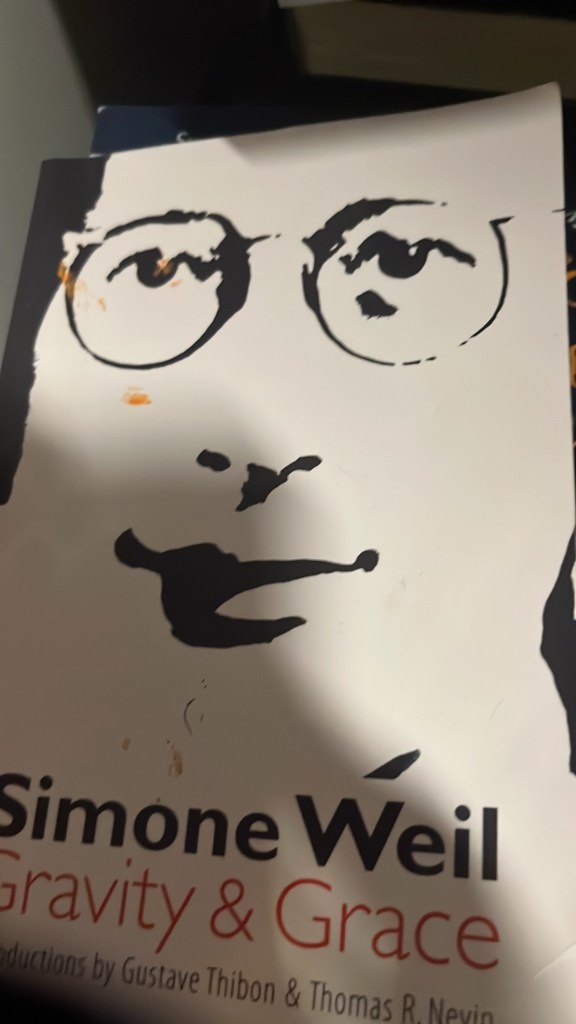
    Hoy leí también sobre Simone Veil. Su regreso a Auschwitz. Su firmeza al decir: “No, nunca he perdonado”. No por odio, sino por respeto. Porque perdonar colectivamente una monstruosidad sería trivializarla. Veil supo que el compromiso con la memoria exige más que reconciliación. Exige verdad, exige testimonio, exige continuidad.

    Y aquí estoy, en Pittsburgh, intentando acompañar esa continuidad. Pensando en los campos de exterminio no como un recuerdo remoto, sino como una posibilidad latente en toda sociedad que idolatra al poder, que erotiza la obediencia, que estetiza la violencia. Hay campos sin alambradas. Hay exterminios que no huelen a carne quemada. Hay silencios que duelen igual.

    Hoy también entendí que mi lugar no es el del juez. Es el del testigo. Y que el testigo no es neutral: toma partido por la víctima. El testigo se niega a olvidar. El testigo se rehúsa a volverse dato. Porque nos están volviendo dato. Porque la desaparición hoy no siempre ocurre con balas, sino con clics. No hay necesidad de campos de concentración cuando basta con suprimir a una persona de los registros oficiales, invisibilizarla en los sistemas, reducirla a una línea de código eliminada sin ceremonia. Por ejemplo: cuando un gobierno elimina el expediente migratorio de un refugiado con solo presionar un botón, no hay cuerpo que caiga, pero sí una vida que se evapora de los sistemas. No hay crimen visible, pero sí un borrado total. Es un exterminio sin humo, sin cámaras de gas, sin huellas.

    Y entonces escribo. Escribo porque necesito mantener viva la lengua del testimonio. Escribo porque el silencio, en estos tiempos, puede ser complicidad. Escribo como quien reza, como quien enciende una vela en la oscuridad, sabiendo que quizás no alumbra mucho, pero que al menos arde.

  • Elegy for the Lost Lights

    After a reading of Nelson Rivera book, Totalitarian Cyclop

    Israel Centeno

    Since God died, the inventory has only grown. The numbers multiply, the bodies pile up, and the world—this world we insisted on calling civilized—writes in ash the names of those it swore to redeem. The Enlightenment promised us light, but forgot to teach us how not to burn each other alive. It built parliaments on graves and carved the word reason with bayonets. We thought we had become gods, and in doing so, turned the Other into clay.

    Was there ever a civilizing gesture that did not come at the cost of someone’s blood? Is there any doctrine, however noble, that does not hide a fist behind its banner? And still, we speak of progress. And still, we parade words like justice, freedom, humanity, as if they hadn’t been torn to shreds in every corner of the earth.

    The humanism that emerged after the death of God became a refined cruelty, an “inhuman humanism” that perfected the art of domination while reciting verses about dignity. If Auschwitz taught us anything, it is that horror is not the opposite of civilization—it is its shadow, its necessary twin.

    What, then, can we expect from transhumanism, if humanism itself has been soaked in horror? What will happen when Dostoyevsky’s demons learn to compute, to code, to simulate empathy with a precision no soul could ever match? What tyranny will emerge when general AI, running on quantum logic, governs not only our decisions, but our memories, our feelings, our histories? What happens when we are ruled not by laws, but by algorithms that know us better than we know ourselves—and do not love us?

    The horror, as Kurtz whispered. The horror, now multiplied, simultaneous, unbound by time. Past, present and future devoured in a single digital breath.

    And yet, Christ spoke of love. That scandalous love of the neighbor that remains impossible for the cynic, a pious fraud for the Sunday believer, and an urgent truth we continue to elude.

    The apocalypse is not in the fire, but in the silence of those who refuse to remember. We are not waiting for the end. We are already surviving it.
    And writing—writing is the last form of resistance.

  • The Authoritarian Cyclop

    Reading Journal – Day 2
    Israel Centeno

    Reading this chapter on Auschwitz, I can’t help but ask myself how far evil goes. To what extent can it take form with total naturalness, dehumanizing one part of humanity and overvaluing another, the one that claims for itself the authority to eliminate—without moral tremor—those it deems unworthy of existence. The horror of Auschwitz is not just historical: it is present. It lives on in the current forms of power, in their discourses, in their extermination strategies that justify themselves through the language of legality, revenge, or preemptive defense.

    I cannot avoid thinking of all the wars I have witnessed throughout my life. Vietnam, the multiple conflicts in the Middle East—no longer events, but an endemic disease—Iran, Iraq, Rwanda. Each of those tragedies was a school of dread. And yet, here we are again: Myanmar. Ukraine. Gaza.

    Where does moral authority end in an armed conflict? At what point does legitimate defense become unlimited vengeance? The war in Ukraine, with its crossed narratives and symbolic machinery, has almost entirely lost any ethical coordinates. It is no longer clear who is the victim and who the aggressor. The same could be said of the war in Israel. At first, after the attacks of October 7, the State of Israel held, in many eyes, an indisputable moral authority: it had been brutally attacked, had hostages in enemy hands, was wounded in its flesh and memory. The response was understandable. Some will say disproportionate; others will justify it as national defense. The debate was legitimate.

    But time passes, and with it, that initial legitimacy dissolves. The death toll rises, bodies pile up, children are buried before they learn to speak, and something in the language begins to fracture. It is no longer retaliation. It is no longer even reprisal. It is extended punishment. It is displacement. It is demolition. And here arises a question that tortures me: at what moment did the Star of David—a symbol of resistance, dignity, of “never again”—cease to be a mark on the chest and become an insignia stamped on tanks advancing over civilian populations? Shouldn’t we also ask whether that star—a symbol of identity, pain, and pride—has now been placed, without many noticing, in another place, perhaps a darker one?

    Nelson Rivera anticipates it with brutal clarity. He speaks of the silence of the camp as a broken tongue. Of that moment when the echo is canceled, the atmosphere expropriated, humiliation institutionalized. He cites Ivan Klíma, Antelme, Elie Wiesel. Not for erudition, but because their words are keys that open the door to the unspeakable: the ruin of the human soul. War, Rivera tells us, is not an exception. It is the normalization of infamy. The construction of a grammar where killing ceases to be a crime and becomes destiny.

    And as I read these pages—so rigorous, so painful, so true—an immense sadness overwhelms me. Because we are not safe. Because we keep manufacturing enemies. Because the cycle repeats itself. Because hate always finds new ways to express itself, to legitimize itself, to celebrate its efficiency.

    This book, far from being a treatise, is a mirror. Not of what we were, but of what we could still become. Reading it in 2024 is not an academic exercise: it is an act of conscience. And, at times, of mourning.

    Another point I cannot stop interrogating, in the light of these dark pages, is that of the presence or absence of God. Was He truly absent? Or, more disturbingly: was He there, but silent?

    From the moment the Nazis came to power, they did not hide their intentions. Extermination was announced, written, shouted. There were no subtleties. Many Jews—perhaps those with a more acute survival instinct, or less attachment to the tangible—fled. And in doing so, they saved their lives. They were not heroes, nor martyrs, nor prophets: they were simply men and women who read the signs of the times and chose flight.

    And yet, what about the others? Those who did not flee. What about those who stayed, not out of clumsiness, but out of emotional or intellectual fidelity to an idea of Germany, of Europe, of civilization? They believed, in naivety or despair, that such a nation could not descend into horror. That something in its roots—music, philosophy, language, literature—would prevent absolute delirium. They thought a moral brake still existed. That the night couldn’t be that long.

    But Kristallnacht came, the Night of Broken Glass. And even then, many hesitated. They waited. They clung. They kept believing. Was it hope? Was it pride? Was it an instinct of attachment stronger than fear?

    This is not a question to judge. It is a question that haunts us all. Because if history teaches anything, it is that fleeing also requires faith. And faith, as Wiesel reminds us, is not always luminous. Sometimes faith is the refusal to see.

    When I read Rivera speak of the silence of the camp, of the “robbery of the atmosphere’s right to echo,” I also think of another silence: the one that arises when an entire people fails to react in time, still believing in the possibility of a pact with reason.

    And God? Where was He? Perhaps in the voice that whispered to each: “Flee.” And that some could hear, and others, out of love, or while preparing armed resistance, or out of attachment, or culture, could not or would not obey. And so, they were devoured by the machinery of the unspeakable.

    And the other thing—the thing I cannot keep quiet about—is this guilt that gnaws at me: the guilt of judging from here, from this quiet community where I have water, shelter, safety, internet, and coffee. From this century that no longer feels like a century, but a fragment, parody, shadow. I wonder whether I have the right to think the unthinkable from this place, from this peace that so closely resembles indifference. Because all the alarms are going off. Not in the streets, but in the information flows, the digital contracts, the invisible architecture of obedience.

    Everything indicates we are being turned into data, and that data doesn’t hurt when deleted.

    Deleting data doesn’t cause screams. It leaves no trace. It has no blood. It just takes a click.

    And with that click—efficient, clean, unresisted—it ends.

    Then I go silent. Or I write. I don’t know whether it is to resist, or merely to not disappear as well.

  • The Authoritarian Cyclop

    Israel Centeno

    Reading Journal – Day 1

    Pittsburgh, May 16. A long, dense day—the kind where light never really arrives and you feel like the sky weighs more than your body. Early in the morning, we discussed the looming effects of federal budget cuts in a meeting. I called my congressman, senator, vice president, president. I don’t know if it makes any difference. I have the sense—and I’m not alone—that we are living under an administration that has turned all criticism into enemy territory. I left with my spirits lowered and my health shaken. Yesterday, over coffee in Bloomfield, I told an old friend—a self-declared skeptic—that without God, all this would be much harder. I have God, I told him, and that allows me to move forward with a certain lightness, even when my body aches and my medical prognosis is uncertain.

    Today I begin reading The Authoritarian Cyclops by Nelson Rivera. I hadn’t read it before, though it was published in 2009, the very year I left Venezuela with no possibility of return. I saw reviews, knew of its existence, but my exile was urgent, chaotic, a rupture—and what I didn’t carry with me remained suspended in an inaccessible time. Only now—fifteen years later, thanks to the generosity of Vasco Szinetar—can I settle that debt. I open it as one opens a book that had long been destined for them, but whose reading had to wait until the storm passed.

    As soon as I open it, in the first few pages, I feel at home. Not geographically, but in the gravity. Rivera writes with surgical precision, but also with a strange kind of intellectual compassion. He states at the outset that to think about war in times of peace is almost a contradiction, but also a duty. War, he says, doesn’t erupt like lightning; it gestates in the shadows, in collective psychic denial, in the emotional veto of imagining the unthinkable. And that strikes me deeply. Isn’t that exactly what happened to us Venezuelans? Didn’t we live through a war without war, an annihilation without trenches, a loss of liberties disguised as popular epic?

    What Nelson Rivera calls “abstract emotions”—nation, people, homeland, revolution—I experienced as slogans, then rhetorical weapons, then instruments of exclusion. It shakes me to read: “Every war is preceded by a high tide of hope.” What a sentence. What precision to describe that moment when we believed everything would change. And it did, of course. But toward the darker. The “new man” ended up being a cyclops, yes, but not out of vision, but due to the mutilation of thought: a single gaze, a single language, a single truth.

    I read from Pittsburgh, from this place that fifteen years ago meant nothing to me and is now the city where I grow old. I’ve become—I once said as a joke—an Appalachian mountaineer, removed from the editorial corridors of my country, a belated observer of its books, a displaced reader. This reading, then, is also a form of return. But not with nostalgia, rather with method.

    Rivera’s book demands I pause. I can’t read it as one looks for quotable ideas. It’s a text to ruminate, to dialogue with philosophers, linguists, phonologists, and literary thinkers who have warned of the destructive power of language when it becomes slogan, when it ceases to serve thought and becomes a device of domination. Arendt, Steiner, Michael Ignatieff, even Simone Weil come to mind, as do echoes of our own tradition of critical thought—now so scattered, reduced to ashes or social media posts no one reads.

    Nationalism, populism, sentimental socialism, as Rivera rightly points out, are not ideas but emotional devices. They don’t operate on the level of reason but of the viscera. In this sense, the book dialogues with a whole tradition of thought that includes everything from Ernesto Laclau’s discourse theory to Umberto Eco’s semiotics of fascism. Rivera patiently dismantles the way these symbolic apparatuses—when reified and embedded into the community—can produce war as an inevitable emotional logic. He says it without alarmism, with a clarity that chills.

    Today I can only read a few pages. I will continue tomorrow. This will be my way of practicing criticism from exile: not as definitive analysis, but as daily dialogue, journal of thought, a way of accompanying a reading that arrives fifteen years late but with an urgency that remains intact.

    I invite you to follow these entries, one by one, as if we were conversing together, under this cloudy sky, in a corner of Pittsburgh where there’s still hot coffee, and where—despite everything—not all is lost.

    The sky hasn’t changed since yesterday. The light remains absent. And although I tried to put the book down—because of the density of what it says—I couldn’t. I kept reading, like one opening a door that leads not only to the past, but to the raw present: Venezuela in its regression, the world in its silent substitution of liberalism by increasingly sophisticated forms of emotional, symbolic, institutional control.

    With the measured pace of a thinker who knows language must not yield to urgency, Nelson Rivera develops a meditation that is not only about war but about the political soul of our time. What he calls “abstract emotions”—that magma of homeland, people, revolution, redemption—has ceased to be the patrimony of classic dictatorships and has become the structural raw material of what we might call the new affective authoritarianism: one that doesn’t need shouts or uniforms to impose obedience.

    As I read, I think about how the last fifteen years have not only returned Venezuela to the 19th century but have confirmed that modernity was not irreversible. The fall of the Berlin Wall did not inaugurate the end of history, as Fukuyama believed, but merely a truce. What we are seeing now is a world sliding into soft but relentless forms of governance: the algorithm as judge, the hoax as doctrine, the enemy as structural need.

    Rivera puts it this way: war, before it is cannon, is language. A language that “flattens the multiple,” that “levels,” that turns everything into an inescapable system of oppositions: us/them, loyal/traitor, kill/die. In that binary grammar, freedom has no possible conjugation. Only the monotonous echo of the slogan remains. That is where we come in, we who still write, as the last phonologists of dissent.

    I read and underline: “the language of war has a purpose: to flatten, reduce, distort reality into insignificance.” I think of how many times that operation has repeated among us. In how many state speeches—of all kinds—that have turned the verb into a club. This warrior tongue, as Rivera explains, does not communicate, it commands. It does not seek meaning, it imputes. It does not interrogate, it dictates. War—he reminds us—does not begin with bombs, but with the slow normalization of that hollow, bombastic language that turns difference into a threat.

    What Rivera denounces with rigor—and without shrillness—is not only the machinery of physical horror but also the aestheticization of conflict. In a world saturated with screens, war has become transmissible, editable, digestible. Propaganda no longer needs to tell the truth; it only needs good graphic design. It is the contemporary version of the “control of the narrative” that Walter Benjamin warned of in the 1930s: fascism does not destroy art, it makes it part of the decor of power. Today, that aestheticization becomes algorithm, trending topic, storytelling. The authoritarianism of the present does not impose silence: it imposes noise. So much that dissent is lost in the cacophony. Against that, this book is an act of deprogramming.

    Later, Rivera offers testimonies. Not figures or concepts: bodies, wounds, children torn apart, women spat upon by their tormentors, men hiding in swamps with their children. These stories (Armenia, Cambodia, Rwanda, Vietnam) do not belong to one continent or one ideology. They belong to the dark heart of the human being when language has ceased to be a home and become a field of extermination.

    It is hard to read these fragments without nausea. But I also realize that one cannot think about today’s politics without going through these pages. Because war no longer needs to be called war. It can be called “beautiful revolution,” “emerging order,” “civilizational project.” It can have spokespeople with microphones, not rifles. But the effects are the same: silence, submission, hunger, fear.

    Rivera forces us to face what others elude with functional theories or conciliatory discourse. He reminds us that true barbarism is not that which produces screams, but that which imposes silence. The silence heard in the testimonies of those who survived everything and no longer know how to speak.

    There is no metaphor here. There is accuracy. War—he writes—is “the fall of God,” “the dissolution of the contracts of the human.” Reading that in 2024 is to understand that it is not enough to denounce old-fashioned authoritarianism. We must also interrogate the new emotional order that surrounds us: one that turns politics into performance, truth into meme, morality into algorithm. And then ask: will this new model stop here? Will China be its final station or are we approaching a Scandinavian “paradise” where freedom is merely a footnote?

    In the end, this reading becomes a testimonial exercise for me. Not only for what Rivera says, but for what it awakens in me as a reader who has seen his country sink without a formal war, but under all its logics. Reading The Authoritarian Cyclops is not just reading about war; it is reading from a wound. A wound that does not bleed but does not close either. This book, in its sobriety, in its drama-free forcefulness, brings me back to the heart of a question almost no one dares to ask in public anymore: What do we do when language has been hijacked by those who use it to justify the unjustifiable? Perhaps, for now, the only answer is to keep reading. And to write, even from the margins.

    I keep reading. I cannot stop. Not with a book like this. Not with this gravity. Not with this echo that reminds me, with each line, that to think is to resist. That to narrate is to contradict the slogan. That every word not surrendered is a small fire against the language of war.

    More tomorrow.