Author: Israel Centeno

  • 🇪🇸La apertura del alma: Edith Stein y el misterio de la empatía🇬🇧/Parte I-Part I

    Israel Centeno


    Hubo un momento en la vida de Edith Stein en que la razón, llevada hasta su límite, se inclinó hacia el misterio. No fue una renuncia a la inteligencia, sino su transfiguración.
    Discípula rigurosa de Husserl, capaz de explorar las estructuras de la conciencia con precisión quirúrgica, Stein descubrió que en el centro mismo del conocimiento hay algo más hondo que el pensamiento: el lugar donde un alma toca a otra. En esa frontera, donde la razón se abre a la compasión, encontró el fenómeno que llamó empatía.

    La empatía no es un sentimiento pasajero, ni una simpatía moral, ni un contagio emocional. Es, más bien, el modo en que el otro se me da como viviente. Ver un rostro, una mirada, una herida; reconocer en ellos no solo una forma física, sino una vida interior que se manifiesta sin agotarse: he ahí el misterio.
    La empatía es el milagro cotidiano de la presencia del otro; el paso silencioso por el cual el alma deja de ser espejo cerrado y se convierte en espacio abierto.

    En el lenguaje riguroso de la fenomenología, Stein dirá que la empatía es una presentificación no originaria de una vivencia originaria ajena (nicht-originäre Vergegenwärtigung).
    Yo no vivo tu dolor como mío, pero tu dolor acontece en mí con evidencia. No lo deduzco ni lo imagino; lo encuentro, lo reconozco, lo experimento como real, aunque no me pertenezca.
    La empatía no borra la distancia: la ilumina. Es una proximidad sin fusión, la revelación de una alteridad viva.

    Frente a las teorías psicológicas de su tiempo —la imitación interna, la asociación, la inferencia por analogía—, Stein muestra que ninguna explica el hecho esencial: que el otro se me da como sujeto.
    No lo infiero; lo percibo. No es una sombra ni una idea, sino una presencia.
    “Antes de explicar el origen de algo —escribe—, hay que saber qué es.”
    La fenomenología no busca causas, sino sentido; no diseca el alma, la contempla.

    Stein distingue tres momentos en el acto empático:
    primero, la aparición del gesto o del signo;
    luego, la inmersión silenciosa, donde mi conciencia sigue la huella del otro hacia su interior;
    finalmente, la comprensión plena, donde reconozco su vida como ajena y, precisamente por eso, real.
    Empatizar es estar cabe el otro, a su lado, mirando con él el horizonte de su mundo.

    En su diálogo con Scheler, Stein niega la idea de una “corriente indiferenciada” de vivencias comunes. No hay experiencia sin sujeto: cada acto pertenece a alguien.
    Así distingue entre reflexión (Reflexion) —la conciencia absoluta de un acto vivido, que no puede ser falsa— y percepción interna (innere Wahrnehmung), que es la apercepción del individuo psicológico y su biografía.
    En la reflexión, capto el amor o el temor en su ser absoluto; los errores surgen no de la vivencia misma, sino de su interpretación o su origen inauténtico.
    Los sentimientos heredados o prestados —el odio inculcado, el amor imitado— son pasiones sin raíz originaria: carecen de verdad interior.

    La empatía, en cambio, es siempre auténtica: en ella se manifiesta la originariedad ajena dentro de mi no-originariedad.
    Es un reflejo de luz, no una fusión de llamas.
    Por eso Stein puede decir que la empatía es el modelo mismo del conocimiento del otro: el respeto amoroso por su ser.

    Cuando cita a Münsterberg —“la voluntad ajena entra en la mía y, sin embargo, sigue siendo del otro”—, Stein asiente, pero amplía el sentido: no solo comprendemos voluntades, sino toda la vida del alma.
    La empatía no se limita al querer; abarca el dolor, la esperanza, el júbilo y la vergüenza.
    En ella se funda la posibilidad del “nosotros”: la comunión de sujetos libres que se reconocen sin confundirse.

    Así, Sobre el problema de la empatía no es solo un tratado filosófico: es el germen de una teología de la comunión.
    La empatía es la ley secreta del alma, el modo en que la imagen de Dios en uno se hace visible para otro.
    Más tarde, en el Carmelo, esa intuición florecerá en La ciencia de la cruz: la Cruz como empatía divina, Dios participando del sufrimiento del mundo.
    El pensamiento se hace oración, y la fenomenología, caridad.
    En ella, comprender es servir; servir, compartir; y compartir, redimir.


    🇬🇧 English

    There was a moment in Edith Stein’s life when reason, carried to its utmost clarity, bent toward mystery. It was not the failure of intellect but its transfiguration.
    A rigorous disciple of Husserl, capable of tracing the structures of consciousness with surgical precision, Stein discovered that at the very core of knowledge lies something deeper than thought itself: the point where one soul touches another. At that threshold —where reason opens into compassion— she found the phenomenon she would name empathy.

    Empathy is not a passing emotion, nor moral sympathy, nor affective contagion. It is rather the mode in which another is given to me as living.
    To see a face, a glance, a wound, and to recognize in it not only a form but an interior life that reveals itself without being exhausted —this is the mystery.
    Empathy is the daily miracle of presence: the quiet crossing through which the soul ceases to be a closed mirror and becomes an open space.

    In phenomenological language, empathy is a non-original presentation of an original experience belonging to another.
    I do not live your pain as my own, yet your pain appears within me with evidence. I do not deduce or imagine it; I encounter it, recognize it, and experience it as real —though it is not mine.
    Empathy does not abolish distance; it illuminates it. It is nearness without fusion, the revelation of a living alterity.

    Against the psychological theories of her time —inner imitation, association, inference by analogy— Stein shows that none can explain the essential fact: that the other is given to me as a subject.
    I do not infer the other; I perceive them. They are not an idea, nor a reflection, but a presence.
    “Before one explains the origin of a thing,” she writes, “one must know what it is.”
    Phenomenology seeks not causes, but meaning; it does not dissect the soul, it contemplates it.

    Stein distinguishes three moments in the act of empathy:
    first, the appearance of a sign or gesture;
    then, the silent immersion by which consciousness follows that trace inward;
    finally, the full comprehension, where I recognize that life as other, and therefore real.
    To empathize is to stand beside the other, looking with them toward their own horizon.

    In dialogue with Scheler, Stein rejects the idea of an “undifferentiated stream” of shared experience. There is no experience without a subject: every act belongs to someone.
    She thus distinguishes reflection —the absolute awareness of a lived act, which cannot deceive— from inner perception, the apperception of the biographical individual.
    In reflection, I grasp love or fear in its absolute being; error arises only in valuation or inauthentic origin.
    Borrowed or inherited feelings —indoctrinated hatred, imitated love— are passions without root, deprived of inner truth.

    Empathy, by contrast, is always authentic: within it, the originarity of the other shines through my non-originarity.
    It is a reflection of light, not a merging of flames.
    Thus empathy becomes the purest model of knowledge of the other —a loving reverence for their being.

    When she quotes Münsterberg —“the will of the other enters into mine and yet remains theirs”— Stein agrees but widens the scope: we comprehend not only acts of will but the entire field of the soul.
    Empathy extends to pain, hope, joy, shame.
    It grounds the possibility of the “we”: the communion of free subjects who recognize one another without confusion.

    In this way, On the Problem of Empathy is not merely a philosophical treatise but the seed of a theology of communion.
    Empathy is the hidden law of the soul, the way the image of God in one person becomes visible to another.
    Later, in Carmel, this insight will blossom in The Science of the Cross: the Cross as divine empathy —God’s participation in the world’s suffering.
    Here thought becomes prayer, and phenomenology turns to charity.
    To understand is to serve;
    to serve is to share;
    and to share, finally, is to redeem.

    notes

    • Originario / Originarity:
      En fenomenología, lo que se da “originariamente” es lo vivido en su presencia inmediata; “no-originario” es lo vivido de manera mediada o representada (como el recuerdo o la empatía).
      In phenomenology, something given “originally” is experienced in direct presence; “non-original” denotes what is given mediately or representationally (as in memory or empathy).
    • Presentificación / Presentification:
      Acto por el cual algo ausente se hace presente en la conciencia (recordar, imaginar, empatizar).
      The act by which what is absent becomes present to consciousness (to remember, to imagine, to empathize).
    • Reflexión / Reflection:
      No mera introspección psicológica, sino el acto absoluto en que la conciencia se vuelve sobre su propio vivenciar y lo capta como tal.
      Not mere introspection, but the absolute act by which consciousness turns upon its own experiencing and apprehends it as such.
    • Percepción interna / Inner perception:
      En Husserl y Stein, se refiere a la apercepción del yo empírico o biográfico, no al darse absoluto del acto.
      In Husserl and Stein, refers to the apperception of the empirical or biographical self, not the absolute givenness of the act.
  • La materia y la resurrección- Matter in the resurrection 🇪🇸🇬🇧

    Free document. Documento libre.

    «Y enseguida el padre del muchacho exclamó con lágrimas:
    “¡Creo, Señor; ayuda mi incredulidad!”»
    (Evangelio según San Marcos 9,24)

    🇪🇸 Nota editorial 🇬🇧

    La publicación de estas conferencias del P. Manuel Carreira Vérez, S.J. no busca probar la verdad de la Resurrección, en la cual creemos, sino mostrar cómo la ciencia, la física y la fe pueden complementarse y ofrecer una visión más profunda del misterio de la existencia.
    Lejos de contradecirse, estos caminos del conocimiento se iluminan mutuamente cuando se orientan hacia la verdad.
    El propósito es dialogar con aquellos que, como Santo Tomás, desean “tocar para creer”, y mostrar que la razón científica también puede abrirse al asombro ante el misterio divino.

    Estas notas han sido recopiladas a partir de diversas conferencias impartidas por el P. Carreira sobre el tema de la materia y el cosmos.
    Recogen ideas y reflexiones clave de su pensamiento, aunque no pretenden reflejar la totalidad ni el contexto completo de sus enseñanzas originales.

    Los documentos pueden descargarse libremente desde esta página para su lectura y estudio personal.


    📖 Breve nota biobibliográfica

    Manuel Carreira Vérez, S.J. (1931–2020) fue un sacerdote jesuita, teólogo, filósofo y astrofísico español, ampliamente reconocido por su trabajo en el diálogo entre ciencia y fe.
    Nació en Villarube (A Coruña) en 1931 e ingresó a la Compañía de Jesús en 1948. Fue ordenado sacerdote en West Baden (EE. UU.) en 1960 por Mons. Paul Schulte, e hizo sus últimos votos en Cleveland en 1966.

    Durante quince años fue miembro de la junta directiva del Observatorio Vaticano, colaborando en investigaciones astrofísicas, y fue también asesor y colaborador en diversos proyectos de la NASA.
    Impartió conferencias en numerosos países —entre ellos el Perú, invitado por las Cruzadas de Santa María—, abordando temas de cosmología, creación y trascendencia.

    En 1999, la Xunta de Galicia le otorgó la Medalla Castelao por su trayectoria científica y humanista.
    Falleció en Salamanca, el 3 de febrero de 2020, a los 88 años, tras 71 años de vida religiosa y 60 de sacerdocio.
    Entre sus intervenciones más recordadas destaca la conferencia “Diálogo con Stephen Hawking sobre la creación” (2010), que simbolizó su convicción de que la razón y la fe no se excluyen, sino que se buscan.

    🇬🇧 Editorial Note

    The publication of these conferences by Fr. Manuel Carreira Vérez, S.J. is not intended to prove the truth of the Resurrection, in which we believe, but to show how science, physics, and faith can complement one another and together offer a deeper understanding of the mystery of existence.
    Far from contradicting each other, these paths of knowledge illuminate one another when guided by the search for truth.
    The aim is to reach those who, like Saint Thomas, wish “to touch in order to believe,” showing that scientific reason can also open itself to wonder before the divine mystery.

    These notes have been compiled from various lectures delivered by Fr. Carreira on the nature of matter and the cosmos.
    They collect key ideas and reflections from his thought, although they do not represent the entirety or full context of his original teachings.

    All documents are available for free download from this page for reading and personal study.


    📖 Brief Biobibliographical Note

    Fr. Manuel Carreira Vérez, S.J. (1931–2020) was a Spanish Jesuit priest, theologian, philosopher, and astrophysicist, widely recognized for his lifelong effort to build bridges between science and faith.
    Born in Villarube (A Coruña, Spain) in 1931, he entered the Society of Jesus in 1948, was ordained in West Baden, USA in 1960 by Bishop Paul Schulte, and made his final vows in Cleveland in 1966.

    He served for fifteen years as a member of the Board of Directors of the Vatican Observatory, contributing to astrophysical research, and also worked as an advisor and collaborator on several NASA projects.
    He lectured internationally — including several visits to Peru, invited by the Cruzadas de Santa María — on topics of cosmology, creation, and transcendence.

    In 1999, the Galician Regional Government (Xunta de Galicia) awarded him the Medalla Castelao for his outstanding scientific and cultural career.
    He passed away in Salamanca on February 3, 2020, at the age of 88, after 71 years in the Jesuit order and 60 as a priest.
    Among his most renowned talks is his 2010 lecture “Dialogue with Stephen Hawking on Creation,” which embodied his conviction that faith and reason are not enemies but companions in the search for truth.

  • 🇪🇸 Santa Isabel de la Trinidad — Último Retiro, Día Dieciséis🇬🇧

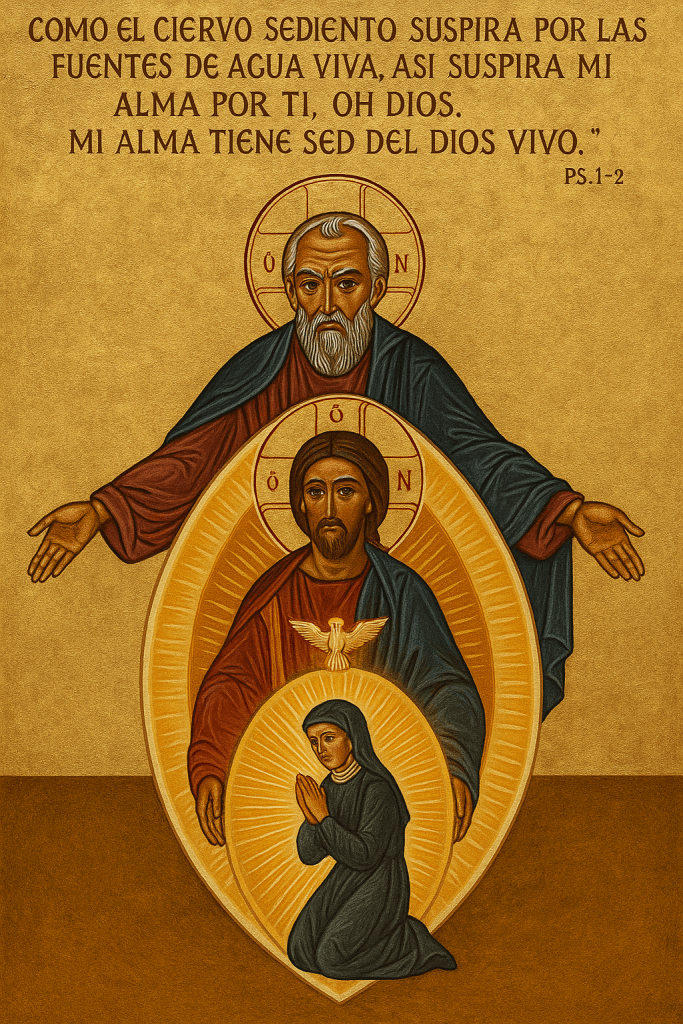
    «Como la cierva sedienta suspira por las fuentes de agua viva,
    así suspira mi alma por Ti, oh Dios.
    Mi alma tiene sed del Dios vivo.
    ¿Cuándo entraré a contemplar Su rostro?»

    Y, sin embargo, así como el gorrión ha hallado una casa
    y la tórtola un nido donde poner sus polluelos,
    así Laudem Gloriae ha encontrado, mientras espera
    ser llevada a la Jerusalén santa, beata pacis visio,
    su retiro, su bienaventuranza, su cielo anticipado,
    donde comienza su vida de eternidad.

    «En Dios mi alma está en silencio;
    de Él viene mi liberación.
    Él es la roca de mi salvación, mi fortaleza;
    no vacilaré.»
    Éste es el misterio que canta hoy mi lira.

    Mi Maestro me ha dicho, como a Zaqueo:
    «Desciende pronto, porque hoy debo hospedarme en tu casa.»
    ¿Desciende? ¿A dónde?
    Al centro más íntimo de mi ser,
    tras haberme abandonado, desprendido,
    quedado sin mí misma,
    sin yo.

    «Debo quedarme en tu casa.»
    Es mi Maestro quien expresa este deseo,
    el que quiere habitar en mí con el Padre y el Espíritu de Amor,
    para que, en palabras del discípulo amado,
    tenga comunión con Ellos.
    «Ya no sois extranjeros ni forasteros,
    sino conciudadanos de los santos
    y miembros de la casa de Dios», dice San Pablo.

    Así entiendo yo pertenecer a la casa de Dios:
    vivir en el seno de la Trinidad tranquila,
    en mi abismo interior,
    en esa invencible fortaleza de santa recolección
    de la que habla San Juan de la Cruz.
    David cantó: «Mi alma desfallece por los atrios del Señor.»
    Y pienso que esa debería ser la actitud
    de toda alma que entra en sus atrios interiores
    para contemplar a su Dios
    y acercarse a Él en el contacto más profundo:
    cae desmayada en un éxtasis divino
    ante el Amor omnipotente,
    ante la infinita Majestad que mora en ella.

    No es la vida la que abandona al alma,
    es el alma la que desdeña esta vida natural
    y se retira de ella;
    siente que esta vida no es digna de Su rica esencia,
    y así muere y se derrama en su Dios.

    ¡Oh, qué hermosa es esta criatura despojada,
    libre de sí misma!
    Puede usar «las ascensiones de su corazón»
    para pasar de este valle de lágrimas
    (a saber, de todo lo que es menos que Dios)
    al lugar que es su meta,
    ese espacio inmenso del que canta el salmista,
    que no es otro que la insondable Trinidad:
    Immensus Pater, Immensus Filius, Immensus Spiritus Sanctus.

    Asciende, se eleva sobre los sentidos,
    sobre la naturaleza,
    se trasciende,
    supera todo gozo y todo dolor
    y pasa a través de las nubes,
    sin detenerse hasta penetrar
    en el interior de Aquel a quien ama,
    que le da el reposo del abismo.

    Y todo eso, sin salir de la santa fortaleza.
    El Maestro le había dicho: «Desciende pronto…»
    Y es sin salir de ella que el alma vivirá,
    como la Trinidad inmutable,
    en un eterno presente,
    adorándole siempre por Él mismo,
    y volviéndose, con una mirada cada vez más simple y unificada,
    el resplandor de Su gloria:
    la alabanza incesante
    de Su adorable perfección.


    🇬🇧 Saint Elizabeth of the Trinity — Final Retreat, Sixteenth Day

    “As the thirsty deer longs for the springs of fresh water,
    so my soul longs for You, O God!
    My soul thirsts for the living God—
    when shall I appear before His face?”

    And yet, just as “the sparrow has found a home
    and the turtledove a nest for her young,”
    so Laudem Gloriae has found, while waiting
    to be led into the holy Jerusalem, beata pacis visio
    her retreat, her blessedness,
    her anticipated Heaven,
    where her life of eternity begins.

    “In God alone my soul is silent;
    from Him comes my deliverance.
    Yes, He is my rock and my salvation,
    my fortress—I shall not be moved.”
    This is the mystery my lyre sings today.

    My Master has said to me, as to Zacchaeus:
    “Hurry and come down, for today I must stay in your house.”
    Hurry and come down—but where?
    Into the innermost depths of my being:
    after forsaking self,
    after being stripped of self,
    in a word—without self.

    “I must stay in your house.”
    It is my Master who desires this!
    He who wishes to dwell within me
    with the Father and the Spirit of Love,
    so that, in the words of the beloved disciple,
    I may have communion with Them.
    “You are no longer strangers or guests,” says St. Paul,
    “but members of the household of God.”

    This, to me, is what it means
    to belong to the house of God:
    to live in the bosom of the tranquil Trinity,
    within my interior abyss,
    within that invincible fortress of holy recollection
    of which St. John of the Cross speaks.
    David sang: “My soul faints for the courts of the Lord.”
    And I think this must be the posture
    of every soul that enters its inner sanctuary
    to contemplate its God,
    to come into closest contact with Him:
    it “falls fainting” in a divine swoon
    before the all-powerful Love,
    the infinite Majesty dwelling within.

    It is not life that leaves the soul—
    it is the soul that scorns this natural life
    and withdraws from it;
    for it feels that this life is unworthy
    of His rich essence,
    and thus it dies and flows into its God.

    Oh, how beautiful is this creature—
    stripped, free from self!
    It may use “the ascensions in its heart”
    to pass from this valley of tears
    (that is, from all that is less than God)
    to its destined place—
    that spacious realm
    of which the psalmist sings,
    which seems to me to be the unfathomable Trinity:
    Immensus Pater, Immensus Filius, Immensus Spiritus Sanctus!

    It ascends, it rises above the senses,
    above nature, beyond every joy and pain,
    passing through the clouds
    until it reaches the innermost heart
    of the One it loves,
    who Himself gives it “the repose of the abyss.”

    And all this without leaving the holy fortress.
    The Master had said: “Hurry and come down…”
    And it is without leaving it
    that the soul will live, like the unchanging Trinity,
    in an eternal present—
    adoring Him always because of Himself,
    and becoming, through a gaze ever simpler, ever more united,
    the radiance of His glory,
    the unceasing praise of His adorable perfections.

  • 🇪🇸 Día Decimoquinto — Último Retiro de Santa Isabel de la Trinidad🇬🇧

    Después de Jesucristo, sin duda a la distancia que existe entre lo Infinito y lo finito, hay una que también fue la gran alabanza de gloria de la Santísima Trinidad. Ella respondió plenamente a la elección divina de la que habla el Apóstol: fue siempre “pura, inmaculada e irreprochable” (Efesios 1:4) ante los ojos del Dios tres veces santo.

    Su alma es tan simple, sus movimientos tan profundos, que escapan a toda mirada humana. Parece reproducir en la tierra la vida misma del Ser divino, del Ser simple.

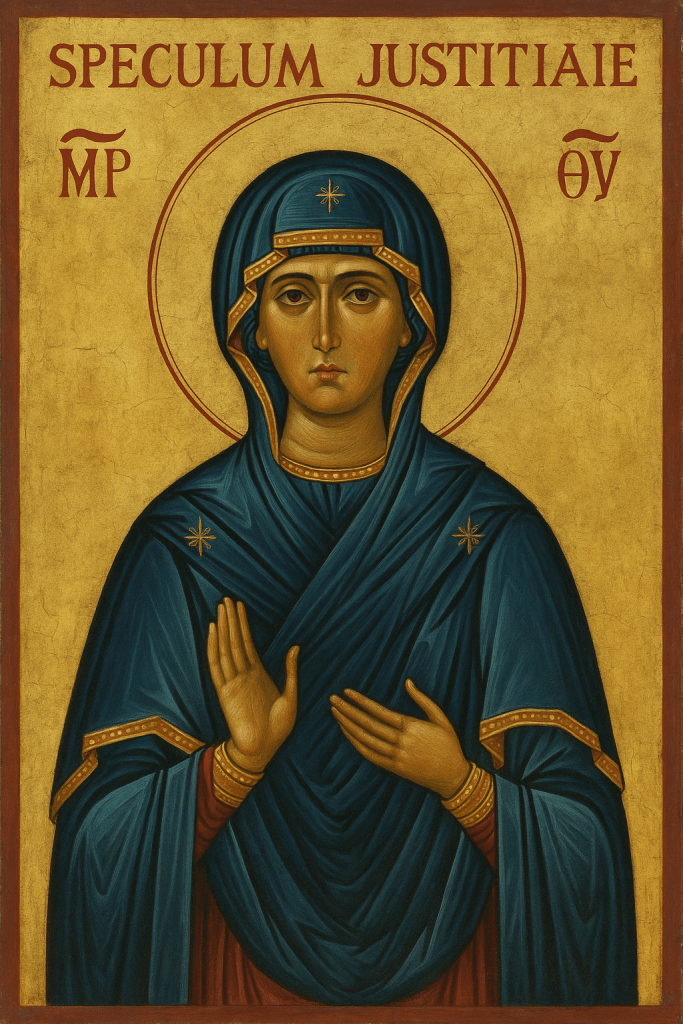
    Es tan transparente, tan luminosa, que uno podría confundirla con la luz; pero ella no es sino el “espejo del Sol de Justicia”: Speculum justitiae!

    “La Virgen guardaba todas estas cosas en su corazón.” (Lucas 2:19)

    ¡Toda su historia puede resumirse en estas pocas palabras! Vivió en el interior de su corazón, y a una profundidad tal que ningún ojo humano puede seguirla.

    Cuando leo en el Evangelio que “María fue de prisa a la región montañosa de Judea” (Lucas 1:39) para servir amorosamente a su prima Isabel, la imagino caminando con serenidad, hermosa y majestuosa, absorta en la presencia del Verbo de Dios que llevaba en su seno.

    Como Él, su oración era siempre: Ecce! — “Aquí estoy”.

    ¿Quién? “La sierva del Señor” (Lucas 1:38), la más humilde de las criaturas, ¡ella, Su Madre!

    Su humildad era perfecta, porque siempre se olvidaba de sí misma, liberada del yo. Por eso pudo cantar:

    “El Todopoderoso ha hecho obras grandes por mí, y su nombre es santo. Desde ahora todas las generaciones me llamarán bienaventurada.” (Lucas 1:48–49)

    Esta Reina de las vírgenes es también Reina de los mártires; pero en su caso, la espada atravesó su corazón (Lucas 2:35), porque en ella todo acontecía dentro, en el silencio interior.

    ¡Qué hermosa es de contemplar en su largo martirio! Serena, envuelta en una majestad que irradia fuerza y dulzura.

    Aprendió del Verbo mismo cómo deben sufrir aquellos que el Padre ha elegido como víctimas, aquellos que Él ha decidido asociar a su obra de redención, los que “han sido conocidos y predestinados para ser conformes a Cristo” (Romanos 8:29), crucificados por amor.

    Está allí, al pie de la Cruz, firme, llena de fortaleza y de amor, y mi Maestro me dice:

    “Ecce Mater tua” — “He aquí a tu Madre.” (Juan 19:27)

    Él me la entrega por Madre.

    Y ahora que Él ha regresado al Padre y me ha sustituido en la Cruz “para que en mi carne complete lo que falta a su pasión por el bien de su Cuerpo, que es la Iglesia” (Colosenses 1:24), la Santísima Virgen está de nuevo a mi lado, para enseñarme a sufrir como Él, para hacerme oír los últimos cantos de Su alma, esos que sólo Ella, Su Madre, pudo escuchar.

    Y cuando yo diga mi propio “consummatum est” (Juan 19:30), será Ella, Janua Coeli — “Puerta del Cielo” — quien me introducirá en las moradas eternas, susurrándome las palabras del salmo:

    “Me alegré cuando me dijeron: Vamos a la casa del Señor.” (Salmo 122:1)

    — Santa Isabel de la Trinidad

    🇬🇧 Fifteenth Day — Last Retreat of Saint Elizabeth of the Trinity

    After Jesus Christ—at the distance that lies between the Infinite and the finite—there is one who was also the great praise of glory of the Holy Trinity. She fully responded to the divine election of which the Apostle speaks: she was always “pure, immaculate, and without reproach” (Ephesians 1:4) in the eyes of the thrice-holy God.

    Her soul is so simple, her movements so deep, that they cannot be perceived. She seems to reproduce on earth the very life of the Divine Being—the simple Being.

    And she is so transparent, so luminous, that one might mistake her for the light itself; yet she is only the “mirror of the Sun of Justice”: Speculum justitiae!

    “The Virgin kept all these things in her heart.” (Luke 2:19)

    Her whole history can be summed up in these few words! She lived within her heart, at such a depth that no human eye could follow her.

    When I read in the Gospel that “Mary went in haste to the hill country of Judea” (Luke 1:39) to render loving service to her cousin Elizabeth, I imagine her passing so beautiful, calm, and majestic, wholly absorbed in the presence of the Word of God within her.

    Like Him, her prayer was always: Ecce! — “Here I am.”

    Who? “The handmaid of the Lord” (Luke 1:38), the lowliest of His creatures, yet His Mother!

    Her humility was absolute, for she was always forgetful of self, freed from all self-consciousness. And she could sing:

    “The Almighty has done great things for me, and holy is His name. From now on all generations will call me blessed.” (Luke 1:48–49)

    This Queen of Virgins is also Queen of Martyrs; but with her, the sword pierced her heart (Luke 2:35), for everything took place within!

    Oh, how beautiful she is to contemplate during her long martyrdom—serene, clothed in majesty, radiating both strength and gentleness.

    She learned from the Word Himself how those must suffer whom the Father has chosen as victims, those He has decided to associate with Himself in the great work of redemption, those whom He “foreknew and predestined to be conformed to His Christ” (Romans 8:29), crucified by love.

    She stands at the foot of the Cross, full of strength and courage—and here my Master says to me:

    “Ecce Mater tua” — “Behold your Mother.” (John 19:27)

    “I rejoiced when they said to me: Letus go to the house of the Lord.” (Psalm 122:1)

    He gives her to me as my Mother.

    — Saint Elizabeth of the Trinityq

    And now that He has returned to the Father and has substituted me on the Cross, “that in my own body I may complete what is lacking in His passion for the sake of His Body, which is the Church” (Colossians 1:24), the Blessed Virgin is again there, teaching me how to suffer like Him, making me hear the last songs of His soul, which only she, His Mother, could hear.

    And when I shall have said my own “consummatum est” (John 19:30), it will be she, Janua Coeli — “Gate of Heaven” — who will lead me into the courts of Heaven, whispering to me these words:

    “I rejoiced when they said to me: Let us go to the house of the Lord.” (Psalm 122:1)

    Last Retreat — Fifteenth Day

    Fifteenth Day — Last Retreat of Saint Elizabeth of the Trinity

    After Jesus Christ—at the distance that lies between the Infinite and the finite—there is one who was also the great praise of glory of the Holy Trinity. She fully responded to the divine election of which the Apostle speaks: she was always “pure, immaculate, and without reproach” (Ephesians 1:4) in the eyes of the thrice-holy God.

    Her soul is so simple, her movements so deep, that they cannot be perceived. She seems to reproduce on earth the very life of the Divine Being—the simple Being.

    And she is so transparent, so luminous, that one might mistake her for the light itself; yet she is only the “mirror of the Sun of Justice”: Speculum justitiae!

    “The Virgin kept all these things in her heart.” (Luke 2:19)

    Her whole history can be summed up in these few words! She lived within her heart, at such a depth that no human eye could follow her.

    When I read in the Gospel that “Mary went in haste to the hill country of Judea” (Luke 1:39) to render loving service to her cousin Elizabeth, I imagine her passing so beautiful, calm, and majestic, wholly absorbed in the presence of the Word of God within her.

    Like Him, her prayer was always: Ecce! — “Here I am.”

    Who? “The handmaid of the Lord” (Luke 1:38), the lowliest of His creatures, yet His Mother!

    Her humility was absolute, for she was always forgetful of self, freed from all self-consciousness. And she could sing:

    “The Almighty has done great things for me, and holy is His name. From now on all generations will call me blessed.” (Luke 1:48–49)

    This Queen of Virgins is also Queen of Martyrs; but with her, the sword pierced her heart (Luke 2:35), for everything took place within!

    Oh, how beautiful she is to contemplate during her long martyrdom—serene, clothed in majesty, radiating both strength and gentleness.

    She learned from the Word Himself how those must suffer whom the Father has chosen as victims, those He has decided to associate with Himself in the great work of redemption, those whom He “foreknew and predestined to be conformed to His Christ” (Romans 8:29), crucified by love.

    She stands at the foot of the Cross, full of strength and courage—and here my Master says to me:

    “Ecce Mater tua” — “Behold your Mother.” (John 19:27)

    He gives her to me as my Mother.

    And now that He has returned to the Father and has substituted me on the Cross, “that in my own body I may complete what is lacking in His passion for the sake of His Body, which is the Church” (Colossians 1:24), the Blessed Virgin is again there, teaching me how to suffer like Him, making me hear the last songs of His soul, which only she, His Mother, could hear.

    And when I shall have said my own “consummatum est” (John 19:30), it will be she, Janua Coeli — “Gate of Heaven” — who will lead me into the courts of Heaven, whispering to me these words:

    “I rejoiced when they said to me: Let us go to the house of the Lord.” (Psalm 122:1)

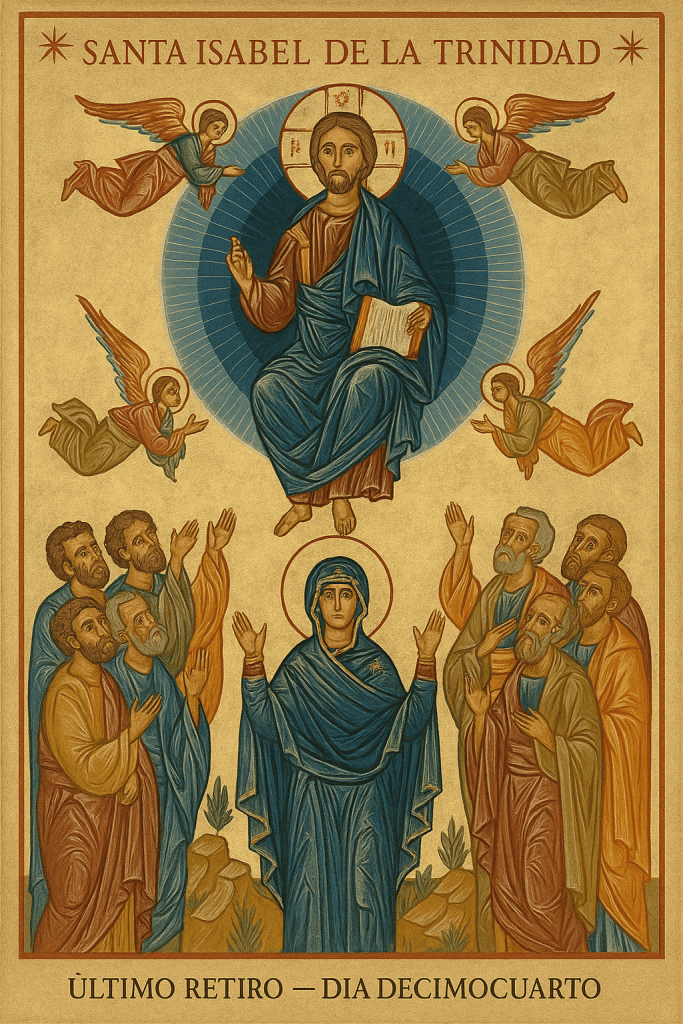
  • 🇪🇸 Día Decimocuarto — Último Retiro de Santa Isabel de la Trinidad🇬🇧

    “Me parece que todo es pérdida desde que conocí la excelencia del conocimiento de mi Señor Jesucristo. Por amor a Él lo he perdido todo; todo lo demás lo tengo por basura, con tal de ganar a Cristo y ser hallada en Él, no con mi propia justicia, sino con la que viene de Dios por la fe.
    Lo que deseo es conocerlo, compartir sus sufrimientos, asemejarme a Él en su muerte.
    Prosigo mi carrera, esforzándome por alcanzar aquello para lo cual Cristo me ha tomado; mi único afán es olvidar lo que queda atrás y avanzar sin cesar hacia lo que está delante; corro recto hacia la meta, hacia el premio de la vocación celestial a la que Dios me ha llamado en Cristo Jesús.” (Filipenses 3:8-14)

    El Apóstol ha revelado muchas veces la grandeza de esta vocación:

    “Dios nos eligió en Él antes de la creación del mundo para que fuéramos santos e inmaculados en su presencia por amor… Hemos sido predestinados según el designio de Aquel que realiza todas las cosas conforme al consejo de su voluntad, para que seamos alabanza de su gloria.” (Efesios 1:4-12)

    ¿Cómo respondemos a la dignidad de esta vocación? Este es el secreto:

    “Mihi vivere Christus est… Vivo autem, iam non ego, vivit vero in me Christus.” — “Para mí, vivir es Cristo… Ya no soy yo quien vive, sino que Cristo vive en mí.” (Filipenses 1:21; Gálatas 2:20)

    Debemos ser transformados en Cristo.
    San Pablo enseña:

    “A los que Dios conoció de antemano, los predestinó a ser conformes a la imagen de su Hijo.” (Romanos 8:29)

    Por tanto, debemos estudiar este divino Modelo, hasta identificarnos tanto con Él que podamos reflejarlo incesantemente ante los ojos del Padre.
    ¿Qué dijo el Hijo al venir al mundo?

    “Aquí estoy, oh Dios, para hacer tu voluntad.” (Hebreos 10:7)

    Esa oración debería ser como el latido del corazón del alma consagrada:

    “Aquí estamos, oh Padre, venimos a hacer tu voluntad.”

    El Maestro fue la Verdad misma en esa oblación inicial. Su vida entera fue consecuencia de ella:

    “Mi alimento es hacer la voluntad del que me envió.” (Juan 4:34)

    Así también debe ser para quien lo ama —y, al mismo tiempo, su espada y su cruz—:

    “Padre, si es posible, pase de mí este cáliz; pero no se haga mi voluntad, sino la tuya.” (Lucas 22:42)

    Y así podrá ir con gozo al sacrificio, sabiendo que el Padre la “ha conocido” al crucificarla con su Hijo.

    “Tus mandamientos son mi herencia perpetua; son el gozo de mi corazón.” (Salmo 119:111)

    Por la fidelidad constante a esos decretos, dará testimonio de la Verdad y podrá decir:

    “El que me envió no me ha dejado solo, porque yo hago siempre lo que le agrada.” (Juan 8:29)

    Entonces irradiará “ese poder secreto” que salva y libera almas.
    Despojada y libre de sí misma, podrá subir con el Maestro al monte, a orar con Él “una oración de Dios”, ofreciendo un sacrificio continuo de alabanza:

    “Por Él, ofrezcamos continuamente a Dios un sacrificio de alabanza, es decir, el fruto de unos labios que confiesan su nombre.” (Hebreos 13:15)

    Y cuando llegue la hora de la humillación, recordará:

    “Jesús autem tacebat” — Jesús callaba. (Mateo 26:63)

    Guardará silencio, “reservando todas sus fuerzas para el Señor”, porque “de la quietud nace la fortaleza”.
    Y cuando llegue la hora del abandono, del grito y del vacío, repetirá con su Maestro:

    “Dios mío, Dios mío, ¿por qué me has abandonado?” (Mateo 27:46)

    Y al beber el cáliz hasta las heces, hallará dulzura divina en su amargura.
    Finalmente, tras haber dicho tantas veces “Tengo sed”, sed de poseerte en la gloria, cantará:

    “Todo está consumado. En tus manos encomiendo mi espíritu.” (Juan 19:30; Lucas 23:46)

    Entonces el Padre vendrá a “introducirla en su herencia”, donde “en tu luz veremos la luz”. (Salmo 36:9)
    Porque el Señor habrá glorificado en ella a su Santo, destruyendo todo lo que no era Él para “revestirla de sí mismo”.
    Así habrá vivido plenamente las palabras del Precursor:

    “Es necesario que Él crezca y que yo disminuya.” (Juan 3:30)

    Santa Isabel de la Trinidad
    Último Retiro — Día Decimocuarto


    🇬🇧 Fourteenth Day — Last Retreat of Saint Elizabeth of the Trinity

    “It seems to me that all is loss since I have known the surpassing worth of knowing Christ Jesus my Lord. For love of Him I have forfeited everything; I consider all else rubbish that I may gain Christ and be found in Him, not having my own justice but that which comes through faith in God. What I want is to know Him, to share in His sufferings, to become like Him in His death.
    I press on, striving to take hold of that for which Christ Jesus has taken hold of me; forgetting what lies behind and straining forward to what lies ahead, I press toward the goal — the prize of the heavenly calling of God in Christ Jesus.” (Philippians 3:8–14)

    The Apostle has revealed many times the greatness of this vocation:

    “God chose us in Him before the creation of the world, to be holy and blameless in His sight, in love… having been predestined according to the plan of Him who works out everything in conformity with the purpose of His will, so that we might be to the praise of His glory.” (Ephesians 1:4–12)

    How can we respond to such dignity? The secret is this:

    “Mihi vivere Christus est… Vivo autem, iam non ego, vivit vero in me Christus.” — “For me to live is Christ… It is no longer I who live, but Christ who lives in me.” (Philippians 1:21; Galatians 2:20)

    We must be transformed into Christ.
    St. Paul teaches:

    “Those whom God foreknew, He also predestined to be conformed to the image of His Son.” (Romans 8:29)

    Thus we must study the Divine Model so closely that we reflect Him constantly before the Father’s eyes.
    What did the Son say when He came into the world?

    “Here I am, O God, I come to do Your will.” (Hebrews 10:7)

    That prayer should be like the heartbeat of the soul:

    “Here we are, O Father, we come to do Your will.”

    The Master was truth itself in that first oblation. His whole life flowed from it:

    “My food is to do the will of Him who sent me.” (John 4:34)

    So it should be for the soul who loves Him — her food and her sword alike.

    “Father, if it is possible, let this cup pass from me; yet not as I will, but as You will.” (Luke 22:42)

    She will joyfully follow Him in every sacrifice, rejoicing to be known by the Father, since He crucifies her with His Son.

    “Your decrees are my inheritance forever; they are the joy of my heart.” (Psalm 119:111)

    Through fidelity to these decrees, she will “bear witness to the truth” and say:

    “He who sent me has not left me alone, for I always do what pleases Him.” (John 8:29)

    Remaining in this union, she will radiate “that secret power which saves and delivers souls.”
    Stripped and free from self, she can follow the Master to the mountain to pray in her soul a “prayer of God,” offering through Him the “sacrifice of praise, the fruit of lips that confess His name.” (Hebrews 13:15)

    When her hour of humiliation comes, she will remember:

    “Jesus autem tacebat” — Jesus was silent. (Matthew 26:63)

    She will keep silence, “reserving all her strength for the Lord,” for “from silence comes strength.”
    And when the hour of abandonment comes, she will recall His cry:

    “My God, my God, why have You forsaken me?” (Matthew 27:46)

    And drinking the cup prepared by the Father, she will find divine sweetness in its bitterness.
    Finally, after having said so often “I thirst,” thirsting to possess Him in glory, she will sing:

    “It is finished. Into Your hands I commend my spirit.” (John 19:30; Luke 23:46)

    Then the Father will come to bring her into His inheritance, where “in Your light we shall see light.” (Psalm 36:9)
    For the Lord will have glorified His Holy One in her, clothing her entirely with Himself, and she will have lived truly the words of the Forerunner:

    “He must increase and I must decrease.” (John 3:30)

    Saint Elizabeth of the Trinity
    Last Retreat — Fourteenth Day

  • 🇪🇸Día Decimotercero del Último Retiro de Santa Isabel de la Trinidad🇬🇧

    🇪🇸 Día Decimotercero

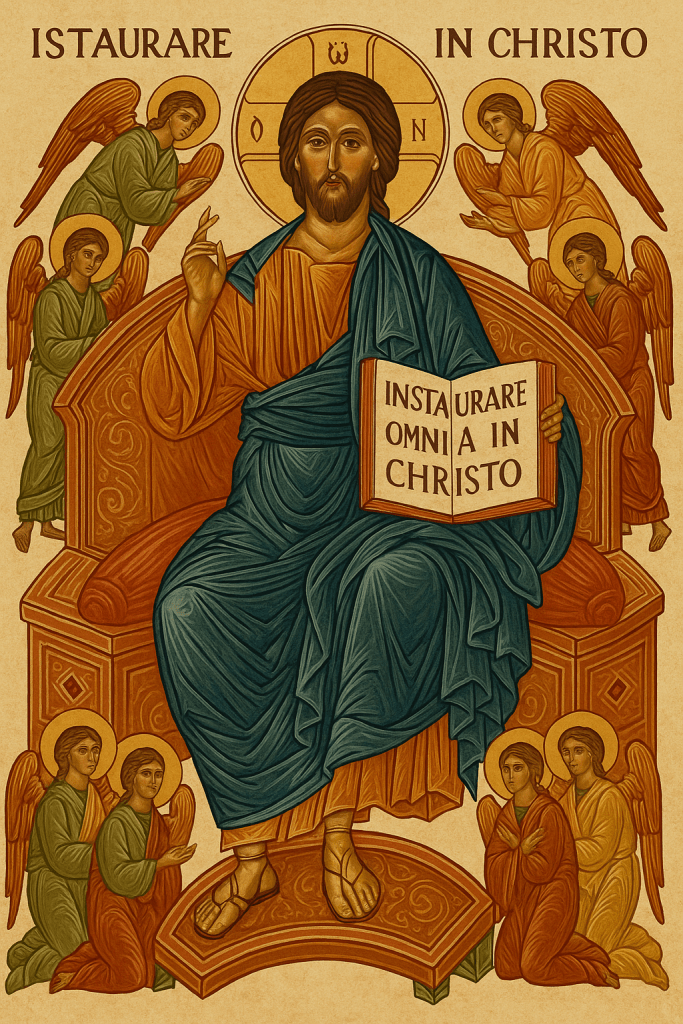
    1. “Instaurare omnia in Christo.”
      De nuevo es San Pablo quien me instruye, San Pablo que acaba de sumergirse en el gran designio de Dios y que me dice “que Él ha resuelto en sí mismo restaurar todas las cosas en Cristo.”
      Para que yo pueda realizar personalmente este plan divino, es también San Pablo quien viene en mi ayuda y quien me traza una regla de vida:
      “Caminad en Jesucristo —me dice—, arraigados en Él, edificados en Él, fortalecidos en la fe, creciendo cada vez más en Él con acción de gracias.”
    2. Caminar en Jesucristo me parece que significa salir de uno mismo, perderse de vista, renunciarse, para entrar cada vez más profundamente en Él, momento tras momento, tan profundamente que el alma quede allí enraizada.
      Entonces, ante cada acontecimiento, ante toda circunstancia, podemos lanzar este hermoso desafío:
      “¿Quién me separará del amor de Jesucristo?”
      Cuando el alma se ha establecido en Él a tal profundidad que sus raíces penetran hondo, la savia divina circula en ella y toda esa vida imperfecta, vulgar y natural es destruida. Entonces, en lenguaje del Apóstol, “lo mortal es absorbido por la vida.”
      El alma así “despojada” de sí misma y “revestida” de Jesucristo ya no tiene nada que temer de los encuentros exteriores ni de las dificultades interiores, pues estas cosas, lejos de ser un obstáculo, sirven únicamente para “arraigarla más profundamente en el amor” de su Maestro.
      A través de todo, a pesar de todo, el alma puede “adorarle siempre por Él mismo”.
      Porque es libre, libre de sí y de todo lo demás; puede cantar con el salmista:
      “Si un ejército acampa contra mí, no temeré; si se desata la guerra, confiaré en medio de todo; porque Yahveh me esconderá en el secreto de su tienda.”
      Y esa tienda no es otra cosa que Él mismo.
      Creo que eso es lo que San Pablo quiere decir cuando dice: “Estad arraigados en Jesucristo.”
    3. ¿Y qué significa ahora estar edificados en Él?
      El profeta también canta:
      “Él me ha puesto en alto sobre una roca, y ahora mi cabeza se alza sobre mis enemigos que me rodean.”
      Creo que esto puede tomarse como figura del alma “edificada en Jesucristo”.
      Él es esa roca sobre la cual se eleva el alma por encima de sí misma, de los sentidos y de la naturaleza, por encima de las consolaciones o de las penas, por encima de todo lo que no sea Él solo.
      Allí, en perfecto dominio de sí misma, el alma vence y trasciende todo.
      Luego, San Pablo me exhorta a ser fortalecida en la fe: en esa fe que nunca deja adormecer al alma, sino que la mantiene completamente vigilante bajo la mirada del Maestro, totalmente absorbida en el recuerdo de su palabra creadora, en esa fe “en su amor sobreabundante”, que permite a Dios —dice San Pablo— “llenar al alma con su plenitud.”
    4. Finalmente, quiere que “crezca en Jesucristo por la acción de gracias”, pues todo debe concluir en esto:
      “Padre, te doy gracias.”
      Mi Maestro cantó estas palabras en su alma y desea oír su eco en la mía.
      Pero pienso que el “cántico nuevo” que más encantará y cautivará a mi Dios es el de un alma despojada y libre de sí, en la cual Él puede reflejar todo lo que es y hacer todo lo que quiere.
      Esa alma permanece bajo su toque como una lira, y todos los dones que Él le concede son cuerdas que vibran sin cesar, día y noche, para cantar la alabanza de su gloria.

    Santa Isabel de la Trinidad


    🇬🇧 Thirteenth Day

    1. “Instaurare omnia in Christo.”
      Once again, it is St. Paul who instructs me —St. Paul who has immersed himself in the great counsel of God and tells me that “He has resolved within Himself to restore all things in Christ.”
      To help me personally realize this divine plan, it is again St. Paul who comes to my aid and who lays out for me a rule of life:
      “Walk in Jesus Christ,” he tells me, “rooted in Him, built up in Him, strengthened in faith, growing more and more in Him through thanksgiving.”
    2. To walk in Jesus Christ seems to me to mean to leave self, lose sight of self, give up self, in order to enter more deeply into Him moment by moment, so deeply that one becomes rooted there.
      Then, before every event and circumstance, one can throw down this beautiful challenge:
      “Who will separate me from the love of Jesus Christ?”
      When the soul is established in Him so deeply that its roots are thrust far within, the divine sap flows through it, and all that imperfect, common, natural life is destroyed. Then, in the Apostle’s words, “that which is mortal is swallowed up by life.”
      The soul thus “stripped” of self and “clothed” in Jesus Christ has nothing more to fear from outward encounters or inner trials, for these, far from being obstacles, serve only “to root it more deeply in the love” of its Master.
      Through everything, in spite of everything, the soul can “adore Him always because of Himself.”
      For it is free —free from self and from everything else; it can sing with the psalmist:
      “Though an army encamp against me, I will not fear; though war be waged upon me, I will trust in spite of all, for Yahweh will hide me in the secrecy of His tent.”
      And that tent is nothing else but Himself.
      I believe this is what St. Paul means when he says, “Be rooted in Jesus Christ.”
    3. And now, what does it mean to be built up in Him?
      The prophet also sings:
      “He has set me high upon a rock, and now my head is lifted up above my enemies who surround me.”
      I think this may well represent the soul “built up in Jesus Christ.”
      He is that rock upon which the soul rises above itself, the senses, and nature —above consolations or sorrows, above all that is not Him alone.
      There, in perfect self-mastery, it overcomes and transcends all.
      Next, St. Paul exhorts me to be strengthened in faith: that faith which never lets the soul sleep, but keeps it wholly vigilant beneath the gaze of its Master, wholly absorbed in remembrance of His creative word, in that faith “in His exceeding love,” which allows God, as St. Paul says, “to fill the soul with His fullness.”
    4. Finally, he wants me “to grow in Jesus Christ through thanksgiving,” for everything must end in this:
      “Father, I thank You!”
      My Master sang this in His soul, and He wishes to hear its echo in mine.
      But I believe that the “new song” which will most delight and captivate my God is that of a soul stripped and freed from self —one in which He can reflect all that He is and do all that He wills.
      Such a soul remains beneath His touch like a lyre, and all His gifts to it are like strings that vibrate day and night to sing the praise of His glory.

    Saint Elizabeth of the Trinity

  • 🇪🇸 Ultimo Retiro, Día Doce. Santa Isabel de la Trinidad — Verbum caro factum est 🇺🇸

    “Y el Verbo se hizo carne y habitó entre nosotros.” (Jn 1,14)

    Dios ha dicho:

    “Sed santos, porque Yo soy santo.” (Lev 11,45)

    Pero permanecía oculto en su luz inaccesible, y la criatura necesitaba que Él descendiera, que viviera su vida, para que, siguiéndolo, pudiera ascender hasta Él y ser santa con su santidad.

    “Por ellos me santifico a mí mismo,
    para que ellos también sean santificados en la verdad.” (Jn 17,19)

    Aquí me encuentro ante el misterio escondido desde siglos y generaciones, el misterio que es Cristo, “nuestra esperanza de gloria” (Col 1,27).
    San Pablo dice que le fue dada la inteligencia de este misterio, y añade que se trata de un conocimiento que “sobrepasa todo conocimiento: el conocimiento del amor de Cristo Jesús” (Ef 3,19).

    Él es mi paz, dice el Apóstol;
    “por Él tengo acceso al Padre” (Ef 2,18),
    pues ha querido el “Padre de las luces” (Sant 1,17)
    que “en Él habitara toda la plenitud,
    y que por Él reconciliara todas las cosas,
    haciendo la paz por la sangre de su cruz.” (Col 1,19-20)

    “De su plenitud hemos recibido todos”, continúa San Pablo.
    “Con Él fuimos sepultados en el Bautismo,
    y con Él resucitamos por la fe en el poder de Dios.
    Nos dio vida juntamente con Él,
    perdonándonos todos nuestros pecados,
    borrando el decreto de condena que pesaba sobre nosotros,
    clavándolo en la Cruz.
    Despojó a los principados y potestades,
    los exhibió públicamente,
    triunfando sobre ellos en sí mismo.” (Col 2,9-15)

    Todo esto lo hizo “para presentarnos santos, inmaculados e irreprochables ante el Padre.” (Col 1,22)

    Este es el trabajo de Cristo en toda alma de buena voluntad.
    Es la obra que su amor inmenso, su amor sin medida, desea realizar en mí.
    Quiere ser mi paz, para que nada me distraiga ni me aparte de la fortaleza invencible del santo recogimiento.
    Allí me dará acceso al Padre,
    y me mantendrá quieto y sereno en su presencia,
    como si mi alma ya viviera en la eternidad.

    Por la sangre de su Cruz, pacificará mi pequeño cielo interior,
    para que sea verdaderamente el reposo de la Trinidad.
    Me llenará de sí mismo, me sepultará con Él,
    me hará resucitar en su vida.

    “Mihi vivere Christus est.”
    Para mí, vivir es Cristo. (Flp 1,21)

    Y si caigo, una y otra vez,
    Él me levantará con ternura, me perdonará,
    borrará mis faltas con celo amoroso,
    y aún más, me despojará, me liberará
    de todo lo que impida su acción divina.

    Llevará cautivas todas mis potencias,
    triunfará sobre ellas en sí mismo,
    hasta que pueda decir con verdad:

    “Ya no soy yo quien vive,
    es mi Maestro quien vive en mí.” (Gál 2,20)

    Y entonces seré “santa, pura e irreprochable” ante los ojos del Padre.

    Santa Isabel de la Trinidad


    🇺🇸 Twelfth Day — “Verbum caro factum est”

    “And the Word was made flesh and dwelt among us.” (John 1:14)

    God has said:

    “Be holy, for I am holy.” (Leviticus 11:45)

    But He remained hidden in His inaccessible light, and the creature needed Him to descend, to live its life, so that by following His footsteps, it might rise toward Him and be holy with His holiness.

    “I sanctify myself for them,
    that they also may be sanctified in the truth.” (John 17:19)

    Here I stand before the mystery hidden for ages and generations, the mystery which is Christ, “your hope of glory” (Col 1:27).
    Saint Paul says that the understanding of this mystery was given to him, and that it is a knowledge which “surpasses all other knowledge — the knowledge of the love of Christ Jesus” (Eph 3:19).

    He is my peace, the Apostle tells me;
    “it is through Him that I have access to the Father” (Eph 2:18),
    for it has pleased the “Father of lights” (James 1:17)
    that “in Him all fullness should dwell,
    and through Him He should reconcile all things,
    making peace through the Blood of His Cross.” (Col 1:19–20)

    “From His fullness we have all received,” Paul continues.
    “We were buried with Him in Baptism,
    and in Him we rose again through faith in the power of God.
    He brought us to life along with Him,
    forgiving us all our sins,
    canceling the decree of condemnation that weighed upon us,
    nailing it to the Cross.
    He disarmed the Principalities and Powers,
    making a public spectacle of them,
    triumphing over them in Himself.” (Col 2:9–15)

    And all this “to present us holy, pure, and blameless before the Father.” (Col 1:22)

    This is the work of Christ in every soul of good will.
    It is the task that His immense, boundless love longs to fulfill in me.
    He wants to be my peace, that nothing may disturb or draw me away from the invincible fortress of holy recollection.
    There, He will give me access to the Father,
    keeping me still and serene in His presence,
    as though my soul were already living in eternity.

    By the Blood of His Cross, He will make peace in my little heaven,
    so that it may truly become the rest of the Three.
    He will fill me with Himself, bury me with Him,
    and make me live by His life.

    “Mihi vivere Christus est.”
    For me, to live is Christ. (Phil 1:21)

    And if I fall again and again,
    He will raise me up in faithful tenderness.
    I know that He will forgive me,
    that He will erase all my faults with jealous care;
    and beyond that, He will strip me, free me,
    from all that hinders His divine action.

    He will lead away all my powers,
    making them His captives,
    triumphing over them in Himself.

    Then I shall have wholly passed into Him and be able to say:

    “I no longer live, but Christ lives in me.” (Gal 2:20)

    And I shall be “holy, pure, and without reproach” in the Father’s eyes.

    Saint Elizabeth of the Trinity

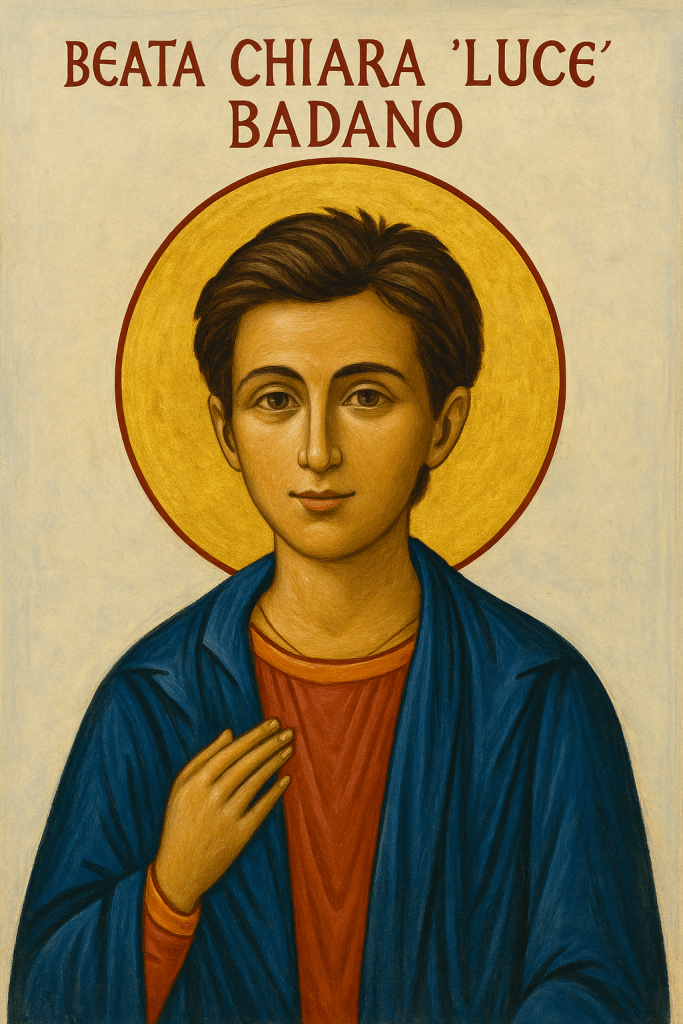
  • 🇪🇸 Beata Chiara “Luce” Badano

    La luz que comprendió el dolor

    Nacida en Sassello, Italia, en 1971, Chiara Badano llegó al mundo tras once años de espera orante de sus padres. Su vida comenzó como un suspiro de esperanza; su nombre, Luce, fue profecía. Desde la infancia, su alegría y serenidad irradiaban una fe profunda, sin afectación, sencilla como el aire.

    A los dieciséis años, un tumor óseo interrumpió su juventud, pero no su amor. La enfermedad fue para ella un diálogo con Dios. El dolor se transformó en presencia. Rechazó la morfina —quería vivir su Pasión despierta— y ofreció cada instante por amor. “Si lo quieres Tú, Jesús, también lo quiero yo”, repetía con dulzura.

    Sus amigos, al visitarla, no hallaban enfermedad, sino una especie de claridad; una alegría sobrenatural que los conmovía hasta las lágrimas. Chiara no hablaba de Cristo: lo encarnaba. Su cama se convirtió en altar, y su sonrisa, en evangelio silencioso.

    Poco antes de morir, pidió flores blancas y un vestido de novia. Su despedida no fue un adiós, sino una promesa.

    “Mamá, sé feliz, porque yo lo soy.”

    Partió el 7 de octubre de 1990, a los dieciocho años, dejando tras de sí una luz que aún atraviesa el mundo. En ella se cumple la palabra de Santa Isabel de la Trinidad: “El alma puede vivir ya en el cielo si se deja habitar por Dios.”

    Beatificada por Benedicto XVI en 2010, Chiara Luce Badano brilla hoy como ejemplo de santidad joven, cotidiana y luminosa. Su alegría no fue ingenuidad, sino fe absoluta; su luz, el reflejo de un corazón totalmente entregado al Amor eterno.


    Oración a la Beata Chiara “Luce” Badano

    Oh Jesús, que concediste a tu sierva Chiara la gracia de transformar el dolor en amor,
    enséñanos, por su intercesión,
    a ofrecer con serenidad nuestras cruces cotidianas.
    Que como ella, sepamos decir con paz:
    “Si lo quieres Tú, también lo quiero yo.”

    Amén.


    🇺🇸 Blessed Chiara “Luce” Badano

    The Light That Understood Suffering

    Born in Sassello, Italy, in 1971, Chiara Badano came into the world after eleven years of her parents’ prayers. Her life began as a sigh of hope; her name, Luce —“light”— was a prophecy. From childhood, her calm joy radiated a deep faith, pure and transparent as dawn.

    At sixteen, an osteosarcoma struck, interrupting her youth but not her love. The disease became a dialogue with God. Pain was transfigured into presence. She refused morphine—she wanted to live her Passion awake—and offered every breath in love. “If You want it, Jesus, I want it too,” she would say with quiet strength.

    Those who visited her found not illness, but clarity. Her peace disarmed the heart. Chiara did not speak about Christ; she became Him. Her bed became an altar, and her smile, a silent gospel.

    Before dying, she asked for white flowers and a bridal gown. Her farewell was not an end, but a wedding.

    “Mom, be happy, because I am.”

    She left this world on October 7, 1990, at eighteen years old. In her, the words of Saint Elizabeth of the Trinity found fulfillment: “The soul can live in heaven already on earth if it lets itself be inhabited by God.”

    Beatified by Pope Benedict XVI in 2010, Chiara Luce Badano shines today as an icon of youthful holiness — simple, luminous, and real. Her joy was not naivety, but faith; her light, the reflection of a soul entirely given to Eternal Love.


    Prayer to Blessed Chiara “Luce” Badano

    O Jesus, who granted your servant Chiara
    the grace to turn pain into love,
    teach us, through her intercession,
    to offer our daily crosses with serenity.
    That, like her, we may say with peace:
    “If You want it, I want it too.”

    Amen.

  • 🇪🇸 Último Retiro — Día UndécimoSanta Isabel de la Trinidad🇬🇧

    🙏 Oración / Prayer
    Señor, condúceme a ese lugar espacioso donde habita Tu silencio.
    Hazme entrar en la soledad infinita donde Tu Palabra se oye y transforma.
    Encierra mi voluntad en la Tuya, para que todo en mí sea movimiento de Tu Espíritu
    y viva, desde ahora, en Tu eterno presente.

    1. “El Señor me condujo a un lugar espacioso, porque se mostró misericordioso conmigo.”
      El Creador, al contemplar el hermoso silencio que reina en su criatura, y al verla recogida en su interior soledad, se enamora de su belleza y la conduce a esa inmensa, infinita soledad, a ese “espacioso lugar” del que canta el profeta, que no es otro sino Él mismo: “Entraré en las profundidades del poder de Dios.”

    El Señor, hablando por medio del profeta, dijo: “La conduciré a la soledad y hablaré a su corazón.”
    El alma ha entrado en esa vasta soledad en la que Dios se hará oír.
    “Su palabra,” dice San Pablo, “es viva y eficaz, más cortante que espada de dos filos: penetra hasta dividir el alma y el espíritu, las coyunturas y los tuétanos.”
    Es, pues, Su palabra la que directamente realiza la obra de despojo en el alma; porque tiene esta característica: produce y crea lo que anuncia, siempre que el alma consienta en dejarse hacer.

    1. Pero no basta con escuchar esta palabra: hay que guardarla.
      Y es en guardarla donde el alma será “santificada en la verdad”, que es el deseo del Maestro: “Santifícalos en la verdad, tu palabra es verdad.”
      ¿Y no ha hecho Él esta promesa a quien guarda Su palabra?: “Mi Padre lo amará, y vendremos a él, y haremos morada en él.”

    Es toda la Trinidad la que habita en el alma que los ama en verdad, es decir, guardando su palabra.
    Y cuando esa alma ha comprendido sus riquezas, todas las alegrías, naturales o sobrenaturales, que puedan venirle de las criaturas o del mismo Dios, no son sino una invitación a reentrar en sí misma, para gozar del Bien sustancial que posee, que no es otro que Dios mismo.

    Así, dice San Juan de la Cruz, el alma llega a tener cierta semejanza con el Ser divino:
    “Sed perfectos como vuestro Padre celestial es perfecto.”
    San Pablo me recuerda que “Él hace todas las cosas según el consejo de Su voluntad,”
    y mi Maestro me pide rendirle homenaje también en esto: hacer todas las cosas según el consejo de mi voluntad, sin dejarme arrastrar por las impresiones o los primeros impulsos de la naturaleza, sino permitiendo que la voluntad gane dominio propio.

    Y para que esta voluntad sea libre, debe —en expresión de un escritor piadoso— “encerrarse en la voluntad de Dios.”
    Entonces seré “movida por Su Espíritu,” como dice San Pablo.
    Haré solo lo que es divino, solo lo que es eterno, y, como mi Inmutable, viviré ya aquí abajo en un presente eterno.


    🇬🇧 Last Retreat — Eleventh Day
    Saint Elizabeth of The Trinity

    1. “The Lord brought me into a spacious place, because He was gracious toward me.”
      The Creator, seeing the beautiful silence reigning in His creature, gazing upon her wholly recollected in her interior solitude, becomes enamored of her beauty and leads her into that immense, infinite solitude—into that “spacious place” sung of by the prophet—which is nothing else but Himself: “I will enter into the depths of the power of God.”

    Speaking through His prophet, the Lord said: “I will lead her into solitude and speak to her heart.”
    The soul has entered into that vast solitude where God will make Himself heard.
    “His word,” says Saint Paul, “is living and active, sharper than any two-edged sword, piercing even to the division of soul and spirit, of joints and marrow.”
    It is His word, then, that accomplishes directly the work of stripping within the soul; for it has this particular power—to effect and to create what it declares—so long as the soul consents to let it be done.

    1. But it is not enough merely to hear this word; we must keep it.
      And it is in keeping it that the soul will be “sanctified in the truth,” which is the desire of the Master: “Sanctify them in the truth; Your word is truth.”
      To the one who keeps His word, has He not made this promise?: “My Father will love him, and We will come to him and make Our home in him.”

    It is the whole Trinity who dwells within the soul that loves Them in truth—that is, by keeping Their word.
    And when this soul has realized its richness, all the natural or supernatural joys that may come to it from creatures or from God Himself are only an invitation to reenter into itself, to enjoy the substantial Good it possesses, which is nothing other than God Himself.

    Thus, says Saint John of the Cross, the soul comes to bear a certain resemblance to the Divine Being:
    “Be perfect as your heavenly Father is perfect.”
    Saint Paul tells me that “He works all things according to the counsel of His will,”
    and my Master asks me also to pay Him homage in this: to do all things according to the counsel of my will, never to be ruled by impressions or by the first impulses of nature, but to let the will gain self-mastery.

    And for this will to be free, it must, in the expression of a pious writer, be “enclosed in God’s will.”
    Then I shall be “moved by His Spirit,” as Saint Paul says.
    I shall do only what is divine, only what is eternal, and—like my Unchanging One—I shall live even here below in an eternal present.


    🙏 Lord, lead me into that spacious place where Your silence dwells.
    Bring me into the infinite solitude where Your Word is heard and transforms.
    Enclose my will within Yours, so that all within me may be moved by Your Spirit
    and live, even now, in Your eternal present.

  • 🇪🇸 Último Retiro — Día Décimo Santa Isabel de la Trinidad🇬🇧

    🙏 Oración: Señor, enséñame a vivir en Tu eterno presente, sin antes ni después, solo en Ti.
    Haz de mi alma una soledad luminosa donde habite Tu paz y donde toda voz interior calle para escuchar la Tuya.
    Que mi belleza sea la unidad de Tu amor en mí, reflejo de Tu perfección divina. Amén.

    1. “Sed perfectos como vuestro Padre celestial es perfecto.”
      Cuando mi Maestro me hace comprender estas palabras en lo más profundo de mi alma, me parece que me pide vivir como el Padre: “en un eterno presente,” sin antes ni después, sino totalmente unificada en este “ahora eterno.”

    ¿Y qué es este presente?
    David me lo dice: “Le adorarán siempre por sí mismo.”
    Ese es el eterno presente en el que debe establecerse la Laudem Gloriae (alabanza de gloria).

    Pero para que ella esté realmente en esta actitud de adoración, de modo que pueda cantar: “Despertaré la aurora,” también debe poder decir con San Pablo: “Por amor a Él lo he perdido todo”; es decir: por Él, para poder adorarle siempre, estoy “sola, separada, despojada” de todas las cosas, tanto en lo natural como en lo sobrenatural.

    Porque un alma que no está así “destruida y liberada” de sí misma será, necesariamente, trivial y natural en ciertos momentos; y eso no es digno de una hija de Dios, de una esposa de Cristo, de un templo del Espíritu Santo.

    Para guardarse de esta vida natural, el alma debe permanecer totalmente vigilante en su fe, con la mirada fija en el Maestro.
    Entonces podrá “caminar”, como canta el profeta real, “en la integridad de su corazón dentro de su casa.”
    Entonces “adorará a su Dios siempre por sí mismo,” y vivirá, como Él, en ese eterno presente en el que Él habita.

    1. “Sed perfectos como vuestro Padre celestial es perfecto.”
      “Dios,” dice San Dionisio, “es el gran solitario.”
      Mi Maestro me pide que imite esta perfección, que le rinda homenaje siendo una gran solitaria.

    El Ser divino vive en una soledad eterna e inmensa.
    Nunca la abandona, aunque se ocupe de las necesidades de sus criaturas, porque nunca se abandona a Sí mismo; y esta soledad no es otra cosa que Su divinidad.

    Para que nada me saque de este hermoso silencio interior, debo mantener siempre las mismas disposiciones: la misma soledad, el mismo retiro, el mismo despojo de mí misma.
    Si mis deseos, mis temores, mis alegrías o mis penas —si todos los movimientos que proceden de estas “cuatro pasiones”— no están perfectamente dirigidos a Dios, no seré solitaria: habrá ruido dentro de mí.
    Debe haber paz, “sueño de las potencias,” unidad del ser.

    “Escucha, hija mía, préstame tu oído, olvida tu pueblo y la casa de tu padre, y el Rey se enamorará de tu hermosura.”
    Me parece que esta llamada es una invitación al silencio: escucha… presta oído…
    Pero para escuchar, hay que olvidar “la casa del padre”, es decir, todo lo que pertenece a la vida natural —esa vida de la que dice el Apóstol: “Si vivís según la carne, moriréis.”

    Olvidar “tu pueblo” es aún más difícil, creo, porque ese pueblo es todo aquello que, por así decirlo, forma parte de nosotros: nuestros sentimientos, nuestros recuerdos, nuestras impresiones, en una palabra, el yo.
    Debemos olvidarlo, abandonarlo; y cuando el alma realiza esta ruptura, cuando se libera de todo eso, el Rey se enamora de su hermosura.
    Porque la belleza es unidad, o mejor dicho, es la unidad de Dios.


    🇬🇧 Last Retreat — Tenth Day
    Saint Elizabeth of The Trinity

    1. “Be perfect as your heavenly Father is perfect.”
      When my Master makes me understand these words in the depths of my soul, it seems to me that He is asking me to live like the Father: “in an eternal present,” with no before or after, but wholly united in this “eternal now.”

    What is this present?
    David tells me: “They will adore Him always because of Himself.”
    This is the eternal present in which the Laudem Gloriae must be established.

    But for her to be truly in this attitude of adoration, so that she can sing, “I will awake the dawn,” she must also be able to say with Saint Paul, “For love of Him I have forfeited everything.”
    That is: for His sake, that I may adore Him always, I am “alone, set apart, stripped” of all things — both natural and supernatural.

    For a soul that is not thus “destroyed and freed” from self will of necessity be trivial and natural at times, and that is not worthy of a daughter of God, a spouse of Christ, a temple of the Holy Spirit.

    To guard against this natural life, the soul must remain entirely vigilant in her faith, her gaze fixed upon the Master.
    Then she “can walk,” as the royal prophet sings, “in the integrity of her heart within her house.”
    Then she “will adore her God always because of Himself,” and will live, like Him, in that eternal present where He dwells.

    1. “Be perfect as your heavenly Father is perfect.”
      “God,” says Saint Dionysius, “is the great solitary.”
      My Master asks me to imitate this perfection, to pay Him homage by being a great solitary.

    The Divine Being lives in an eternal, immense solitude.
    He never leaves it, though He concerns Himself with the needs of His creatures, for He never leaves Himself; and this solitude is nothing else than His divinity.

    So that nothing may draw me out of this beautiful inner silence, I must always maintain the same dispositions: the same solitude, the same withdrawal, the same stripping of self.
    If my desires, fears, joys, or sorrows —all the movements arising from these “four passions”— are not perfectly directed to God, I will not be solitary: there will be noise within me.
    There must be peace, “sleep of the powers,” unity of being.

    “Listen, my daughter, lend your ear, forget your people and your father’s house, and the King will become enamored of your beauty.”
    It seems to me that this call is an invitation to silence: listen… lend your ear…
    But to listen we must forget “our father’s house,” that is, everything that pertains to the natural life — this life of which the Apostle says: “If you live according to the flesh, you will die.”

    To forget “your people” is even more difficult, I think, for this people is everything that, so to speak, forms part of us: our feelings, our memories, our impressions — in a word, the self.
    We must forget it, abandon it, and when the soul has made this break, when it is free from all that, the King is enamored of its beauty.
    For beauty is unity, or rather, it is the unity of God.


    🙏 / Prayer

    Lord, teach me to live in Your eternal present, without before or after, only in You.
    Make of my soul a luminous solitude where Your peace dwells and every inner voice falls silent to hear Yours.
    May my beauty be the unity of Your love within me, the reflection of Your divine perfection. Amen.