Tag: blog

  • El Ser y la Luz: Eternidad, Física y la Palabra de Cristo

    Israel Centeno Spanish/Inglés.

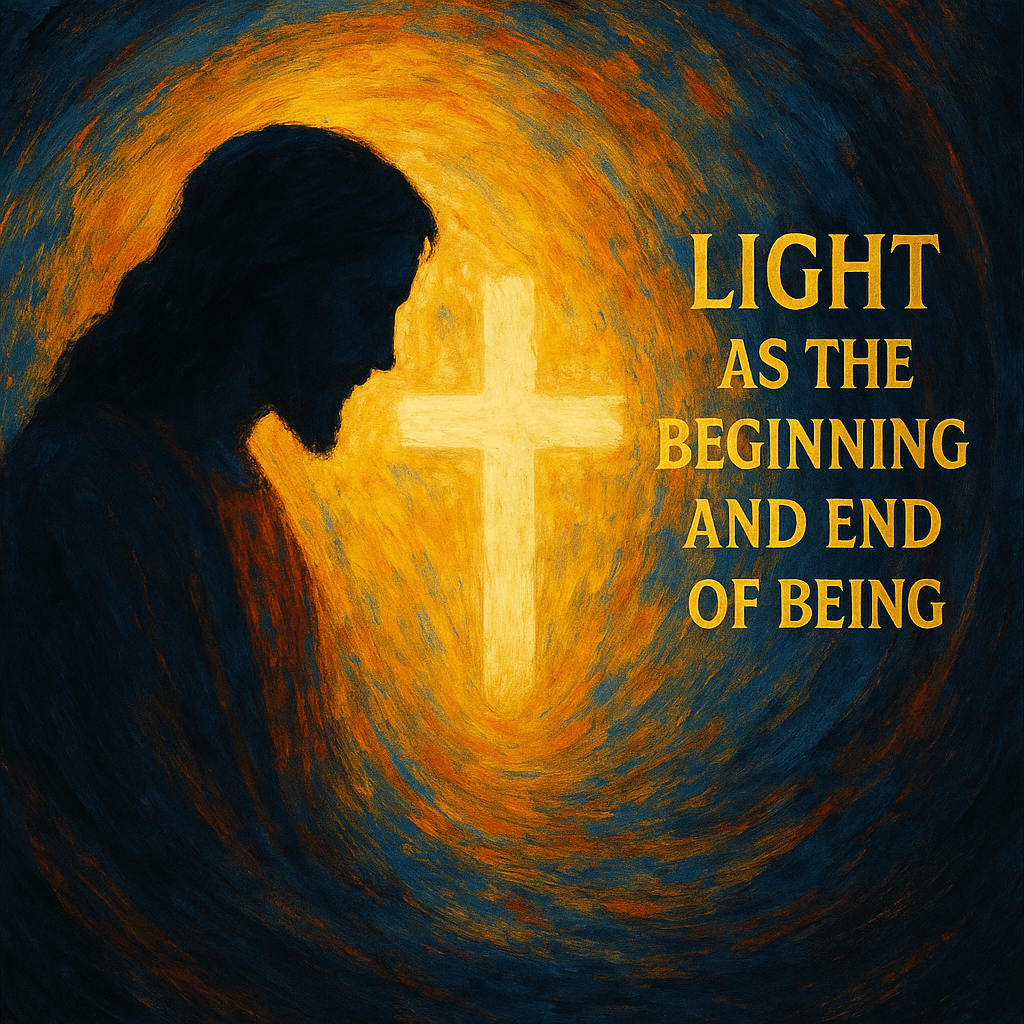
    La afirmación de Jesús “Yo soy la Luz” ha sido entendida de muchas maneras: como símbolo espiritual, metáfora ética o proclamación teológica. Sin embargo, cuando la confrontamos con los descubrimientos de la física moderna y con la tradición filosófica, el alcance se abre en dimensiones inesperadas. La luz, tanto en su realidad física como en su misterio simbólico, se convierte en puerta hacia el ser eterno.

    Desde Parménides hasta Heidegger, la filosofía ha intuido que el ser se vincula con la manifestación, con el “des-cubrimiento” que permite al ente mostrarse. La luz, más que un fenómeno sensible, es condición de posibilidad de la presencia. En la mística cristiana, ese fulgor se transforma en signo de lo divino: la luz revela, no solo objetos, sino la hondura del misterio que los sostiene.

    La física, a su manera, no está tan lejos de estas intuiciones. Para Einstein, la luz ocupa el lugar de límite cósmico: el fotón, sin masa, se desplaza siempre a velocidad constante, indiferente al paso del tiempo. Allí donde la materia se dilata y se consume en energía, la luz parece vivir en un presente absoluto. Einstein lo expresó con rigor: “Para la luz, el intervalo de tiempo propio entre dos eventos es siempre igual a cero.” De modo que, desde la perspectiva del fotón, no existe ni pasado ni futuro, solo un ahora eterno.

    Frente al “eterno retorno” de Nietzsche —ese ciclo infinito donde todo vuelve idéntico, donde la existencia es peso que se repite— la luz ofrece otra lectura del tiempo. No un círculo de cansancio, sino la apertura hacia un eterno ahora, donde lo que existe se cumple en plenitud. La eternidad, en esta clave, no es repetición, sino presencia absoluta: cada instante, totalidad.

    Cuando Jesús dice “Yo soy la Luz”, no está jugando únicamente con una metáfora moral. Está proclamando que en Él se halla la fuente misma del ser. Así como la luz física sostiene la vida y marca el límite del tiempo, Cristo sostiene la creación y abre el acceso a esa eternidad que se vislumbra en la misma estructura del cosmos. Su ser-luz no es símbolo vacío, sino una verdad ontológica: Él es la Vida que no muere, la Presencia que no se apaga, la Eternidad que irrumpe en la historia.

    La resurrección es la confirmación de este misterio: el destino humano no es quedar atrapado en la rueda del tiempo, sino participar de un cuerpo glorioso, capaz de trascender el límite de la materia y de la velocidad. Lo que comenzó en el tiempo puede, en Cristo, abrirse hacia el ser eterno. De la misma manera que el fotón no conoce el desgaste de la temporalidad, el ser humano en Cristo es llamado a entrar en un estado donde el tiempo mismo se consuma en plenitud.

    El ser, la luz y la eternidad confluyen en esta visión: la realidad última no es devenir ciego ni repetición absurda, sino plenitud de presencia. Y en esa plenitud, cuando Cristo declara “Yo soy la Luz”, está diciendo más de lo que nuestra razón alcanza: nos está mostrando que en Él la física y la mística, la carne y el infinito, la historia y la eternidad, se abrazan en un mismo resplandor.


    Being and Light: Eternity, Physics, and the Word of Christ

    Jesus’ statement “I am the Light” has been understood in many ways: as a spiritual symbol, an ethical metaphor, or a theological proclamation. Yet when we place it alongside the discoveries of modern physics and the philosophical tradition, its scope unfolds in unexpected dimensions. Light, both in its physical reality and its symbolic depth, becomes a gateway to the eternal being.

    From Parmenides to Heidegger, philosophy has intuited that being is tied to manifestation, to the “un-veiling” that allows things to appear. Light, more than a sensible phenomenon, is the very condition for presence. In Christian mysticism, that radiance becomes the sign of the divine: light reveals not only objects but also the hidden depth that sustains them.

    Physics, in its own way, is not far from these intuitions. For Einstein, light occupies the cosmic threshold: the photon, without mass, always moves at a constant speed, untouched by the passage of time. Where matter dilates and consumes itself in energy, light seems to dwell in an absolute present. Einstein expressed it with precision: “For light, the proper time interval between two events is always equal to zero.” From the photon’s perspective, there is neither past nor future, only an eternal now.

    In contrast to Nietzsche’s “eternal return”—that infinite cycle where everything repeats itself identically, where existence is a burden—light offers another reading of time. Not a circle of fatigue, but an opening toward the eternal now, where what exists is fulfilled in plenitude. Eternity here is not repetition but absolute presence: each instant, totality.

    When Jesus says “I am the Light”, He is not merely using a moral metaphor. He is proclaiming that in Him lies the very source of being. Just as physical light sustains life and marks the boundary of time, Christ sustains creation and opens access to the eternity glimpsed in the very structure of the cosmos. His being-light is no empty symbol but an ontological truth: He is the Life that does not die, the Presence that does not fade, the Eternity that breaks into history.

    The resurrection confirms this mystery: human destiny is not to remain trapped in the wheel of time but to share in a glorious body, capable of transcending the limits of matter and velocity. What began in time can, in Christ, open itself to eternal being. Just as the photon knows nothing of temporal decay, the human being in Christ is called to enter into a state where time itself is consumed in fullness.

    Being, light, and eternity converge in this vision: ultimate reality is not blind becoming nor absurd repetition, but plenitude of presence. And in that plenitude, when Christ declares “I am the Light”, He is saying more than reason alone can grasp: He is revealing that in Him physics and mysticism, flesh and infinity, history and eternity, embrace in one single radiance.

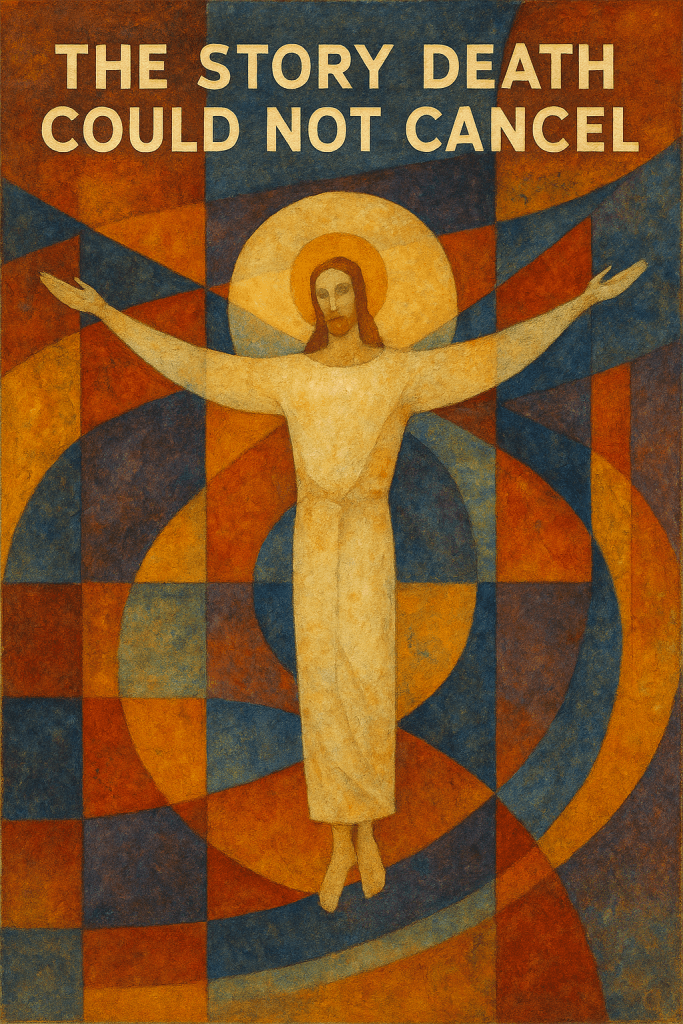
  • “La historia que la muerte no pudo cancelar”

    Israel Centeno

    A menudo se ha querido reducir a Jesús a una construcción mítica, un símbolo más entre los tantos del imaginario religioso de la antigüedad. Algunos sectores de la academia contemporánea —especialmente desde enfoques progresistas o posmodernos— han intentado ubicarlo en la misma categoría que los héroes griegos o los dioses solares, como una figura derivada de tradiciones previas. Pero esta comparación resulta insostenible cuando se toma en serio la densidad narrativa, histórica y teológica que acompaña la figura de Jesús.

    En primer lugar, su historia no se estructura como una tragedia griega, ni como un mito heroico. El relato de los Evangelios —aun con sus diferencias de estilo— tiene una coherencia que nace del entramado judío en el que se inscribe. Mateo, Marcos, Lucas y Juan escriben desde matrices culturales y teológicas profundamente hebreas. Incluso cuando Lucas, probablemente no judío, redacta su Evangelio, lo hace bajo la impronta de Pablo de Tarso, rabino, conocedor de la Ley y teólogo riguroso. El resultado es una narrativa entrelazada con las Escrituras, que respira profecía, genealogía, Ley, numerología y promesa.

    Este entrelazamiento no es trivial. En una época donde la transmisión de textos era limitada, difícil y fragmentaria, construir un relato que articule el Génesis con Isaías, los Salmos con Daniel, y que haga de esa urdimbre un anuncio y cumplimiento en Jesús, no es obra de un solo autor ni de una escuela tardía. Es una arquitectura espiritual imposible de falsificar desde la invención. Implicaría un conocimiento exhaustivo de los textos hebreos, de las esperas mesiánicas, de las formas narrativas judías. E implicaría además haber previsto, con siglos de antelación, cada gesto, cada palabra, cada número. Porque los números, en los Evangelios, también hablan.

    La numerología bíblica atraviesa los textos. El siete, cifra de la plenitud; el doce, figura del nuevo Israel; el tres, símbolo de confirmación. Pedro niega a Jesús tres veces, pero también tres veces es restaurado: “¿Me amas?”, le pregunta Jesús. Y tres veces lo llama a pastorear. No es reiteración por insistencia: es arquitectura de sentido. Como cuando se perdona “setenta veces siete”, como cuando el tercer día marca la plenitud del misterio pascual. Los Evangelios no solo narran: codifican una lógica interior, profundamente semítica, que articula el símbolo con la acción.

    Decir que Jesús es un mito griego es ignorar que ningún otro personaje en la historia —ni Buda, ni Krishna, ni Hermes, ni Mitra— clamó lo que él clamó: ser el Logos eterno, el Hijo de Dios, el Alfa y el Omega, aquel por quien y para quien fue creado el universo. Ningún otro afirmó haber preexistido a la creación y permanecer más allá del tiempo. No es una figura cósmica más. Es el centro mismo del ser, de acuerdo con el testimonio que de sí mismo dejó. Eso no es compatible con las narrativas de divinidades naturales o de héroes apoteósicos.

    A ello se suma el testimonio de quienes no eran cristianos. El historiador romano Tácito menciona a Cristo como el fundador de la secta que Nerón persigue. Plinio el Joven, en sus cartas al emperador, narra las prácticas de los cristianos que adoran a Cristo “como a un dios”. Josefo, en el Testimonium Flavianum, habla de Jesús como un hombre sabio, ejecutado bajo Poncio Pilato. Y aunque hay debate sobre la autenticidad de algunos pasajes, la referencia básica permanece. Pero quizá lo más llamativo es lo que dicen los enemigos de Jesús.

    En el Talmud, texto central del judaísmo rabínico posterior al siglo I, hay varias menciones —indirectas y directas— a un personaje llamado Yeshu. No se trata de fuentes amistosas. Pero es precisamente allí donde radica su valor: no buscan glorificarlo, sino desacreditarlo. Y sin embargo, lo acusan de hacer milagros… por medio de la magia. Lo llaman hechicero, brujo, seductor de Israel. Lo cual, en lenguaje negativo, sigue siendo un reconocimiento de que tenía poder. No niegan los prodigios; niegan su fuente. Ese dato es crucial: confirma, desde la oposición, que Jesús era percibido como alguien con autoridad y capacidad para obrar signos.

    Y luego está Pablo. El perseguidor. El fariseo que odiaba a los cristianos. Que no conoció a Jesús en vida, pero que tuvo un encuentro tan radical que transformó su vida y su teología. A él se le debe el primer credo cristiano, escrito en 1 Corintios 15, apenas veinte años después de la crucifixión, donde afirma que Cristo murió, fue sepultado, y resucitó al tercer día “según las Escrituras”. Pablo no escribe mitos; escribe con la urgencia del testigo.

    No basta con intentar desfigurar al Jesús de la fe; ahora hay sectores de la academia que, en nombre del racionalismo progresista, pretenden extirpar también al Jesús de la historia. La estrategia es doble: por una parte, se reduce al Nazareno a un arquetipo narrativo intercambiable con héroes de otras culturas —un Prometeo reformado, un Buda itinerante, un Sócrates más emotivo—; por otra, se niega toda posibilidad de un núcleo factual que fundamente la proclamación más radical de la cristiandad: la Resurrección.

    Esta negación sistemática, sin embargo, enfrenta un obstáculo serio: la evidencia mínima, pero poderosa, reconocida por historiadores de distintas corrientes —incluso escépticos—, que admite al menos tres hechos fundamentales:

    1. Jesús fue crucificado bajo Poncio Pilato.
    2. Su tumba fue hallada vacía por un grupo de mujeres discípulas.
    3. Un amplio número de sus seguidores, incluyendo a enemigos declarados como Pablo de Tarso, aseguraron haberlo visto resucitado y transformaron sus vidas en función de ese encuentro.

    La academia crítica puede poner en duda la interpretación teológica de estos hechos —la Resurrección como acto divino—, pero no logra borrar el hecho de que el cristianismo comienza precisamente con esa proclamación. No fue una enseñanza moral, ni una teoría revolucionaria lo que provocó la expansión del cristianismo primitivo: fue el testimonio insistente de que Jesús, muerto y sepultado, había sido visto vivo, glorioso y presente.

    El estudioso alemán Pinchas Lapide, judío no cristiano, llega a sostener que la única explicación plausible para la transformación de los apóstoles y el nacimiento de la Iglesia es que algo real les ocurrió. No fue ilusión colectiva, ni construcción simbólica tardía. Y William Lane Craig, Gary Habermas y otros historiadores especializados han recogido una vasta literatura crítica, escéptica e interconfesional que, aun sin aceptar la fe, reconoce la solidez de la tumba vacía como hecho histórico.

    ¿Por qué, entonces, esta necesidad de borrar al Resucitado? ¿Por qué ciertos académicos insisten en reducir el acontecimiento fundacional de la cristiandad a un símbolo colectivo, cuando el testimonio está anclado en tiempo, lugar, y testigos —muchos de ellos martirizados sin retractarse? Tal vez porque aceptar que la tumba estaba vacía abre una puerta incómoda. Porque si el cuerpo no estaba allí… ¿dónde estaba? ¿Quién lo movió? ¿Por qué nadie lo exhibió para acabar con la secta naciente?

    Se ha señalado con razón que la Resurrección no es simplemente una doctrina; es un acontecimiento. Si no ocurrió, el cristianismo es un mito. Si ocurrió, cambia la historia. No hay término medio. Por eso no puede relegarse a fábula. Porque una fábula no hace que cientos de hombres y mujeres renuncien al poder, a la familia y a la vida misma con tal de proclamar que Aquel que vieron morir volvió a abrazarlos.

    Y es precisamente esa radicalidad lo que incomoda: la tumba vacía como grieta en el materialismo, como interpelación a la soberbia del siglo. La Resurrección, no como consuelo piadoso, sino como hecho que altera las leyes del mundo. Una afirmación que no se puede cancelar sin reescribir también la historia del amor más escandaloso que haya existido.


    Hay una afirmación que a menudo pasa desapercibida, incluso entre estudiosos del cristianismo primitivo: los Evangelios no son una ruptura con la tradición judía, sino su culminación y transfiguración. Lejos de ser productos de una helenización tardía, sus textos están impregnados del aliento y la lógica profunda de la Escritura hebrea. Aun en aquellos casos en que los destinatarios parecen ser públicos no judíos —como ocurre con el Evangelio de Lucas—, el andamiaje teológico, la simbología, la estructura narrativa y los referentes siguen siendo indisociablemente judíos.

    El Evangelio de Mateo es quizás el ejemplo más evidente: está construido como una relectura mesiánica de la historia de Israel, con Jesús como el nuevo Moisés, el nuevo David, el Hijo que recapitula y consuma la fidelidad que Israel no pudo sostener por sí mismo. Cada frase, cada escena está anclada en la Ley y los Profetas. El texto está pensado como una exégesis viviente de la Escritura, una midrash cristológica.

    Marcos, por su parte, aunque más sobrio, conserva la fuerza simbólica de los signos proféticos. La urgencia escatológica y el lenguaje apocalíptico remiten a la literatura intertestamentaria judía, a la espera de la restauración de Israel, al clamor del justo sufriente en el estilo de Isaías.

    Lucas, muchas veces considerado más “griego”, es sin embargo inseparable de la figura de Pablo, el fariseo convertido, el doctor de la Ley, el intérprete más radical de la tradición judía en clave cristológica. El evangelio lucano y los Hechos de los Apóstoles no pueden comprenderse sin el pensamiento paulino como trasfondo. Y Pablo, pese a su apertura misionera, jamás dejó de considerarse un judío. “Hebreo de hebreos”, dirá él mismo. Su teología, su uso de las Escrituras, su visión del Mesías, todo es lectura interna de la historia de Israel a la luz de Cristo.

    Y Juan, el más teológico de los cuatro, es quizá el más judío en su profundidad. Su prólogo —“En el principio era el Logos”— ha sido interpretado como influencia helénica. Pero es, en verdad, una reelaboración sublime del Bereshit del Génesis. El Logos no es un concepto griego importado, sino la Dabar, la Palabra viva que creó el mundo. Y todo el evangelio de Juan está estructurado como un relato de cumplimiento: los signos, las fiestas judías, el templo, la Torah misma, encuentran en Jesús su plenitud. Juan no rompe con la tradición: la lleva hasta el fondo.

    Así, leer los Evangelios como textos judíos no es una concesión arqueológica, es una necesidad hermenéutica. Porque la figura de Jesús sólo se comprende en la continuidad —y el cumplimiento— del relato bíblico de Israel. No hay Evangelio sin Éxodo. No hay Cruz sin Cordero Pascual. No hay Encarnación sin promesa davídica. No hay Resurrección sin esperanza de restauración.

    Los Evangelios, en suma, no son mitos helenísticos. Son la corona profética de un linaje literario, teológico e histórico que empieza en Abraham, pasa por Moisés y los profetas, y se revela en el Hijo. Son, en toda su forma y contenido, narrativas judías que anuncian la irrupción de lo eterno en la historia.

    Fuentes utilizadas / Recomendadas para profundización

    1. N.T. Wright, The Resurrection of the Son of God
      (Sobre la unicidad del mensaje pascual en el contexto del judaísmo del Segundo Templo)
    2. Gary Habermas y Michael Licona, The Case for the Resurrection of Jesus
      (Defensa académica de la historicidad de la resurrección con referencias a estudios escépticos)
    3. Pinchas Lapide, The Resurrection of Jesus: A Jewish Perspective
      (Reflexión de un erudito judío que considera históricamente plausible la Resurrección)
    4. Jacob Neusner, Judaism and the Interpretation of Scripture
      (Sobre midrash, numerología y estructuras narrativas judías)
    5. Richard Bauckham, Jesus and the Eyewitnesses
      (La validez de los Evangelios como testimonios de primera mano)
    6. Margaret Barker, The Great High Priest: The Temple Roots of Christian Liturgy
      (Relación entre el simbolismo del templo y la narrativa cristológica)
    7. Michael Fishbane, Biblical Interpretation in Ancient Israel
      (Sobre exégesis simbólica y estructuras hermenéuticas hebreas)
    8. Edith Stein, La Ciencia de la Cruz
      (Lectura mística y teológica de la pasión en clave carmelitana, profundamente enraizada en la tradición judía)

    Israel Centeno

    The Story Death Could Not Cancel”

    Jesus and the Impossibility of Myth
    by Israel Centeno

    Jesus has often been reduced to a mythical construct, just another symbol within the vast religious imagination of antiquity. Certain sectors of contemporary academia—especially from progressive or postmodern perspectives—have attempted to place him in the same category as Greek heroes or solar deities, as a figure derived from earlier traditions. But this comparison collapses when one takes seriously the narrative, historical, and theological density that surrounds the figure of Jesus.

    First, his story does not unfold like a Greek tragedy or a heroic myth. The Gospel accounts—even with their stylistic differences—possess a coherence born from the Jewish matrix in which they are rooted. Matthew, Mark, Luke, and John write from profoundly Hebrew cultural and theological frameworks. Even when Luke, likely not Jewish, writes his Gospel, he does so under the imprint of Paul of Tarsus—a rabbi, expert in the Law, and rigorous theologian. The result is a narrative interwoven with Scripture, breathing prophecy, genealogy, Law, numerology, and promise.

    This interweaving is not trivial. In an age when the transmission of texts was limited, difficult, and fragmented, constructing a narrative that connects Genesis to Isaiah, the Psalms to Daniel—and makes of that tapestry an announcement and fulfillment in Jesus—is not the work of a single author nor of a late editorial school. It is a spiritual architecture impossible to fabricate. It would require exhaustive knowledge of Hebrew texts, of messianic expectations, of Jewish narrative forms. And it would also require having foreseen, centuries in advance, each gesture, each word, each number. Because the numbers in the Gospels also speak.

    Biblical numerology permeates the texts. Seven, the number of fullness; twelve, the figure of the new Israel; three, the symbol of confirmation. Peter denies Jesus three times, but is also restored three times: “Do you love me?” Jesus asks him. And three times, he is called to shepherd. It is not repetition for emphasis—it is architecture of meaning. Just as when one is called to forgive “seventy times seven,” or when the third day marks the fullness of the paschal mystery. The Gospels do not merely narrate: they encode an inner logic, deeply Semitic, that links symbol to action.

    To say that Jesus is a Greek myth is to ignore the fact that no other figure in history—not Buddha, not Krishna, not Hermes, not Mithras—claimed what he claimed: to be the eternal Logos, the Son of God, the Alpha and the Omega, the one by whom and for whom the universe was created. No one else claimed to have pre-existed creation and to remain beyond time. He is not one more cosmic figure. He is the very center of being, according to his own testimony. That is incompatible with the narratives of natural divinities or apotheosized heroes.

    To this is added the testimony of those who were not Christians. The Roman historian Tacitus refers to Christ as the founder of the sect persecuted by Nero. Pliny the Younger, in his letters to the emperor, describes Christian practices of worshipping Christ “as a god.” Josephus, in the Testimonium Flavianum, speaks of Jesus as a wise man, executed under Pontius Pilate. And although there is debate over the authenticity of some passages, the basic reference remains. But perhaps most striking is what Jesus’ enemies said about him.

    In the Talmud, a central text of post-1st-century rabbinic Judaism, there are several indirect and direct references to a figure named Yeshu. These are not friendly sources. But that is precisely what gives them weight: they do not aim to glorify, but to discredit. And yet, they accuse him of performing miracles… through magic. They call him a sorcerer, a charlatan, a seducer of Israel. Which, in negative language, still acknowledges that he had power. They do not deny the wonders—only their source. That detail is crucial: it confirms, even from the opposition, that Jesus was perceived as someone with authority and the ability to perform signs.

    And then there is Paul. The persecutor. The Pharisee who hated Christians. Who never knew Jesus in life, but who had such a radical encounter that it transformed his life and theology. To him we owe the first Christian creed, written in 1 Corinthians 15, barely twenty years after the crucifixion, where he affirms that Christ died, was buried, and rose on the third day “according to the Scriptures.” Paul does not write myths; he writes with the urgency of a witness.


    Against the Cancellation of the Risen One

    It is no longer enough to distort the Jesus of faith; now, certain sectors of academia, under the banner of progressive rationalism, seek to eliminate even the Jesus of history. The strategy is twofold: on one hand, the Nazarene is reduced to a narrative archetype interchangeable with heroes from other cultures—a reformed Prometheus, a wandering Buddha, a more emotive Socrates; on the other hand, any possibility of a factual core that could support the most radical proclamation of Christianity—the Resurrection—is denied.

    This systematic denial, however, faces a serious obstacle: the minimal yet powerful evidence recognized by historians of various schools of thought—even skeptical ones—that admits at least three fundamental facts:

    1. Jesus was crucified under Pontius Pilate.
    2. His tomb was found empty by a group of female disciples.
    3. A large number of his followers, including declared enemies like Paul of Tarsus, claimed to have seen him resurrected and radically changed their lives because of that encounter.

    Critical scholarship may question the theological interpretation of these events—the Resurrection as a divine act—but it cannot erase the fact that Christianity begins precisely with that proclamation. It was not a moral teaching, nor a revolutionary theory, that sparked the growth of early Christianity—it was the persistent testimony that Jesus, dead and buried, had been seen alive, glorious, and present.

    The German scholar Pinchas Lapide, a non-Christian Jew, went so far as to argue that the only plausible explanation for the transformation of the apostles and the birth of the Church is that something real happened to them. It was not a collective hallucination, nor a late symbolic construction. And William Lane Craig, Gary Habermas, and other specialized historians have compiled a vast critical, skeptical, and interconfessional literature that—while not embracing the faith—nonetheless acknowledges the historical solidity of the empty tomb.

    Why, then, this drive to erase the Risen One? Why do certain academics insist on reducing Christianity’s foundational event to a collective symbol, when the testimony is rooted in time, place, and witnesses—many of whom were martyred without ever recanting? Perhaps because accepting that the tomb was empty opens an uncomfortable door. Because if the body wasn’t there… where was it? Who moved it? Why did no one produce it to discredit the fledgling sect?

    It has rightly been said that the Resurrection is not merely a doctrine; it is an event. If it did not happen, Christianity is a myth. If it did, it changes history. There is no middle ground. That is why it cannot be dismissed as a fable. Because a fable does not cause hundreds of men and women to renounce power, family, and life itself to proclaim that the One they saw die had returned to embrace them.

    And it is precisely that radical nature that unsettles: the empty tomb as a crack in materialism, a challenge to the arrogance of the age. The Resurrection—not as pious consolation, but as a fact that alters the laws of the world. A claim that cannot be canceled without also rewriting the history of the most scandalous love the world has ever known.

    The Gospel Narrative as the Heart of Messianic Judaism
    by Israel Centeno

    There is a claim that often goes unnoticed, even among scholars of early Christianity: the Gospels are not a rupture with Jewish tradition, but its culmination and transfiguration. Far from being products of late Hellenization, their texts are steeped in the breath and deep logic of Hebrew Scripture. Even in those cases where the intended audience seems to be non-Jewish—such as in the Gospel of Luke—the theological framework, the symbolism, the narrative structure, and the references remain inseparably Jewish.

    The Gospel of Matthew is perhaps the clearest example: it is constructed as a messianic rereading of Israel’s history, with Jesus as the new Moses, the new David, the Son who recapitulates and fulfills the faithfulness Israel could not sustain on its own. Every phrase, every scene is anchored in the Law and the Prophets. The text is conceived as a living exegesis of Scripture—a Christological midrash.

    Mark, for his part, though more concise, retains the symbolic force of prophetic signs. The eschatological urgency and apocalyptic language point back to Jewish intertestamental literature, to the longing for Israel’s restoration, to the cry of the suffering righteous one in the style of Isaiah.

    Luke, often considered the most “Greek,” is nonetheless inseparable from the figure of Paul—the converted Pharisee, the doctor of the Law, the most radical interpreter of Jewish tradition through a Christological lens. The Lukan Gospel and the Acts of the Apostles cannot be understood apart from Paul’s thought. And Paul, despite his missionary openness, never ceased to consider himself a Jew. “A Hebrew of Hebrews,” as he says himself. His theology, his use of Scripture, his vision of the Messiah—all of it is an internal reading of Israel’s story in the light of Christ.

    And John, the most theological of the four, may be the most deeply Jewish. His prologue—“In the beginning was the Logos”—has often been interpreted as Hellenistic in influence. But in truth, it is a sublime reworking of the Bereshit of Genesis. The Logos is not a borrowed Greek concept, but the Dabar, the living Word that created the world. The entire Gospel of John is structured as a narrative of fulfillment: the signs, the Jewish feasts, the Temple, the Torah itself—all find their fullness in Jesus. John does not break with tradition; he brings it to its depths.

    Thus, to read the Gospels as Jewish texts is not an archaeological concession, but a hermeneutic necessity. For the figure of Jesus can only be understood within the continuity—and fulfillment—of the biblical story of Israel. There is no Gospel without Exodus. No Cross without the Paschal Lamb. No Incarnation without the Davidic promise. No Resurrection without the hope of restoration.

    In sum, the Gospels are not Hellenistic myths. They are the prophetic crown of a literary, theological, and historical lineage that begins with Abraham, passes through Moses and the prophets, and is revealed in the Son. In both form and content, they are Jewish narratives proclaiming the eruption of the eternal into history.

    Sources Used / Recommended for Further Study

    1. N.T. Wright, The Resurrection of the Son of God
      (On the uniqueness of the Easter message within the context of Second Temple Judaism)
    2. Gary Habermas and Michael Licona, The Case for the Resurrection of Jesus
      (A scholarly defense of the historicity of the Resurrection, including references to skeptical studies)
    3. Pinchas Lapide, The Resurrection of Jesus: A Jewish Perspective
      (Reflections by a Jewish scholar who considers the Resurrection historically plausible)
    4. Jacob Neusner, Judaism and the Interpretation of Scripture
      (On midrash, numerology, and Jewish narrative structures)
    5. Richard Bauckham, Jesus and the Eyewitnesses
      (On the validity of the Gospels as firsthand testimonies)
    6. Margaret Barker, The Great High Priest: The Temple Roots of Christian Liturgy
      (On the relationship between temple symbolism and the Christological narrative)
    7. Michael Fishbane, Biblical Interpretation in Ancient Israel
      (On symbolic exegesis and Hebrew hermeneutical structures)
    8. Edith Stein, The Science of the Cross
      (A mystical and theological reading of the Passion in Carmelite key, deeply rooted in the Jewish tradition)
  • Milagros, Razón y el Escándalo de Cristo

    Spanish English version

    David Hume afirmó que los milagros no existen porque implicarían una violación de las leyes de la naturaleza, y las leyes naturales —decía él— no pueden ser violentadas. Pero su razonamiento descansa sobre un error de base: confunde la inmutabilidad del orden creado con la imposibilidad de la acción de su Creador.

    Un milagro no destruye la naturaleza, la trasciende. Es como cuando el hombre, criatura finita, logra suspender lo que parecía definitivo. Un médico en un quirófano revierte la muerte clínica con técnicas de reanimación: suspende y revierte un proceso natural sin anular la ley de la biología, simplemente introduciendo un factor superior. Si un ser humano limitado puede hacer esto, ¿qué no podrá hacer Dios, que es el autor de todas las leyes?

    Quien elabora y establece las leyes de su creación tiene la capacidad de modificarlas, suspenderlas, sustraerlas e incluso generar nuevas. No porque contradiga su propia obra, sino porque es soberano de ella. Las leyes de la física, de la biología o de la química no son dioses: son expresiones de la voluntad creadora, abiertas siempre a la intervención de quien las sustenta en el ser.

    Los milagros, entonces, no son irracionales ni imposibles: son irrupciones de una causalidad más alta que actúa dentro y más allá del orden natural. Cuando Cristo resucita a un muerto, no “viola” la naturaleza, sino que manifiesta que la vida no es una cadena ciega de causas y efectos, sino un don en manos de su Autor. Cuando Dios sana, multiplica, libera, no contradice lo creado, sino que lo lleva a una plenitud imposible por sus solas fuerzas.

    El error de Hume es pensar que lo que no cabe en el mecanismo de lo observable es imposible. Pero el milagro justamente revela que el mecanismo nunca fue absoluto. Como el hombre que inventa cohetes para suspender la gravedad o cámaras de vacío para alterar condiciones naturales, así también, pero infinitamente más, Dios puede moverse en dimensiones que no vemos ni conocemos, más allá del espacio y del tiempo.

    Por eso, los milagros no son una amenaza a la razón, sino un recordatorio de que la razón no agota el misterio. El milagro es Dios diciéndonos: Yo soy libre, Yo soy amor, y Mi creación nunca está cerrada a Mi mano.


    El ataque cultural: el “mito” de los Evangelios

    El New Yorker en un artículo reciente, reseñando a Elaine Pagels, sostiene que los Evangelios son “construcciones literarias” y que los milagros no son más que “tropes” para maquillar inconsistencias. Es un estribillo viejo, reciclado como novedad: reducir el cristianismo a literatura griega de segunda mano.

    Lo curioso es que con figuras como Buda o Mahoma los mismos críticos se muestran cautelosos, reverentes, cuidadosos de no ofender sensibilidades. Pero cuando se trata de Cristo, todo vale: ironía, deconstrucción, sarcasmo. Ese desequilibrio revela algo más que “escolaridad”; es política. El ataque a Jesús es seguro porque se percibe como un ataque a las propias raíces culturales de Occidente.

    Y sin embargo, dos mil años después, el único mito que no consiguen enterrar es Cristo mismo. Si los Evangelios fueran fábulas, estarían olvidados como tantas obras antiguas. Pero no lo están. Sobre ellos se construyeron civilizaciones, se escribieron sinfonías, se levantaron hospitales, murieron mártires. Nadie da la vida por un tropo literario.


    El consenso histórico sobre Jesús

    Aquí está la ironía: mientras ciertos sectores mediáticos y pseudoacadémicos hablan de “mito”, la historiografía seria —incluso la secular— afirma con claridad:

    • E. P. Sanders“That Jesus existed, and that he was crucified by order of the Roman prefect Pontius Pilate, is as sure as anything historical can ever be.” (The Historical Figure of Jesus, 1993).
    • Bart D. Ehrman, agnóstico: “The idea that Jesus did not exist is simply unsustainable. The existence of Jesus is as secure as that of any figure of antiquity.” (Did Jesus Exist?, 2012).
    • Paula Fredriksen“The existence of Jesus is one of the most certain facts of ancient history.” (From Jesus to Christ, 1988).
    • John P. Meier: la negación de Jesús es “un fenómeno marginal sin base académica” (A Marginal Jew, 1991–2016).
    • Géza Vermes y Maurice Casey, ambos no cristianos, confirman que los Evangelios preservan memorias auténticas de un predicador judío en Galilea.

    La cuestión no es si Jesús existió, sino quién fue realmente: profeta, rabino, revolucionario espiritual… o el Hijo de Dios.


    La crítica contemporánea que reduce a Cristo a mito no hace más que confirmar la vigencia de su escándalo. Porque si Él no fuera lo que dijo ser, nadie perdería el tiempo en deconstruirlo. El sepulcro vacío sigue siendo la piedra en el zapato de los siglos.

    La verdadera irracionalidad no es creer en milagros, sino creer que dos mil años de cultura, martirio y transformación humana se sostienen sobre “ficciones griegas”. Eso no es erudición: es ideología disfrazada de ciencia.

    Miracles, Reason, and the Scandal of Christ

    Israel Centeno

    David Hume argued that miracles cannot exist because they would imply a violation of the laws of nature, and the laws of nature, he claimed, cannot be violated. But his reasoning rests on a basic error: it confuses the immutability of the created order with the impossibility of the Creator’s action.

    A miracle does not destroy nature; it transcends it. It is like when a finite creature suspends what seemed definitive. A physician in an operating room can reverse clinical death through resuscitation techniques: he suspends and even reverses a natural process without nullifying the law of biology, but by introducing a higher factor. If a limited human being can do this, what could God—the author of all laws—not do?

    He who establishes the laws of creation retains the capacity to modify them, suspend them, subtract them, or even generate new ones. Not because He contradicts His work, but because He is sovereign over it. The laws of physics, biology, or chemistry are not gods; they are expressions of the creative will, always open to the intervention of the One who sustains them in being.

    Miracles, therefore, are not irrational or impossible: they are eruptions of a higher causality acting within and beyond the natural order. When Christ raises the dead, He does not “violate” nature; He reveals that life is not a blind chain of causes and effects but a gift in the hands of its Author. When God heals, multiplies, or liberates, He does not contradict creation but carries it to a fullness it could never reach on its own.

    Hume’s error is to assume that what does not fit within the mechanism of the observable is impossible. But the miracle precisely reveals that the mechanism was never absolute. Just as man invents rockets to suspend gravity or vacuum chambers to alter natural conditions, so too—yet infinitely more—God can move in dimensions we neither see nor know, beyond space and time.

    Thus, miracles are not a threat to reason but a reminder that reason does not exhaust mystery. A miracle is God saying to us: I am free, I am love, and My creation is never closed to My hand.


    The Cultural Attack: The “Myth” of the Gospels

    The New Yorker, in a recent piece reviewing Elaine Pagels, claimed that the Gospels are “literary constructions” and that miracles are merely “tropes” designed to smooth over inconsistencies. This is nothing new: the old refrain of reducing Christianity to recycled Greek literature.

    What is curious, however, is the double standard. When it comes to figures like Buddha or Muhammad, the very same critics tread carefully—speaking with caution, reverence, and restraint. But with Christ, everything is fair game: irony, deconstruction, and mockery. This imbalance betrays something deeper than “scholarship”; it is politics. Attacking Jesus is culturally safe because it feels like striking at the roots of the West itself.

    And yet, two thousand years later, the only “myth” that cannot be buried is Christ Himself. If the Gospels were mere fables, they would have rotted in the libraries alongside countless forgotten texts. But they did not. Civilizations were built upon them, symphonies composed, hospitals founded, martyrs made. Nobody dies for a literary trope.


    The Historical Consensus on Jesus

    Here lies the irony: while media pundits and pseudo-academics speak of “myth,” serious historiography—even secular—insists otherwise:

    • E. P. Sanders“That Jesus existed, and that he was crucified by order of the Roman prefect Pontius Pilate, is as sure as anything historical can ever be.” (The Historical Figure of Jesus, 1993).
    • Bart D. Ehrman, agnostic: “The idea that Jesus did not exist is simply unsustainable. The existence of Jesus is as secure as that of any figure of antiquity.” (Did Jesus Exist?, 2012).
    • Paula Fredriksen“The existence of Jesus is one of the most certain facts of ancient history.” (From Jesus to Christ, 1988).
    • John P. Meier: denying the existence of Jesus is “a marginal phenomenon without academic basis.” (A Marginal Jew, 1991–2016).
    • Géza Vermes and Maurice Casey, both non-Christian, confirm that the Gospels preserve authentic memories of a Jewish preacher in Galilee.

    The real question is not whether Jesus existed, but who He really was: prophet, rabbi, revolutionary, or the Son of God.


    The contemporary criticism that reduces Christ to myth only confirms the enduring power of His scandal. For if He were not what He claimed to be, no one would waste time deconstructing Him. The empty tomb remains the unanswered riddle of history.

    The true irrationality is not believing in miracles, but believing that two thousand years of culture, martyrdom, and human transformation were built upon “clever storytelling.” That is not scholarship—it is ideology dressed as reason.

  • Somos Hechos para el Infinito

    Una Convergencia de Razones para el Cielo

    Israel Centeno

    Comenzar con Agustín es comenzar con el corazón humano. En las Confesiones no ofrece una demostración geométrica de la vida eterna, sino una observación que, para él, es más segura que cualquier silogismo: “Nos hiciste, Señor, para ti, y nuestro corazón está inquieto hasta que descanse en ti”. Para Agustín, el deseo humano de plenitud, de una paz que ninguna posesión terrena otorga, es universal y constante. Lo que es universal y constante en la naturaleza humana no es un accidente; es una señal de propósito. La inquietud del corazón no es una enfermedad que debamos curar con distracciones, sino una brújula que apunta hacia la única fuente capaz de saciarla.

    Si todo en la creación tiene una finalidad —la semilla para el árbol, el ojo para la luz, el intelecto para la verdad—, entonces el anhelo más profundo del alma no puede carecer de objeto real. Negar la vida eterna sería, para Agustín, negar que el Creador sea coherente: un Dios bueno no implantaría en nosotros un deseo infinito para después frustrarlo eternamente. Así, la existencia del cielo no es solo posible, sino necesaria para que la historia de Dios con el hombre tenga sentido. Agustín no ve el cielo como un premio arbitrario que se concede al final de la vida moral, sino como la consumación natural de lo que significa ser humano: la visión de Dios, la unión sin velo, la paz definitiva. Este descanso no es pasividad, sino la plenitud de todo acto, la alegría sin pérdida, el amor sin sombra. Si algo puede asegurarnos que la vida eterna es real, dice Agustín, es que sin ella, nada en nuestra experiencia encajaría; con ella, todo encuentra su lugar.

    Para Tomás de Aquino, la certeza del cielo se apoya no solo en la experiencia del corazón humano, sino en la estructura misma de la razón y del ser. El intelecto humano, sostiene Tomás, está ordenado al conocimiento de la verdad, y la voluntad, al amor del bien. Ninguna verdad finita, por espléndida que sea, agota el hambre de la mente; ningún bien pasajero sacia por completo el deseo de la voluntad. Esta apertura al infinito no es un capricho psicológico, sino una huella ontológica del Creador.

    Si el alma es capaz de conocer verdades universales y de amar bienes que no caducan, su objeto último no puede ser algo limitado. El fin proporcionado a un intelecto y una voluntad humanas no puede ser otra cosa que Dios mismo, conocido y amado directamente. Aquí entra en juego la noción central de Tomás: la visión beatífica. En esta visión, el alma contempla la esencia misma de Dios sin mediaciones, y en ese acto alcanza la felicidad perfecta. No se trata de una abstracción filosófica, sino de la consumación de todo lo que somos. Para Tomás, sería inconcebible que Dios infundiera en el alma un apetito natural por Él sin ofrecerle la posibilidad real de alcanzarlo. La ausencia de cielo sería, desde este punto de vista, una falla en el orden del universo, una disonancia en la sinfonía de la creación. Por eso, la promesa de vida eterna no es un añadido sentimental al cristianismo, sino la conclusión lógica de una antropología que toma en serio tanto la dignidad como el destino de la persona humana.

    Si Agustín apela al deseo universal y Tomás edifica una estructura racional, los místicos aportan la experiencia directa, esa certeza que no viene de un argumento sino de un encuentro. San Juan de la Cruz, desde la noche oscura, describe el momento en que el alma, purificada de todo apego, se une a Dios en un “toque sustancial” que es ya anticipo del cielo. Para él, esa unión no es metáfora ni ilusión psicológica: es participación real, aunque incompleta, de la misma vida divina que se gozará plenamente después de la muerte.

    Santa Teresa de Ávila, con la claridad de quien lo ha vivido, afirma que las moradas más altas del alma son un preludio de la eternidad. En ellas, la comunicación con Dios es tan íntima que la muerte se convierte no en una pérdida, sino en la consumación de una amistad ya establecida. Santa Teresita del Niño Jesús, sin visiones espectaculares, ofrece una certeza no menos firme: la confianza total en la promesa de Jesús, vivida como un abandono sencillo y radical en el amor de Dios.

    Santa Isabel de la Trinidad eleva esta certeza a un plano contemplativo, afirmando que el cielo no es un lugar lejano, sino “Dios en nosotros y nosotros en Dios”, una comunión que empieza ya en la tierra y que la muerte solo despliega por completo. Edith Stein, filósofa y carmelita, entiende esta unión como el destino lógico de un alma creada a imagen de Dios y llamada a compartir su ser; para ella, la fe ilumina lo que la razón vislumbra, y la experiencia mística lo confirma. Incluso Simone Weil, que nunca quiso forzar su entrada en la Iglesia, habla de una obediencia absoluta a la luz que desciende de lo alto y que ningún sufrimiento puede apagar. Y René Girard, desde otra vertiente, imagina el cielo como la ciudad sin víctimas, la comunidad reconciliada donde la lógica del sacrificio violento ha sido reemplazada por la lógica del amor divino.

    Si Agustín nombra la sed y Tomás construye el puente, los científicos creyentes muestran que ese puente puede sostenerse incluso en medio de galaxias, partículas y secuencias genéticas. No intentan colar teología en el laboratorio, sino que insisten en que la buena ciencia y la fe honesta responden a preguntas distintas, y que juntas pueden hacer que la esperanza del cielo sea intelectualmente seria.

    Un genetista como Francis Collins empieza reconociendo que el método científico es inigualable para responder al cómo funciona el mundo, pero guarda silencio ante el por qué existe el mundo, qué sentido último tiene, o si el amor, la obligación moral y la persona apuntan más allá de la materia. Pedirle a la ciencia que pruebe el cielo es como pedirle a un microscopio que pese una sinfonía. La conclusión correcta no es “el cielo no existe”, sino “necesitamos otro tipo de evidencia”.

    El padre Georges Lemaître, padre del Big Bang y sacerdote católico, encarnó esta postura: hacer física de primer nivel con honestidad intelectual y dejar que la teología hable en su propio registro. Advertía contra el uso de los modelos cosmológicos como sermones disfrazados, pero al mismo tiempo reconocía que si el espacio-tiempo tiene un límite temporal, nada en la física impide una realidad más allá del espacio y del tiempo. La creación, para él, no es un evento puntual del pasado, sino la dependencia continua del cosmos entero de una Fuente que no compite con él. En esa perspectiva, el cielo no es un lugar dentro del universo, sino el orden trascendente en el que el universo entero subsiste, y con el que las personas pueden unirse definitivamente.

    Cosmólogos como George Ellis destacan la asombrosa inteligibilidad del mundo: las matemáticas describen la realidad con precisión sorprendente y las leyes físicas se mantienen estables desde la estructura de las galaxias hasta la línea de emisión del hidrógeno. Para un teísta, esto es más que coincidencia: es una firma, la huella de que la mente engendra mente. Si la Fuente es Razón y Amor personales, entonces un destino en el que criaturas racionales y amantes compartan esa vida para siempre no es un capricho, sino algo coherente. Collins añade que nuestra conciencia moral y nuestra capacidad de amar no pueden reducirse a procesos químicos. Podemos describir los correlatos cerebrales del amor o de la promesa, pero no extraer de ellos un “debo” que obligue a cumplirla. Sin embargo, prometemos y cumplimos, incluso a costa propia. Para un creyente, esto apunta a una Fuente personal cuya fidelidad es fundamento de la nuestra. El cielo, entonces, sería la culminación de esa comunión personal, no una prolongación fantasmal de la biología, sino la plenitud de lo que las personas están llamadas a ser.

    A estos enfoques se suman señales que, sin ser pruebas, resultan sugestivas: el ajuste fino del universo, la irreductibilidad de la conciencia y los testimonios de experiencias cercanas a la muerte. La física revela un cosmos calibrado con precisión extrema para la vida; la neurociencia no logra explicar por completo la experiencia subjetiva; y algunos relatos de quienes han estado clínicamente muertos incluyen percepciones verificables y vivencias que coinciden con la esperanza cristiana: continuidad de la identidad personal, claridad moral y encuentro con una presencia amorosa. Ninguno de estos indicios obliga a creer, pero juntos dibujan un patrón difícil de ignorar.

    Consideradas de forma aislada, cada una de las razones para creer en el cielo puede ser discutida o rechazada. Pero algo distinto ocurre cuando todas estas piezas se colocan una junto a la otra. El deseo profundo del que habla Agustín se refleja en la estructura intelectual y volitiva que Tomás demuestra orientada hacia el bien infinito. La disposición del cosmos para albergar vida se convierte en eco cósmico de ese mismo anhelo. Los místicos dan testimonio de momentos en que la luz de la eternidad irrumpe en el tiempo, ofreciendo no solo esperanza, sino un anticipo palpable de lo prometido. La ciencia, sin pretender demostrarlo, no cierra la puerta al horizonte más allá del espacio y del tiempo, donde las preguntas de significado, propósito y destino siguen abiertas. Conjuntas, estas razones forman una cuerda trenzada con múltiples hebras: filosofía, historia, experiencia y señales empíricas.

    Al final, todos estos caminos —la sed de Agustín, la necesidad lógica de Tomás, la experiencia directa de los místicos, la apertura de los científicos, las huellas grabadas en la trama del universo— confluyen en un solo horizonte. Es el horizonte que Cristo mismo abrió: no un mito para tranquilizar a los moribundos, sino una promesa anclada en la historia, sellada por su Resurrección y sostenida por el Espíritu a lo largo de los siglos. El cielo no es huida del mundo, sino su plenitud: la unión sin sombra con Dios, en la que la mente reposará en plena luz, la voluntad arderá en amor sin desgaste, y el cuerpo —resucitado y glorificado— participará de un gozo que no se marchita. Y cuando Cristo dice: «Voy a prepararles un lugar, para que donde yo esté, estén también ustedes» (Jn 14,3), no habla en poesía: es un hecho esperando su cumplimiento. Vivimos ahora en el penúltimo capítulo, pero la última página ya está escrita, en el idioma de la eternidad, con letras de luz.

    Made for the Infinite,

    A Converging Case for Heaven

    Israel Centeno

    To begin with Augustine is to begin with the human heart. In the Confessions he does not offer a geometric proof of eternal life but an observation that, for him, is more certain than any syllogism: “You have made us for yourself, O Lord, and our heart is restless until it rests in you.” For Augustine, the human longing for fullness — for a peace no earthly possession can grant — is universal and constant. What is universal and constant in human nature is not an accident; it is a sign of purpose. The restlessness of the heart is not a disease to be cured with distractions, but a compass pointing to the only source capable of satisfying it.

    If everything in creation has a purpose — the seed for the tree, the eye for light, the intellect for truth — then the deepest longing of the soul cannot be without a real object. To deny eternal life would be, for Augustine, to deny that the Creator is coherent: a good God would not plant in us an infinite desire only to frustrate it forever. The existence of heaven, therefore, is not only possible but necessary if the story of God and man is to make sense. Augustine does not see heaven as an arbitrary prize granted at the end of a moral life but as the natural consummation of what it means to be human: the vision of God, union without veil, definitive peace. This rest is not passivity but the fullness of every act — joy without loss, love without shadow. If anything assures us that eternal life is real, Augustine says, it is that without it, nothing in our experience fits; with it, everything finds its place.

    For Thomas Aquinas, the certainty of heaven rests not only on the experience of the human heart but on the very structure of reason and being. The human intellect, Thomas argues, is ordered to the knowledge of truth, and the will, to the love of the good. No finite truth, however splendid, exhausts the hunger of the mind; no passing good fully satisfies the desire of the will. This openness to the infinite is not a psychological quirk but an ontological imprint of the Creator.

    If the soul is capable of knowing universal truths and loving goods that do not decay, its ultimate object cannot be something limited. The end proportionate to a human intellect and will can only be God Himself, known and loved directly. Here enters Thomas’s central notion: the beatific vision. In this vision, the soul beholds the very essence of God without mediation, and in that act attains perfect happiness. This is not a philosophical abstraction but the consummation of all that we are. For Thomas, it would be inconceivable for God to instill in the soul a natural appetite for Himself without offering a real possibility of attaining Him. The absence of heaven would be, from this point of view, a flaw in the order of the universe, a dissonance in the symphony of creation. The promise of eternal life is therefore not a sentimental add-on to Christianity but the logical conclusion of an anthropology that takes seriously both the dignity and destiny of the human person.

    If Augustine appeals to universal desire and Thomas builds a rational structure, the mystics bring direct experience — a certainty that does not come from an argument but from an encounter. John of the Cross, from within the dark night, describes the moment when the soul, stripped of every attachment, unites with God in a “substantial touch” that is already a foretaste of heaven. For him, that union is not a metaphor nor a psychological illusion: it is a real, though incomplete, participation in the very divine life that will be enjoyed fully after death.

    Teresa of Ávila, with the clarity of one who has lived it, affirms that the highest mansions of the soul are a prelude to eternity. In them, communication with God is so intimate that death becomes not a loss but the consummation of a friendship already established. Thérèse of Lisieux, without spectacular visions, offers a certainty no less firm: total trust in Jesus’ promise, lived as a simple yet radical surrender into God’s love.

    Elizabeth of the Trinity raises this certainty to a contemplative plane, affirming that heaven is not a faraway place but “God in us and we in God,” a communion that begins on earth and that death only fully unfolds. Edith Stein, philosopher and Carmelite, understands this union as the logical destiny of a soul created in God’s image and called to share His being; for her, faith illuminates what reason glimpses, and mystical experience confirms it. Even Simone Weil, who never wished to force her way into the Church, speaks of an absolute obedience to the light descending from above, which no suffering can extinguish. And René Girard, from another angle, imagines heaven as the city without victims, the reconciled community where the logic of violent sacrifice has been replaced by the logic of divine love.

    If Augustine names the thirst and Thomas builds the bridge, believing scientists show that the bridge can hold even amid galaxies, particles, and genetic sequences. They do not try to smuggle theology into the laboratory; they insist that good science and honest faith answer different questions, and that together they can make the hope of heaven intellectually serious.

    A geneticist like Francis Collins begins by acknowledging that the scientific method is unrivaled in answering how the world works, but it remains silent on why the world exists, what ultimate meaning it has, or whether love, moral obligation, and personhood point beyond matter. Asking science to prove heaven is like asking a microscope to weigh a symphony. The right conclusion is not “heaven does not exist” but “we need another kind of evidence.”

    Father Georges Lemaître, father of the Big Bang theory and a Catholic priest, embodied this stance: doing first-rate physics with intellectual honesty and letting theology speak in its own register. He warned against using cosmological models as disguised sermons, yet he acknowledged that if space-time has a temporal limit, nothing in physics forbids a reality beyond space and time. Creation, for him, was not a one-time event in the past but the ongoing dependence of the entire cosmos on a Source that does not compete with it. In that perspective, heaven is not a place within the universe but the transcendent order in which the universe itself subsists, and with which persons can unite forever.

    Cosmologists like George Ellis point to the astonishing intelligibility of the world: mathematics describes reality with uncanny precision, and the laws of physics hold steady from the structure of galaxies to the hydrogen emission line. For a theist, this is more than coincidence: it is a signature, the imprint of Mind begetting mind. If the Source is personal Reason and Love, then a destiny in which rational, loving creatures share that life forever is not fanciful but fitting. Collins adds that our moral consciousness and capacity for love cannot be reduced to chemistry. We can map the brain correlates of love or promise-keeping, but we cannot extract from them the ought that obliges us to keep a promise. And yet we do, often at personal cost. For a believer, this points to a personal Source whose faithfulness grounds our own. Heaven, then, would be the culmination of that personal communion, not a ghostly extension of biology but the fullness of what persons are called to be.

    To these approaches we can add hints that, while not proofs, are striking: the fine-tuning of the universe, the irreducibility of consciousness, and reports of near-death experiences. Physics reveals a cosmos calibrated with exquisite precision for life; neuroscience cannot fully explain subjective experience; and some accounts from those who have been clinically dead include verifiable perceptions and encounters that echo the Christian hope: continuity of personal identity, moral clarity, and meeting with a loving presence. None of these clues compels belief, but together they form a pattern hard to ignore.

    Considered in isolation, each reason for believing in heaven can be debated or dismissed. But something else happens when they are set side by side. The deep desire Augustine describes is mirrored in the intellectual and volitional structure Thomas shows to be oriented toward the infinite good. The universe’s readiness to host life becomes a cosmic echo of that same longing. The mystics bear witness to moments when the light of eternity breaks into time, offering not just hope but a palpable foretaste of what is promised. Science, without claiming to prove it, does not close the door to the horizon beyond space and time, where questions of meaning, purpose, and destiny remain open. Together, these reasons form not a fragile chain that snaps if one link fails but a rope braided from many strands — philosophy, history, experience, and empirical signs.

    In the end, all these paths — Augustine’s thirst, Thomas’s logic, the mystics’ direct encounter, the scientists’ openness, the marks embedded in the fabric of the universe — converge on a single horizon. It is the horizon Christ Himself opened: not a myth to soothe the dying but a promise anchored in history, sealed by His Resurrection, and sustained by the Spirit through the centuries. Heaven is not an escape from the world but its fullness: the union without shadow with God, where the mind will rest in full light, the will will burn in love without weariness, and the body — risen and glorified — will share in a joy that never fades. And when Christ says, “I go to prepare a place for you, that where I am, you may also be” (John 14:3), He is not speaking in poetry: it is a fact awaiting its fulfillment. We now live in the penultimate chapter, but the last page is already written, in the language of eternity, in letters of light.

  • Dios en el Fade Out

    Israel Centeno

    Estuve pensando en Roberto Roena toda la tarde. No fue nostalgia. Fue otra cosa. Un sacudón por dentro. Un bajo, desde lo más hondo, se activaba y empezaba a remover cosas viejas. Y en medio de esa sensación aparecieron los recuerdos del 79, 80. Yo con 19 o 20 años. Saliendo de la adolescencia pero todavía sin escudo. Medio ñángara, medio malandro, en ese punto en que uno quiere cambiar el mundo y, al mismo tiempo, se derrumba si la mujer que quiere lo ignora.

    Vivía en el oeste de Caracas. Y allá la salsa no era una estética ni una pose. No era para turistas que visitan “El maní es así”, ni para la clase media haciendo su ronda emocional en Sabana Grande. Era nuestra manera de hablar del dolor sin quedar en ridículo. Era la manera de sentir sin tener que explicar tanto. Y en esa banda sonora, Roberto Roena tenía un lugar central. No era ídolo: era clave. Sus discos no eran colección de éxitos. Eran fragmentos de una verdad no revelada.

    Y claro, estaba Denise. La Negra. Una flaca hermosa y terrible. Se movía en sol mayor y en carne viva. Estaba perfecta. Pero no era para mí. Aunque a veces, por momentos, parecía que sí. En otra fiesta, semanas antes, me cayó a besos con maldad. Parecía una corroncha. Me dejó el cuello marcado. Al día siguiente todo el mundo jodiendo: “A ti te chupó un mosquito bembón”, “¿Tú eres marico?”, “¿Donaste sangre o qué?” Y uno ahí, entre la burla y la satisfacción de haber sido mordido por la negra, queriendo defender algo que ni siquiera entendía. Porque el amor, cuando no es claro, es una trampa que uno se pone solo.

    Y luego, aquella tarde en casa de Kike. No había rastro de besos ni de corronchería. Solo distancia y dialectica. Denise me bailó un par de temas, sonreía no debía nada, y de pronto se lanzó a la pista con otro. Uno más suelto, más calle, más decidido. Yo me quedé quieto, con el vaso en la mano, la lengua seca y el pecho abollado.

    Y entonces sonó “Mi Desengaño”. La percusión entró seca, el bajo pesado. Tito Cruz no cantaba. Declaraba. “Cuando despierte, diré… mi desengaño.”  la melopea de lo que yo no aceptaba. El Apollo Sound no fallaba. Era exacto. Era música y percusión con precisión asesina. Roena sabía dar espacio. Sabía cuándo dejar que las palabras hicieran daño y cuándo meter los metales para levantar al muerto.

    Y entró “Marejada Feliz”. Más melódica, más suave. Pero no por eso menos feroz. “La playa de mi cariño…” decía, y yo entendí que la felicidad era una banalidad del mal. Viene como un regalo, castiga y se va. Yo la miraba. A Denise. Girando, riendo, soltándose. Su cuerpo me descargaba y me decía: qué va, mi amor, contigo ni pa’ la esquina. Música, y Roena predicando. Era el pastor del fin de mis tiempos.

    Y ahí pasó algo que no entendí del todo. No fue iluminación ni milagro. Fue más bien una certeza sin forma. Alguien se sentó al lado mío, invisible  y no dijo nada. Solo era presencia. Un silencio que no juzga. Un acompañamiento mudo. Y supe —o creí saber— que Dios estaba ahí. No el Dios de las templos del reino, no el de los sermones. Uno más callado. Más discreto. Uno que viene y se sienta contigo cuando no queda nada y espera a que respires de nuevo. 

    La fiesta seguía, pero para mí ya todo estaba en bajada, era El guagancó del Adiós. El sonido se iba apagando. Roena entraba en fade out. Denise se alejaba. El timbal sonaba, marcaba el final de lo que nunca había comenzado pero estaba ahí, pulsátil; una hinchazón de encía. Y en medio de ese apagón lento, supe que era todo. No había más vuelta. La Negra no era mía. El amor no se fuerza. La música puede enseñarte cosas que ni los libros ni los amigos saben.

    Y cuando todo calló, cuando quedó solo la vibración en el cuerpo, yo sentado permanecí tranquilo con las remoras del alcohol, escuchando el silencio de una última nota. Y sentí que había algo más. Algo pasivo. Aunque Denise ya no estuviera, aunque el momento se hubiese perdido, aunque las bromas de los panas siguieran flotando como zancudos en la memoria, algo adentro pulsaba.

    Y era eso.

    Era el fade out.

    Era Dios.

    Sin palabras.

    Sin redoble.

  • El Amor como Deseo de Bien y de Unión.

    Una Lectura Filosófico-Teológica a partir de Tomás de Aquino y Eleonore Stump

    Israel Centeno

    En un mundo que ha vaciado la palabra “amor” de su espesor ontológico y espiritual, es urgente volver a una comprensión radical y realista del amor. No una versión sentimental ni puramente emotiva, sino aquella que propone Santo Tomás de Aquino y que Eleonore Stump recupera y profundiza en Wandering in Darkness. Este ensayo se propone desplegar esa concepción en sus implicaciones filosóficas, espirituales y existenciales: el amor como una estructura compuesta por dos deseos fundamentales e inseparables: el deseo del bien del amado y el deseo de unión con el amado.

    Para Tomás de Aquino, el amor no es una reacción pasiva ante la belleza o el valor del otro, ni una mera emoción efímera. Es, en su esencia, una actividad de la voluntad racional, que se expresa a través de dos actos: desear el bien del amado y desear la unión con él.

    Stump insiste en que estos dos deseos están interconectados pero no se reducen el uno al otro. El primero puede ser unilateral: se puede desear el bien del otro incluso sin reciprocidad, sin relación, incluso sin conocimiento directo. Este amor es agápico, libre, espiritual. El segundo, el deseo de unión, implica una dimensión relacional, pues no puede realizarse sin algún grado de apertura del otro. Aquí se manifiesta la vulnerabilidad del amante: su anhelo de compartir la interioridad con el amado.

    Como dice Stump: “Puesto que el amor surge de la interacción de dos deseos, por el bien del amado y por la unión con él, la ausencia de cualquiera de los dos es suficiente para anular el amor” (p. 104).

    Stump confronta la teoría de la “respuesta al valor” del amor, muy presente en la filosofía contemporánea, que sostiene que amamos porque percibimos en el otro un conjunto de rasgos valiosos. Pero esta teoría fracasa ante realidades humanas fundamentales: el amor de una madre por su hijo no disminuye cuando el hijo actúa de forma indigna; no sustituimos a nuestros seres queridos por otros “mejores”; el amor verdadero persiste a pesar de la corrupción, la enfermedad o el rechazo.

    La teoría de Tomás, en cambio, explica la constancia, la insustituibilidad y la profundidad del amor. Esto es posible porque el amor no está fundado en el valor cambiante del amado, sino en la voluntad del amante y en la “oficina” o tipo de relación: madre-hijo, amigo-amigo, Dios-creatura.

    “La función del amor entre una madre y sus hijos determina el tipo de amor entre ellos… dicha función no depende de las características intrínsecas del amado, y por tanto no varía con ellas” (p. 103).

    Una de las aportaciones más brillantes de Stump es su lectura del amor propio. Amar a uno mismo, según Tomás, no es buscar placer o gratificación, sino desear el bien verdadero para uno mismo y desear la unión consigo mismo, es decir, la integridad interior.

    “Amarse a uno mismo es desear el bien para uno mismo y desear la unión con uno mismo… Tomás describe a una persona que carece de integración interior en la voluntad como alguien que quiere y no quiere lo mismo, ya sea por desear cosas incompatibles o por no querer lo que quiere querer” (p. 100).

    Amar bien a uno mismo es buscar la paz interior que surge de la coherencia volitiva, la integridad del alma. “El bien para una persona requiere, por tanto, integración interior” (p. 100).

    A primera vista, parece absurdo hablar de “desear el bien de Dios”: Él es la plenitud del Ser, no le falta nada. Pero Stump clarifica: Dios desea el bien de todas sus criaturas. Por tanto, si yo deseo el bien del otro, deseo lo que Dios desea. En ese acto, mi voluntad se une a la de Dios y, en ese sentido profundo, amo a Dios deseando su bien: lo que Él quiere como bien.

    “En efecto, desea lo que Dios desea. De este modo, desea el bien que Dios desea tener; y en ese sentido, también desea el bien para Dios” (p. 101).

    Stump muestra que el perdón es una forma concreta del amor. Perdonar no es simplemente olvidar, ni soltar, ni no sentir odio. Es desear el bien del que me hirió y, en algún grado, desear una forma de unión con él.

    “Sea lo que sea exactamente el perdón, parece implicar una especie de amor hacia quien ha causado daño o cometido una injusticia contra uno” (p. 104).

    Sin ambos deseos, no hay amor. Sin amor, no hay perdón. Esto redefine el perdón como una expresión elevada de la caridad cristiana. Perdonar es participar del amor de Dios, que desea el bien y la unión incluso con quienes lo crucificaron.

    La teoría del amor de Tomás, según Stump, no es una filosofía de laboratorio: es una antropología espiritual, una medicina para el alma. Amar bien, amar de verdad, es desear el bien y la unión incluso en el sufrimiento, incluso en el rechazo, incluso en la distancia. Es lo que hace Dios. Es lo que Cristo encarna. Y es lo que está llamado a sanar el corazón humano.

    El amor, entendido así, no es una emoción que viene y va, ni una respuesta mecánica al valor del otro. Es un acto de libertad, de voluntad iluminada. Es un fuego que desea el bien incluso cuando el rostro del otro se desfigura por la ofensa o la indiferencia. Es un puente tendido hacia la unidad, incluso cuando parece que la fractura es definitiva.

    Amar es decir: quiero tu bien, quiero estar contigo, quiero tu plenitud, aunque no me respondas, aunque no me abraces, aunque no lo comprendas. Así ama Dios. Y en esa forma de amar se juega no solo nuestra santidad, sino también nuestra humanidad redimida.

    Allí donde se ama así, el infierno se deshace y comienza el Reino.

  • Más Allá del Microscopio: Por Qué la Ciencia No Puede Expulsar a Dios

    Israel Centeno

    Spanish and English version

    “¿Crees en Dios?”, pregunta cada vez más común en una cultura donde lo trascendente ha sido desplazado por lo cuantificable. Y no es raro escuchar la respuesta que parece clausurar todo diálogo: “Yo creo en la ciencia.” Suena firme, moderna, casi definitiva. Pero esa frase, lejos de expresar madurez intelectual, revela una confusión de fondo: confundir ciencia con cosmovisión, método con significado, datos con sentido.

    Vivimos en una época donde se le pide a la ciencia no solo que describa la materia, sino que nos diga qué somos, de dónde venimos y hacia dónde vamos. Lo que comenzó como una herramienta para investigar lo observable ha sido elevado al trono de la metafísica contemporánea. Y desde allí se declara —sin evidencia experimental— que no hay propósito, que todo es azar, que la mente es un accidente bioquímico.

    Por definición, la ciencia no trata con lo eterno ni con lo absoluto. Estudia lo que se puede medir, replicar, falsar. No tiene instrumentos para investigar si existe el alma, ni para concluir si el universo fue querido. Su lógica es reductiva, no contemplativa. Su poder es explicativo, pero no fundacional. Y sin embargo, vemos cómo muchos científicos, al salir del laboratorio, se transforman en oráculos del nihilismo: — “No hay sentido.” — “No hay mente detrás del universo.” — “Todo es resultado de combinaciones aleatorias.”

    ¿En qué parte del método científico se validan estas afirmaciones?
    ¿Con qué telescopio midieron el origen del alma?
    ¿Dónde se falsó la posibilidad de Dios?

    La contradicción es más que lógica: es espiritual. Se afirma que el universo es infinito, sin bordes ni centro, pero al mismo tiempo se intenta comprimir ese infinito en modelos, constantes y algoritmos. Se glorifica la complejidad, pero se exige que toda realidad entre en una ecuación. Se venera el método, pero se lo convierte en dogma.

    La ciencia, en sí misma, es un logro prodigioso. Cuando se ordena al bien, al conocimiento, al cuidado de la creación, puede ser incluso una forma de humildad. Pero cuando se absolutiza, cuando se convierte en sistema cerrado y totalizante, cae en lo que podríamos llamar la superstición del laboratorio: la creencia de que todo lo real es mensurable, y que todo lo que no puede medirse, simplemente no existe.

    Y sin embargo, el propio mundo científico comienza a mostrar fisuras en ese reduccionismo.

    En abril de 2022, la New York Academy of Sciences publicó una declaración de consenso firmada por médicos, neurocientíficos y expertos clínicos en reanimación, afirmando que:

    “La evidencia sugiere que ni los procesos fisiológicos ni los cognitivos terminan con la muerte.”

    Se refieren a los estudios del Dr. Sam Parnia, director de investigación en reanimación en NYU Langone, quien ha documentado durante años experiencias de conciencia lúcida en pacientes en paro cardíaco clínico. En un estudio con más de 500 personas resucitadas, se registró que aproximadamente el 20% tuvo percepciones organizadas, memorias, revisión de vida, e incluso vivencias con una dimensión moral profundamente estructurada. Y no hablamos de creencias religiosas: hablamos de pacientes clínicamente muertos, con electroencefalograma plano, recordando lo que sucedía mientras sus cuerpos eran técnicamente cadáveres.

    Por si alguien cree que esto es misticismo de pasillo de hospital, aparece una figura difícil de ignorar: el Dr. Michael Egnor, neurocirujano con más de 7.000 operaciones cerebrales a lo largo de su carrera. Egnor no es un bloguero de TikTok ni un conferencista motivacional: es un cirujano que ha abierto cabezas humanas y ha trabajado con epilepsia, tumores, traumas craneales. Y lo que ha observado lo ha llevado a una conclusión que no cabe en una TED Talk: el pensamiento no se produce en el cerebro. El cerebro no es el origen de la conciencia, sino su instrumento.

    A esta misma conclusión llegó hace décadas otro titán de la neurocirugía: Wilder Penfield, pionero en el mapeo cerebral en pacientes epilépticos. Estimuló regiones cerebrales con electrodos y logró desencadenar recuerdos, movimientos, emociones. Pero jamás —ni una sola vez— logró provocar el pensamiento consciente como tal. No pudo inducir una decisión. No pudo generar el yo. Al final de su carrera, Penfield escribió que el centro del pensamiento consciente no estaba en ninguna parte del cerebro, y que probablemente residía en otra dimensión del ser.

    Y no todo ocurre en quirófanos ni laboratorios. El Dr. Andrew Huberman, neurocientífico de Stanford y uno de los divulgadores científicos más influyentes del mundo actual, ha declarado públicamente que cree en Dios y que la oración transforma radicalmente su estado mental. No lo dice como sacerdote encubierto, sino como hombre de ciencia que reconoce en su experiencia algo que escapa a la dopamina.

    Estos testimonios no pretenden demostrar la existencia de Dios como se demuestra la presión de un gas. Pero derriban el prejuicio de que la ciencia y la trascendencia son incompatibles. Demuestran que hay médicos que operan cerebros y reconocen el alma. Que hay investigadores que miden la actividad neuronal y admiten que la mente no es una sinapsis. Que hay científicos que no necesitan negar el misterio para hacer ciencia.

    La ciencia pregunta: ¿cómo funciona esto?
    La filosofía se atreve a ir más allá: ¿por qué hay algo en vez de nada?
    Y la teología responde con humildad: porque alguien lo ha querido.

    Esa respuesta no anula la ciencia. La enmarca. La dignifica. La orienta.

    No se trata de elegir entre Dios o el microscopio. Se trata de reconocer que sin Dios, el microscopio no tiene por qué estar ahí. Y que sin apertura al misterio, incluso el universo observable se convierte en una ecuación sin alma, en una partitura sin melodía.

    Cuando alguien dice “yo creo en la ciencia” para rechazar a Dios, no está eligiendo entre dos verdades. Está buscando consuelo en el sinsentido. Pero lo más profundo no se deja atrapar por instrumentos. Se deja intuir por el alma.

    Hace unos años, uno de los apóstoles del nuevo ateísmo —de esos que hacen filosofía de YouTube en nombre del empirismo— soltó con aire de genialidad que el autor de Hamlet no era más que un saco de moléculas. Lo dijo para provocar, claro. Pero logró el efecto contrario: reforzó lo que todos intuimos, incluso quienes repiten ese tipo de frases sin pensar demasiado. Porque decir que Shakespeare no era más que materia organizada equivale a decir que HamletEl Rey LearEl Mercader de Venecia, fueron escritas por una reacción química sin sujeto, sin libertad, sin alma.

    Y nadie, en su conciencia viva, lo cree realmente.

    Quien escribió Hamlet era más que hueso y sinapsis. Era más que biología. Era alguien que trascendía su carne, que interrogaba el dolor, la muerte, la traición, el amor y el destino con una lucidez que no se fabrica en un laboratorio. Porque el alma no es un órgano, ni el pensamiento un accidente.

    Si algo nos dice Hamlet, no es que somos polvo animado, sino que somos seres abiertos al abismo, al sentido, a la pregunta que ninguna fórmula puede clausurar. Y esa pregunta —la que no cabe en el microscopio— es donde comienza la filosofía. Y también, quizás, la oración.

    English version

    Beyond the Microscope: Why Science Cannot Expel God

    “Do you believe in God?” A question increasingly common in a culture where transcendence has been displaced by what is quantifiable. And it’s not rare to hear the response that seems to shut down all dialogue: “I believe in science.” It sounds firm, modern, almost definitive. But that phrase, far from expressing intellectual maturity, reveals a deeper confusion: mistaking science for worldview, method for meaning, data for purpose.

    We live in a time when science is expected not only to describe matter but also to tell us who we are, where we come from, and where we are going. What began as a tool to investigate the observable has been elevated to the throne of contemporary metaphysics. And from there, it is declared—without experimental evidence—that there is no purpose, that everything is chance, that the mind is a biochemical accident.

    By definition, science does not deal with the eternal or the absolute. It studies what can be measured, replicated, falsified. It has no instruments to investigate whether the soul exists or to conclude whether the universe was willed. Its logic is reductive, not contemplative. Its power is explanatory, not foundational. And yet, we see how many scientists, once outside the lab, transform into oracles of nihilism:
    — “There is no meaning.”
    — “There is no mind behind the universe.”
    — “Everything is the result of random combinations.”

    Where in the scientific method are these claims validated?
    With what telescope did they measure the origin of the soul?
    Where was the possibility of God falsified?

    The contradiction is not only logical; it is spiritual. They claim the universe is infinite, without borders or center, yet try to compress that infinity into models, constants, and algorithms. They glorify complexity but demand that all reality fit into an equation. They venerate the method, yet turn it into dogma.

    Science, in itself, is a prodigious achievement. When directed toward good, knowledge, and the care of creation, it can even be an act of humility. But when absolutized, when it becomes a closed and totalizing system, it falls into what we might call the superstition of the laboratory: the belief that everything real is measurable and that everything unmeasurable simply does not exist.

    And yet, the scientific world itself is beginning to show cracks in that reductionism.

    In April 2022, the New York Academy of Sciences published a consensus statement signed by physicians, neuroscientists, and resuscitation experts affirming:

    “Evidence suggests that neither physiological nor cognitive processes end with death.”

    They refer to the studies of Dr. Sam Parnia, director of resuscitation research at NYU Langone, who has documented for years lucid consciousness in clinically dead patients. In a study with over 500 resuscitated people, about 20% reported organized perceptions, memories, life reviews, and even experiences with a deeply structured moral dimension. And we’re not talking about religious beliefs: these were clinically dead patients, with flat EEGs, recalling events while their bodies were technically corpses.

    For those who think this is hospital hallway mysticism, consider a difficult-to-ignore figure: Dr. Michael Egnor, a neurosurgeon with over 7,000 brain operations in his career. Egnor is not a TikTok blogger or a motivational speaker: he is a surgeon who has opened human skulls and dealt with epilepsy, tumors, and cranial trauma. What he has observed led him to a conclusion unfit for a TED Talk: thought is not produced in the brain. The brain is not the origin of consciousness but its instrument.

    This same conclusion was reached decades ago by another neurosurgery titan: Wilder Penfield, pioneer in brain mapping in epileptic patients. He stimulated brain regions with electrodes and triggered memories, movements, emotions. But never—not once—did he manage to provoke conscious thought itself. He couldn’t induce a decision. He couldn’t generate the self. At the end of his career, Penfield wrote that the center of conscious thought was nowhere to be found in the brain and likely resided in another dimension of being.

    And not all happens in operating rooms and labs. Dr. Andrew Huberman, Stanford neuroscientist and one of the most influential science communicators today, has publicly declared that he believes in God and that prayer radically transforms his mental state. He doesn’t say this as a covert priest, but as a scientist who recognizes in his experience something that escapes dopamine.

    These testimonies do not aim to prove God’s existence the way one proves gas pressure. But they dismantle the prejudice that science and transcendence are incompatible. They show that there are doctors who operate on brains and recognize the soul. That there are researchers who measure neural activity and admit the mind is not a synapse. That there are scientists who do not need to deny mystery to practice science.

    Science asks: how does this work?
    Philosophy dares to go further: why is there something rather than nothing?
    And theology responds with humility: because someone willed it.

    That answer does not cancel science. It frames it. It dignifies it. It orients it.

    It’s not about choosing between God or the microscope. It’s about recognizing that without God, the microscope has no reason to be there. And that without openness to mystery, even the observable universe becomes an equation without soul, a score without melody.

    When someone says “I believe in science” to reject God, they are not choosing between two truths. They are seeking comfort in meaninglessness. But the deepest realities cannot be captured by instruments. They are intuited by the soul.

    A few years ago, one of the apostles of the new atheism—those who do YouTube philosophy in the name of empiricism—stated with smugness that the author of Hamlet was just a sack of molecules. He said it to provoke, of course. But he achieved the opposite: he reinforced what we all sense, even those who repeat such phrases unthinkingly. Because saying that Shakespeare was nothing but organized matter is equivalent to saying that HamletKing LearThe Merchant of Venice were written by a chemical reaction without subject, freedom, or soul.

    And no one, in their living consciousness, truly believes that.

    Whoever wrote Hamlet was more than bone and synapse. He was more than biology. He was someone who transcended his flesh, who interrogated pain, death, betrayal, love, and destiny with a lucidity that cannot be manufactured in a lab. Because the soul is not an organ, and thought is not an accident.

    If Hamlet tells us anything, it is not that we are animated dust, but that we are beings open to the abyss, to meaning, to the question that no formula can close. And that question—the one that does not fit in a microscope—is where philosophy begins. And perhaps, too, where prayer begins.

  • A Jacques Derrida

    Epístolas desde el Abismo


    Desde las ruinas del sujeto
    Desde la Babel de las identidades
    Desde un mundo sin centro

    Estimado Sr. Derrida,

    Nos enseñó a desconfiar.
    A sospechar del texto, de la tradición, del sujeto, del significado mismo.
    Nos enseñó a deconstruir.
    Y lo hicimos. Con entusiasmo. Con furia. Con precisión académica.

    Pero hoy le escribimos desde el otro lado de ese proceso.

    Desmantelamos la historia.
    Desactivamos las metanarrativas.
    Desconfiamos de todo y de todos.
    Desarmamos al sujeto hasta que resultó irreconocible.
    Reducimos la justicia a una estructura de poder.
    Y declaramos a Dios una invención lingüística.

    Ahora vivimos entre ruinas simbólicas.

    Le preguntamos, con la humildad de quienes han perdido el camino:
    ¿Cómo puede una civilización trazar un mapa de esperanza sin un marco?
    ¿Cómo construir un futuro cuando todo significado es sospechoso, toda verdad es relativa, toda belleza es contingente, y todo valor no es más que un eco del poder?

    Usted enseñó que toda construcción puede y debe ser desmantelada.
    Pero ¿puede el hombre vivir sin construcciones?
    ¿Sin un consenso mínimo sobre el bien, la justicia, la equidad, la oportunidad?
    ¿Puede vivir en un mundo donde el único dogma es que no hay dogmas?
    ¿Donde todo se mueve, pero nada echa raíces?
    ¿Donde todo es lenguaje, pero ya no hay palabras que unan?

    ¿Puede una sociedad vivir sin verdades trascendentes, sin Dios, sin alma?
    ¿Puede siquiera sobrevivir?

    Usted legó una herramienta poderosa.
    Pero la convertimos en un método absoluto.
    La deconstrucción—que alguna vez fue una vía posible hacia la clarificación—se convirtió en
    una fábrica de escepticismo,
    una maquinaria de disolución.

    Y hoy, Sr. Derrida, vivimos en una época de
    emoción sin fundamento,
    identidades en guerra,
    moralidad líquida,
    arte sin referencia,
    el yo disperso,
    los derechos convertidos en armas.

    ¿No vio usted venir esto?
    ¿O era este el destino inevitable de su legado?

    Vemos ahora cómo sus ideas fueron recogidas por Michel Foucault, quien transmutó el poder en la misma gramática de lo social. Y por Judith Butler, quien redujo el género a pura performance y negó la coherencia del cuerpo. Y por Lyotard, quien proclamó la muerte de las grandes narrativas. Y por Jean-Luc Nancy, quien disolvió la comunidad en fragmentos del ser-con.

    Este es el mundo que queda:
    Un museo de ruinas, curado por activistas.
    Una democracia donde el lenguaje ya no une.
    Una civilización donde la literatura es ilegible, la filosofía no se puede enseñar, el arte es inefable.

    ¿Puede haber belleza en un mundo sin verdad?
    ¿Puede haber ética en un mundo sin sustancia?
    ¿Puede haber sentido en un mundo donde todo significante se disuelve?

    No preguntamos como enemigos, sino como herederos inquietos:
    ¿Dónde comienza la reconstrucción?
    ¿En el silencio? ¿En un retorno a la metafísica? ¿En la humildad? ¿En el misterio?

    O quizá, en una larga mirada al abismo—y la decisión de amar de todos modos.

    Desde el borde del abismo,
    un ser que aún anhela sentido.


    Interludio: Sobre la Actualidad y la Potencialidad del Ser, la Memoria y el Paso Más Allá de la Muerte

    Para comprender el misterio del yo—ese “yo” que persiste a través del río del tiempo—debemos distinguir entre actualidad y potencialidad, entre el ser que es y el ser que puede llegar a ser.

    Aristóteles enseñó que el ser siempre está en movimiento: la bellota es potencialmente un roble. El yo, también, es un devenir. Sin embargo, en medio de ese devenir, hay un sentido de permanencia. Sigo siendo yo, incluso mientras cambio.

    La memoria es la silenciosa guardiana del tiempo. Sin memoria, el tiempo desaparece. Porque el tiempo, en su sentido más profundo, no es el tic de un reloj, sino la huella del cambio impresa en un ser consciente. Las piedras no sienten el pasado. Nosotros sí.

    Y este yo que recuerda también anticipa. Soy lo que fui, pero también lo que llegaré a ser. El presente, entonces, no es un punto—es un tramo entre la remembranza y la esperanza.

    Ahora preguntamos: ¿qué ocurre en la muerte? ¿Qué pasa con este yo, este centro de memoria y anticipación?

    Si todo lo que soy es la configuración actual de materia y neuronas, entonces la muerte me disuelve. Pero si soy más que materia—si soy un ser que sabe que es, que recuerda y que anhela—entonces quizá mi ser no se extingue, sino que se transforma.

    La fe nos enseña esto: que el alma, como forma del cuerpo y centro de la persona, no se deshace con la descomposición. La resurrección no es la negación de la muerte, sino su transfiguración. En esa esperanza, el alma preserva su identidad, incluso mientras se despoja de su envoltura mortal.

  • El Ser en Movimiento

    Israel Centeno

    Tiempo, Memoria y la Paradoja del Barco de Teseo

    “Yo soy ahora lo que no era antes, y tampoco lo que seré en el futuro.”

    ¿Quién soy, si todo en mí cambia? ¿Qué permanece, si la experiencia del presente me transforma, el recuerdo me reconfigura y la muerte me despoja del cuerpo? Estas preguntas nos enfrentan al misterio más íntimo de la existencia: la permanencia del ser en medio del devenir.

    I. El barco de Teseo y la identidad en el cambio

    La clásica paradoja del barco de Teseo plantea si un objeto que ha tenido todos sus componentes reemplazados sigue siendo el mismo objeto. Aplicada al ser humano, la pregunta se vuelve aún más profunda: si mis células cambian, si mis recuerdos se modifican, si mis emociones y deseos se transforman, ¿soy aún el mismo?

    Lo que esta paradoja revela no es un mero juego lógico, sino una intuición fundamental: la identidad no es una sustancia inmóvil, sino una continuidad estructurada, una forma que permanece mientras su materia fluye. En términos aristotélicos, el ser se manifiesta como acto y potencia: soy actual en mi presente, pero contengo la potencia de lo que fui y de lo que seré.

    II. El tiempo como horizonte del ser finito

    El tiempo no es un contenedor neutro en el que ocurren los cambios. Para el ser consciente, el tiempo es una dimensión vivida. Agustín de Hipona lo expresó con claridad: el pasado es memoria, el futuro es expectativa, el presente es atención. El tiempo, entonces, no es tanto lo que pasa, sino lo que el alma conserva.

    Sin memoria no hay tiempo, solo instantes inconexos. El ser finito construye su identidad al narrarse, al grabar en su interior un flujo que se convierte en historia. Por eso, la muerte no interroga únicamente sobre el cuerpo, sino sobre esa huella interior: ¿a dónde va mi identidad? ¿Se disuelve o permanece?

    III. La memoria como inscripción del ser

    La memoria no es solo recuerdo, sino configuración del yo. A través de ella, el ser finito reordena sus experiencias y se reconoce. Somos memoria que se actualiza constantemente, que reelabora lo vivido y proyecta lo porvenir. El ser graba, y en ese grabar se sostiene.

    E incluso si el cuerpo muere, ¿no será esa memoria —ese modo de ser grabado— susceptible de otra forma de existencia? Aquí se abre la posibilidad de una trascendencia que no niega el tiempo, sino que lo eleva: una memoria eternizada, no como repetición, sino como consumación.

    IV. Actualidad, potencialidad y la vida post mortem

    Desde la metafísica tomista, todo ser actualiza lo que antes estaba en potencia. La vida humana es una constante actualización: nacemos con potencialidades que, al desarrollarse, nos configuran como sujetos. Pero si hay en nosotros un principio espiritual —no reducible a la materia—, entonces esa actualización puede continuar más allá de la muerte.

    El cristianismo propone que la identidad no se pierde, sino que se transfigura en la resurrección, no como restauración material exacta, sino como permanencia del yo en su totalidad. El cuerpo glorioso es la forma final de esa continuidad personal.

    V. Conclusión: entre el ahora que pasa y el yo que permanece

    El ser humano vive una paradoja: está siempre cambiando, pero se reconoce como el mismo. Es acto, pero también potencia. Vive en el tiempo, pero desea eternidad. Su yo está hecho de presente, pero hilado de pasado y proyectado hacia el porvenir.

    Así como el barco de Teseo sigue siendo el mismo mientras cambia, yo soy yo mientras me transformo, porque hay algo —una forma, una memoria, una vocación de sentido— que permanece.

    Y si ese “algo” tiene un origen divino, entonces su destino no puede ser la nada, sino la plenitud.

  • Letter from the Abyss of the Future

    Israel Centeno

    Dear Albert Camus, Jean-Paul Sartre, and Martin Heidegger,

    I write to you from a dystopian future, a post-secular world consumed by spiritual fatigue. Here, at the edge of this abyss, the civilization you helped to shape lies exhausted and meaningless. Your ideas on Nothingness, absurdity, and anguish left a profound imprint on our culture, and today, the echoes of your philosophies still resonate in the emptiness that surrounds us. I address you, masters of 20th-century thought, with a grieving heart: Why, in your time, did you prefer Nothingness, absurdity, or anguish over the idea of an Eternal Being? Why did you reject the possibility of a transcendent truth and a divine presence that might give meaning to Being?

    I remember your foundational works—Being and Nothingness, Nausea, The Rebel, Being and Time —as inverted lighthouses that, rather than offering light, radiated a defiant shadow. You three, in different but converging styles, portrayed the human of your era as metaphysically orphaned.

    Jean-Paul, in Being and Nothingness you taught that man has no given essence, that we are “condemned to be free” in a world without God or preordained values. You defined the pour-soi as a void, a nothingness that constructs itself through free choices, always conscious of a chasm of meanings. In Nausea, your protagonist experiences disgust and vertigo at the mere existence of things, discovering that everything simply “is” without a reason. That overwhelming gratuity of existence led to anguish: the awareness of a total freedom with no guide, a terrifying insecurity in every decision. You admitted that anguish is the cost of absolute freedom, because in the end, “there is no God to tell us what we must do,” and man feels forsaken before his choices. Your philosophy rejected any transcendent truth; instead, it placed upon human shoulders the unbearable burden of inventing meaning ex nihilo, in the midst of Nothingness.

    Albert, you spoke of the absurd with the voice of the poetic rebel. In The Rebel and earlier in The Myth of Sisyphus, you portrayed humanity, upon finding no divine order in the universe, deciding to assert its dignity through rebellion. You proclaimed that the world lacks ultimate meaning—that the “universe is absurd”—yet you proposed that “the greatness of man lies in knowing it and accepting it.” You maintained that we must live “without hope” of eternity, rejecting supernatural consolations, and instead creating our own value through human solidarity and justice. Yet your heart was troubled. Not believing in God did not erase the unease; it only left an open wound. You bitterly asked: “What can we expect of man when he expects nothing and believes in nothing?” That rhetorical question found its answer in your novels: Meursault, “a hollow man” who kills without motive in The Stranger, because in a world governed by chance there are no longer any whys, no finalities. Years later, shortly before your untimely death, you would confess: “I am a disillusioned and exhausted man. I have lost faith, I have lost hope. It is impossible to live a life without meaning.” Even you, Camus, sensed that ethical rebellion was not enough to fill the void; your soul still thirsted for an absolute you publicly denied.

    Martin, you embarked on a radical exploration of Being, reviving the question of the meaning of being in Being and Time. You unearthed human finitude with lucidity: you described Dasein (that concrete human being) as a being thrown into the world, Geworfenheit, launched without reason or purpose into existence. In your fundamental ontology, there was no mention of a Creator or divine sustenance; man appeared abandoned to temporality, defined by his being-towards-death and the anguish before Nothingness. You admired the authenticity of the individual who embraces his mortal destiny, but ignored the possibility of an eternal horizon. You contemplated the void revealed in the experience of Nothingness (in your famous lecture on “Nothingness nothings”), and proposed that only by facing that void can man find himself. Yet you remained silent on the question of God. Your student, Karl Rahner, called you a “hidden theologian,” but your pages offered no supernatural consolation. Yours was a diagnosis without transcendental remedy: man, you said, must find meaning despite being thrown into a world and doomed to vanish in death. You never spoke of an eternal Being sustaining finite beings; for you, transcendence was only Being manifesting in time, not a personal God who loves us.

    I confess that, as a spiritual student of Edith Stein, my perspective on your philosophical legacies is profoundly different. My teacher, Edith Stein (also known as Saint Teresa Benedicta of the Cross), walked an intellectual and mystical path opposite to yours. She too knew the dark night of doubt—having been a disciple of Husserl and immersed in modern philosophy—but ultimately she entrusted herself to an Eternal Being you declined to seek. Stein dared to ask the ultimate question of Being, and that led her to a spiritual ontology: a view of the human person as a creature with an immortal soul, made in the divine image, called to a truth that transcends the temporal. In her work Finite and Eternal Being, Stein traced a path toward God through philosophy itself: she found in the essences of created things the traces of an absolute foundation. She discovered that every finite being points beyond itself. For Stein, the beauty and order of the world were not absurd or gratuitous, but reflections of eternal archetypes conceived by a loving Intelligence. Every truth discovered by reason was, for her, a sign pointing to the Supreme Truth, and every longing of the soul a call from the Infinite Spirit.

    Where you saw a Nothing underlying being, Stein saw the discreet presence of the Divine, the ultimate foundation that sustains all reality. She wrote that the finite spirit (our soul) is always “exposed to non-being for lack of shelter,” but also that it is anticipated and upheld by the Infinite Spirit. That is: without God our soul is vulnerable to Nothingness, orphaned and fragile; but in God, it finds shelter and reaches its fulfillment. Stein understood the search for meaning not as a scream into the void, but as a dialogue: reason inquires, and the Eternal Being reveals Himself silently to the one who opens their heart in faith. She affirmed that truth is not an arbitrary construct, but a Transcendent Person who has compassion for our misery and fills our existence with meaning.

    Contemplating your legacy through Stein’s teachings, the contrast could not be more striking. You proclaimed Nothingness, while she clung to the Eternal Being. You exalted absolute freedom even knowing it left man in anguish and abandonment; she, instead, taught that human freedom truly blossoms when it is oriented toward the good and the truth of God. You saw man as “thrown” into a senseless world; she saw him as “sustained” at every moment by invisible hands of grace. Where Sartre denied a given human nature (because without God “existence precedes essence”), Stein reclaimed the Thomistic insight that in God lies our archetype: we are creatures with an essence eternally conceived in the divine mind. Where Camus declared we must not expect anything from Heaven, Stein persevered in supernatural hope, even in the darkness of Auschwitz, believing that suffering itself gains meaning in the Cross. And where Heidegger spoke of anguish before Nothingness, Stein responded with a serene certainty of Being: the certainty that the Eternal Being calls us by name and loves us, even as we walk through the valley of shadows.

    Now, from this future time, I witness the bitter fruits of a civilization that, in large part, followed your steps without looking further. By making absurdity and Nothingness their banner, our age has reaped hopelessness. People today live as if God did not exist; they feel radically free, but alone, lost within themselves. Without a transcendent compass, we have seen the proliferation of nihilism disguised as freedom. The idea that “there is no essence or universal truth” became absolute, and with it, each person ended up locked in their subjectivity, isolated. By abolishing the notion of a divine or objective meaning, we thought we were gaining autonomy, but in reality we drowned in the collective anguish of not knowing why we live. Today a kind of global existential nausea prevails: a weariness, an apathy of souls that no longer find a reason to get up each day. Your writings spoke to the intellectual individual of your time, inviting him to bravely face the lack of cosmic meaning; but as those ideas spread, the masses—less stoic than your novelistic heroes—fell into apathy or meaningless violence. The condition Sartre called bad faith abounds: to escape the anguish of freedom, people retreat into consumption, tribal ideologies, or any distraction rather than face the question of meaning. And yet, suffering has not vanished; on the contrary, the absence of a higher meaning makes it nearly unbearable. As you, Albert, rightly observed: without the expectation of “a beyond,” existence becomes unbearable.

    I want you to know I write not in reproach, but with sorrow and a thirst for understanding. You loved humanity and sincerely sought the truth you thought possible. Perhaps it was inevitable that, after the wars and horrors of your century, you would distrust grand narratives and resist religious promises that many had betrayed. I understand your disillusionment with gods made by men. Your choice of Nothingness or absurdity was perhaps an act of honesty before a sky that seemed empty. And yet, from my little lamp lit with the oil of faith, I wonder if in that fervent rejection of transcendence there was not a premature renunciation of hope. Edith Stein, living in the same turbulent age, discovered a different path: she opened her soul to the possibility of the Eternal. In the midst of Nazism, when all seemed absurd, she found a divine presence in the silence, a flame of meaning that even the ovens of Auschwitz could not extinguish. You, instead, offered the world only the image of man alone with himself, brave but exhausted, free yet torn apart. And that man, lacking living water for his thirst, eventually withered. Your civilization of “God is dead” left us technological achievements and liberties, yes, but at enormous spiritual cost: it left us with a parched collective soul.

    I speak from that withered world, but not without flashes of hope. There are still some of us who await the light. In this abyss of the future, I hold onto the teaching of my guide Edith Stein: truth exists and awaits us, even if we are slow to accept it. I believe, with Stein, that the light of the Eternal Being still shines beyond all the nights of nihilism. It is a latent dawn, ready to break when we awaken from the nightmare of Nothingness. That is why I write to you, visionaries of despair, from the darkness of a future that still longs for dawn. I write to build an imaginary bridge between your restless consciences and this lost generation, hoping for a response, a correction, or at least a word of comfort. I want to believe that if you could see what your ideas became, you might look with new eyes toward that Other you did not see.

    This letter may never reach its addressees; after all, you already belong to the eternity of memory. Still, I needed to tell you that, despite everything, I do not judge you enemies of truth, but misunderstood seekers. Your questions remain alive here, but your answers no longer suffice. Absurdity, Nothingness, and anguish have not quenched humanity’s thirst for meaning. That is why, from this abyss still awaiting light, I turn my gaze to the Eternal Being Edith Stein invited us to contemplate. Toward that direction I now point the compass you cast aside. Perhaps, in some fold of time or eternity, your restless spirits may also glimpse that transcendent light.

    No more for now. I bid farewell with a hope that survived the ashes of postmodernity. I still await the dawn in this abyss, convinced that the final word belongs not to Nothingness, but to the Being who is Love and Meaning. You, who so deeply reflected on being and nothingness, deserved to find that Eternal Being. Perhaps in the mystery of God, you already have.

    From my solitude, filled with faith,A humble spiritual disciple of Edith Stein,

    Carta desde el abismo del futuro

    Queridos Albert Camus, Jean-Paul Sartre y Martin Heidegger:

    Les escribo desde un futuro distópico, un mundo post-secular consumido por la fatiga espiritual. Aquí, en el abismo de esta era, la civilización que ayudaron a moldear yace agotada y sin sentido. Sus ideas sobre la Nada, el absurdo y la angustia calaron hondo en nuestra cultura, y hoy los ecos de aquellas filosofías resuenan en el vacío que nos rodea. Me dirijo a ustedes, maestros del pensamiento del siglo XX, para preguntar con el corazón en duelo: ¿por qué, en su momento, prefirieron la Nada, el absurdo o la angustia en lugar de explorar o rendirse ante la idea de un Ser eterno? ¿Por qué descartaron la posibilidad de una verdad trascendente y una presencia divina que diera sentido al ser?

    Recuerdo sus obras fundamentales —El ser y la nada, La náusea, El hombre rebelde, Ser y tiempo— como faros invertidos que, en vez de luz, irradiaban una sombra desafiante. Ustedes tres, con estilos distintos pero convergentes, pintaron al ser humano de vuestra época sumido en la orfandad metafísica. Jean-Paul, en El ser y la nada enseñaste que el hombre no tiene esencia dada, que «estamos condenados a ser libres» en un mundo sin Dios ni valores preestablecidos. Definiste al pour-soi como un vacío, una nada que se hace a sí misma mediante elecciones libres, siempre consciente de un abismo de significados. En La náusea, tu protagonista siente asco y vértigo ante la mera existencia de las cosas, descubriendo que “de más está” todo lo que es, porque nada tiene una razón de ser más allá de sí mismo. Esa sensación de gratuidad absoluta del existir desembocaba en angustia: la conciencia de una libertad total y sin guía, una inseguridad angustiosa ante cada decisión. Admitiste que la angustia es el precio de la libertad absoluta, porque al final “no hay un Dios que nos dicte lo que debemos hacer” y por eso el hombre se siente desamparado y solo frente a sus elecciones. Tu filosofía, Jean-Paul, rechazó cualquier verdad trascendente; en su lugar, pusiste sobre los hombros humanos la carga insoportable de inventar un sentido ex nihilo, en medio de la Nada.

    Albert, tú en cambio hablaste del absurdo con la voz del poeta rebelde. En El hombre rebelde y anteriormente en El mito de Sísifo, retrataste una humanidad que, al no encontrar orden divino en el universo, decide afirmar su dignidad a través de la rebeldía. Proclamaste que el mundo carece de sentido último —que el “universo es absurdo”— y aun así propusiste que “la grandeza del hombre reside en saberlo y aceptarlo”. Sostuviste que debíamos vivir “sin esperanza” de eternidad, sin recurrir a consuelos sobrenaturales, creando nuestro propio valor en la solidaridad y la justicia humanas. Sin embargo, tu propio corazón se inquietaba. No creer en Dios no disipó el malestar, sino que dejó una herida abierta. Te preguntaste con amargura: “¿Qué puede esperarse del hombre cuando no espera nada y no cree en nada?”. Esa pregunta retórica la respondiste en tus novelas: el resultado es un Meursault, “un hombre hueco” que mata sin motivo en El extranjero, porque en un mundo gobernado por el azar ya no hay porqués ni finalidad. Años más tarde, poco antes de tu muerte prematura, confesarías: «Soy un hombre desilusionado y exhausto. He perdido la fe, he perdido la esperanza. Es imposible vivir una vida sin sentido». Incluso tú, Camus, intuías que la rebelión ética no bastaba para colmar el vacío; te reconociste hastiado, anhelando una fe que diera sentido. Tu valor te llevó a luchar por la humanidad, pero tu alma seguía sedienta de un absoluto que públicamente negaste.

    Martin, tú emprendiste una exploración radical del Ser, devolviéndonos la pregunta por el sentido del ser en Ser y tiempo. Desenterraste la finitud humana con lucidez: describiste al Dasein (ese ser humano concreto) como un ser arrojado al mundo, Geworfenheit, lanzado sin porqué ni para qué en medio de la existencia. En tu ontología fundamental no mencionaste un Creador ni un sustento divino; el ser humano apareció como abandonado a la temporalidad, definido por su ser-para-la-muerte y la angustia ante la Nada. Admiraste la autenticidad del individuo que asume su finitud y su destino mortal, pero ignoraste la posibilidad de un horizonte eterno. Contemplaste el vacío que se abre en la experiencia de la nada (aquella famosa conferencia tuya donde afirmaste que “la Nada nadea”), y propusiste que solo encarando ese vacío el hombre podría encontrarse a sí mismo. Sin embargo, te quedaste en silencio sobre la pregunta de Dios. Tu alumno, Karl Rahner, te llamaría “teólogo oculto”, pero lo cierto es que tus páginas no ofrecieron consuelo sobrenatural alguno. El tuyo fue un diagnóstico sin medicina trascendente: el hombre, dijiste, debe hallar sentido a pesar de estar arrojado al mundo y abocado a desaparecer con la muerte. Nunca hablaste de un Ser eterno que sostenga al ser finito; para ti, la trascendencia parecía ser únicamente el Ser mismo manifestándose en el tiempo, no un Dios personal que nos ame.

    Les confieso que, siendo estudiante espiritual de Edith Stein, mi perspectiva ante sus legados filosóficos es profundamente distinta. Mi maestra, Edith Stein (a quien llamo también Santa Teresa Benedicta de la Cruz), recorrió un camino intelectual y místico opuesto al de ustedes. Ella también conocía la noche oscura de la duda —fue discípula de Husserl, inmersa en la filosofía moderna— pero al final se abandonó confiada a un Ser eterno que ustedes declinaron mirar. Stein se atrevió a preguntar por la verdad última del ser, y esa pregunta la condujo a la ontología espiritual: una comprensión del ser humano como criatura con alma inmortal, hecha a imagen divina, llamada a una verdad que trasciende lo meramente terreno. En su obra Ser finito y ser eterno, Edith Stein ensayó un recorrido hacia Dios desde la misma filosofía: buscó en las esencias del mundo creado las huellas de un fundamento absoluto. Descubrió que todo ser finito apunta más allá de sí mismo. Para Stein, la belleza y el orden del mundo no eran absurdos ni gratuitos, sino reflejos de arquetipos eternos pensados por una Inteligencia amorosa. Cada verdad descubierta por la razón era, para ella, un signo que remitía a la Verdad suprema, y cada anhelo del alma una llamada hacia el Espíritu infinito. Donde ustedes veían una nada subyacente al ser, Stein veía la presencia discreta de lo divino, el fundamento último que mantiene en el ser a todo lo real. Ella escribió que el espíritu finito (nuestra alma) siempre está “expuesto al no-ser por falta de cobijo”, pero también que ese mismo espíritu es anticipado y sostenido por el Espíritu infinito. Es decir, sin Dios nuestra alma queda vulnerable a la nada, huérfana y frágil; pero en Dios encuentra cobijo y se realiza plenamente. Stein no entendía la búsqueda de sentido como un grito en el vacío, sino como un diálogo: por un lado, la razón humana indaga y, por otro, el Ser eterno se revela silenciosamente al que abre su interior a la fe. Esta filósofa santificada afirmaba que la verdad no es una construcción arbitraria, sino una Persona transcendente que se compadece de nuestra miseria y llena de significado nuestro existir.

    Al contemplar vuestro legado a la luz de las enseñanzas de Edith Stein, el contraste no podría ser más dramático. Vosotros proclamasteis la Nada, mientras ella se aferró al Ser eterno. Vosotros exaltasteis la libertad absoluta aun sabiendo que sumía al hombre en la angustia y el desamparo; ella, en cambio, enseñó que la libertad humana florece verdaderamente cuando se orienta hacia el bien y la verdad de Dios, cuando se reconoce criatura y no absoluto. Vosotros visteis al hombre “arrojado” a un mundo sin sentido, pero ella lo vio “sostenido” en todo momento por unas manos invisibles de gracia. Donde Jean-Paul Sartre negó que hubiera una naturaleza humana dada (porque sin Dios “la existencia precede a la esencia”), Edith Stein retomó la intuición de Tomás de Aquino de que en Dios estaba nuestro arquetipo: somos criaturas con una esencia pensada eternamente en la mente divina. Donde Albert Camus declaró que no debemos esperar nada del cielo, Edith Stein perseveró en la esperanza sobrenatural, incluso en medio de la oscuridad de Auschwitz, creyendo que el sufrimiento mismo adquiere sentido en la Cruz. Y donde Martin Heidegger habló de angustia ante la nada, Stein respondió con una certeza serena del ser: la certeza de que el Ser eterno nos llama por nuestro nombre y nos ama, aunque caminemos en el valle de sombra.

    Ahora, desde este tiempo futuro, contemplo los frutos amargos de una civilización que, en gran parte, siguió vuestros pasos sin mirar más allá. Al hacer del absurdo y la nada su bandera, nuestra era ha cosechado desesperanza. La gente de este futuro vive como si Dios no existiera; todos se sienten radicalmente libres, pero solos, perdidos en sí mismos. Sin una brújula trascendente, hemos visto proliferar la nihilidad disfrazada de libertad. Se absolutizó la idea de que “no hay esencia ni verdad universal”, y con ello, cada individuo ha acabado encerrado en su subjetividad, aislado. Al abolir la noción de un sentido objetivo o divino, creíamos ganar autonomía, pero en realidad terminamos ahogándonos en la angustia colectiva de no saber para qué vivimos. Hoy impera una suerte de náusea existencial global: un hastío, una apatía de almas que ya no encuentran motivo para levantarse cada día. Vuestros escritos hablaban al individuo intelectual de vuestro tiempo, invitándolo a asumir con valentía la falta de sentido cósmico; pero al difundirse esas ideas, la masa humana —menos estoica que vuestros héroes de novela— cayó en la apatía o en la violencia sin causa. Veo a mi alrededor muchedumbres que oscilan entre el vacío hedonista y la desesperación silenciosa. Aquello que Sartre llamaba mala fe abunda: para escapar de la angustia de la libertad se refugian en consumos, en ideologías tribales, en cualquier distracción, antes que enfrentar la pregunta por el sentido. Y sin embargo, el sufrimiento no ha desaparecido; al contrario, la ausencia de un significado más alto lo hace casi intolerable. Como bien apuntaste, Albert, sin la expectativa de “un más allá”, la existencia se vuelve insoportable.

    Quisiera que supieran que no les escribo con ánimo de reproche altivo, sino con dolor y ansia de comprensión. Ustedes amaban a la humanidad y buscaron sinceramente la verdad que veían posible. Tal vez era inevitable que, tras las guerras y horrores de su siglo, desconfiaran de los grandes relatos y se resistieran a las promesas religiosas que tantos habían traicionado. Comprendo su desilusión con los dioses fabricados por los hombres. Su elección de la Nada o el absurdo fue, quizá, un grito de honestidad ante un cielo que percibían vacío. Y sin embargo, desde mi pequeña lámpara encendida con el óleo de la fe, me pregunto si en aquel rechazo ardiente a lo trascendente no se coló una renuncia prematura a la esperanza. Edith Stein, viviendo en la misma época turbulenta que ustedes, descubrió una senda diferente: abrió su alma a la posibilidad de lo eterno. En medio de la noche del Nazismo, cuando todo parecía absurdo, ella encontró una presencia divina en el silencio, una llama de sentido que ni siquiera los hornos de Auschwitz pudieron apagar. Ustedes, en cambio, ofrecieron al mundo solo la imagen del hombre a solas consigo mismo, valiente pero exhausto, libre pero desgarrado. Y ese hombre, sin agua viva para su sed, terminó por marchitarse. Vuestra civilización del “Dios ha muerto” nos legó conquistas tecnológicas y libertades, sí, pero a un costo espiritual enorme: nos legó un alma colectiva reseca.

    Les hablo desde ese mundo marchito, pero no sin destellos de esperanza. Aún hay algunos que, como yo, esperamos la luz. En este abismo del futuro, me aferro a la enseñanza de mi guía Edith Stein: la verdad existe y nos espera, aunque nosotros demoraremos en aceptarla. Creo, con Stein, que la luz del Ser eterno sigue brillando más allá de todas las noches del nihilismo. Es una aurora latente, preparada para irrumpir cuando despertemos de la pesadilla de la Nada. Por eso les escribo a ustedes, visionarios de la desesperanza, desde las tinieblas de un porvenir que aún ansía al alba. Les escribo para tender un puente imaginario entre sus conciencias inquietas y esta generación perdida, con la esperanza de hallar una respuesta, una rectificación o al menos un consuelo. Quiero pensar que, si pudieran ver lo que devino de sus ideas, tal vez mirarían con nuevos ojos hacia ese Otro al que no vieron.

    Sé que esta carta quizás nunca encuentre destinatario; al fin y al cabo, ustedes pertenecen ya a la eternidad del recuerdo. Aun así, necesitaba decirles que, pese a todo, no los juzgo enemigos de la verdad, sino buscadores incomprendidos. Sus preguntas siguen vigentes aquí, pero ya no satisfacen sus respuestas. El absurdo, la nada, la angustia no han saciado el hambre de significado de la humanidad. Por eso, desde este abismo que aún espera luz, vuelvo la mirada al Ser eterno que Edith Stein nos invitó a contemplar. En esa dirección apunto ahora la brújula que ustedes arrojaron al suelo. Ojalá, en algún pliegue del tiempo o de la eternidad, sus espíritus inquietos también alcancen a vislumbrar esa luz trascendente.

    Sin más, me despido con una esperanza que sobrevivió a las cenizas de la posmodernidad. Aún aguardo la aurora en este abismo, convencida de que la última palabra no la tiene la Nada, sino el Ser que es Amor y Sentido. Ustedes, que tanto reflexionaron sobre el ser y la nada, merecían encontrar ese Ser eterno. Quizás en el misterio de Dios ya lo habrán encontrado. Desde mi soledad poblada de fe, les envío un saludo respetuoso y conmovedor, con la confianza de que algún día la verdad trascendente que Stein vislumbró termine por iluminar incluso las sombras que ustedes, involuntariamente, ayudaron a proyectar.

    Atentamente,
    Una humilde discípula espiritual de Edith Stein,
    Desde el Abismo del Futuro (aún en espera de la Luz).


    From the Abyss of the Future (still waiting for the Light).