Truth, says Edith Stein, occurs when a mind encounters a being. It is not a substance but a living relation between being and intelligence. In the Aristotelian-Thomistic tradition, truth is defined as the adaequatio rei et intellectus—the correspondence of intellect and thing. Stein, however, goes further: she roots truth in the structure of Being itself, and ultimately, in the divine Logos that sustains all existence.
II. The Infinite and the Finite Mind
In the divine Mind—the absolute Being—there is no distinction between knowing and being. God is truth because in Him being and knowing coincide perfectly. Hence the Logos can say: “I am the Truth.” In God, every creature is known before it exists; its truth precedes its temporal appearance. Truth is eternal because it participates in God’s eternal knowledge.
The human mind, by contrast, knows in time, step by step. Truth, for us, is both goal and path—the result of the act of knowing. The soul does not possess truth; it dwells in it incompletely. Only God possesses it in fullness.
III. Created Truths and Language
St. Thomas speaks of veritas creata—“created truth”: the finite truths born when the human intellect formulates judgments about the world. Each true proposition is a finite reflection of the divine Mind.
When we say “the rose is red,” the act of judgment concludes the process of knowing. The intellect unites essence (quidditas) and existence (haecceitas). Language becomes the place where the human mind recreates in miniature the structure of the Logos. Thus, true propositions have an “ideal existence” even before we think them: the world is knowable because it is already thought in God.
IV. The Incarnate Logos: Truth Made Flesh
When Stein moves from philosophy to theology, she identifies the fullness of truth with the Incarnation. The eternal Logos—the Word of God—does not only create; He enters creation. In Christ, divine knowledge and human reality become one. The Incarnate Word is the visible form of eternal Truth: God knowing man from within.
Human knowledge, wounded by fragmentation and doubt, is redeemed in Christ. It no longer knows from distance but from communion. The Incarnation turns knowledge into an act of love: to know is to participate in Being as gift.
V. The Light of Knowledge
The prologue of John’s Gospel illuminates this entire ontology:
“In Him was life, and the life was the light of men.”
That light is the divine intelligence sustaining all human understanding. Each time the soul perceives a truth, it participates—however slightly—in the eternal act by which the Logos knows the Father. Hence the act of knowing has a Trinitarian structure:
The I who knows (image of the Son),
The object known (work of the Father),
And the light of understanding (the Spirit’s action).
To know, then, is a form of communion with the Trinity. True thought does not divide: it unites.
VI. Truth as Communion and Redemption
For Stein, truth does not oppose faith; it reaches its fulfillment in it. Faith is the highest form of knowledge because it is knowledge through union. On the cross, the incarnate Logos pushes truth to its limit: He confronts falsehood, pain, and death, transforming them into revelation. Human knowing is thus redeemed—it can now perceive meaning even in suffering.
Knowledge ceases to be conquest; it becomes contemplation. Truth is no longer something to possess, but something to inhabit.
VII. Conclusion: Dwelling in Truth
In Stein’s synthesis, truth is not a logical property but a mode of being. To be true is to exist in relation to the Logos. Every creature participates in truth to the extent that it participates in being. The human drive to know is not mere curiosity—it is nostalgia for its origin.
Thus, the soul that knows through love participates in the very act by which God knows and loves the world. Truth is not possessed: it is inhabited. And in that dwelling, the definitive word of the Logos is fulfilled:
“I am the Truth.”
🇪🇸 El Logos y la Verdad del Ser
Del conocimiento humano a la mente divina
I. La verdad como acontecimiento del ser
La verdad —dice Edith Stein— sucede cuando una mente conoce un ser. No es una sustancia ni un objeto, sino una relación viva entre el ser y la inteligencia. En la tradición aristotélico-tomista, se la define como adaequatio rei et intellectus (la adecuación del intelecto a la cosa). Pero Stein va más allá: muestra que toda verdad se enraíza en la estructura del Ser mismo y, en última instancia, en el Logos divino que sostiene la existencia.
II. La mente infinita y la mente finita
En la Mente divina —el ser absoluto— no hay distinción entre conocer y ser. Dios es la verdad porque en Él el ser y el conocimiento coinciden plenamente. Por eso el Logos puede decir: “Yo soy la Verdad.” En Dios, cada criatura es conocida antes de existir; su verdad precede a su aparición temporal. La verdad es eterna porque participa del conocimiento eterno de Dios.
La mente humana, en cambio, conoce en el tiempo, paso a paso. La verdad, para nosotros, es meta y camino: el resultado del proceso de conocer. El alma no posee la verdad, sino que la busca y la habita parcialmente. Solo Dios la posee en plenitud.
III. Las verdades creadas y el lenguaje
Santo Tomás habla de veritas creata, “verdad creada”: las verdades particulares que surgen cuando el intelecto humano formula juicios sobre el mundo. Cada proposición verdadera es un reflejo finito de la mente divina.
Stein explica que cuando decimos “la rosa es roja”, el juicio concluye un proceso de conocimiento. El intelecto ha unido la esencia (quidditas) con su existencia concreta (haecceitas). El lenguaje no es solo expresión: es el lugar donde la mente humana reproduce en pequeño la estructura del Logos. Por eso las proposiciones verdaderas tienen una “existencia ideal” anterior a su formulación: el mundo es cognoscible porque está ya pensado en Dios.
IV. El Logos encarnado: la Verdad hecha carne
Cuando Stein pasa de la filosofía a la teología, identifica la plenitud de la verdad con la Encarnación. El Logos eterno —la Palabra de Dios— no solo crea, sino que entra en la creación. En Cristo, el conocimiento divino y la realidad humana se hacen uno. El Verbo encarnado es la forma visible de la Verdad eterna: Dios conoce al hombre desde dentro.
El conocimiento humano, herido por la fragmentación y la duda, es redimido en Cristo. Ya no conoce desde la distancia, sino desde la comunión. La Encarnación convierte el conocer en un acto de amor: conocer es participar en el Ser que se dona.
V. La luz del conocimiento
El prólogo del Evangelio de Juan ilumina toda esta ontología:
“En Él estaba la vida, y la vida era la luz de los hombres.”
Esa luz es la inteligencia divina que sostiene todo conocimiento humano. Cada vez que el alma comprende una verdad, participa —aunque sea mínimamente— de la luz del Logos. Por eso el acto de conocer tiene una estructura trinitaria:
El yo que conoce (imagen del Hijo),
El objeto creado (obra del Padre),
Y la luz del entendimiento (acción del Espíritu).
Conocer, entonces, es un modo de comunión con la Trinidad. El pensamiento verdadero no separa: une.
VI. La verdad como comunión y redención
Para Stein, la verdad no se opone a la fe, sino que encuentra en ella su consumación. La fe es el conocimiento más alto porque es conocimiento por unión. En la cruz, el Logos encarnado lleva la verdad al límite: enfrenta la mentira, el dolor y la muerte, y los transforma en revelación. El conocimiento humano queda así redimido: puede ver el sentido incluso en el sufrimiento.
Conocer deja de ser conquista: se vuelve contemplación. La verdad ya no se busca como posesión, sino como morada.
VII. Conclusión: habitar la verdad
En la síntesis de Edith Stein, la verdad no es una fórmula lógica, sino un modo de ser. Ser verdadero es existir en relación con el Logos. Toda criatura participa de la Verdad en la medida en que participa del Ser. El impulso de conocer no es simple curiosidad: es nostalgia del origen.
Por eso, el alma que conoce con amor participa del acto mismo por el cual Dios conoce y ama al mundo. La verdad no se posee: se habita. Y en esa morada se cumple la palabra definitiva del Logos:
Cuando Wittgenstein escribe al final del Tractatus “De lo que no se puede hablar, hay que callar”, no niega lo trascendente; señala su límite. Ese silencio no es vacío: es reverencia. No dice “Dios no existe”, sino “Dios no cabe en el lenguaje”. Lo indecible no desaparece: brilla en el límite de lo que puede decirse.
La fenomenología, al suspender toda valoración y prejuicio mediante la epoché, nos enseña a mirar sin categorías, a dejar que el ser se manifieste tal como es. Si aplicamos ese método a lo divino, descubrimos que el silencio wittgensteiniano no es negación, sino apertura. Callar no es renunciar a la palabra, sino prepararla. La epoché fenomenológica, en su forma más pura, se convierte en un ejercicio espiritual: una purificación del alma que, al abandonar el juicio y la interpretación, abre espacio a lo que se revela por sí mismo.
Así como Wittgenstein lleva el lenguaje a su límite, la fenomenología nos conduce al límite de la conciencia. Lo que el lenguaje no puede decir, la conciencia puede acoger en silencio. Allí donde la palabra termina, comienza la experiencia. Dios no es un objeto entre objetos, ni un fenómeno dentro del horizonte del mundo. No se da como algo de lo que podamos tener “experiencia” en sentido empírico. Pero sí se da como fundamento de todo darse, como fuente del aparecer. No se muestra como figura, sino como aquello que permite que algo aparezca.
Dios, entonces, no es fenómeno, pero todo fenómeno auténtico remite a Él. El ser finito, al mostrarse, revela su límite, y en ese límite brilla la infinitud. Fenomenológicamente, lo divino no se impone ni se prueba: se deja entrever. La conciencia que se descubre finita advierte que su ser no procede de sí misma. Esa conciencia, al encontrarse con su propia contingencia, toca el acto puro, no como contenido, sino como origen. El alma no ve a Dios: se siente mirada por Él.
El actus purus —el Ser que es solo acto, sin potencia ni cambio— no puede vivirse como experiencia directa. Y sin embargo, es vivenciable en el sentido más alto del término: no como percepción de algo, sino como participación en el ser mismo. Cuando el alma contempla sin juzgar, cuando cesa de constituir el mundo y simplemente acoge lo que se da, experimenta una evidencia silenciosa: la de no ser su propia fuente. En ese instante de claridad, el alma intuye el acto puro como presencia sin forma, como actualidad absoluta que sostiene todo lo que es.
Esa vivencia no ocurre en el discurso racional, sino en la contemplación. Y contemplar, en este contexto, no es pensar ni imaginar: es dejar que el ser se dé sin resistencia. Es el mismo movimiento del alma que describen Teresa de Jesús, San Juan de la Cruz y Edith Stein: cuando el yo se aquieta y el pensamiento se detiene, surge un lugar interior esquivo e infinito, un punto de contacto, un portal donde el alma trasciende el marco espacio-temporal y se abre a lo eterno. Allí no hay sujeto ni objeto, sino comunión. Ese punto, que parece pequeño, es infinitamente vasto, porque en él cabe Dios entero.
En ese espacio interior, Dios se hace semejante a nosotros y nosotros semejantes a Él. Las categorías humanas —sujeto, objeto, pensamiento, tiempo— se disuelven. El alma, liberada de su necesidad de comprender, se entrega. Y en esa entrega, el silencio de Wittgenstein se vuelve el silencio de la contemplación: no el mutismo del límite, sino el recogimiento de la presencia. El callar del filósofo se transforma en el callar del místico.
El acto puro no se “ve”: se reconoce en el ser sostenido. Es lo que hace posible que haya verdad, amor y existencia. La contemplación no es un modo de observar a Dios, sino el modo en que Dios nos deja participar de su propio acto de ser. El silencio final del Tractatus encuentra así su correspondencia en la oración contemplativa: la palabra que ya no nombra, porque se ha convertido en presencia.
Hablar de Dios desde la fenomenología es hablar desde el silencio. No es definir ni demostrar, sino dejar que lo que sostiene todo aparecer se revele en la conciencia abierta. Dios no puede categorizarse ni como sujeto ni como objeto, porque trasciende ambos: es la unidad absoluta donde conocer y ser se identifican. En Él, el acto puro es plenitud, y la contemplación es el modo humano de participar en esa plenitud.
Allí donde el tiempo se suspende, la conciencia deja de preguntar y se vuelve adoración. El alma descansa en la Luz.
A Phenomenological Reading of Silence
🇬🇧 God and the Pure Act: “Only the soul in silence can hear God.” — Edith Stein
When Wittgenstein writes at the end of the Tractatus, “What we cannot speak about, we must pass over in silence,” he does not deny the transcendent; he marks its limit. That silence is not emptiness—it is reverence. He does not say “God does not exist,” but “God cannot fit within language.” The unsayable does not vanish; it shines at the boundary of what can be said.
Phenomenology, by suspending all valuation and prejudice through the epoché, teaches us to look without categories, to let being reveal itself as it is. Applied to the divine, this means that Wittgenstein’s silence is not negation but openness. To be silent is not to renounce speech, but to prepare it. The pure epoché becomes a spiritual exercise, a purification of the soul that, by abandoning judgment and interpretation, opens space for what reveals itself.
As Wittgenstein brings language to its boundary, phenomenology brings consciousness to its own. What cannot be said may still be received in silence. Where words end, experience begins. God is not an object among objects, nor a phenomenon within the horizon of the world. He does not “appear” as something of which we can have empirical experience. Yet He gives Himself as the foundation of all givenness, as the source of appearance itself. He is not a figure within the field of vision, but that which allows vision to occur.
God, then, is not a phenomenon, yet every authentic phenomenon points toward Him. Finite being, in showing itself, reveals its limit—and in that limit, infinity glimmers. Phenomenologically speaking, the divine is not imposed or proven; it lets itself be intuited. Consciousness, upon discovering its finitude, perceives that its being is not self-originating. In that discovery lies the first contact with the pure act—not as content, but as source. The soul does not see God; it feels itself seen.
The actus purus—the Being that is pure act, without potentiality or change—cannot be experienced directly. Yet it can be lived, not as perception of something, but as participation in Being itself. When the soul contemplates without judgment, when it ceases to constitute the world and simply receives what is given, it experiences a silent evidence: that it is not its own source. In that clarity, the soul intuits the pure act as formless presence, as the absolute actuality sustaining all that is.
Such experience does not occur in rational discourse but in contemplation. To contemplate here is not to think or imagine; it is to let being give itself without resistance. It is the movement described by Teresa of Ávila, John of the Cross, and Edith Stein: when the self grows still and thought ceases, there emerges an inner space—elusive, infinite—a point of contact, a portal through which the soul transcends the frame of space and time and opens to the eternal. There is no subject or object there, only communion. That point, which seems so small, is infinitely vast, for it contains the fullness of God.
In that interior space, God becomes like us, and we become like God. Human categories—subject, object, thought, time—dissolve. The soul, freed from its need to understand, yields. And in that yielding, Wittgenstein’s silence becomes the silence of contemplation: not the muteness of limit, but the stillness of presence. The philosopher’s silence becomes the mystic’s silence.
The pure act cannot be “seen”; it can only be recognized in the being sustained. It is what makes truth, love, and existence possible. Contemplation is not a way of observing God, but the way God allows us to share in His own act of being. The final silence of the Tractatus thus finds its correspondence in contemplative prayer: a word that no longer names, because it has become presence.
To speak of God phenomenologically is to speak from silence—not to define or prove, but to let what sustains all appearance reveal itself in open consciousness. God cannot be categorized as subject or object, for He transcends both: He is the absolute unity where knowing and being are one. In Him, pure act is fullness, and contemplation is our way of participating in that fullness.
Where time is suspended, consciousness ceases to question and becomes adoration. The soul rests in the Light.
La empatía, en la obra temprana de Edith Stein, no es una emoción pasajera ni una mera resonancia afectiva. Es el lugar donde el alma se abre al misterio del otro sin violentarlo. En su estudio fenomenológico, Stein no busca explicar causalmente por qué nos entendemos o nos conmovemos, sino mostrar cómo el otro se da en la conciencia con una claridad tan precisa como frágil: no como objeto, sino como presencia viva que me interpela.
Su punto de partida es riguroso: la fenomenología debe reducir todo lo dudable. Stein, siguiendo a Husserl pero con una mirada más encarnada, suspende el mundo físico, las ciencias y hasta el yo empírico, para quedarse con lo único indubitable: el acto mismo de vivenciar. Allí, en el núcleo de la conciencia, el yo no se define por su biografía, sino por su capacidad de acoger la aparición de algo que no es él. Desde esa reducción nace la pregunta decisiva: ¿cómo puede el otro, que no soy yo, aparecer en mi campo de experiencia sin perder su alteridad?
Stein describe el fenómeno empático como una experiencia directa de la vida ajena. No veo simplemente un cuerpo, sino un cuerpo vivo, un Leib que irradia alma. Cuando alguien sonríe o se encoge de dolor, no percibo sólo un gesto físico; percibo la alegría o el sufrimiento que lo habita. Esa captación no es imaginación ni deducción: es una forma de presencia. En la empatía, el otro se me da, pero no de modo originario. Yo no siento su dolor en mí; comprendo que él lo siente. Se trata, pues, de una vivencia no-originaria que, sin apropiarse del otro, me permite estar ante su interioridad.
La distinción entre lo originario y lo no-originario es clave. Lo originario pertenece al flujo de mi propia conciencia; lo no-originario es aquello que se presenta a través de la experiencia del otro. La empatía no transforma lo ajeno en propio, sino que me abre a un espacio intermedio donde el otro se muestra como otro y, sin embargo, cercano. En esa distancia respetada —ni fusión ni indiferencia— se funda la posibilidad de toda comunidad espiritual.
En su diálogo con Theodor Lipps, Stein delimita con precisión la frontera entre comprender y absorber. Lipps creía que la empatía podía culminar en una especie de fusión, un “vivenciar completo” en el que el yo del otro y el mío se unifican. Stein rechaza esa idea con firmeza. El verdadero acto empático no anula la diferencia entre los sujetos, sino que la sostiene. No me convierto en el otro; me acerco a él. Mi conciencia se transfiere hacia su experiencia, pero sin perder su centro. En este sentido, empatizar es un acto de respeto ontológico: reconocer al otro como otro, no como prolongación de mí mismo.
Stein explora también los grados de esta apertura: la empatía, el cosentir y el sentir a una. Empatizar es aprehender la vivencia ajena; cosentir es alegrarse o sufrir con el otro; sentir a una es participar en un sentimiento compartido que da lugar al “nosotros”. En el extremo opuesto surge la empatía negativa: aquella imposibilidad de resonar, cuando el dolor o la pena propia me cierran a la alegría del otro. Incluso esa resistencia forma parte del mapa fenomenológico del alma: la empatía fracasa, pero su fracaso revela los límites de nuestra apertura.
La pregunta siguiente es si la empatía es una representación o una actualidad. Stein responde que no es ni lo uno ni lo otro. No es una simple imagen mental ni una percepción inmediata. Es una experiencia intuitiva, pero sin evidencia plena, una presencia indirecta que me permite conocer sin poseer. Saber que alguien sufre no es lo mismo que deducirlo ni que sentir su dolor. Es saberlo en la forma viva de una evidencia incompleta, donde el otro se manifiesta y a la vez se oculta.
Desde esa base fenomenológica, Stein refuta las teorías psicológicas de su tiempo. La empatía no se explica por imitación, ni por asociación de recuerdos, ni por inferencia por analogía. Esos modelos confunden el conocimiento del otro con un reflejo de mí mismo. El contagio emocional, por ejemplo, me hace llorar con quien llora, pero no me hace comprender su tristeza. Lo que hace de la empatía algo único es que en ella el otro se da como otro: un tú viviente, no un espejo de mis emociones.
Contra la psicología causal, Stein establece un principio radical: antes de explicar cómo se origina la empatía, debemos saber qué es. La fenomenología, por tanto, no describe procesos neuronales o afectivos, sino modos de aparecer. La empatía no es un producto del cerebro, sino una forma de presencia en la conciencia. Es el lugar donde el ser humano trasciende el solipsismo y el yo se abre a un tú que también siente, piensa y quiere.
En diálogo con Scheler, Stein afina su postura. Scheler había propuesto que lo propio y lo ajeno se perciben dentro de una misma corriente indiferenciada del vivenciar, como si en el origen no existiera diferencia entre sujetos. Stein lo objeta: no puede haber vivencia sin un yo que vivencie. La empatía no nace de la confusión, sino de la claridad: yo soy yo, tú eres tú, y sin embargo te comprendo. Ella distingue con nitidez entre la reflexión (el volverme hacia mis propias vivencias), la percepción interna (el conocimiento del individuo anímico) y la empatía (la apertura hacia la interioridad ajena). Así preserva el misterio de la alteridad sin disolverlo en una corriente común.
Finalmente, Stein amplía el horizonte al examinar a Münsterberg, quien limitaba la empatía al entendimiento de la voluntad ajena. Ella le responde que la empatía abarca todo el ámbito del vivir humano: sentimientos, decisiones, pensamientos, deseos. No hay parte del alma que no pueda ser presentificada, aunque siempre bajo el signo de la distancia. Esa distancia, lejos de ser un obstáculo, es la condición misma del amor y del conocimiento.
La empatía, así entendida, no es una técnica psicológica ni un sentimentalismo ético. Es la vía ontológica por la que el ser humano se abre a otro ser humano. En el acto empático, el alma no se disuelve ni se repliega; se expande, se transparenta, se vuelve lugar de encuentro. Comprender no significa poseer, sino dejar ser. Ver al otro en su dolor o en su alegría es participar en su existencia sin arrebatársela.
Edith Stein intuye aquí algo más que una teoría del conocimiento: una teología del corazón humano. En la empatía, el alma refleja la forma en que Dios mismo conoce: no invadiendo, sino sosteniendo; no imponiendo, sino mirando con amor. La fenomenología se convierte entonces en un camino espiritual. Ver al otro como fenómeno no es reducirlo, sino reconocer en su aparecer la huella de un misterio mayor.
Por eso la empatía es, en última instancia, un modo de salvación del mundo humano. Allí donde comprendemos el dolor ajeno sin juicio, donde la mirada se abre al sufrimiento y lo acoge sin poseerlo, allí se restaura la comunidad rota por el ego. Ser capaz de empatía no es sólo entender: es abrir el alma al ser del otro, y, en esa apertura, vislumbrar algo de lo eterno.
🇬🇧 The Opening of the Soul II: On Empathy and the Revelation of the Other
Edith Stein and the Transparency of the Other’s Being
In Edith Stein’s early work, empathy is neither a passing emotion nor a mere affective resonance. It is the place where the soul opens itself to the mystery of the other without violating it. In her phenomenological study, Stein does not seek to explain causally why we understand or are moved by others, but to show how the other manifests in consciousness with a clarity both fragile and precise: not as an object, but as a living presence that calls to me.
Her starting point is rigorous: phenomenology must reduce everything that can be doubted. Stein, following Husserl yet with a more incarnate vision, suspends the physical world, the sciences, and even the empirical self, to remain with the only indubitable reality — the act of experiencing itself. There, in the core of consciousness, the “I” is not defined by biography but by its capacity to receive the appearance of what is not itself. From that reduction arises a decisive question: how can the other, who is not me, appear within my field of experience without losing their alterity?
Stein describes empathy as a direct experience of another’s inner life. I do not merely see a body, but a living body, a Leib that radiates soul. When someone smiles or bends in pain, I do not simply perceive a physical gesture; I perceive the joy or suffering that inhabits it. This apprehension is neither imagination nor inference—it is a form of presence. In empathy, the other is given to me, but not in an original way. I do not feel their pain within me; I understand that they feel it. It is, therefore, a non-original experience that allows me to stand before another’s interiority without appropriating it.
The distinction between the original and the non-original is crucial. What is original belongs to the flow of my own consciousness; what is non-original is that which appears through the experience of the other. Empathy does not transform the alien into the familiar; it opens me to an intermediate space where the other reveals themselves as other, yet near. In that respected distance—neither fusion nor indifference—lies the possibility of all spiritual community.
In her dialogue with Theodor Lipps, Stein sharply defines the boundary between understanding and absorption. Lipps believed empathy could culminate in a kind of fusion, a “complete living” in which the self of the other and my own would merge. Stein rejects this firmly. The true empathetic act does not erase difference; it sustains it. I do not become the other; I draw near. My consciousness transfers toward their experience without losing its own center. To empathize is, therefore, an ontological act of respect: to recognize the other as other, not as an extension of myself.
Stein explores also the gradations of this openness: empathy, co-feeling, and feeling-as-one. To empathize is to apprehend the other’s experience; to co-feel is to rejoice or suffer with them; to feel-as-one is to participate in a shared emotion that gives rise to the “we.” At the opposite pole appears negative empathy: the incapacity to resonate, when one’s own sorrow or pain closes the door to another’s joy. Even such failure belongs within the phenomenological map of the soul—it reveals the limits of our openness.
The next question is whether empathy is representation or actuality. Stein answers that it is neither. It is not a mental image, nor a direct perception. It is an intuitive experience, but without full evidence—a mediated presence that allows knowing without possession. Knowing that someone suffers is not the same as deducing it or feeling their pain; it is to know it in a living, incomplete form of evidence, where the other both manifests and conceals themselves.
From this phenomenological base, Stein refutes the psychological theories of her time. Empathy cannot be explained by imitation, associative memory, or inference by analogy. Such models confuse knowing the other with seeing oneself reflected. Emotional contagion, for example, may make me cry with the one who cries, but it does not make me understand their sorrow. What makes empathy unique is that in it the other is given as other—a living thou, not a mirror of my emotions.
Against causal psychology, Stein establishes a radical principle: before explaining how empathy originates, one must understand what it is. Phenomenology, therefore, does not describe brain or affective processes, but modes of appearing. Empathy is not a product of the mind; it is a form of presence in consciousness. It is where the human being transcends solipsism, where the self opens to a thou who also feels, thinks, and wills.
In dialogue with Max Scheler, Stein refines her position. Scheler proposed that the self and the other are perceived within an undifferentiated stream of experience, as if at the origin no distinction existed between subjects. Stein objects: there can be no experience without a self that experiences. Empathy is born not of confusion, but of clarity: I am I, you are you, and yet I understand you. She distinguishes between reflection (turning toward one’s own experiences), internal perception (awareness of the psychic individual), and empathy (the opening toward another’s interiority). Thus she preserves the mystery of alterity without dissolving it in a common current.
Finally, Stein expands her horizon by examining Münsterberg, who limited empathy to understanding another’s will. She responds that empathy encompasses the entire range of human life: feelings, decisions, thoughts, desires. No part of the soul is excluded from this luminous openness, though always under the sign of distance. That distance, far from being an obstacle, is the very condition of love and knowledge.
Empathy, thus understood, is not a psychological technique or sentimental ethic. It is the ontological path through which one human being opens to another. In the empathetic act, the soul neither dissolves nor withdraws—it expands, becomes transparent, becomes a place of encounter. To understand is not to possess, but to let be. To see another in their pain or joy is to participate in their existence without taking it away.
Edith Stein intuits here more than a theory of knowledge: a theology of the human heart. In empathy, the soul mirrors the way God knows—not by invading, but by sustaining; not by imposing, but by gazing with love. Phenomenology thus becomes a spiritual path. To see the other as phenomenon is not to reduce them, but to recognize, in their appearing, the trace of a greater mystery.
Ultimately, empathy is a way of redeeming the human world. Wherever we understand another’s pain without judgment, wherever the gaze opens to suffering and receives it without possessing, there the broken community is restored. To be capable of empathy is not merely to understand—it is to open the soul to the being of the other, and in that opening, to glimpse the eternal.
Hubo un momento en la vida de Edith Stein en que la razón, llevada hasta su límite, se inclinó hacia el misterio. No fue una renuncia a la inteligencia, sino su transfiguración. Discípula rigurosa de Husserl, capaz de explorar las estructuras de la conciencia con precisión quirúrgica, Stein descubrió que en el centro mismo del conocimiento hay algo más hondo que el pensamiento: el lugar donde un alma toca a otra. En esa frontera, donde la razón se abre a la compasión, encontró el fenómeno que llamó empatía.
La empatía no es un sentimiento pasajero, ni una simpatía moral, ni un contagio emocional. Es, más bien, el modo en que el otro se me da como viviente. Ver un rostro, una mirada, una herida; reconocer en ellos no solo una forma física, sino una vida interior que se manifiesta sin agotarse: he ahí el misterio. La empatía es el milagro cotidiano de la presencia del otro; el paso silencioso por el cual el alma deja de ser espejo cerrado y se convierte en espacio abierto.
En el lenguaje riguroso de la fenomenología, Stein dirá que la empatía es una presentificación no originaria de una vivencia originaria ajena (nicht-originäre Vergegenwärtigung). Yo no vivo tu dolor como mío, pero tu dolor acontece en mí con evidencia. No lo deduzco ni lo imagino; lo encuentro, lo reconozco, lo experimento como real, aunque no me pertenezca. La empatía no borra la distancia: la ilumina. Es una proximidad sin fusión, la revelación de una alteridad viva.
Frente a las teorías psicológicas de su tiempo —la imitación interna, la asociación, la inferencia por analogía—, Stein muestra que ninguna explica el hecho esencial: que el otro se me da como sujeto. No lo infiero; lo percibo. No es una sombra ni una idea, sino una presencia. “Antes de explicar el origen de algo —escribe—, hay que saber qué es.” La fenomenología no busca causas, sino sentido; no diseca el alma, la contempla.
Stein distingue tres momentos en el acto empático: primero, la aparición del gesto o del signo; luego, la inmersión silenciosa, donde mi conciencia sigue la huella del otro hacia su interior; finalmente, la comprensión plena, donde reconozco su vida como ajena y, precisamente por eso, real. Empatizar es estar cabe el otro, a su lado, mirando con él el horizonte de su mundo.
En su diálogo con Scheler, Stein niega la idea de una “corriente indiferenciada” de vivencias comunes. No hay experiencia sin sujeto: cada acto pertenece a alguien. Así distingue entre reflexión (Reflexion) —la conciencia absoluta de un acto vivido, que no puede ser falsa— y percepción interna (innere Wahrnehmung), que es la apercepción del individuo psicológico y su biografía. En la reflexión, capto el amor o el temor en su ser absoluto; los errores surgen no de la vivencia misma, sino de su interpretación o su origen inauténtico. Los sentimientos heredados o prestados —el odio inculcado, el amor imitado— son pasiones sin raíz originaria: carecen de verdad interior.
La empatía, en cambio, es siempre auténtica: en ella se manifiesta la originariedad ajena dentro de mi no-originariedad. Es un reflejo de luz, no una fusión de llamas. Por eso Stein puede decir que la empatía es el modelo mismo del conocimiento del otro: el respeto amoroso por su ser.
Cuando cita a Münsterberg —“la voluntad ajena entra en la mía y, sin embargo, sigue siendo del otro”—, Stein asiente, pero amplía el sentido: no solo comprendemos voluntades, sino toda la vida del alma. La empatía no se limita al querer; abarca el dolor, la esperanza, el júbilo y la vergüenza. En ella se funda la posibilidad del “nosotros”: la comunión de sujetos libres que se reconocen sin confundirse.
Así, Sobre el problema de la empatía no es solo un tratado filosófico: es el germen de una teología de la comunión. La empatía es la ley secreta del alma, el modo en que la imagen de Dios en uno se hace visible para otro. Más tarde, en el Carmelo, esa intuición florecerá en La ciencia de la cruz: la Cruz como empatía divina, Dios participando del sufrimiento del mundo. El pensamiento se hace oración, y la fenomenología, caridad. En ella, comprender es servir; servir, compartir; y compartir, redimir.
🇬🇧 English
There was a moment in Edith Stein’s life when reason, carried to its utmost clarity, bent toward mystery. It was not the failure of intellect but its transfiguration. A rigorous disciple of Husserl, capable of tracing the structures of consciousness with surgical precision, Stein discovered that at the very core of knowledge lies something deeper than thought itself: the point where one soul touches another. At that threshold —where reason opens into compassion— she found the phenomenon she would name empathy.
Empathy is not a passing emotion, nor moral sympathy, nor affective contagion. It is rather the mode in which another is given to me as living. To see a face, a glance, a wound, and to recognize in it not only a form but an interior life that reveals itself without being exhausted —this is the mystery. Empathy is the daily miracle of presence: the quiet crossing through which the soul ceases to be a closed mirror and becomes an open space.
In phenomenological language, empathy is a non-original presentation of an original experience belonging to another. I do not live your pain as my own, yet your pain appears within me with evidence. I do not deduce or imagine it; I encounter it, recognize it, and experience it as real —though it is not mine. Empathy does not abolish distance; it illuminates it. It is nearness without fusion, the revelation of a living alterity.
Against the psychological theories of her time —inner imitation, association, inference by analogy— Stein shows that none can explain the essential fact: that the other is given to me as a subject. I do not infer the other; I perceive them. They are not an idea, nor a reflection, but a presence. “Before one explains the origin of a thing,” she writes, “one must know what it is.” Phenomenology seeks not causes, but meaning; it does not dissect the soul, it contemplates it.
Stein distinguishes three moments in the act of empathy: first, the appearance of a sign or gesture; then, the silent immersion by which consciousness follows that trace inward; finally, the full comprehension, where I recognize that life as other, and therefore real. To empathize is to stand beside the other, looking with them toward their own horizon.
In dialogue with Scheler, Stein rejects the idea of an “undifferentiated stream” of shared experience. There is no experience without a subject: every act belongs to someone. She thus distinguishes reflection —the absolute awareness of a lived act, which cannot deceive— from inner perception, the apperception of the biographical individual. In reflection, I grasp love or fear in its absolute being; error arises only in valuation or inauthentic origin. Borrowed or inherited feelings —indoctrinated hatred, imitated love— are passions without root, deprived of inner truth.
Empathy, by contrast, is always authentic: within it, the originarity of the other shines through my non-originarity. It is a reflection of light, not a merging of flames. Thus empathy becomes the purest model of knowledge of the other —a loving reverence for their being.
When she quotes Münsterberg —“the will of the other enters into mine and yet remains theirs”— Stein agrees but widens the scope: we comprehend not only acts of will but the entire field of the soul. Empathy extends to pain, hope, joy, shame. It grounds the possibility of the “we”: the communion of free subjects who recognize one another without confusion.
In this way, On the Problem of Empathy is not merely a philosophical treatise but the seed of a theology of communion. Empathy is the hidden law of the soul, the way the image of God in one person becomes visible to another. Later, in Carmel, this insight will blossom in The Science of the Cross: the Cross as divine empathy —God’s participation in the world’s suffering. Here thought becomes prayer, and phenomenology turns to charity. To understand is to serve; to serve is to share; and to share, finally, is to redeem.
notes
Originario / Originarity: En fenomenología, lo que se da “originariamente” es lo vivido en su presencia inmediata; “no-originario” es lo vivido de manera mediada o representada (como el recuerdo o la empatía). In phenomenology, something given “originally” is experienced in direct presence; “non-original” denotes what is given mediately or representationally (as in memory or empathy).
Presentificación / Presentification: Acto por el cual algo ausente se hace presente en la conciencia (recordar, imaginar, empatizar). The act by which what is absent becomes present to consciousness (to remember, to imagine, to empathize).
Reflexión / Reflection: No mera introspección psicológica, sino el acto absoluto en que la conciencia se vuelve sobre su propio vivenciar y lo capta como tal. Not mere introspection, but the absolute act by which consciousness turns upon its own experiencing and apprehends it as such.
Percepción interna / Inner perception: En Husserl y Stein, se refiere a la apercepción del yo empírico o biográfico, no al darse absoluto del acto. In Husserl and Stein, refers to the apperception of the empirical or biographical self, not the absolute givenness of the act.
Nacida en Sassello, Italia, en 1971, Chiara Badano llegó al mundo tras once años de espera orante de sus padres. Su vida comenzó como un suspiro de esperanza; su nombre, Luce, fue profecía. Desde la infancia, su alegría y serenidad irradiaban una fe profunda, sin afectación, sencilla como el aire.
A los dieciséis años, un tumor óseo interrumpió su juventud, pero no su amor. La enfermedad fue para ella un diálogo con Dios. El dolor se transformó en presencia. Rechazó la morfina —quería vivir su Pasión despierta— y ofreció cada instante por amor. “Si lo quieres Tú, Jesús, también lo quiero yo”, repetía con dulzura.
Sus amigos, al visitarla, no hallaban enfermedad, sino una especie de claridad; una alegría sobrenatural que los conmovía hasta las lágrimas. Chiara no hablaba de Cristo: lo encarnaba. Su cama se convirtió en altar, y su sonrisa, en evangelio silencioso.
Poco antes de morir, pidió flores blancas y un vestido de novia. Su despedida no fue un adiós, sino una promesa.
“Mamá, sé feliz, porque yo lo soy.”
Partió el 7 de octubre de 1990, a los dieciocho años, dejando tras de sí una luz que aún atraviesa el mundo. En ella se cumple la palabra de Santa Isabel de la Trinidad: “El alma puede vivir ya en el cielo si se deja habitar por Dios.”
Beatificada por Benedicto XVI en 2010, Chiara Luce Badano brilla hoy como ejemplo de santidad joven, cotidiana y luminosa. Su alegría no fue ingenuidad, sino fe absoluta; su luz, el reflejo de un corazón totalmente entregado al Amor eterno.
✨ Oración a la Beata Chiara “Luce” Badano
Oh Jesús, que concediste a tu sierva Chiara la gracia de transformar el dolor en amor, enséñanos, por su intercesión, a ofrecer con serenidad nuestras cruces cotidianas. Que como ella, sepamos decir con paz: “Si lo quieres Tú, también lo quiero yo.”
Amén.
🇺🇸 Blessed Chiara “Luce” Badano
The Light That Understood Suffering
Born in Sassello, Italy, in 1971, Chiara Badano came into the world after eleven years of her parents’ prayers. Her life began as a sigh of hope; her name, Luce —“light”— was a prophecy. From childhood, her calm joy radiated a deep faith, pure and transparent as dawn.
At sixteen, an osteosarcoma struck, interrupting her youth but not her love. The disease became a dialogue with God. Pain was transfigured into presence. She refused morphine—she wanted to live her Passion awake—and offered every breath in love. “If You want it, Jesus, I want it too,” she would say with quiet strength.
Those who visited her found not illness, but clarity. Her peace disarmed the heart. Chiara did not speak about Christ; she became Him. Her bed became an altar, and her smile, a silent gospel.
Before dying, she asked for white flowers and a bridal gown. Her farewell was not an end, but a wedding.
“Mom, be happy, because I am.”
She left this world on October 7, 1990, at eighteen years old. In her, the words of Saint Elizabeth of the Trinity found fulfillment: “The soul can live in heaven already on earth if it lets itself be inhabited by God.”
Beatified by Pope Benedict XVI in 2010, Chiara Luce Badano shines today as an icon of youthful holiness — simple, luminous, and real. Her joy was not naivety, but faith; her light, the reflection of a soul entirely given to Eternal Love.
✨ Prayer to Blessed Chiara “Luce” Badano
O Jesus, who granted your servant Chiara the grace to turn pain into love, teach us, through her intercession, to offer our daily crosses with serenity. That, like her, we may say with peace: “If You want it, I want it too.”
🇪🇸 Segundo Día — “Mi alma está siempre en mis manos” “Mi alma está siempre en mis manos.” —Salmo 118:109
Mi Maestro cantó esto en lo profundo de Su alma, y por eso, en medio de toda Su angustia, permaneció siempre sereno y fuerte. Tener el alma en las propias manos: ¿qué significa sino poseerse plenamente en la presencia del que es la Paz?
Hay otra frase de Cristo que quisiera repetir sin cesar: “Guardaré mi fuerza para Ti.” Y mi Regla me recuerda: “En el silencio estará tu fuerza.” Por tanto, conservar la fuerza para el Señor significa unificar todo el ser mediante el silencio interior, recoger las potencias del alma para emplearlas en una sola obra: la obra del amor. Es tener “el ojo sencillo” que deja pasar la luz de Dios sin obstáculos.
Un alma dividida en sí misma, que se agita en pensamientos inútiles o deseos dispersos, disipa su energía; su lira no vibra al unísono con el Maestro, y cuando Él la toca, no puede extraer de ella armonías divinas, porque todavía suena demasiado humana y discordante. El alma que guarda algo para sí dentro de su “reino interior”, cuyos poderes no están “encerrados en Dios”, no puede ser una perfecta alabanza de gloria. Debe afinar constantemente las cuerdas de su instrumento, en lugar de dejar que la melodía fluya en perfecta unidad.
Esta unidad interior es indispensable para el alma que desea vivir aquí abajo como viven los bienaventurados: simple, libre, recogida. Eso es, sin duda, lo que el Maestro quiso decir a María Magdalena cuando habló del unum necessarium, lo único necesario. La gran santa lo comprendió bien: el ojo de su alma, iluminado por la fe, reconoció a su Dios bajo el velo de la humanidad, y en silencio, en unidad de espíritu, escuchó lo que Él le decía. Podía cantar: “Mi alma está siempre en mis manos” y repetir: “Nescivi”—“Nada sé, sino a Él.” Podía haber ruido y acusaciones a su alrededor: “Nescivi.” Ni la vanidad ni el mundo lograron apartarla de su sagrado silencio.
Así también el alma que ha entrado en la fortaleza del santo recogimiento. El ojo interior, abierto por la fe, descubre a Dios presente y vivo en su interior. Y el alma, presente ante Él con sencilla fidelidad, es custodiada celosamente por su Señor. Entonces pueden venir tempestades externas o heridas del amor propio: “Nescivi.” Dios puede ocultarse y retirar la dulzura sensible de Su gracia: “Nescivi.” Porque, como escribió San Pablo: “Por amor a Él lo he perdido todo.” Entonces el Maestro es libre, libre para fluir dentro del alma, para entregarse según su medida. El alma así simplificada y unificada se convierte en trono del Inmutable, porque la unidad es el trono de la Santísima Trinidad.
🇬🇧 Second Day — “My soul is always in my hands” “My soul is always in my hands.” —Psalm 118:109
My Master sang this in His soul, and that is why, in the midst of all His anguish, He always remained calm and strong. “My soul is always in my hands.” What does that mean but this complete self-possession in the presence of the Peaceful One?
There is another of Christ’s songs that I would like to repeat unceasingly: “I shall keep my strength for You.” My Rule tells me: “In silence will your strength be.” It seems to me, therefore, that to keep one’s strength for the Lord is to unify one’s whole being through interior silence—to gather all one’s powers and employ them in “the one work of love”; to have this “single eye” that allows the light of God to enlighten us.
A soul that debates with itself, occupied with feelings, chasing vain thoughts and desires, scatters its forces; its lyre does not vibrate in harmony, and when the Master plays it, He cannot draw from it divine harmonies, for it remains too human and discordant. The soul that still keeps something for itself within its “inner kingdom,” whose powers are not enclosed in God, cannot be a perfect praise of glory. It cannot sing unceasingly that canticum magnum of which St. Paul speaks, since unity does not reign within it. Instead of persevering in praise with simplicity, it must constantly retune its strings, always a little out of tune.
How indispensable this inner unity is for the soul that wishes to live here below the life of the blessed—simple, spiritual, free. It seems to me that this is what the Master meant when He spoke to Mary Magdalene of the unum necessarium. How well that great saint understood it! “The eye of her soul, enlightened by faith,” recognized her God beneath the veil of His humanity; and in silence, in the unity of her powers, “she listened to what He told her.” She could sing, “My soul is always in my hands,” and also that small word: “Nescivi”—“I knew nothing but Him.” There could be noise and accusations around her: “Nescivi.” Neither vanity nor exterior things could draw her out of her sacred silence.
It is the same for the soul that has entered into the fortress of holy recollection: The eye of its soul, opened by faith, discovers its God living within. In turn, it remains so present to Him, in beautiful simplicity, that He guards it with jealous care. Then disturbances from without or wounds to self-love may arise: “Nescivi.” God may hide Himself, withdraw His sensible grace: “Nescivi.” Or, as St. Paul writes: “For love of Him I have forfeited everything.” Then the Master is free—free to flow into the soul, to give Himself “according to His measure.” And the soul, thus simplified and unified, becomes the throne of the Unchanging One, for unity is the throne of the Holy Trinity.
Hay textos que nacen de la plenitud de la vida, y otros que surgen en la víspera de la muerte. El Último Retiro de Isabel de la Trinidad pertenece a esta segunda categoría: es la obra de una joven carmelita de apenas veintiséis años que, consumida por la enfermedad, escribe lo que sabe será su despedida.
Pero lo que aquí se ofrece no es un testamento frío, ni un tratado espiritual elaborado con calma. Son notas breves, escritas en noches de insomnio, entre dolores insoportables y fatigas que casi la hacen desvanecerse. El cuaderno nace bajo la luz tenue de una pequeña lámpara, símbolo de su fe ardiente: una fe que, en medio de la oscuridad, se atreve a confesar que Dios es fuego devorador y, al mismo tiempo, luz de amor.
El lector no encontrará aquí teorías de mística ni teología especulativa. Isabel no escribe como teórica, sino como testigo. Sus palabras tienen el peso de lo vivido: el lecho se convierte en altar, la enfermedad en noviciado para el Cielo, el sufrimiento en comunión con el Crucificado. Todo está atravesado por un solo deseo, repetido con insistencia: ser “alabanza de gloria”, Laudem Gloriae. Ese es el nombre que ella misma elige para sí, y que convierte su vida entera en un himno a la Trinidad.
Al mismo tiempo, estas páginas tienen un aire sorprendentemente universal. Aunque escritas en la clausura de un Carmelo de Dijon, en 1906, resuenan con la misma fuerza en el lector de hoy, porque tocan lo esencial: la necesidad de silencio interior, la presencia de Dios en lo más profundo, la unión con Cristo en su cruz y la esperanza firme en una vida eterna.
En El Último Retiro, Isabel no pretende enseñar nada nuevo; pretende —como María— guardar en el corazón la Palabra de Dios y dejar que ella lo ilumine todo. La Escritura se convierte en su alimento diario: no como cita erudita, sino como palabra viva que consuela, juzga y transforma. Su oración es simple y radical: escuchar, asentir, amar.
Este cuaderno, entonces, no debe leerse como un manual, sino como lo que realmente es: un diario del alma, una serie de relámpagos escritos en el umbral de la eternidad. El valor de estas páginas no está en la perfección de su estilo, sino en la transparencia de su espíritu. Isabel escribe desde “el abismo sin fondo” de su alma abierta a Dios, y desde allí nos invita a mirar más allá del sufrimiento, hacia el horizonte donde todo se transforma en gloria.
Leer El Último Retiro es acompañar a una joven mujer en su paso hacia la eternidad, y dejarse enseñar por ella que la verdadera vida comienza cuando ya no nos pertenecemos, sino que nos dejamos poseer por el Amor.
Introducción
Desde su celda en la enfermería, el 14 de agosto de 1906, Isabel de la Trinidad anuncia a la Madre María de Jesús (priora del Carmelo de Paray-le-Monial, y su antigua priora en el momento de su entrada al Carmelo, que acababa de llegar a Dijon) que la tarde siguiente comenzará su retiro anual. Ella sabe muy bien que será el último.
“Me alegra tanto encontrarte en este gran viaje. Parto con la Santísima Virgen en la víspera de su Asunción para prepararme a la vida eterna. Nuestra Madre [Madre Germaine] me ha hecho tanto bien al decirme que este retiro será mi noviciado para el Cielo, y que el 8 de diciembre [quinto aniversario de su toma de hábito], si la Santísima Virgen ve que estoy lista, me revestirá con su manto de gloria. La bienaventuranza me atrae cada vez más; entre mi Maestro y yo, de eso es de lo único que hablamos, y toda su obra en mí es prepararme para la vida eterna” (Carta 306).
La misma idea se repite en la carta 307, escrita al día siguiente. Isabel había “pedido la gracia de un retiro” hasta el “31 de agosto.”
La priora, que apenas desde hacía unos días tenía en sus manos el cuaderno de El Cielo en la Fe, y que ya pensaba en la circular necrológica que pronto tendría que redactar sobre la joven carmelita moribunda, le hizo un pedido aparentemente inocente: que “anotara sencillamente las luces espirituales” que recibiera. Isabel comprendió y aceptó con una sonrisa.
Descripción y datación
Un pequeño cuaderno, escrito con tinta, nos confía el testimonio de sus intuiciones espirituales. No fue hasta el 24 de septiembre que Isabel entregó sus notas a la priora, envueltas en un pobre papel pardo (todavía conservado), con esta inscripción: “El último retiro de Laudem Gloriae.”
¿Es un “título” (realmente muy adecuado), como sugería la Madre Germaine? ¿O simplemente una indicación cronológica —“este retiro ha sido el último, pronto ya no estaré más”—, como parece más probable?
Al abrir el cuaderno leemos en la parte superior de la primera página, antes del texto: “Jueves 16 de agosto. Primer día.” Nada más. Isabel no dio título alguno. Como en El Cielo en la Fe, esta ausencia indica al menos una gran falta de pretensión.
El “día 16” nos lleva lógicamente al 31 de agosto como conclusión del retiro; y en efecto, el texto parece estar en sintonía con la liturgia de ese día, la Dedicación de las Iglesias Carmelitas. Sin embargo, Isabel no entregó su cuaderno hasta el 24 de septiembre y este “día dieciséis” coincide también, de alguna manera, con el Poema 115, preparado para esa misma fecha.
Por ello, cabe preguntarse si la redacción terminó realmente el 31 de agosto o si continuó después. O incluso si el cuaderno es una segunda versión de un borrador que Isabel destruyó. Es imposible resolverlo. Lo más probable es que los escritos correspondan efectivamente a los dieciséis días de retiro, redactados directamente en el cuaderno.
La caligrafía, lenta y laboriosa, da testimonio del agotamiento físico de Isabel.
Un tanto revisado, el texto fue publicado en la primera edición de los Souvenirs en 1909.
Un retiro de una enferma
A causa de la enfermedad de Isabel, su retiro no se desarrolla como en años anteriores. Por una parte, ya no participa con la comunidad ni en el Oficio Divino ni en las comidas; por otra, la soledad y el silencio durante el día no pueden ser absolutos. Recibe las visitas de las enfermeras, que le traen el escaso alimento que todavía puede ingerir, le arreglan la cama de la agotada enferma, limpian la habitación y la atienden. También está la visita periódica del médico.
En la enfermería vive al menos otra hermana (ya anciana, que morirá cinco días después que Isabel). Durante esos días, Isabel vuelve a ver a su madre en la sala de visitas de la enfermería (cf. Carta 308, nota 3). No quiso hablarle a su familia del retiro para no privarles de la consolación de un último encuentro antes de su muerte cercana.
En este período no siempre permanece en su celda: aprovecha los días de “buen tiempo” para salir a la terraza. Isabel pasa sus jornadas en oración, lectura, silencio y descanso. Es por la tarde, cuando es menos probable que la interrumpan las visitas de las enfermeras, cuando redacta sus notas de retiro.
La Madre Germaine precisa que estas páginas fueron “escritas durante noches dolorosamente insomnes y bajo el asalto de dolores tan violentos que la pobre niña sentía que iba a desmayarse” (Souvenirs, 215). La pequeña lámpara que ilumina sus escritos se convierte en símbolo: el de su deseo de ofrecerse al “fuego devorador” de Dios (Último Retiro 19), sostenida únicamente por “la hermosa luz de la fe… la única que debe iluminar mi camino hacia el Esposo” (Último Retiro 10).
Las notas del retiro no son necesariamente la transcripción inmediata de su oración de cada día ni de sus lecturas bíblicas diarias. La oración de Isabel no está hecha tanto de ideas, sino de una atención perseverante, amorosa y creyente a la Presencia que habita en ella y al Amor que la reclama. Es la totalidad de pensamientos expresados en El Último Retiro lo que refleja su vida interior en esos días.
Claves de lectura
Trasfondo autobiográfico El Último Retiro posee un fuerte valor autobiográfico y un marcado significado cronológico. Refleja las realidades espirituales dominantes de aquellos dieciséis días, tal como lo deseaba la Madre Germaine. Isabel no habla como teórica, sino como testigo.
Presencia del sufrimiento El texto está atravesado por el dolor físico, la aceptación espiritual y la dimensión redentora del sufrimiento. Isabel lo vive como conformidad con el Crucificado.
Cristocentrismo Cristo es el “Maestro”, el centro absoluto de su vida interior. Y junto a Él, María, la Madre que enseña a sufrir como Él.
El alma de una sola idea La gran idea de Isabel es la unión con Dios, en la tierra como en el Cielo. Esa unión es ya participación en la eternidad y fuente de alabanza.
El uso de la Escritura La Escritura es su alimento. No la cita como erudición, sino como palabra viva que se hace carne en su sufrimiento y en su oración. Cada cita es un acto de escucha y de entrega.
Conclusión
¿Es El Último Retiro una “obra maestra”? No. Es más que eso: no un tratado estético, sino un grito de amor y de verdad.
Nace de una sed radical de Dios, de la entrega total de Isabel al “Crucificado por amor.”
Es, en definitiva, el grito del alma ante el exceso de amor de Dios, escrito en el umbral de la eternidad.
El soplo de Dios pasa del corazón a la pluma.
Primer día — Jueves 16 de agosto
“Nescivi” — “Ya no supe nada.” Así canta la Esposa del Cantar de los Cantares después de haber sido introducida en la “bodega interior.”
Me parece que este debe ser también el estribillo de una alabanza de gloria en este primer día del retiro, en el que el Maestro la hace penetrar en las profundidades del abismo sin fondo, para enseñarle a cumplir la obra que será suya por toda la eternidad, y que ya debe comenzar a realizar en el tiempo, pues el tiempo no es sino la eternidad que ha comenzado y aún sigue en curso.
“Nescivi” — ya no sé nada; no quiero saber nada, sino “conocerle a Él, compartir sus sufrimientos, asemejarme a Él en su muerte.” Porque “a los que Dios conoció de antemano, también los predestinó a ser conformes a la imagen de su Hijo divino,” aquel que fue crucificado por amor.
Cuando esté totalmente identificada con este Modelo divino, cuando haya pasado completamente a Él y Él a mí, entonces cumpliré mi vocación eterna: aquella para la cual Dios “me eligió en Él”in principio; la que continuaré in aeternum cuando, sumergida en el seno de mi Trinidad, sea la alabanza perpetua de su gloria, Laudem Gloriae Ejus.
“Nadie ha visto al Padre,” nos dice san Juan, “sino el Hijo y aquel a quien el Hijo quiera revelarlo.”
Me parece que también podemos decir: “Nadie ha penetrado las profundidades del misterio de Cristo, excepto la Santísima Virgen.”
San Juan y María Magdalena penetraron profundamente este misterio; san Pablo habla con frecuencia de “la inteligencia de este misterio que le fue concedida.” Y, sin embargo, ¡cuán en sombras permanecen todos los santos cuando se contempla la luz de la Santísima Virgen!
Este es el inefable secreto que ella guardaba en su mente y meditaba en su corazón, un secreto que ninguna lengua puede expresar ni pluma describir.
Esta Madre de la gracia formará mi alma, para que su pequeña hija sea una imagen viva y resplandeciente de su Primogénito, el Hijo del Eterno, Aquel que fue la perfecta alabanza de la gloria del Padre.
📜 Santa Isabel de la Trinidad, El Último Retiro (The Complete Works, vol. 1, edición revisada, ICS Publications)
The Last Retreat
Prologue
There are texts that are born from the fullness of life, and others that arise on the eve of death. The Last Retreat of Elizabeth of the Trinity belongs to the latter: it is the work of a young Carmelite, only twenty-six years old, who, consumed by illness, writes what she knows will be her farewell.
Yet what is offered here is not a cold testament, nor a carefully composed spiritual treatise. These are brief notes, written on sleepless nights, amid unbearable pain and fatigue that nearly made her faint. The notebook was born under the dim light of a small lamp—a symbol of her burning faith: a faith that, in the midst of darkness, dares to confess that God is a consuming fire and, at the same time, a light of love.
The reader will not find here theories of mysticism or speculative theology. Elizabeth writes not as a theorist, but as a witness. Her words bear the weight of lived experience: the bed becomes an altar, illness a novitiate for Heaven, suffering a communion with the Crucified. Everything is crossed by a single desire, repeated insistently—to be a “praise of glory,” Laudem Gloriae. That is the name she chooses for herself, transforming her whole life into a hymn to the Trinity.
At the same time, these pages have a surprisingly universal tone. Although written in the enclosure of a Carmelite convent in Dijon in 1906, they still resonate powerfully with today’s reader, for they touch the essential: the need for inner silence, the presence of God at the deepest level, union with Christ on the cross, and the firm hope in eternal life.
In The Last Retreat, Elizabeth does not seek to teach anything new; she seeks—like Mary—to keep the Word of God in her heart and allow it to illumine everything. Scripture becomes her daily nourishment: not as scholarly quotation, but as living word that consoles, judges, and transforms. Her prayer is simple and radical: to listen, to consent, to love.
This notebook, then, should not be read as a manual, but as what it truly is: a diary of the soul, a series of flashes written at the threshold of eternity. The value of these pages lies not in stylistic perfection but in the transparency of her spirit. Elizabeth writes from “the bottomless abyss” of her soul opened to God, and from there she invites us to look beyond suffering, toward the horizon where all is transformed into glory.
To read The Last Retreat is to accompany a young woman on her passage into eternity and to let her teach us that true life begins when we no longer belong to ourselves, but allow ourselves to be possessed by Love.
Introduction
From her cell in the infirmary, on August 14, 1906, Elizabeth of the Trinity announced to Mother Marie of Jesus (prioress of the Carmel of Paray-le-Monial, and her former prioress at the time of her entrance into Carmel, who had just come to Dijon) that the next evening she would begin her annual retreat. She knew very well that it would be her last.
“I am delighted to meet you on my great journey. I leave with the Blessed Virgin on the eve of her Assumption to prepare myself for eternal life. Our Mother [Mother Germaine] did me so much good by telling me that this retreat would be my novitiate for Heaven, and that on the 8th of December [fifth anniversary of her clothing], if the Blessed Virgin sees that I am ready, she will clothe me in her mantle of glory. Beatitude attracts me more and more; between my Master and me that is all we talk about, and His whole work is to prepare me for eternal life” (Letter 306).
The same idea appears again the following day in Letter 307. Elizabeth had “asked for the grace of a retreat” until “the 31st of August.”
The prioress, who had held in her hands for just a few days the notebook of Heaven in Faith and had already begun to think about the obituary circular she would soon have to write for the dying young nun, made an apparently innocent request: that Elizabeth “simply write down any spiritual insights she might receive.” Elizabeth understood and accepted with a smile.
Description and Dating
A small notebook, written in ink, entrusts to us the account of her spiritual insights. It was not until September 24 that Elizabeth gave her notes to the prioress, wrapped in poor brown paper (still preserved) with this inscription: “The Last Retreat of Laudem Gloriae.”
Is it a “title” (indeed a fitting one), as Mother Germaine suggested? Or rather a simple chronological indication—“this retreat has been my last; soon I will be no more”?
Upon opening the notebook, we read at the top of the first page before the text begins: “Thursday, August 16. First day.” Nothing more. Elizabeth gives no title. As in Heaven in Faith, this absence signals at least a great lack of pretension.
The “16th day” logically leads us to August 31 for the conclusion of the retreat; the text, in fact, aligns with the liturgy of that day—the Dedication of the Churches of Carmel. However, Elizabeth did not hand over her notebook until September 24, and this “sixteenth day” also corresponds, in a sense, to Poem 115, prepared for that same date.
Thus, one might ask whether the writing truly ended on August 31 or continued afterward—or whether the notebook was a second draft of a first version that Elizabeth may have destroyed. The question cannot be resolved. What seems most probable is that the writing coincided with the sixteen days of the retreat and was written directly in the notebook.
The handwriting, slow and painstaking, bears witness to Elizabeth’s physical exhaustion. Slightly revised, the text was published in the first edition of the Souvenirs in 1909.
A Retreat of an Invalid
Because of Elizabeth’s illness, her retreat did not unfold as in previous years. She no longer joined the community for the Divine Office or meals, and her solitude and silence could not be absolute. The infirmarians brought her the little nourishment she could still take, tended her bed, cleaned her cell, and cared for her. The doctor came regularly.
At least one other sister—very old and soon to die five days after Elizabeth—shared the infirmary. Elizabeth saw her mother again during these days in the infirmary parlor (cf. Letter 308, n. 3). She did not wish to tell her family about the retreat, so as not to deprive them of the consolation of one last visit before her approaching death.
During this period she did not always remain in her cell: she took advantage of “good weather” to “go out on the terrace.” Elizabeth spent her days in prayer, reading, silence, and rest. It was in the evenings, less likely to be interrupted by visits, that she wrote her retreat notes.
Mother Germaine tells us these pages were “written during painfully sleepless nights and amid such violent suffering that the poor child felt she would faint” (Souvenirs, 215). The small lamp that lit her writing became a symbol of her desire to offer herself to “the consuming fire” of God (Last Retreat 19), sustained only by “the beautiful light of faith… which alone should illumine my path as I go to meet the Bridegroom” (Last Retreat 10).
These notes do not necessarily record her prayer of that exact day, nor her daily readings. Her prayer consisted less of ideas than of loving, persevering attention to the Presence dwelling within her and the Love claiming her. The whole of her reflections in the Last Retreat reveal the interior life she lived during those days.
Keys to Reading
Autobiographical background The Last Retreat has a strong autobiographical character and chronological significance. It reflects the dominant spiritual realities of those sixteen days, as Mother Germaine desired. Elizabeth does not write as a theoretician, but as a witness.
Presence of suffering The text is marked by physical pain, spiritual acceptance, and the redemptive meaning of suffering. Elizabeth lives it as conformity with the Crucified.
Christocentrism Christ is the “Master,” the absolute center of her inner life. Beside Him stands Mary—the Mother who teaches her to suffer as He did.
The soul of one idea Elizabeth’s great idea is union with God, on earth as in Heaven. That union is already participation in eternity and the source of praise.
Use of Scripture Scripture is her sustenance. She does not quote it for erudition, but as living word that becomes flesh in her suffering and prayer. Each quotation is an act of listening and surrender.
Conclusion
Is The Last Retreat a “masterpiece”? Not in the aesthetic sense. It is not a polished treatise, but a cry.
It is born from a radical thirst for God, from Elizabeth’s total surrender to the “Crucified by love.”
It is, ultimately, the cry of a soul before the excess of God’s love, written on the threshold of eternity.
The breath of God passes from heart to pen.
Saint Elizabeth of the Trinity The Last Retreat First Day — Thursday, August 16
“Nescivi” — “I no longer knew anything.” Thus sings the Bride of the Canticle of Canticles after having been brought into the “inner cellar.”
It seems to me that this must also be the refrain of a praise of glory on this first day of retreat, in which the Master makes her enter into the depths of the bottomless abyss, so that He may teach her to fulfill the work that will be hers for eternity, and which she must already begin to perform in time — for time is eternity begun and still unfolding.
“Nescivi” — I no longer know anything; I no longer wish to know anything except “to know Him, to share in His sufferings, and to become like Him in His death.” “For those whom God foreknew, He also predestined to be conformed to the image of His divine Son,” the One crucified by love.
When I am wholly identified with this divine Exemplar, when I have wholly passed into Him and He into me, then I will fulfill my eternal vocation: the one for which God “chose me in Him”in principio, the one I shall continue in aeternum when, immersed in the bosom of my Trinity, I shall be the unceasing praise of His glory — Laudem Gloriae Ejus.
“No one has seen the Father,” says Saint John, “except the Son and the one to whom the Son chooses to reveal Him.”
It seems to me that we can also say: “No one has penetrated the depths of the mystery of Christ except the Blessed Virgin.”
John and Mary Magdalene entered deeply into this mystery; Saint Paul often speaks of “the understanding of it that was given to him.” And yet, how all the saints remain in shadow when we look at the light of the Blessed Virgin!
This is the unspeakable secret that she kept in mind and pondered in her heart — a secret no tongue can tell and no pen can describe.
This Mother of grace will form my soul, so that her little child may become a living and radiant image of her First-Born, the Son of the Eternal, He who was the perfect praise of His Father’s glory.
📜 Saint Elizabeth of the Trinity, The Last Retreat (The Complete Works, Vol. 1 — Revised Edition, ICS Publications)
A singular testimony: that of a woman of whom, unanimously, it was said she was incapable of lying. Her words carried the weight of naked truth, without adornment or artifice. She did not seek to persuade or embellish; she simply recounted what she had lived, with the transparency of one who knew neither calculation nor convenience.
In her encounter with the divine, every phrase she left written —or spoken to the few who could hear her— bears the force of the irrefutable. Not because it was clothed in authority, but because it sprang from a radical purity: the incapacity to falsify.
To such a voice, nothing can be added. One can only receive it with reverence, with the certainty that here speaks truth that burns, truth that unsettles, truth that illuminates.
Simone Weil Encounters Jesus
“Perhaps, in spite of everything, he does love me.”
He entered my room and said: “You poor wretch, who understand nothing and know nothing – come with me and I will teach you of things you have no idea of.” I followed him.
He led me into a church. It was new and ugly. He brought me before the altar and said: “Kneel.” I replied: “I have not been baptized.” He answered: “Fall down on your knees before this place, with love, as before the place where truth exists.” And I obeyed.
He took me then to a garret, from whose window the whole town could be seen: scaffoldings, the river where boats were unloading. He made me sit down.
We were alone. He spoke, and sometimes others entered for a moment, joining in the conversation before leaving again.
It was no longer winter; not yet spring. Bare branches stretched in a cold air full of sunlight. The light rose, brightened, faded; then the stars and the moon appeared. Again the dawn returned.
At times he would bring bread from a cupboard, and we shared it. That bread truly had the taste of bread. I have never tasted it again.
He poured us wine, which carried the taste of the sun and the soil on which the city stood. Sometimes we lay on the wooden floor, and the sweetness of sleep descended on me. Then I awoke, and drank the light of the sun.
He had promised to teach me, but he taught me nothing. We talked in a rambling way, as old friends do.
One day he said: “Now go away.” I fell at his knees, clinging, begging him not to send me off. But he pushed me out toward the stairs. I descended as if unconscious, my heart torn to shreds. I walked through the streets, realizing I no longer knew where that house was.
I never tried to find it again. He had come for me by mistake. My place was not in that garret. My place was anywhere else: in a prison cell, a bourgeois parlor full of trinkets, a station waiting room. Anywhere—but not in that garret.
And yet, sometimes, words of his return to me. I repeat them with fear, never sure if I remember them rightly. He is not here to confirm them.
I know well that he does not love me. How could he love me? And yet, deep within me, something trembles with the thought— that perhaps, in spite of everything, he does.
Simone Weil se encuentra con Jesús
«Quizá, a pesar de todo, él me ame.»
Entró en mi habitación y me dijo: «Pobre desdichada, que no entiendes nada y nada sabes. Ven conmigo, y te enseñaré cosas de las que no tienes idea.» Y lo seguí.
Me condujo a una iglesia. Era nueva y fea. Me llevó ante el altar y dijo: «Arrodíllate.» Yo respondí: «No he sido bautizada.» Él contestó: «Póstrate aquí, con amor, como ante el lugar donde habita la verdad.» Y obedecí.
Luego me llevó a un desván, desde cuya ventana abierta se veía la ciudad entera: andamios de madera, el río donde descargaban los barcos. Me hizo sentar.
Estábamos solos. Él hablaba, y a veces alguien entraba, se unía un instante a la conversación, y luego se marchaba.
Ya no era invierno; tampoco aún primavera. Las ramas de los árboles estaban desnudas, sin brotes, en un aire frío lleno de sol. La luz crecía, brillaba, luego se apagaba; aparecían la luna y las estrellas. Y de nuevo volvía el amanecer.
A veces sacaba pan de un armario y lo compartía conmigo. Ese pan sabía verdaderamente a pan. Nunca más he vuelto a encontrar ese sabor.
Vertía vino para mí y para él, vino con el gusto del sol y de la tierra sobre la que estaba construida la ciudad. A veces nos tendíamos sobre el suelo de madera, y la dulzura del sueño descendía sobre mí. Luego despertaba y bebía la luz del sol.
Me había prometido enseñanza, pero no me enseñó nada. Hablábamos sin rumbo fijo, de mil cosas, como viejos amigos.
Un día me dijo: «Ahora vete.» Caí a sus pies, lo abracé, le supliqué que no me echara. Pero me arrojó hacia la escalera. Bajé como sin conciencia, con el corazón hecho pedazos. Caminé por las calles y comprendí que ya no sabía dónde estaba aquella casa.
Nunca intenté volver a encontrarla. Comprendí que había venido a buscarme por error. Mi lugar no estaba en aquel desván. Mi lugar estaba en cualquier otro sitio: en una celda de prisión, en un salón burgués lleno de baratijas y terciopelo rojo, en la sala de espera de una estación. En cualquier parte, menos en aquel desván.
Y, sin embargo, a veces me sorprendo repitiendo, con temor y compunción, alguna de sus palabras. ¿Cómo saber si las recuerdo fielmente? Él no está para decírmelo.
Sé bien que no me ama. ¿Cómo podría amarme? Y sin embargo, hay algo profundo en mí, un punto de mi ser, que no puede dejar de pensar, con miedo y temblor, que quizá, a pesar de todo… él me ame.
Fuente: Simone Weil, Cuadernos (First and Last Notebooks), (Wipf and Stock, 2015), pp. 65–66.
In an age of polarization and mimetic contagion, we either demonize or idolize, but rarely see clearly. René Girard’s lens helps us uncover the hidden mechanism of “all against one” and discover a new path: not myth, not scapegoating, but the truth revealed in the Cross — the innocence of the victim and the call to reconciliation.
Bilingual
✍️ Article in English
Reading the Present with Girard’s Lens
We live in a time marked by deep social tension. Political, cultural, and religious polarization multiplies divisions, and each side mirrors in the other the very passions that fuel its anger. Hatred imitates hatred, indignation spreads like fire, fear multiplies by contagion. In this collective mirror, conflict escalates until the entire community vibrates under the invisible pressure of finding someone to blame, someone to bear the weight of all unrest.
Then the most ancient mechanism of humanity emerges: the convergence of all against one. A culprit is identified, a face that concentrates suspicion and rage. It can be an individual, a minority, even a symbol. The unanimous cry rises: “If we eliminate this one, there will be peace.” And the sacrifice takes place: exclusion, lynching, assassination, social cancellation. The group feels, for an instant, a false peace, as if the problem had been solved.
But what follows is the building of a narrative. In the mythic logic, the victim is presented as guilty; their elimination is justified, even sacred. Violence is thus legitimized. In the evangelical logic, however, the victim is shown to be innocent. Their exclusion does not save the community but reveals the injustice of unanimity. It shows that supposed peace is built upon a lie.
This is our present: one sector demonizes, another deifies; one cries “monster”, the other “martyr.” Both fall into the mimetic trap. Neutrality becomes almost impossible, because contagion pressures everyone to take sides, to reproduce collective passion.
Against this endless cycle, the Cross opens another path. It is not a military or political triumph; it does not resemble the victory of a Roman general dragging prisoners in chains. The triumph of the Cross is paradoxical: it exposes the very mechanism of violence and strips it of its prestige. In the innocence of the victim, the lie of accusation is revealed. The Cross shows that neither demonization nor sacralization can save. What saves is truth — the recognition that we all participate in the mechanism and all stand in need of conversion.
How, then, do we find the truth in a time of mimetic contagion?
Recognize the contagion: when everyone shouts the same accusation, suspect the unanimity.
Avoid extremes: neither demonize nor idolize; both belong to the same trap.
Listen to the victim: let the silenced voice speak; truth begins with their testimony.
Separate fact from interpretation: distinguish what is real from what is viral.
Recover the evangelical gaze: do not turn victims into banners, but look at them with compassion.
Practice community discernment: seek truth together, not against one another.
The challenge of the present is not to choose whom to demonize or whom to sacralize, but to recognize how the “all against one” still operates and to learn to break free from it. The evangelical revelation calls us not to justify violence or glorify victims as idols, but to humanize: to defend innocence, resist contagion, dismantle the narratives that legitimize exclusion, and open a path toward reconciliation.
✍️ Artículo en Español
Leer el presente con la mirada de Girard
Vivimos en un tiempo marcado por la tensión social. La polarización política, cultural y religiosa multiplica las divisiones, y cada bando refleja en el otro las pasiones que alimentan su furia. El odio imita al odio, la indignación se contagia como fuego, el miedo se multiplica. En este espejo colectivo, el conflicto crece hasta que toda la comunidad vibra bajo una presión invisible: la necesidad de encontrar a alguien a quien culpar, alguien que cargue con el peso del malestar.
Entonces aparece el mecanismo más antiguo de la humanidad: la convergencia de todos contra uno. Se identifica un culpable, un rostro que concentra la sospecha y la rabia. Puede ser un individuo, una minoría, incluso un símbolo. El grito unánime se eleva: «Si eliminamos a este, habrá paz». Y el sacrificio se consuma: exclusión, linchamiento, asesinato, cancelación social. El grupo experimenta, por un instante, una paz ilusoria, como si el problema hubiera sido resuelto.
Pero lo que sigue es la construcción de un relato. En la lógica mítica, la víctima aparece como culpable; su eliminación se presenta como justa, necesaria o incluso sagrada. Así, la violencia queda legitimada. En la lógica evangélica, en cambio, la víctima es mostrada como inocente. Su exclusión no salva: desnuda la injusticia de la unanimidad, muestra que la paz aparente se levanta sobre una mentira.
Este es nuestro presente: un sector demoniza, otro sacraliza; unos gritan «monstruo», otros «mártir». Ambos caen en la trampa mimética. La neutralidad se vuelve casi imposible, porque la presión del contagio empuja a tomar partido, a reproducir la pasión colectiva.
Frente a este ciclo interminable, la Cruz abre otro camino. No es un triunfo militar ni político; no se parece a la victoria de un general romano que arrastra prisioneros encadenados. El triunfo de la Cruz es paradójico: consiste en exponer el mecanismo de la violencia y despojarlo de su prestigio. En la inocencia de la víctima se revela la mentira de la acusación. La Cruz enseña que ni la demonización ni la sacralización salvan; lo que salva es la verdad: reconocer que todos participamos en el mecanismo y todos necesitamos conversión.
¿Cómo encontrar, entonces, la verdad en un tiempo de contagio mimético?
Reconocer el contagio: cuando todos acusan lo mismo, sospechemos de la unanimidad.
Evitar los extremos: ni demonizar ni idolatrar; ambos pertenecen a la misma trampa.
Escuchar la voz de la víctima: dejar hablar a quien fue silenciado; la verdad comienza con su testimonio.
Separar hechos de interpretaciones: distinguir lo real de lo viral.
Recuperar la mirada evangélica: no convertir a las víctimas en banderas, sino mirarlas con compasión.
Practicar el discernimiento comunitario: buscar la verdad juntos, no unos contra otros.
El desafío del presente no es elegir a quién demonizar ni a quién sacralizar, sino reconocer cómo sigue operando el “todos contra uno” y aprender a liberarnos de él. La revelación evangélica no nos llama a justificar la violencia ni a glorificar a las víctimas como ídolos, sino a humanizar: a defender la inocencia, resistir el contagio, desmontar las narrativas que legitiman la exclusión y abrir un camino de reconciliación.
La Sábana no es dogma de fe. No creemos en la resurrección por la Sábana, pero sigue siendo motivo de asombro lo que se encuentra al estudiarla y al tratar de replicarla sin éxito, a pesar de que algunos afirman que fue producida en la Edad Media.
La Sábana de Turín ha sido, durante siglos, objeto de devoción y controversia. Más allá de los debates sobre su autenticidad histórica, recientes aplicaciones de inteligencia artificial (IA) han permitido aproximaciones inéditas a la imagen grabada en el lienzo. Estos estudios no han revelado códigos ocultos ni mensajes intencionales, sino algo más fundamental: patrones geométricos y matemáticos consistentes que sugieren un proceso de formación no explicado satisfactoriamente.
Entre los hallazgos destacan los obtenidos con análisis de componentes principales (PCA), una técnica que elimina el ruido de los datos y resalta las variables más significativas. Al aplicarla a escaneos digitales de alta resolución, los investigadores observaron que la figura humana pasaba a un segundo plano y emergía un campo de información. La gradación de luces y sombras mostraba una consistencia matemática precisa: la intensidad de la impronta variaba de manera proporcional a la distancia hipotética entre cuerpo y tela. En otras palabras, la Sábana contiene información tridimensional que sigue una regla física estable: cuanto más cerca el cuerpo, más fuerte la señal; cuanto más lejos, más débil¹.
Asimismo, la IA detectó un andamiaje geométrico subyacente en zonas anatómicas específicas, como las manos y la curvatura de las costillas. Estos patrones habían permanecido invisibles al ojo humano, ocultos por la trama del lino y los daños acumulados. Para descartar errores, los modelos de IA fueron alimentados con imágenes de otros lienzos antiguos y obras artísticas. El resultado fue concluyente: la estructura geométrica era exclusiva de la Sábana de Turín².
Las implicaciones son significativas. La precisión geométrica y la tridimensionalidad observadas hacen improbable que la imagen haya sido generada por contacto directo —lo que produciría manchas irregulares—. Sugieren, más bien, un proceso de proyección, como si alguna forma de energía hubiera transmitido la información desde cierta distancia.
Entre las hipótesis exploradas se encuentran el efecto corona, en el que un campo eléctrico de alto voltaje alrededor de un cuerpo podría haber dejado una impronta superficial, y la de un pulso de radiación ultravioleta, capaz de afectar únicamente la capa más externa de las fibras³. Sin embargo, hasta ahora ningún experimento ha conseguido reproducir, al mismo tiempo, las características únicas de la Sábana:
La superficialidad de la coloración (limitada a las fibrillas externas del lino).
Su naturaleza de negativo fotográfico.
La coherencia tridimensional de la intensidad de la imagen.
La presencia de patrones geométricos consistentes.
En conclusión, los estudios con IA no han resuelto el debate sobre la edad de la Sábana, pero sí han desplazado la discusión hacia otro terreno: el de su estructura informacional. El lienzo no es solo objeto de análisis histórico o artístico, sino un fenómeno que contiene información tridimensional organizada bajo reglas matemáticas. En este sentido, la Sábana de Turín, lejos de ser un simple vestigio textil, continúa representando un desafío abierto para la ciencia contemporánea.
Notas
Thomas McAvoy, Artificial Intelligence Analysis of Images of the Shroud of Turin, International Journal of Astrophysics and Space Science, vol. 13, n.º 1, 2025.
Three-Dimensional Reconstructions of the Shroud of Turin: From Photographic Negatives to AI-Enhanced Forensic Analysis, Academia.edu, 2024.
Giulio Fanti et al., Comparative tests on various image formation hypotheses simulating the Turin Shroud image, Journal of Imaging Science and Technology, vol. 63, n.º 6, 2019.
📖 English Version
What Does Artificial Intelligence Tell Us About the Shroud of Turin?
The Shroud is not a dogma of faith. We do not believe in the resurrection because of the Shroud, but it remains a source of wonder when studied and when replication attempts continue to fail, despite claims that it was produced in the Middle Ages.
The Shroud of Turin has, for centuries, been an object of devotion and controversy. Beyond debates about its historical authenticity, recent applications of artificial intelligence (AI) have enabled unprecedented approaches to the image imprinted on the cloth. These studies have not revealed hidden codes or intentional messages, but rather something more fundamental: consistent geometric and mathematical patterns that suggest a process of formation not yet satisfactorily explained.
Among the findings are those obtained through principal component analysis (PCA), a technique that eliminates noise in datasets and highlights the most significant variables. When applied to high-resolution digital scans, researchers observed that the human figure receded into the background, and what emerged was a field of information. The gradation of light and shadow revealed precise mathematical consistency: the intensity of the imprint varied in proportion to the hypothetical distance between body and cloth. In other words, the Shroud contains three-dimensional information that follows a stable physical rule: the closer the body, the stronger the signal; the farther away, the weaker.¹
AI also detected an underlying geometric scaffolding in specific anatomical regions, such as the hands and the curvature of the ribs. These patterns had remained invisible to the human eye, concealed by the weave of the linen and centuries of damage. To rule out errors, AI models were tested with images of other ancient linens and artistic works. The result was conclusive: the geometric structure was unique to the Shroud of Turin².
The implications are significant. The observed geometric precision and three-dimensionality make it unlikely that the image was generated by direct contact—which would have produced irregular smudges. Rather, they suggest a process of projection, as though some form of energy had transmitted the information from a distance.
Proposed hypotheses include the corona discharge theory, in which a high-voltage electric field around a body could leave a superficial imprint, and that of a short burst of ultraviolet radiation, capable of affecting only the outermost fibers of the linen³. Yet no experiment to date has succeeded in reproducing all the Shroud’s unique features at once:
The superficial nature of the coloration (limited to the outer fibrils of the linen).
The photographic negative quality of the image.
The three-dimensional coherence of the imprint’s intensity.
The presence of consistent geometric patterns.
In conclusion, AI-based studies have not resolved the debate about the age of the Shroud, but they have shifted the discussion toward another domain: its informational structure. The cloth is not merely an object of historical or artistic analysis, but a phenomenon containing three-dimensional information organized under mathematical rules. In this sense, the Shroud of Turin, far from being a simple textile relic, continues to pose an open challenge to contemporary science.
Notes
Thomas McAvoy, Artificial Intelligence Analysis of Images of the Shroud of Turin, International Journal of Astrophysics and Space Science, vol. 13, no. 1, 2025.
Three-Dimensional Reconstructions of the Shroud of Turin: From Photographic Negatives to AI-Enhanced Forensic Analysis, Academia.edu, 2024.
Giulio Fanti et al., Comparative tests on various image formation hypotheses simulating the Turin Shroud image, Journal of Imaging Science and Technology, vol. 63, no. 6, 2019.
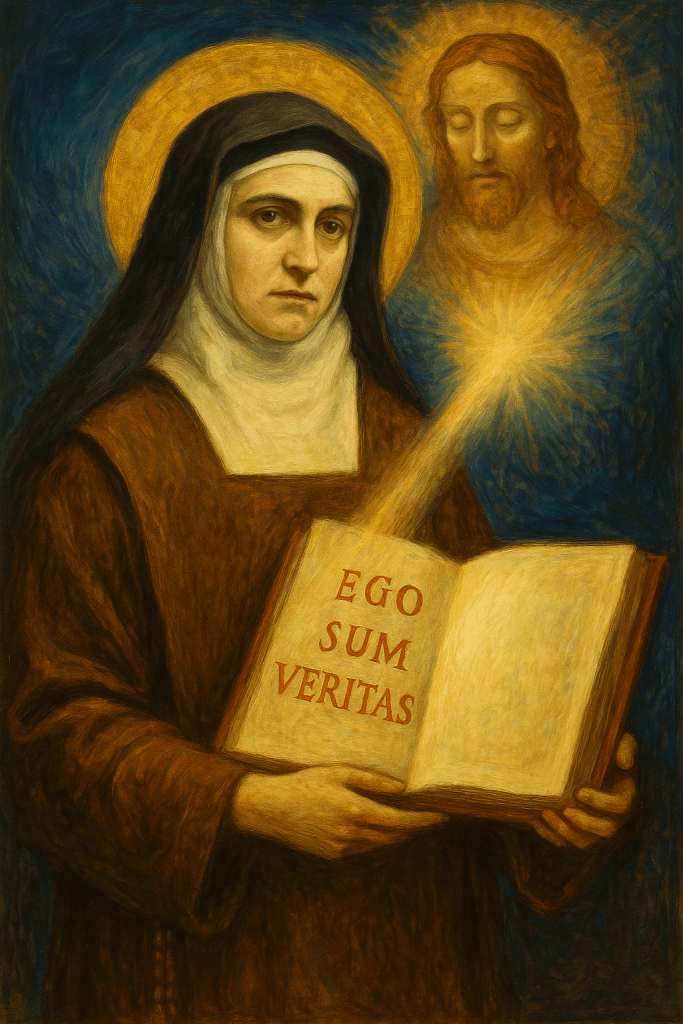

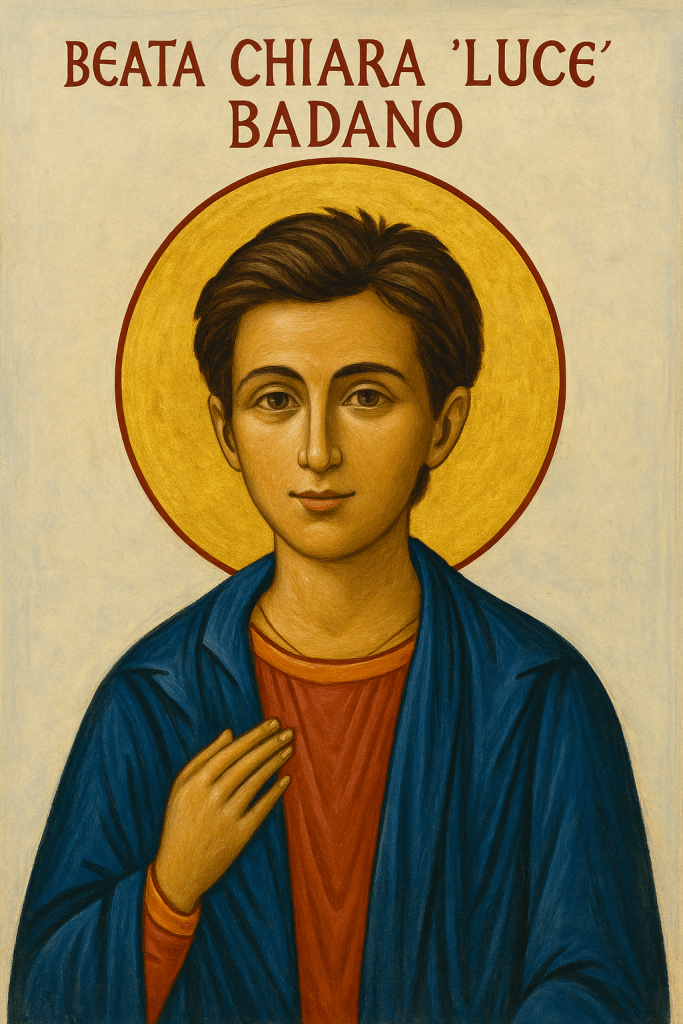
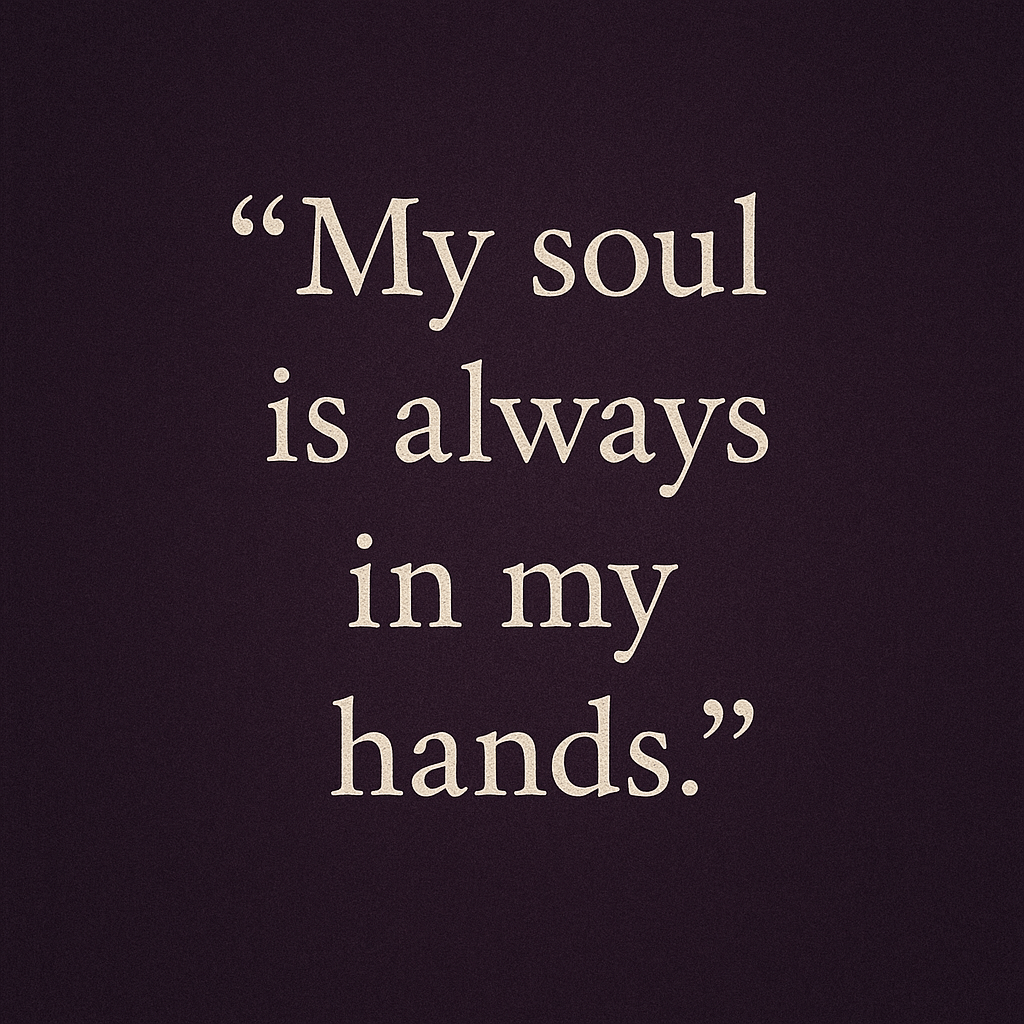
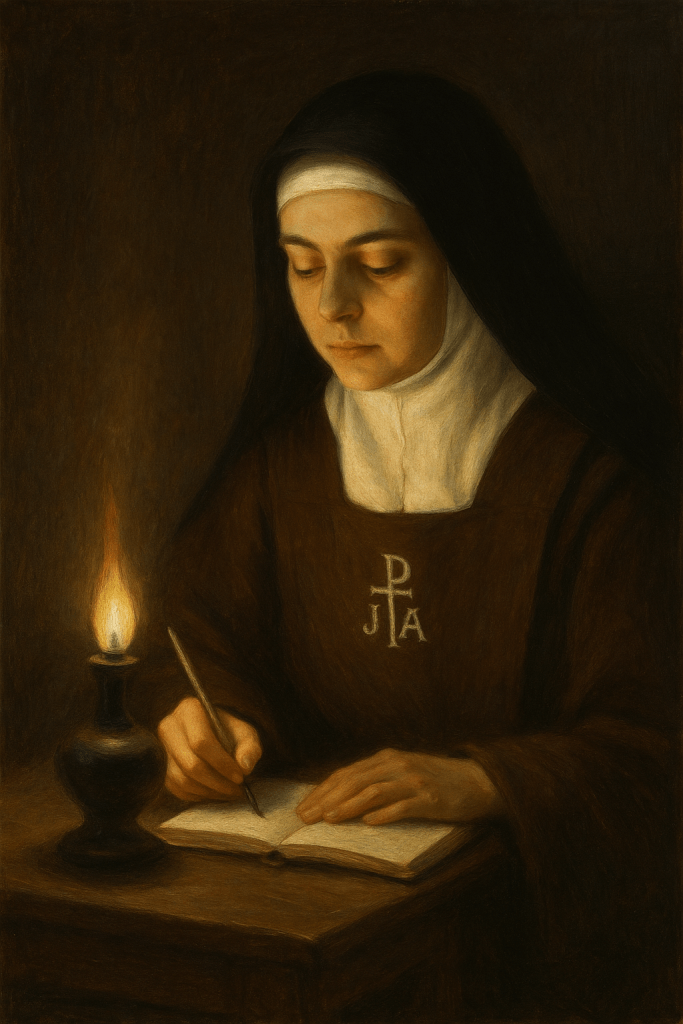

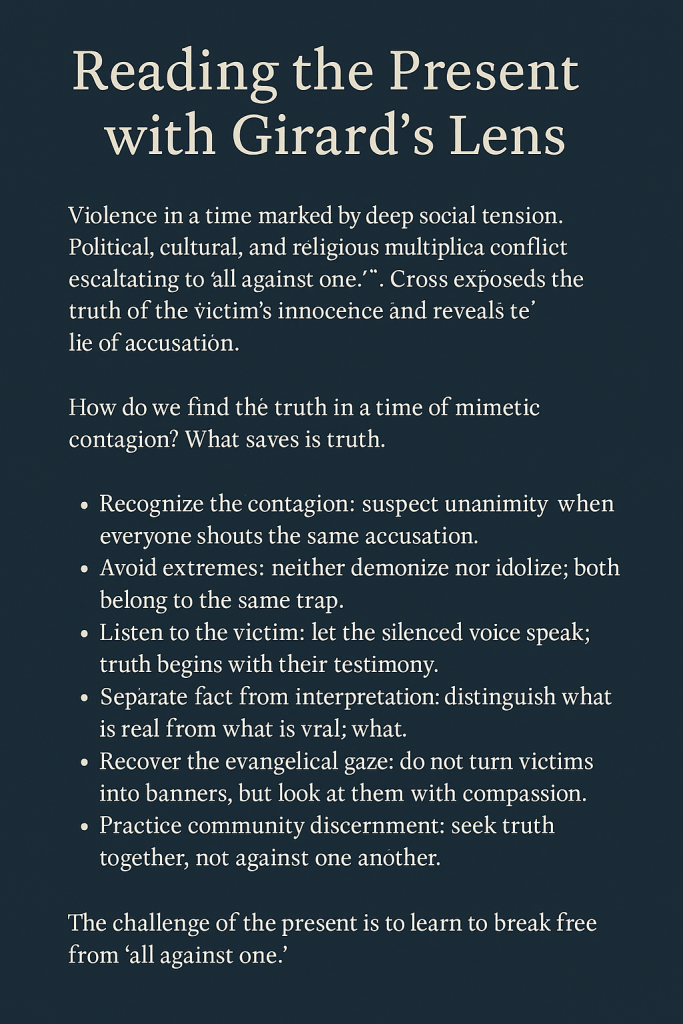

 Centeno's Lighthouse